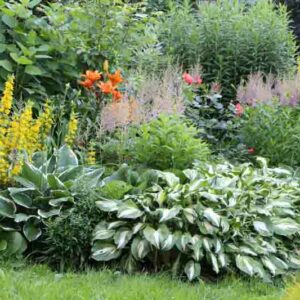
Hostas are loved for foliage, but the best fragrant varieties add sweetly scented summer flowers too. Discover Hosta plantaginea, 'Guacamole', 'Royal Standard', 'Stained Glass', and other fragrant favorites. Gardenia's Fragrant Hosta Fit Framework helps match scent, bloom timing, foliage, mature size, light, and placement to your garden.


Hostas are famous for their foliage, but some of the best varieties offer another pleasure entirely: fragrance. When a fragrant Hosta comes into bloom, its white, near-white, lavender, or pale purple flowers can perfume a shaded path, patio, woodland border, or evening garden at a time when most gardeners are looking down at the leaves rather than up at the flowers.
Not every Hosta is fragrant, and fragrance is not equally prominent in every cultivar. Some, especially Hosta plantaginea and cultivars descended from it, are grown specifically for large, sweetly scented flowers. Others combine fragrance with exceptional golden, green, or variegated foliage.
The best fragrant Hosta therefore depends on more than scent alone. Fragrance prominence, bloom timing, flower character, foliage, mature size, light, climate, and where you intend to experience the perfume all matter.
Best species for fragrance: Hosta plantaginea – famous for large, intensely fragrant white flowers that open toward evening in late summer to early fall.
Best highly fragrant variegated Hosta: Hosta ‘Guacamole’ – chartreuse-gold foliage edged in dark green and topped by huge, highly fragrant white flowers.
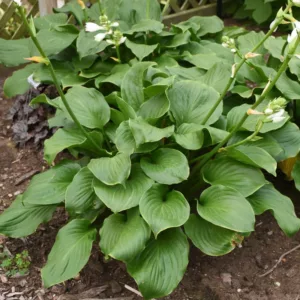
Best classic fragrant green Hosta: Hosta ‘Royal Standard’ – vigorous bright green foliage with abundant, delightfully fragrant white flowers.
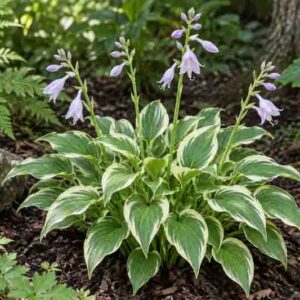
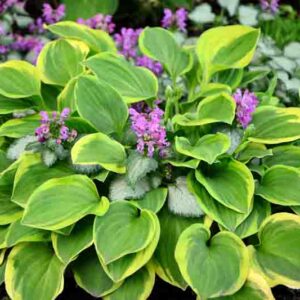
Best fragrant foliage-and-flower combination: Hosta ‘Fragrant Bouquet’ – apple-green foliage edged in cream with fragrant pale purple flowers.
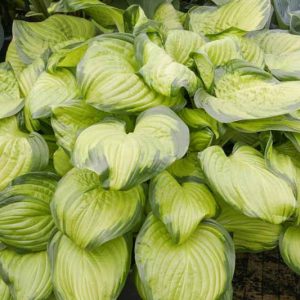
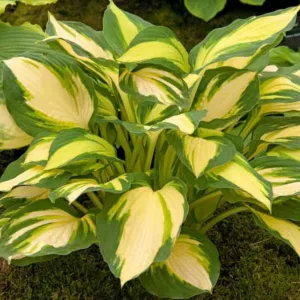
Best luminous fragrant Hosta: Hosta ‘Stained Glass’ – brilliant golden-yellow foliage with dark green margins and fragrant, near-white flowers.
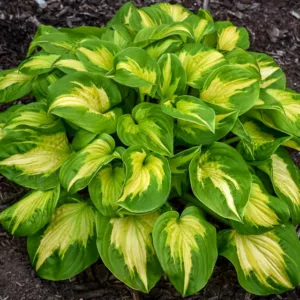
Best newer golden-centered selection: Hosta ‘Etched Glass’ – bright golden foliage edged in dark green with very large, fragrant near-white flowers.
Best classic white-margined fragrant Hosta: Hosta ‘So Sweet’ – glossy green leaves with creamy margins and masses of very fragrant pale lavender to near-white flowers.
Best large fragrant green Hosta: Hosta ‘Royal Crest’ – a substantial green mound with large fragrant white flowers in late summer to early fall.
Best colorful fragrant selection: Hosta ‘Color Festival’ – striking green, cream, and gold foliage accompanied by fragrant lavender flowers.
Gardenia’s Fragrant Hosta Rule: Choose fragrance by where and when you will experience it, not by the word “fragrant” on a plant label alone. A strongly scented Hosta hidden at the back of a woodland bed may be less rewarding than a fragrant cultivar beside a path, patio, doorway, or evening seating area.
Fragrance is not a universal Hosta trait. Many cultivars produce attractive flowers with little or no noticeable perfume, while a smaller group is prized specifically for scented blooms.
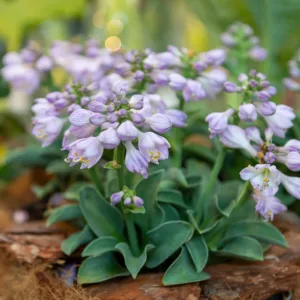
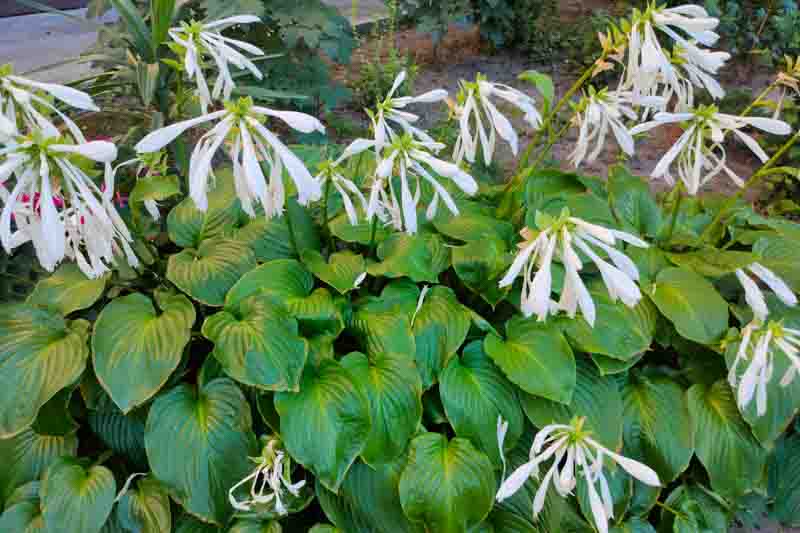
Hosta plantaginea, sometimes called fragrant plantain lily or August lily, is central to the story. It produces exceptionally large, waxy white flowers in late summer and early fall, and they rank among the most fragrant flowers in the genus. Unlike the flowers of many Hostas, they open toward evening, making their perfume particularly noticeable near patios and places used later in the day.
Many of the best-known fragrant Hosta cultivars descend directly or indirectly from H. plantaginea. ‘Guacamole’, ‘Fragrant Bouquet’, ‘Stained Glass’, and ‘So Sweet’ all belong to this broader fragrance-rich breeding tradition.
That ancestry does not mean every descendant smells equally strong. Fragrance can vary by cultivar and may also seem stronger or weaker depending on flower age, temperature, humidity, air movement, time of day, and individual perception.
Important: There is no useful universal numeric scale for Hosta fragrance. Gardenia does not assign arbitrary “10/10” fragrance scores. This guide distinguishes cultivars specifically documented for strong or notable fragrance from Hostas whose flowers are simply described as fragrant.
When choosing a fragrant Hosta, Gardenia recommends comparing six factors rather than fragrance in isolation:
This produces a more useful decision than simply asking which Hosta smells strongest. A gardener wanting evening fragrance outside a kitchen door may make a different choice from someone seeking luminous foliage and summer scent in a woodland border.
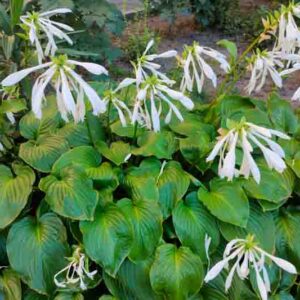
Hosta plantaginea is the essential fragrant Hosta. Its glossy bright green foliage forms an attractive mound, but its extraordinary flowers are what distinguish it from most other species.
In late summer to early fall, tall scapes carry large, waxy, trumpet-shaped white blooms that can reach several inches long. The flowers open toward evening and rank among the most fragrant in the Hosta genus.
‘Guacamole’ is one of the most compelling fragrant cultivars because neither the foliage nor the flowers feel secondary.
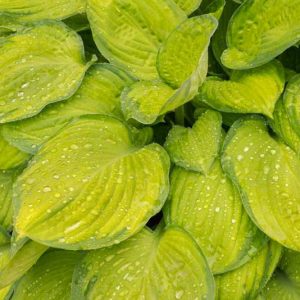
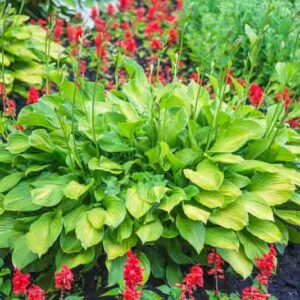
Its broad leaves develop glowing chartreuse-gold centers surrounded by irregular dark green margins. Above them rise huge, funnel-shaped white flowers noted for their strong fragrance.
The plant provides substantial foliage impact throughout the growing season, then becomes a scented flowering specimen later in summer.
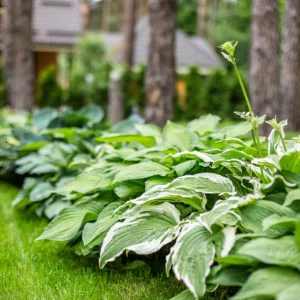
‘Royal Standard’ proves that a fragrant Hosta does not need elaborate variegation to be memorable.
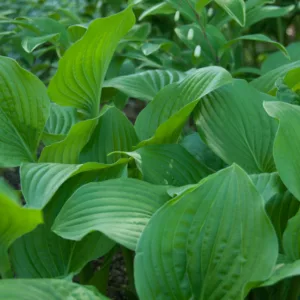
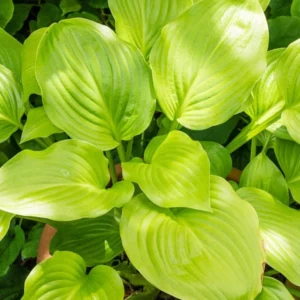
Its vigorous mound of satiny bright green leaves is topped in late summer to fall by waxy white flowers opening from lavender-tinted buds. The flowers are delightfully fragrant and are produced particularly freely.
| Hardiness |
3 - 9 |
|---|---|
| Heat Zones |
1 - 8 |
| Climate Zones | 1, 1A, 1B, 2, 2A, 2B, 3, 3A, 3B, 4, 5, 6, 7, 8, 9, 10, 14, 15, 16, 17, 18, 19, 20, 21 |
| Plant Type | Perennials |
| Plant Family | Asparagaceae |
| Genus | Hosta |
| Exposure | Partial Sun, Shade |
| Season of Interest | Spring (Mid, Late), Summer (Early, Mid, Late), Fall |
| Maintenance | Low |
| Soil Drainage | Moist but Well-Drained |
| Characteristics | Fragrant |
Gardenia’s fragrance-first shortlist: If scent is your primary objective, start with H. plantaginea, ‘Guacamole’, and ‘Royal Standard’. Then choose among them by foliage, mature size, bloom timing, and the conditions around the place where you want to enjoy the fragrance.
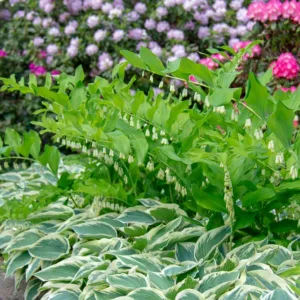
‘Fragrant Bouquet’ offers a softer color palette than many boldly variegated Hostas. Its leaves combine fresh apple-green to chartreuse tones with pale margins that mature toward cream.
Fragrant pale purple flowers rise well above the foliage in summer. The combination of scent, attractive variegation, and manageable garden presence makes ‘Fragrant Bouquet’ one of the most versatile fragrant Hostas.
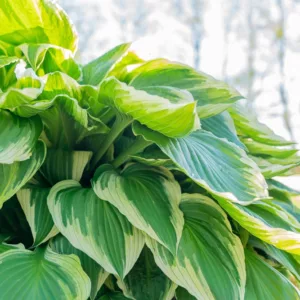
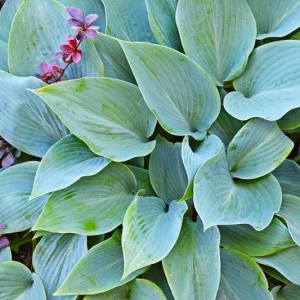
‘Stained Glass’ is hard to overlook even when it is not flowering. Brilliant golden-yellow leaves are framed by irregular dark green margins, while deeply impressed veins create the stained-glass effect that inspired its name.
Its floral display adds another dimension. In summer, tall scapes carry large, fragrant near-white flowers. The American Hosta Society specifically recognizes ‘Stained Glass’ for its fragrant blooms, making it a strong choice where luminous foliage and scent matter equally.
‘Etched Glass’ continues the golden-centered theme with bright foliage framed by broad, irregular dark green margins.
Its floral display is particularly useful in a fragrance planting: very large, fragrant near-white flowers rise on tall scapes in late summer.
Gardenia design shortcut: When foliage and fragrance matter equally, choose a Hosta that earns its space for months before its flowers appear. ‘Fragrant Bouquet’, ‘Stained Glass’, and ‘Etched Glass’ provide a long foliage season first, then add scent when they bloom.
‘So Sweet’ is one of the cultivars that belongs in any serious discussion of fragrant Hostas. Introduced by hybridizer Kevin Vaughn and selected as the 1996 Hosta of the Year, it combines attractive variegated foliage with an exceptionally generous scented floral display.
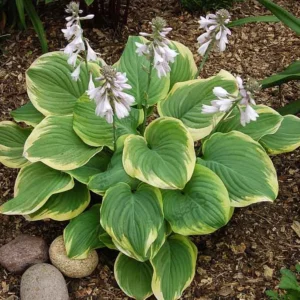
Its glossy green leaves are edged in creamy yellow that becomes creamy white as the season progresses. In August, tall flower scapes carry numerous pale lavender to near-white flowers noted by the American Hosta Society as very fragrant.
‘So Sweet’ was registered from a cross involving ‘Fragrant Bouquet’. Its fragrant-flowered breeding line also reflects the influence of H. plantaginea, the species behind many scented Hostas.
‘Royal Crest’ forms a substantial mound of thick, broadly oval, shiny medium-green leaves and produces large fragrant white flowers in late summer to early fall.
It is particularly useful where you want fragrance from a larger green Hosta rather than from a strongly variegated cultivar.
‘Color Festival’ is one of the most colorful choices in this fragrant group. Its foliage combines dark green margins, creamy centers, and golden tones, creating a striking effect even before the flowers appear.
Fragrant lavender flowers rise above the clump from mid to late summer, adding a scented floral layer to foliage that is already decorative from spring onward.
If fragrance strength is the main goal, Hosta plantaginea deserves the starting position. Its flowers are widely recognized as exceptionally fragrant within the genus, and their evening-opening habit makes the perfume particularly noticeable later in the day.
‘Guacamole’ is also specifically noted for highly fragrant flowers, while ‘Royal Standard’ combines strong fragrance with a generous floral display. ‘So Sweet’ deserves a place in this leading group as well: the American Hosta Society describes its flowers as very fragrant and produced in large numbers.
Beyond these standouts, it is safer to describe cultivars as fragrant rather than force them into a strongest-to-weakest ranking. Fragrance perception can change with:
Gardenia’s Fragrance Confidence Rule: Separate documented fragrance from assumed fragrance strength. A cultivar described as fragrant should not automatically be advertised as “the most fragrant” unless reliable evidence supports the stronger claim.
Fragrance is unusually dependent on placement. A beautifully scented plant at the back of a deep woodland border may perfume the surrounding air, but most gardeners will enjoy it far more where they naturally walk, sit, or open a door.
Good locations include:
Gardenia’s Fragrance Placement Rule: Put the scent where the person is, not simply where the planting space is. A moderately fragrant Hosta beside a frequently used path may create a more memorable experience than an intensely fragrant cultivar planted 20 feet away.
Several fragrant Hostas – especially cultivars influenced by Hosta plantaginea – tolerate brighter conditions well when moisture is dependable. Fragrance itself is not a predictor of sun tolerance, so each cultivar should still be judged individually.
‘So Sweet’ is a good example. The American Hosta Society notes its strong sun tolerance and reports that flowering is especially good with more sun. That does not mean it should automatically be planted in hot, dry full sun in every climate.
Climate changes the answer dramatically. Several hours of sun in a cool northern garden are not equivalent to the same exposure in a hot inland climate.
See Gardenia’s Hostas Tolerant of Sun for more detailed guidance.
Hosta plantaginea is particularly important for gardeners in warmer regions. Its breeding influence is found in many fragrant cultivars that also perform well with brighter light and summer warmth.
Warm-climate success still depends on the entire site:
For regional selection guidance, see Gardenia’s Hostas for Warmer Climates.
A fragrant Hosta cannot perfume the garden if it barely flowers. Genetics determine much of a cultivar’s flowering potential, but growing conditions influence how well that potential is expressed.
For a stronger floral display:
For complete planting, watering, feeding, division, and seasonal-care guidance, see Gardenia’s Hosta Care Guide.
Start with the experience you want rather than choosing a cultivar simply because its label says “fragrant.”
| Your Goal | Gardenia Pick | Key Attraction | Best Setting |
|---|---|---|---|
| Fragrance first | H. plantaginea | Exceptionally fragrant evening-opening white flowers | Patio, path, evening garden |
| Strong scent + dramatic foliage | ‘Guacamole’ | Highly fragrant white flowers + luminous foliage | Specimen or large border |
| Abundant fragrant flowers | ‘Royal Standard’ | Fragrant white flowers over vigorous green foliage | Mass planting or path-side border |
| Soft variegation | ‘Fragrant Bouquet’ | Apple-green foliage + fragrant pale flowers | Border or container |
| Maximum golden glow | ‘Stained Glass’ | Brilliant golden foliage + fragrant flowers | Bright shade or focal planting |
| Very large fragrant flowers | ‘Etched Glass’ | Very large fragrant flowers + golden-centered foliage | Patio or specimen planting |
| Classic white-margined foliage | ‘So Sweet’ | Very fragrant flowers + glossy variegated foliage | Path, patio, container |
| Large green fragrant Hosta | ‘Royal Crest’ | Large fragrant white flowers | Large border near seating |
| Most colorful foliage | ‘Color Festival’ | Green, cream, and gold foliage + lavender flowers | Medium border or container |
Gardenia’s final fragrant-hosta rule: Fragrance should influence placement as much as plant choice. Select a cultivar that fits the site, then put it where its flowers can actually be smelled during the weeks it is in bloom.
No single list can represent every Hosta worth growing. Mature size, leaf color, sun exposure, hardiness, climate, and the importance you place on fragrance can turn an excellent cultivar into the wrong plant for a particular garden.
Find More Hostas for Your Garden
Use Gardenia’s Plant Finder to explore additional Hostas and narrow your choices by mature size, foliage color, sun exposure, growing conditions, and other characteristics that matter in your planting.
Compare Your Finalists Side by Side
Use Gardenia’s Hosta comparison tool to compare mature size and growing requirements, or browse the complete Hosta collection before deciding which fragrant cultivar belongs closest to your patio, path, doorway, or shade border.
Hosta plantaginea is one of the most fragrant Hostas and is the key species behind many fragrant cultivars. Its large waxy white flowers open toward evening. ‘Guacamole’ is noted for highly fragrant flowers, while ‘Royal Standard’ and ‘So Sweet’ also produce strongly fragrant displays.
No. Many Hostas produce attractive white, lavender, or purple flowers with little or no noticeable fragrance. Strong fragrance is especially associated with Hosta plantaginea and a number of cultivars descended from fragrant-flowered breeding.
Bloom time varies by cultivar. Many fragrant Hostas flower from midsummer into late summer, while Hosta plantaginea and some related selections extend the scented display into late summer and early fall.
Yes. The American Hosta Society describes ‘So Sweet’ as producing large numbers of very fragrant pale lavender flowers in August. Its fragrant-flowered ancestry includes ‘Fragrant Bouquet’ and the influence of Hosta plantaginea.
They do not need full sun, but extremely deep shade can reduce flowering. Many fragrant Hostas perform well in bright shade, filtered light, or morning sun when the soil stays consistently moist. Hot afternoon sun can scorch foliage, especially in warm climates.
Hosta plantaginea is famous for large fragrant white flowers. ‘Guacamole’, ‘Royal Standard’, ‘Royal Crest’, ‘Stained Glass’, and ‘Etched Glass’ also produce fragrant white or near-white flowers.
Many fragrant Hostas associated with Hosta plantaginea tolerate brighter conditions better than some classic shade Hostas, but fragrance does not automatically make a cultivar sun tolerant. Climate, soil moisture, time of day, and cultivar still determine how much direct sun is appropriate.
Plant fragrant Hostas where you will encounter their flowers – beside a path, patio, doorway, bench, or other frequently used garden area. Match the location to the cultivar’s light, moisture, and mature-size requirements rather than choosing placement for fragrance alone.
Updated: September 2026 – Reviewed by Gardenia Editors
| Hardiness |
3 - 9 |
|---|---|
| Heat Zones |
1 - 8 |
| Climate Zones | 1, 1A, 1B, 2, 2A, 2B, 3, 3A, 3B, 4, 5, 6, 7, 8, 9, 10, 14, 15, 16, 17, 18, 19, 20, 21 |
| Plant Type | Perennials |
| Plant Family | Asparagaceae |
| Genus | Hosta |
| Exposure | Partial Sun, Shade |
| Season of Interest | Spring (Mid, Late), Summer (Early, Mid, Late), Fall |
| Maintenance | Low |
| Soil Drainage | Moist but Well-Drained |
| Characteristics | Fragrant |
Create a membership account to save your garden designs and to view them on any device.
Becoming a contributing member of Gardenia is easy and can be done in just a few minutes. If you provide us with your name, email address and the payment of a modest $25 annual membership fee, you will become a full member, enabling you to design and save up to 25 of your garden design ideas.
Join now and start creating your dream garden!
Create a membership account to save your garden designs and to view them on any device.
Becoming a contributing member of Gardenia is easy and can be done in just a few minutes. If you provide us with your name, email address and the payment of a modest $25 annual membership fee, you will become a full member, enabling you to design and save up to 25 of your garden design ideas.
Join now and start creating your dream garden!