Should you cut hostas back after frost, in late fall, or wait until spring? Learn the best timing for healthy, frost-damaged, diseased, and slug-prone hostas, how low to cut the foliage, when to remove flower stalks, and how Gardenia's simple cut-back matrix makes the decision easy.



When should you cut back hostas – after the first frost, when the leaves turn yellow, or in spring? The answer is simpler than the conflicting advice online makes it sound.
For most hostas, the best time to cut back the foliage is after the leaves have naturally yellowed and begun to collapse in late fall, often after frost has damaged or killed them. At that point, the growing season is over and removing the spent foliage will not deprive the plant of useful green leaf area.
But fall cutting is not compulsory. Healthy hosta foliage can be left through winter and removed before new growth emerges in spring. The better choice depends on the condition of the leaves, whether pests or diseases have been present, and how tidy you want the garden to look.
Healthy green foliage: Leave it alone. It is still functioning and should not be removed simply because autumn has arrived.
Leaves yellowing naturally: You can wait until most foliage has declined, then cut it back.
Foliage flattened or killed by frost: This is an excellent time for fall cleanup.
Diseased or nematode-infested foliage: Remove affected material rather than leaving it around the crown over winter.
Heavy slug problems: Fall cleanup may reduce some sheltered overwintering sites for slugs and their eggs, but it should be part of a broader slug-management strategy.
Healthy foliage left over winter: Remove it in late winter or early spring before new hosta shoots expand.
Flower stalks: Cut faded scapes after flowering if you prefer a tidy plant, or leave them until the normal fall cleanup.
How low? Cut dead petioles and leaves close to the ground without slicing into the crown or emerging buds.
Gardenia’s Hosta Cut-Back Rule: Green and healthy – keep it. Yellow and finished – cut it. Diseased or heavily infested – remove it. Healthy and left for winter – clear it before spring growth. The condition of the foliage is a better guide than a fixed calendar date.
Hostas are herbaceous perennials. Their leaves emerge in spring, remain above ground through the growing season, then naturally yellow and die back as the plant enters dormancy in autumn. The crown and roots remain alive below ground and produce new shoots the following spring.
This annual dieback is normal. A hosta turning yellow throughout the clump in autumn is therefore very different from one developing isolated yellow leaves, brown lesions, unusual mottling, wilt, or crown collapse during active growth.
As long as leaves remain substantially green and healthy, there is little reason to rush their removal. Green foliage continues to photosynthesize and support the plant while the growing season is still active.
Once the foliage has yellowed, browned, softened, and collapsed, however, its useful season is effectively finished.
Do not let the calendar make the decision for you. An October hosta may still be green in one climate and completely dormant in another. Look at the plant, not just the date.
You will often hear the advice, “Cut hostas back after the first frost.” It is useful advice, but it should not be interpreted too literally.
A frost frequently accelerates the normal end-of-season decline. Hosta leaves may become limp, translucent, yellow, brown, or flattened after sufficiently cold weather. Once the foliage has been seriously damaged and is no longer contributing useful green growth, it can be removed.
But you do not have to wait for a specific frost if the plant has already naturally died back. Likewise, a light frost that leaves most foliage green is not a signal that every leaf must immediately be cut away.
Use the foliage itself as your guide:
The practical question is not “Has frost happened?” but “Has the foliage finished functioning for the season?”
Yes. Healthy hostas do not have to be cut back in autumn.
Dead foliage can be left through winter and removed in late winter or early spring, particularly if fall cleanup is not a priority. As winter progresses, old hosta leaves often soften and collapse, making them easy to clear away.
If you choose spring cleanup, do it before the new hosta shoots expand. Once the pointed shoots begin pushing through the soil, vigorous raking or cutting around the crown risks damaging them.
Spring cleanup works particularly well where:
So the question is not really “fall or spring – which is correct?” Both can be correct. The condition of the hosta determines which is more useful.
Fall cleanup becomes more valuable when spent foliage may shelter pests or carry disease problems into the next season.
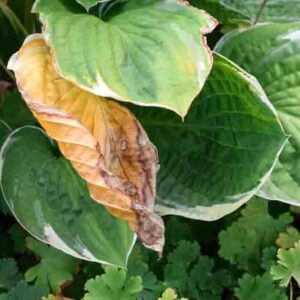
Foliar nematodes live and feed within leaf tissue and typically cause yellow-to-brown bands or wedges confined between major leaf veins. Removing affected foliage rather than allowing it to settle around the crown is an important sanitation step.
Do not compost foliage known to be infested with foliar nematodes unless local guidance specifically confirms that your composting method will destroy them.
Read Gardenia’s Foliar Nematodes identification and management guide if you see this characteristic vein-bounded damage.
Leaves affected by significant disease should not automatically be treated like clean autumn foliage. Remove infected material and dispose of it appropriately rather than leaving it around the crown.
As a general precaution, do not compost foliage known to carry a serious infectious disease unless local extension guidance or the specific disease-management recommendation confirms that your composting method is appropriate.
If you are not sure whether brown spots, mottling, yellow bands, or collapsing petioles indicate disease, use Gardenia’s Hosta Diseases: Symptoms, Diagnosis and Treatment guide before starting cleanup.
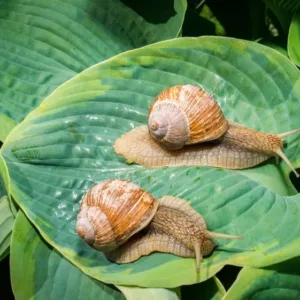
Slugs and their eggs can overwinter in protected sites in soil, mulch, and plant debris. Removing soggy hosta leaves and excessive debris in fall may reduce some sheltered overwintering sites around the crown.
Cutting hostas back should therefore be treated as one part of a broader slug-management strategy rather than a stand-alone control.
For more help, see Gardenia’s guide to preventing slugs and snails from feasting on hostas.
Gardenia’s cleanup priority: Healthy dead foliage gives you a choice between fall and spring. Diseased, nematode-damaged, or heavily slug-infested foliage gives you a much stronger reason to clean up in fall.
Once the foliage has died back, cutting a hosta is simple.
There is no horticultural prize for cutting every petiole to exactly the same height. The objective is simply to remove dead foliage without damaging the living crown below.
For ordinary healthy hostas, fall cleanup is straightforward. But if a plant shows suspicious mottling, puckering, ringspots, or color bleeding along the veins, stop before moving from plant to plant with the same cutting tool.
Hosta Virus X (HVX) can be spread mechanically when infected hosta sap is transferred into wounds on another hosta. A knife, pruner, mower, or other piece of equipment can therefore turn routine cutting into a transmission opportunity.
If HVX is suspected, do not simply trim the hosta and continue down the bed. Diagnose the problem first and use appropriate sanitation.
See Gardenia’s Hosta Virus X guide for symptoms, testing, removal, and tool sanitation.
Gardenia’s HVX rule: sap + wound = transmission opportunity. If the foliage looks virus-like, sanitation matters more than making the bed tidy.
Routine summer cutback is not recommended. Healthy hosta leaves are the plant’s working foliage and should normally remain in place throughout the growing season.
If you are considering cutting a hosta back in summer, use this rule:
Hail, wind, scorching, animals, or accidental injury may leave individual leaves beyond repair, and removing those does not require waiting until autumn.
A severely damaged hosta is different. If most of the foliage has been shredded or destroyed, cutting back badly damaged tissue may improve appearance and allow the plant to redirect growth. But this is a recovery measure, not routine annual pruning.
Do not cut a healthy hosta to the ground in midsummer simply because the foliage looks tired. First ask why it looks tired.
Why Does Your Hosta Look Bad?
Yellow leaves, brown edges, holes, wilting, and weak growth have very different causes. Before cutting everything down, use Gardenia’s Hosta Problems guide to diagnose the pattern.
Cutting back leaves and cutting flower stalks are two different jobs.
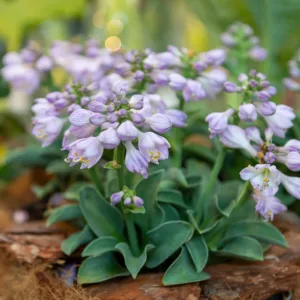
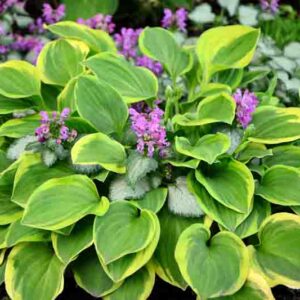
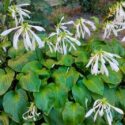
Hostas send up flower scapes in summer, typically carrying white, lavender, or purple flowers. What you do after flowering depends mostly on your preference:
None of these choices requires removing healthy hosta leaves.
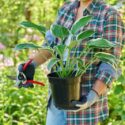
The basic cutback timing is the same for hostas in pots: allow healthy foliage to complete its season, then remove it after it yellows and dies back or clean it away before spring growth.
Winter care is more about the roots and crown than about the leaves. For container-grown hostas, focus on three things:
Cutting the leaves does not itself make a hosta more winter-hardy. The living plant survives winter through its dormant crown and roots.
A newly planted hosta follows the same basic rule as an established plant: do not prematurely remove healthy green foliage simply because winter is approaching.
For a recently planted hosta:
Newly planted hostas may benefit more from attention to the root zone than from special pruning. Where winter freeze-thaw cycles are severe, late-summer or fall-planted hostas may benefit from winter mulch after the ground freezes to reduce frost heaving.
Keep heavy mulch from packing directly against the crown and remove excess protection as growth resumes in spring.
Instead of following a one-date-fits-all rule, use the condition of the plant to choose your cleanup time.
| What You See | Best Response | Why / Next Step |
|---|---|---|
| Healthy green leaves in fall | Wait | The foliage is still active |
| Mostly yellow or brown foliage | Cut back now or leave until spring | Normal dormancy is underway |
| Frost-killed, collapsed foliage | Good time to cut back | The leaves have finished functioning |
| Diseased foliage | Remove and dispose appropriately | Use Gardenia’s Hosta Diseases guide to identify the cause |
| Foliar nematode damage | Favor fall removal | See Gardenia’s Foliar Nematodes guide |
| Heavy slug problems | Favor fall cleanup | Reduce sheltered debris and continue with Gardenia’s Slug and Snail guide |
| Mottling, puckering, or ink-bleed symptoms | Stop cutting until investigated | Check Gardenia’s Hosta Virus X guide before moving tools to another plant |
| Healthy dead foliage left over winter | Remove before new shoots expand | Avoid damaging emerging spring growth |
| Only a few damaged leaves in summer | Remove individual leaves if desired | Healthy remaining foliage should stay |
Why Gardenia uses plant condition instead of a date: Hosta dormancy responds to season and temperature, not to the gardener’s calendar. The same date may find one hosta fully dormant and another still green. Cut based on foliage condition first, then adjust for disease and pest risk.
Once the dead foliage is gone, there is little else an established hosta needs simply because it has been cut back.
For full seasonal care, watering, fertilizing, division, planting, and troubleshooting, see Gardenia’s How to Grow Hostas: Planting, Care and Problems.
There is usually no reason to strip healthy leaves from a hosta simply because autumn cleanup has started elsewhere in the garden. Let the plant finish its growing season.
Frost is a convenient trigger, not a mandatory event. If the foliage has naturally yellowed and collapsed, cleanup can proceed.
Brown spots with dark borders, brown bands between veins, unusual mottling, or rotting petiole bases may indicate a disease or pest problem rather than ordinary dormancy.
This is particularly risky when virus-like symptoms are present. Diagnose first and sanitize appropriately.
The foliage is disposable. The crown is not. Cut the petioles rather than shaving into the living growing points at soil level.
For most gardeners, the simplest answer is: cut hostas back after their foliage has yellowed, browned, and begun to collapse in late fall, often after frost damage.
If healthy dead foliage remains in place over winter, it can also be removed in late winter or early spring before new shoots expand.
Fall removal becomes more useful when foliage is diseased, affected by foliar nematodes, or associated with heavy slug pressure.
Above all, do not remove healthy green hosta leaves merely because a date on the calendar says the gardening season should be over.
What Should You Do With Your Hosta Next?
If the foliage looks abnormal rather than simply dormant, diagnose it with Gardenia’s Hosta Problems guide or Hosta Diseases guide. For complete seasonal care, continue with Gardenia’s Hosta planting and care guide.
Cut hostas back after the foliage has naturally yellowed, browned, and begun to collapse, often after frost damage. There is no need to remove healthy green leaves simply because autumn has arrived.
No. Frost is a useful seasonal trigger but not a requirement. If hosta foliage has already naturally yellowed and died back, it can be removed. If a light frost leaves the foliage healthy and green, there is no need to cut it immediately.
Yes. Healthy hosta foliage can be left through winter and removed in late winter or early spring. Clear it before new shoots expand so cleanup does not damage emerging growth.
Diseased or nematode-damaged hosta foliage is better removed rather than left around the crown through winter. Do not automatically compost infected material, and clean tools carefully, especially when viral disease such as Hosta Virus X is suspected.
Cut dead hosta leaves and petioles close to ground level while avoiding the living crown. Leaving short stubs is preferable to cutting into the crown or damaging emerging buds.
You can remove faded hosta flower stalks near the base after flowering if you prefer a tidier plant. They may also be left until normal fall cleanup. Removing flower stalks does not require cutting back healthy hosta leaves.
Do not routinely cut healthy hostas to the ground in summer. Individual damaged leaves can be removed at any time. Severe hail or physical damage may justify heavier cleanup, but first diagnose why the foliage is declining.
Fall cleanup may reduce some sheltered overwintering sites for slugs and their eggs by removing soggy foliage and excess debris. It should be combined with broader slug-management practices rather than relied on as the only control.
Updated: September 2026 – Reviewed by Gardenia Editors
| Hardiness |
3 - 9 |
|---|---|
| Heat Zones |
1 - 8 |
| Climate Zones | 1, 1A, 1B, 2, 2A, 2B, 3, 3A, 3B, 4, 5, 6, 7, 8, 9, 10, 14, 15, 16, 17, 18, 19, 20, 21 |
| Plant Type | Perennials |
| Plant Family | Asparagaceae |
| Genus | Hosta |
| Exposure | Partial Sun, Shade |
| Season of Interest | Spring (Mid, Late), Summer (Early, Mid, Late), Fall |
| Maintenance | Low |
| Water Needs | Average |
| Soil Drainage | Moist but Well-Drained |
| Attracts | Bees, Butterflies, Hummingbirds |
| Landscaping Ideas | Patio And Containers, Small Gardens |
| Garden Styles | City and Courtyard, Gravel and Rock Garden, Informal and Cottage, Pollinator Garden, Woodland Garden |
| Hardiness |
3 - 9 |
|---|---|
| Heat Zones |
1 - 8 |
| Climate Zones | 1, 1A, 1B, 2, 2A, 2B, 3, 3A, 3B, 4, 5, 6, 7, 8, 9, 10, 14, 15, 16, 17, 18, 19, 20, 21 |
| Plant Type | Perennials |
| Plant Family | Asparagaceae |
| Genus | Hosta |
| Exposure | Partial Sun, Shade |
| Season of Interest | Spring (Mid, Late), Summer (Early, Mid, Late), Fall |
| Maintenance | Low |
| Water Needs | Average |
| Soil Drainage | Moist but Well-Drained |
| Attracts | Bees, Butterflies, Hummingbirds |
| Landscaping Ideas | Patio And Containers, Small Gardens |
| Garden Styles | City and Courtyard, Gravel and Rock Garden, Informal and Cottage, Pollinator Garden, Woodland Garden |
Create a membership account to save your garden designs and to view them on any device.
Becoming a contributing member of Gardenia is easy and can be done in just a few minutes. If you provide us with your name, email address and the payment of a modest $25 annual membership fee, you will become a full member, enabling you to design and save up to 25 of your garden design ideas.
Join now and start creating your dream garden!
Create a membership account to save your garden designs and to view them on any device.
Becoming a contributing member of Gardenia is easy and can be done in just a few minutes. If you provide us with your name, email address and the payment of a modest $25 annual membership fee, you will become a full member, enabling you to design and save up to 25 of your garden design ideas.
Join now and start creating your dream garden!