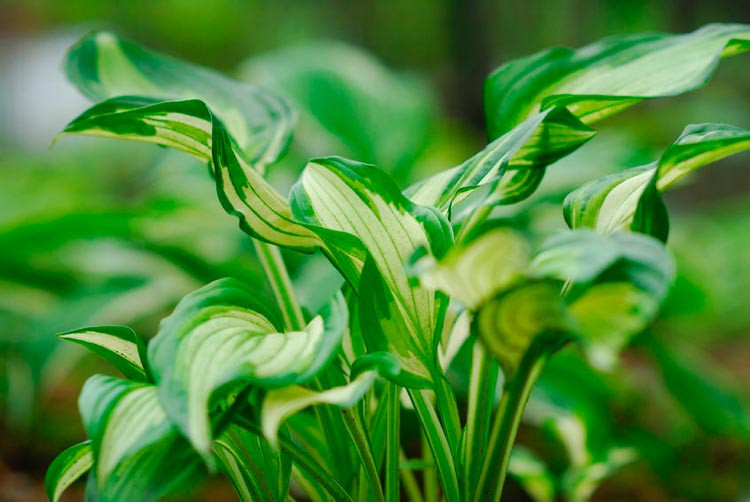
Hosta Guides
Hostas are dependable shade perennials, but the best results come from matching the plant to the site. Most thrive in partial or dappled shade, fertile soil, and consistent moisture without waterlogging. Good hosta care is largely about getting the basics right – light, water, spacing, and timely maintenance – then recognizing problems before they become serious.
Plant and Grow Hostas Successfully
Hostas generally perform best in bright shade, dappled light, or morning sun with afternoon shade. Deep, dry shade can limit growth, while hot afternoon sun may scorch leaves. Some cultivars tolerate considerably more sun than others, especially where soil moisture is reliable. See Gardenia’s guide to hostas tolerant of sun and the complete guide to growing hostas for planting, soil, watering, feeding, and seasonal care.
Diagnose Yellow Leaves, Brown Edges, Holes, and Disease
Hosta leaves quickly show when something is wrong. Yellowing may result from natural aging, moisture stress, transplant shock, or disease, while brown edges are often linked to heat, drought, or excessive sun. Holes usually point to feeding damage rather than disease. Start with Gardenia’s guide to yellow leaves, brown edges, holes, and other hosta problems. If symptoms are unusual or persistent, consult the hosta disease guide.
Protect Hostas from Slugs, Deer, and Rabbits
Slugs and snails can leave hosta foliage riddled with holes, especially in damp, sheltered gardens. Deer and rabbits may cause even more dramatic damage, sometimes stripping plants overnight. Learn how to prevent slugs from feasting on hostas and how to protect hostas from deer and rabbits.
Divide, Transplant, and Cut Back Hostas
Healthy hostas do not need frequent division, but mature clumps can be divided when you want more plants or when they have outgrown their space. Moving or dividing them at the right time helps reduce stress and speeds recovery. See when and how to divide hostas, how to transplant hostas successfully, and when to cut hostas back.
Choose Hostas for Size, Color, Fragrance, and Your Garden
Hostas range from compact edging plants to enormous specimens several feet across. Compare variegated hostas, fragrant hostas, and giant hostas to find plants that suit your space and design goals. If pets use the garden, also remember that hostas are toxic to dogs and cats if eaten.