Do deer eat salvia? Usually not much. Many sages have excellent deer-resistance records, from compact woodland sage to autumn sage, Mexican bush sage, and hummingbird favorites. Compare 15 beautiful choices, learn when browsing can still happen, and find the Salvia that truly fits your climate, moisture, and garden style.
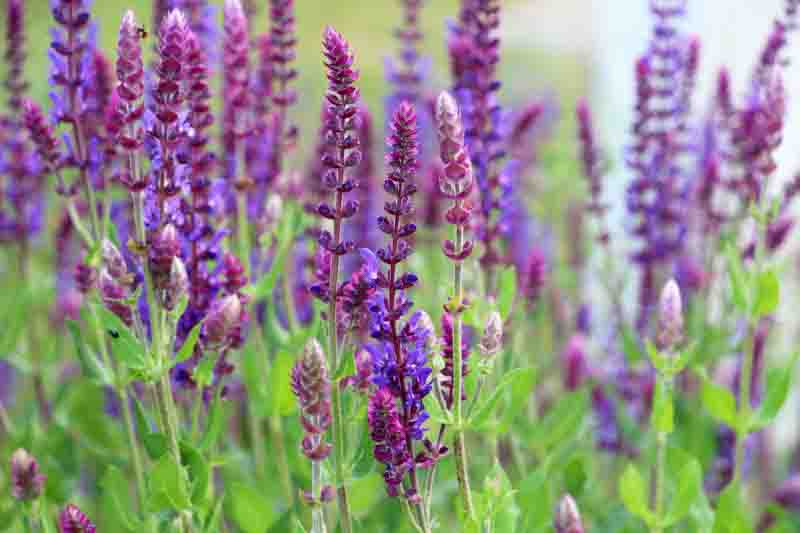


Deer can eat salvia, but most commonly grown sages are considered deer resistant and are usually left alone. Browsing can still happen, especially on tender new growth or where deer pressure is high, but repeated severe damage is uncommon across many popular Salvia species.
Salvia has a strong deer-resistance record across many different species. NC State Extension describes the genus as resistant to deer and rabbits, and individual records reinforce that pattern.
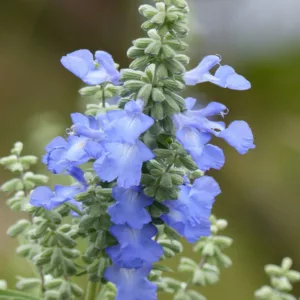
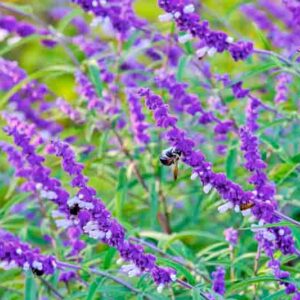
Blue sage, Salvia azurea, is resistant to browsing; autumn sage, Salvia greggii, is seldom damaged; Mexican bush sage, Salvia leucantha, resists deer and rabbits; and mealycup sage, Salvia farinacea, is also seldom damaged. Blue anise sage, Salvia guaranitica, and culinary sage, Salvia officinalis, have similarly good records.
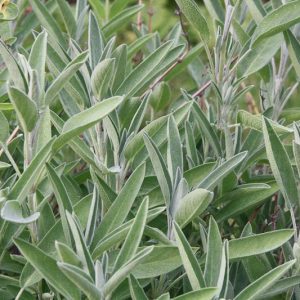
Many sages have aromatic, textured, or hairy foliage, which may help make them less appealing to deer. But Salvia is a large genus, so the strongest guidance comes from documented records for individual species and cultivars rather than scent alone.
Gardenia’s Salvia Fit Rule: deer resistance gets a sage onto the shortlist. Site fit decides whether it succeeds. Hardiness, summer heat, drainage, moisture, mature size, and bloom season can vary dramatically from one Salvia to another.
Because deer resistance is common across Salvia, the more interesting choice is what kind of sage you actually need. Some are compact hardy perennials, others are shrubby, drought-tolerant plants, and others grow into large, late-flowering hummingbird magnets.
| Hardiness |
3 - 12 |
|---|---|
| Climate Zones | 1, 1A, 1B, 2, 2A, 2B, 3, 3A, 3B, 4, 5, 6, 7, 8, 9, 10, 11, 12, 13, 14, 15, 16, 17, 18, 19, 20, 21, 22, 23, 24, A1, A2, A3, H1, H2 |
| Plant Type | Annuals, Perennials, Shrubs |
| Plant Family | Lamiaceae |
| Genus | Salvia |
| Exposure | Full Sun, Partial Sun |
| Season of Interest | Spring (Early, Mid, Late), Summer (Early, Mid, Late), Fall |
| Maintenance | Low |
| Water Needs | Average |
| Soil Type | Chalk, Loam, Sand |
| Soil pH | Acid, Alkaline, Neutral |
| Soil Drainage | Moist but Well-Drained, Well-Drained |
| Characteristics | Dried Arrangements, Cut Flowers, Fragrant, Showy |
| Tolerances | Deer |
| Attracts | Bees, Birds, Butterflies, Hummingbirds |
| Landscaping Ideas | Beds And Borders, Patio And Containers, Wall-Side Borders |
| Garden Styles | City and Courtyard, Coastal Garden, Informal and Cottage, Mediterranean Garden, Prairie and Meadow |
A deer-resistant salvia can still be the wrong salvia. ‘Caradonna’ and ‘Black and Blue’ both resist browsing, but ‘Caradonna’ is a compact hardy border perennial while ‘Black and Blue’ is a taller, more vigorous sage that prefers more dependable moisture. Choose for the site, not flower color alone.
Even a resistant sage may occasionally be sampled. Browsing becomes more likely when natural forage is scarce, local deer numbers are high, or plants are newly installed.
Tender spring shoots are also more vulnerable than mature foliage. A single bite on an established plant rarely matters, while the same amount of damage can remove a large proportion of a young transplant.
Gardenia browse check: distinguish sampling from a pattern. One clipped stem usually does not justify protection. Repeated loss of fresh shoots is when browsing becomes a real garden problem.
Salvia is useful in a deer-prone garden because deer often leave the salvia itself alone. That does not mean a sage plant creates a protective zone around everything growing beside it.
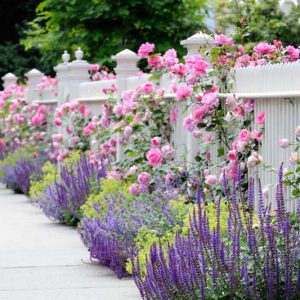
Do not rely on salvia to shield Hostas, daylilies, roses, or other plants that deer actively seek out. Deer can simply pass over the sage and browse the more palatable plant next to it.
The better strategy is to use salvias as part of a landscape with fewer highly vulnerable plants, rather than expecting their scent to function as a living fence.
Plant salvia because deer tend to leave salvia alone. Do not depend on it to protect its neighbors.
A battered-looking sage is not necessarily being eaten. The pattern of damage usually gives better clues than the overall appearance of the plant.
Missing shoots or flower spikes suggest browsing. Wilted, yellowing, or collapsed foliage with stems still intact usually points elsewhere.
Most established salvias do not need routine deer protection. Match the response to the amount of damage.
This is where the choice becomes more interesting than deer resistance alone.
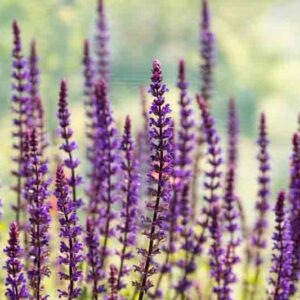
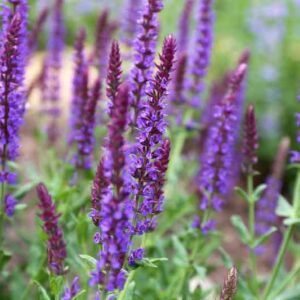
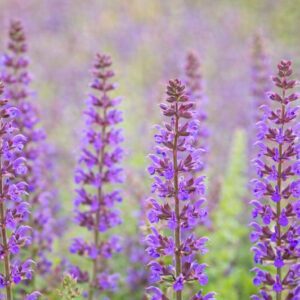
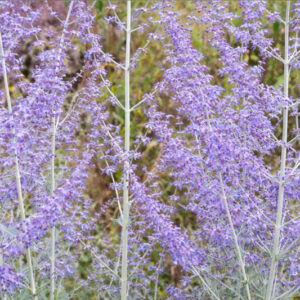
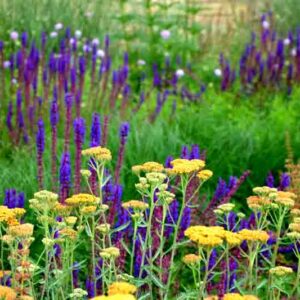
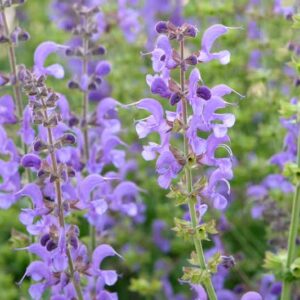
For a hardy perennial border, woodland sages such as ‘Caradonna’, ‘May Night’, ‘Ostfriesland’, and ‘Blue Hill’ provide compact clumps and upright flower spikes.
For hot, relatively dry gardens, autumn sage and culinary sage are stronger candidates. Both prefer good drainage and cope well with drought once established.
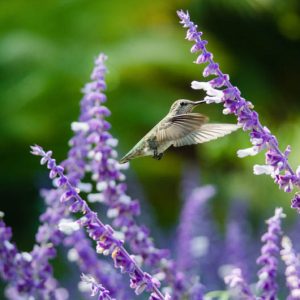
For late-season height and hummingbirds, Mexican bush sage, ‘Amistad’, and ‘Black and Blue’ offer much larger plants and a longer, later display.
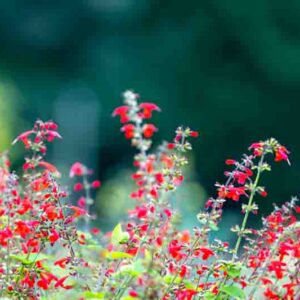
For native or naturalistic planting, blue sage and scarlet sage offer strong wildlife value while fitting very different regions and moisture conditions.
That is why selecting “a deer-resistant salvia” is not enough. Two equally resistant sages may differ by several feet in height, bloom at different times, tolerate very different winters, and respond very differently to summer moisture.
Gardenia’s Salvia Fit Rule: after deer resistance, match the plant to the garden. Hardiness, summer heat, drainage, moisture, mature size, bloom season, and wildlife value determine whether a Salvia actually belongs in the site.
Knowing that Salvia is deer resistant narrows the field, but it does not finish the decision. The right sage still needs to fit your climate, sunlight, soil, drainage, moisture, available space, and design goals.
Explore the Gardenia Salvia collection to compare hardy perennials, shrubby sages, tender salvias, herbs, and native species. Then use the Gardenia Plant Finder to narrow your choices by hardiness, sun, soil, drainage, water needs, mature size, native status, wildlife value, and deer resistance.
For planting inspiration, browse Deer-Resistant Garden Ideas, then use the Garden Design Tool to check whether the salvias and companion plants you want actually share compatible growing conditions.
Deer can eat salvia, but most commonly grown sages are considered deer resistant and are usually left alone. Browsing is more likely on tender new growth, newly planted sages, or where deer pressure is unusually high.
Yes. Many Salvia species have strong deer-resistance records, including woodland sage, autumn sage, blue sage, mealycup sage, Mexican bush sage, blue anise sage, and culinary sage.
‘Caradonna’ is generally considered deer resistant. It belongs to the Salvia nemorosa group, which has a strong lower-browse reputation and is widely used in deer-prone perennial borders.
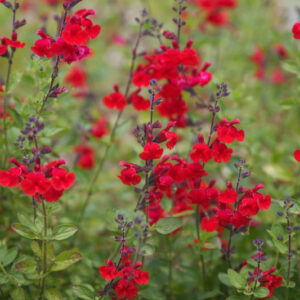
Autumn sage, Salvia greggii, is seldom damaged by deer. It may still be sampled under unusually high browsing pressure or while plants are young and establishing.
Not reliably. Deer may leave salvia alone while eating a preferred plant growing beside it. Use salvia because it is itself lower-browse, not because it creates a protective barrier.
Good choices include ‘Caradonna’, ‘May Night’, ‘Ostfriesland’, Salvia greggii, Salvia azurea, Mexican bush sage, ‘Black and Blue’, culinary sage, and many other sages with documented deer resistance.
They may. Deer become less selective during food shortages, drought, winter, or periods of high population pressure. Deer resistance reduces browsing risk but does not make salvia deer-proof.
Updated: September 2026 – Reviewed by Gardenia Editors
| Hardiness |
3 - 12 |
|---|---|
| Climate Zones | 1, 1A, 1B, 2, 2A, 2B, 3, 3A, 3B, 4, 5, 6, 7, 8, 9, 10, 11, 12, 13, 14, 15, 16, 17, 18, 19, 20, 21, 22, 23, 24, A1, A2, A3, H1, H2 |
| Plant Type | Annuals, Perennials, Shrubs |
| Plant Family | Lamiaceae |
| Genus | Salvia |
| Exposure | Full Sun, Partial Sun |
| Season of Interest | Spring (Early, Mid, Late), Summer (Early, Mid, Late), Fall |
| Maintenance | Low |
| Water Needs | Average |
| Soil Type | Chalk, Loam, Sand |
| Soil pH | Acid, Alkaline, Neutral |
| Soil Drainage | Moist but Well-Drained, Well-Drained |
| Characteristics | Dried Arrangements, Cut Flowers, Fragrant, Showy |
| Tolerances | Deer |
| Attracts | Bees, Birds, Butterflies, Hummingbirds |
| Landscaping Ideas | Beds And Borders, Patio And Containers, Wall-Side Borders |
| Garden Styles | City and Courtyard, Coastal Garden, Informal and Cottage, Mediterranean Garden, Prairie and Meadow |
Create a membership account to save your garden designs and to view them on any device.
Becoming a contributing member of Gardenia is easy and can be done in just a few minutes. If you provide us with your name, email address and the payment of a modest $25 annual membership fee, you will become a full member, enabling you to design and save up to 25 of your garden design ideas.
Join now and start creating your dream garden!