Create Your Garden

South Carolina Sun-Loving Native Annuals and Perennials

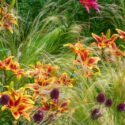
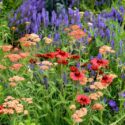
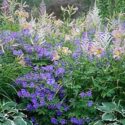
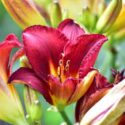
Sun-soaked South Carolina beds don’t have to be thirsty or fussy. Mix butterfly milkweed, lanceleaf tickseed, blazing star, swamp sunflower, goldenrod, ironweed, and tickseed sunflower for nonstop color, pollinators, and songbird seed. These native annuals and perennials love heat, humidity, sandy soil, and full, baking Southern sun.
Native Plants, Native Perennials, Native Annuals, South Carolina Native Plant, South Carolina Native Perennials, South Carolina Native Annuals, Fun Perennials, Sun Annuals

South Carolina Sun-Loving Native Annuals and Perennials – Wildflower Color for Hot Southern Sunshine

Dreaming of flower beds that laugh at blazing South Carolina sun instead of melting by June? Sun-loving native annuals and perennials are built for Columbia heat, Charleston humidity, Sandhills drought, and coastal breezes. These wildflowers, meadow plants, and bog-lovers thrive in USDA zones 7 to 9 while feeding butterflies, bees, and birds.

South Carolina Sun-Loving Wildflower Quick Start

  • Give them honest full sun – most native wildflowers and prairie perennials want at least six hours of direct light. In the Midlands and Sandhills, eight hours is even better.
  • Match plants to moisture – swamp sunflower, sneezeweed, hibiscus, golden club, arrowhead, and fragrant water lily love ditches and pond edges. Butterfly milkweed, rattlesnake master, gray goldenrod, and prairie phlox prefer dry, fast-draining sites.
  • Know what is annual versus perennial – annual phlox and tickseed sunflower bloom their hearts out in one season, while blazing star, goldenrods, and ironweed return and expand year after year.
  • Plant in drifts, not singles – groups of three, five, or more of the same species look natural and make it easier for pollinators to forage efficiently.
  • Water to establish, then ease off – even drought-tolerant South Carolina natives need regular deep watering for the first season. After that, many can rely mostly on rainfall.

South Carolina Full-Sun Wildflower Zones at a Glance

From the Blue Ridge foothills to Lowcountry marsh edges, South Carolina offers many sunny habitats. Matching native annuals and perennials to these conditions is the key to long-term success.

  • Blue Ridge and upper Piedmont – cooler nights, red clay or rocky soil, old fields, and roadside banks. White yarrow, rattlesnake master, stiff goldenrod, New York ironweed, and lobed tickseed do well.
  • Midlands and Piedmont – hot summers, compacted clay, suburban yards and meadow edges. Black-eyed Susan, lanceleaf tickseed, sneezeweed, blazing star, swamp sunflower, and butterfly milkweed thrive here.
  • Sandhills – deep, droughty sand with pines and wiregrass. Butterfly milkweed, blue sage, rattlesnake master, prairie phlox, gray goldenrod, and evening primrose shine in this tough full-sun terrain.
  • Coastal plain and Lowcountry – sandy to mucky soils, high humidity, and wetland edges near rivers and tidal creeks. Swamp sunflower, seashore mallow, hardy hibiscus, cardinal flower, yellow pitcher plant, golden club, arrowhead, fragrant water lily, and powdery alligator-flag love sunny, wet spots.

Walk your property after a rain and in late afternoon. Notice which sunny areas stay dry, which stay soggy, and which reflect extra heat from walls or pavement. Then choose South Carolina native annuals and perennials adapted to those exact conditions.

Best South Carolina Sun-Loving Native Annuals and Perennials

Use this list as a menu of South Carolina native wildflowers, prairie perennials, and wetland plants that handle full sun while supporting butterflies, bees, hummingbirds, and songbirds. Mix long-blooming annuals with sturdy clumping perennials and bold bog plants for a resilient, wildlife-friendly garden.

Guide Information

Plant Type Annuals, Perennials
Exposure Full Sun
Native Plants South Carolina, Southeast, United States
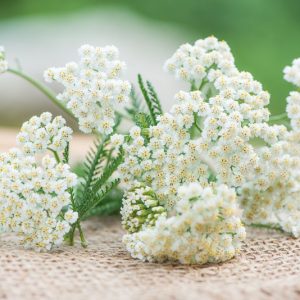
Achillea millefolium (White Yarrow)
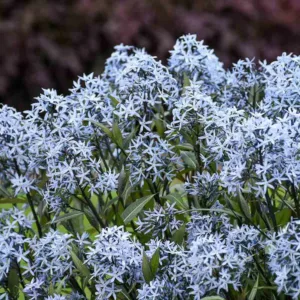
Amsonia tabernaemontana ‘Storm Cloud’ (Blue Star)
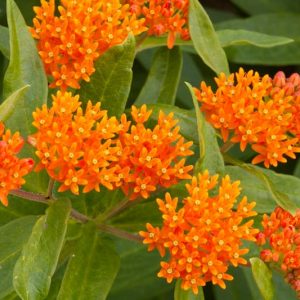
Asclepias tuberosa (Butterfly Milkweed)
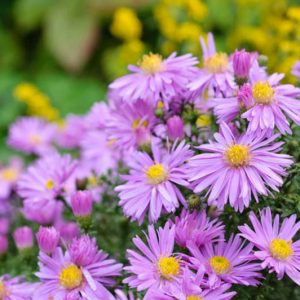
Aster dumosus (Bushy Asters)
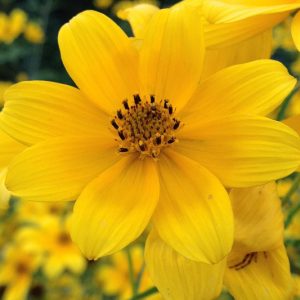
Bidens aristosa (Tickseed Sunflower)
Coreopsis auriculata (Lobed Tickseed)
Coreopsis lanceolata (Lanceleaf Tickseed)
Erigeron pulchellus (Robin’s Plantain)
Eryngium yuccifolium (Rattlesnake Master)
Helenium autumnale (Sneezeweed)
Helenium flexuosum (Purple-head Sneezeweed)
Helianthus angustifolius (Swamp Sunflower)
Helianthus annuus (Common Sunflower)
Hibiscus moscheutos (Hardy Hibiscus)
Kosteletzkya virginica (Seashore Mallow)
Liatris spicata (Blazing Star)
Lobelia cardinalis (Cardinal Flower)
Nymphaea odorata (Fragrant Water Lily)
Oenothera fruticosa (Sundrops)
Oenothera speciosa (Evening Primrose)
Oligoneuron rigidum (Stiff Goldenrod)
Orontium aquaticum (Golden Club)
Parthenium integrifolium (Wild Quinine)
Phlox drummondii (Annual Phlox)
Phlox pilosa (Prairie Phlox)
Rudbeckia hirta (Black-Eyed Susan)
Sagittaria latifolia (American Arrowhead)
Salvia azurea (Blue Sage)
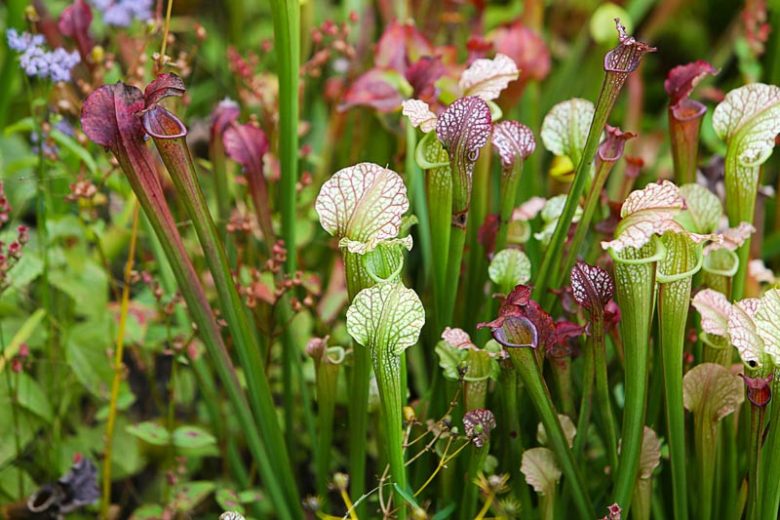
Sarracenia flava (Yellow Pitcher Plant)
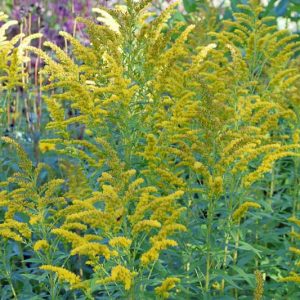
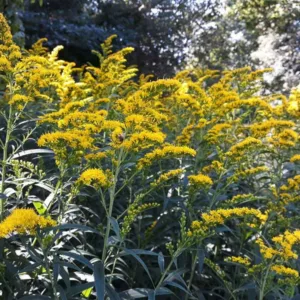
Solidago canadensis (Canada Goldenrod)
Solidago nemoralis (Gray Goldenrod)
Solidago odora (Sweet Goldenrod)
Thalia dealbata (Powdery Alligator-Flag)
Vernonia noveboracensis (New York Ironweed)
Viola bicolor (Field Pansy)
Viola pedata (Bird’s Foot Violet)

Easy Pattern Recipes for Native Wildflower Planting

Dry Sandhills Pollinator Strip: Combine Asclepias tuberosa (Butterfly Milkweed), Coreopsis lanceolata (Lanceleaf Tickseed), Rudbeckia hirta (Black-Eyed Susan), Liatris spicata (Blazing Star), Eryngium yuccifolium (Rattlesnake Master), and Salvia azurea (Blue Sage). Together they create a blazing orange, yellow, purple, and blue ribbon that draws monarchs, swallowtails, and native bees.

Moist Meadow and Rain Garden Mix: In sunny low spots, plant Helenium autumnale (Sneezeweed), Helenium flexuosum (Purple-head Sneezeweed), Helianthus angustifolius (Swamp Sunflower), Hibiscus moscheutos (Hardy Hibiscus), Kosteletzkya virginica (Seashore Mallow), and Lobelia cardinalis (Cardinal Flower). These perennials thrive in wet soils and provide nectar from midsummer through fall.

Pond Edge and Water Garden Palette: Around sunny ponds and water features, combine Sagittaria latifolia (American Arrowhead), Orontium aquaticum (Golden Club), Thalia dealbata (Powdery Alligator-Flag), Nymphaea odorata (Fragrant Water Lily), and Sarracenia flava (Yellow Pitcher Plant). Add a strip of Bidens aristosa (Tickseed Sunflower) behind them for golden late-season color.

Sunny Prairie and Roadside Meadow: For open fields, mix Solidago odora (Sweet Goldenrod), Solidago nemoralis (Gray Goldenrod), Solidago canadensis (Canada Goldenrod), Oligoneuron rigidum (Stiff Goldenrod), Vernonia noveboracensis (New York Ironweed), Helianthus annuus (Common Sunflower), and Oenothera fruticosa (Sundrops). This combination mimics natural South Carolina meadows and supports migrating monarchs and fall pollinators.

Why Choose Native Annuals and Perennials in South Carolina?

Non-native bedding plants often demand constant watering, fertilizer, and pest control just to limp through a South Carolina summer. Sun-loving native annuals and perennials evolved in the same heat, humidity, drought cycles, and storms that define the state, so they fit the climate instead of fighting it.

  • Climate adapted – these wildflowers and meadow perennials are used to summer thunderstorms, short droughts, and winter freezes in zones 7 to 9.
  • Pollinator magnets – milkweeds, blazing star, goldenrods, asters, coneflowers, ironweed, and phlox provide nectar and pollen for butterflies, moths, bees, and beneficial wasps.
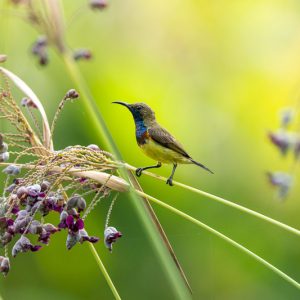
  • Wildlife friendly – sunflowers, tickseed sunflower, goldenrods, and black-eyed Susan set seed for finches and other birds, while emergent aquatics shelter dragonflies, frogs, and turtles.
  • Lower maintenance – once established, most natives need only occasional weeding, seasonal cutting back, and a light mulch instead of constant replanting.
  • Sense of place – South Carolina native wildflowers echo the look and feel of local prairies, savannas, and wetlands, giving your landscape a strong regional identity.

Tip: Start by removing invasive weeds and lawn from a small area, then seed or plug in a diverse mix of native annuals and perennials. Add more patches each year until your yard feels like its own sunny mini-prairie.

Sun-Loving South Carolina Native Annuals and Perennials to Know

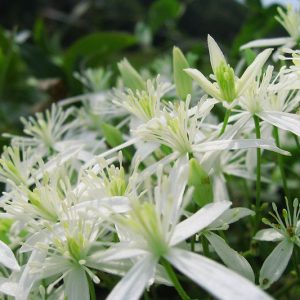
  • Achillea millefolium (White Yarrow) – ferny foliage and flat white flower clusters; thrives in full sun and dry, lean soil, excellent for cutting and beneficial insects.
  • Amsonia tabernaemontana ‘Storm Cloud’ (Blue Star) – clumping perennial with dark spring stems, starry blue flowers, and golden fall foliage; best in full sun to light shade and average soil.
  • Asclepias tuberosa (Butterfly Milkweed) – bright orange flower clusters on drought-tolerant stems; host plant for monarch and queen butterflies, ideal for hot, sandy slopes.
  • Aster dumosus (Bushy Asters) – compact mounds covered in late-season daisy flowers; important nectar source for fall pollinators in full sun.
  • Bidens aristosa (Tickseed Sunflower) – showy annual with clouds of golden flowers; excellent for roadsides, meadows, and wildlife food plots.
  • Coreopsis auriculata (Lobed Tickseed) – low spreading perennial with orange-yellow daisies in spring; good groundcover for sunny banks.
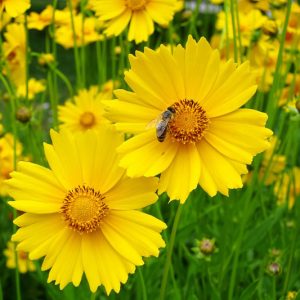
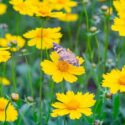
  • Coreopsis lanceolata (Lanceleaf Tickseed) – clumping sun-lover with long-blooming yellow flowers; thrives in poor, sandy soils and reseeds politely.
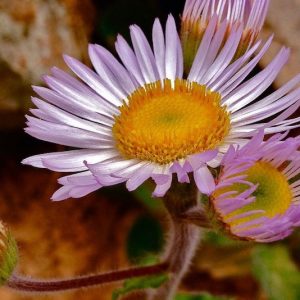
  • Erigeron pulchellus (Robin’s Plantain) – rosettes of fuzzy leaves and pale lavender daisies; handles sun to light shade and average soils.
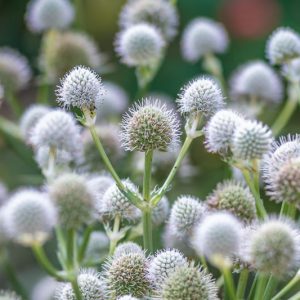
  • Eryngium yuccifolium (Rattlesnake Master) – architectural prairie plant with yucca-like leaves and spherical gray flower heads; attracts diverse pollinators in dry sun.
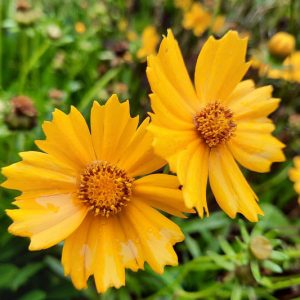
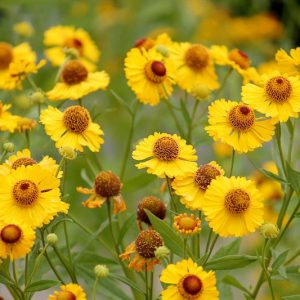
  • Helenium autumnale (Sneezeweed) – tall stems topped with yellow to orange daisies; perfect for moist meadows and rain gardens.
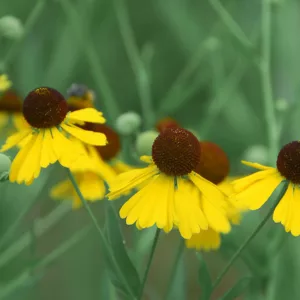
  • Helenium flexuosum (Purple-head Sneezeweed) – native perennial with dark purple center cones and yellow rays; thrives in full sun and moist soil.
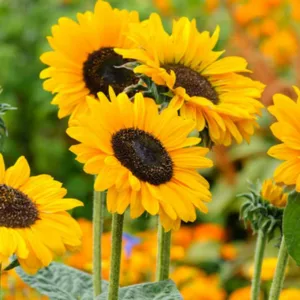
  • Helianthus annuus (Common Sunflower) – iconic tall annual with large yellow flower heads; provides nectar, pollen, and seed for wildlife.
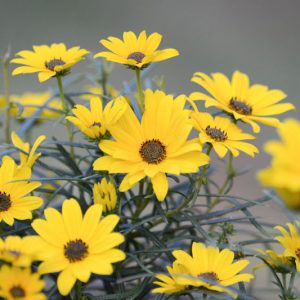
  • Helianthus angustifolius (Swamp Sunflower) – late-season blaze of golden flowers atop narrow leaves; loves sunny wet ground and pond margins.
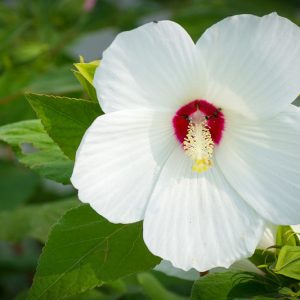
  • Hibiscus moscheutos (Hardy Hibiscus) – huge tropical-looking blooms in pink, red, or white; thrives in sunny, consistently moist soil.
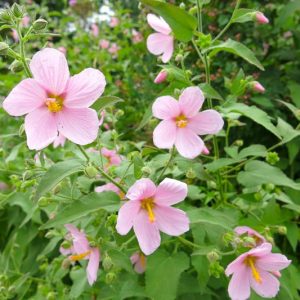
  • Kosteletzkya virginica (Seashore Mallow) – hibiscus relative with pink flowers; salt-tolerant and ideal for coastal marsh edges and wet ditches.
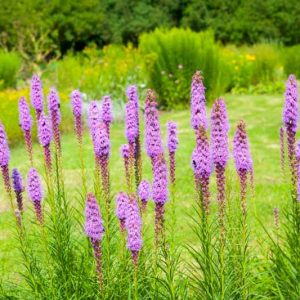
  • Liatris spicata (Blazing Star) – vertical spikes of purple flowers; a classic butterfly plant for sunny borders and meadows.
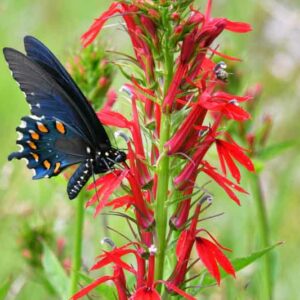
  • Lobelia cardinalis (Cardinal Flower) – brilliant red spires adored by hummingbirds; grows in sunny to lightly shaded wet soils.
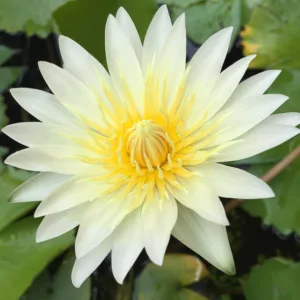
  • Nymphaea odorata (Fragrant Water Lily) – floating leaves and fragrant white flowers; suited to sunny ponds and quiet coves.
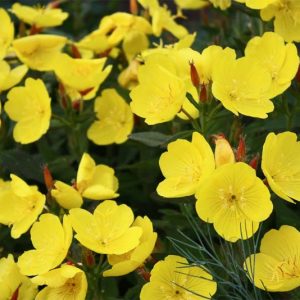
  • Oenothera fruticosa (Sundrops) – bright yellow evening primrose relative for hot, dry banks and cottage-style borders.
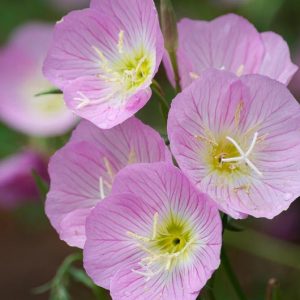
  • Oenothera speciosa (Evening Primrose) – pale pink cups that open in the evening; spreads in well-drained sunny soil and supports night-flying pollinators.
  • Oligoneuron rigidum (Stiff Goldenrod) – upright clumps with flat-topped golden clusters; excellent for prairie-style plantings and birds.
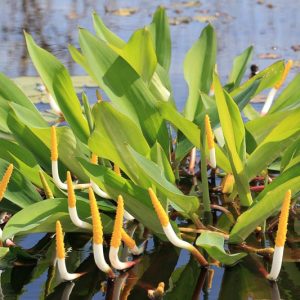
  • Orontium aquaticum (Golden Club) – bold, blue-green leaves and golden flower spikes; thrives in shallow water and sunny bog gardens.
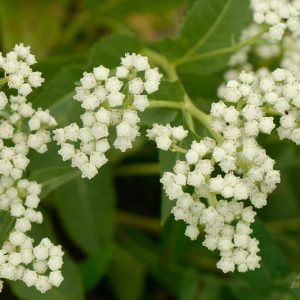
  • Parthenium integrifolium (Wild Quinine) – tough prairie perennial with white flower clusters and coarse leaves; suited to sunny, well-drained soils.
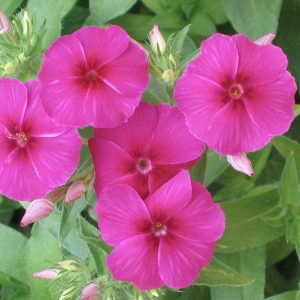
  • Phlox drummondii (Annual Phlox) – colorful annual wildflower for quick color in sunny beds and meadows; useful filler between young perennials.
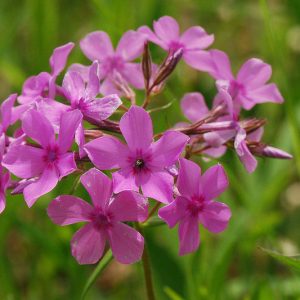
  • Phlox pilosa (Prairie Phlox) – fragrant pink to lavender flower clusters; loves well-drained sunny slopes and attracts butterflies.
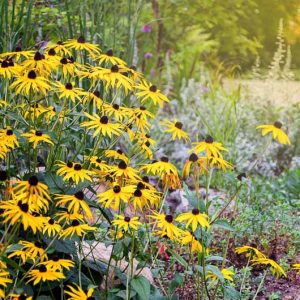
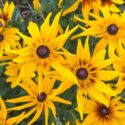
  • Rudbeckia hirta (Black-Eyed Susan) – cheerful golden daisies with dark centers; thrives almost anywhere in sun and is ideal for beginners.
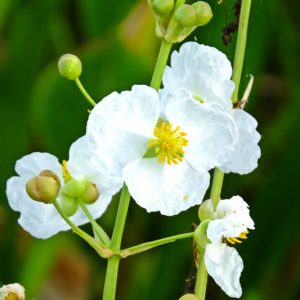
  • Sagittaria latifolia (American Arrowhead) – arrow-shaped leaves and white flowers; strong performer in sunny shallow water or muck.
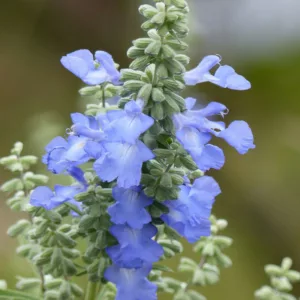
  • Salvia azurea (Blue Sage) – tall, airy stems with sky-blue flowers; drought-tolerant and a magnet for bees.
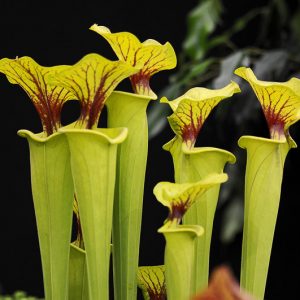
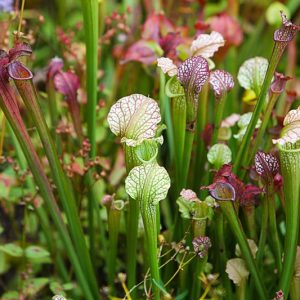
  • Sarracenia flava (Yellow Pitcher Plant) – carnivorous bog plant with tall yellow pitchers and striking flowers; best in sunny, consistently wet, low-nutrient soil.
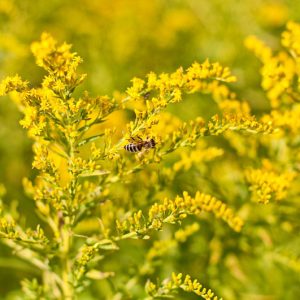
  • Solidago canadensis (Canada Goldenrod) – robust goldenrod for meadows and roadside plantings; vital for fall pollinators.
  • Solidago nemoralis (Gray Goldenrod) – shorter species for dry, gravelly soils and sunny slopes; excellent in smaller gardens.
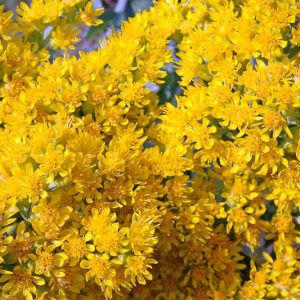
  • Solidago odora (Sweet Goldenrod) – fragrant leaves and arching sprays of yellow bloom; good for coastal plain and dry sandy sites.
  • Thalia dealbata (Powdery Alligator-Flag) – tall, tropical-looking aquatic with purple flower spikes; dramatic accent for sunny ponds and water gardens.
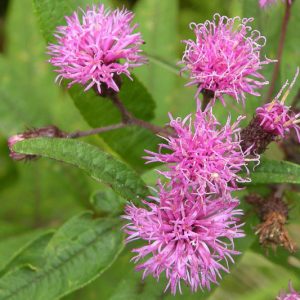
  • Vernonia noveboracensis (New York Ironweed) – deep purple flower clusters on tall stems; thrives in sun and moist to average soil, adored by butterflies.
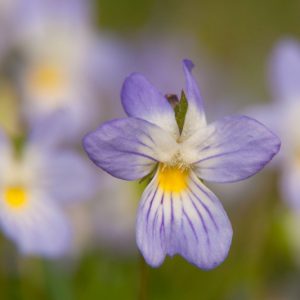
  • Viola bicolor (Field Pansy) – delicate annual or short-lived perennial with small pansy-like flowers; charming filler for sunny, lean soils.
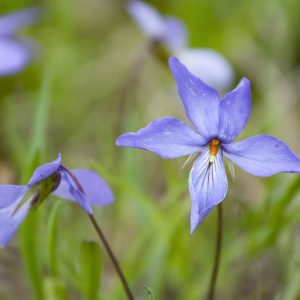
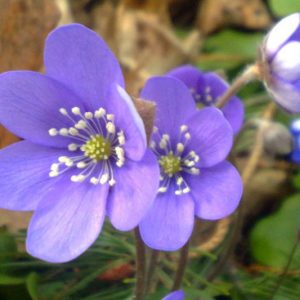
  • Viola pedata (Birdfoot Violet) – low-growing violet with divided leaves and showy blue to bicolor flowers; prefers acidic, sandy soil in sun to light shade.

Bringing South Carolina Sun-Loving Native Annuals and Perennials Into Your Design

Sketch your yard and mark full-sun spots that are dry, average, or wet. Use butterfly milkweed, blazing star, blue sage, and prairie phlox on hot, sandy slopes. Plant sneezeweed, swamp sunflower, hibiscus, and seashore mallow in sunny rain gardens. Tuck water lily, golden club, arrowhead, and alligator-flag into ponds and ditches. Within a few seasons, your garden will evolve into a vibrant South Carolina wildflower patch buzzing with life from spring through frost.

Discover more beautiful South Carolina native plants

Plant Finder

Frequently Asked Questions

What are the best sun-loving native annuals and perennials for South Carolina?

Top choices include butterfly milkweed, lanceleaf tickseed, lobed tickseed, swamp sunflower, rattlesnake master, blazing star, sneezeweed, black-eyed Susan, cardinal flower, blue sage, goldenrods, ironweed, and bird’s-foot violet. These species thrive in full sun, heat, humidity, and sandy or clay soils across USDA zones 7–9.

Which native perennials handle extreme heat and drought in South Carolina?

Drought-tough species include butterfly milkweed, rattlesnake master, lanceleaf tickseed, stiff goldenrod, gray goldenrod, black-eyed Susan, wild quinine, New York ironweed, and evening primrose. These plants evolved in South Carolina’s sandhills and piedmont prairies and survive prolonged sun and poor, dry soils.

What native wildflowers thrive in wet, sunny areas or seasonally flooded soils?

Swamp sunflower, fragrant water lily, seashore mallow, American arrowhead, golden club, sneezeweed, sweet goldenrod, and yellow pitcher plant thrive in sunny wetlands, ditches, boggy edges, and shallow water. These species tolerate saturated soils and periodic flooding.

Which native plants attract the most pollinators in full sun?

Butterfly milkweed, blazing star, cardinal flower, sneezeweed, blue sage, tickseed sunflowers, lobed tickseed, and rattlesnake master provide nectar for monarchs, swallowtails, skippers, bees, and beneficial insects. Many bloom from spring to fall, supporting continuous pollinator activity.

Are there native annuals and perennials that provide long bloom seasons?

Lanceleaf tickseed, black-eyed Susan, swamp sunflower, sneezeweed, blazing star, and sweet goldenrod offer extended bloom periods. These species provide months of flowers, strong pollinator support, and vibrant late-season color.

Which native flowers produce seeds for birds and wildlife?

Tickseed sunflowers, black-eyed Susan, swamp sunflower, goldenrods, blazing star, and evening primrose produce abundant seeds. Goldfinches, sparrows, and other songbirds rely on these seeds in late summer and fall.

Can native annuals and perennials replace traditional bedding plants?

Yes. Goldenrods, blazing star, tickseeds, milkweed, and black-eyed Susan create low-maintenance, high-impact alternatives to petunias or marigolds. They offer longer bloom periods, stronger ecological value, and better resilience in full sun.

Which South Carolina native flowers are best for coastal, sandy, or salt-exposed sites?

Seashore mallow, tickseed sunflower, rattlesnake master, butterfly milkweed, gray goldenrod, and beach-adapted blazing star tolerate wind, salt spray, sandy soils, and intense full sun along the Carolina coast.

How can I design a full-sun native flower bed in South Carolina?

Use tall structural bloomers like swamp sunflower, sneezeweed, and blazing star at the back; mid-height stars like tickseed, black-eyed Susan, and blue sage in the center; and low growers like bird’s-foot violet and field pansy up front. Mix species with staggered bloom times for year-round color and wildlife value.

References

More on Gardenia

Recommended Guides

Monarch Nectar Plants for South Carolina
Great Pollinator Plants for South Carolina
South Carolina Native Grasses
Invasive Plant Species in South Carolina
South Carolina Native Deciduous Trees
South Carolina Native Evergreen Trees
South Carolina Sun-Loving Native Shrubs
South Carolina Shade-Loving Native Shrubs
South Carolina Native Ferns
South Carolina Native Vines
South Carolina Shade-Loving Native Annuals and Perennials
South Carolina Sun-Loving Native Annuals and Perennials
Explore Great Plant Combination Ideas
Lower South Coastal South
While every effort has been made to describe these plants accurately, please keep in mind that height, bloom time, and color may differ in various climates. The description of these plants has been written based on numerous outside resources.

Guide Information

Plant Type Annuals, Perennials
Exposure Full Sun
Native Plants South Carolina, Southeast, United States
Explore Great Plant Combination Ideas
Lower South Coastal South

Related Items

Please Login to Proceed

You Have Reached The Free Limit, Please Subscribe to Proceed

Subscribe to Gardenia

To create additional collections, you must be a paid member of Gardenia
  • Add as many plants as you wish
  • Create and save up to 25 garden collections
Become a Member

Plant Added Successfully

You have Reached Your Limit

To add more plants, you must be a paid member of our site Become a Member

Update Your Credit
Card Information

Cancel

Create a New Collection

Sign Up to Our Newsletter

    You have been subscribed successfully

    Join Gardenia.net

    Create a membership account to save your garden designs and to view them on any device.

    Becoming a contributing member of Gardenia is easy and can be done in just a few minutes. If you provide us with your name, email address and the payment of a modest $25 annual membership fee, you will become a full member, enabling you to design and save up to 25 of your garden design ideas.

    Join now and start creating your dream garden!

    Join Gardenia.net

    Create a membership account to save your garden designs and to view them on any device.

    Becoming a contributing member of Gardenia is easy and can be done in just a few minutes. If you provide us with your name, email address and the payment of a modest $25 annual membership fee, you will become a full member, enabling you to design and save up to 25 of your garden design ideas.

    Join now and start creating your dream garden!
    Find your Hardiness Zone

    Find your Heat Zone

    Find your Climate Zone