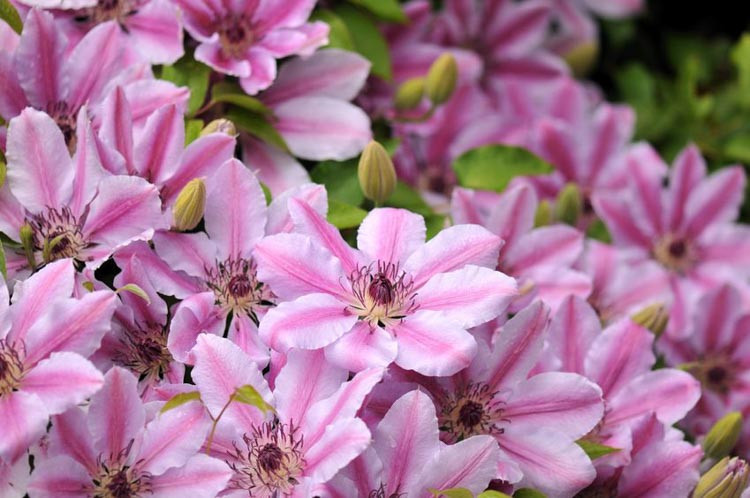
Flowering Vines Guides
A flowering vine can make a plain fence disappear beneath blossoms, turn a pergola into a fragrant retreat, or fill a garden arch with color. But why does one clematis flower beautifully while another barely blooms? How do you stop wisteria from taking over, or persuade jasmine to cover a trellis? Growing flowering vines successfully starts with understanding how they climb, when they flower, and how to prune them. Whether you’re planting your first climber or restoring an overgrown one, discover practical advice to keep your flowering vines healthy, manageable, and covered in blooms.
Learn How to Plant Flowering Vines and Choose the Right Support for Every Climber
The most successful flowering vines begin with three things: a plant suited to the growing conditions, enough room for its mature growth, and a support that matches the way it climbs. A little planning before planting can prevent years of unnecessary pruning and maintenance.
Seven essential steps for planting flowering vines:
- Choose the right vine: Consider your USDA hardiness zone, sunlight, soil moisture, mature height, growth rate, flowering season, and whether the species may be invasive locally.
- Match the support to the plant: Compact clematis can use lightweight lattice or narrow wires, but mature woody vines such as wisteria require exceptionally strong, permanently anchored supports.
- Prepare the soil: Most flowering climbers appreciate well-drained soil, although their fertility and moisture preferences differ. Improve the planting area according to the chosen species rather than using the same soil mix for every vine.
- Position the roots carefully: Allow space away from dry foundations and competing tree roots. Follow species-specific guidance on planting depth, particularly for clematis.
- Water thoroughly: Water after planting and maintain appropriate moisture while the root system develops. Avoid both prolonged drought and poorly drained, waterlogged conditions.
- Apply suitable mulch: Mulching helps conserve soil moisture and suppress weeds. Keep mulch away from vulnerable stems and crowns.
- Begin training immediately: Guide young stems toward their intended support before they become tangled, overly vigorous, or difficult to reposition.
How do you know what support a flowering vine needs? Start by examining its climbing mechanism. Wisteria, honeysuckle, and star jasmine twine around supports. Clematis uses its leaf stalks to grip narrow structures. Passionflowers climb with tendrils, while climbing hydrangea attaches using aerial rootlets. Each needs a different type of framework to climb successfully.
How do you plant clematis successfully? Choose a position with suitable sunlight, fertile, well-drained soil, and a support that its leaf stalks can grip. Planting depth differs by clematis group and plant type, so follow the nursery’s instructions. Protect the root area from excessive heat and drought without creating constantly waterlogged conditions.
How do you plant wisteria? Choose a spacious, sunny position with a substantial support. Wisteria develops heavy, woody stems and should not be planted against weak fences, gutters, or delicate structures. Grafted plants of known flowering cultivars generally offer more predictable flowering than seed-grown plants.
How should you plant honeysuckle? Provide fertile, well-drained soil and a sturdy trellis or framework for twining stems. Many honeysuckles flower well in sun or partial sun, although performance varies. Choose regionally appropriate varieties, as some introduced honeysuckles can spread aggressively or become invasive.
Can flowering vines grow in containers? Yes, compact clematis, black-eyed Susan vine, and some jasmine species can grow beautifully in large containers. Use suitable potting compost, reliable drainage, and a stable support. Containers dry out more quickly than garden soil and usually require more frequent watering and feeding.
When is the best time to plant flowering vines? Spring and fall are often excellent planting seasons where temperatures and soil conditions are moderate. Container-grown climbers may be planted during a broader period if adequately watered, while frost-sensitive species should be planted outdoors only when temperatures are suitable.
Gardenia’s planting advice: Install the support before planting. It’s much easier to train a young vine onto a properly designed framework than to untangle mature stems or replace an inadequate structure later.
Explore Gardenia’s Clematis Growing and Care Guide, Wisteria Growing Guide, and Arbor, Pergola, and Trellis Growing Guides.
Discover How to Train and Prune Clematis, Wisteria, Jasmine, and Honeysuckle for More Flowers
Training and pruning are the keys to keeping flowering vines attractive and manageable. But there is no single pruning method that works for every climber. The correct approach depends on how the vine grows and whether its flowers develop on old stems, new growth, or both.
How do you train clematis on a trellis? Clematis climbs by wrapping its leaf stalks around thin supports. Provide lattice, mesh, narrow wires, or slender branches that the plant can grip. Guide young shoots gently because they can be brittle. Spread stems across the available space to create a more even display rather than allowing them to tangle at the top.
How do you prune clematis correctly? The traditional three pruning groups provide a useful guide:
- Group 1: Generally flowers on growth produced in previous seasons. Prune lightly after flowering when necessary.
- Group 2: Often flowers first on older stems and again on new growth. Prune selectively in late winter or early spring, preserving healthy flowering wood.
- Group 3: Flowers on the current season’s new growth and is generally cut back more firmly in late winter or early spring.
Always check the individual cultivar’s pruning group before cutting. Pruning a spring-flowering clematis too severely at the wrong time can remove much of its next display.
How do you train wisteria over a pergola? Establish one or more strong main stems and guide them along the permanent structural supports. Train selected branches across overhead beams, keeping growth away from gutters, roof tiles, and fragile features. Wisteria can develop exceptionally thick stems and should never be allowed to twist tightly around vulnerable structures.
When should you prune wisteria? Established wisteria is commonly pruned twice annually: once during summer to shorten excessive whippy growth, and again during dormancy to reduce selected side shoots and maintain flowering spurs. Exact timing and pruning severity depend on the climate, species, and training system.
How do you train star jasmine on a fence? Star Jasmine uses twining stems that need suitable wires or trellis supports. Guide young shoots across the framework and secure them temporarily where necessary. Regular light shaping helps create an even, dense covering.
When should you prune jasmine? Pruning depends on the species. Summer-flowering jasmine is often pruned after flowering or at a seasonally appropriate time, while winter-flowering jasmine has different requirements. Star jasmine is commonly trimmed after its main flowering period. Avoid treating all plants called jasmine as if they flower on the same wood.
How do you keep honeysuckle from becoming tangled? Train several healthy main stems across a sturdy support, remove dead or congested growth, and shorten excessive shoots when appropriate. Pruning times vary by species and flowering season, so identify the honeysuckle before making major cuts.
Should trumpet vine be pruned hard? Campsis radicans flowers on new growth and can tolerate substantial dormant-season pruning once established. However, pruning alone does not prevent spreading through underground shoots. Plant it only where its vigorous growth can be responsibly managed.
How do you train flowering vines on an arch? Guide young growth up the sides, spreading flexible stems around the curve where possible. Use ties only when needed and leave sufficient clearance for people to pass beneath the structure. Avoid combining several vigorous climbers on an arch that cannot support their mature weight.
What is the most common pruning mistake? Cutting back a flowering vine without knowing whether it blooms on old or new growth. This can remove flower buds before they open. Identify the plant, understand its flowering habit, and preserve its important structural stems.
Gardenia’s training tip: A well-spaced framework produces a more attractive display than a mass of tangled stems. Guide vigorous new growth regularly rather than waiting until the vine has become overgrown.
Read Gardenia’s How to Prune Jasmine for More Flowers, Training Jasmine on a Trellis, and Wisteria Care and Pruning Guide.
Solve Common Flowering Vine Problems and Learn How to Encourage Healthy, Abundant Blooms
Few things are more frustrating than a flowering vine that produces vigorous foliage but hardly any flowers. Fortunately, many problems can be traced to unsuitable growing conditions, incorrect pruning, or a plant that has not yet reached flowering maturity.
Why isn’t my flowering vine blooming? Common causes include insufficient sunlight, immature plants, incorrect pruning, excessive nitrogen fertilizer, drought stress, or winter damage to developing flower buds. Check the species’ normal flowering season before assuming something is wrong.
Why does my wisteria have leaves but no flowers? Seed-grown wisteria may take many years to reach flowering maturity. Excessive nitrogen, insufficient sunlight, and inappropriate pruning can also reduce blooms. Choose a reliably flowering, vegetatively propagated cultivar and train it properly.
Why is my clematis not flowering? Check the cultivar’s pruning group, the amount of sunlight it receives, and whether winter or late frosts damaged flowering stems. Cutting back a Group 1 or Group 2 clematis too severely at the wrong time can remove much of its potential display.
Why are my flowering vine leaves turning yellow? Yellow leaves can indicate waterlogged soil, drought stress, nutrient problems, unsuitable soil pH, pests, disease, or normal seasonal aging. Examine the whole plant and growing conditions before applying fertilizer or pesticide.
How much water do flowering vines need? Newly planted climbers require consistent moisture while their roots establish. Mature plants differ considerably: wisteria may tolerate moderate dry periods once established, while many clematis perform best with more consistent soil moisture. Water deeply when appropriate rather than relying on frequent light sprinkling.
Should you fertilize flowering vines regularly? Feeding depends on the plant, soil fertility, and growing season. Excessive nitrogen can encourage vigorous foliage at the expense of flowers, particularly in wisteria. Apply fertilizer only when appropriate and follow species-specific recommendations.
How do you prevent fungal diseases? Choose well-adapted varieties, provide adequate air circulation, avoid prolonged leaf wetness where possible, and remove seriously diseased material when appropriate. Clematis wilt, powdery mildew, and leaf spot diseases have different causes and require different management approaches.
What should you do when clematis suddenly wilts? Inspect the stems and growing conditions carefully. Damage, drought, root problems, and clematis wilt can produce similar symptoms. Some affected plants recover by producing fresh growth from surviving buds below the damaged area, but not every sudden collapse is caused by fungal disease.
How do you control an overgrown flowering vine? Identify the plant before pruning heavily. Some vigorous climbers tolerate substantial renovation, while others may lose flowering wood or struggle after severe cutting. Remove dead growth first and restore the framework gradually when appropriate.
Are vigorous vines safe to grow against a house? Some vines attach to surfaces using aerial roots or adhesive structures, while others can become heavy enough to damage weak supports. Avoid allowing growth to enter gutters, roofing materials, vents, or deteriorating masonry. Freestanding trellises can be a safer alternative for powerful climbers.
How should you care for flowering vines in winter? Select plants hardy enough for your climate, protect vulnerable container roots from freezing, and avoid encouraging tender late-season growth in cold regions. Evergreen climbers may need protection from cold, drying winds, while deciduous vines often enter winter dormancy.
Can invasive flowering vines be controlled by pruning? Pruning helps manage size, but it may not prevent plants from spreading through runners, seeds, or root suckers. Choose non-invasive alternatives where regional guidance identifies a species as problematic.
Gardenia’s final advice: The secret to abundant flowers is understanding the vine you’re growing. Give it the right light, a suitable support, thoughtful pruning, and enough room to mature. Healthy, well-trained climbers are usually more beautiful and easier to maintain than plants forced into unsuitable spaces.
Explore Gardenia’s How to Choose the Right Wisteria, Non-Invasive Honeysuckle Guide, and Complete Climbing Plant Guide Collection.