Training jasmine on a trellis is not just about support - it is about structure, bloom control, and long-term beauty. With the right framework, loose ties, and smart stem placement, jasmine grows fuller, flowers more evenly, and stays far easier to manage. Done well, trellising transforms a vine into a feature.


If you want a jasmine vine that looks elegant, flowers heavily, and actually covers a trellis the way you imagined, training matters just as much as watering or feeding. Many gardeners plant jasmine, add a support, and expect the vine to figure it out on its own. Sometimes it does – but usually it becomes a tangle of long runners, woody stems, and flowers concentrated in the wrong places. Learning how to train jasmine on a trellis is what turns vigorous growth into a structured, bloom-filled display.
The goal is not to force jasmine into a rigid shape. The goal is to guide growth early, create a strong framework, and position stems so the plant can flower evenly across the support. When jasmine is trained correctly, it gets better light exposure, better airflow, easier maintenance, and more productive flowering wood. It also looks intentional instead of overgrown.
This guide explains exactly how to trellis jasmine, when to tie stems in, how to shape different jasmine types, how to avoid common training mistakes, and how to build a vine that stays attractive season after season. It focuses on true jasmines in the Jasminum genus, while also noting where popular jasmine relatives behave differently.
If you only remember one principle, remember this: train jasmine young, tie stems loosely, and spread growth sideways or diagonally instead of letting it race straight up.
Key idea: Jasmine rarely covers a trellis neatly on its own. For the best shape and the best bloom distribution, it needs to be guided.
Jasmine is vigorous, but vigor alone does not create a beautiful wall of flowers. Left alone, many jasmine vines send long shoots upward or outward, cross over themselves, shade lower growth, and concentrate flowering at the tips. That is why a healthy plant can still look sparse, messy, or uneven on a support.
Training fixes that by changing the plant’s structure. When you spread main stems across a trellis, you create better exposure to light and more points where side shoots can develop. Those side shoots are often where the best blooms appear. In practical terms, properly trained jasmine usually flowers more evenly and covers a support more effectively than untrained jasmine.
There is also a practical advantage. A trained jasmine is easier to prune, easier to inspect, easier to keep off gutters or rooflines, and easier to maintain in a container. The vine becomes something you manage with precision, not something you constantly rescue from chaos.
A weak trellis creates problems from the beginning. Jasmine may look delicate when young, but mature plants can become surprisingly heavy, especially after rain or after several seasons of woody growth. Choose a support that is firmly anchored, weather-resistant, and large enough for the mature vine.
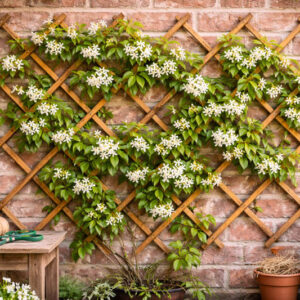
The best trellis for jasmine usually has an open pattern that gives you multiple tie-in points. Lattice panels, horizontal wires, metal grids, and sturdy wooden trellises all work well. What matters most is that stems can be attached at intervals without being crushed or forced sharply. Thin decorative supports often look attractive at first but become inadequate once the vine gains mass.
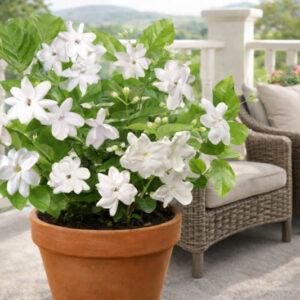
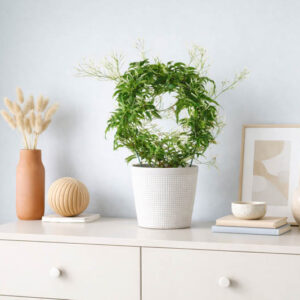
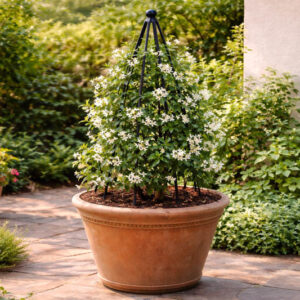
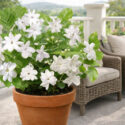
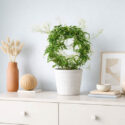
For potted jasmine, scale matters even more. A container trellis should be stable enough that the weight of the vine does not tip the pot. If you are growing Arabian Jasmine (Jasminum sambac) in a pot, you may use a compact fan, obelisk, or ring support. For stronger vining types such as Common Jasmine (Jasminum officinale) or Pink Jasmine (Jasminum polyanthum), a larger and more structured support is usually the better choice.
A good jasmine trellis should support the plant you will have in three years, not the plant you bought this week.
Not every support works the same way. The best trellis for jasmine depends on the species, the planting site, and whether the vine is in the ground or in a container. Use this comparison to match the support to the plant rather than forcing every jasmine into the same structure.
| Support Type | Best For | Main Advantage | Main Limitation | Training Note |
|---|---|---|---|---|
| Lattice panel | General garden use, walls, fences | Easy tie-in points and broad coverage | Can become congested if the vine is not thinned regularly | Ideal for fan training with horizontal and diagonal stems |
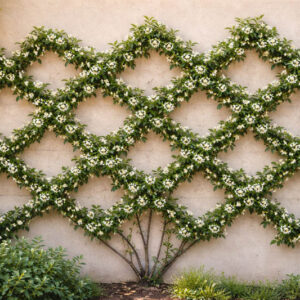
| Horizontal wall wires | Serious training against walls | Excellent control of framework and spacing | Requires more setup and more deliberate training | One of the best systems for long-term flowering structure |
| Metal grid or welded panel | Large vigorous jasmines | Very strong and durable | Can look harsh unless softened by planting design | Best where long-term strength matters more than ornament |
| Obelisk or tower | Potted jasmine, small spaces | Compact, decorative, easy for containers | Limited coverage area and can become top-heavy | Works best with repeated light training and regular size control |
| Fan or hoop support | Arabian jasmine and smaller container plants | Good for shaping without encouraging excessive height | Not ideal for large aggressive climbers | Useful when the goal is tidy flowering rather than wall coverage |
1 Identify the strongest main stems. Start by selecting a few healthy shoots that can become the plant’s primary framework. These are the stems you will guide across the support. Do not try to tie in every shoot at once.
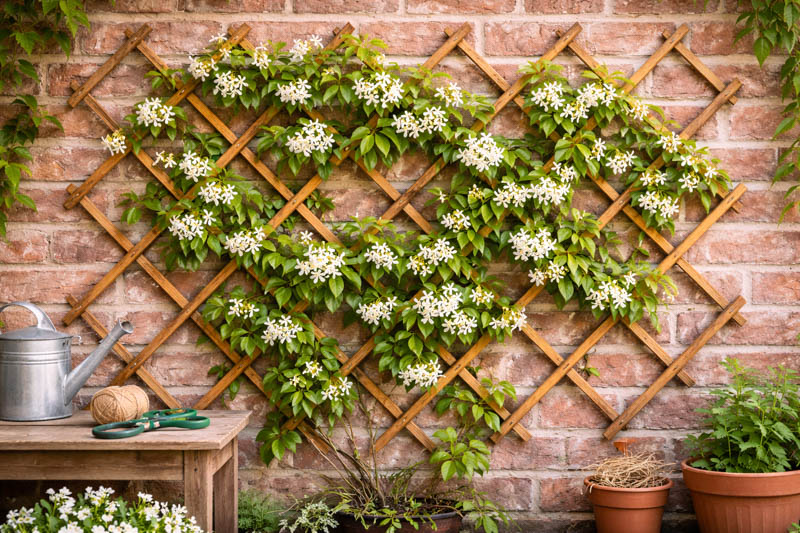
2 Spread stems outward, not just upward. This is where many gardeners lose control. If you let jasmine climb straight up, flowering shifts higher and the lower trellis stays thin. Instead, guide stems horizontally or diagonally to encourage side branching and fuller coverage.
3 Tie stems loosely. Use soft plant ties, garden twine, or flexible clips. Never cinch stems tightly against the trellis. Jasmine stems thicken over time, and a tight tie can cut into the plant and weaken growth. The tie should secure the stem while still allowing slight movement.
4 Fill the framework gradually. Once the main stems are placed, allow side shoots to develop and guide them into open spaces. Think like you are building coverage in layers. First structure, then branching, then flowering detail.
5 Retrain frequently while stems are soft. Young jasmine can change direction easily. Older stems become woody and less cooperative. Check the plant regularly during active growth and redirect shoots before they tangle or harden in the wrong place.
6 Prune only after the framework is clear. Once you can see which stems are structural and which are excess, remove weak, crossing, or congested growth. Training and pruning work together. One without the other rarely gives the best result.
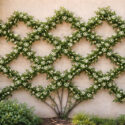
The most productive jasmine on a trellis usually follows a simple pattern: a few well-placed main stems, with shorter flowering side shoots emerging from them. That is why a fan shape works so well. It spreads the framework broadly, exposes more leaf surface to light, and creates room for flowering laterals all along the support.
This is also why horizontal training is so effective. When a stem is tied more horizontally, the plant often produces more side growth along that stem. More side growth means more potential bloom points. For gardeners trying to grow more flowers on trellised jasmine, this is one of the most valuable principles to understand.
Do not aim for perfect symmetry. Jasmine is still a living vine, not architectural metalwork. But you do want visual balance: no heavy knot at the base, no empty center, and no single stem dominating the whole structure.
The prettiest jasmine trellis is usually the one with the least obvious struggle. Good training makes the plant look naturally graceful, even though it was carefully directed.
Different jasmine types do not behave exactly the same way. Use this table to match the plant to the support and training method that suits it best.
| Plant | Growth Habit | Best Support | Training Note |
|---|---|---|---|
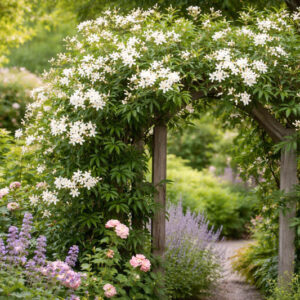
| Common Jasmine (Jasminum officinale) | Vigorous twining or scrambling climber | Wall wires, large trellis, pergola | Build a strong permanent framework and thin after flowering |
| Pink Jasmine (Jasminum polyanthum) | Fast-growing vine with flexible stems | Lattice, wires, trellis panel | Train often after bloom because it can race ahead quickly |
| Arabian Jasmine (Jasminum sambac) | Shrubby to semi-vining | Obelisk, fan, ring support | Best for compact shaping rather than large wall coverage |
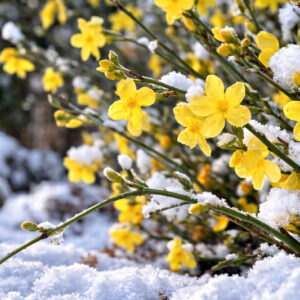
| Winter Jasmine (Jasminum nudiflorum) | Arching, scrambling stems | Wall ties, informal trellis, slope support | Guide canes loosely and prune after flowering to preserve next season’s display |
| Star Jasmine (Trachelospermum jasminoides) | Woody evergreen climber with twining stems | Wall wires, sturdy trellis, fence | Not a true jasmine; place stems carefully early because the plant becomes woodier with age |
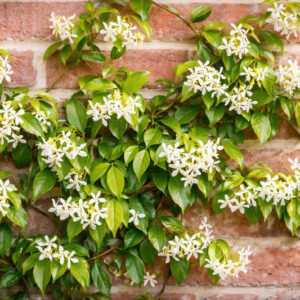
Pink Jasmine (Jasminum polyanthum) is fast, flexible, and one of the easiest jasmines to train on a trellis. It responds well to frequent tying-in after bloom and can quickly cover a support if directed early.
Common Jasmine (Jasminum officinale) is a vigorous climber that benefits from a strong permanent framework. It can become woody at the base if left unmanaged, so training should be paired with selective thinning and post-bloom pruning.
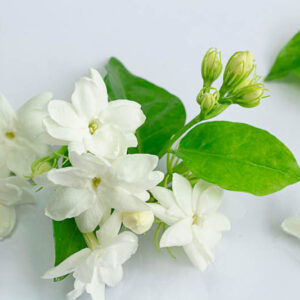
Arabian Jasmine (Jasminum sambac) is often more shrubby than aggressively vining. It can still be trained, especially in containers, but it usually needs shaping and support more than full wall-style coverage.
Winter Jasmine (Jasminum nudiflorum) has arching stems rather than strong twining behavior. It can be tied against a support, but it behaves more like a plant being guided than one actively climbing. Training should preserve its fountain-like habit rather than forcing it into a tight lattice pattern.
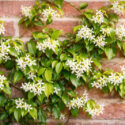
If you are growing star jasmine, remember that Star Jasmine (Trachelospermum jasminoides) is not a true jasmine. It is often trained similarly, but the stems become woodier and more structural with age, so early placement is especially important.
The best time to train jasmine is during active growth, when stems are long enough to guide but still soft enough to bend safely. That usually means spring through summer, depending on the type and your climate. You do not need to wait for a special calendar date. You need to watch the plant and act when new shoots are flexible.
Pruning follows a different rule. Major pruning is usually best done right after flowering, not just before it. That matters because many jasmines flower on old growth or on shoots that need time to mature for the next bloom cycle. Cut at the wrong time, and you can remove the wood that would have carried the next display.
If your jasmine is blooming lightly, review your timing as carefully as your technique. The issue is often not that the plant needs harsher cutting, but that it needs better-timed training and pruning. Dead, damaged, or obviously misplaced stems can be removed whenever necessary, but structural reshaping should still follow flowering whenever possible.
Train new shoots as they grow, but do major pruning after bloom so you keep the next cycle of flowering wood.
Letting all growth go vertical. This creates a top-heavy vine with sparse lower coverage and fewer evenly distributed flowers.
Tying stems too tightly. Restricted stems can scar, weaken, or become damaged as they expand.
Waiting too long to train. Young growth is easy to guide. Mature woody stems are not. Delay turns simple training into corrective work.
Trying to fill the entire trellis immediately. Fast coverage sounds appealing, but overcrowding leads to congestion, poor airflow, and more pruning later.
Ignoring pruning altogether. Training without thinning eventually creates a dense shell of growth that looks full from a distance but performs poorly over time.
Using a flimsy support. A trellis that bends, pulls away, or rots quickly becomes a structural problem instead of a solution.
My jasmine is not attaching well. Many jasmines are better described as needing guidance than as self-managing climbers. Tie young stems in early, add more anchor points, and avoid waiting until shoots harden in the wrong direction.
My jasmine is not flowering well. The most common causes are too little sun or bright light, excessive nitrogen, and pruning at the wrong time. True jasmines generally flower best with strong light and post-bloom pruning that preserves the next cycle of buds.
My vine is getting woody and messy. This usually means training was delayed or thinning has been neglected. Remove selected old stems after flowering, keep the framework open, and stop allowing long, unplaced runners to dominate the trellis.
The plant is bare at the base. This often happens when the vine has been allowed to shoot straight upward, shading the lower structure. Redirect newer stems lower and wider, improve light penetration, and thin congested top growth after flowering.
My potted jasmine looks weak even though I trained it correctly. Check the root system. A rootbound jasmine may slow down, flower less, and dry out too quickly between waterings. In that case, the problem is not the trellis – it is the restricted root zone.
Container jasmine needs a tighter strategy because root space, height, and support size are limited. In a pot, you are not trying to create maximum mass. You are trying to create repeatable flowering in a controlled footprint.
Keep a smaller number of main framework stems, tie new growth into open spaces, and remove runners that extend beyond the support. Do not allow the top to become a dense cap that shades everything below it. In pots, lower growth weakens quickly when light cannot reach it.
If flowering declines even though training is correct, check the roots. A rootbound jasmine may need repotting or fresh mix, because training alone cannot overcome exhausted root conditions.
Usually, yes. Many jasmine types benefit from being tied in and directed across a trellis, especially while the stems are young and flexible. Waiting too long often leads to tangled growth and poor coverage.
Guide the main stems horizontally or diagonally, then let shorter side shoots develop along that framework. This usually creates better branching, fuller trellis coverage, and more evenly distributed flowering points than letting the plant grow straight upward.
Check jasmine regularly during active growth, especially in spring and summer. Fast-growing types can produce long shoots quickly, and tying them in early is much easier than trying to reposition woody stems later.
Yes. Trellis training is one of the best ways to keep potted jasmine tidy, productive, and easier to manage. Compact supports such as fans, rings, or obelisks are usually the most practical choices for containers.
Usually, you should identify and place the main framework stems first, then remove excess growth once the structure is clear. Major pruning is best done after flowering, while dead or damaged stems can be removed whenever needed.
If you want a jasmine trellis that looks lush, balanced, and flower-filled, the secret is not simply giving the plant something to climb. The secret is training with intention. Choose a sturdy support, spread the main stems, tie them loosely, guide new growth early, and prune after bloom to protect the next flowering cycle.
That is how you turn jasmine from a vigorous vine into a refined, high-performing climber. A well-trained jasmine does not just grow on a trellis – it transforms it.
The guidance in this article is supported by current horticultural references on jasmine growth habit, pruning timing, light needs, and training of climbers.
Updated: March 2026 • Reviewed by Gardenia Editors
| Hardiness |
6 - 11 |
|---|---|
| Plant Type | Climbers, Shrubs |
| Plant Family | Apocynaceae, Oleaceae |
| Genus | Jasminum, Trachelospermum |
| Exposure | Full Sun, Partial Sun |
| Season of Interest | Spring (Early, Mid, Late), Summer (Early, Mid, Late), Fall, Winter |
| Maintenance | Low |
| Water Needs | Average |
| Soil Type | Chalk, Loam, Sand |
| Soil pH | Acid, Alkaline, Neutral |
| Soil Drainage | Moist but Well-Drained, Well-Drained |
| Characteristics | Showy |
| Attracts | Bees, Butterflies |
| Landscaping Ideas | Arbors, Pergolas, Trellises, Banks And Slopes, Ground Covers, Patio And Containers, Wall-Side Borders |
| Garden Styles | City and Courtyard, Coastal Garden, Informal and Cottage |
| Hardiness |
6 - 11 |
|---|---|
| Plant Type | Climbers, Shrubs |
| Plant Family | Apocynaceae, Oleaceae |
| Genus | Jasminum, Trachelospermum |
| Exposure | Full Sun, Partial Sun |
| Season of Interest | Spring (Early, Mid, Late), Summer (Early, Mid, Late), Fall, Winter |
| Maintenance | Low |
| Water Needs | Average |
| Soil Type | Chalk, Loam, Sand |
| Soil pH | Acid, Alkaline, Neutral |
| Soil Drainage | Moist but Well-Drained, Well-Drained |
| Characteristics | Showy |
| Attracts | Bees, Butterflies |
| Landscaping Ideas | Arbors, Pergolas, Trellises, Banks And Slopes, Ground Covers, Patio And Containers, Wall-Side Borders |
| Garden Styles | City and Courtyard, Coastal Garden, Informal and Cottage |
Create a membership account to save your garden designs and to view them on any device.
Becoming a contributing member of Gardenia is easy and can be done in just a few minutes. If you provide us with your name, email address and the payment of a modest $25 annual membership fee, you will become a full member, enabling you to design and save up to 25 of your garden design ideas.
Join now and start creating your dream garden!
Create a membership account to save your garden designs and to view them on any device.
Becoming a contributing member of Gardenia is easy and can be done in just a few minutes. If you provide us with your name, email address and the payment of a modest $25 annual membership fee, you will become a full member, enabling you to design and save up to 25 of your garden design ideas.
Join now and start creating your dream garden!