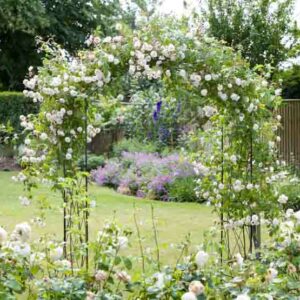
Jasmine is a fragrant flowering vine or shrub prized for white, pink, or yellow blooms from winter through summer, depending on species. This guide explains exactly how to prune jasmine for more flowers, stronger branching, better shape, and repeatable bloom performance without sacrificing the next flowering season.
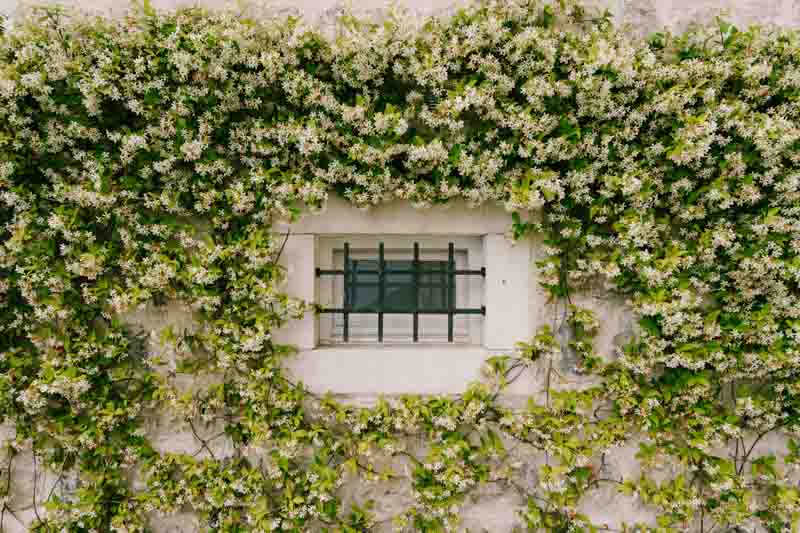


If your jasmine looks healthy but blooms lightly, pruning is often the missing piece. Many gardeners feed more, water more, and wait longer – when the real issue is that the plant has become tangled, overgrown, shaded, or pruned at the wrong time. Learning how to prune jasmine for more flowers is one of the most effective ways to increase bloom production, improve plant shape, and keep fragrant growth exactly where you want it.
The key is not aggressive cutting. The key is timing, selectivity, and understanding how your jasmine flowers. Some jasmines bloom on growth produced after flowering. Others bloom from wood formed the previous season. Prune at the wrong moment, and you can remove the very stems that would have carried the next flush of blooms.
This guide explains when to prune jasmine, how to shape different types, how to avoid the most common pruning mistakes, and how to encourage a heavier display of flowers without weakening the plant. It focuses on true jasmines in the Jasminum genus, while also noting where popular jasmine relatives behave differently.
If you only remember one rule, remember this: prune jasmine right after it finishes flowering unless you are removing dead, damaged, or diseased growth.
Jasmine flowers better when pruning creates light, air, and fresh flowering wood – not when the plant is simply cut back all over.
Pruning is not just about keeping jasmine neat. Done properly, it directly affects flowering by improving light penetration, air circulation, branch structure, and energy distribution. When jasmine becomes dense and tangled, the outer shell of growth shades the interior. Inner stems weaken, flowering declines, and the plant starts putting energy into long, unruly shoots instead of balanced bloom production.
Good pruning resets that pattern. It removes weak stems, shortens overextended growth, and encourages strong side shoots. Those side shoots are often where the best flowers appear. In practical terms, a well-pruned jasmine usually produces more bloom points, better bud exposure to light, and a more manageable shape.
That is why experienced growers do not ask, “Should I prune jasmine?” They ask, “When should I prune this specific jasmine, and how hard should I go?”
The correct pruning time depends on when your jasmine flowers and whether it blooms on growth made the previous season or on newer post-bloom growth. That is why “prune in spring” is too vague for jasmine and often wrong. The safest flower-preserving rule is this: prune immediately after the main flowering period ends, then let the plant regrow and set up the next bloom cycle.
For example, Pink Jasmine (Jasminum polyanthum) typically flowers from late winter into spring, so it should be pruned in mid to late spring, right after bloom. Common Jasmine (Jasminum officinale) and Spanish Jasmine (Jasminum grandiflorum) bloom mainly from late spring or summer into fall, so they are usually pruned after the main summer flowering flush or in early fall if flowering has finished.
Winter Jasmine (Jasminum nudiflorum) is one of the clearest examples of why timing matters. It flowers on stems formed earlier, so pruning in fall or early winter removes the shoots that would have produced the display. It should be pruned immediately after flowering ends in late winter or early spring.
Arabian Jasmine (Jasminum sambac), often grown in containers, is pruned a little differently. It responds well to light shaping during the warm growing season, but the main structural pruning is still best done after a bloom cycle, not just before one.
Dead, broken, diseased, or frost-damaged stems can be removed whenever you see them. But major reshaping should follow flowering, not precede it. If you wait too long after bloom, the plant loses valuable time to make and mature new flowering wood. For jasmine, precise timing is not a small detail – it is the difference between a leafy plant and a flower-covered one.
Use this table to match pruning time to bloom season, growth habit, and flowering pattern. For jasmine, pruning at the wrong time is one of the fastest ways to lose a season of flowers.
| Variety | Bloom Time | Best Time to Prune | How Hard to Prune | Why Timing Matters | Avoid |
|---|---|---|---|---|---|
| Common Jasmine (Jasminum officinale) True jasmine |
Late spring to fall | After the main flowering flush, usually late summer to early fall | Moderate thinning and shortening | Needs time to produce fresh flowering side shoots before next season | Hard pruning in late winter or spring |
| Pink Jasmine (Jasminum polyanthum) True jasmine |
Late winter to spring | Immediately after flowering, usually spring | Moderate; shorten long runners and retrain | Flowers are followed by vigorous vine growth that needs controlling early | Fall pruning or pre-bloom pruning |
| Arabian Jasmine (Jasminum sambac) True jasmine |
Mainly summer, sometimes repeated flushes | After a main bloom cycle; light shaping in active growth | Light to moderate, especially in containers | Heavy cuts can reduce the next flush and spoil compact form | Severe cutback before summer flowering |
| Downy Jasmine (Jasminum multiflorum) True jasmine |
Spring through fall | After the heaviest bloom period; light touch-ups during the season | Light shaping and thinning | Flowers over a long season, so hard pruning can interrupt display | Hard shearing during active flowering |
| Yellow Jasmine (Jasminum humile) True jasmine |
Late spring to fall | After the main flowering period | Moderate thinning and shape correction | Needs pruning to stay balanced and keep flowering wood exposed to sun | Late dormant-season reshaping |
| Primrose Jasmine (Jasminum mesnyi) True jasmine |
Late winter to spring | Right after spring flowering | Moderate; preserve arching framework | Pruning too early removes flowering stems before display | Autumn pruning |
| Winter Jasmine (Jasminum nudiflorum) True jasmine |
Winter to early spring | Immediately after flowering ends | Moderate to fairly hard on old stems if needed | Blooms on stems formed earlier, so fall cuts remove winter flowers | Pruning in fall or early winter |
| Spanish Jasmine (Jasminum grandiflorum) True jasmine |
Summer to fall | After the main summer or early fall bloom period | Moderate thinning and shortening | Keeps the vine productive and prevents woody, sparse growth | Heavy spring pruning before buds form |
| Star Jasmine (Trachelospermum jasminoides) Jasmine relative |
Late spring to summer | After flowering, usually summer | Light to moderate; often more training than pruning | Woodier growth benefits from steady control rather than drastic cutting | Repeated shearing into a tight shell |
| Night-Blooming Jasmine (Cestrum nocturnum) Jasmine relative |
Warm season, often intermittent | After a strong bloom flush or to control size in warm growth | Moderate | Fast growth can become leggy if not cut back after flowering | Cold-season hard pruning |
1 Start with dead, damaged, and diseased growth. Remove brown, brittle, broken, or clearly unhealthy stems first. This clarifies the structure of the plant and prevents wasted effort.
2 Thin congestion at the center. Cut out some of the oldest or most crowded stems at their base or point of origin. This opens the plant to light and air, which supports stronger flowering wood.
3 Shorten long, whippy shoots. Reduce overextended stems to a healthy pair of leaves or a strong side shoot. This encourages branching rather than more length with fewer flowers.
4 Preserve the framework. Do not remove every long stem. Keep the main structure and shorten selectively so the plant retains shape, support coverage, and future flowering potential.
5 Tie in new growth. Training matters as much as cutting. Secure flexible new shoots to a trellis, wires, or support before they harden. A well-trained jasmine flowers more evenly than one left to tangle on itself.
Most jasmines respond best to moderate, regular pruning, not yearly hacking. If you prune lightly but consistently after flowering, you will usually get better bloom performance than if you let the plant overgrow for several years and then cut it back hard.
As a working rule, remove enough growth to restore shape and open the plant, but not so much that you strip away all of its productive framework. For a healthy established jasmine, reducing selected stems by one-third or less is often enough. Harder rejuvenation pruning is possible on overgrown plants, but it may reduce flowering for a season while the plant rebuilds.
This is especially important in container culture. Potted jasmine has less root volume and less buffering capacity than jasmine in the ground. Over-pruning can create stress, delay recovery, and produce a burst of soft leafy regrowth instead of flowers.
For more flowers, think like a vine trainer, not a hedge trimmer. Jasmine needs structure and spacing more than uniform clipping.
Common Jasmine (Jasminum officinale) is a vigorous climber that benefits from annual thinning and shortening after bloom. It can become woody and sparse at the base if left untrained.
Pink Jasmine (Jasminum polyanthum) grows fast and often needs both pruning and retraining after its main flowering period. Without that, it quickly becomes a mass of long stems with flowers concentrated only at the ends.
Arabian Jasmine (Jasminum sambac) is often grown more as a shrubby plant in pots. It benefits from tip pruning, light shaping, and the removal of weak interior growth rather than aggressive vine-style cutting.
Winter Jasmine (Jasminum nudiflorum) is arching rather than strongly twining. Pruning should preserve its natural fountain-like form while removing old stems after flowering.
If you grow Star Jasmine (Trachelospermum jasminoides), remember it is not a true jasmine. It is pruned somewhat similarly for shape and coverage, but its growth is woodier and more structural over time.
Note: Bloom season and growth rate can shift somewhat with climate, container culture, and whether the plant is grown indoors or outdoors, so use these traits as practical identification clues rather than absolute rules.
Before you prune for more flowers, make sure you know which plant you are actually growing. Many plants sold or described as jasmine are not true jasmines in the Jasminum genus. That matters because bloom timing, growth habit, and pruning response can differ significantly.
A simple first step is to ask three questions: When does it bloom? What color are the flowers? And how does the plant grow? Those clues usually tell you whether you have a true jasmine or a jasmine relative.
| Plant | True Jasmine? | Typical Flower Clues | Growth Habit | Pruning Hint |
|---|---|---|---|---|
| Common Jasmine (Jasminum officinale) | Yes | White, fragrant flowers; long bloom season in warm weather | Vigorous twining or scrambling climber | Prune after flowering |
| Pink Jasmine (Jasminum polyanthum) | Yes | Pink buds opening to white, very fragrant flowers | Fast-growing vine, often trained on supports | Prune after the main bloom flush |
| Arabian Jasmine (Jasminum sambac) | Yes | White, highly fragrant flowers, often in repeated flushes | Shrubby or semi-vining, often grown in pots | Use light shaping more than hard cutting |
| Winter Jasmine (Jasminum nudiflorum) | Yes | Yellow flowers in winter or very early spring, usually before leaves | Arching, fountain-like stems rather than a strong twining vine | Prune immediately after flowering |
| Star Jasmine (Trachelospermum jasminoides) | No | White pinwheel-like flowers; sweet fragrance | Woody evergreen climber with thicker leaves than most true jasmines | Usually needs training and light pruning after bloom |
| Night-Blooming Jasmine (Cestrum nocturnum) | No | Greenish-white tubular flowers with strong nighttime fragrance | Shrub, not a true twining jasmine vine | Prune for size control after bloom flushes |
If it has yellow flowers in winter on bare green stems, it is probably winter jasmine (Jasminum nudiflorum), not the white-flowered summer jasmines.
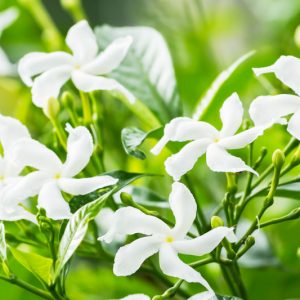
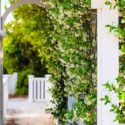
If it has white pinwheel flowers and leathery evergreen leaves, it is probably star jasmine (Trachelospermum jasminoides), which is a jasmine relative rather than a true jasmine.
If it is strongly fragrant with white blooms and a looser vining habit, it is more likely a true jasmine in the Jasminum genus.
If it flowers mainly at night with an intense scent and shrub-like growth, it may be night-blooming jasmine (Cestrum nocturnum), which follows somewhat different pruning logic.
When in doubt, identify the plant first and prune second. The right pruning method depends on whether your plant is a twining summer jasmine, an arching winter jasmine, a shrubby Arabian jasmine, or a jasmine relative being grown for coverage and scent.
Container-grown jasmine needs a slightly more disciplined approach because space, root volume, and support are limited. In pots, the goal is not maximum size. The goal is repeatable flowering in a controlled footprint.
After flowering, remove tangled shoots, shorten stems that have outgrown the support, and keep the top from becoming so dense that light cannot reach the lower growth. If the plant has become rootbound and bloom production is falling despite proper pruning, the issue may not be pruning alone. It may be time to repot, refresh the potting mix, or lightly root-prune at the correct season.
For trellised jasmine in containers, keep the strongest framework stems and direct new side growth horizontally or diagonally where possible. This helps distribute flowering sites more evenly across the support instead of producing a narrow tower of leaves with sparse bloom at the top.
1 Pruning at the wrong time. This is the biggest reason jasmine fails to flower well after cutting.
2 Shearing the whole plant. Uniform clipping creates a shell of outer growth and often worsens congestion inside.
3 Ignoring training. Pruning without tying in new growth wastes the opportunity to build a better flowering framework.
4 Overfeeding after pruning. Too much nitrogen often pushes leafy growth instead of buds.
5 Expecting pruning to fix poor light. Jasmine that does not receive enough sun or bright light will rarely bloom heavily, no matter how well it is pruned.
Once pruning is finished, support recovery with steady but not excessive care. Water consistently, especially for jasmine in containers, and feed modestly during active growth with a fertilizer that does not overwhelm the plant with nitrogen. Watch for fresh side shoots and direct them early.
Do not force the plant with heavy feeding immediately after a hard cutback. The objective is balanced regrowth, not a surge of soft stems. If your jasmine is healthy, correctly timed pruning should be followed by fuller branching and a better flowering framework over the next cycle.
That is the real secret behind pruning jasmine for more flowers: you are not just cutting the plant back – you are building the next flowering season.
Prune jasmine right after it finishes flowering. This gives the plant time to grow and mature the shoots that will produce the next cycle of blooms.
Yes, but only when necessary. Overgrown jasmine can usually handle rejuvenation pruning, but heavy cutting may reduce flowering for one season while the plant rebuilds its framework.
The most common reason is pruning at the wrong time. If you remove stems that were going to carry buds, flowering will drop. Poor light and excess nitrogen can also reduce bloom.
Yes. Potted jasmine should be pruned more strategically to control size, preserve the main framework, and keep light reaching the lower growth. Regular moderate pruning is usually better than severe cutting.
Yes, when it is done correctly. Proper pruning improves light, airflow, and branching, which helps jasmine produce more flowering shoots and a stronger bloom display.
Only for dead, damaged, or diseased stems. Major pruning in winter often removes flowering wood, especially on jasmine types that bloom in late winter, spring, or early summer.
If you want more blooms, the smartest move is not harder pruning – it is better pruning. Jasmine flowers best when it is pruned after bloom, opened to light, thinned at the center, and trained onto a clean framework. That combination gives you stronger new shoots, more flowering points, and a plant that looks intentionally grown rather than merely contained.
The best jasmine pruning is precise, seasonal, and strategic. Once you understand that, more flowers stop being guesswork and start becoming routine.
These sources support the pruning-timing guidance, bloom-on-old-wood rule, and distinctions between true jasmines and common jasmine relatives used in this guide.
| Hardiness |
6 - 11 |
|---|---|
| Plant Type | Climbers, Shrubs |
| Plant Family | Apocynaceae, Oleaceae |
| Genus | Jasminum, Trachelospermum |
| Exposure | Full Sun, Partial Sun |
| Season of Interest | Spring (Early, Mid, Late), Summer (Early, Mid, Late), Fall, Winter |
| Maintenance | Low |
| Water Needs | Average |
| Soil Type | Chalk, Loam, Sand |
| Soil pH | Acid, Alkaline, Neutral |
| Soil Drainage | Moist but Well-Drained, Well-Drained |
| Characteristics | Showy |
| Attracts | Bees, Butterflies |
| Landscaping Ideas | Arbors, Pergolas, Trellises, Banks And Slopes, Ground Covers, Patio And Containers, Wall-Side Borders |
| Garden Styles | City and Courtyard, Coastal Garden, Informal and Cottage |
| Hardiness |
6 - 11 |
|---|---|
| Plant Type | Climbers, Shrubs |
| Plant Family | Apocynaceae, Oleaceae |
| Genus | Jasminum, Trachelospermum |
| Exposure | Full Sun, Partial Sun |
| Season of Interest | Spring (Early, Mid, Late), Summer (Early, Mid, Late), Fall, Winter |
| Maintenance | Low |
| Water Needs | Average |
| Soil Type | Chalk, Loam, Sand |
| Soil pH | Acid, Alkaline, Neutral |
| Soil Drainage | Moist but Well-Drained, Well-Drained |
| Characteristics | Showy |
| Attracts | Bees, Butterflies |
| Landscaping Ideas | Arbors, Pergolas, Trellises, Banks And Slopes, Ground Covers, Patio And Containers, Wall-Side Borders |
| Garden Styles | City and Courtyard, Coastal Garden, Informal and Cottage |
Create a membership account to save your garden designs and to view them on any device.
Becoming a contributing member of Gardenia is easy and can be done in just a few minutes. If you provide us with your name, email address and the payment of a modest $25 annual membership fee, you will become a full member, enabling you to design and save up to 25 of your garden design ideas.
Join now and start creating your dream garden!
Create a membership account to save your garden designs and to view them on any device.
Becoming a contributing member of Gardenia is easy and can be done in just a few minutes. If you provide us with your name, email address and the payment of a modest $25 annual membership fee, you will become a full member, enabling you to design and save up to 25 of your garden design ideas.
Join now and start creating your dream garden!