Are coral bells deer resistant? Usually, yes. Discover how likely deer are to browse Heucheras, how to recognize damage, whether plants recover, and which colorful varieties best suit shade, heat, containers, and woodland borders. Learn why site fit matters more than unsupported claims that one cultivar resists deer better than another.
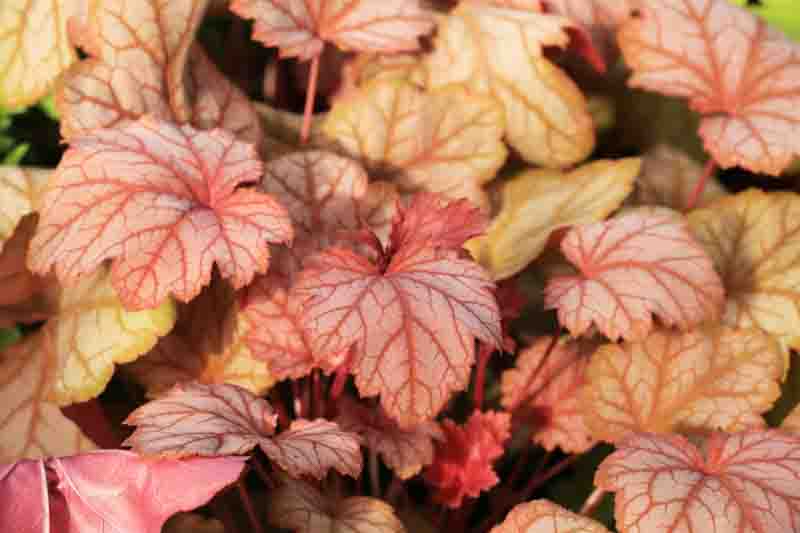


Yes. Heucheras, commonly called coral bells, are generally considered deer resistant and are often an excellent choice for deer-prone gardens. Their foliage contains tannins that make it unappetizing to deer and rabbits, according to NC State Extension. However, no coral bell is completely deer-proof, and hungry deer may still sample young plants or fresh growth when browsing pressure is high.
Coral bells are among the more useful lower-browse perennials for gardens visited by deer.
NC State Extension lists Heuchera as resistant to deer and rabbits and gives an unusually useful explanation for that resistance: tannins in the leaves make the foliage unappetizing.
Clemson Cooperative Extension also includes Heuchera among perennials that deer seldom damage.
That makes coral bells particularly attractive for gardeners who want dependable foliage color without automatically planting a species that deer are likely to target.
Still, deer resistance is relative rather than absolute. Deer behavior changes with population density, season, drought, weather, available food, and local feeding habits. A plant ignored for years in one garden may be sampled in another.
This is why “deer resistant” should never be translated as “deer cannot eat it.”
Gardenia’s Heuchera Rule: think low browsing risk, not guaranteed immunity. Coral bells are a strong choice for deer-prone gardens, but local deer pressure still matters.
One reason is chemical rather than simply visual.
NC State notes that tannins in Heuchera leaves make the foliage unappetizing to deer and rabbits. Tannins are naturally occurring plant compounds that contribute to an astringent, less appealing taste.
That does not create an invisible shield around the plant. A hungry deer may still take a bite, particularly where alternative food is scarce.
But it helps explain why Heuchera generally carries a lower browsing risk than many lush, tender foliage plants.
The genus also offers something especially useful to gardeners: most coral bells are grown primarily for their foliage rather than depending on a brief flower display. Their leaves can provide purple, bronze, caramel, lime, silver, red, peach, or near-black color for months.
That combination – colorful foliage plus relatively low deer appeal – is particularly valuable in part shade and shade, where plant choices can become frustrating in deer-heavy landscapes.
This is where it is important not to promise more than the evidence supports.
Garden centers offer hundreds of named Heuchera cultivars, but there is not strong independent evidence showing that popular cultivars differ consistently in deer resistance.
In other words, there is no sound basis for saying that ‘Obsidian’ is more deer resistant than ‘Caramel’, or that ‘Palace Purple’ is safer from deer than ‘Lime Marmalade’.
The genus itself has a good lower-browse record. Once that is established, the differences that actually matter among cultivars are things such as:
The better question is not “Which Heuchera do deer dislike most?” It is “Which lower-browse Heuchera actually fits my garden?”
The following coral bells are useful choices because they combine the genus’s generally low browsing risk with different horticultural strengths. They are not ranked by deer resistance.
| Heuchera | Why Grow It? | Best Use |
|---|---|---|
| ‘Caramel’ | Apricot-caramel foliage and better tolerance of hot, humid summers than many Heucheras. | Warmer climates, dry shade once established, woodland edges. |
| ‘Southern Comfort’ | Large cinnamon-peach foliage and breeding for heat and humidity tolerance. | Bold foliage masses and warm-climate gardens. |
| ‘Obsidian’ | Glossy, almost-black foliage that holds its dark color through the season. | Dark contrast, edging, mixed borders, and containers. |
| ‘Palace Purple’ | A proven, widely grown cultivar with purple-bronze foliage and long seasonal interest. | Mass planting, edging, woodland borders, and groundcover effect. |
| ‘Lime Marmalade’ | Bright, ruffled lime-green foliage that brings light to darker plantings. | Part shade, woodland gardens, paths, and containers. |
| ‘Citronelle’ | Luminous citron-yellow to chartreuse foliage and strong performance in part to full shade. | Shady borders, edging, woodland gardens, and bright foliage contrast. |
These cultivars share Heuchera’s generally low browsing risk. Their differences in heat tolerance, exposure, size, vigor, and foliage color are much more useful for choosing among them than an unsupported cultivar-by-cultivar deer ranking.
If deer do browse a coral bell, the most useful clue is that healthy plant tissue has suddenly disappeared.
You may notice:
But not every damaged Heuchera has been eaten by deer.
Holes within the leaves are more suggestive of chewing insects or slugs. Notched leaf margins can indicate root-weevil feeding. Wilting or crown collapse may point toward root, crown, drainage, or disease problems rather than browsing.
Gardenia’s Deer Damage Check: substantial missing tissue suggests browsing. Holes, notched leaf edges, spotting, or crown decline deserve a different diagnosis.
Established Heucheras usually recover well from modest foliage loss if the crown remains healthy.
Coral bells are clump-forming herbaceous perennials. New leaves arise from the crown, so losing several leaves is not the same as losing the whole plant.
If browsing is light, leave healthy foliage in place and allow the plant to replace what was lost. Remove only badly damaged leaves or broken flower stems when necessary.
Repeated browsing is more concerning, particularly on newly planted coral bells. A small transplant may have only a modest crown and limited foliage, so repeated removal of new leaves can slow establishment.
That is when temporary protection becomes worthwhile.
Many established Heucheras will never need special deer protection.
Pay the most attention to new plants. A small coral bell has much less foliage to lose than a mature clump.
Watch what happens after the first bite. An isolated damaged leaf is very different from new foliage disappearing repeatedly.
Be more cautious when local deer pressure rises. Rutgers notes generally that no landscape plant is completely deer-proof and that browsing changes with local deer populations and weather conditions.
If damage becomes repetitive, a small cage or temporary barrier around the plant can be more dependable than letting it regrow the same foliage again and again.
Commercial repellents may also help where browsing pressure is light to moderate. Follow the label carefully and maintain coverage as plants produce fresh foliage or weather reduces effectiveness.
This is where coral bells become more interesting than a simple “deer-resistant plant.”
Heuchera solves a common garden-design problem: how do you add lasting color to a shaded planting without relying entirely on flowers?
The answer is foliage.
Depending on the cultivar, coral bells can provide lime, caramel, peach, amber, silver, burgundy, purple, bronze, red, or almost-black leaves. That color lasts far longer than a typical flowering display.
The slender flower stalks add a second layer of interest, and many forms attract bees, butterflies, and hummingbirds.
But there is another part of the decision that matters just as much as deer resistance: site fit.
Most Heucheras need good drainage. Many thrive in partial shade or dappled light, while tolerance of full sun, heat, humidity, or dry shade can vary among cultivars.
The best coral bell solves two problems at once: deer usually leave it alone, and its light, drainage, moisture, heat, and space requirements actually match the garden.
For gardeners dealing with deer in shade, this is one of the most useful comparisons.
Hostas are grown for bold, lush leaves and can create dramatic foliage masses beneath trees and shrubs. Unfortunately, they are also commonly browsed where deer are active.
Heucheras offer a different foliage effect but generally much lower browsing risk.
That does not make coral bells visual substitutes for every Hosta. Hostas often produce larger leaves and broader mounds, while Heucheras generally form more compact clumps and offer a much wider range of foliage colors.
The better approach is to think in terms of garden role.
If Hostas repeatedly disappear from a shaded border, Heuchera can still provide low foliage masses, path edging, underplanting, container color, or contrast beneath shrubs – without trying to imitate a Hosta leaf for leaf.
That is a much more useful design solution than repeatedly replacing a highly browsed plant with another copy of the same plant.
Once you have chosen a coral bell that suits the site, the next step is not simply to surround it with anything labeled deer resistant.
The companion plants still need to belong together.
A successful planting combines browsing risk with the conditions that actually control plant performance: light, drainage, moisture, hardiness, mature size, and garden role.
Gardenia’s Deer-Smart Heuchera Strategy: use deer resistance as one filter, then design around the site.
Explore the Gardenia Heuchera collection to compare coral bells by foliage color, exposure, hardiness, size, and garden use.
Then use the Gardenia Plant Finder to find other lower-browse plants that also match your sun exposure, soil, drainage, water needs, hardiness, mature size, garden style, native goals, wildlife value, and other tolerances.
Browse Deer-Resistant Garden Ideas for inspiration, then use the Garden Design Tool to check whether the plants you choose actually want compatible growing conditions before planting them together.
Yes. Heucheras, or coral bells, are generally considered deer resistant. NC State notes that tannins in the foliage make the leaves unappetizing to deer and rabbits. No Heuchera is completely deer-proof, however.
Deer can eat coral bells, but serious browsing is usually uncommon. Deer may become less selective when populations are high, weather is severe, or preferred food is scarce.
NC State Extension notes that tannins in Heuchera foliage make the leaves unappetizing to deer and rabbits. This lowers browsing risk but does not guarantee that no deer will ever sample the plant.
There is not strong independent evidence showing that popular Heuchera cultivars differ consistently in deer resistance. Choose among coral bells for light, heat tolerance, size, vigor, drainage, and foliage color rather than an unsupported deer-resistance ranking.
Useful choices include ‘Caramel’ and ‘Southern Comfort’ for warmer conditions, ‘Obsidian’ for dark foliage, ‘Palace Purple’ for classic purple-bronze color, and ‘Lime Marmalade’ or ‘Citronelle’ for bright foliage. Choose by site fit rather than presumed differences in deer resistance.
Established coral bells usually recover from modest foliage loss if the crown remains healthy. Repeated browsing is more concerning on newly planted plants with small crowns and limited foliage.
Deer browsing removes leaves, flower stalks, or other plant tissue and may leave ragged damage. Holes within leaves, notched margins, spotting, wilt, or crown decline may instead indicate insects or plant-health problems.
Often, yes. Heucheras provide long-lasting foliage color for shade and part shade while generally carrying lower deer-browsing risk than Hostas. They are not visually identical, so use them for a similar garden role rather than as exact substitutes.
Updated: September 2026 – Reviewed by Gardenia Editors
| Hardiness |
4 - 9 |
|---|---|
| Heat Zones |
1 - 8 |
| Climate Zones | 1, 1A, 1B, 2, 2A, 2B, 3, 3A, 3B, 4, 5, 6, 7, 8, 9, 10, 14, 15, 16, 17, 18, 19, 20, 21, 22, 23, 24 |
| Plant Type | Perennials |
| Genus | Heuchera |
| Exposure | Full Sun, Partial Sun, Shade |
| Season of Interest | Spring (Early, Mid, Late), Summer (Early, Mid, Late), Fall, Winter |
| Height | 1' - 2' (30cm - 60cm) |
| Spread | 1' - 2' (30cm - 60cm) |
| Maintenance | Low |
| Water Needs | Average |
| Soil Type | Chalk, Clay, Loam, Sand |
| Soil pH | Acid, Neutral |
| Soil Drainage | Moist but Well-Drained, Well-Drained |
| Characteristics | Showy, Semi-Evergreen, Evergreen, Cut Flowers |
| Tolerances | Deer |
| Attracts | Bees, Butterflies, Hummingbirds |
| Landscaping Ideas | Banks And Slopes, Beds And Borders, Edging, Ground Covers, Patio And Containers, Small Gardens, Underplanting Roses And Shrubs |
| Garden Styles | City and Courtyard, Gravel and Rock Garden, Informal and Cottage |
Create a membership account to save your garden designs and to view them on any device.
Becoming a contributing member of Gardenia is easy and can be done in just a few minutes. If you provide us with your name, email address and the payment of a modest $25 annual membership fee, you will become a full member, enabling you to design and save up to 25 of your garden design ideas.
Join now and start creating your dream garden!