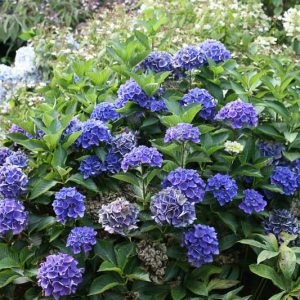
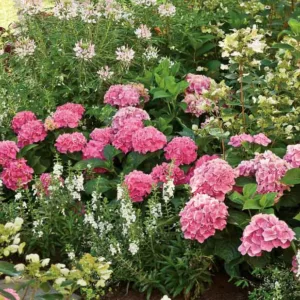
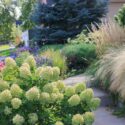
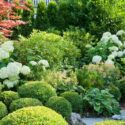
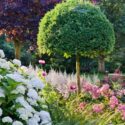
Gatsby Gal Oakleaf Hydrangea, Gatsby Gal Hydrangea, Oakleaf Hydrangea, Hydrangea quercifolia 'Brenhill'
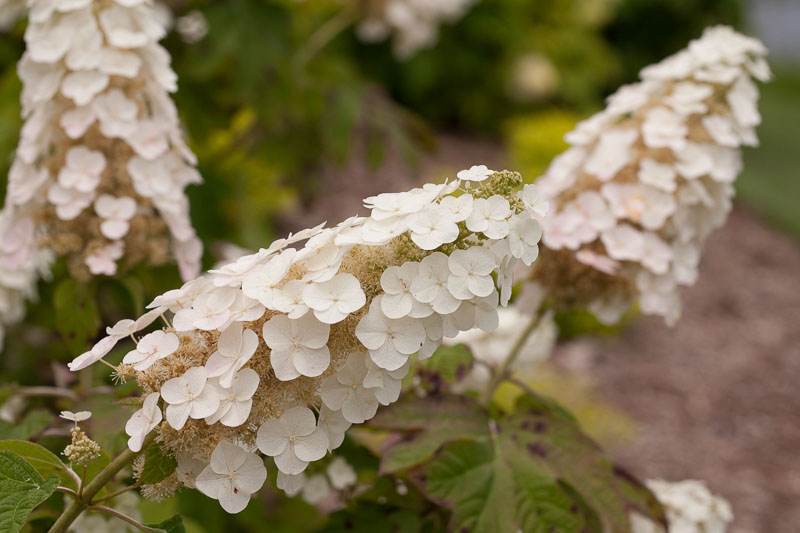
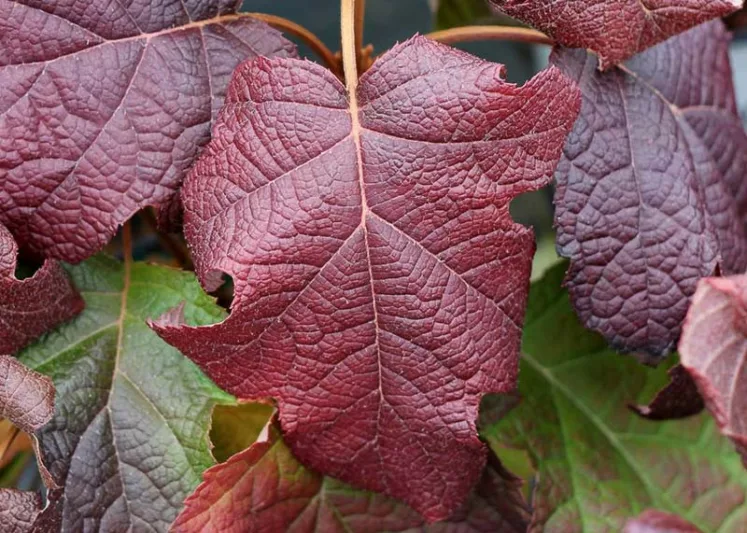
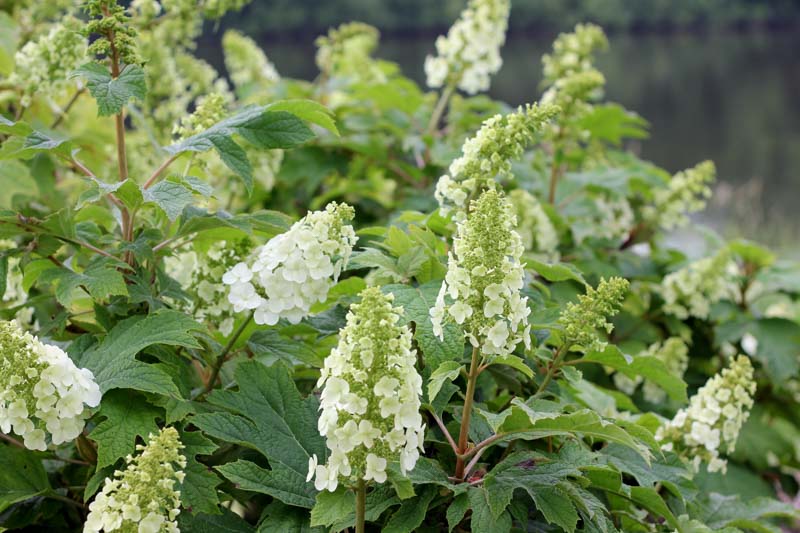
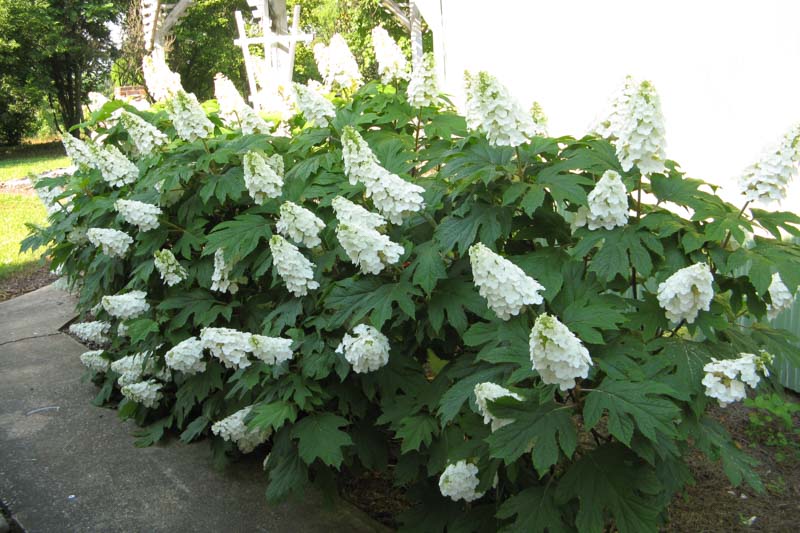


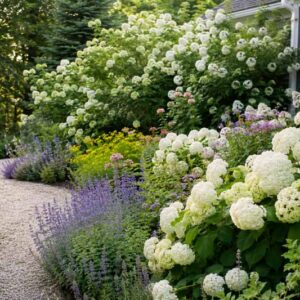
Hydrangea quercifolia Gatsby Gal®, commonly called Gatsby Gal oakleaf hydrangea, is a compact deciduous shrub with oversized white flower panicles, bold oak-shaped leaves, rich wine-red fall color, and exfoliating winter bark. Smaller than many oakleaf hydrangeas but still substantial in the landscape, it brings four-season presence to woodland edges, foundation plantings, mixed borders, shaded entries, informal hedges, and smaller gardens.
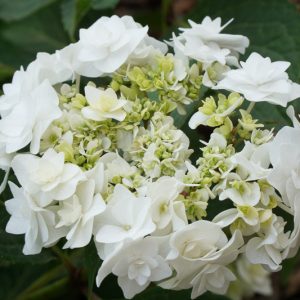
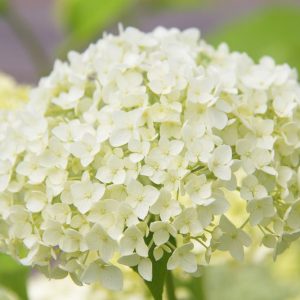
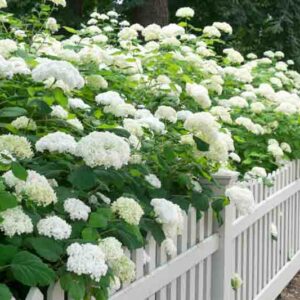
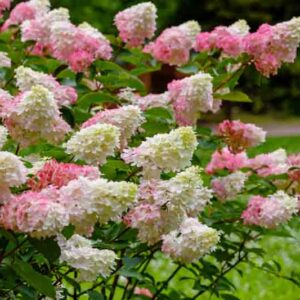
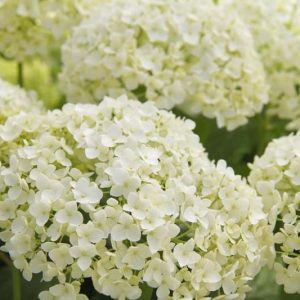
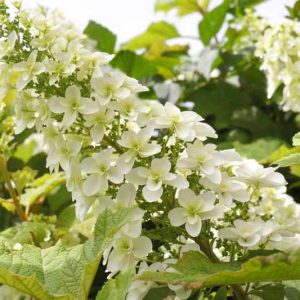
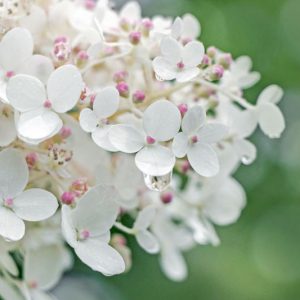
The big summer flower clusters open pure white, stand upright above the foliage, and gradually take on pinkish tones as the season progresses. Unlike bigleaf hydrangeas, the bloom color is not affected by soil pH. Its deeply lobed leaves create a coarse, handsome texture through summer, then turn burgundy, wine red, and purple as cool nights arrive.
Gatsby Gal® is a Proven Winners® ColorChoice® selection valued for combining native oakleaf hydrangea character with a more garden-friendly size. Give it morning sun, afternoon shade in hot climates, moist well-drained soil, and minimal pruning, and it will reward you with flowers, foliage, fall color, and winter bark.
Summary: Compact deciduous oakleaf hydrangea shrub with large upright white panicles, oak-shaped green leaves, wine-red fall foliage, and exfoliating bark.
Use: Excellent for mixed borders, foundation plantings, woodland gardens, informal hedges, native shrub plantings, containers, and smaller landscapes.
Highlight: Oversized flowers on a more compact oakleaf hydrangea, with bold foliage and excellent fall color.
Note: Blooms on old wood. Avoid routine pruning; shape only after flowering if needed.
| Botanical Name | Hydrangea quercifolia Gatsby Gal®; cultivar name Hydrangea quercifolia ‘Brenhill’; USPP 25,106; Can 5,304 |
|---|---|
| Family | Hydrangeaceae |
| Common Names | Gatsby Gal oakleaf hydrangea, oakleaf hydrangea, oak leaf hydrangea |
| Native Range | A cultivated selection of Hydrangea quercifolia, a species native to the southeastern United States, especially moist woods, stream banks, wooded slopes, and ravines. |
| Plant Type and Habit | Deciduous shrub; upright-rounded to mounded, multi-stemmed, compact oakleaf hydrangea |
| Hardiness (USDA) | Typically hardy in USDA Zones 5 to 9; may need winter protection in colder Zone 5 sites while young. |
| Size | Grows about 5 to 6 ft tall and 5 to 6 ft wide at maturity. |
| Sun and Exposure | Part sun to sun; best with morning sun and afternoon shade in hot climates. Some daily sun improves bloom and fall color. |
| Soil | Moist, fertile, humus-rich, well-drained soil; adaptable except in excessively wet or waterlogged sites. |
| Water Needs | Average moisture; water regularly during establishment and during prolonged dry spells. |
| Bloom Time | Early to late summer, depending on climate and growing conditions. |
| Flower Color | Pure white panicles aging pinkish, then tan or brown as they dry; color is not affected by soil pH. |
| Foliage Color | Dark green, deeply lobed oak-shaped leaves turning wine red, burgundy, purple, and bronze in fall. |
| Pollinator Value | Flowers attract pollinators; oakleaf hydrangeas also add habitat structure and cover. |
| Deer Resistance | Not reliably deer resistant. Deer may browse flower buds, leaves, and young stems, especially in winter or early spring. |
| Best Uses | Foundation plantings, mixed borders, woodland edges, shade gardens, native shrub borders, informal hedges, specimen shrubs, slopes, containers, and naturalistic gardens. |
Gatsby Gal® is a compact selection of oakleaf hydrangea, a deciduous shrub known for large cone-shaped flower panicles, bold oak-like foliage, rich fall color, and peeling bark. It is smaller than many classic oakleaf hydrangeas, but its flowers are large relative to the plant size, creating a full, showy display in early to midsummer.
The flower panicles open pure white and are held upright above the foliage. As they age, they may blush pink before drying to tan or brown. The leaves are broad, deeply lobed, and textured, giving the shrub a strong architectural presence even when it is not in bloom.
Gatsby Gal® is a cultivated selection, but its species, Hydrangea quercifolia, is native to the southeastern United States. In the wild, oakleaf hydrangea grows in moist woods, stream banks, ravines, wooded slopes, and other partly shaded habitats with organic, well-drained soil.
Because of this native background, Gatsby Gal® is especially useful in woodland-edge plantings, native shrub borders, informal screens, shaded foundations, and pollinator-friendly gardens where a compact deciduous shrub is needed.
Gatsby Gal® has an upright-rounded to mounded habit and generally matures around 5 to 6 feet tall and wide. It is compact compared with many oakleaf hydrangeas, but it is still a medium-sized shrub that needs room to develop a natural shape.
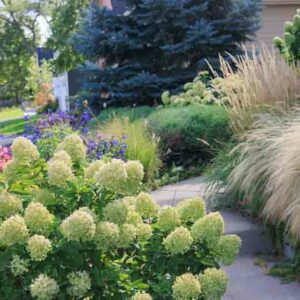
The flowers are arranged in full, cone-shaped panicles held upright over the foliage. They open pure white in summer, then may age to pinkish tones before drying to tan. The color shift is natural and is not controlled by soil pH. This makes Gatsby Gal® different from many bigleaf hydrangeas, whose flower color can change with soil acidity.
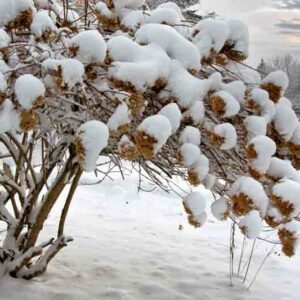
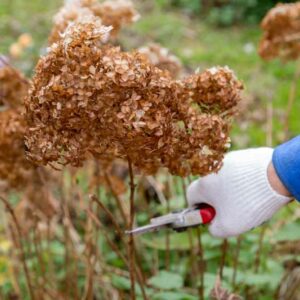
The dried flower heads can be left on the plant for late-season texture or cut for arrangements. If you deadhead, avoid cutting deeply into older stems, because next year’s flower buds develop on old wood.
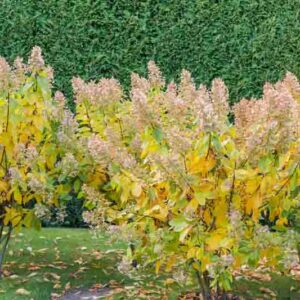
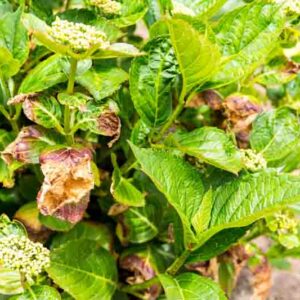
The foliage is one of the biggest reasons to grow oakleaf hydrangea. Gatsby Gal® has large, deeply lobed leaves that resemble oak leaves, creating a bold, coarse texture in the garden. In fall, the green foliage turns wine red, burgundy, bronze, and purple, often giving the shrub a longer season of interest than many summer-blooming hydrangeas.
As Gatsby Gal® matures, its older stems develop exfoliating bark that peels in cinnamon, tan, and brown tones. This bark is especially attractive in winter after the leaves have dropped. Place the shrub near paths, entries, patios, or windows where the stems can be appreciated in the off-season.
Gatsby Gal® is generally hardy in USDA Zones 5 to 9. In colder Zone 5 gardens, young plants may benefit from a sheltered site, winter mulch, and protection from harsh wind. In hotter climates, give afternoon shade and consistent moisture to reduce leaf scorch.
Oakleaf hydrangea flowers attract bees, butterflies, and other beneficial insects. The shrub also adds cover and structure to mixed plantings. For the highest wildlife value, use Gatsby Gal® as part of a layered planting with native shrubs, grasses, perennials, and leaf litter or mulch beneath.
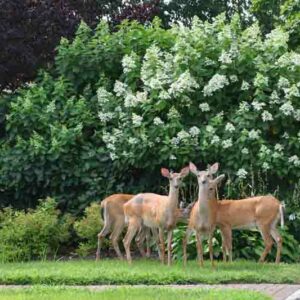
Hydrangeas are not reliable deer-proof plants, and oakleaf hydrangeas may be browsed, especially when tender spring growth or overwintering buds are available. In deer-heavy gardens, protect young plants with repellents, fencing, or cages until they are established. Flower buds form on old wood, so winter and early spring browsing can reduce bloom.
Oakleaf hydrangea is more tolerant of dry periods than many hydrangeas once established, but Gatsby Gal® still performs best with average moisture. Keep the soil evenly moist during the first growing season. Established shrubs can handle short dry spells, but prolonged drought may cause wilting, leaf scorch, fewer flowers, or poor fall color.
Hydrangeas are considered toxic to dogs, cats, horses, and people if eaten. The plants contain cyanogenic glycosides and may cause vomiting, diarrhea, depression, or gastrointestinal upset. Cyanide poisoning is rare, but ingestion should still be taken seriously. Keep pets and children from chewing the leaves, flowers, or stems, and contact a veterinarian or poison control professional if ingestion is suspected.
Gatsby Gal® oakleaf hydrangea is not considered invasive. It is a cultivated shrub that expands by woody stems rather than aggressive runners. Give it enough room to reach its mature size, and remove occasional unwanted suckers or low branches only if needed for shape.
Oakleaf hydrangeas are deciduous shrubs valued for cone-shaped summer flowers, bold lobed foliage, vivid fall color, and peeling winter bark. Choose Gatsby Gal® when you want a more compact plant with large upright white flower panicles.
Choose Gatsby Gal® for compact size and large upright flowers. Choose larger oakleaf hydrangeas for screening, massing, broad woodland edges, and background structure.
Successful Gatsby Gal® care comes down to bright shade, steady moisture, good drainage, and light pruning only when needed.
Named, patented cultivars such as Gatsby Gal® should not be propagated for sale or distribution without permission. Home gardeners should buy plants from licensed nurseries. Oakleaf hydrangeas in general can root from softwood cuttings, but patented cultivars are legally protected.
Gatsby Gal® is generally low maintenance when grown in the right conditions. Most problems are linked to poor drainage, drought stress, too much shade, deer browsing, or pruning at the wrong time.
Hydrangea quercifolia Gatsby Gal is a compact oakleaf hydrangea shrub with large upright white flower panicles, oak-shaped leaves, wine-red fall color, and exfoliating bark. It is a deciduous shrub and a Proven Winners ColorChoice selection.
Gatsby Gal oakleaf hydrangea typically grows about 5 to 6 feet tall and 5 to 6 feet wide. It is more compact than many oakleaf hydrangeas but still needs room to mature naturally.
Gatsby Gal performs best in part sun to sun. Morning sun with afternoon shade is ideal in hot climates. Some direct sun improves flowering and fall color, while too much deep shade can reduce bloom.
Gatsby Gal oakleaf hydrangea blooms in summer, usually from early to midsummer and often continuing interest into late summer as the white flowers age pinkish and then dry to tan.
Gatsby Gal blooms on old wood. This means flower buds form on stems produced the previous season. Avoid pruning in fall, winter, or spring except to remove dead wood, or you may remove the flower buds.
Prune Gatsby Gal only if needed, immediately after flowering. Remove dead, damaged, or crossing stems, and avoid heavy shearing. In spring, wait until the plant leafs out before removing winter-damaged wood.
No. Gatsby Gal oakleaf hydrangea flowers are not affected by soil pH. The panicles open white and may age pinkish naturally, but they do not turn blue or pink in response to acidic or alkaline soil.
Gatsby Gal is a cultivated selection of Hydrangea quercifolia. The species oakleaf hydrangea is native to the southeastern United States, where it grows in moist woods, stream banks, wooded slopes, and ravines.
Gatsby Gal is not reliably deer resistant. Deer may browse leaves, stems, and overwintering flower buds, especially when other food is scarce. Protect young plants in deer-heavy gardens.
Yes. Gatsby Gal can grow in a large container for several years if the pot has excellent drainage, the soil is kept evenly moist, and the container is protected from severe winter freezing in cold climates.
Proven Winners – Gatsby Gal® Oakleaf Hydrangea: https://www.provenwinners.com/plants/hydrangea/gatsby-gal-oakleaf-hydrangea-hydrangea-quercifolia
Spring Meadow Nursery – Gatsby Gal® Hydrangea: https://springmeadownursery.com/plantfinder/gatsby-gal-40930
North Carolina Extension Gardener Plant Toolbox – Hydrangea quercifolia: https://plants.ces.ncsu.edu/plants/hydrangea-quercifolia/
ASPCA – Hydrangea Toxicity: https://www.aspca.org/pet-care/aspca-poison-control/toxic-and-non-toxic-plants/hydrangea
Updated: June 2026 • Reviewed by Gardenia Editors
| Hardiness |
5 - 9 |
|---|---|
| Heat Zones |
5 - 9 |
| Climate Zones | 2, 2B, 3, 3A, 3B, 4, 5, 6, 7, 8, 9, 10, 11, 12, 13, 14, 15, 16, 17, 18, 19, 20, 21, 22, 23 |
| Plant Type | Shrubs |
| Plant Family | Hydrangeaceae |
| Genus | Hydrangea |
| Common names | Hydrangea, Oakleaf Hydrangea |
| Exposure | Full Sun, Partial Sun |
| Season of Interest | Summer (Early, Mid, Late), Fall |
| Height | 5' - 6' (150cm - 180cm) |
| Spread | 5' - 6' (150cm - 180cm) |
| Spacing | 60" - 72" (150cm - 180cm) |
| Maintenance | Low |
| Water Needs | Average |
| Soil Type | Clay, Loam, Sand |
| Soil pH | Acid, Neutral |
| Soil Drainage | Moist but Well-Drained, Well-Drained |
| Characteristics | Dried Arrangements, Cut Flowers, Showy |
| Tolerance | Clay Soil |
| Attracts | Bees, Butterflies |
| Garden Uses | Beds And Borders, Ground Covers, Patio And Containers, Small Gardens |
| Garden Styles | Butterfly Garden, City and Courtyard, Informal and Cottage, Pollinator Garden, Traditional Garden, Woodland Garden |


| Hardiness |
5 - 9 |
|---|---|
| Heat Zones |
5 - 9 |
| Climate Zones | 2, 2B, 3, 3A, 3B, 4, 5, 6, 7, 8, 9, 10, 11, 12, 13, 14, 15, 16, 17, 18, 19, 20, 21, 22, 23 |
| Plant Type | Shrubs |
| Plant Family | Hydrangeaceae |
| Genus | Hydrangea |
| Common names | Hydrangea, Oakleaf Hydrangea |
| Exposure | Full Sun, Partial Sun |
| Season of Interest | Summer (Early, Mid, Late), Fall |
| Height | 5' - 6' (150cm - 180cm) |
| Spread | 5' - 6' (150cm - 180cm) |
| Spacing | 60" - 72" (150cm - 180cm) |
| Maintenance | Low |
| Water Needs | Average |
| Soil Type | Clay, Loam, Sand |
| Soil pH | Acid, Neutral |
| Soil Drainage | Moist but Well-Drained, Well-Drained |
| Characteristics | Dried Arrangements, Cut Flowers, Showy |
| Tolerance | Clay Soil |
| Attracts | Bees, Butterflies |
| Garden Uses | Beds And Borders, Ground Covers, Patio And Containers, Small Gardens |
| Garden Styles | Butterfly Garden, City and Courtyard, Informal and Cottage, Pollinator Garden, Traditional Garden, Woodland Garden |
How many Hydrangea quercifolia Gatsby Gal® (Oak Leaf Hydrangea) do I need for my garden?
| Plant | Quantity | |
|---|---|---|
| Hydrangea quercifolia Gatsby Gal® (Oak Leaf Hydrangea) | N/A | Buy Plants |
Create a membership account to save your garden designs and to view them on any device.
Becoming a contributing member of Gardenia is easy and can be done in just a few minutes. If you provide us with your name, email address and the payment of a modest $25 annual membership fee, you will become a full member, enabling you to design and save up to 25 of your garden design ideas.
Join now and start creating your dream garden!
Create a membership account to save your garden designs and to view them on any device.
Becoming a contributing member of Gardenia is easy and can be done in just a few minutes. If you provide us with your name, email address and the payment of a modest $25 annual membership fee, you will become a full member, enabling you to design and save up to 25 of your garden design ideas.
Join now and start creating your dream garden!