Small-Cupped Daffodil 'Xit', Daffodil 'Xit', Small-Cupped Daffodils
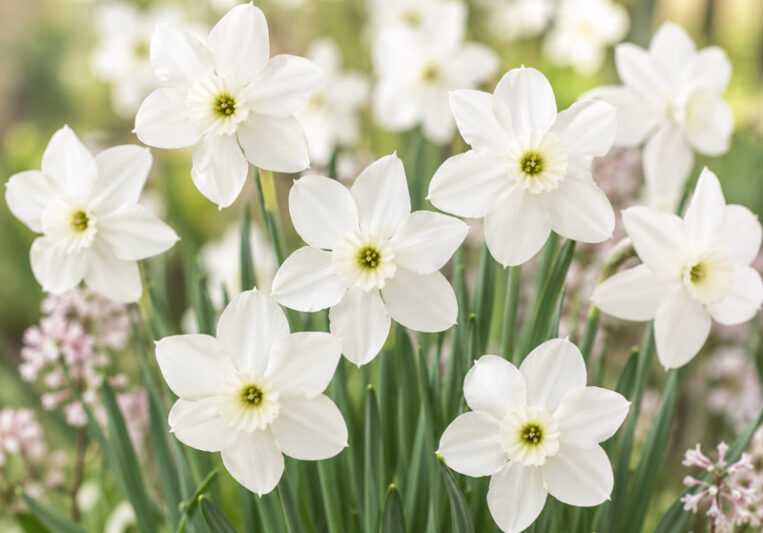


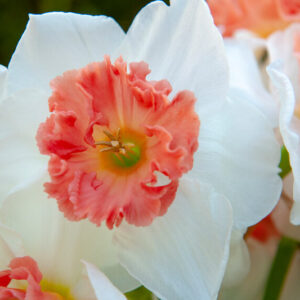
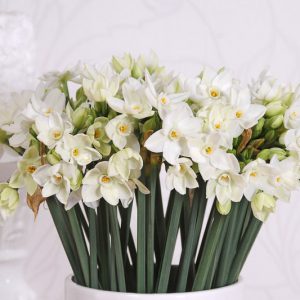
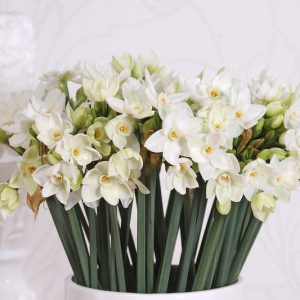
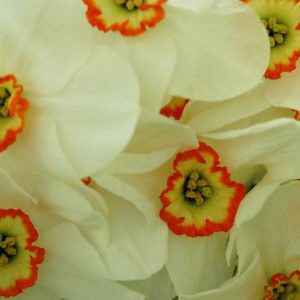
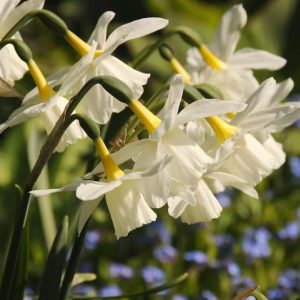
Narcissus ‘Xit’, commonly called daffodil ‘Xit’, is a refined miniature small-cupped daffodil prized for its pure white petals, shallow ribbed white cup, and fresh green center. At only about 6 inches tall, this elegant spring bulb is best appreciated up close, where its delicate flower structure can be seen in detail.
Compact, bright, and quietly distinctive, ‘Xit’ is ideal for rock gardens, troughs, containers, edging, alpine beds, bulb lawns, small borders, and naturalized spring drifts. It blooms in mid-spring, bringing a cool white accent to low bulb combinations and close-view plantings beside paths, steps, patios, and raised beds.
Introduced before 1948 by the noted daffodil breeder Alec Gray, ‘Xit’ has Narcissus rupicola subsp. watieri in its background. That heritage helps explain its small stature, refined flower form, and natural fit in miniature bulb displays. This is not a bold, oversized daffodil. It is a finely scaled spring jewel for gardeners who value detail, proportion, and elegance.
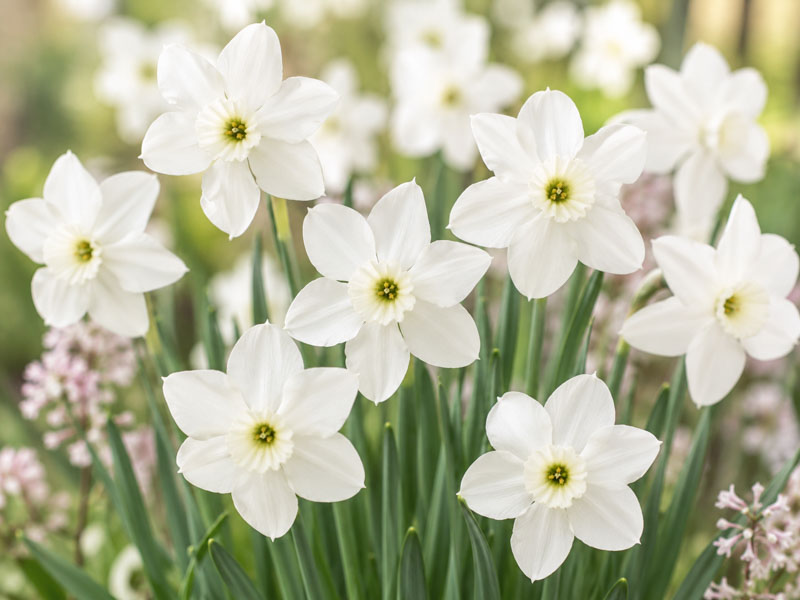
Summary: Petite white small-cupped daffodil with grey-green foliage, pure white petals, and a shallow ribbed white cup touched green at the base.
Use: Excellent for rock gardens, edging, containers, troughs, alpine beds, bulb lawns, woodland edges, and refined front-of-border spring displays.
Highlight: Elegant mid-spring flowers bring crisp white sparkle to small spaces and close-view plantings.
Note: Best in full sun to partial shade and well-drained soil. Avoid soggy, poorly drained sites, especially during bulb dormancy.
| Botanical Name | Narcissus ‘Xit’ |
|---|---|
| Division | Division 3 – Small-Cupped Daffodil |
| Family | Amaryllidaceae |
| Common Names | Daffodil ‘Xit’, miniature daffodil ‘Xit’, white miniature daffodil, small-cupped daffodil ‘Xit’ |
| Origin | Introduced before 1948 by Alec Gray; includes Narcissus rupicola subsp. watieri in its background |
| Native Range | Cultivated hybrid daffodil; not a wild species |
| Plant Type and Habit | Bulbous perennial; compact, upright, clump-forming, spring-flowering habit |
| Hardiness | Generally hardy in USDA Zones 3-8 where winter chilling and good drainage are available |
| Height | About 6 in. tall |
| Spread | About 2-4 in. wide per bulb; slowly forms small clumps by offsets |
| Spacing | Plant bulbs 2-4 in. apart; use closer spacing in containers for a fuller display |
| Sun Exposure | Full sun to partial shade; best flowering occurs with bright spring light |
| Soil | Average to fertile, humus-rich, well-drained soil; suitable for loam, sand, chalk, or improved clay if drainage is good |
| Water Needs | Average moisture during active growth; drier conditions preferred after foliage fades and bulbs become dormant |
| Bloom Time | Mid-spring |
| Flower Color | Pure white petals with a shallow ribbed white cup, green at the base |
| Foliage Color | Grey-green, narrow, strap-like leaves |
| Pollinator Value | Limited nectar value; best paired with bee-friendly low bulbs such as crocus, muscari, and anemones |
| Deer Resistance | Generally deer and rabbit resistant due to bitter, toxic daffodil compounds |
| Best Uses | Rock gardens, containers, edging, troughs, alpine beds, small borders, bulb lawns, naturalized drifts, woodland edges, and small cut-flower arrangements |
Design spark
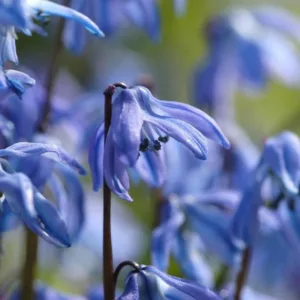
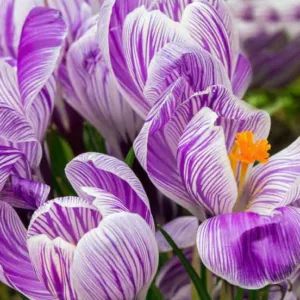
Use ‘Xit’ as a white accent in low spring plantings – along a stone path, in a trough, around the rim of a pot, or among blue scilla, striped crocus, and dwarf muscari.
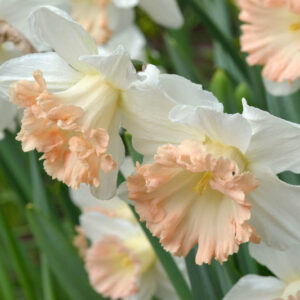
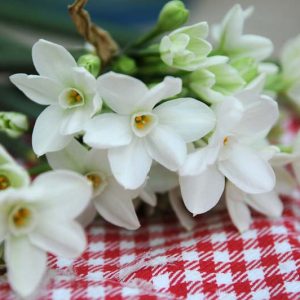
Narcissus ‘Xit’ is a miniature small-cupped daffodil with a crisp, refined flower form. Its broad white perianth segments are smooth and slightly reflexed, surrounding a shallow, strongly ribbed white corona that is greenish toward the base.
‘Xit’ is compact, upright, and finely scaled for small gardens. At about 6 inches tall, it is shorter than many common daffodils and should not be hidden behind larger spring bulbs. Use it at the front of beds, in gravel gardens, alpine troughs, raised planters, window boxes, and low border pockets.
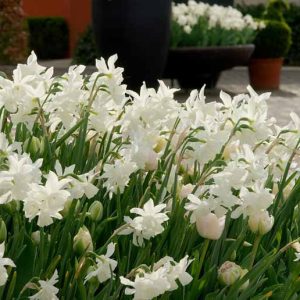
The flowers appear in mid-spring, when they combine naturally with low bulbs that bloom at the same time or slightly earlier. The white flowers are most effective in small drifts or repeated clusters. A single bulb may disappear visually, but a group of 10 to 25 bulbs creates a clean, intentional spring display.
The leaves are narrow, grey-green, and strap-like. After flowering, leave the foliage in place until it yellows naturally. This post-bloom period allows the bulb to replenish itself, ensuring stronger flowering in future years.
Care secret
The best aftercare is patience. Let the leaves feed the bulb, then remove them once they yellow and loosen easily.
Narcissus ‘Xit’ performs best in temperate climates with cool winters and moderate spring moisture. Like most daffodils, it needs a winter chilling period to flower reliably. In warm-winter regions, bulbs may need pre-chilling or may be treated as seasonal spring color.
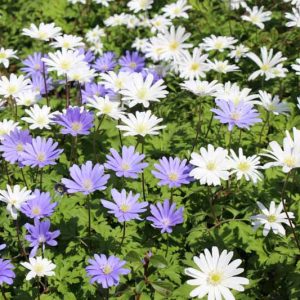
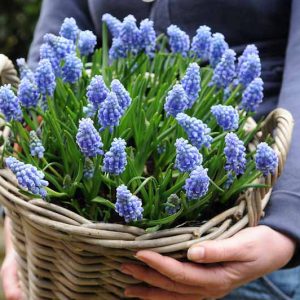
Daffodils are grown mainly for durable spring color rather than high nectar value. For stronger early-season habitat, combine ‘Xit’ with bee-friendly plants such as crocus, grape hyacinths, and Grecian windflowers.
Daffodils are among the most useful flower bulbs that deer will avoid. Their bitter, toxic compounds make them unappealing to rabbits and many browsing animals. Deer resistance is never absolute, but ‘Xit’ is a practical choice where tulips and crocus are often browsed.
During active spring growth, ‘Xit’ prefers average moisture. Once the leaves fade and the bulbs become dormant, it tolerates drier conditions. Avoid frequent summer irrigation in heavy soil or containers without excellent drainage.
All parts of daffodils are toxic if eaten, especially the bulbs. Ingestion may cause serious discomfort in people and pets, and the sap may irritate sensitive skin. Store bulbs safely away from children and animals, and wear gloves if handling many bulbs.
Narcissus ‘Xit’ is not considered invasive. It may increase slowly by offsets where growing conditions are favorable, forming neat clumps rather than aggressive colonies. If clumps become crowded or flowering declines, lift and divide them when dormant.
Full sun gives the best flowering, but partial shade is suitable. One of the best settings is beneath deciduous shrubs or small trees, where bulbs receive bright spring light before the canopy fills in.
Well-drained soil is essential. Average garden soil is suitable, including loam, sandy soil, chalky soil, or improved clay, provided water does not sit around the bulbs. In containers, use a free-draining potting mix and pots with drainage holes.
Water after planting to settle the bulbs. In spring, keep the soil moderately moist during active growth, especially in pots. After the foliage fades, reduce watering and allow the bulbs to rest.
In good soil, ‘Xit’ needs little feeding. In poor soil or containers, add compost or a balanced bulb fertilizer in fall or as shoots emerge. Avoid heavy nitrogen, which encourages leaves at the expense of flowers.
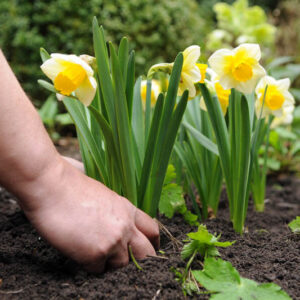
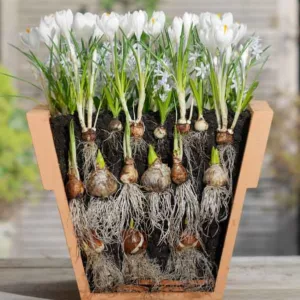
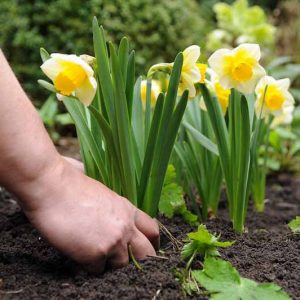
Plant bulbs in fall, several weeks before the ground freezes. Set them about 3 to 4 inches deep and 2 to 4 inches apart. For containers and troughs, use closer spacing for a fuller display. For naturalizing, plant in small informal groups rather than straight lines.
Deadhead faded flowers if you want to keep the planting tidy, but leave the leaves until they yellow naturally. To hide fading foliage, pair ‘Xit’ with low companions that emerge or expand after bloom, such as small sedges, creeping thyme in sunny gravel gardens, or compact hardy geraniums at the edge of a border.
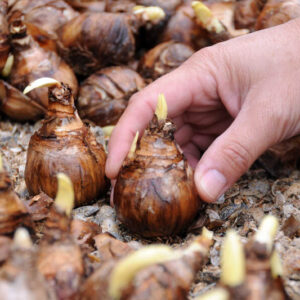
Propagate by dividing bulb offsets during dormancy. Lift congested clumps after the foliage has died back, separate healthy bulbs, and replant immediately or store in a cool, dry, airy place until fall.
Bulb rot: Wet, poorly drained soil can cause bulbs to soften, decay, or fail to sprout. Plant firm, healthy bulbs in well-drained soil and avoid waterlogged containers.
Blind daffodils: Leaves without flowers usually point to overcrowding, too much shade, shallow planting, poor nutrition, or foliage removed too early. Let leaves yellow naturally and divide crowded clumps during dormancy.
Narcissus bulb fly: Larvae tunnel inside bulbs, causing weak growth, collapse, or failure to emerge. Lift and destroy affected bulbs and replant only sound, healthy bulbs.
Narcissus eelworm: This stem and bulb nematode can cause swollen, distorted, yellowing, or stunted foliage, with brown rings visible inside cut bulbs. Remove and destroy affected bulbs and avoid moving suspect soil or bulbs.
Bulb mites: These tiny mites attack damaged, bruised, or rotting bulbs, leading to weak shoots and further decay. Plant only firm bulbs and discard any soft or damaged ones.
Slugs and snails: Young shoots may be nibbled in damp weather, especially in pots and sheltered beds. Remove debris and check containers in early spring.
Virus diseases: Yellow streaks, mottled foliage, distorted growth, or unusual flower markings may indicate virus. Remove affected plants and avoid propagating from suspicious clumps.
Planting formula
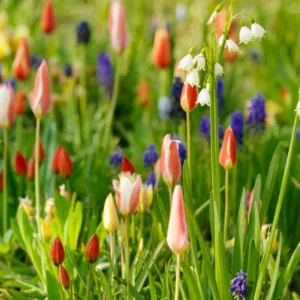
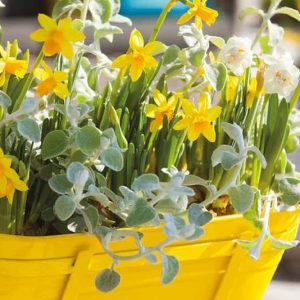
For a low spring trough, plant ‘Xit’ in small clusters and weave crocus, scilla, or Anemone blanda around the edges for color at the same scale.
Narcissus ‘Xit’ is only about 6 inches tall, so the best companions are low bulbs and ground-hugging perennials that bloom in early to mid-spring without hiding its delicate flowers. Choose partners in the 3 to 8 inch range with similar needs: full sun to partial shade, well-drained soil, average spring moisture, and drier conditions after dormancy begins.
Designer tip
Keep the whole composition low. For ‘Xit’, the best companions are miniature bulbs and ground-hugging spring flowers, not standard tulips or tall daffodils.
Narcissus ‘Xit’ is a miniature small-cupped daffodil with pure white petals, a shallow ribbed white cup green at the base, grey-green foliage, and a compact spring-flowering habit.
Narcissus ‘Xit’ usually grows about 6 inches tall, making it ideal for rock gardens, containers, edging, troughs, alpine beds, and the front of spring borders.
Narcissus ‘Xit’ blooms in mid-spring, depending on climate, planting depth, and seasonal weather.
Yes. Narcissus ‘Xit’ is excellent for containers because it is compact, elegant, and easy to combine with low bulbs such as crocus, scilla, muscari, anemones, and other miniature daffodils.
Yes. Like most daffodils, Narcissus ‘Xit’ is generally deer resistant and rabbit resistant because daffodils contain bitter, toxic compounds. Deer resistance is never absolute, but it is a reliable choice for many gardens.
Remove faded flowers if desired, but leave the foliage until it yellows naturally. The leaves feed the bulb and help produce next year’s flowers.
Updated: June 2026 – Reviewed by Gardenia Editors
| Hardiness |
3 - 8 |
|---|---|
| Heat Zones |
1 - 9 |
| Climate Zones | 1, 1A, 1B, 2, 2A, 2B, 3, 3A, 3B, 4, 5, 6, 7, 8, 9, 10, 11, 12, 13, 14, 15, 16, 17, 18, 19, 20, 21, 22, 23, 24, A2, A3 |
| Plant Type | Bulbs |
| Plant Family | Amaryllidaceae |
| Genus | Narcissus |
| Common names | Daffodil |
| Exposure | Full Sun, Partial Sun |
| Season of Interest | Spring (Mid) |
| Height | 6" (15cm) |
| Spread | 2" - 4" (5cm - 10cm) |
| Spacing | 2" - 4" (5cm - 10cm) |
| Depth | 3" - 4" (8cm - 10cm) |
| Maintenance | Low |
| Water Needs | Average |
| Soil Type | Chalk, Clay, Loam, Sand |
| Soil pH | Acid, Neutral, Alkaline |
| Soil Drainage | Moist but Well-Drained |
| Characteristics | Cut Flowers, Showy |
| Tolerance | Rabbit, Clay Soil, Deer, Drought |
| Attracts | Bees, Butterflies |
| Garden Uses | Banks And Slopes, Beds And Borders, Underplanting Roses And Shrubs |
| Garden Styles | Butterfly Garden, City and Courtyard, Coastal Garden, Gravel and Rock Garden, Informal and Cottage, Pollinator Garden, Traditional Garden |


| Hardiness |
3 - 8 |
|---|---|
| Heat Zones |
1 - 9 |
| Climate Zones | 1, 1A, 1B, 2, 2A, 2B, 3, 3A, 3B, 4, 5, 6, 7, 8, 9, 10, 11, 12, 13, 14, 15, 16, 17, 18, 19, 20, 21, 22, 23, 24, A2, A3 |
| Plant Type | Bulbs |
| Plant Family | Amaryllidaceae |
| Genus | Narcissus |
| Common names | Daffodil |
| Exposure | Full Sun, Partial Sun |
| Season of Interest | Spring (Mid) |
| Height | 6" (15cm) |
| Spread | 2" - 4" (5cm - 10cm) |
| Spacing | 2" - 4" (5cm - 10cm) |
| Depth | 3" - 4" (8cm - 10cm) |
| Maintenance | Low |
| Water Needs | Average |
| Soil Type | Chalk, Clay, Loam, Sand |
| Soil pH | Acid, Neutral, Alkaline |
| Soil Drainage | Moist but Well-Drained |
| Characteristics | Cut Flowers, Showy |
| Tolerance | Rabbit, Clay Soil, Deer, Drought |
| Attracts | Bees, Butterflies |
| Garden Uses | Banks And Slopes, Beds And Borders, Underplanting Roses And Shrubs |
| Garden Styles | Butterfly Garden, City and Courtyard, Coastal Garden, Gravel and Rock Garden, Informal and Cottage, Pollinator Garden, Traditional Garden |
How many Narcissus ‘Xit’ (Small-Cupped Daffodil) do I need for my garden?
| Plant | Quantity | |
|---|---|---|
| Narcissus ‘Xit’ (Small-Cupped Daffodil) | N/A | Buy Plants |
Create a membership account to save your garden designs and to view them on any device.
Becoming a contributing member of Gardenia is easy and can be done in just a few minutes. If you provide us with your name, email address and the payment of a modest $25 annual membership fee, you will become a full member, enabling you to design and save up to 25 of your garden design ideas.
Join now and start creating your dream garden!
Create a membership account to save your garden designs and to view them on any device.
Becoming a contributing member of Gardenia is easy and can be done in just a few minutes. If you provide us with your name, email address and the payment of a modest $25 annual membership fee, you will become a full member, enabling you to design and save up to 25 of your garden design ideas.
Join now and start creating your dream garden!