Lily or daylily? Learn how to tell them apart by their leaves, stems, roots, bulbs, flowers, and growth habit. Discover why daylilies are not true lilies and how calla lilies, peace lilies, canna lilies, lily of the valley, Peruvian lilies, and spider lilies fit into the picture.
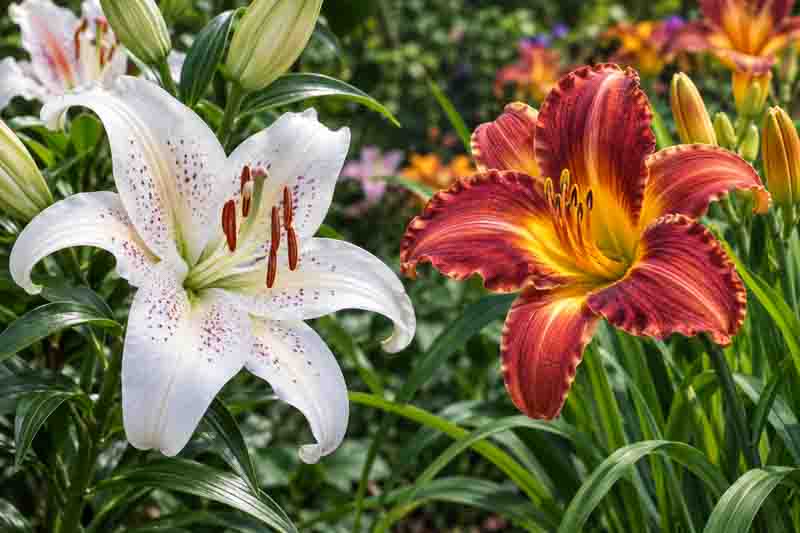


A true lily and a daylily can look surprisingly similar when they are covered in summer flowers, but botanically they are very different plants. A true lily belongs to the genus Lilium and grows from a bulb made of fleshy scales. A daylily belongs to the genus Hemerocallis and grows as a clump of arching leaves from a crown with fibrous and fleshy roots.
The quickest way to tell lilies and daylilies apart is to ignore the flowers for a moment and look at the stems and leaves. True lilies produce upright, leafy stems, with leaves attached along the same stems that carry the flowers. Daylilies produce fountain-like fans of leaves at ground level, while their flowers rise separately on mostly leafless stalks called scapes.
The flowers behave differently too. A true lily flower usually remains attractive for several days. An individual daylily flower typically lasts for about a day, but a mature plant may carry many buds that open one after another, keeping the clump in bloom for weeks.
| Feature | True Lily | Daylily |
|---|---|---|
| Botanical genus | Lilium | Hemerocallis |
| Family | Liliaceae | Asphodelaceae |
| Underground structure | Scaly bulb | Fibrous and fleshy roots arising from a crown |
| Leaves | Attached along the upright stem | Long, strap-like leaves growing in basal fans |
| Stem structure | Flowers and leaves share the same upright stem | Leaves form basal fans; flowers rise on separate scapes |
| Flower stalk | Leafy flowering stem | Mostly leafless scape |
| Individual flower | Usually lasts several days | Typically lasts about one day |
| Growth habit | Separate upright stems arising from bulbs | Expanding clumps made up of leaf fans |
Quick identification rule: Leaves running up the flowering stem usually point to a true Lilium. A fountain of grass-like leaves at ground level, with flowers on separate leafless stalks, points to a daylily.
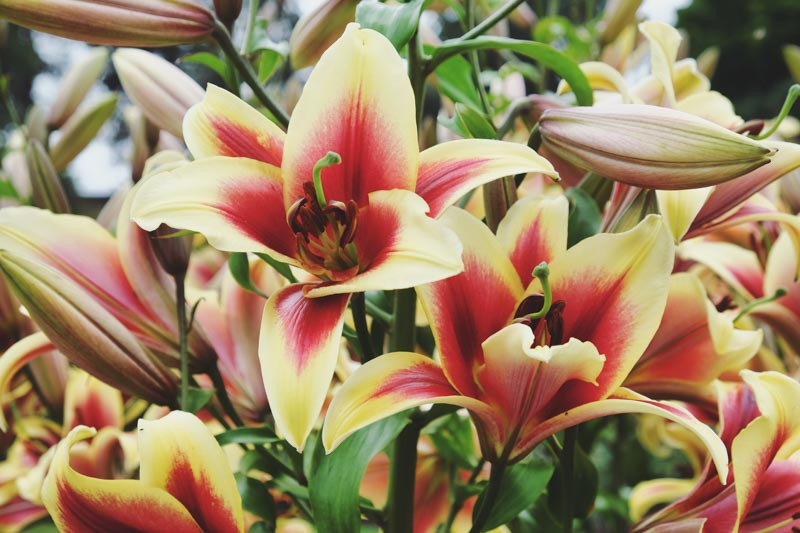
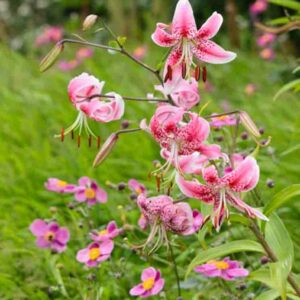
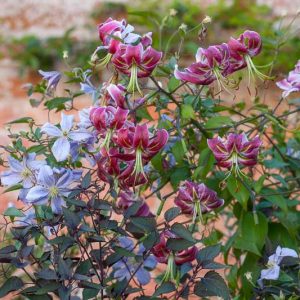
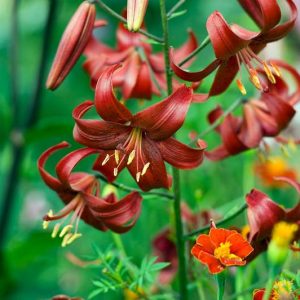
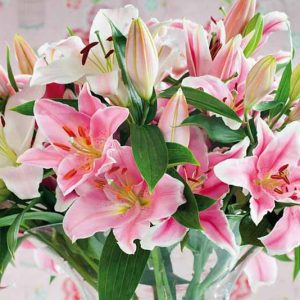
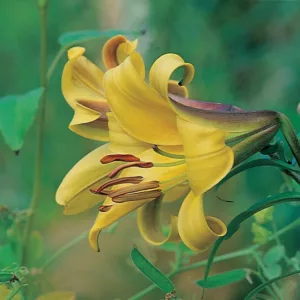
A true lily is a plant belonging to the genus Lilium. These herbaceous perennials are members of the lily family, Liliaceae, and occur naturally across much of the temperate Northern Hemisphere, including parts of Asia, Europe, and North America.
True lilies grow from distinctive bulbs made of overlapping fleshy scales. Unlike tulips or daffodils, lily bulbs generally do not have a protective dry, papery tunic. From the bulb rises an upright stem carrying leaves and, eventually, one or more flowers.
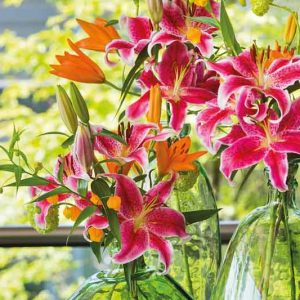
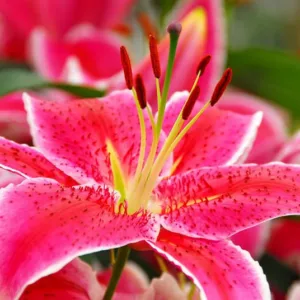
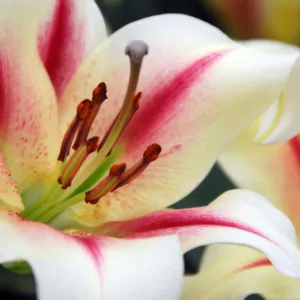
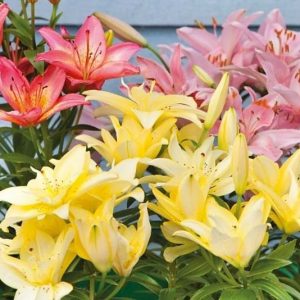
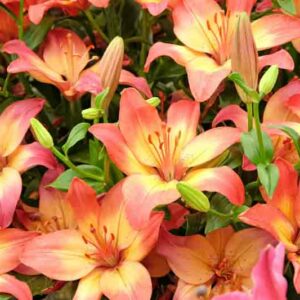
The flowers vary enormously among species and hybrids. They can be trumpet-shaped, bowl-shaped, flat, or strongly recurved, and may face upward, outward, or downward. Despite this diversity, true Lilium flowers share a recognizable basic structure, typically with six tepals and six prominent anthers.
That feature alone does not distinguish a true lily from a daylily, however. Daylily flowers also have six tepals. Stems, foliage, and underground structures are much more reliable identification clues.
True lilies at a glance:
The genus includes familiar garden groups such as Asiatic lilies, Oriental lilies, Trumpet lilies, Martagons, Orienpets, Easter lilies, tiger lilies, and numerous wild species.
Botanical shortcut: If the botanical name begins with Lilium, it is a true lily. If it begins with Hemerocallis, Zantedeschia, Spathiphyllum, Convallaria, Canna, Alstroemeria, or another genus, it is not.
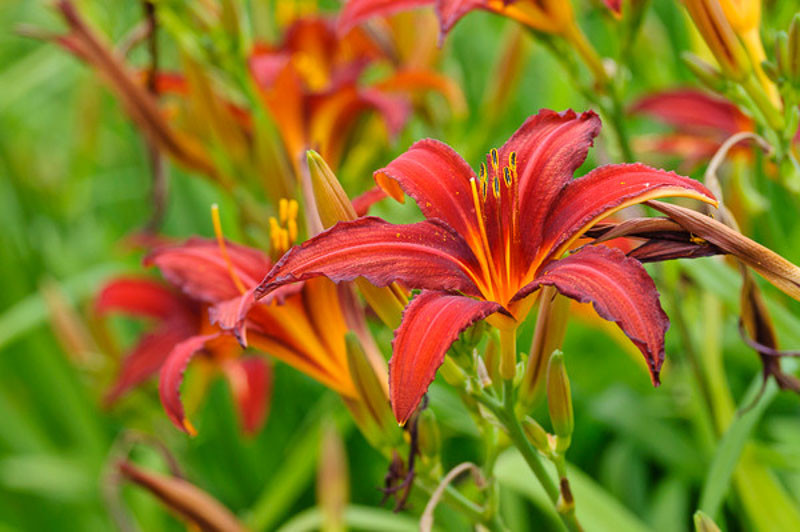
A daylily belongs to the genus Hemerocallis. Despite its common name and distinctly lily-like flowers, it is not a true lily. Daylilies belong to the family Asphodelaceae rather than Liliaceae.
The name Hemerocallis comes from Greek roots associated with “day” and “beauty,” reflecting the short life of each individual flower. Although a bloom typically remains open for about a day, established plants produce many buds in succession.
Daylilies grow as dense fountains of long, narrow, arching leaves. Individual fans arise from crowns at ground level, and additional fans develop as the plant matures, gradually creating a broader clump.
The flowers rise above the foliage on separate stalks known as scapes. These are mostly leafless, immediately distinguishing them from the leafy flowering stems of true lilies.
Daylilies at a glance:
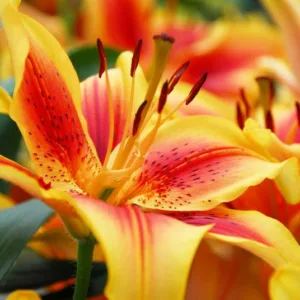
Modern daylily breeding has created an extraordinary range of flowers in yellow, orange, red, pink, purple, cream, near-white, and multicolored combinations, often with contrasting throats, eyes, edges, or other markings. Flower shape can vary so much that a bloom viewed in isolation may convincingly resemble a true lily.
That is why the whole plant, rather than the flower alone, is the best identification guide.
If the plants are not flowering, their leaves are usually the fastest way to tell them apart.
A true lily sends up one or more erect stems from underground bulbs. Leaves are attached along those stems and may be arranged alternately, spirally, or in whorls depending on the species or hybrid. Looking from the ground upward, you see a distinctly vertical, leafy flowering stem.
A daylily looks more like a fountain of ornamental grass when it is out of bloom. Long, narrow leaves arise from crowns at soil level and are grouped into fans. Several fans together create the familiar arching clump.
When the plant flowers, the contrast becomes even clearer. Daylily scapes emerge separately through the foliage and rise above it without the rows of leaves found along a true lily stem.
No flowers? Look at the leaves. True lily leaves climb the stem. Daylily leaves remain concentrated in fountain-like fans at the base of the plant.
The underground structures make the distinction even more obvious.
True lilies grow from bulbs composed of thick, fleshy overlapping scales. These scales store energy and support the following season’s growth. Many lilies also produce offsets that gradually develop into additional flowering bulbs.
Daylilies do not produce true lily bulbs. Instead, they grow from crowns with fibrous and fleshy roots. As the crown develops, it produces additional fans of foliage, and those fans eventually create a larger clump.
This difference affects how the plants are sold and propagated. True lilies are commonly purchased and planted as bulbs. Daylilies are typically sold as container-grown plants or rooted divisions and are readily propagated by dividing established clumps.
You may occasionally see a retailer use the phrase “daylily bulbs.” That is convenient commercial shorthand rather than a precise botanical description. A Hemerocallis is not a bulb-forming plant in the same sense as a true Lilium.
Both plants can produce spectacular six-part flowers, so flower shape alone is less reliable than many gardeners assume. Instead, look at where the flowers are carried and how long individual blooms remain open.
True lily flowers develop toward the upper portion of leafy stems and usually remain attractive for several days. Their fragrance varies enormously. Oriental and Trumpet lilies are famous for powerful perfume, while most Asiatic hybrids have little or no fragrance.
Daylily blooms appear on scapes above the foliage. An individual flower generally lasts for about a day, although the precise opening and fading time varies. Many familiar daylilies open in the morning and fade by night, while nocturnal types may open later in the day and remain attractive into the following morning.
The short life of an individual bloom explains the name “daylily,” but it does not mean the entire plant flowers for just one day. A single scape may carry many buds, and an established clump can have numerous scapes opening flowers in succession. Some cultivars also rebloom later in the growing season.
One flower versus the whole plant: A daylily bloom is short-lived, but the display is not. Each fading flower can be followed by another bud, allowing a mature clump to flower for weeks.
Not exactly. Both are herbaceous perennials valued for spectacular summer flowers, and both can succeed in sunny, well-drained garden sites, but their growth habits and cultural preferences are different enough that they should not be treated as interchangeable plants.
The main growing differences include:
These differences are broad guidelines rather than universal rules. Individual lily groups can have quite different requirements, particularly Oriental, Martagon, American, and species lilies.
For detailed information on true lily soil, planting depth, watering, feeding, staking, winter care, containers, and problems, see Gardenia’s complete guide to planting and caring for lilies.
This question depends on whether you mean the life of a single flower or the flowering period of the entire plant.
At the garden level, both plants can contribute weeks of color when cultivars with different bloom times are combined. The mechanism is different: daylilies replace short-lived flowers with new ones, while lilies open a sequence of longer-lasting flowers on each stem.
Which lasts longer? A single true lily flower usually lasts longer than a single daylily flower. A daylily clump, however, can keep producing fresh flowers from successive buds for an extended period.
For the average perennial border, daylilies usually have the advantage in sheer adaptability. They tolerate a broad range of soils, cope with some drought once established, and require relatively little attention, although flowering is best when plants receive adequate moisture during the growing season.
True lilies are not necessarily difficult. Many Asiatic hybrids, for example, are straightforward garden plants. But good drainage matters greatly because prolonged waterlogging can damage or rot lily bulbs. Some species and hybrid groups also have more specialized soil or climate preferences.
That extra specificity comes with rewards that daylilies cannot completely duplicate. True lilies offer strong vertical structure, exceptional cut flowers, enormous Oriental blooms, fragrant Trumpet flowers, elegant Martagons, and a remarkable range of species and hybrids.
Choose by effect, not just ease: Daylilies are superb for durable, low-maintenance drifts and perennial borders. True lilies bring vertical drama, distinctive flower forms, and, in many groups, extraordinary fragrance.
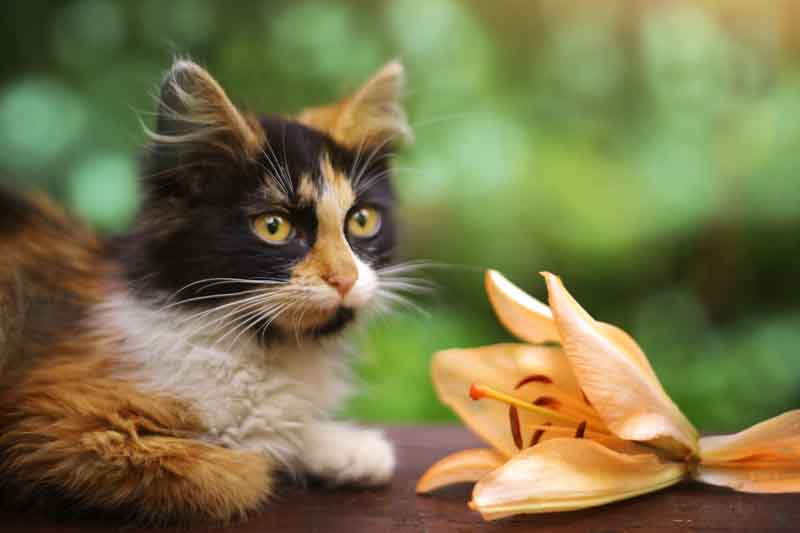
Yes, and this is one difference you should not use to distinguish them. True lilies in the genus Lilium and daylilies in the genus Hemerocallis can both cause severe acute kidney injury in cats.
With true Lilium, poisoning can occur after a cat eats plant material, swallows pollen while grooming it from the coat or paws, or drinks water from a vase containing lilies.
Cat owners: If you suspect a cat has eaten or otherwise been exposed to a true lily or daylily, seek veterinary help immediately. Do not wait for symptoms. Botanical differences matter for plant identification, but both Lilium and Hemerocallis require urgent attention after suspected exposure.
Gardenia’s detailed guide to lilies and cat safety explains which lilies are most dangerous, how pollen and vase water can cause exposure, symptoms of lily poisoning, and what to do in an emergency.
Common plant names developed long before modern botanical classification, which is why the word “lily” appears in the names of many plants that are not members of the genus Lilium. Some have lily-like flowers. Others share a bulbous growth habit, long leaves, fragrance, or simply an elegant appearance that reminded earlier gardeners of lilies.
This is more than botanical trivia. Plants called lilies can have very different cultivation requirements, underground structures, plant families, and toxicities. The botanical name is often the fastest and safest way to determine what plant you actually have.
| Common Name | Genus | True Lily? | What It Actually Is |
|---|---|---|---|
| True lily | Lilium | Yes | Bulbous perennial in Liliaceae |
| Daylily | Hemerocallis | No | Clump-forming perennial in Asphodelaceae |
| Calla lily | Zantedeschia | No | Rhizomatous aroid with a spathe and spadix |
| Peace lily | Spathiphyllum | No | Tropical aroid commonly grown as a houseplant |
| Lily of the valley | Convallaria | No | Rhizomatous woodland perennial in Asparagaceae |
| Canna lily | Canna | No | Rhizomatous perennial in Cannaceae |
| Peruvian lily | Alstroemeria | No | South American perennial in Alstroemeriaceae |
| Spider / resurrection lily | Lycoris | No | Bulbous perennial in Amaryllidaceae |
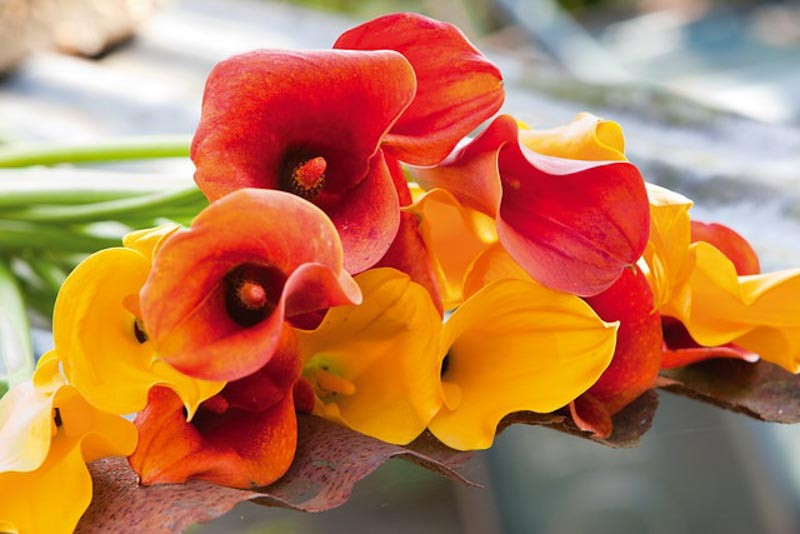
The calla lily belongs to the genus Zantedeschia, a southern African group in the arum family, Araceae. Despite the familiar name, it is not a true lily.
Its famous “flower” is structurally very different from a Lilium flower. The showy, often funnel-shaped spathe is actually a modified leaf surrounding a central spadix on which the small true flowers are borne.
Calla lilies grow from rhizomatous underground structures rather than the scaled bulbs of Lilium. Their broad, often arrow-shaped or spear-shaped leaves provide another immediate clue.
Calla lilies are also toxic in a different way from true lilies. Their tissues contain insoluble calcium oxalate crystals, which can cause painful irritation of the mouth and gastrointestinal tract if chewed.
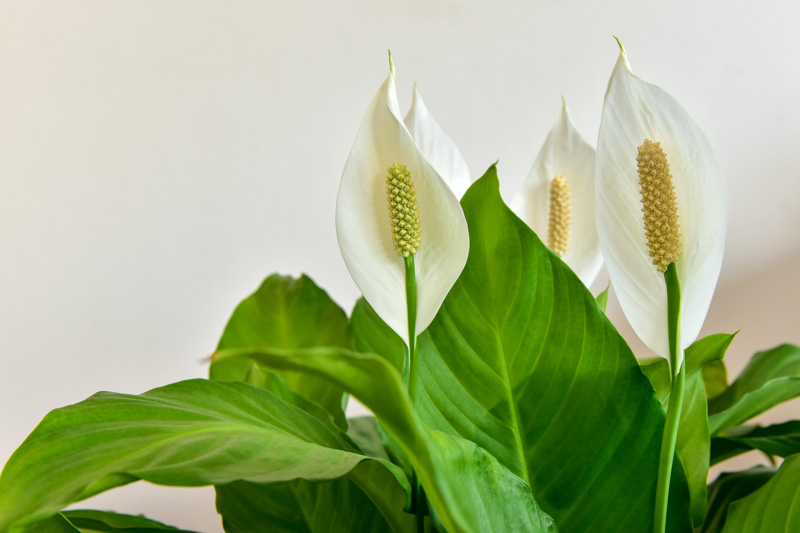
The peace lily, Spathiphyllum, is another member of the Araceae family and not a true lily. Like the calla lily, its characteristic floral display consists of a spathe surrounding a central spadix.
Peace lilies are tropical foliage plants widely grown indoors. Their glossy leaves arise from the base of the plant, and they do not produce the scaly bulbs or upright leafy flowering stems characteristic of Lilium.
The distinction is especially important for cat owners. Peace lilies are toxic because their calcium oxalate crystals can cause painful oral irritation, drooling, and gastrointestinal upset if chewed. However, they do not cause the characteristic lily-induced acute kidney injury associated with true Lilium and Hemerocallis daylilies.
“Not a true lily” does not mean “non-toxic.” Peace lilies, calla lilies, lily of the valley, and other plants carrying “lily” in their common names may still be poisonous, but their toxins and effects differ from those of Lilium.
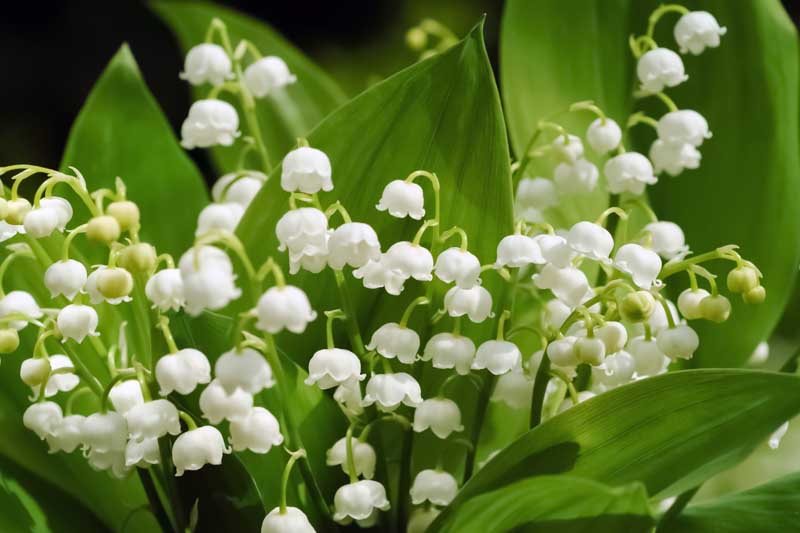
Lily of the valley, Convallaria majalis, is a low-growing woodland perennial in the family Asparagaceae. It is not a true lily.
It spreads through underground rhizomes and forms colonies of broad green leaves. In spring, arching flower stalks carry small, intensely fragrant, bell-shaped white flowers. Once seen as a whole plant, its low, spreading habit bears little resemblance to the upright stems of Lilium.
Lily of the valley is nevertheless highly toxic. It contains cardiac glycosides capable of affecting heart function, so its exclusion from the genus Lilium should never be interpreted as evidence that it is harmless.
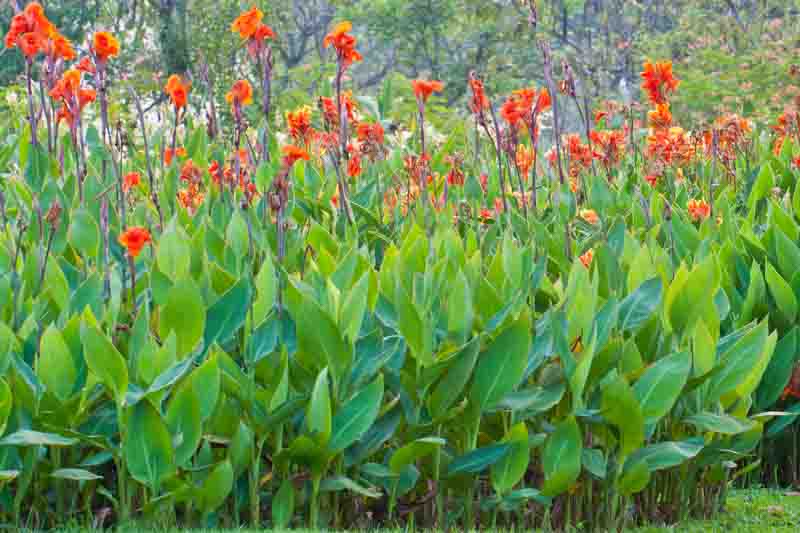
Canna lilies belong to the genus Canna and the family Cannaceae. They are tropical and subtropical rhizomatous perennials grown as much for their dramatic foliage as for their brightly colored flowers.
Cannas are particularly easy to distinguish from true lilies by their leaves. The broad, paddle-shaped foliage can give the plant an almost banana-like appearance and bears little resemblance to the relatively narrow leaves lining most Lilium stems.
Cannas grow from rhizomes rather than true lily bulbs and form substantial clumps. Their flowers, foliage, underground structures, and botanical relationships all confirm that “canna lily” is simply a common name.
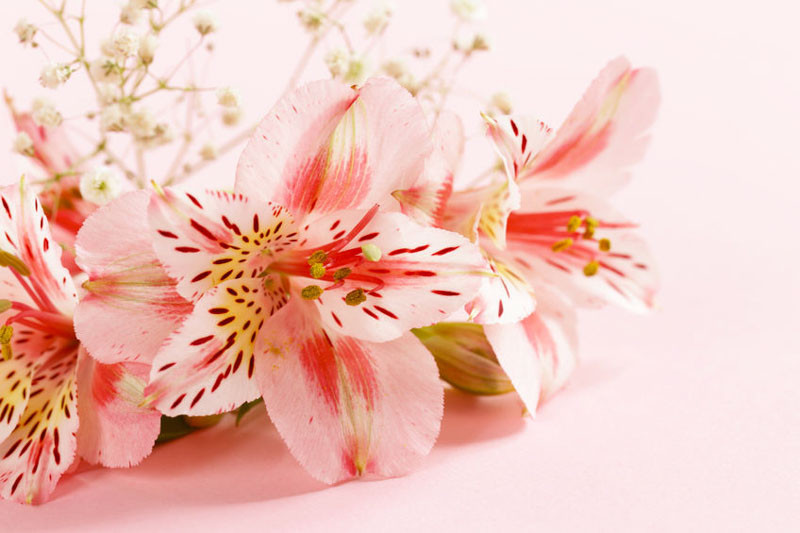
Peruvian lilies belong to the genus Alstroemeria. These South American perennials are especially familiar as cut flowers because their colorful blooms last well in arrangements.
The flowers can resemble smaller true lilies and are often streaked, spotted, or marked with contrasting colors, making Alstroemeria one of the easiest “false lilies” to confuse with Lilium when only the flower is visible.
The whole plant tells a different story. Alstroemerias arise from underground rhizomatous structures and fleshy storage roots rather than scaled lily bulbs. Their distinctive foliage and growth habit also separate them botanically from true lilies.
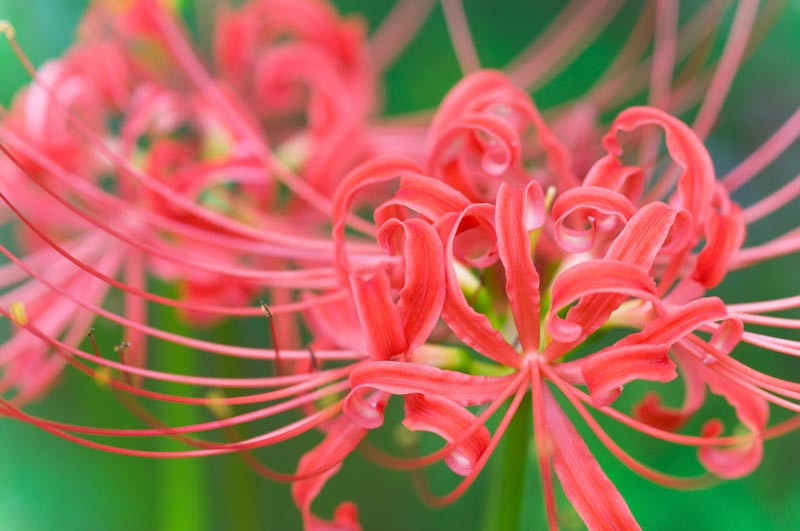
Lycoris species are commonly known as spider lilies, surprise lilies, resurrection lilies, or magic lilies. They are genuinely bulbous plants, but they belong to the amaryllis family, Amaryllidaceae, rather than the lily family.
Their unusual seasonal cycle is one of their signatures. Foliage and flowers appear at different times, and after the leaves disappear, bare flower stalks can seemingly emerge from nowhere in late summer or fall. This abrupt flowering explains names such as surprise lily and resurrection lily.
Lycoris provides an important identification lesson: having a bulb does not automatically make a plant a true lily. Bulbous plants occur in several unrelated plant families.
Common names are descriptive rather than taxonomic. Long before modern botanical classification, plants acquired the word “lily” because some feature reminded people of familiar lilies: a trumpet-like bloom, elegant flower parts, long leaves, a bulbous habit, fragrance, or simply a graceful flower.
That naming tradition gave us daylilies, calla lilies, peace lilies, lily of the valley, canna lilies, Peruvian lilies, spider lilies, and many others. Some are relatively closer to true lilies in the plant evolutionary tree; others are only distantly related.
The solution is not to abandon common names. Common names are familiar and useful. But whenever accurate identification matters – especially for cultivation, toxicity, purchasing, or plant records – the botanical name removes the uncertainty.
The one botanical name worth remembering: Lilium means true lily. Every other plant carrying “lily” in its common name should be checked by botanical name before assuming that it grows, behaves, or has the same toxicity as a true lily.
If you are standing in front of a mystery plant in the garden, stop staring at the flower and work from the bottom upward.
No single clue should be used blindly, but taken together these features make the difference between lilies and daylilies remarkably easy to recognize.
No. True lilies belong to the genus Lilium and family Liliaceae, while daylilies belong to the genus Hemerocallis and family Asphodelaceae. They differ in their bulbs or roots, leaves, stems, growth habit, and flower longevity.
Look at the foliage and stems. True lilies have leaves attached along upright flowering stems. Daylilies form clumps of long, grass-like basal leaves, with flowers carried above them on separate, mostly leafless stalks called scapes.
Usually, an individual daylily flower remains open for about a day. However, daylilies produce many buds that open in succession, so an established plant can remain in bloom for several weeks.
No. Daylilies grow from crowns with fibrous and fleshy roots and produce expanding fans of foliage. True lilies grow from bulbs composed of fleshy scales.
Yes. Lilium species and Hemerocallis daylilies can both cause severe acute kidney injury in cats. Suspected exposure to either group requires immediate veterinary attention.
No. Calla lilies belong to the genus Zantedeschia and family Araceae. Their showy floral structure consists of a spathe surrounding a spadix rather than a true Lilium flower.
No. Peace lilies belong to the genus Spathiphyllum and family Araceae. They are tropical aroids rather than true lilies.
No. Lily of the valley is Convallaria majalis, a rhizomatous woodland perennial in the family Asparagaceae. It is toxic, but its toxic compounds differ from those associated with true lilies.
No. Canna lilies belong to the genus Canna and family Cannaceae. They grow from rhizomes and have broad, tropical-looking foliage, so the word “lily” is only part of their common name.
The genus name Lilium identifies true lilies. Plants called lilies that belong to other genera, including Hemerocallis, Zantedeschia, Spathiphyllum, Convallaria, Canna, Alstroemeria, and Lycoris, are not true lilies.
True lilies and daylilies resemble each other just enough to create plenty of confusion, but once you know what to look for, telling them apart is straightforward.
A true lily is a Lilium. It grows from a scaly bulb, sends up an upright stem with leaves attached along it, and carries flowers that generally remain open for several days. A daylily is a Hemerocallis. It grows as a clump of arching basal leaf fans with fibrous and fleshy roots, sends up separate mostly leafless scapes, and replaces its short-lived flowers with a succession of new blooms.
The larger lesson is equally useful: having “lily” in a common name does not make a plant a true lily. Calla lilies, peace lilies, lily of the valley, canna lilies, Peruvian lilies, and spider lilies belong to different genera, and several belong to entirely different plant families.
When there is any doubt, check the botanical name. If the genus is Lilium, you have a true lily.
Updated: August 2026 • Reviewed by Gardenia Editors
| Hardiness |
3 - 9 |
|---|---|
| Plant Type | Bulbs, Perennials |
| Genus | Hemerocallis, Lilium |
| Exposure | Full Sun, Partial Sun |
| Season of Interest | Spring (Late), Summer (Early, Mid, Late), Fall |
| Maintenance | Low |
| Water Needs | Average |
| Soil Drainage | Moist but Well-Drained |
| Characteristics | Cut Flowers, Fragrant, Showy |
| Attracts | Bees, Butterflies, Hummingbirds |
| Landscaping Ideas | Beds And Borders, Patio And Containers |
| Garden Styles | City and Courtyard, Cutting Garden, Informal and Cottage |
| Hardiness |
3 - 9 |
|---|---|
| Plant Type | Bulbs, Perennials |
| Genus | Hemerocallis, Lilium |
| Exposure | Full Sun, Partial Sun |
| Season of Interest | Spring (Late), Summer (Early, Mid, Late), Fall |
| Maintenance | Low |
| Water Needs | Average |
| Soil Drainage | Moist but Well-Drained |
| Characteristics | Cut Flowers, Fragrant, Showy |
| Attracts | Bees, Butterflies, Hummingbirds |
| Landscaping Ideas | Beds And Borders, Patio And Containers |
| Garden Styles | City and Courtyard, Cutting Garden, Informal and Cottage |
Create a membership account to save your garden designs and to view them on any device.
Becoming a contributing member of Gardenia is easy and can be done in just a few minutes. If you provide us with your name, email address and the payment of a modest $25 annual membership fee, you will become a full member, enabling you to design and save up to 25 of your garden design ideas.
Join now and start creating your dream garden!
Create a membership account to save your garden designs and to view them on any device.
Becoming a contributing member of Gardenia is easy and can be done in just a few minutes. If you provide us with your name, email address and the payment of a modest $25 annual membership fee, you will become a full member, enabling you to design and save up to 25 of your garden design ideas.
Join now and start creating your dream garden!