North America is home to remarkable native lilies, from moisture-loving Canada and Michigan lilies to western Columbia and leopard lilies. Discover where these wild Lilium species grow, which ones suit home gardens, how their habitat shapes cultivation, and why protecting native populations and buying nursery-propagated plants matters.
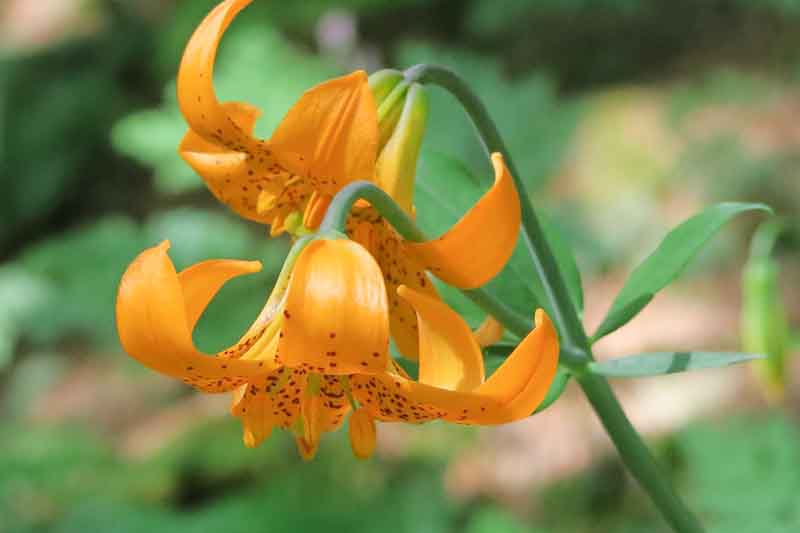


Long before Asiatic, Oriental, Trumpet, and Orienpet hybrids transformed modern gardens, spectacular lilies were already flowering across North America. True native lilies in the genus Lilium grow from eastern wetlands and tallgrass country to Pacific Northwest forest openings, California streambanks, mountain meadows, and coastal habitats.
These are not simply wild versions of familiar garden lilies. North America’s native lilies have evolved for very different ecological settings. Some thrive in rich, consistently moist ground. Others prefer sunny prairies, open woods, or well-drained mountain slopes. Their flowers may face upward, nod from slender stems, or curve backward into the classic Turk’s-cap form.
For gardeners, that diversity is both the attraction and the challenge. A native lily can be magnificent when its natural habitat is understood and surprisingly difficult when planted simply because it is “native.” Native to North America does not mean native to every state, every climate, or every garden.
This guide explores some of the most distinctive North American lilies represented in Gardenia’s plant collection, including their native ranges, natural habitats, garden suitability, and conservation concerns. For a broader introduction to wild lilies from around the world, see Gardenia’s Species and Wild Lilies.
| Native Lily | Broad Native Range | Typical Habitat | Garden Role |
|---|---|---|---|
| Canada Lily Lilium canadense |
Eastern Canada to eastern United States | Wet meadows, rich woods, streamsides, marshes and other moist habitats | Moist native borders, meadow gardens, woodland edges |
| Michigan Lily Lilium michiganense |
Ontario through north-central and east-central United States | Wet meadows, bottomlands, moist woodland edges, prairies | Rain gardens, moist meadows, naturalistic borders |
| Wood Lily Lilium philadelphicum |
Canada across a broad portion of the United States | Prairies, meadows, open woods, clearings and forest margins | Sunny native gardens, meadows and open woodland edges |
| Turk’s-cap Lily Lilium superbum |
East-central and eastern United States | Swamp edges, streamsides, moist meadows and rich woodland openings | Moist borders, pond edges and large naturalistic plantings |
| Columbia Lily Lilium columbianum |
Western Canada to northwestern California, east into the inland Northwest | Prairies, forest openings, woodland edges and meadows | Pacific Northwest native gardens and naturalistic woodland borders |
| Leopard Lily Lilium pardalinum |
Oregon through California to northern Baja California | Streamsides, springs, seeps, wet meadows and moist woodland | Moist western gardens, woodland edges and streamside plantings |
Start with habitat, not flower color. North American lilies range from prairie and open-woodland species to plants closely associated with streams, wetlands, and seeps. Matching the species to your garden conditions is far more important than choosing the prettiest flower.
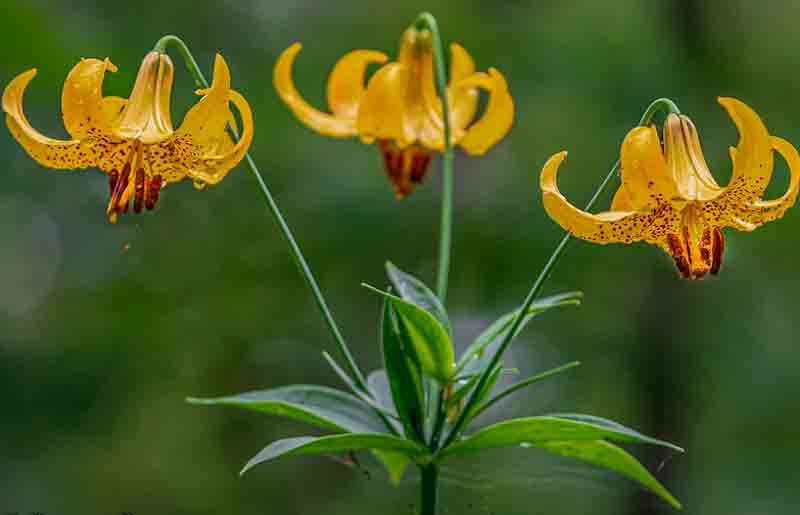
Canada lily (Lilium canadense) is one of the classic lilies of moist eastern North America. Its native range extends from eastern Canada south through much of the eastern United States.
Rather than growing as a rigid garden specimen, Canada lily has an elegant, almost meadow-like presence. Tall stems carry whorls of leaves and clusters of nodding bell-shaped flowers in yellow, orange, or red, usually marked with darker spots.
In the wild it occurs in wet meadows, moist rich woods and woodland edges, streamsides, river alluvium, bogs, marshes, and swamps. That ecological background is an important clue for cultivation.
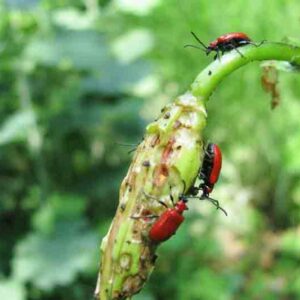
NatureServe currently considers Canada lily globally secure, but that broad status hides considerable local variation. Populations are uncommon or vulnerable in portions of its range, and documented threats include development, invasive plants, logging, collection from the wild, habitat succession, rights-of-way maintenance, and the introduced lily leaf beetle.
Native does not mean drought tolerant. Canada lily is a good example. Its natural history is strongly associated with moist habitats, so planting it in a hot, dry border simply because it is a North American native misses the ecological requirement that makes the species successful.
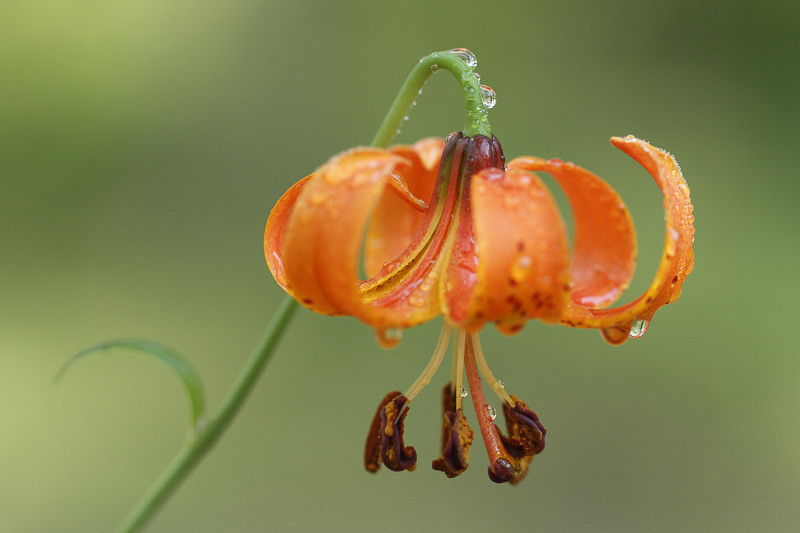
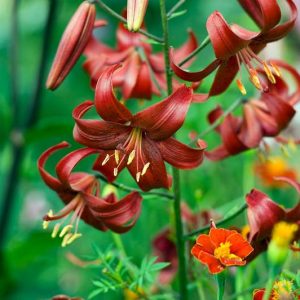
Michigan lily (Lilium michiganense) is a central North American species whose orange-red flowers curve sharply backward into a classic Turk’s-cap shape. Purple spotting adds to the effect, while whorled leaves distinguish the slender upright stems.
Its native range extends from Ontario through much of the north-central and east-central United States. Natural populations occur in wet meadows, bottomlands, moist woodland openings and edges, prairies, and similar sites where the soil remains reasonably moist during active growth.
Michigan lily is one of the easier native lilies to imagine in a contemporary naturalistic garden because its preferred conditions overlap with several popular native-garden settings.
Michigan lily is currently ranked G5, or globally secure, by NatureServe, although that global rank is flagged as needing review. Its conservation status can still vary regionally, so it should be treated as a habitat-specific native rather than a universal garden bulb. Its strongest garden performance usually comes where summer moisture and root-zone conditions resemble those of its native sites.
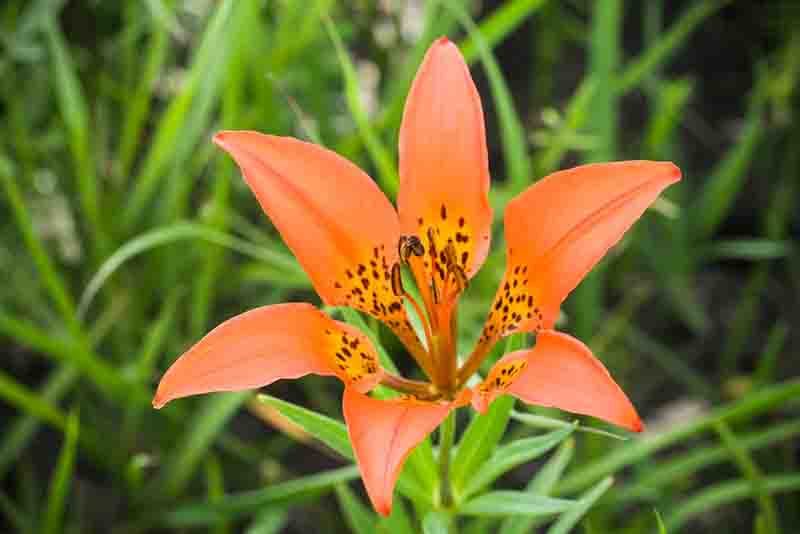
Wood lily (Lilium philadelphicum) is one of the most widely distributed true lilies native to North America. Its range stretches across much of Canada and through a broad portion of the United States.
Unlike many native lilies with nodding flowers, wood lily commonly holds its brilliant orange-red blossoms upright. Dark spotting adds depth to the flowers, which appear above comparatively compact stems.
Despite its common name, this is not exclusively a deep-woodland plant. Wood lily is associated with open woods, forest margins, meadows, prairies, clearings, and other relatively open habitats. Many populations depend on enough light reaching the ground, which helps explain why woody encroachment and the loss of open meadow or prairie habitat can be significant problems.
Wood lily illustrates an important conservation paradox. A species may remain widespread across a continent and still become rare in individual regions. Local populations can decline when prairies and meadows disappear, grazing becomes intensive, deer pressure increases, or flowering stems are repeatedly picked.
Leave wild lilies where they grow. Picking a flower removes that season’s opportunity to produce seed, while digging wild bulbs removes the entire plant. Purchase nursery-propagated native lilies instead of collecting plants from natural populations.
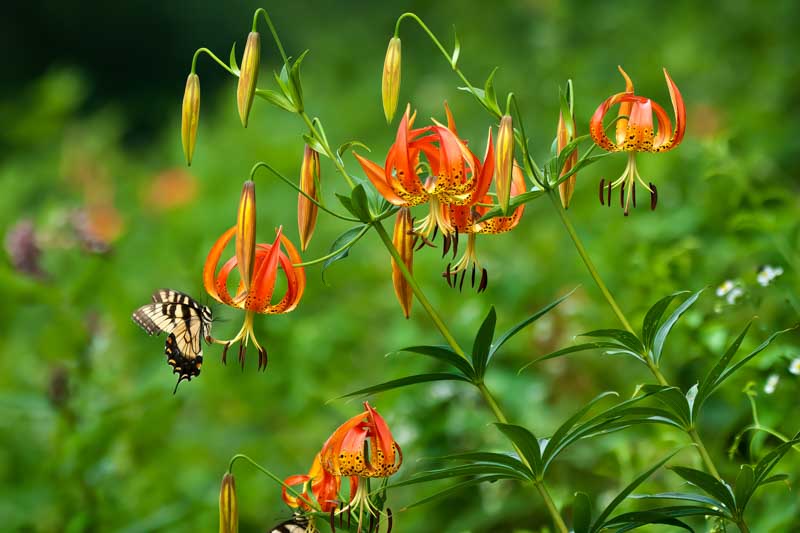
Few native lilies can equal the scale of Lilium superbum. Often called Turk’s-cap lily or swamp lily, it can rise dramatically above surrounding vegetation and carry numerous orange flowers with strongly reflexed tepals and dark spotting.
This spectacular species is native to the east-central and eastern United States. Natural habitats include gaps in rich woods, swamp margins and bottoms, streamsides, moist meadows, thickets, and other sites where water is reliably available but the plant is not permanently submerged.
That makes L. superbum an outstanding choice for gardeners with the right site but a poor choice for a dry border.
NatureServe considers the species globally secure, yet it is rare or vulnerable in several individual states. Threats documented in parts of its range include wetland and habitat alteration, logging, conversion to pasture, invasive plants, deer browse, recreational disturbance, and collection.
That distinction matters when discussing native-plant conservation. A species can be safe from global extinction while individual populations or the habitats supporting them disappear from parts of its historical range.
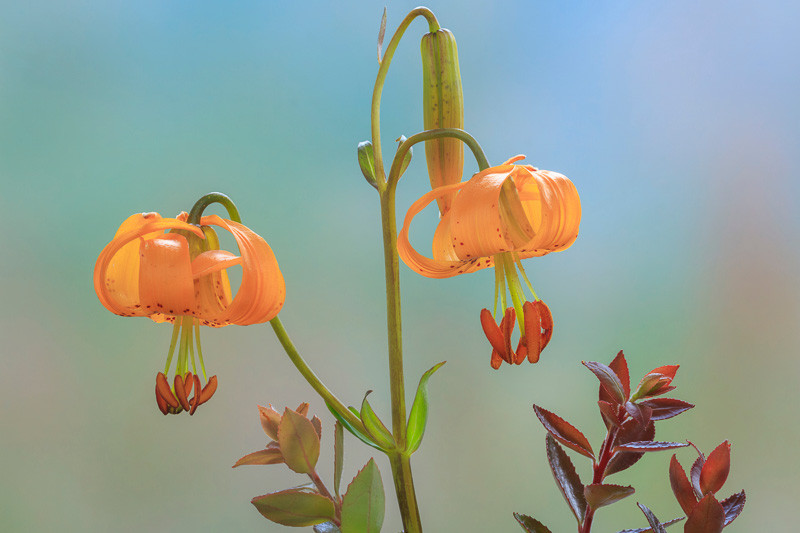
Western North America contributes an entirely different expression of the native lily. Columbia lily (Lilium columbianum) is native from British Columbia south through the Pacific Northwest to northwestern California, with its range extending inland into Idaho and Montana.
The orange to reddish-orange flowers are pendant or nodding and strongly recurved, with abundant reddish or maroon spotting. In favorable plants, numerous flowers can create a remarkable display.
Columbia lily occurs in prairies, meadows, forest openings, forest margins, and coniferous woodland settings. Its habitat range is broader than that of a wetland specialist such as leopard lily, but local soil, elevation, moisture, and climate still matter greatly.
Columbia lily is currently ranked G5 by NatureServe, although its global status is flagged as needing review. Regional status also differs markedly: British Columbia ranks it secure, while Montana ranks it imperiled. This is another reason not to use a continental conservation label as a substitute for state or provincial information.
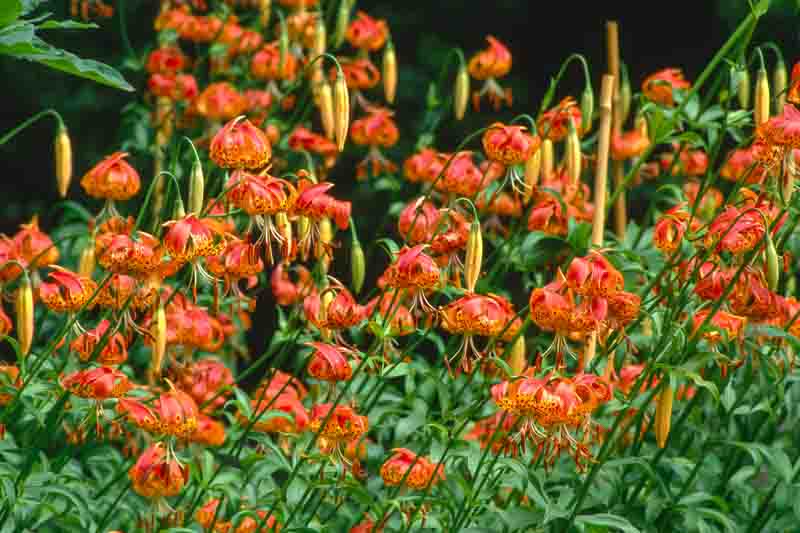
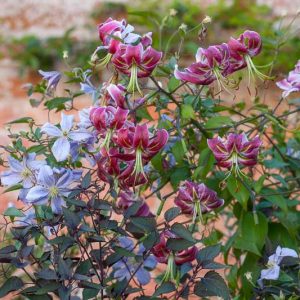
Leopard lily (Lilium pardalinum) is one of the great western wet-habitat lilies. Its native range extends from Oregon through California into northern Baja California.
The spectacular nodding flowers combine orange-red outer portions, yellow centers, and heavy brown spotting. The strongly recurved tepals create the spotted Turk’s-cap appearance behind common names such as leopard lily and panther lily.
In nature, the species is closely associated with moisture. It occurs around streams, springs, seeps, wet meadows, and moist woodland habitats. Rhizomatous bulbs allow established plants to spread into colonies when conditions remain favorable.
At the species level, leopard lily is currently ranked G5 by NatureServe, although that assessment is old and flagged as needing review. Conservation becomes much more serious when individual subspecies are considered. Lilium pardalinum includes several geographically restricted forms, and the Pitkin Marsh lily, Lilium pardalinum subsp. pitkinense, is federally listed as endangered in the United States.
Species-level status can hide rare subspecies. Leopard lily demonstrates why conservation should be examined below the species level. A relatively widespread species can contain highly localized populations or subspecies whose survival depends on only a handful of specialized habitats.
The lilies above are especially useful because Gardenia already provides detailed profiles for them, but they represent only part of North America’s wild Lilium flora.
Western North America in particular contains a remarkable concentration of native lilies, including species associated with California mountains, serpentine landscapes, coastal wetlands, montane forests, and other specialized habitats.
Some are much less suitable for ordinary gardens precisely because their ecological requirements are so narrow. That rarity is part of what makes North American lilies botanically important, but it should not create demand for wild-collected plants.
The conservation story of North American lilies ranges from widespread species that remain globally secure to extremely localized lilies threatened with extinction.
The most striking example is western lily (Lilium occidentale). This species is restricted to a narrow portion of the Pacific Coast of southern Oregon and northern California and has been federally listed as endangered in the United States since 1994.
Its decline illustrates many of the pressures affecting specialized native lilies: wetland drainage, development, conversion of habitat, grazing, changes in natural disturbance patterns, woody encroachment following fire suppression, and horticultural collection.
Conservation concerns affecting North American lilies can include:
Never assume “globally secure” means “locally common.” A native lily may be abundant somewhere in its continental range and protected, rare, threatened, or absent in your state or province. Check local conservation status before planting, collecting seed, or interacting with wild populations.
The best native-lily garden starts with ecology rather than a shopping list. Ask where the species grows naturally and whether your garden can reproduce the same basic conditions.
For general lily cultivation, see Gardenia’s How to Grow and Care for Lilies. Remember, however, that species lilies may need more habitat-specific treatment than widely grown hybrids.
There is no single “best native lily.” The right species depends on location and habitat.
In every case, regional nativity should come before the broad label “North American native.” A plant from Oregon and a plant from Virginia may both be native to the continent while belonging to completely different ecosystems.
Explore Gardenia’s Species and Wild Lilies to discover additional true lilies and compare their flower forms, growing habits, and garden requirements.
If you are choosing lilies more broadly, Gardenia’s How to Choose Lilies explains the differences between species lilies and the major hybrid groups.
Remember: The best native plant is not simply one native somewhere on the continent. Choose species that fit both your region and the ecological conditions of your garden.
Yes. North America has a distinctive native flora of true lilies in the genus Lilium. Examples include Canada lily, Michigan lily, wood lily, Turk’s-cap lily, Columbia lily, leopard lily, western lily, and several other regional species.
Eastern North America supports several native true lilies, including Lilium canadense, Lilium superbum, and Lilium philadelphicum. Lilium michiganense occurs primarily in central North America and reaches portions of the eastern United States. Their ranges and habitat requirements differ substantially.
Western North America has a rich native lily flora. Gardenia profiles include Columbia lily, Lilium columbianum, and leopard lily, Lilium pardalinum. Other western species include highly localized lilies such as the federally endangered western lily, Lilium occidentale.
Some adapt well to gardens, but native lilies vary greatly in their requirements. Moisture-loving Canada, Michigan, Turk’s-cap, and leopard lilies need different conditions from species associated with open meadows or well-drained woodland edges. Matching the natural habitat is essential.
Several North American lilies are associated with moist habitats. Canada lily, Michigan lily, Turk’s-cap lily, and leopard lily can all be useful where regional nativity and site conditions are appropriate. They generally need moisture without prolonged stagnant water around the bulbs.
Conservation status varies greatly. Several widespread North American lilies are considered globally secure but may be rare in individual states or provinces. Other lilies are genuinely imperiled. Lilium occidentale, the western lily, and Lilium pardalinum subsp. pitkinense, the Pitkin Marsh lily, are federally endangered in the United States.
Wild lilies should be left in their natural populations. Digging removes the entire plant, while repeated flower picking can prevent seed production. Obtain nursery-propagated plants from reputable sources and follow local regulations protecting native or rare species.
No. North America covers many distinct ecological regions. A lily native to California or Oregon is not automatically native to the eastern United States, and an eastern wetland lily may not belong in a western native garden. Check the species’ regional range before planting.
North America’s native lilies are far more than ornamental alternatives to familiar hybrid lilies. They are plants shaped by wetlands, prairies, open woods, mountain forests, streams, coastal habitats, and centuries of ecological change.
Canada lily, Michigan lily, wood lily, Turk’s-cap lily, Columbia lily, and leopard lily demonstrate just how varied a native Lilium can be. Their different habitats also explain why there is no universal recipe for growing them.
For gardeners, the best approach is simple: choose regionally appropriate species, reproduce their natural growing conditions as closely as possible, and buy propagated plants rather than taking lilies from the wild.
For conservation, the lesson is broader. Protecting a native lily means protecting more than the flower itself. It means preserving the meadow, prairie, wetland, streamside, woodland opening, or coastal habitat that allows the plant to survive.
Updated: August 2026 • Reviewed by Gardenia Editors
| Hardiness |
3 - 9 |
|---|---|
| Heat Zones |
1 - 7 |
| Climate Zones | 1, 2, 3, 4, 5, 6, 7, 8, 9, 14, 15, 16, 17, 18, 19, 20, 21, 22, 23 |
| Plant Type | Bulbs, Perennials |
| Genus | Lilium |
| Exposure | Full Sun, Partial Sun |
| Season of Interest | Summer (Early, Mid, Late) |
| Maintenance | Low |
| Water Needs | Average |
| Soil Type | Chalk, Clay, Loam, Sand |
| Soil pH | Acid, Alkaline, Neutral |
| Soil Drainage | Moist but Well-Drained, Well-Drained |
| Characteristics | Cut Flowers, Fragrant, Showy |
| Landscaping Ideas | Beds And Borders, Patio And Containers |
| Garden Styles | City and Courtyard, Cutting Garden, Informal and Cottage, Traditional Garden |
| Hardiness |
3 - 9 |
|---|---|
| Heat Zones |
1 - 7 |
| Climate Zones | 1, 2, 3, 4, 5, 6, 7, 8, 9, 14, 15, 16, 17, 18, 19, 20, 21, 22, 23 |
| Plant Type | Bulbs, Perennials |
| Genus | Lilium |
| Exposure | Full Sun, Partial Sun |
| Season of Interest | Summer (Early, Mid, Late) |
| Maintenance | Low |
| Water Needs | Average |
| Soil Type | Chalk, Clay, Loam, Sand |
| Soil pH | Acid, Alkaline, Neutral |
| Soil Drainage | Moist but Well-Drained, Well-Drained |
| Characteristics | Cut Flowers, Fragrant, Showy |
| Landscaping Ideas | Beds And Borders, Patio And Containers |
| Garden Styles | City and Courtyard, Cutting Garden, Informal and Cottage, Traditional Garden |
Create a membership account to save your garden designs and to view them on any device.
Becoming a contributing member of Gardenia is easy and can be done in just a few minutes. If you provide us with your name, email address and the payment of a modest $25 annual membership fee, you will become a full member, enabling you to design and save up to 25 of your garden design ideas.
Join now and start creating your dream garden!
Create a membership account to save your garden designs and to view them on any device.
Becoming a contributing member of Gardenia is easy and can be done in just a few minutes. If you provide us with your name, email address and the payment of a modest $25 annual membership fee, you will become a full member, enabling you to design and save up to 25 of your garden design ideas.
Join now and start creating your dream garden!