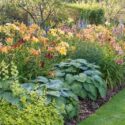
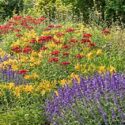
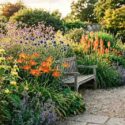
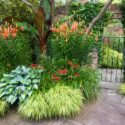
Discover the best fragrant daylilies for paths, patios, borders, and containers. Compare very fragrant classics, compact rebloomers, colorful scented cultivars, and evening-opening flowers, then learn how bloom season, placement, plant size, and weather affect fragrance so you can create a garden that smells as beautiful as it looks.
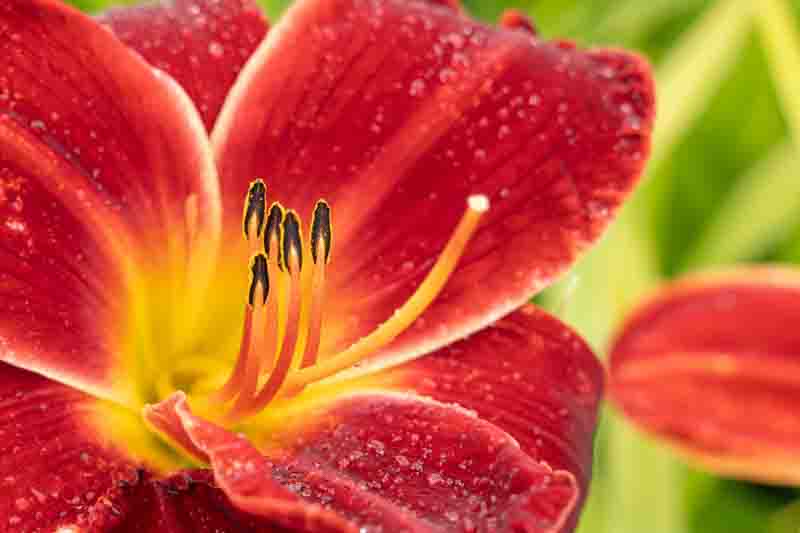


Daylilies are usually chosen for flower color, bloom season, size, or rebloom, but fragrance can completely change how a planting feels. A scented daylily beside a path, patio, bench, or doorway gives you something a distant border cannot: a reason to stop, lean in, and experience the flower rather than simply admire it.
Not every daylily (Hemerocallis) is noticeably fragrant. The American Daylily Society recognizes fragrance as a registered cultivar characteristic and distinguishes between fragrant and very fragrant flowers. It also notes an important reality: scent can vary with the cultivar, time of day, and weather.
That means choosing the best fragrant daylily involves more than looking for the word “fragrant” in a plant description.
A strongly scented cultivar planted at the back of a deep border may contribute less to your experience than a moderately fragrant daylily beside the chair where you drink coffee every morning. Bloom season matters too. So do flower height, rebloom, time of opening, color, plant size, and whether the flowers are close enough to actually smell.
Gardenia’s Fragrance Placement Rule: Choose fragrance for where you experience the garden, not simply for where you have space. Place scented daylilies beside paths, patios, seating areas, entrances, decks, and frequently used garden routes where flowers can be enjoyed at close range.
Some are. Some are only lightly scented. Others have little noticeable fragrance at all.
The American Daylily Society describes daylily fragrance as generally light and pleasing, while noting that certain cultivars are considerably more scented than others. Fragrance is important enough to be recorded during cultivar registration, where a daylily may be designated as having no fragrance, being fragrant, or being very fragrant.
That distinction is useful, but it should not be treated as a laboratory fragrance score.
Your own perception can change during the day. Temperature, humidity, wind, flower age, and the time a particular cultivar opens can influence how easily you detect its scent. One gardener may notice a flower immediately while another has to lean close.
The practical lesson is simple: fragrance is a real cultivar trait, but your experience of it is influenced by both genetics and conditions.
Do not expect every fragrant daylily to perfume an entire garden. Many are best appreciated at close range. Use fragrance as an invitation to interact with the planting rather than expecting the effect of a lilac, jasmine, or intensely scented rose.
Fragrance matters, but it should not be the only selection criterion.
A daylily occupies garden space for the entire growing season, while each individual flower usually lasts only about a day. The best scented cultivar for a real landscape therefore needs to work as a complete plant.
Gardenia gives particular weight to six characteristics.
A cultivar does not need to excel in all six categories. A fragrant heritage daylily may earn its place even without rebloom. A compact fragrant rebloomer may be more useful beside a patio even if its scent is less pronounced.
The goal is to choose the right fragrant daylily for the role you want it to play.
The selections below provide a range of colors, sizes, bloom seasons, flower forms, and garden uses. Some are described or registered as very fragrant, while others combine fragrance with rebloom, compact growth, unusual color, extended flowering, or strong garden performance.
This is deliberately not a strongest-to-weakest fragrance ranking. Scent perception is subjective and can vary with weather, time of day, flower age, and the individual gardener.
How to use this list: Choose first by fragrance and the garden role you need, then compare bloom season, color, height, rebloom, foliage habit, and mature spread. “Very fragrant” and “fragrant” describe cultivar characteristics, not guaranteed scent intensity under every weather condition.
See the recommended fragrant daylilies below and select any plant to open its full Gardenia profile, with photos, mature size, bloom season, growing requirements, fragrance, and other characteristics.
| Hardiness |
3 - 9 |
|---|---|
| Heat Zones |
2 - 11 |
| Climate Zones | 2, 3, 4, 5, 6, 7, 8, 9, 10, 11, 12, 13, 14, 15, 16, 17, 18, 19, 20, 21, 22, 23, 24, H1, H2 |
| Plant Type | Perennials |
| Genus | Hemerocallis |
| Exposure | Full Sun, Partial Sun |
| Season of Interest | Summer (Early, Mid, Late), Fall |
| Maintenance | Low |
| Water Needs | Average |
| Soil Type | Chalk, Clay, Loam, Sand |
| Soil pH | Acid, Alkaline, Neutral |
| Soil Drainage | Moist but Well-Drained, Well-Drained |
| Characteristics | Showy |
| Tolerances | Drought, Rabbit, Dry Soil, Salt |
| Attracts | Butterflies, Hummingbirds |
| Landscaping Ideas | Banks And Slopes, Beds And Borders, Patio And Containers |
| Garden Styles | City and Courtyard, Coastal Garden, Informal and Cottage, Traditional Garden |
Find the right fragrant daylily: Use Gardenia’s Plant Finder to explore daylilies by fragrance, flower color, bloom season, size, exposure, and other characteristics. Use the Daylily Comparison Tool to compare cultivars side by side, or the Garden Design Tool to compare mature sizes and flowering seasons and build a planting palette for your garden.
A list of fragrant cultivars is useful. A way to choose among them is more useful.
Gardenia’s selection approach combines fragrance with the practical role each daylily can play in the landscape.
The important point is that fragrance does not exist independently of garden design. A scented daylily becomes far more valuable when its height, bloom period, color, and position all support the way you use the space.
Do not hide your most fragrant cultivars where you rarely walk.
The ideal position is somewhere fragrance can interrupt your normal routine.
If container growing is part of your plan, see Gardenia’s Daylilies in Pots: Best Varieties and Container Care.
Move fragrance into your life. A fragrant daylily 30 feet from the patio may function mainly as a colorful daylily. The same cultivar beside a seat, gate, or walkway becomes a sensory plant.
It can.
The American Daylily Society specifically notes that scent may vary with the time of day and weather conditions. This is one reason two gardeners can describe the same cultivar differently, or why the same flower can seem more noticeable at one hour than another.
Flower-opening habit also matters.
Most daylilies are diurnal, opening during the day. Nocturnal cultivars begin opening later, generally in the afternoon or evening, and can remain open overnight into the following morning. Some flowers are classified as extended because they remain open for at least 16 hours.
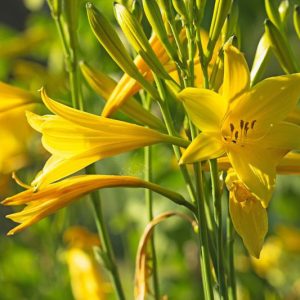
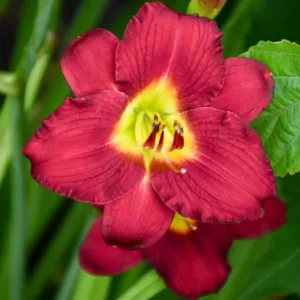
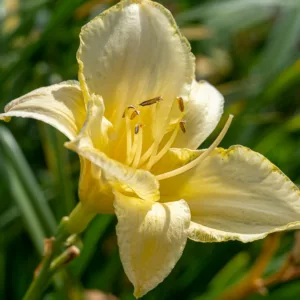
Hemerocallis lilioasphodelus, for example, is a fragrant species whose lemon-yellow flowers open toward evening. ‘Pardon Me’ combines a nocturnal flowering habit with rich burgundy-red color, while other fragrant cultivars are best enjoyed during daytime garden use.
If fragrance is important to you, visit the planting at different hours before deciding whether a cultivar is poorly scented. Weather and flower age can change the experience.
Yes – and this is one of the best reasons not to choose fragrant daylilies on scent alone.
A single cultivar has a limited primary bloom period. By combining cultivars with different flowering seasons and adding rebloomers, you can stretch both color and fragrance across a much larger part of summer.
Hemerocallis lilioasphodelus can contribute fragrance relatively early. ‘Happy Returns’, ‘Wineberry Candy’, ‘Romantic Returns’, and other fragrant cultivars broaden the main summer display, while reblooming selections can send up additional scapes later when conditions allow.
Rebloom should not be interpreted as continuous flowering or guaranteed repeat bloom in every climate. Genetics create the potential, but growing-season length, temperature, moisture, plant vigor, and local conditions influence whether that potential is fully expressed.
For a longer flowering strategy, see Gardenia’s Best Reblooming Daylilies for Repeat Summer Flowers.
Gardenia’s Fragrance-Season Strategy: Do not search for one “perfect” scented daylily. Combine fragrant cultivars with different primary bloom seasons and add rebloomers where appropriate. The result is a sequence of fragrance instead of one short peak.
No. Fragrance does not create a separate set of cultural requirements.
Fragrant daylilies generally need the same conditions as other Hemerocallis: substantial sunlight for good flowering, reasonably fertile and well-drained soil, and reliable moisture during active growth.
RHS notes that daylilies flower most prolifically in full sun, although they can grow in partial shade. Deep shade generally reduces flowering.
Water is particularly valuable while flower scapes and buds are developing and during the bloom season. A drought-stressed plant may survive, but survival is not the same as producing its best flower display.
Established daylilies usually do not require heavy feeding. Fertilize according to actual soil needs rather than assuming a flowering perennial needs repeated applications of “bloom booster.”
For complete planting, watering, feeding, division, and seasonal care, see Gardenia’s complete daylily growing and care guide.
Many classic fragrant daylilies are yellow or pale-flowered, which can create the impression that fragrance belongs mainly to yellow Hemerocallis.
It does not.
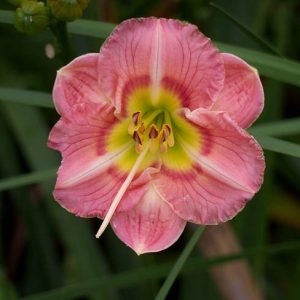
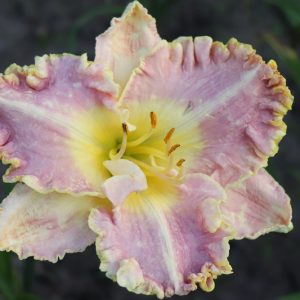
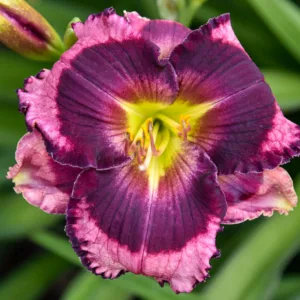
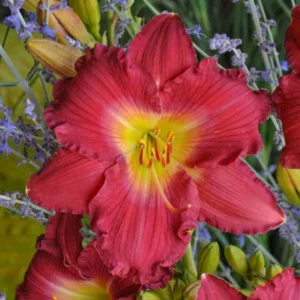
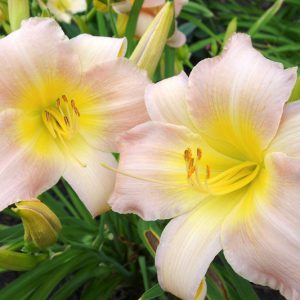
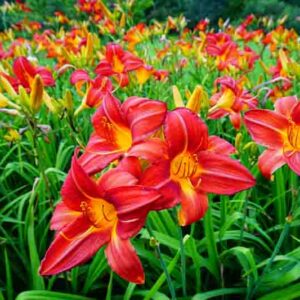
The fragrant selections above demonstrate how broad the color range can be. ‘Pardon Me’ is burgundy-red. ‘Wineberry Candy’ is orchid-pink with a wine-purple eye. ‘Bestseller’ is lavender. ‘Storm Shelter’ is purplish-pink with a dark halo. ‘Romantic Returns’ is deep rose-pink. ‘Catherine Woodbury’ brings soft lavender-pink into the palette.
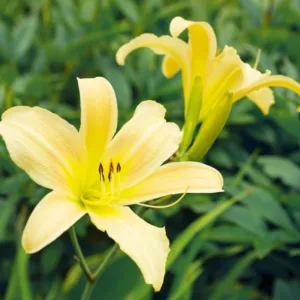
Yellow fragrant cultivars remain exceptionally useful because they combine scent with bright garden visibility, but you do not need to sacrifice your color scheme to include fragrance.
This is particularly useful when designing mixed borders. Fragrance can be layered into pink, purple, red, white, or pastel plantings rather than treated as a separate yellow-daylily category.
A fragrant border works best when scent is layered into the design rather than scattered randomly.
Instead of placing one fragrant daylily at each end of a long border, repeat scented cultivars or fragrance zones where people naturally pause or pass close to the flowers.
Compact cultivars such as ‘Stella de Oro’, ‘Happy Returns’, ‘Fragrant Returns’, and ‘Pardon Me’ work toward the front. Mid-height cultivars such as ‘Ice Carnival’, ‘Wineberry Candy’, and ‘Catherine Woodbury’ can sit deeper in the planting. ‘Hyperion’ adds a taller, graceful layer.
A succession of early, midseason, later, and reblooming fragrant cultivars gives you more sensory value than a border where every scented plant flowers during the same short period.
Fragrant roses, phlox, lavender, dianthus, lilies, herbs, or shrubs can expand the sensory season, but avoid creating a planting where every scent is competing intensely at the same moment.
A garden often feels more sophisticated when fragrance appears in waves.
If scent is the objective, do not bury compact fragrant daylilies behind tall companion plants. Their flowers should remain visible and close enough to experience.
For compatible planting ideas, see Gardenia’s companion plants for daylilies.
Yes, and containers may actually make fragrance easier to enjoy.
A pot can place the flowers immediately beside a chair, outdoor table, balcony door, or walkway. Compact fragrant cultivars such as ‘Stella de Oro’, ‘Happy Returns’, ‘Fragrant Returns’, ‘Pardon Me’, ‘Bestseller’, and ‘Storm Shelter’ are particularly easy to integrate into patio spaces.
The cultivar still needs enough root space, good drainage, regular watering, and adequate sunlight. A fragrant label does not make a daylily more tolerant of poor container conditions.
Remember that potted plants dry faster than established daylilies growing in the ground and require more regular feeding because their roots depend on a limited volume of potting mix.
Use Gardenia’s container daylily guide for pot size, cultivar selection, watering, feeding, repotting, and winter care.
This is not necessarily a labeling error.
The American Daylily Society notes that daylily scent can vary with time of day and weather. Fragrance may seem stronger at certain hours or under different temperature and humidity conditions.
Your distance from the flower matters too. Many fragrant daylilies produce a pleasing scent that is obvious close to the bloom but does not carry across an entire yard.
If a cultivar seems unexpectedly unscented:
A fragrance label describes a cultivar characteristic, not a guaranteed perfume cloud. Judge scented daylilies at flower level, under several conditions, before deciding how noticeable their fragrance is in your garden.
It is tempting to turn a fragrant-daylily article into a contest for the strongest-smelling flower.
That is not how most gardeners actually use daylilies.
A plant has to earn its space when it is not in flower. Its foliage must fit the location. Its flower scapes need to sit at the right height. Its color should work with neighboring plants. Its primary bloom should complement the rest of the border. If repeat flowering is important, the cultivar needs the genetic ability to rebloom.
Fragrance then becomes an additional layer of garden value rather than the only reason the plant is there.
Gardenia’s Whole-Plant Fragrance Test: Before choosing a scented daylily, compare fragrance + height + bloom season + flower color + rebloom + foliage + placement. The best fragrant cultivar is the one whose scent and garden performance work together in the place where you intend to grow it.
The best fragrant daylily is not simply the cultivar described as having the strongest scent.
Daylily fragrance varies by cultivar and can also change with time of day and weather. Some flowers are registered or described as very fragrant, while many others provide a lighter scent that is most noticeable at close range.
For especially fragrant choices, consider ‘Ice Carnival’, ‘Catherine Woodbury’, and Hemerocallis lilioasphodelus. For compact fragrant plants with long garden value, look at ‘Happy Returns’, ‘Fragrant Returns’, ‘Pardon Me’, or ‘Stella de Oro’. ‘Wineberry Candy’ combines documented fragrance with striking color and a distinguished fragrance-award history, while ‘Hyperion’ brings scent higher into the border.
Then think beyond individual cultivars. Combine different bloom periods, use rebloomers where appropriate, and position fragrant flowers beside the paths, patios, entrances, and gathering places you actually use.
The most effective fragrant-daylily garden combines scent + season + scale + placement.
When those elements work together, fragrance becomes more than another item in a plant description. It becomes part of how the garden is experienced.
Some daylilies are fragrant, while others have little noticeable scent. The American Daylily Society records fragrance as a cultivar characteristic and distinguishes between fragrant and very fragrant daylilies. Scent can also vary with time of day and weather.
Gardenia highlights choices such as ‘Ice Carnival’, ‘Catherine Woodbury’, and Hemerocallis lilioasphodelus for gardeners seeking pronounced fragrance. Fragrance perception varies with cultivar, weather, time of day, and the individual gardener, so this should not be interpreted as an objective strongest-to-weakest ranking.
Yes. ‘Wineberry Candy’ is documented as fragrant and combines scent with orchid-pink flowers, a wine-purple eyezone, an extended flowering habit, and rebloom. It also received the American Daylily Society’s L. Ernest Plouf Award for fragrance.
Many classic fragrant daylilies are yellow, but fragrance is not limited to yellow flowers. Fragrant cultivars are available in pink, red, lavender, ivory, and multicolored forms, including ‘Pardon Me’, ‘Wineberry Candy’, ‘Bestseller’, ‘Storm Shelter’, and ‘Catherine Woodbury’.
They can. The American Daylily Society notes that daylily scent may vary with time of day and weather conditions. Flower-opening habit also matters, since some cultivars open during the day while nocturnal daylilies open later and remain open into the evening or night.
Yes. Compact fragrant cultivars can be excellent container plants because pots bring the flowers closer to patios, seating areas, balconies, and doorways. Container-grown daylilies need adequate root space, excellent drainage, regular watering, sufficient sunlight, and seasonal feeding.
No. Fragrant daylilies generally need the same care as other Hemerocallis: good light for flowering, well-drained soil, adequate moisture during active growth, and division when clumps become crowded. Fragrance itself does not create special cultural requirements.
Fragrance can vary with time of day, weather, flower age, distance from the bloom, and individual scent perception. Try smelling several freshly opened flowers at different times before concluding that the cultivar lacks fragrance.
Combine fragrant cultivars with different primary bloom seasons and include reblooming varieties where appropriate. Gardenia recommends building a fragrance sequence rather than relying on one cultivar, since rebloom and flowering duration vary with genetics, climate, moisture, and growing conditions.
American Daylily Society – Fragrant – specialist guidance on daylily fragrance and how scent can vary with cultivar, time of day, and weather.
American Daylily Society – Daylily Database – official registered cultivar information including flower characteristics, bloom season, foliage type, rebloom, fragrance, and flower-opening habit.
Royal Horticultural Society – How to Grow Hemerocallis – guidance on choosing daylilies, sunlight, soil, planting, watering, containers, and general culture.
Royal Horticultural Society – Hemerocallis Trial Results – garden-performance information for daylilies and cultivar evaluation.
Gardenia – Hemerocallis Daylilies – cultivar profiles, photographs, mature dimensions, flower characteristics, fragrance, bloom season, rebloom, growing requirements, and garden uses.
Gardenia – Daylilies in Pots – cultivar selection, container sizing, watering, feeding, repotting, and winter care.
Gardenia – How to Grow and Care for Daylilies – complete daylily planting, watering, fertilizing, flowering, division, and seasonal care guidance.
Updated: August 2026 • Reviewed by Gardenia Editors
| Hardiness |
3 - 9 |
|---|---|
| Heat Zones |
2 - 11 |
| Climate Zones | 2, 3, 4, 5, 6, 7, 8, 9, 10, 11, 12, 13, 14, 15, 16, 17, 18, 19, 20, 21, 22, 23, 24, H1, H2 |
| Plant Type | Perennials |
| Genus | Hemerocallis |
| Exposure | Full Sun, Partial Sun |
| Season of Interest | Summer (Early, Mid, Late), Fall |
| Maintenance | Low |
| Water Needs | Average |
| Soil Type | Chalk, Clay, Loam, Sand |
| Soil pH | Acid, Alkaline, Neutral |
| Soil Drainage | Moist but Well-Drained, Well-Drained |
| Characteristics | Showy |
| Tolerances | Drought, Rabbit, Dry Soil, Salt |
| Attracts | Butterflies, Hummingbirds |
| Landscaping Ideas | Banks And Slopes, Beds And Borders, Patio And Containers |
| Garden Styles | City and Courtyard, Coastal Garden, Informal and Cottage, Traditional Garden |
Create a membership account to save your garden designs and to view them on any device.
Becoming a contributing member of Gardenia is easy and can be done in just a few minutes. If you provide us with your name, email address and the payment of a modest $25 annual membership fee, you will become a full member, enabling you to design and save up to 25 of your garden design ideas.
Join now and start creating your dream garden!
Create a membership account to save your garden designs and to view them on any device.
Becoming a contributing member of Gardenia is easy and can be done in just a few minutes. If you provide us with your name, email address and the payment of a modest $25 annual membership fee, you will become a full member, enabling you to design and save up to 25 of your garden design ideas.
Join now and start creating your dream garden!