Missing buds, ragged holes, sticky leaves, scarred flowers, or pale stippling? Learn how to identify what is attacking your daylilies from the damage it leaves behind. Diagnose deer, slugs and snails, thrips, aphids, spider mites, gall midge, leafminer, cutworms, and other pests, then choose the right response.
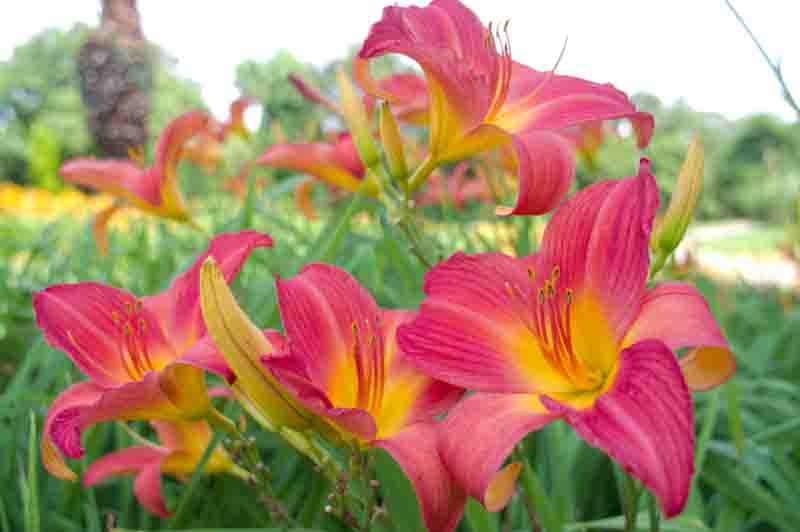


You walk into the garden expecting another round of daylily flowers and discover that half the buds have disappeared. Or perhaps the leaves are full of ragged holes, the flowers are opening scarred and distorted, or healthy-looking foliage has suddenly developed hundreds of tiny pale speckles.
Something may be attacking your daylilies – but identifying the culprit takes more than finding the nearest insect.
Daylilies (Hemerocallis) are generally tough, dependable perennials, and many pest encounters remain minor. Deer, slugs and snails, thrips, aphids, spider mites, daylily gall midge, daylily leafminer, cutworms, beetles, grasshoppers, and other animals can all damage daylilies, but they leave very different clues.
The fastest route to the right diagnosis is therefore not to ask, “What pests live in my garden?” Start with what part of the daylily was damaged and what the damage actually looks like.
A missing flower bud points in a different direction from a swollen bud that never opens. Ragged holes suggest something very different from pale stippling. Sticky scapes, winding trails inside leaves, shredded foliage, and scarred petals each narrow the possibilities further.
Gardenia’s Daylily Pest ID Rule: Read the damage before looking for the pest. Ask four questions: What part of the plant is affected? Is tissue missing, distorted, stippled, sticky, scarred, swollen, or mined? When did the damage appear? What physical evidence – insects, slime, webbing, honeydew, droppings, mines, tracks, or bite marks – confirms the suspect?
The American Daylily Society emphasizes that different pests injure plants in different ways. Some chew away tissue. Others pierce cells and suck plant juices. Some feed inside buds, while leafminers tunnel between the surfaces of a leaf.
That makes the damage pattern one of the most useful identification tools you have.
This table narrows the suspects, but it does not replace inspection. Before treating anything, find evidence that the suspected pest is actually responsible.

If healthy daylily buds seem to vanish overnight, deer should be high on your list of suspects.
Daylilies should not be treated as reliably deer-resistant. Deer may browse foliage, flower scapes, buds, and flowers, and a favorite clump can lose much of its display just before the buds were ready to open.
Because deer lack upper incisors, browsed vegetation is often torn or ragged rather than neatly clipped. Look beyond the damaged daylily for hoofprints, droppings, browsing on nearby plants, and repeated damage at a height deer can easily reach.
Missing and malformed are different clues. A bud that has vanished points toward browsing. A bud that remains attached but is scarred, sticky, distorted, or abnormally swollen should shift the investigation toward insects or other causes.
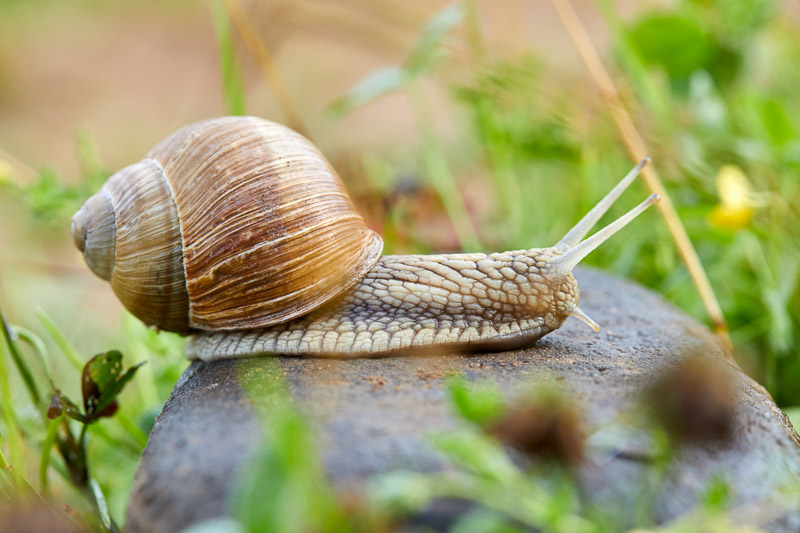
Irregular holes and shredded leaf margins are classic chewing symptoms, and slugs and snails are common suspects on tender daylily growth.
These molluscs are most active at night or during cool, damp conditions. During the day they shelter beneath boards, stones, pots, dense vegetation, plant debris, or other places that remain moist.
A shiny slime trail is particularly useful evidence.
Damage may be most conspicuous on young leaves, where feeding can leave the foliage looking shredded between the veins.
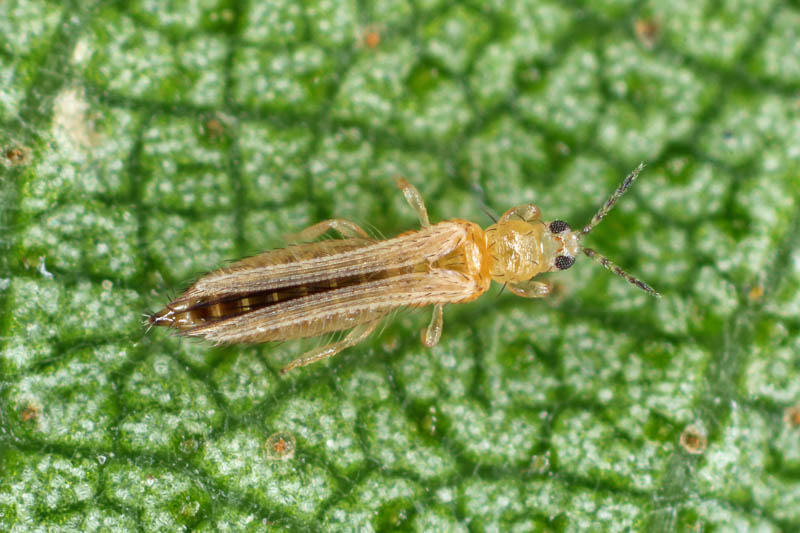 Thrips tabaci (Onion Thrips) feeding on plant tissue
Thrips are frustrating because they are tiny and often feed in protected areas between leaves, inside buds, and among flower parts.
Several species can occur on daylilies, including the daylily thrips, Frankliniella hemerocallis.
On leaves, feeding can create pale patches or streaks. Tiny dark droppings may appear near the injured tissue. Bud feeding can produce streaking, distorted flowers, damaged petals, or bud drop, while flower scapes may develop corky lesions.
Do not diagnose thrips from one unattractive flower. Heat, weather injury, physical damage, and other pests can also spoil daylily blooms.
Look for a repeated pattern across several buds, leaves, flowers, or scapes and inspect protected areas closely.
Do not diagnose thrips from one ugly flower. Confirm a pattern of feeding injury and look for insects or dark droppings before treating the whole daylily bed.
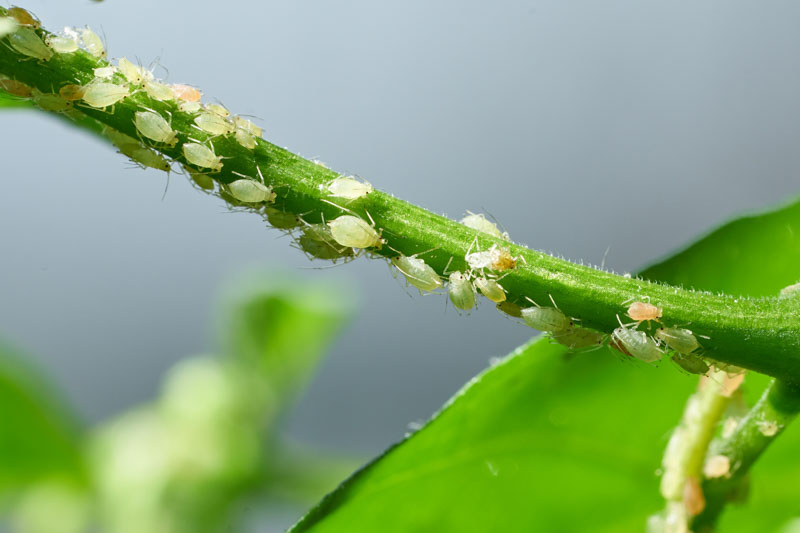
Aphids are small, soft-bodied insects that pierce plant tissue and feed on sap. The daylily aphid, Myzus hemerocallis, is particularly associated with Hemerocallis.
Look deep between the leaves as well as along tender growth. Daylily aphids can feed in colonies tucked into the fans, where they are easy to overlook.
Two clues are especially helpful.
The first is honeydew, the sticky substance aphids excrete while feeding. The second is the presence of tiny whitish cast skins left behind as the insects molt.
Heavy infestations can distort tender growth, but a few aphids do not automatically require treatment. Lady beetles, lacewings, syrphid fly larvae, parasitic wasps, and other natural enemies can keep populations below damaging levels.
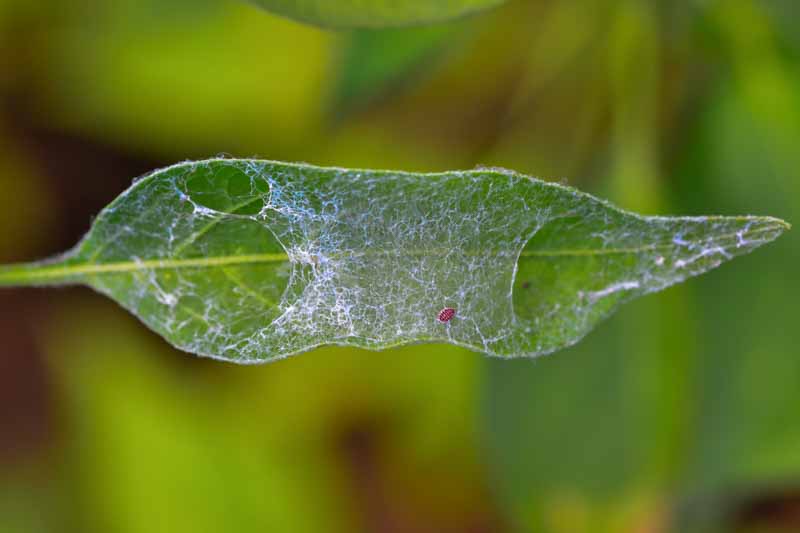 Spider mite webbing on a pepper leaf
Spider mites do not chew holes in daylily leaves. They pierce individual plant cells and remove their contents.
The result is often fine pale or yellow stippling scattered across the foliage. As infestations become heavier, leaves can look faded, bronzed, dry, or generally unhealthy.
This damage is easily confused with drought or heat stress because spider mite problems themselves often increase during hot, dry weather.
Inspect both sides of affected leaves. The mites are extremely small and may require magnification to see clearly. Fine webbing can develop when populations become heavier, although webbing is not always obvious early in an infestation.
Stippling is not a hole. If the leaf tissue is still present but covered with hundreds of tiny pale feeding marks, investigate mites and other piercing feeders before blaming deer, slugs, or chewing insects.
Daylily gall midge, Contarinia quinquenotata, produces one of the most distinctive daylily pest symptoms.
Affected flower buds become shorter, wider, and abnormally swollen instead of developing the normal elongated shape. They fail to open and may eventually dry or rot.
Inside an affected bud, numerous tiny, pale larvae can be found feeding in watery plant tissue.
This is not a pest every gardener will encounter. Geography matters. RHS reports daylily gall midge as widespread in England and Wales and established in parts of Scotland, while the American Daylily Society notes that the pest was first identified in North America in 2001.
Use the bud itself as evidence: Missing bud – investigate browsing. Scarred or distorted bud – inspect for thrips. Sticky tender growth – look for aphids. Short, fat, swollen bud that never opens – investigate gall midge where the pest occurs.
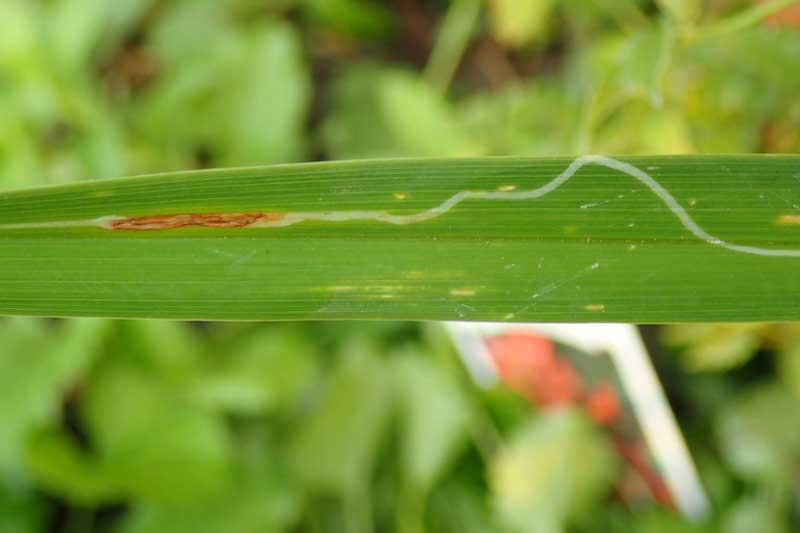
If a leaf develops long, pale, winding trails that appear trapped inside the blade rather than sitting on its surface, investigate daylily leafminer.
The daylily leafminer, Ophiomyia kwansonis, is a small fly whose larvae feed between the upper and lower surfaces of daylily leaves.
The feeding trail creates distinctive whitish serpentine mines that widen as the larva grows.
This pattern differs from leaf streak, rust, slug feeding, and mite stippling. The tissue has been mined internally rather than simply spotted, scraped, or chewed away.
Inspect new daylilies before introducing them into an established collection. If leafminer is confirmed, remove and destroy mined leaves where practical rather than leaving infested foliage in the bed.
Because distribution can change, gardeners encountering an unfamiliar leafminer should consult local Extension or other regional plant-health guidance for current information.
Not every chewed daylily is the work of a slug or deer.
The American Daylily Society records a wider range of occasional pests, including cutworms, Japanese beetles, cucumber beetles, tarnished plant bugs, grasshoppers, leafhoppers, white grubs, and others.
Most will not be equally important in every region or garden.
Cutworms are caterpillars that typically feed at night and hide near or just beneath the soil surface during the day. Depending on the species, they can damage tender growth near the base or climb plants to feed.
If young shoots have been chewed close to soil level, inspect nearby soil and debris for curled caterpillars.
Adult beetles may chew flowers or foliage when locally abundant. Identify the beetle before deciding how to manage it. An irregular hole alone does not tell you which chewing insect caused it.
Grasshoppers can remove substantial pieces of leaf or flower tissue during outbreak years. Their larger bites are very different from the pinprick stippling created by spider mites or the internal mines produced by leafminers.
Some scarab beetle larvae live below ground and have been reported feeding on daylily roots. Suspect root-feeding grubs only when the plant is declining and grubs are actually found around affected roots.
Do not diagnose an underground pest simply because a daylily is weak. Poor drainage, root or crown problems, planting stress, drought, and disease can produce similar above-ground symptoms.
One of the easiest ways to waste time – and pesticides – is to treat a disease or growing problem as though something were eating the plant.
Daylily leaf streak can produce brown lesions surrounded by yellow tissue. Daylily rust produces orange-yellow pustules. Crown and root problems may cause yellowing, wilting, loose fans, or collapse.
Those symptoms require a very different response from deer browsing or slug feeding.
Use the pattern:
For a broader symptom-by-symptom diagnosis, use Gardenia’s Daylily Problems: Yellow Leaves, Spots and Poor Bloom.
Finding a pest does not automatically mean you need to eliminate it.
The American Daylily Society advises assessing the amount of injury before taking control measures. A few insects may cause little meaningful damage, and natural enemies may reduce the population without intervention.
Before treating, ask:
If treatment becomes necessary, choose the least disruptive effective option available. If a pesticide is required, select a product labeled for both the pest and the intended ornamental use and follow the label exactly.
Broad-spectrum treatments can eliminate beneficial insects along with pests and may sometimes allow secondary pest populations to increase.
Gardenia’s Pest-Control Threshold: Presence is not the same as damage, and damage is not always severe enough to justify treatment. Confirm the culprit, judge the injury, then choose the least disruptive control that can realistically solve the problem.
Healthy daylilies are not pest-proof, but sensible garden care reduces stress and makes plants better able to tolerate minor feeding.
Severe drought stress can reduce plant vigor and favor pests such as spider mites. Moisture is particularly important while scapes and buds are developing and during flowering.
More fertilizer does not automatically mean healthier plants. High nitrogen levels can produce lush, tender growth that is attractive to several pests, including aphids.
For complete soil, feeding, watering, and maintenance guidance, use Gardenia’s complete daylily planting and care guide.
Different pests call for different kinds of sanitation. Remove unnecessary damp hiding places around beds where slugs and snails are a recurring problem. Destroy mined leaves when daylily leafminer is confirmed. Remove galled flower buds promptly where daylily gall midge occurs.
Look carefully at new plants before adding them to an established collection. Check leaves for mines and stippling, inspect the fans for aphids, examine buds for unusual swelling or scarring, and look at the crown and roots for signs of poor health.
Lady beetles, lacewings, syrphid fly larvae, parasitic wasps, predatory mites, spiders, and other predators contribute to natural pest control.
A diverse garden with flowering plants and restrained pesticide use gives those beneficial organisms a better chance to work.
If the foliage looks healthy but flowers are failing, concentrate first on buds, scapes, browsing, and recent growing conditions rather than treating the whole plant for a foliage disease.
If the plant is healthy but simply produces few scapes or flowers, the culprit may not be a pest at all. Sunlight, planting depth, crowding, moisture, excessive feeding, recent division, and cultivar behavior can all affect flowering.
Gardenia’s Why Are My Daylilies Not Blooming? Causes and Fixes provides a separate diagnostic path for those plants.
Gardenia’s diagnostic shortcut: First decide whether tissue is being removed, altered, or simply failing to develop. Missing tissue suggests a browser or chewing pest. Altered tissue points toward feeding, mining, or gall formation. Healthy tissue with poor flowering shifts the diagnosis toward growing conditions rather than pests.
Pest management becomes easier when a garden is designed around plants suited to the site rather than forcing stressed plants to survive unsuitable conditions.
Use Gardenia’s Plant Finder to explore plants by sunlight, soil, moisture, size, tolerance, wildlife value, and other characteristics.
If you are choosing among daylily cultivars, use the Daylily Comparison Tool to compare plants side by side.
You can then use Gardenia’s Garden Design Tool to combine plants, compare mature dimensions and seasons of interest, and build a planting palette suited to your garden.
Good plant selection will not eliminate every aphid, slug, deer visit, or thrips outbreak. But matching plants to their growing conditions reduces avoidable stress and makes unusual damage easier to recognize.
Daylilies can attract deer, slugs and snails, aphids, thrips, spider mites, gall midge, leafminers, and other occasional pests, but most gardens will never experience all of them.
The useful skill is not memorizing a long pest list. It is learning how to read the plant.
Then confirm the suspect before treating.
Finding an insect does not prove it caused the damage. Finding damage does not automatically mean a pesticide is necessary. And a disappointing daylily does not necessarily have a pest problem at all.
The most reliable diagnosis combines affected plant part + damage pattern + timing + confirming evidence.
Once those clues agree, the right response becomes much clearer.
Start with the damage pattern. Missing buds can indicate deer, ragged holes and slime suggest slugs or snails, sticky growth points toward aphids, scarred or distorted flowers may indicate thrips, fine stippling suggests spider mites, swollen unopened buds can indicate gall midge where present, and winding white trails inside leaves suggest daylily leafminer.
Yes. Daylilies should not be considered reliably deer-resistant. Deer may browse foliage, flower scapes, buds, and flowers. Browsed tissue is often torn or ragged rather than neatly clipped.
Yes. Slugs and snails can create irregular holes, ragged edges, and shredded areas on tender daylily foliage. They feed mainly at night or during damp conditions and often leave shiny slime trails.
Thrips can cause pale streaks or patches on leaves, scarred or distorted buds and flowers, bud drop, and corky scape lesions. Tiny dark droppings may appear near feeding damage. Inspect protected areas carefully because thrips often hide between leaves and inside buds.
Look for colonies of small soft-bodied insects tucked between leaves or on tender growth. Sticky honeydew and tiny whitish shed skins are useful clues. Daylily aphids may hide deep inside the fans, where they can be difficult to see and difficult to reach with contact treatments.
Spider mite feeding produces fine pale or yellow stippling rather than holes. Heavier infestations may cause faded or bronzed foliage and fine webbing. Mites are extremely small, so inspect both sides of the leaves closely, especially during hot, dry weather.
Where daylily gall midge occurs, larvae can cause buds to become unusually short, wide, swollen, and unable to open normally. Remove and destroy affected buds promptly and confirm that gall midge occurs in your region before assuming it is the cause.
Not necessarily. First confirm that the pest is causing meaningful damage. Healthy daylilies can tolerate some feeding, and natural enemies often suppress small pest populations. When intervention is needed, begin with the least disruptive effective method and use pesticides only according to the label.
American Daylily Society – Daylily Pests – specialist guidance on pest identification from feeding damage, deciding whether control is necessary, beneficial insects, and lower-impact management.
American Daylily Society – Aphids – guidance on daylily aphids, honeydew, cast skins, nitrogen, natural enemies, and the limitations of contact treatments.
American Daylily Society – Thrips – guidance on thrips identification, leaf and flower symptoms, drought, nitrogen, and management.
American Daylily Society – Spider Mites – guidance on spider mite symptoms, hot and dry conditions, webbing, and management.
Royal Horticultural Society – Hemerocallis Gall Midge – identification, distribution, biology, affected buds, and management of daylily gall midge.
UC Statewide IPM – Snails and Slugs – identification, habitat management, handpicking, barriers, and slug and snail bait guidance.
Gardenia – Daylily Problems: Yellow Leaves, Spots and Poor Bloom – Gardenia’s symptom-based guide to distinguishing pests, diseases, water stress, crown problems, and normal foliage decline.
Gardenia – Why Are My Daylilies Not Blooming? – Gardenia’s diagnostic guide to sunlight, planting depth, moisture, crowding, plant health, pests, and other causes of poor flowering.
Gardenia – How to Grow and Care for Daylilies – complete planting, watering, feeding, maintenance, pest, disease, and flowering guidance.
Updated: August 2026 • Reviewed by Gardenia Editors
| Hardiness |
3 - 9 |
|---|---|
| Heat Zones |
2 - 11 |
| Climate Zones | 2, 3, 4, 5, 6, 7, 8, 9, 10, 11, 12, 13, 14, 15, 16, 17, 18, 19, 20, 21, 22, 23, 24, H1, H2 |
| Plant Type | Perennials |
| Genus | Hemerocallis |
| Exposure | Full Sun, Partial Sun |
| Season of Interest | Summer (Early, Mid, Late), Fall |
| Maintenance | Low |
| Water Needs | Average |
| Soil Type | Chalk, Clay, Loam, Sand |
| Soil pH | Acid, Alkaline, Neutral |
| Soil Drainage | Moist but Well-Drained, Well-Drained |
| Characteristics | Showy |
| Tolerances | Drought, Rabbit, Dry Soil, Salt |
| Attracts | Butterflies, Hummingbirds |
| Landscaping Ideas | Banks And Slopes, Beds And Borders, Patio And Containers |
| Garden Styles | City and Courtyard, Coastal Garden, Informal and Cottage, Traditional Garden |
| Hardiness |
3 - 9 |
|---|---|
| Heat Zones |
2 - 11 |
| Climate Zones | 2, 3, 4, 5, 6, 7, 8, 9, 10, 11, 12, 13, 14, 15, 16, 17, 18, 19, 20, 21, 22, 23, 24, H1, H2 |
| Plant Type | Perennials |
| Genus | Hemerocallis |
| Exposure | Full Sun, Partial Sun |
| Season of Interest | Summer (Early, Mid, Late), Fall |
| Maintenance | Low |
| Water Needs | Average |
| Soil Type | Chalk, Clay, Loam, Sand |
| Soil pH | Acid, Alkaline, Neutral |
| Soil Drainage | Moist but Well-Drained, Well-Drained |
| Characteristics | Showy |
| Tolerances | Drought, Rabbit, Dry Soil, Salt |
| Attracts | Butterflies, Hummingbirds |
| Landscaping Ideas | Banks And Slopes, Beds And Borders, Patio And Containers |
| Garden Styles | City and Courtyard, Coastal Garden, Informal and Cottage, Traditional Garden |
Create a membership account to save your garden designs and to view them on any device.
Becoming a contributing member of Gardenia is easy and can be done in just a few minutes. If you provide us with your name, email address and the payment of a modest $25 annual membership fee, you will become a full member, enabling you to design and save up to 25 of your garden design ideas.
Join now and start creating your dream garden!
Create a membership account to save your garden designs and to view them on any device.
Becoming a contributing member of Gardenia is easy and can be done in just a few minutes. If you provide us with your name, email address and the payment of a modest $25 annual membership fee, you will become a full member, enabling you to design and save up to 25 of your garden design ideas.
Join now and start creating your dream garden!