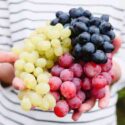
Grow your own sweet, snack-ready seedless grapes with this expert backyard guide. Learn the secrets to choosing the right varieties, building the perfect trellis, pruning for bigger clusters, and harvesting grapes at peak sweetness. If you want healthier vines and better fruit, this step-by-step guide makes growing seedless grapes simple and rewarding.
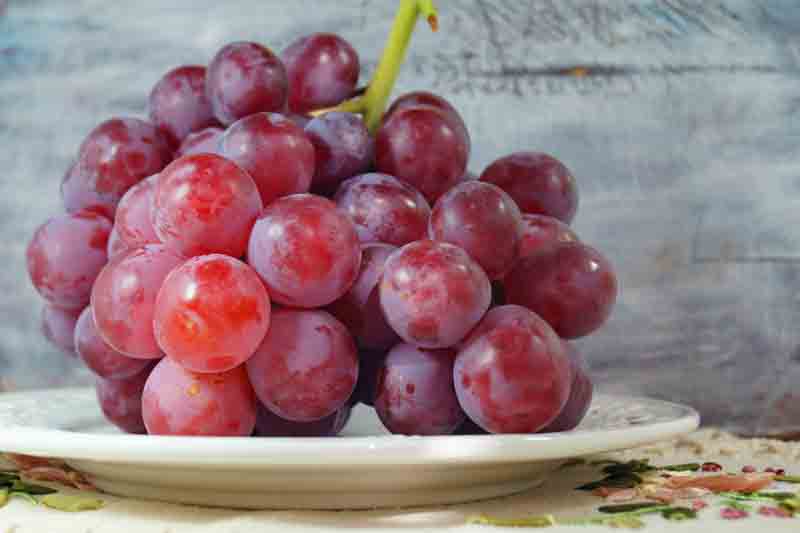


Growing seedless grapes at home is one of the most rewarding ways to combine beauty, food production, and long-term garden value in one plant. A well-trained vine can soften a fence, cover an arbor, shade a pergola, or turn a simple trellis into a productive edible feature. Better still, seedless grapes are the grapes most home gardeners actually want to eat fresh: sweet, convenient, easy to snack on, and family-friendly.
But excellent seedless grapes do not happen by accident. They come from smart variety choice, full sun, sharp drainage, strong support, balanced growth, and confident pruning. Most disappointing harvests can be traced back to a few common mistakes: too much shade, the wrong variety for the climate, overcrowding, overfeeding, or pruning too lightly.
Jump to: What Are Seedless Grapes? | How to Choose the Right Variety | Best Seedless Grape Varieties | Seedless Grape Variety Comparison Table | Climate and USDA Zones | Where to Plant | How to Plant | How to Care for Seedless Grapes | Fertilizing | Training and Trellising | How to Prune | Flowering and Pollination | How Long They Take to Fruit | How Much Fruit One Vine Produces | When to Harvest | Winter Care | Growing in Containers | Common Problems | Pests and Diseases | Common Mistakes | Frequently Asked Questions
Seedless grapes are grape varieties that produce fruit with little to no fully developed seed inside. In many seedless grapes, the fruit develops through a process called stenospermocarpy, where pollination and fertilization begin but the seed does not mature fully. For home gardeners, the practical point is simple: seedless grapes are not normally grown from seed. They are propagated from cuttings, grafted vines, or nursery stock.
Most seedless grapes grown in home gardens are bunch grapes in the Vitis genus. They are woody perennial climbers that need sunlight, support, airflow, and annual pruning to stay fruitful. They are especially popular because they are easy to eat fresh, easy to pack into lunches, and widely preferred as table grapes.
Seedless grapes are not automatically easier or harder to grow than seeded grapes. The real issue is adaptation. A seedless grape that performs beautifully in one region may struggle badly in another. Climate fit matters more than convenience.
Best Grapes for Fresh Eating – Top Varieties Ranked
Choosing the right variety is the most important decision in the whole process. Many failures begin before planting, when gardeners buy a vine based only on berry color or name recognition instead of local performance.
If you garden in a cold climate, choose a variety known for winter hardiness and earlier ripening. If you garden in a humid region, disease resistance matters just as much as flavor because grape diseases can ruin foliage and fruit quickly. If your summers are warm and dry, you have more flexibility, but even then, a late grape still needs enough season length to sweeten fully.
A good seedless grape for home gardens should offer dependable ripening, good fresh-eating quality, decent disease tolerance, and proven local performance. That last point matters enormously. A vine that thrives in a dry valley vineyard can struggle in a humid backyard with poor airflow and constant mildew pressure.
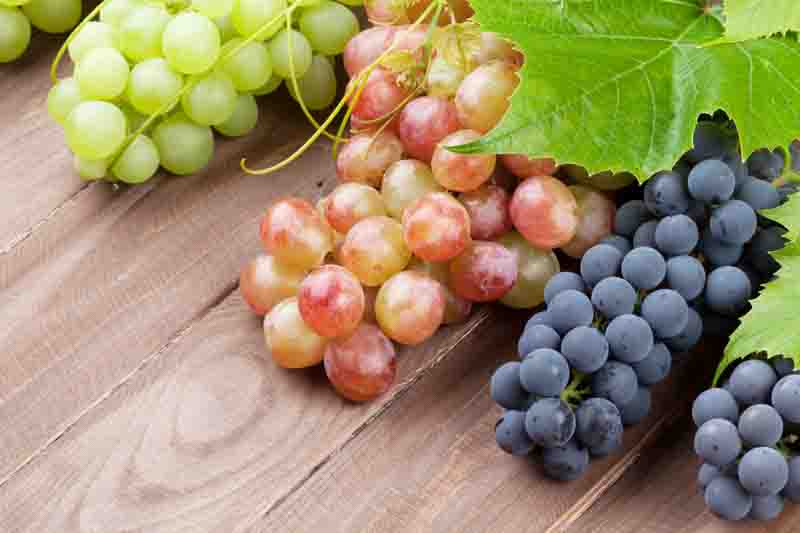
Several seedless grape varieties have earned strong reputations in home gardens, but no single variety is best everywhere. Use the list below as a practical starting point rather than a universal ranking.
Reliance is one of the best-known cold-hardy seedless grapes and is often recommended for northern gardens. It is valued for good flavor, attractive pink fruit, and dependable performance in cooler climates. It is often one of the safest introductions for gardeners who want a seedless table grape with broad appeal.
Canadice is another respected seedless grape for cooler regions, with red fruit and good fresh-eating quality. It is often chosen for home-garden use because it combines good eating quality with better cold adaptation than many classic supermarket grapes.
Mars is a blue seedless grape known for better disease resistance than many seedless types. In humid climates, that extra resilience can matter a great deal. It is often a smart choice for gardeners who want a more forgiving vine.
Himrod is a classic white or golden seedless grape known for sweetness and tender texture. It is highly regarded as a fresh-eating grape, though local climate fit still matters.
Jupiter is sometimes described as having soft seed traces rather than being perfectly seedless in every circumstance, but it is still frequently included in seedless home-garden discussions because of its excellent table quality and attractive flavor.
Thompson Seedless is famous, but it is not the ideal default choice for every backyard. It generally performs best in warmer, drier climates and is often less forgiving in humid or colder regions than many American-derived seedless grapes.
| Variety | Fruit Color | Best Fit | Main Strength | Watch For |
|---|---|---|---|---|
| Reliance | Pink-red | Cooler climates | Cold hardiness | Choose a sunny site for best sweetness |
| Canadice | Red | Cool to moderate climates | Fresh-eating quality | Needs good airflow in humid areas |
| Mars | Blue | Humid climates | Better disease resistance | Still needs pruning and open canopies |
| Himrod | White-gold | Moderate climates | Sweet dessert flavor | Regional performance varies |
| Jupiter | Blue-red | Many home gardens | Excellent table quality | May have soft seed traces |
| Thompson Seedless | Green-gold | Warm, dry climates | Classic table grape | Less forgiving in cold or humid regions |
Seedless grapes are grown across a broad range of climates, but the best variety depends on how cold your winters are, how humid your summers are, and how long your growing season lasts. Cold-hardy seedless grapes are often better for northern USDA zones, while more classic table grape types often perform better in warmer, drier areas.
As a broad rule, many hardy seedless grapes can be grown successfully in USDA Zones 5 through 8, while some varieties are better suited to warmer areas and some need more winter protection in colder ones. The exact zone range varies by cultivar, which is why variety selection matters more than broad grape-growing optimism.
Gardeners in short-season climates should prioritize early-ripening varieties. Gardeners in humid climates should prioritize disease tolerance. Gardeners in warm, dry climates can often grow a wider range of seedless table grapes successfully, provided water and pruning are managed well.
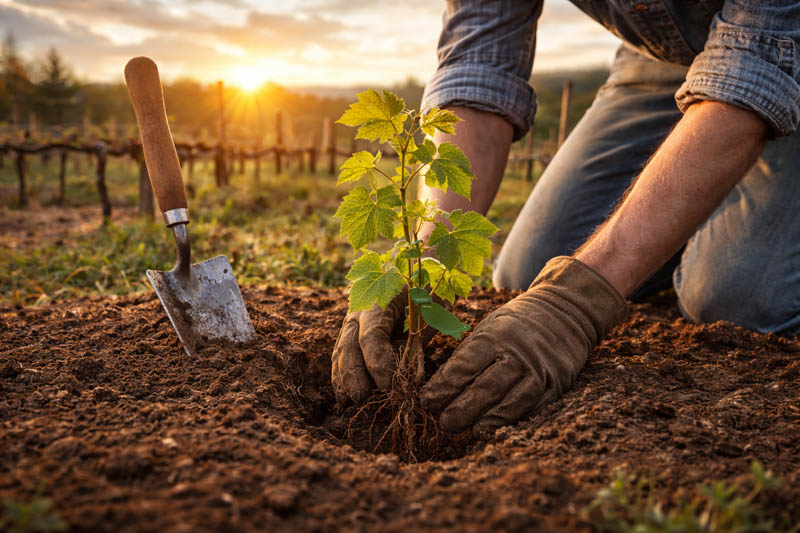
Site selection shapes sweetness, disease pressure, vine health, and long-term productivity.
Sun exposure: Seedless grapes need full sun for the best sugar development and strongest fruiting wood. In practice, that usually means at least six to eight hours of direct sun, with more being better.
Soil: Grapes tolerate average soil better than wet soil. If the roots sit in soggy ground, growth weakens, fruit quality drops, and disease pressure rises. Good drainage matters more than rich soil.
Air circulation: Open sites are healthier than cramped corners. Leaves and clusters that stay wet too long are more likely to develop fungal diseases.
Exposure: If possible, avoid low frost pockets and cold-air traps. Slightly elevated, sunny sites are often better for grapes than low spots.
Support: Because grapevines are vigorous climbers, they should be planted where a permanent support system can be installed from the start. A grapevine without structure quickly becomes harder to prune, harder to inspect, and harder to harvest.
The best time to plant seedless grapes is usually early spring while the vine is still dormant or just beginning active growth. Spring planting gives the roots time to establish before summer heat arrives.
To plant correctly:
Spacing matters. Most bunch grapes, including many seedless types, should be spaced about 6 to 8 feet apart. Proper spacing improves airflow, reduces crowding, and makes future pruning much easier.
Right after planting, prune the vine back to one strong cane with about 2 to 3 buds. This can feel severe, but it is correct. That cut directs energy into root establishment and future structure instead of weak top growth.
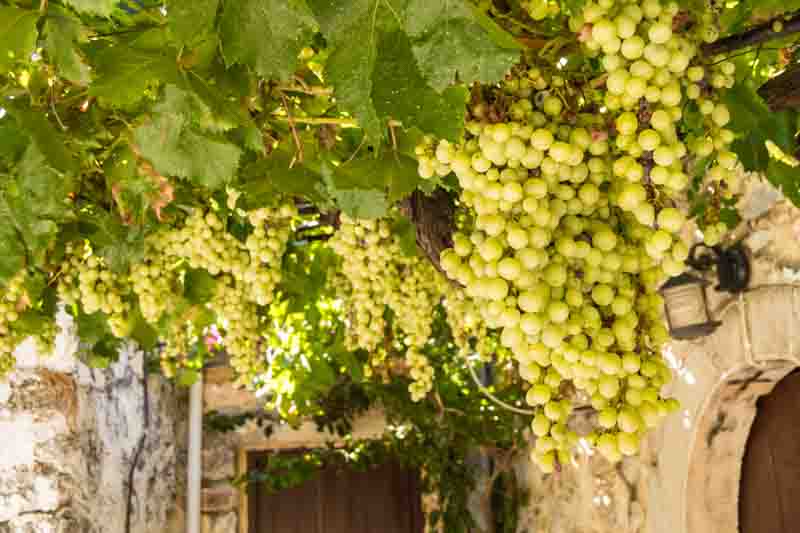
Seedless grapes are not difficult once established, but they are not casual plants. They need structured, consistent care rather than neglect or constant interference.
Watering: Newly planted vines need steady moisture while roots establish. Water deeply, then allow the upper soil to begin drying before watering again. Mature vines are more drought-tolerant, but prolonged dry periods can reduce berry size and increase stress.
Mulching: A light mulch layer helps conserve moisture and suppress weeds, but mulch should never rest against the trunk.
Canopy management: Dense, tangled growth traps humidity, slows ripening, increases disease pressure, and makes harvest more difficult. Open vines are healthier vines.
Crop balance: A vine carrying too much fruit often produces smaller, less flavorful grapes. Backyard vines should be managed for balance, not brute quantity.
Grapes usually need less fertilizer than beginners expect. Too much fertilizer, especially nitrogen, produces vigorous leafy growth that shades the fruit, delays ripening, and encourages the dense canopy conditions that favor disease.
In many home gardens, seedless grapes do well with modest feeding, compost, and close observation. If a vine is growing strongly and fruiting well, heavy fertilization is usually unnecessary. If growth is weak or pale, a soil test is the most useful guide.
The goal is balanced growth, not maximum foliage. When in doubt, feed conservatively rather than aggressively.
Training gives a grapevine structure, productivity, and manageability. Popular systems for home gardens include a simple wire trellis, bilateral cordon training, fence training, high cordon systems, and arbor training. A simple trellis is often easiest for pruning, inspection, and harvest.
In the first year, choose the strongest shoot and train it upward as the future trunk. Remove major competing shoots. Once the trunk reaches the wire, develop side arms or cordons that will support future fruiting wood.
Without training, a vine becomes more difficult every year. With training, it becomes easier to prune and more productive. For more detail, this guide to the best trellis systems for backyard grapes is highly relevant.
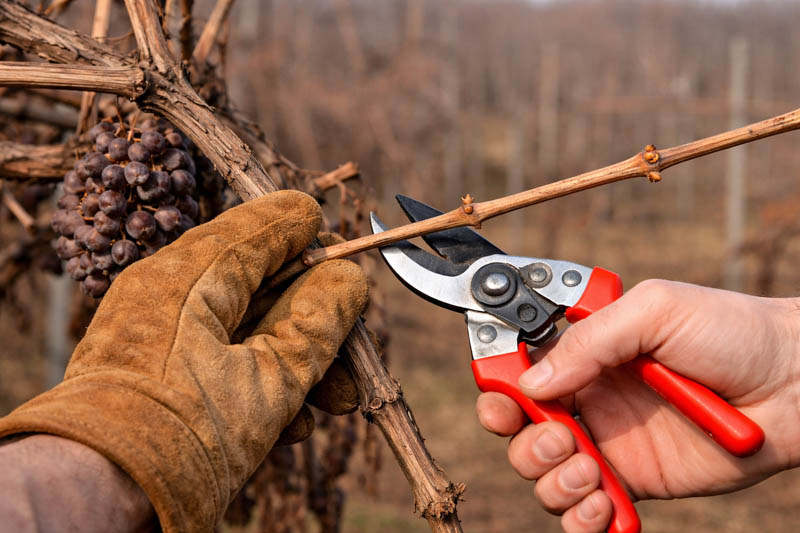
Pruning is the most important skill in grape growing. Grapes fruit on new shoots that grow from one-year-old wood. That single fact explains why pruning matters so much. If you leave too much old growth, the vine becomes overgrown and fruit quality suffers. If you remove the wrong wood, the crop can be reduced.
Most seedless grapes are pruned during dormancy in late winter or early spring. Remove weak, tangled, crowded, or damaged wood. Keep a clean trunk and a manageable framework. Retain only the fruiting wood your system requires.
Some seedless grapes perform better under cane pruning, while others can be spur-pruned successfully depending on variety and training style. The exact method varies, but one principle stays true: grapes do not reward timid pruning.
If the vine still looks crowded after pruning, you probably left too much wood. That is one of the most useful practical lessons a home gardener can learn. For deeper detail, see cane pruning vs spur pruning.
Most bunch grapes, including most seedless table grapes grown in home gardens, are self-fruitful and do not need a second vine for pollination. The flowers are small and not especially showy, but they are usually capable of setting fruit on a single plant under normal conditions.
If fruit set is poor, the cause is more often weather stress during bloom, vine stress, overvigorous growth, or other cultural issues rather than lack of a pollinator. That is one reason good pruning, balanced fertility, and local variety adaptation matter so much.
Most seedless grapevines do not produce a meaningful crop immediately. In a well-managed planting, the first real harvest usually comes around the third year after planting. Some vines may carry a few clusters earlier, but the first two years should focus mainly on roots, trunk development, and framework building.
A young vine forced to crop too heavily too soon usually develops more slowly and becomes harder to shape properly. Patience early on leads to better harvests later. If your vine produces leaves but no grapes, this guide on why grapevines produce leaves but no fruit can help identify the cause.
Yield depends heavily on variety, vine age, pruning, training system, climate, and overall care. A young vine should not be judged by production because the first years are mainly about building roots, trunk strength, and structure.
Once mature and well managed, a backyard seedless grape vine can produce anywhere from a modest household crop to many pounds of fruit in a season. The exact amount varies so much by cultivar and care that fixed numbers can mislead, but most healthy mature vines should give more than just a handful of clusters.
What matters most in a home garden is balance. A vine carrying too many clusters often gives smaller berries, slower ripening, and weaker flavor. A properly pruned vine with a manageable crop load usually produces better fruit than a vine pushed for maximum output.
Seedless grapes should be harvested only when fully ripe. They do not continue sweetening after picking. Color alone is not enough. The best test is taste. Ripe grapes should taste sweet, full, and true to the variety.
Use clean pruners to cut whole clusters rather than pulling them. Harvest in dry weather when possible. As grapes begin coloring and sweetening, protect them from birds with netting. Waiting until the fruit is fully ripe before protecting it often means losing part of the crop.
For a practical ripeness guide, see how to tell when grapes are ready to harvest.
Winter care depends on grape type and climate. Cold-hardy seedless grapes usually tolerate winter better than tender varieties, but young vines are always more vulnerable. In colder regions, protect the root zone with light mulch after the soil cools and protect young trunks from rodent damage.
Avoid pushing late-season nitrogen growth because tender new shoots are more vulnerable to cold injury. Major pruning is best saved for dormancy. In very cold climates, variety choice matters more than rescue measures. A hardy vine is easier to protect than a tender one planted outside its comfort zone.
Yes, seedless grapes can be grown in containers, but they are more demanding there than in the ground. A container-grown vine needs a large pot, excellent drainage, strong support, and more frequent watering and feeding. Root restriction means moisture levels change quickly and the margin for error is smaller.
If you grow seedless grapes in pots, use one vine per container, provide a trellis or obelisk, and prune carefully so the plant does not become top-heavy. Containers are useful for limited-space gardeners, but in-ground planting is usually easier and more forgiving.
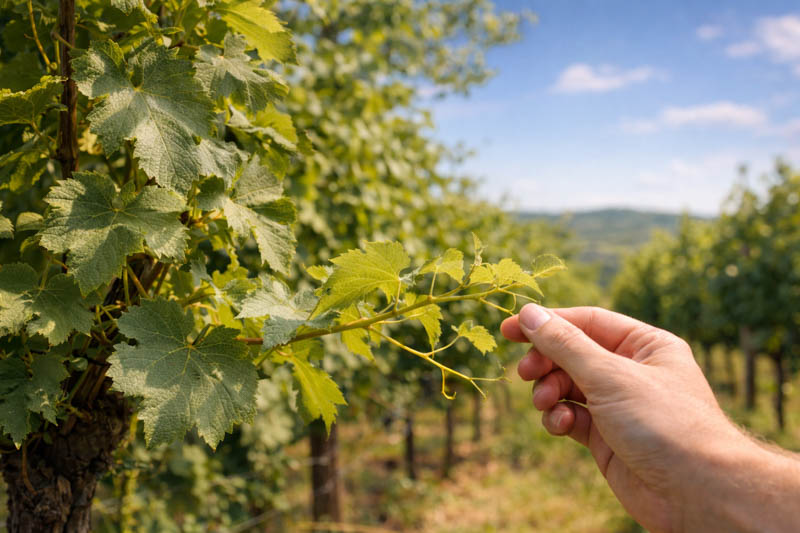
Why are my seedless grapes sour? Seedless grapes are usually sour because they were harvested too early, grown in too much shade, overloaded with fruit, or planted in a climate where that variety struggles to ripen fully.
Why are my grapes small? Small berries are often caused by water stress, overcropping, weak vine balance, or poor pruning.
Why does my vine have leaves but no fruit? The most common reasons are improper pruning, insufficient sunlight, vine immaturity, winter injury, or excess nitrogen that promotes leafy growth instead of fruiting.
Why is my vine growing vigorously but producing poor fruit? Excess fertilizer, especially nitrogen, and insufficient pruning often create lush foliage at the expense of fruit quality.
The best strategy is prevention, not rescue. The right variety in the right site solves more problems than late corrections.
In humid climates, disease pressure is often the biggest challenge in growing grapes. Three of the most important disease concerns are black rot, powdery mildew, and downy mildew. These diseases are strongly encouraged by poor airflow, wet foliage, overcrowded canopies, and unsuitable variety choice.
Other problems can include fruit rot, bird damage, and insect feeding. Birds are often the most visible late-season pest in backyard plantings, which is why netting becomes important as fruit colors and sweetens.
The best defense is an open canopy, good spacing, full sun, careful sanitation, and a variety suited to your region. For disease-prone climates, grape growing is easier when prevention is built into the planting plan.
The most common grape-growing mistakes are surprisingly consistent:
Most of these mistakes reduce sweetness, increase disease pressure, or make the vine harder to manage. Fortunately, they are also preventable.
Can you grow seedless grapes at home?
Yes. Seedless grapes can grow very well in home gardens when they are planted in full sun, trained on a strong support system, and pruned correctly every year.
Do seedless grapes need full sun?
Yes. Seedless grapes need full sun for the best fruit quality, stronger canes, better ripening, and sweeter harvests. Too much shade often leads to weak growth and sour fruit.
How long does it take for seedless grapes to bear fruit?
Most seedless grapevines produce their first meaningful crop around the third year after planting. Early years are usually spent establishing roots, trunk structure, and fruiting framework.
What is the best soil for seedless grapes?
The best soil for seedless grapes is well-drained soil with moderate fertility. Good drainage matters more than rich soil because grape roots struggle in waterlogged ground.
What are the best seedless grape varieties for home gardens?
Some of the best-known seedless grape varieties for home gardens include Reliance, Canadice, Mars, Himrod, and sometimes Jupiter, but the best choice depends on your climate, winter lows, humidity, and season length.
Are seedless grapes harder to grow than seeded grapes?
Not necessarily. Seedless grapes are not automatically harder to grow than seeded grapes. Success depends more on climate fit, disease pressure, pruning, and sunlight than on whether the grape is seeded or seedless.
Why are my seedless grapes sour?
Seedless grapes are usually sour because they were picked too early, grown in too much shade, overloaded with fruit, or planted in a climate where the variety struggles to ripen fully.
Do seedless grapes need a trellis?
Yes. Seedless grapes are vigorous climbing vines and need a strong trellis, fence, arbor, or wire system to support healthy growth, improve airflow, and encourage better fruit production.
How do you make seedless grapes sweeter?
To make seedless grapes sweeter, grow them in full sun, prune for an open canopy, avoid overcropping, and wait until the grapes are fully ripe before harvesting.
Can seedless grapes grow in containers?
Yes. Seedless grapes can grow in large containers with excellent drainage and sturdy support, but they need more frequent watering, closer feeding, and stricter pruning than in-ground vines.
When is the best time to plant seedless grapes?
The best time to plant seedless grapes is usually early spring while the vines are dormant or just beginning active growth. This gives roots time to establish before summer heat arrives.
How far apart should seedless grape vines be planted?
Most seedless grape vines should be planted about 6 to 8 feet apart. Proper spacing improves airflow, reduces disease pressure, and gives each vine enough room to grow and fruit well.
Do seedless grapes need another vine for pollination?
Usually no. Most bunch grapes, including most seedless table grapes grown in home gardens, are self-fruitful and do not need a second vine for pollination.
How much fruit does one seedless grape vine produce?
A mature, healthy seedless grape vine can produce a generous backyard crop, but yield depends heavily on variety, age, pruning, training, climate, and overall care. Balanced vines usually produce better fruit than overloaded vines.
What USDA zones are best for seedless grapes?
The best USDA zones depend on the variety. Many hardy seedless grapes perform well in Zones 5 through 8, while some cultivars prefer warmer conditions and others need extra winter protection in colder regions.
Growing seedless grapes successfully is less about luck than about understanding the vine. Choose a variety that matches your climate, plant it in full sun, give it drainage and airflow, train it from the beginning, and prune with confidence. Do that, and a seedless grapevine can become one of the most productive, attractive, and satisfying edible plants in your landscape.
Updated: March 2026 • Reviewed by Gardenia Editors
| Hardiness |
3 - 10 |
|---|---|
| Plant Type | Climbers, Fruits |
| Plant Family | Vitaceae |
| Genus | Vitis |
| Exposure | Full Sun |
| Maintenance | High |
| Water Needs | Average |
| Soil Type | Chalk, Loam, Sand |
| Soil pH | Alkaline, Neutral |
| Soil Drainage | Well-Drained, Moist but Well-Drained |
| Attracts | Bees, Birds |
| Hardiness |
3 - 10 |
|---|---|
| Plant Type | Climbers, Fruits |
| Plant Family | Vitaceae |
| Genus | Vitis |
| Exposure | Full Sun |
| Maintenance | High |
| Water Needs | Average |
| Soil Type | Chalk, Loam, Sand |
| Soil pH | Alkaline, Neutral |
| Soil Drainage | Well-Drained, Moist but Well-Drained |
| Attracts | Bees, Birds |
Create a membership account to save your garden designs and to view them on any device.
Becoming a contributing member of Gardenia is easy and can be done in just a few minutes. If you provide us with your name, email address and the payment of a modest $25 annual membership fee, you will become a full member, enabling you to design and save up to 25 of your garden design ideas.
Join now and start creating your dream garden!
Create a membership account to save your garden designs and to view them on any device.
Becoming a contributing member of Gardenia is easy and can be done in just a few minutes. If you provide us with your name, email address and the payment of a modest $25 annual membership fee, you will become a full member, enabling you to design and save up to 25 of your garden design ideas.
Join now and start creating your dream garden!