The best seedless grapes for backyard gardens go far beyond a short list of supermarket names. This expert guide compares the top cultivars by flavor, climate fit, and harvest season, with a practical comparison table and USDA zone recommendations to help gardeners choose vines that truly perform at home.
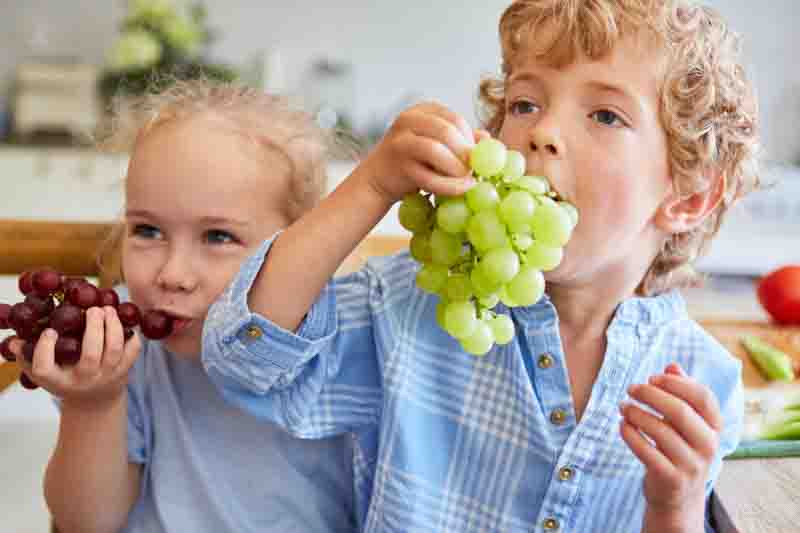


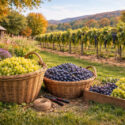
A well-sited grapevine can cover an arbor, fence, pergola, or trellis for years, produce heavy crops, and become one of the most productive edible plants in the garden. But when the wrong cultivar is planted in the wrong climate, grapes can quickly become disappointing, disease-prone, or late-ripening enough to test a gardener’s patience.
That is why the best seedless grapes for backyard gardens are not defined by popularity alone. They are defined by fit. The right grape for a short-season northern garden is not always the right grape for a warm, long-season backyard. A cultivar that performs beautifully in a dry western climate may struggle badly where humidity drives disease. And a grape that sounds impressive in a catalog may not be the one you most enjoy eating fresh.
Seedless grapes dominate backyard plantings because they are easier to eat, easier to share, and usually bred for fresh use. Most home gardeners are not trying to produce commercial fruit or fine wine. They want clusters they can cut from the vine and eat on the spot. That means texture, sweetness, skin quality, berry size, and overall eating experience matter more than prestige.
Technically, seedless grapes are not always completely seed-free. Most contain very small undeveloped seed traces, but those traces are usually soft enough that they are barely noticeable when eaten fresh. In practical terms, they function as seedless grapes, which is exactly why they are so popular in family gardens.
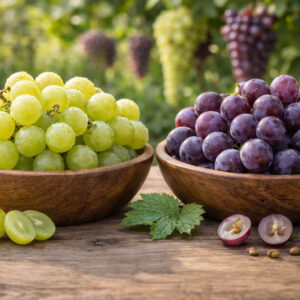
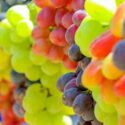
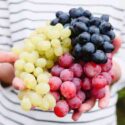
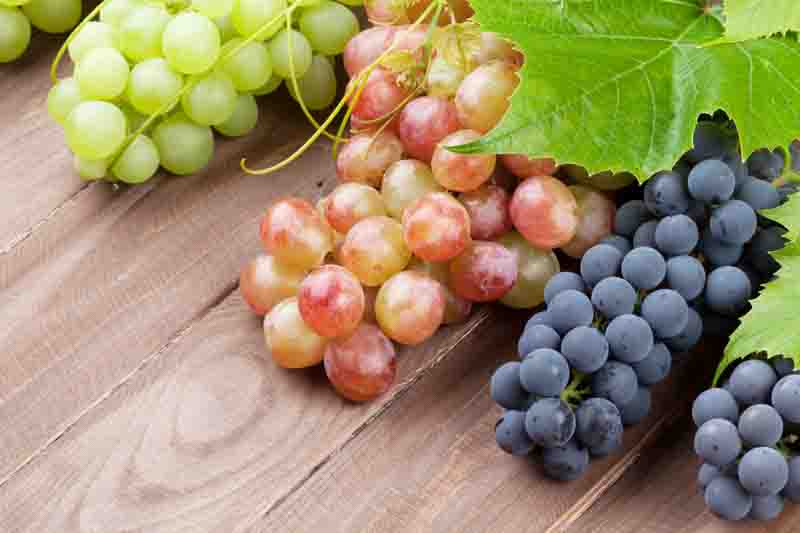
Seedless grapes are also far more diverse than many beginners realize. Backyard growers can choose from white, green, golden, red, rose, pink-red, and blue-black grapes. Some are delicate and honeyed. Some are fruity or strawberry-like. Some have richer muscat character. Some are prized because they ripen early, and others because they hold well, look beautiful on the table, or deliver a familiar American grape flavor without seeds.

The best backyard seedless grapes usually combine five core traits: good climate fit, dependable ripening, strong fresh-eating quality, manageable vigor, and realistic disease performance for home care. That combination is what separates a genuinely useful home-garden grape from a cultivar that sounds exciting but becomes frustrating in practice.
The best backyard seedless grapes usually share five core traits: good climate fit, dependable ripening, strong fresh-eating quality, manageable vigor, and realistic disease performance for home care.
For colder regions, winter survival and early ripening are non-negotiable. For humid regions, diseases such as downy mildew, black rot, and related fungal problems become central. For warm regions, heat tolerance, berry size, and growing-season length become more important. In places where Pierce’s disease is a serious threat, cultivar choice becomes even more critical.
That is why short, shallow “top five” lists rarely do this category justice. Backyard gardeners do not all need the same grape. They need a grape that matches their site, their climate, and the kind of fruit they actually want to harvest and eat.
| Cultivar | Color | Hardiness (USDA) | Season | Why Gardeners Like It |
|---|---|---|---|---|
| Reliance | Pink-red | 4-8 | Early | Hardy, productive, dependable backyard grape |
| Himrod | White-gold | 5-8 | Early-mid | Honeyed flavor, excellent eating quality |
| Interlaken | Green-gold | 5-8 | Very early | Reliable early harvest in cooler climates |
| Lakemont | White-green | 5-8 | Mid-late | Large clusters, good storage |
| Canadice | Red | 4-8 | Early-mid | Cold-hardy red seedless option |
| Einset Seedless | Bright red | 5-8 | Early | Strawberry-like flavor |
| Vanessa | Rose-red | 5-8 | Mid | Premium flavor and crisp texture |
| Mars | Blue-black | 5-8 | Mid | Reliable dark seedless grape |
| Jupiter | Reddish-blue | 5-8 | Early-mid | Large berries, muscat flavor |
| Saturn | Red | 6-9 | Mid | Distinctive berry shape |
| Venus | Dark | 5-9 | Mid | Southern seedless grape |
| Neptune | White | 5-8 | Mid-late | White Arkansas cultivar |
| Thompson Seedless | Pale green | 7-9 | Mid-late | Classic green seedless grape for fresh eating and raisins |
| Somerset Seedless | Pink-red | 4-8 | Very early | One of the hardiest seedless grapes, excellent for cold climates |
| Concord Seedless | Blue-black | 5-8 | Late summer-early fall | Classic Concord flavor without seeds; useful for fresh eating, juice, and preserves |
Note: These hardiness ranges are practical home-garden ranges, not guarantees. Site exposure, disease pressure, humidity, pruning, and winter extremes still matter.
Best for cold climates: Reliance, Somerset Seedless, Canadice, Himrod, and Interlaken. These grapes make the most sense when winter survival and early ripening are the first priorities.
Best for warm climates: Jupiter, Mars, Venus, Neptune, Saturn, and Thompson Seedless. These are stronger candidates when longer seasons and greater heat make warm-climate table grapes more realistic.
Best for top-tier fresh eating: Himrod, Vanessa, Jupiter, and Thompson Seedless. These cultivars stand out for flavor, texture, or overall table quality.
Best for classic American grape flavor: Concord Seedless. If what you really want is classic Concord character without seeds, this is the clear niche choice.
Best for early harvest: Interlaken, Somerset Seedless, Reliance, and Einset Seedless. These are especially useful where the season closes quickly or where gardeners want fruit sooner.
Best for variety and visual interest: Lakemont, Saturn, Jupiter, and Concord Seedless. These help diversify berry color, cluster appearance, and flavor profile in a home planting.
The table becomes much more useful once you stop treating it like a list and start reading it like a decision tool.
Hardiness is the first filter. If you garden where winters are serious, seedless grapes such as Reliance, Somerset Seedless, Canadice, Himrod, and Interlaken deserve priority. They are the cultivars that make backyard seedless grape growing realistic in colder settings.
Harvest timing is the second filter. In short-season climates, very early and early grapes give you insurance. In longer-season climates, later grapes expand your options and may reward you with larger berries, more classic table-grape character, or more distinctive flavor. This is where Thompson Seedless, Lakemont, Neptune, and Concord Seedless begin to matter in different ways.
Flavor is the third filter, and it is where the category becomes genuinely interesting. Himrod offers a white seedless grape with excellent eating quality. Jupiter pushes toward larger berries and richer muscat character. Einset Seedless brings a distinct strawberry-like note. Concord Seedless is not trying to taste like a neutral table grape at all. It matters because it preserves a beloved flavor type in seedless form.
Reliance remains one of the foundational seedless grapes for backyard gardens, especially where winters are cold enough to punish less hardy types. It is valuable not just because it survives, but because it combines that resilience with early ripening and enjoyable fresh-eating quality. For many home growers, Reliance is the grape that proves seedless grapes can be realistic outside warm grape regions.
It also fills an important practical role in mixed plantings. A gardener may be more excited about another cultivar’s flavor, but Reliance often becomes the grape that provides dependable harvests year after year. That reliability is a major advantage in home gardens, where consistency matters at least as much as novelty.
Himrod is still one of the most respected white seedless grapes for home use because flavor carries this cultivar. It is the sort of grape gardeners mention when they want a seedless table grape that feels genuinely worth growing rather than merely acceptable. That makes it one of the best “quality first” grapes in the whole category.
It is also especially useful because it shows that cold-leaning backyard grapes do not have to feel like compromises. Himrod gives home growers a refined white seedless option with strong garden relevance, which is why it continues to appear in serious recommendations.
Interlaken and Lakemont are best understood as complementary white seedless grapes rather than interchangeable ones. Interlaken matters because it ripens very early, which can make all the difference in climates where the season is short. It is the kind of grape that gives gardeners a real chance at dependable maturity when later cultivars become risky.
Lakemont plays a different role. It is more about larger clusters, a later season, and an attractive fresh-market look. For backyard growers, that means it can extend the white seedless harvest and bring a more showy cluster type to the garden. Together, these two grapes make the white seedless category much more flexible than beginners often assume.
These three grapes are central to the red seedless conversation, but each serves a different backyard purpose. Canadice is especially valuable because it helped make cold-climate red seedless grapes more realistic. Einset Seedless is one of the most useful “different flavor” grapes in the category, bringing a strawberry-like character that sets it apart from more generic sweet reds. Vanessa is often the one gardeners focus on when they want premium texture and refined eating quality.
Together, they show why no single red seedless grape can do all the work. Canadice is about dependable red seedless performance in colder regions. Einset Seedless brings personality. Vanessa brings polish. A strong article needs all three because they answer different backyard goals.
This Arkansas-centered group broadens the category for moderate and warm climates. Mars gives gardeners a dark seedless grape with solid backyard appeal. Jupiter is the standout for many growers because of its larger berries and richer muscat flavor, making it one of the most talked-about flavor grapes in the group. Saturn adds novelty with its distinctive berry shape. Venus and Neptune round out the lineup by giving gardeners more dark and white options in warmer settings.
These grapes matter because they expand what seedless backyard growing can look like in longer-season gardens. They also remind gardeners that warmth opens up possibilities but does not erase the importance of disease pressure. In warm and humid regions especially, cultivar fit is never just about hardiness.
Thompson Seedless remains the classic green seedless grape, and that status is deserved. It is the grape many gardeners picture first when they imagine a traditional seedless table grape. It is also closely associated with fresh eating and raisins, which keeps it relevant far beyond commercial vineyards.
But Thompson Seedless is not the default answer everywhere. Its real value appears in warmer, longer-season climates where it can ripen well and show the qualities gardeners expect from it. In the right climate, it is absolutely one of the defining backyard seedless grapes. In the wrong climate, it can become a reminder that fame and fit are not the same thing.
Somerset Seedless deserves a prominent place in any serious backyard seedless grape article because it solves one of the hardest problems in the category: finding a truly worthwhile seedless grape for colder regions. Its value is not just hardiness. It also ripens very early, which makes it especially useful where the season is short and every extra week matters.
For gardeners in colder zones, Somerset Seedless can be the grape that changes the conversation from “Can I grow seedless grapes here?” to “Which hardy seedless grape do I want to grow?” That is a major distinction, and it is why this cultivar belongs near the center of the topic, not at the edge.
Concord Seedless fills an entirely different niche from grapes such as Himrod or Thompson Seedless. Its job is not to imitate a neutral supermarket table grape. Its job is to preserve classic Concord flavor without the inconvenience of seeds. For gardeners who love Concord-type fruit for fresh eating, juice, jelly, and preserves, that is a major advantage.
This also makes Concord Seedless especially important in a comparison article. It gives gardeners a reason to choose by flavor identity rather than by generic sweetness alone. Not everyone wants a mild green or red table grape. Some gardeners want a grape that tastes unmistakably like Concord, and this cultivar answers that desire directly.
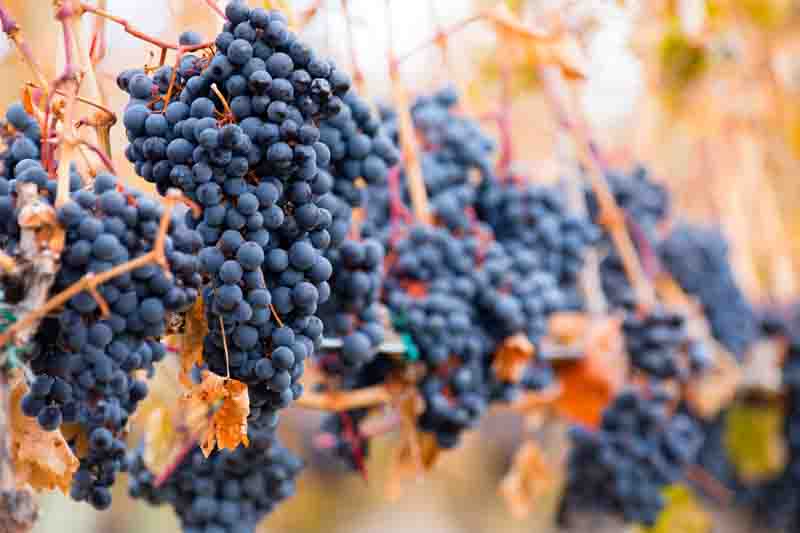
Cold-climate gardeners need hardiness and early ripening above all else. The strongest names here are Reliance, Somerset Seedless, Himrod, Interlaken, Canadice, and Vanessa, with Lakemont often working in good sites. In these zones, the main goal is dependable maturity before the season closes.
Zone 6 is often the transition sweet spot. Gardeners can usually grow the hardier northeastern grapes reliably and begin to experiment with cultivars like Jupiter, Mars, and Saturn in suitable sites. Microclimate matters more here than many beginners realize, especially in humid or exposed gardens.
This is where the Arkansas group becomes much more realistic. Jupiter, Mars, Saturn, Venus, Neptune, and Thompson Seedless all become stronger candidates, while some colder-climate grapes may still perform well depending on disease pressure and site quality. In these zones, the challenge often shifts from winter injury to maintaining fruit quality through heat and humidity.
In the warmest regions, classic commercial table grapes and more heat-oriented selections are often more relevant than the colder-hardy northeastern types. Thompson Seedless becomes especially important here, but zone alone is never enough. Disease pressure, humidity, and regional grape problems can outweigh simple hardiness ratings.
If you want the simplest selection framework, use this order: first winter low or heat suitability, second disease pressure, third desired harvest window, and fourth flavor and berry color. That order may feel less exciting than choosing by appearance, but it is the one most likely to produce a successful planting.
For many gardeners, the smartest strategy is to plant one reliability grape and one excitement grape. The reliability grape is the cultivar you trust to perform under your conditions. The excitement grape is the one you are most eager to taste. Sometimes those are the same grape, but often they are not. That is why mixed plantings are so effective in backyard gardens with room for more than one vine.
It also helps to remember that grapes are structural plants as well as fruit plants. They shape space. A vigorous vine can soften a fence, cool a pergola, or turn a plain arbor into an edible focal point. That makes cultivar choice even more important, because the wrong grape is not just a poor fruit choice. It is a long-term garden compromise.
The best seedless grapes for backyard gardens are not defined by popularity alone. They are defined by fit. A grape that thrives in your climate, ripens on time, and delivers the flavor you actually enjoy will always outperform a more famous cultivar that struggles in your site conditions.
That is why strong backyard grape advice must go beyond short, generic lists. For cold climates, start with cultivars such as Reliance, Somerset Seedless, Interlaken, Canadice, Himrod, and Vanessa. For moderate climates, widen the field to include Lakemont, Mars, and Jupiter. For warmer regions, Thompson Seedless, Jupiter, Venus, Neptune, and related warm-climate selections become stronger candidates. And if classic American grape flavor matters most, Concord Seedless deserves a clear place in the conversation.
Choose carefully, train the vine well, prune consistently, and a grapevine can become one of the most productive and beautiful edible plants in the garden. The right seedless grape is not just another fruit plant. It is long-term garden structure with a harvest attached.
The strongest cold-climate seedless grapes include Reliance, Somerset Seedless, Himrod, Interlaken, Canadice, Vanessa, and Lakemont in suitable sites. These cultivars are better adapted to cooler regions than many classic warm-climate seedless table grapes.
Himrod is often considered one of the best-flavored white seedless grapes, while Vanessa and Einset Seedless are standout red choices. Jupiter is also highly regarded in suitable climates for its larger berries and muscat-like flavor.
Most bunch grapes are self-fertile, so one vine can usually produce fruit on its own. Backyard gardeners do not normally need a second seedless grape specifically for pollination.
Warm-climate gardeners often do well with cultivars such as Jupiter, Mars, Saturn, Venus, Neptune, and Thompson Seedless. In the right long-season conditions, these grapes can be especially rewarding.
Most home grapevines begin producing small crops in the second or third year, with more meaningful harvests commonly arriving by the third year as the vine matures.
Not necessarily. Seedless grapes are easier to eat, but overall ease of growing depends more on climate fit, disease pressure, and cultivar selection than on whether the berries are seeded or seedless.
Updated: April 2026 • Reviewed by Gardenia Editors
| Hardiness |
3 - 10 |
|---|---|
| Plant Type | Climbers, Fruits |
| Plant Family | Vitaceae |
| Genus | Vitis |
| Exposure | Full Sun |
| Maintenance | High |
| Water Needs | Average |
| Soil Type | Chalk, Loam, Sand |
| Soil pH | Alkaline, Neutral |
| Soil Drainage | Well-Drained, Moist but Well-Drained |
| Attracts | Bees, Birds |
| Hardiness |
3 - 10 |
|---|---|
| Plant Type | Climbers, Fruits |
| Plant Family | Vitaceae |
| Genus | Vitis |
| Exposure | Full Sun |
| Maintenance | High |
| Water Needs | Average |
| Soil Type | Chalk, Loam, Sand |
| Soil pH | Alkaline, Neutral |
| Soil Drainage | Well-Drained, Moist but Well-Drained |
| Attracts | Bees, Birds |
Create a membership account to save your garden designs and to view them on any device.
Becoming a contributing member of Gardenia is easy and can be done in just a few minutes. If you provide us with your name, email address and the payment of a modest $25 annual membership fee, you will become a full member, enabling you to design and save up to 25 of your garden design ideas.
Join now and start creating your dream garden!
Create a membership account to save your garden designs and to view them on any device.
Becoming a contributing member of Gardenia is easy and can be done in just a few minutes. If you provide us with your name, email address and the payment of a modest $25 annual membership fee, you will become a full member, enabling you to design and save up to 25 of your garden design ideas.
Join now and start creating your dream garden!