Discover New Jersey growing zones with our easy guide to the 2023 USDA hardiness map, frost dates, and what to plant. Learn which vegetables, fruits, flowers, and native plants thrive in each NJ region—from Skylands to Cape May—so you can grow a healthier, more resilient Garden State landscape.
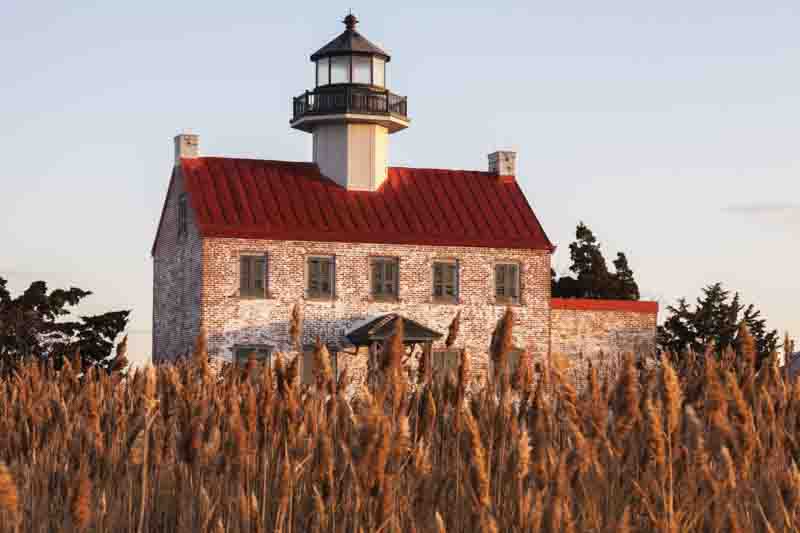


Gardening in New Jersey means everything from breezy vegetable beds along the Jersey Shore to berry patches in the Skylands and pollinator gardens in the suburbs outside New York and Philadelphia. New Jersey planting zones span a relatively narrow but important range of USDA hardiness zones, running roughly from zone 6b in the cooler northwest to zone 8a at the southern tip of Cape May.
This guide will help you understand your New Jersey growing zone, read the updated 2023 USDA map, time your planting around frost dates, and pick the best plants for your corner of the Garden State.
New Jersey is small but climatically diverse, shaped by the Atlantic Ocean, the Delaware River, and the higher hills of the northwest. According to the 2023 USDA Plant Hardiness Zone Map, New Jersey hardiness zones now range from 6b to 8a, with many locations shifting about a half-zone warmer compared with the 2012 map.
The USDA Plant Hardiness Zone Map for New Jersey shows how winter lows shift from the cooler Skylands near the New York–Pennsylvania border to the milder coastal strip and Cape May. The 2023 map uses 1991–2020 climate data and is the standard for choosing trees, shrubs, and perennials that can handle your local winter.
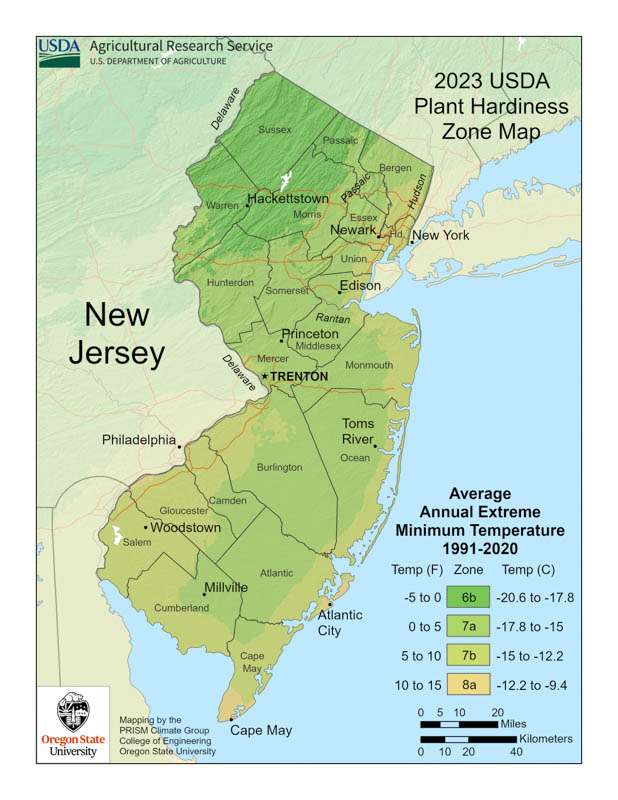
A simplified New Jersey planting zone map based on the 2023 USDA Plant Hardiness Zone Map, using 1991–2020 climate data.
Use the map together with your ZIP code to pinpoint your exact New Jersey garden zone. Look up your New Jersey planting zone by ZIP code using the USDA tool, then come back here or visit our Plant Finder for plants tailored to your zone and site conditions.
Although New Jersey’s planting zones only span 6b–8a, the combination of ocean, rivers, hills, and dense development creates lots of microclimates. Breaking the state into regions makes it easier to match plants to your climate and gardening style.
This cooler region includes much of Sussex, Warren, western Morris, and northern Hunterdon counties. Elevation, rocky soils, and cooler nights mean longer winters and a slightly shorter growing season, but also excellent conditions for cold-hardy crops and classic Northeast landscapes.
From the Hudson River waterfront and Newark Airport through the dense suburbs of Essex, Hudson, Bergen, and Union counties, urban heat helps push winters milder. Gardens here can support a wide range of shrubs, trees, and perennials, plus heat-loving vegetables in raised beds and containers.
Around New Brunswick, Somerville, Princeton, Trenton, and neighboring towns, you’ll find classic mid-Atlantic conditions: four true seasons, warm to hot summers, and winters that rarely reach extreme lows. This is a sweet spot for fruit trees, mixed borders, and both cool- and warm-season vegetables.
This region includes Camden, Gloucester, Burlington, Cumberland, and much of interior Atlantic and Ocean counties. Sandy, well-drained soils, pine woods, and relatively mild winters define the landscape. Gardeners can grow a wide assortment of warm-season veggies, ornamental grasses, and native shrubs, while using mulch and irrigation to handle summer drought.
From Sandy Hook and Long Branch through Point Pleasant, Toms River, and Atlantic City, ocean influence keeps winter lows milder and extends the frost-free season. On the flip side, salt spray and wind are real design considerations. Think salt-tolerant shrubs, seaside grasses, and raised vegetable beds in protected spots.
Cape May, Stone Harbor, and nearby barrier islands enjoy the longest growing season and mildest winters in New Jersey, with updated data nudging them into zone 8a. That opens the door to a wider range of marginally hardy shrubs, figs, and long-season vegetables, especially in protected courtyards and against sun-warmed walls.
In a state like New Jersey, frost dates are your best scheduling tool. From Highlands to Hoboken and Hammonton to Cape May, your average last and first frosts determine when it’s safe to plant tender crops and when you should be ready with row covers in fall. In general, New Jersey’s last frosts run from early April to mid-May, and first frosts from early October to late October or early November, depending on location.
| Region / City | Average Last Spring Frost | Average First Fall Frost | Approx. Frost-Free Days |
|---|---|---|---|
| Newark (Urban North Jersey) | Mid April (around Apr 11–20) | Late October (around Oct 20–26) | ~190–200 days |
| Trenton (Central Jersey) | Late April (around Apr 21–30) | Mid–Late October (Oct 16–31) | ~180–190 days |
| Atlantic City (Coastal South) | Early–Mid April (Apr 1–10, some tools show around Mar 31–Apr 1) | Mid November (around Nov 10–15), with light frosts often later than inland | ~210–220 days |
| Morristown (Northwest Suburbs) | Early May (around May 1–10) | Mid October (Oct 10–20) | ~160–170 days |
| Sussex County Highlands (Cooler Northwest) | Early–Mid May (around May 1–15) | Early–Mid October (Oct 1–15) | ~150–165 days |
Dates summarized from regional climate and frost-date tools; always check a local forecast and a ZIP-code–based lookup for the most precise information for your garden.
Use these frost dates as planning guides—your yard may be slightly warmer or cooler depending on elevation, distance from the ocean, surrounding pavement, nearby water, and building heat. They’re long-term averages, not guarantees, so keep an eye on the forecast during spring and fall cold snaps.
Once you know your New Jersey planting zone, you can lean into your region’s strengths—whether that’s a slightly cooler Skylands garden or a long, milder season on the Jersey Shore or in Cape May. Focus on cold-hardy staples in 6b areas and heat-loving crops and ornamentals in 7–8, while choosing perennials rated for your specific hardiness zone.
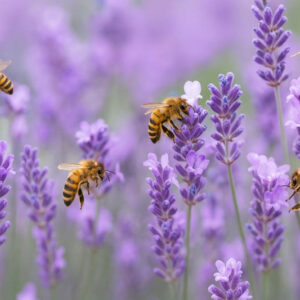
New Jersey native plants are naturally adapted to local soils, moisture, and winter cold. Mix native wildflowers, grasses, shrubs, and trees for a low-maintenance, wildlife-friendly landscape that supports pollinators, songbirds, and beneficial insects.
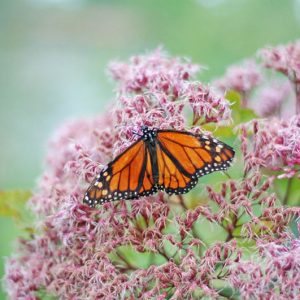
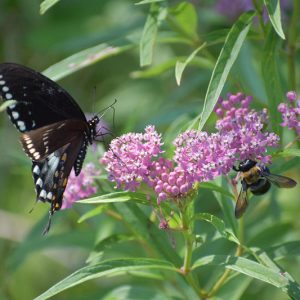
Browse curated lists like great pollinator plants for New Jersey and monarch nectar plants for New Jersey to build a garden that buzzes and flutters from spring through frost.
Tap a month to see what to plant in New Jersey by zone. Use these quick guides as a starting point—then adjust for your exact frost dates and whether you garden in a windy ridge-top yard, shaded town courtyard, or sunny coastal slope.
New Jersey gardeners juggle coastal storms, sandy soils, urban heat islands, and, yes, deer and groundhogs. These tips help your plants thrive from zone 6b to 8a:
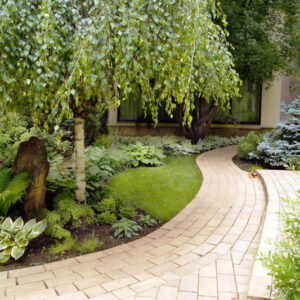
Now that you understand your New Jersey planting zone, frost dates, and regional climate, you’re ready to choose plants that love your conditions and create a thriving Garden State landscape. Mix edible crops, flowering perennials, and native plants for a yard that feeds both your household and local wildlife. Want to compare New Jersey to other states? Visit our national USDA planting zone guide to explore growing zones across the United States.
As of the 2023 USDA Plant Hardiness Zone Map, New Jersey spans zones 6b to 8a. Cooler northwest areas sit mostly in 6b, much of the urban and central corridor is 7a–7b, and the warmest coastal pockets around Cape May reach 8a. These zones are based on 1991–2020 average winter minimum temperatures
Yes. Many locations in New Jersey shifted about a half-zone warmer between the 2012 and 2023 maps. For example, Sussex County moved from 6a to 6b, and Cape May from 7b to 8a, reflecting higher average winter minimum temperatures over the newer 30-year climate period.
Most New Jersey locations see their average last spring frost between mid- and late April, with cooler northwest areas running into early–mid May and the warmest southern coastal areas as early as early April. Because these are averages, gardeners should confirm dates using a ZIP-code–based frost tool and local forecasts each year.
Across much of New Jersey, the first fall frost typically arrives between mid- and late October. Higher, cooler parts of northwest New Jersey often see frost in early–mid October, while some coastal locations may not freeze until early–mid November. These dates mark probabilities, so cold snaps can occur earlier or later in any given year.
New Jersey’s frost-free season generally runs about 160 to 220 days, depending on location. Northwest highland areas may have roughly 150–170 frost-free days, central and much of North Jersey around 180–190 days, and mild coastal and Cape May gardens often 200+ days between last and first frost.
Cool-season vegetables such as lettuce, spinach, peas, broccoli, cabbage, carrots, and radishes thrive in spring and fall throughout New Jersey. Warm-season crops—tomatoes, peppers, squash, cucumbers, beans, and sweet corn—perform well statewide when planted after the last frost. In the mildest coastal zones, long-season crops like okra and sweet potatoes can also succeed with adequate heat.
Yes. New Jersey native plants are adapted to local soils and climate, so they usually need less irrigation and fertilizer once established. They also provide crucial habitat and food for pollinators, songbirds, and other wildlife. Using native perennials, shrubs, and trees is one of the most effective ways to build a resilient, low-maintenance landscape in any New Jersey zone.
Updated: December 2025 • Reviewed by Gardenia Editors
| Hardiness |
6 - 8 |
|---|---|
| Native Plants | United States, Northeast, New Jersey |
| Hardiness |
6 - 8 |
|---|---|
| Native Plants | United States, Northeast, New Jersey |
Create a membership account to save your garden designs and to view them on any device.
Becoming a contributing member of Gardenia is easy and can be done in just a few minutes. If you provide us with your name, email address and the payment of a modest $25 annual membership fee, you will become a full member, enabling you to design and save up to 25 of your garden design ideas.
Join now and start creating your dream garden!
Create a membership account to save your garden designs and to view them on any device.
Becoming a contributing member of Gardenia is easy and can be done in just a few minutes. If you provide us with your name, email address and the payment of a modest $25 annual membership fee, you will become a full member, enabling you to design and save up to 25 of your garden design ideas.
Join now and start creating your dream garden!