Determinate or indeterminate tomatoes? The choice affects plant size, harvest timing, pruning, support, and container growing - but growth habit is only part of the decision. Compare both types, understand dwarf and semi-determinate tomatoes, and use Gardenia's five-factor framework to choose the tomato that truly fits your garden.


Determinate and indeterminate tomatoes can both produce excellent crops, but they grow, ripen, and fit into the garden in very different ways. Choose the wrong type and you may end up with a tomato plant that overwhelms its support, produces most of its crop at an inconvenient time, or takes up far more space than expected.
The difference is fundamentally about growth habit. Determinate tomatoes grow to a genetically limited size and produce much of their crop during a relatively concentrated period. Indeterminate tomatoes keep extending their stems, producing new flower clusters, and setting additional fruit for as long as growing conditions remain favorable.
That one distinction affects much more than plant height. It changes:
How much space the plant needs.
How long the harvest lasts.
Whether the plant needs light or substantial support.
How useful pruning is.
How easily the tomato adapts to containers.
Whether you receive a large batch for preserving or a steadier supply for fresh eating.
The quickest way to choose: Want a compact plant and a relatively concentrated crop for sauce, canning, or limited space? Start with determinate tomatoes. Want fresh tomatoes ripening steadily through the season and have room for a strongly supported plant? Indeterminate tomatoes are usually the better starting point.
| Feature | Determinate Tomatoes | Indeterminate Tomatoes |
|---|---|---|
| Growth habit | Shoots eventually stop extending | Shoots continue growing through the season |
| Typical height | Often about 2-4 ft., depending on cultivar | Often 6 ft. or more; some exceed 8-10 ft. |
| Harvest pattern | Much of the crop ripens within several weeks | Fruit ripens progressively over a longer season |
| Support | Usually benefits from a cage or similar support | Strong staking, caging, or trellising is usually needed |
| Pruning | Little or no sucker pruning | Can be selectively pruned to control and train growth |
| Containers | Generally easier to manage | Possible, but needs a large container and strong support |
| Preserving | Very useful when a large batch is needed at once | Less convenient for one large processing day |
| Fresh eating | Good, with a shorter peak harvest | Excellent for a steady supply over many weeks |
A determinate tomato has a genetically limited growth pattern. Instead of continuing to extend indefinitely, its shoots eventually terminate in flower clusters. The plant therefore reaches a relatively predictable mature size and produces a large proportion of its crop over a shorter period.
Determinate tomatoes are often called bush tomatoes, although they are still branching herbaceous plants rather than true shrubs.
Typical characteristics include:
Controlled size: Many determinate tomatoes mature around 2-4 feet tall, although some stay shorter and others grow larger.
More concentrated cropping: Much of the fruit ripens within a few weeks rather than over an entire summer.
Less training: Plants usually need less tying and pruning than indeterminate varieties.
Good container potential: Their predictable size makes them useful for patios, raised beds, and smaller spaces.
Convenient preserving harvests: A larger quantity of ripe fruit at one time is useful for sauces, salsa, juice, freezing, and canning.
After the main flush of fruit has ripened, production usually declines substantially. That is part of the plant’s normal growth habit rather than a sign that something has suddenly gone wrong.
Determinate does not mean “everything ripens on the same day.” The harvest normally extends over several weeks. The difference is that fruiting is much more concentrated than on an indeterminate tomato.
Indeterminate tomatoes retain an active growing tip. As long as light, temperature, moisture, and plant health remain favorable, they continue producing new stems, leaves, flower clusters, and tomatoes.
A healthy mature plant may therefore carry ripe tomatoes low on the vine, green fruit farther up, and fresh flowers near the growing tip at the same time.
Typical characteristics include:
Continuous growth: Plants commonly exceed 6 feet and may grow substantially taller in long seasons.
Long harvest period: Successive flower clusters produce fruit over many weeks or even months.
Strong support requirements: Mature vines and heavy fruit loads demand sturdy cages, stakes, strings, or trellises.
Flexible training: Plants can be grown broadly in large cages or selectively pruned to one or several leaders.
Steady fresh production: They are ideal when you want ripe slicing or cherry tomatoes throughout the season.
Indeterminate plants continue producing until frost, disease, severe heat, or another limiting condition stops them.
Vertical does not mean small. Training an indeterminate tomato upward can save ground space, but it exchanges horizontal spread for height, strong support, and more regular maintenance.
Growth habit varies by cultivar, so always check the specific variety rather than assuming that fruit shape, size, or heirloom status tells you how the plant will grow. These well-known tomatoes illustrate the range within each group.
| Popular Determinate Tomatoes | Why Gardeners Grow Them | Popular Indeterminate Tomatoes | Why Gardeners Grow Them |
|---|---|---|---|
| Roma | Classic determinate paste tomato with meaty fruit suited to sauces, cooking, canning, and preserving. | Early Girl | Early-producing indeterminate slicer that continues flowering and fruiting after its first harvest. |
| Mountain Fresh | Reliable determinate red slicer valued for productive, relatively concentrated cropping. | Cherokee Purple | Famous indeterminate heirloom with dusky pink-purple fruit and rich, complex flavor. |
| Celebrity | Manageable determinate plant producing versatile red slicing tomatoes with useful disease resistance. | Brandywine | Large-fruited indeterminate heirloom prized for exceptional slicing quality and rich flavor. |
| Bush Early Girl | Compact determinate cultivar bred for early production in containers and smaller gardens. | Sun Gold | Exceptionally sweet orange cherry tomato producing continuously on vigorous indeterminate vines. |
| Patio Choice Yellow | Compact determinate yellow cherry tomato particularly useful for patios, balconies, and containers. | Super Sweet 100 | Vigorous indeterminate cherry tomato producing long clusters of sweet red fruit over an extended season. |
| Plum Regal | Determinate paste tomato valued for meaty fruit, concentrated cropping, and useful disease resistance. | Green Zebra | Distinctive indeterminate tomato with green-and-gold striped fruit and bright, sweet-tart flavor. |
Do not choose by fruit type alone. “Roma,” “cherry,” “beefsteak,” “paste,” and “heirloom” describe fruit type, use, or history – not growth habit. A cherry tomato can be determinate or indeterminate, and paste tomatoes occur in both growth types. Always check the actual cultivar.
It is tempting to make the entire tomato decision from one label: determinate or indeterminate. That is useful, but incomplete.
A tomato can have the “right” growth habit and still be poorly suited to your garden. For example, a compact determinate cultivar may mature too late for a short growing season, while an indeterminate cultivar may work beautifully in a container if its mature size is manageable and it receives adequate root space and support.
For a more useful decision, evaluate these five traits together:
Growth habit: Determinate, indeterminate, semi-determinate, or dwarf.
Days to maturity: Especially important in short-season climates or where summer heat interrupts fruit set.
Mature plant size: Two determinate tomatoes can differ significantly in height and spread.
Disease resistance: Resistance to local disease problems can matter more than growth habit alone.
Fruit type and intended use: Cherry, slicer, beefsteak, paste, salad, preserving, or fresh eating.
Why this matters: “Determinate” does not automatically mean small enough for every container, early enough for every climate, or ideal for every sauce. Growth habit is one important filter – not the entire tomato description.
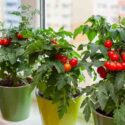
Determinate tomatoes are usually easier to manage in confined spaces because their eventual size is more predictable. They fit naturally into patio gardens, raised beds, and containers where an 8-foot vine would be difficult to accommodate.
But determinate does not necessarily mean tiny. A 4-foot tomato carrying a heavy crop can still become broad and top-heavy.
For small-space growing:
Determinate tomatoes: Usually the easiest conventional choice for containers and compact beds.
Indeterminate tomatoes: Work well when you have a large container and a tall, sturdy vertical support.
Dwarf tomatoes: Often ideal when you want substantial fruit from a compact plant.
Semi-determinate tomatoes: Useful when you want a manageable plant but a longer harvest than standard determinates usually provide.
A 5-gallon container may be workable for some tomato plants, but larger containers create a much more forgiving root zone and moisture reserve. Vigorous indeterminates are considerably easier to maintain in larger pots.
Usually, yes – or at least they benefit from it.
The common claim that determinate tomatoes never need staking or caging is too simplistic. Their stems stop extending sooner, but a compact plant carrying several pounds of fruit can still lean, split, or collapse onto the soil.
Support helps:
Keep fruit away from damp soil.
Reduce branch breakage under a heavy crop.
Improve access for harvesting.
Increase airflow through dense foliage.
Reduce wind damage.
A sturdy cage or stake-and-weave system often suits determinate tomatoes well.
Indeterminate tomatoes need substantially stronger structures because height and weight continue increasing through the season. Tall cages, stakes, strings, fences, and trellises can all work when properly anchored.
Support and pruning solve different problems. A determinate tomato can benefit greatly from a cage while needing almost no sucker removal. Keeping the plant upright does not mean it should be trained like an indeterminate vine.
Determinate tomatoes generally need little or no sucker pruning. Their productive growth is finite, so removing healthy shoots can remove flowers and fruit that the plant will not simply replace with unlimited new growth.
Useful pruning is normally limited to:
Diseased foliage.
Broken or badly damaged stems.
Leaves remaining in contact with wet soil.
Occasional overcrowded foliage where airflow is poor.
Indeterminate plants offer more training choices because new shoots continue to develop. They may be grown naturally in a large cage or pruned to one, two, or several main stems.
Selective pruning can:
Make tall plants easier to support.
Improve airflow.
Reduce plant width.
Make fruit easier to see and harvest.
Help fit more vertically trained plants into a limited area.
But pruning is a tradeoff. A healthy sucker is a potential fruiting branch, and excessive pruning reduces the leafy canopy that powers growth and protects fruit from intense sun.
A sucker is not wasted growth. It is a lateral stem capable of producing leaves, flowers, and tomatoes. Remove it when it conflicts with your chosen training system, not simply because tomato suckers are said to be “bad.”
For a complete guide to sucker removal, determinate vs. indeterminate pruning, single- and multi-stem training, lower-leaf removal, Missouri pruning, topping, and avoiding overpruning, see Gardenia’s How and When to Prune Tomatoes.
Tomato growth habits do not fit perfectly into only two boxes.
Semi-determinate varieties usually remain more manageable than fully indeterminate tomatoes but produce for longer than typical determinate plants.
They can be particularly useful when you want:
A moderate plant size.
A longer harvest than a standard determinate.
A tomato suited to raised beds or medium-sized cages.
Less vigorous growth than a large indeterminate vine.
Dwarf tomatoes deserve separate treatment because dwarf describes stature rather than automatically describing determinate growth. Some dwarf cultivars have an indeterminate fruiting pattern while remaining compact because their stems have short internodes and thicker, sturdier growth.
They can be excellent choices for:
Patios and balconies.
Large containers.
Small raised beds.
Gardeners who want full-sized tomatoes without managing a very tall vine.
Always read the cultivar description rather than assuming that dwarf, patio, bush, and determinate are interchangeable terms.
False. Growth habit describes the plant, not fruit size. Determinate cultivars can produce cherry, paste, slicing, and other tomato types.
False. Many familiar cherry tomatoes are indeterminate, but determinate and dwarf cherry cultivars also exist.
False. Determinate paste tomatoes are popular because concentrated ripening suits processing, but indeterminate paste tomatoes are also available.
False. Heirloom describes a cultivar’s history and reproduction, not its growth habit.
False. Their stems may be shorter, but a heavy fruit load can still pull branches onto the soil or cause the plant to topple.
False. Pruning is optional. Large cages can support indeterminate tomatoes with relatively little sucker removal, while narrow vertical systems usually require more active training.
Fruit type and growth habit are different traits. “Cherry,” “beefsteak,” “paste,” “heirloom,” and “red” tell you something different from determinate or indeterminate. Check the actual cultivar description rather than guessing from the fruit.
Early-maturing determinate tomatoes can be useful because they reach production quickly and concentrate much of their crop. However, an early indeterminate can also perform very well. Days to maturity is more important than growth habit alone.
Indeterminate tomatoes can make excellent use of long summers because they continue producing flower clusters and fruit after their earliest tomatoes have been harvested.
Extreme heat can interrupt fruit set in either growth type. A determinate cultivar that sets much of its crop before peak summer heat may be useful, but cultivar heat tolerance and planting date usually matter more than the determinate label itself.
Growth habit does not equal disease resistance. In humid regions, look for resistant cultivars, allow appropriate spacing, mulch the soil, water at root level, and choose a training system that provides reasonable airflow.
Instead of asking which growth habit is “best,” match the tomato to what you actually want from the garden.
| Your Priority | Best Starting Point | Why | Watch Out For |
|---|---|---|---|
| Small patio or balcony | Determinate or dwarf | More predictable mature size | Determinate does not automatically mean tiny |
| Fresh tomatoes all summer | Indeterminate | Keeps producing new flower clusters | Needs strong support and ongoing maintenance |
| Canning or sauce | Determinate | More ripe fruit available during a shorter window | One plant may still not provide enough for a preserving batch |
| Minimal pruning | Determinate | Little sucker management is normally required | Plants may still need strong support |
| Tall trellis available | Indeterminate | Makes excellent use of vertical space | Training and tying may be needed throughout the season |
| Large container | Either | Root volume and support can accommodate both | Indeterminates require more water and structural support |
| Compact plant + long harvest | Dwarf or semi-determinate | Combines manageable size with extended production | Check the individual cultivar – these categories vary |
| Maximum harvest flexibility | Grow both | Combines concentrated and extended cropping | Allow different support and spacing for each type |
The most versatile choice may be both. A few determinate plants can provide a useful preserving harvest, while an indeterminate cherry or slicing tomato continues supplying fresh fruit. Different growth habits can complement one another rather than compete.
If a plant label has disappeared, you may not be able to identify the growth habit immediately. Watch how the plant develops.
A tomato is more likely to be determinate if it:
Remains relatively compact.
Produces many flower clusters within a short interval.
Stops extending once growing tips terminate in flower clusters.
Ripens much of its crop within several weeks.
A tomato is more likely to be indeterminate if it:
Continues extending upward or outward throughout summer.
Keeps producing new suckers and growing tips.
Carries flowers, green fruit, and ripe tomatoes at the same time.
Continues setting new fruit until weather or disease stops growth.
Plant size alone is not enough for a reliable identification. A young indeterminate is still small, while some determinate varieties become surprisingly substantial.
The best tomato is not simply the one labeled determinate or indeterminate. It is the cultivar whose complete set of traits fits your garden.
Before choosing, ask:
How much horizontal and vertical space do I have?
Do I want tomatoes all season or a larger harvest within a shorter period?
Am I growing in the ground, a raised bed, or a container?
How much pruning, tying, and support am I willing to manage?
How long is my growing season?
Which tomato diseases are common in my area?
Do I want cherry tomatoes, slicers, paste tomatoes, or fruit for preserving?
Explore the Gardenia profile for Tomato (Solanum lycopersicum) for tomato characteristics and growing requirements.
You can also use the Gardenia Plant Finder to explore plants suited to your garden conditions, or the Gardenia Plant Comparison Tool to compare plant characteristics side by side.
Choose determinate tomatoes when compact growth and a more concentrated crop are advantages. Choose indeterminate tomatoes when continued growth and an extended harvest suit the way you garden. Consider dwarf or semi-determinate tomatoes when you need a middle ground.
And remember Gardenia’s five-factor rule: growth habit, maturity time, mature size, disease resistance, and fruit use belong in the same decision. That is a far better way to choose a tomato than relying on “determinate” or “indeterminate” alone.
Determinate tomatoes grow to a limited size and produce much of their fruit over a relatively concentrated period. Indeterminate tomatoes continue growing, flowering, and setting new fruit throughout the season until frost, disease, or unfavorable conditions stop them.
Neither is universally better. Determinate tomatoes suit compact spaces, lower-maintenance growing, and concentrated harvests. Indeterminate tomatoes suit gardeners who want an extended supply of fresh fruit and have room for substantial support.
Many determinate tomatoes mature at roughly 2-4 feet tall, but size varies considerably by cultivar. Determinate describes the plant’s finite growth habit, not a guaranteed mature height.
They often benefit from support. Although determinate tomatoes are shorter than most indeterminate varieties, a heavily loaded plant can lean, break, or collapse. A sturdy cage or similar support helps keep fruit and foliage off the ground.
Determinate tomatoes generally need little or no sucker pruning because removing healthy shoots can reduce their finite crop. Remove diseased, damaged, or soil-contacting foliage, but avoid aggressive pruning.
Pruning is optional but useful when indeterminate plants are being trained vertically or when improved airflow and narrower growth are desired. They can also be grown successfully with minimal pruning inside large, sturdy cages.
Determinate and dwarf tomatoes are generally easier to manage in containers because their mature size is more predictable. Indeterminate tomatoes can also grow successfully in pots but need more root volume, water, and support.
Determinate tomatoes are convenient for preserving because a larger proportion of the crop ripens within a shorter period. However, fruit type and flavor matter too, and both determinate and indeterminate paste tomatoes exist.
No. Many Roma and paste-type tomatoes are determinate because concentrated ripening is convenient for processing, but indeterminate paste tomatoes also exist. Always check the specific cultivar.
They can be either. Many familiar cherry tomatoes are indeterminate, but determinate and dwarf cherry varieties are also available. Fruit size does not determine growth habit.
Semi-determinate tomatoes usually remain more compact than fully indeterminate plants but continue producing for longer than typical determinate varieties. They can provide a useful middle ground between controlled plant size and an extended harvest.
Yes. Growing both can work extremely well. Determinate plants can provide a concentrated crop, while indeterminate plants continue producing fresh tomatoes over a longer period. Give each plant the spacing and support appropriate to its growth habit.
Updated: September 2026 • Reviewed by Gardenia Editors
| Hardiness |
2 - 11 |
|---|---|
| Climate Zones | 1, 1A, 1B, 2, 2A, 2B, 3, 3A, 3B, 4, 5, 6, 7, 8, 9, 10, 11, 12, 13, 14, 15, 16, 17, 18, 19, 20, 21, 22, 23, 24, A1, A2, A3, H1, H2 |
| Plant Type | Fruits |
| Plant Family | Solanaceae |
| Genus | Solanum, Tomatoes |
| Common names | Love Apple, Tomato |
| Exposure | Full Sun |
| Season of Interest | Spring (Late), Summer (Early, Mid, Late), Fall |
| Height | 3' - 10' (90cm - 3m) |
| Spread | 1' - 4' (30cm - 120cm) |
| Spacing | 24" - 36" (60cm - 90cm) |
| Maintenance | Average, High |
| Water Needs | Average |
| Soil Type | Clay, Loam, Sand |
| Soil pH | Acid, Neutral |
| Soil Drainage | Moist but Well-Drained |
| Tolerance | Rabbit, Clay Soil |
| Attracts | Bees |
| Landscaping Ideas | Patio And Containers |
| Garden Styles | City and Courtyard, Informal and Cottage, Pollinator Garden |
| Hardiness |
2 - 11 |
|---|---|
| Climate Zones | 1, 1A, 1B, 2, 2A, 2B, 3, 3A, 3B, 4, 5, 6, 7, 8, 9, 10, 11, 12, 13, 14, 15, 16, 17, 18, 19, 20, 21, 22, 23, 24, A1, A2, A3, H1, H2 |
| Plant Type | Fruits |
| Plant Family | Solanaceae |
| Genus | Solanum, Tomatoes |
| Common names | Love Apple, Tomato |
| Exposure | Full Sun |
| Season of Interest | Spring (Late), Summer (Early, Mid, Late), Fall |
| Height | 3' - 10' (90cm - 3m) |
| Spread | 1' - 4' (30cm - 120cm) |
| Spacing | 24" - 36" (60cm - 90cm) |
| Maintenance | Average, High |
| Water Needs | Average |
| Soil Type | Clay, Loam, Sand |
| Soil pH | Acid, Neutral |
| Soil Drainage | Moist but Well-Drained |
| Tolerance | Rabbit, Clay Soil |
| Attracts | Bees |
| Landscaping Ideas | Patio And Containers |
| Garden Styles | City and Courtyard, Informal and Cottage, Pollinator Garden |
Create a membership account to save your garden designs and to view them on any device.
Becoming a contributing member of Gardenia is easy and can be done in just a few minutes. If you provide us with your name, email address and the payment of a modest $25 annual membership fee, you will become a full member, enabling you to design and save up to 25 of your garden design ideas.
Join now and start creating your dream garden!
Create a membership account to save your garden designs and to view them on any device.
Becoming a contributing member of Gardenia is easy and can be done in just a few minutes. If you provide us with your name, email address and the payment of a modest $25 annual membership fee, you will become a full member, enabling you to design and save up to 25 of your garden design ideas.
Join now and start creating your dream garden!