Grow better tomatoes from seed to harvest. Learn when and how to plant, how much to water and feed, whether to remove suckers, why flowers sometimes drop, and how to solve common fruit and foliage problems. Practical, science-based advice helps you grow healthier plants and harvest more delicious tomatoes.
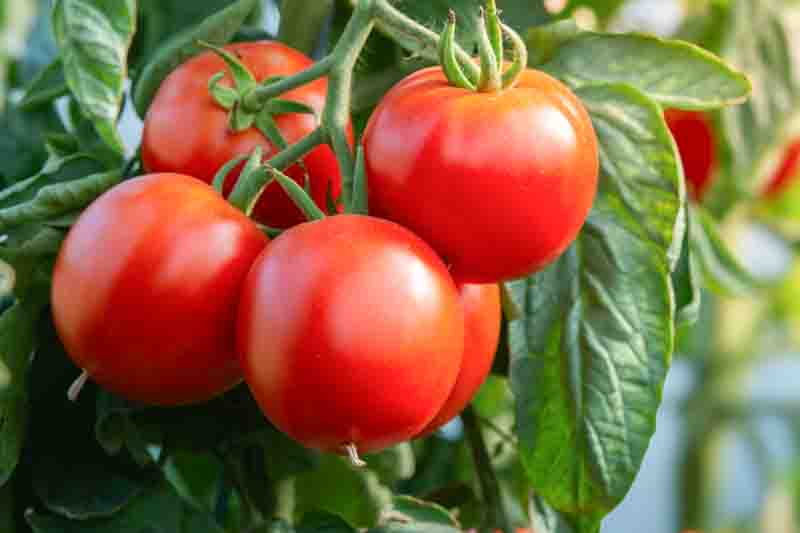


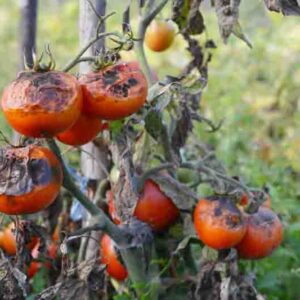
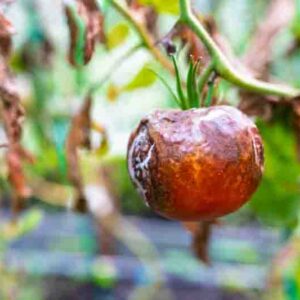
Few crops reward a gardener quite like tomatoes. A healthy plant can grow from a modest spring transplant into a sprawling vine loaded with fruit in a matter of months. But tomatoes also have a reputation for problems: flowers drop, leaves curl, fruit cracks, plants grow enormous without producing much, or black patches suddenly appear on developing tomatoes.
The good news is that most tomato-growing problems become much easier to understand once you know what the plant needs at each stage. Successful tomato growing is built around a handful of fundamentals:
Full sun for vigorous growth and good fruit production.
Warm growing conditions without prolonged cold or extreme heat.
Fertile, well-drained soil with enough organic matter to retain moisture.
Consistent watering rather than repeated cycles of drought and saturation.
Balanced feeding without excessive nitrogen.
Strong support for plants and developing fruit.
Good airflow to reduce disease pressure and keep foliage manageable.
This complete guide explains how to grow tomatoes from seed or transplants, when and how to plant them, how much to water and fertilize, whether to prune suckers, why tomato flowers sometimes fail to set fruit, how to grow tomatoes in containers, and how to diagnose common tomato problems before reaching for fertilizer or pesticide.
The tomato-growing principle that matters most: Tomatoes tolerate many imperfect conditions, but they dislike sudden extremes. A steady supply of light, moisture, nutrients, and root space generally produces healthier plants and better fruit than repeated cycles of drought, overwatering, overfeeding, or severe pruning.
| Tomato Need | Best Practice |
|---|---|
| Light | At least 6 hours of direct sun; 8 hours or more is preferable for strong growth and fruiting. |
| Soil | Fertile, moisture-retentive but well drained. |
| Soil pH | About 6.0-6.8; roughly 6.2-6.5 is an excellent target for nutrient availability. |
| Water | Keep the root zone consistently moist, not saturated. About 1 inch (2.5 cm) per week is a starting point for in-ground plants, adjusted for weather and soil. |
| Spacing | Usually 24-36 inches (60-90 cm), depending on cultivar, vigor, pruning, and support system. |
| Support | Cage, stake, or trellis installed at or soon after planting. |
| Feeding | Maintain adequate fertility but avoid excessive nitrogen, which can promote leaves at the expense of fruiting. |
| Harvest | Pick fully ripe fruit or harvest from the breaker stage onward when weather, cracking, or pests threaten the crop. |
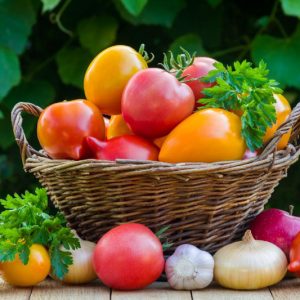
Tomatoes (Solanum lycopersicum) are warm-season members of the nightshade family, Solanaceae. Although naturally perennial in frost-free climates, they are usually grown as annual crops. Tomatoes range from tiny currant and cherry fruits to plum, slicing, beefsteak, and specialty types in red, pink, orange, yellow, green, purple, and near-black shades.
Before choosing a variety, decide whether you need a determinate or indeterminate tomato.
| Type | How It Grows | Best Use | Pruning & Support |
|---|---|---|---|
| Determinate | Reaches a genetically limited size and ripens much of its crop over a relatively concentrated period. | Containers, smaller gardens, preserving, concentrated harvests. | Usually caged or supported; little sucker pruning is needed. |
| Indeterminate | Continues producing stems, flower clusters, and fruit until frost, disease, or unfavorable weather stops growth. | Long harvests, vertical growing, many cherry, slicing, and heirloom tomatoes. | Needs substantial support; selective pruning can help control vigorous growth. |
When selecting a tomato cultivar, consider more than fruit color or flavor. Pay attention to:
Days to maturity: Earlier cultivars are especially useful in short-season climates.
Growth habit: Determinate plants are easier to fit into smaller spaces; indeterminate plants can produce over a longer season.
Disease resistance: Resistant cultivars can reduce losses where particular diseases are common.
Fruit type: Cherry, slicing, paste, beefsteak, and specialty tomatoes suit different uses.
Climate: Some cultivars perform better under cool summers, intense heat, or short growing seasons.
Available space: A vigorous indeterminate tomato can become a very large plant.
Choosing varieties for your conditions matters. A tomato with outstanding flavor is not automatically the best tomato for every garden. Season length, summer heat, disease pressure, container size, and available support can matter just as much.
Explore the Gardenia profile for Tomato (Solanum lycopersicum) for plant characteristics and growing requirements.
Tomatoes are easy to grow from seed, and starting them yourself gives you access to far more varieties than most nurseries can offer. Sow seeds indoors about 5-8 weeks before you expect to transplant outdoors.
For sturdy seedlings:
Sow seeds about 1/4 inch (6 mm) deep in a sterile seed-starting mix.
Keep the mix warm. Approximately 75-85°F (24-29°C) provides an excellent germination range.
Provide strong light immediately after emergence. Weak light produces thin, elongated seedlings.
Keep the mix evenly moist but never permanently saturated.
Pot seedlings on if roots become crowded after true leaves develop.
About a week before transplanting, begin hardening seedlings off. Gradually introduce them to outdoor conditions rather than moving them directly from a protected indoor environment into full sun and wind.
Start with a sheltered location and limited outdoor exposure.
Increase the time outdoors gradually each day.
Introduce direct sunlight progressively to avoid leaf scorch.
Protect seedlings from strong winds and unusually cold nights.
Continue checking moisture because small containers can dry rapidly outdoors.
Bigger is not always better. A compact, stocky tomato seedling transplanted at the right time often establishes faster than an oversized, root-bound plant that has been kept indoors too long.
Tomatoes are frost-tender and dislike prolonged cold. Wait until the danger of frost has passed and conditions have become reliably warm before planting them outside. For a complete guide to frost timing, soil temperature, hardening off, planting depth, spacing, and transplant care, see Gardenia’s When and How to Plant Tomatoes Outdoors.
Night temperatures are particularly important. Nighttime temperatures below about 55°F (13°C) can interfere with normal tomato pollination and fruit set. Cold soil also slows root growth and nutrient uptake, so planting several weeks early rarely produces the head start gardeners expect.
Heat creates the opposite problem. Sustained daytime temperatures around 88-90°F (31-32°C) or higher, especially when nights remain around 70°F (21°C) or warmer, can reduce pollen viability and cause flowers to drop without setting fruit.
| Temperature Situation | What It Means for Tomatoes |
|---|---|
| 75-85°F (24-29°C) | Excellent range for rapid seed germination. |
| Nights below about 55°F (13°C) | Pollination and fruit set may be impaired. |
| Days around 88-90°F (31-32°C)+ | Sustained heat may reduce successful pollination and increase blossom drop. |
| Nights around 70°F (21°C)+ during hot weather | Warm nights can compound heat-related flower abortion and poor fruit set. |
These are useful guidelines rather than absolute cutoffs. Cultivar, humidity, duration of the temperature extreme, plant stress, and local conditions all influence how well a tomato continues setting fruit.
Don’t rush planting just because the calendar says spring. Tomatoes gain little from sitting in cold soil. Warm, actively growing roots are far more valuable than getting plants outside a week or two early.
Plant tomatoes in the sunniest suitable part of the garden. They need at least 6 hours of direct sunlight each day, and 8 hours or more usually supports stronger growth and heavier crops. In very hot climates, some relief from fierce late-afternoon sun can reduce heat stress, but tomatoes grown in substantial shade generally produce fewer fruits.
For the best root environment, aim for soil that is:
Fertile without being overloaded with fertilizer.
Rich in organic matter for good structure and biological activity.
Moisture-retentive enough to avoid rapid drying.
Well drained so roots are not sitting in waterlogged soil.
Slightly acidic, around pH 6.0-6.8, with roughly 6.2-6.5 an excellent target.
A soil test is far more useful than guessing. It can identify pH problems and nutrient deficiencies before amendments are added unnecessarily.
Incorporating mature compost can improve both soil structure and moisture retention. Where soilborne diseases have been troublesome, avoid repeatedly planting tomatoes and closely related crops such as peppers, potatoes, and eggplants in exactly the same ground.
Tomatoes have an unusual advantage over many garden plants: buried portions of the stem can develop additional roots. That makes tall tomato transplants especially adaptable at planting time.
For a normal transplant:
Remove the lowest leaves.
Dig a planting hole deep enough to bury part of the bare stem.
Leave several healthy sets of leaves above the soil.
Firm the soil gently around the roots and buried stem.
Water thoroughly after planting.
For an extremely leggy plant, dig a shallow trench instead of an unnecessarily deep hole. Lay much of the bare stem horizontally, cover it with soil, and gently angle the leafy growing tip upward.
Most garden tomatoes can be spaced about 24-36 inches (60-90 cm) apart, but spacing should reflect plant size and training. For a more detailed breakdown by growth habit, pruning, cages, stakes, trellises, and raised beds, see Gardenia’s Tomato Plant Spacing: How Far Apart to Plant.
Compact determinate varieties: Can often be planted toward the closer end of the range.
Large indeterminate plants: Benefit from more room when grown in cages or with minimal pruning.
Vertically trained tomatoes: May sometimes be grown more closely when carefully pruned and supported.
Humid climates: Wider spacing can improve airflow and reduce prolonged leaf wetness.
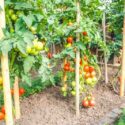
Install support early. Put cages, stakes, or trellises in place at planting time or soon afterward. Once tomato plants begin sprawling, adding support becomes much harder without breaking stems or disturbing roots.
Water management is one of the biggest differences between an easy tomato season and a frustrating one. Tomatoes grow best when the root zone remains consistently moist but well drained. For a detailed watering strategy, see Gardenia’s guide on how often to water tomato plants.
As a starting point, established tomatoes growing in the ground may need around 1 inch (2.5 cm) of rain or irrigation per week, but actual demand varies enormously.
Tomatoes may need more frequent watering when:
Weather is hot, dry, or windy.
Plants are growing in sandy soil.
They are planted in raised beds.
They are growing in containers.
Large plants are carrying a heavy fruit load.
For efficient irrigation:
Water deeply so moisture penetrates the active root zone.
Water at soil level rather than routinely wetting foliage.
Use drip irrigation or soaker hoses when practical.
Check the soil rather than following a rigid schedule.
Mulch after the soil has warmed with clean straw, shredded leaves, or another suitable organic mulch.
Why consistency matters: Allowing soil to become very dry and then soaking it heavily can contribute to fruit cracking and blossom-end rot. The goal is not simply “more water” – it is a reasonably steady supply of water to actively growing roots.
Tomatoes are productive plants with significant nutrient requirements, but heavy fertilizing does not guarantee a heavy crop. A lush plant can actually be a sign that too much fertilizer has been applied. For a complete feeding strategy, see Gardenia’s guide on how to fertilize tomatoes, what to feed them, and when.
Keep these principles in mind:
Start with the soil. A soil test gives better guidance than fertilizing by habit.
Use a modest starter fertilizer when appropriate rather than heavily feeding young transplants.
Avoid excessive nitrogen. Too much can produce huge, dark-green plants with relatively few flowers and fruits.
Maintain balanced nutrition. Tomatoes also need phosphorus, potassium, calcium, magnesium, and micronutrients.
Do not assume fruiting plants automatically need extra potassium. Potassium is important for fruit development and quality, but fertilizer should reflect actual soil fertility.
Avoid routine Epsom salts. They supply magnesium and sulfur, not a universal tomato tonic.
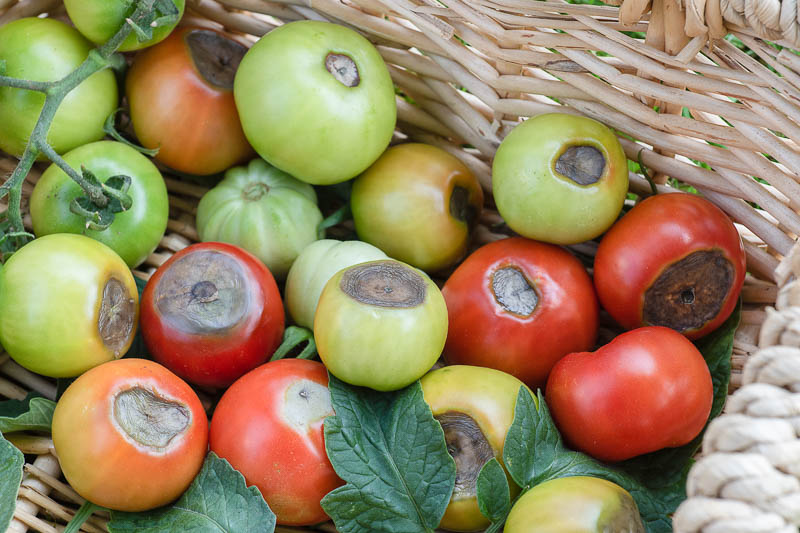
Not necessarily.
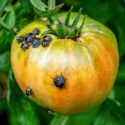
Blossom-end rot causes a dark, sunken area at the blossom end of a developing tomato. The disorder involves inadequate calcium reaching rapidly developing fruit tissue, but that does not automatically mean the soil lacks calcium.
Calcium movement into the fruit can be disrupted by:
Irregular watering.
Rapid swings between dry and wet soil.
Root damage.
Excessive fertilizer salts.
Very rapid vegetative growth.
Blossom-end rot does not automatically mean “add calcium.” Stabilize soil moisture and protect root health first. Use a soil test before adding calcium amendments unless a deficiency is already known.
Caging, staking, or trellising keeps tomatoes off the soil, makes harvesting easier, and can improve access and airflow through the planting.
Cages: Allow a relatively natural canopy and require less pruning.
Stakes: Save space but require regular tying and more canopy management.
Trellises: Work well for vigorous indeterminate plants and vertical growing systems.
Whatever system you choose, make it strong enough. A mature indeterminate tomato carrying dozens of fruits can become surprisingly heavy.
Pruning depends on the tomato and how you intend to grow it.
Determinate tomatoes: Avoid heavy sucker pruning because the plant has a naturally limited growth pattern and those shoots contribute to its crop.
Indeterminate tomatoes: Selective sucker removal can make vigorous plants easier to train, improve airflow, and concentrate growth on one or several main stems.
All tomatoes: Remove badly diseased or damaged foliage when appropriate and avoid allowing dense foliage to remain pressed against wet soil.
A tomato sucker is simply a lateral shoot growing from the junction between a leaf and the main stem. It is not a parasite or inherently wasted growth. Left in place, it can produce leaves, flowers, and fruit.
For a complete guide to sucker removal, determinate vs. indeterminate pruning, single- and multi-stem training, lower-leaf removal, Missouri pruning, topping, and avoiding overpruning, see Gardenia’s How and When to Prune Tomatoes.
A useful pruning test: Before removing a healthy shoot, ask what problem the cut is solving. If it improves training, airflow, access, or plant manageability, it may be useful. If the only reason is “tomato suckers must always be removed,” leave the pruning shears closed.
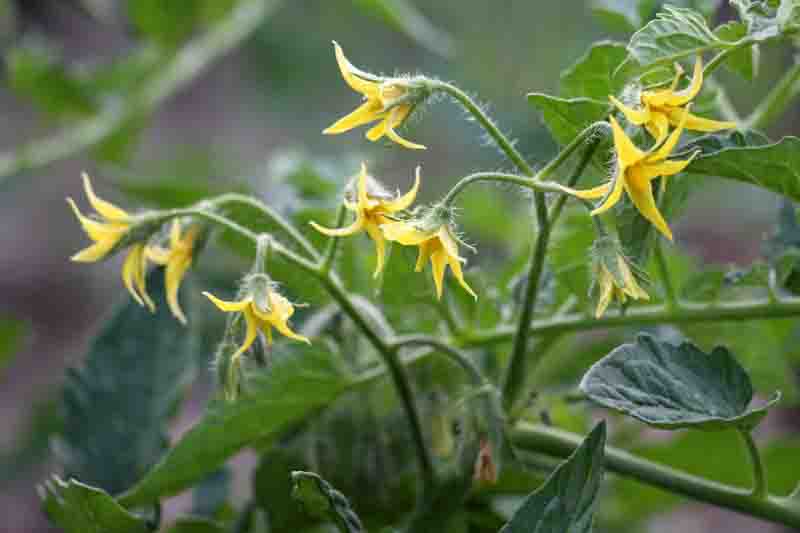
Tomato flowers are self-fertile. They contain both male and female reproductive structures, so you do not need two different tomato plants for fruit production. Wind, bees, and other vibration help release pollen within the flower, and outdoors ordinary air movement is often sufficient.
If your tomato plant is flowering but producing little fruit, check these possibilities:
Cool nights: Temperatures below about 55°F (13°C) can interfere with fertilization.
Extreme heat: Sustained daytime temperatures around 88-90°F (31-32°C) or higher can reduce pollen viability.
Warm nights: Nights around 70°F (21°C) or warmer during hot weather can further reduce fruit set.
High humidity: Can interfere with normal pollen release.
Drought stress: Stressed plants may shed flowers.
Excess nitrogen: Can encourage foliage at the expense of flowering and fruiting.
Insufficient sunlight: Weakens overall flowering and fruit production.
During a heat wave, don’t fertilize in an attempt to force tomatoes to set. Keep the plants healthy and adequately watered. Once temperatures moderate, newly produced flowers often begin setting fruit normally again.
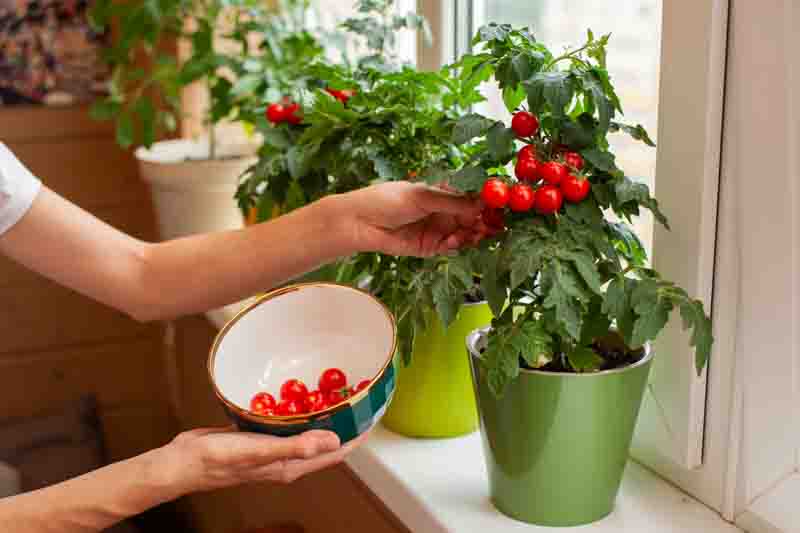
Tomatoes grow very well in containers when their roots have enough room and the gardener can keep up with water and nutrients. For detailed guidance on pot size, soil, watering, feeding, support, pruning, and variety selection, see Gardenia’s Growing Tomatoes in Containers: Complete Guide.
For good container performance:
Use enough soil volume. Five gallons (19 L) is a practical minimum for many full-sized tomatoes, but 10 gallons or more is much more forgiving for vigorous indeterminate cultivars.
Choose a container with excellent drainage.
Use high-quality potting mix rather than heavy garden soil.
Place the container in full sun.
Install support at planting time.
Check moisture frequently. Containers can dry very quickly in hot weather.
Feed regularly but carefully. Frequent irrigation leaches nutrients, but excessive nitrogen is still undesirable.
Container size changes everything. A larger pot does more than provide extra root space – it also creates a larger moisture reserve, making watering far easier to manage during hot weather.
Tomatoes have a long list of possible pests, diseases, and physiological disorders, but a long list is not very useful when you are standing beside one unhappy plant. Start instead with what you see, what happened immediately beforehand, and which part of the plant is affected first.
| What You See | Useful Clue | Likely Explanation | What to Check First |
|---|---|---|---|
| Dark, sunken patch on the bottom of fruit | Soil has alternated between dry and wet | Blossom-end rot | Moisture consistency and root health before automatically adding calcium. |
| Fruit suddenly splits | Heavy rain or irrigation followed a dry period | Growth cracking | Maintain steadier moisture and harvest coloring fruit when severe rain is expected. |
| Flowers turn yellow and drop | Weather has been very hot or unusually cool | Temperature-related blossom drop | Recent day and night temperatures; keep plants healthy until conditions improve. |
| Huge leafy plant with few tomatoes | Frequent high-nitrogen fertilizer | Excessive vegetative growth | Stop unnecessary nitrogen feeding and reassess fertility. |
| Spots begin on lower leaves | Wet weather, splash, or persistent leaf moisture | Possible foliar disease | Identify the lesion pattern before treating; improve airflow and reduce soil splash. |
| Large portions of foliage disappear | Damage occurs rapidly | Hornworm or another large caterpillar | Inspect stems and undersides of leaves carefully for camouflaged caterpillars. |
| Leaves curl or roll but remain mostly green | Recent heat, heavy pruning, or moisture stress | Possible physiological leaf roll | Environmental stress before assuming infection. |
| Pale, bleached patch develops on exposed fruit | Fruit was suddenly exposed after pruning or leaf loss | Sunscald | Preserve adequate foliage around developing fruit and avoid unnecessary severe pruning. |
For a more detailed symptom-by-symptom diagnostic guide, see Tomato Problems: What Is Wrong With My Plant?, which covers yellow leaves, curling, wilting, stem problems, fruit disorders, pests, diseases, and environmental stress.
If the symptoms suggest chewing, sucking, webbing, stippling, leaf mining, or other insect damage, use Gardenia’s Tomato Pests: Identification, Control & Prevention guide to compare hornworms, aphids, whiteflies, spider mites, flea beetles, cutworms, stink bugs, fruit-feeding caterpillars, and other common tomato pests.
If the symptoms point to an infectious disease, use Gardenia’s Tomato Diseases: Identification, Treatment & Prevention guide to compare early blight, late blight, Septoria leaf spot, bacterial diseases, vascular wilts, viruses, and other common tomato diseases.
| Stage | What Matters Most |
|---|---|
| 5-8 weeks before planting | Start seeds indoors under strong light. |
| About 1 week before planting | Harden seedlings gradually and prepare beds and supports. |
| After frost danger has passed | Plant into warm conditions, bury stems deeply, water thoroughly, and install support. |
| Rapid vegetative growth | Maintain moisture, train vines, mulch once soil is warm, and avoid excessive nitrogen. |
| Flowering | Watch temperature extremes, moisture stress, and excessive vegetative growth. |
| Fruit development | Keep water availability steady; monitor pests, diseases, support, and fertility. |
| Harvest | Pick at your preferred ripeness or from the breaker stage when cracking, pests, or severe weather threaten fruit. |
A productive tomato garden is more than a row of tomato plants. The surrounding planting can provide flowers for pollinating and beneficial insects, use otherwise empty garden space, shade soil, and create a more diverse vegetable garden.
A practical approach to companion planting is to choose neighboring plants for:
Compatible sun and water requirements.
Efficient use of vertical and ground-level space.
Flowers that support pollinators and beneficial insects.
Limited competition for light, moisture, and nutrients.
A longer season of garden interest and productivity.
Be cautious with companion-planting claims that promise one neighboring plant will magically improve tomato flavor or repel every pest. Garden design and plant compatibility are more useful when based on growing conditions and ecological function.
Explore Gardenia’s Tomato Companion Plants guide, and use the Gardenia Plant Finder to discover plants suited to your garden’s sun, soil, climate, and other growing conditions.
The most useful tomato habit is observation. A cracked tomato after heavy rain tells a different story from a spotted lower leaf after humid weather. Flowers dropping during a heat wave call for a different response than a huge, leafy plant that has been heavily fertilized. Connect the symptom to what the plant has recently experienced before choosing a remedy.
Tomatoes do not need secret fertilizers, aggressive pruning, or complicated homemade treatments to produce a good crop. What they need is much less mysterious: warm conditions, plenty of sunlight, healthy roots, steady moisture, balanced nutrition, enough space, and attentive observation.
The best tomato growers do not simply react to symptoms – they connect the symptom to what the plant has experienced. Once you begin doing that, tomato care becomes far more predictable, and a great harvest becomes much easier to achieve.
Tomatoes need at least 6 hours of direct sunlight per day, but 8 hours or more is preferable for strong growth and good fruit production. In exceptionally hot climates, some protection from intense late-afternoon sun can reduce heat stress.
Water tomatoes often enough to keep their root zone consistently moist but not waterlogged. About 1 inch of water per week is a useful starting point for in-ground plants, but hot weather, wind, sandy soils, raised beds, containers, and heavy fruit loads can increase water needs substantially.
Tomatoes can be planted deeper than they grew in their containers because buried stem tissue can develop additional roots. Remove the lowest leaves and bury part of the stem, leaving several healthy sets of leaves above the soil. Very leggy plants can be planted in a shallow horizontal trench.
Not automatically. Tomato suckers are lateral stems capable of producing leaves, flowers, and fruit. Determinate tomatoes generally should not be heavily sucker-pruned. Indeterminate tomatoes can be selectively pruned when doing so improves training, airflow, access, or plant manageability.
Temperature extremes are a frequent cause. Night temperatures below about 55°F (13°C), sustained daytime heat around 88-90°F (31-32°C) or higher, and warm nights around 70°F (21°C) or above can interfere with tomato pollination and fruit set. Excessive nitrogen, drought stress, poor light, and very high humidity can also contribute.
Not necessarily. Blossom-end rot results when developing fruit receives inadequate calcium, but soil calcium may already be sufficient. Irregular moisture, root stress, excessive salts, and rapid growth can interfere with calcium uptake and movement. Improve moisture consistency and use a soil test before automatically adding calcium.
Tomatoes grow well in slightly acidic soil around pH 6.0-6.8, with roughly 6.2-6.5 an excellent target for nutrient availability. Testing the soil before planting provides better guidance than adjusting pH or adding nutrients by guesswork.
A 5-gallon container is a practical minimum for many full-sized tomatoes, but larger containers are easier to manage. A pot holding 10 gallons or more provides vigorous indeterminate tomatoes with greater root volume and a more stable moisture reserve. Compact patio and dwarf cultivars need less space.
Tomato cracking commonly follows rapid changes in water availability, especially when heavy rain or irrigation follows a dry period. The fruit absorbs water and expands faster than its skin can accommodate. Maintain more consistent soil moisture and harvest mature, coloring fruit when prolonged heavy rain is expected.
Yes. Once a mature tomato reaches the breaker stage and begins changing from mature green toward its final color, it can continue ripening after harvest. This is useful when cracking, pests, storms, frost, or other problems threaten fruit left on the plant.
Updated: September 2026 • Reviewed by Gardenia Editors
| Hardiness |
2 - 11 |
|---|---|
| Climate Zones | 1, 1A, 1B, 2, 2A, 2B, 3, 3A, 3B, 4, 5, 6, 7, 8, 9, 10, 11, 12, 13, 14, 15, 16, 17, 18, 19, 20, 21, 22, 23, 24, A1, A2, A3, H1, H2 |
| Plant Type | Fruits |
| Plant Family | Solanaceae |
| Genus | Solanum, Tomatoes |
| Common names | Love Apple, Tomato |
| Exposure | Full Sun |
| Season of Interest | Spring (Late), Summer (Early, Mid, Late), Fall |
| Height | 3' - 10' (90cm - 3m) |
| Spread | 1' - 4' (30cm - 120cm) |
| Spacing | 24" - 36" (60cm - 90cm) |
| Maintenance | Average, High |
| Water Needs | Average |
| Soil Type | Clay, Loam, Sand |
| Soil pH | Acid, Neutral |
| Soil Drainage | Moist but Well-Drained |
| Tolerance | Rabbit, Clay Soil |
| Attracts | Bees |
| Landscaping Ideas | Patio And Containers |
| Garden Styles | City and Courtyard, Informal and Cottage, Pollinator Garden |
| Hardiness |
2 - 11 |
|---|---|
| Climate Zones | 1, 1A, 1B, 2, 2A, 2B, 3, 3A, 3B, 4, 5, 6, 7, 8, 9, 10, 11, 12, 13, 14, 15, 16, 17, 18, 19, 20, 21, 22, 23, 24, A1, A2, A3, H1, H2 |
| Plant Type | Fruits |
| Plant Family | Solanaceae |
| Genus | Solanum, Tomatoes |
| Common names | Love Apple, Tomato |
| Exposure | Full Sun |
| Season of Interest | Spring (Late), Summer (Early, Mid, Late), Fall |
| Height | 3' - 10' (90cm - 3m) |
| Spread | 1' - 4' (30cm - 120cm) |
| Spacing | 24" - 36" (60cm - 90cm) |
| Maintenance | Average, High |
| Water Needs | Average |
| Soil Type | Clay, Loam, Sand |
| Soil pH | Acid, Neutral |
| Soil Drainage | Moist but Well-Drained |
| Tolerance | Rabbit, Clay Soil |
| Attracts | Bees |
| Landscaping Ideas | Patio And Containers |
| Garden Styles | City and Courtyard, Informal and Cottage, Pollinator Garden |
Create a membership account to save your garden designs and to view them on any device.
Becoming a contributing member of Gardenia is easy and can be done in just a few minutes. If you provide us with your name, email address and the payment of a modest $25 annual membership fee, you will become a full member, enabling you to design and save up to 25 of your garden design ideas.
Join now and start creating your dream garden!
Create a membership account to save your garden designs and to view them on any device.
Becoming a contributing member of Gardenia is easy and can be done in just a few minutes. If you provide us with your name, email address and the payment of a modest $25 annual membership fee, you will become a full member, enabling you to design and save up to 25 of your garden design ideas.
Join now and start creating your dream garden!