Brown flowers, spotted leaves, black mold, yellow foliage, dying branches, or damaged roots? This authoritative camellia diagnostic guide compares petal blight, Botrytis, leaf gall, leaf blight, canker, root rot, tea scale, mites, aphids, thrips, mealybugs, and vine weevils, with visual clues and practical treatment steps.
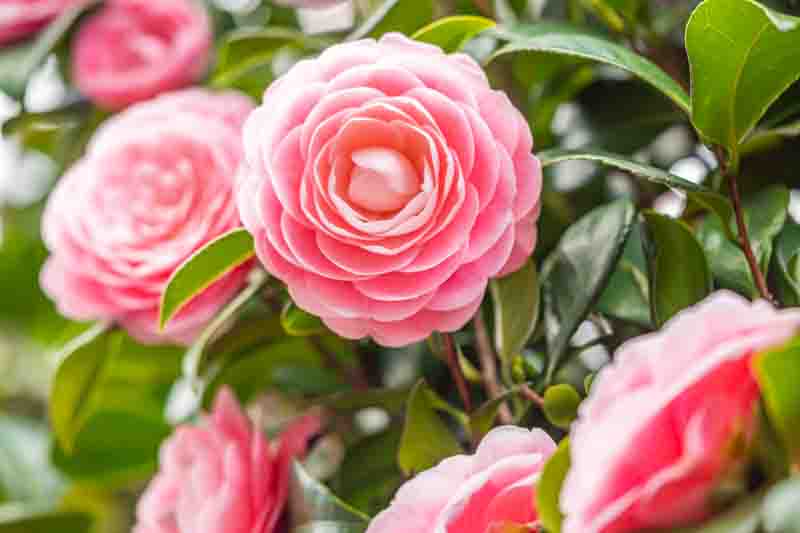


Camellias are resilient evergreen shrubs, but their flowers, leaves, stems, and roots can be affected by diseases, pests, frost, poor drainage, and other environmental stresses. The difficult part is that several problems produce remarkably similar symptoms.
A brown camellia flower may have petal blight, Botrytis gray mold, or frost injury. Yellow-speckled leaves may indicate tea scale or spider mites. A wilting branch may be suffering from drought, root rot, or a stem canker that has interrupted water movement.
The most reliable diagnosis begins with the part of the plant that is affected. Examine flowers, buds, leaves, stems, and roots separately. Then look for distinctive clues such as rapidly spreading petal spots, swollen leaves, black surface mold, sunken bark, sticky honeydew, white scale coverings, webbing, or notched leaf edges.
This visual guide covers the principal diseases, pests, and environmental disorders affecting camellias. Use it to identify the most likely cause, choose an appropriate treatment, and determine when professional diagnosis is needed.
Before treating: Confirm whether the problem is caused by a disease, pest, or environmental condition. Fungicide will not repair frost injury, insecticide will not cure root rot, and fertilizer may worsen a plant with damaged roots.
| What You See | Likely Problem | Best Diagnostic Clue |
|---|---|---|
| Brown flower spots spreading quickly | Camellia petal blight | Darkened petal veins and rapid flower collapse |
| Soft brown flowers with fuzzy gray growth | Botrytis gray mold | Cool, humid weather and gray spores |
| Outer petals brown after a freeze | Frost injury | Damage follows freezing weather |
| Buds brown, drop, or remain closed | Moisture stress, frost, or bud mites | Review weather and inspect buds with magnification |
| Pale, swollen, fleshy young leaves | Camellia leaf gall | Distorted tissue later develops a white surface |
| Brown leaf blotches and premature leaf loss | Camellia leaf blight | Often severe on young, propagated, or stressed plants |
| Raised reddish or velvety leaf spots | Algal leaf spot | Common in warm, humid climates |
| Irregular yellow rings or mosaics | Possible virus-associated mottling | Symptoms may be confined to selected branches |
| A branch wilts above sunken bark | Camellia dieback and canker | Stem lesion girdles growth above it |
| Whole plant yellows and wilts | Phytophthora or another root rot | Wet soil and dark, decaying feeder roots |
| Yellow splotches on upper leaf surfaces | Tea scale | White or dark scale coverings beneath leaves |
| Sticky leaves and black sooty mold | Soft scale, aphids, or mealybugs | Honeydew-producing insects are present |
| Semicircular notches along leaf edges | Vine weevil | Root-feeding larvae may weaken container plants |
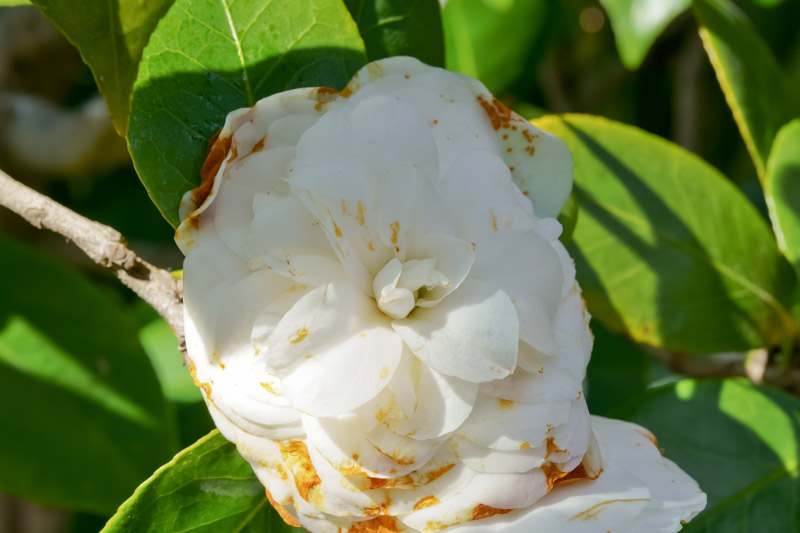
Camellia petal blight, also called camellia flower blight, is caused by Ciborinia camelliae. It damages camellia petals but does not infect the leaves or stems.
Small brown spots appear on petals and enlarge rapidly, sometimes consuming most of the flower within one or two days. Dark brown veins may become visible in affected petals, and the flower often drops prematurely while still partly intact.
The fungus survives beneath infected plants in hardened structures produced from fallen flowers. During a later flowering season, these structures release spores that can infect nearby blooms.
Remove infected flowers immediately and collect every fallen bloom. Do not compost diseased petals. Where infection recurs, replace contaminated surface mulch and continue sanitation throughout the flowering season.
Preventive fungicides may be useful where severe petal blight has been confirmed, but timing and permitted products vary. Follow local guidance and the product label.
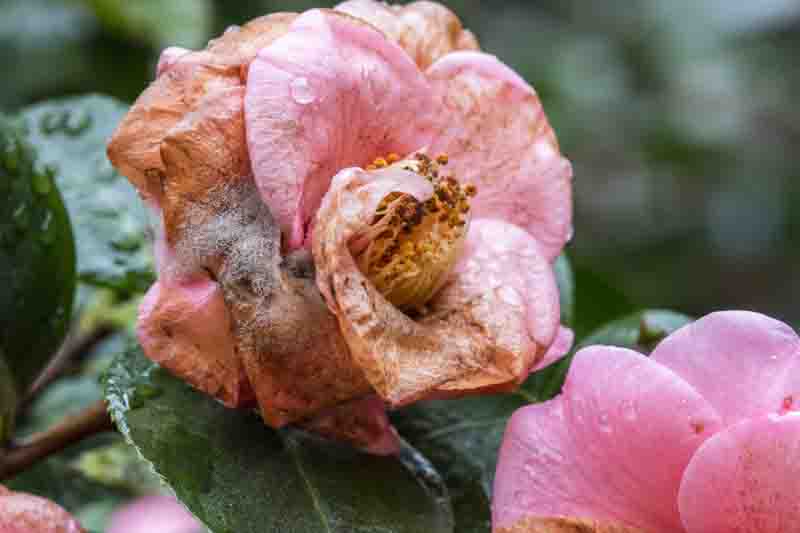
Botrytis gray mold, caused by Botrytis cinerea, affects aging, damaged, or wet camellia flowers during cool, humid weather. Petals develop soft tan or brown patches and may acquire fuzzy gray fungal growth.
Unlike camellia petal blight, Botrytis is a broad-host disease that readily colonizes weakened or dying tissue. Gray spores, prolonged humidity, crowding, and decaying floral debris support the diagnosis.
Remove affected flowers and old debris. Improve airflow, avoid wetting the flowers, and reduce prolonged humidity where practical. Use a labeled fungicide only when Botrytis is confirmed and cultural measures are insufficient.
Frost-damaged camellia petals may become brown, translucent, limp, or papery. The damage usually appears soon after freezing weather and often affects several exposed flowers at the same time.
Frost injury does not spread progressively between flowers. Direct sunlight early in the morning may worsen damage by thawing already frozen tissue too rapidly.
Remove spoiled flowers for appearance, but do not apply fungicide. Select hardy or later-blooming cultivars, avoid frost pockets, and shelter early flowers from cold wind and direct early-morning sun.
Bud drop is a symptom rather than a single disease. Summer drought, irregular watering, transplant stress, excessive nitrogen, temperature swings, frost, damaged roots, and pests may all cause camellia buds to fall or remain closed.
Some bud thinning is natural when a plant sets more buds than it can support. Excessive loss is more concerning when nearly every bud drops or the remaining buds become brown, distorted, or unusually slow to develop.
Maintain even moisture while flower buds develop, avoid unnecessary fertilizer, and inspect damaged buds closely. See Gardenia’s guide to camellias not blooming, dropping buds, or failing to open for a complete symptom-based diagnosis.
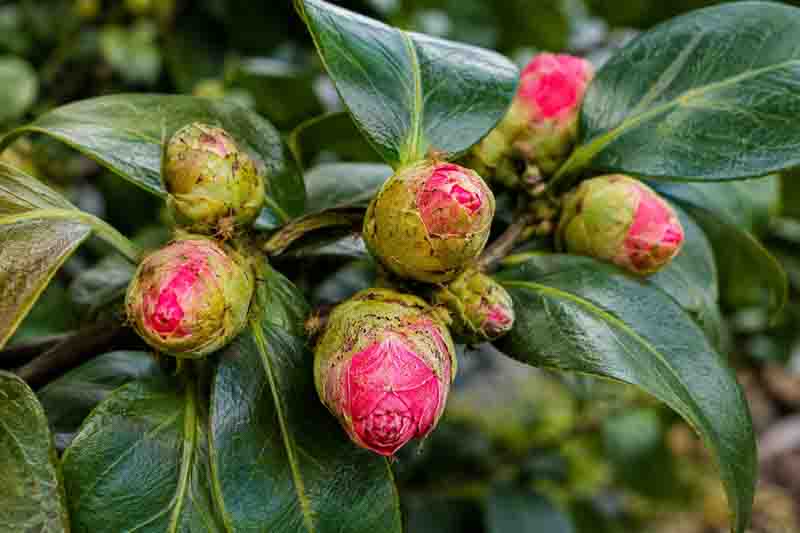
Camellia bud mites are microscopic pests that feed within or around developing flower buds. Affected buds may enlarge slowly, develop brown tips, remain closed, become distorted, or fall prematurely.
Bud-mite damage can closely resemble drought stress, frost injury, and other causes of bloom failure. The mites are too small to identify reliably without magnification or expert examination.
Compare damaged and healthy buds with a hand lens and seek confirmation from a plant clinic or extension service. Remove badly affected buds and fallen debris. Do not apply a miticide unless the pest has been identified and the product is labeled for camellias.
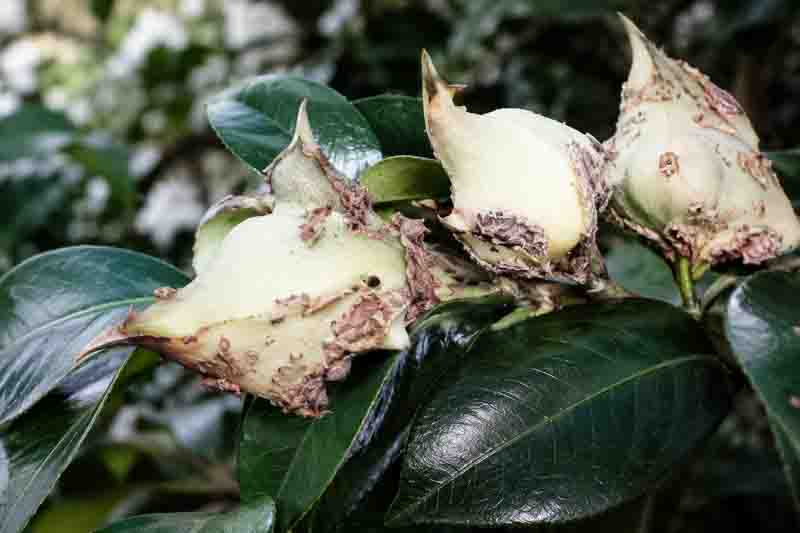
Camellia leaf gall is caused by Exobasidium camelliae and is especially common on sasanqua camellias during moist spring weather. Young leaves and shoots become abnormally thick, fleshy, distorted, and pale green, cream, pink, or nearly white.
As the gall matures, its surface develops a white spore-producing layer before drying and turning brown. Although the growth looks dramatic, limited infections rarely cause lasting harm.
Remove and discard galls while they are young, before the surface turns white and releases spores. Avoid overhead irrigation and reduce persistently damp, crowded conditions. Fungicide is seldom necessary in home gardens.
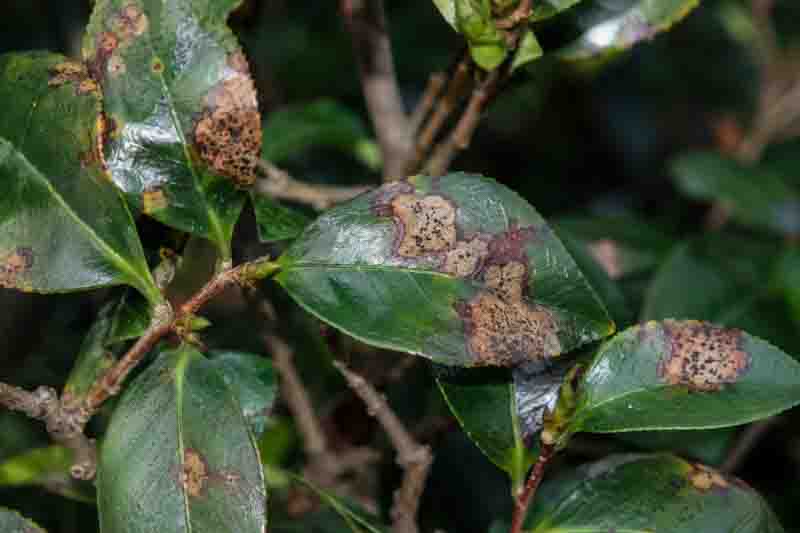
Camellia leaf blight is associated primarily with Monochaetia karstenii and species of Pestalotiopsis. Brown or scorched-looking blotches develop on the foliage, and numerous tiny black fruiting bodies may become visible within the dead tissue.
Severe infection can cause premature leaf loss and may spread through the petiole into shoots or branches, resulting in dieback. Young plants, rooted cuttings, recently propagated material, and stressed camellias can be particularly vulnerable.
Remove badly affected leaves and prune dead twigs back to healthy tissue. Collect fallen foliage, improve airflow, and water at soil level. Correct drought, root damage, poor drainage, or other underlying stresses.
Because several conditions can produce similar blotches, seek professional diagnosis before using fungicide on a valuable or rapidly declining plant.
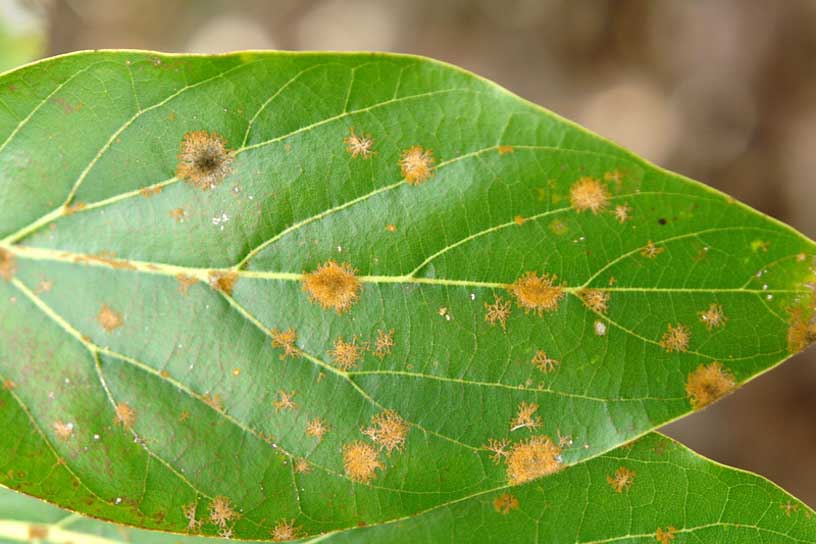
Algal leaf spot, commonly associated with Cephaleuros virescens, occurs mainly in warm, humid climates. Spots may begin as small gray-green, reddish, or orange patches and become raised, velvety, or crust-like.
Severe infection can weaken foliage and occasionally extend onto young twigs, but the disease is often most noticeable on stressed plants growing in humid, crowded conditions.
Improve plant vigor, drainage, spacing, and airflow. Avoid prolonged foliage wetness and remove heavily affected leaves. Copper-based products may be recommended for severe outbreaks, but use only products labeled for the plant and disease in your location.
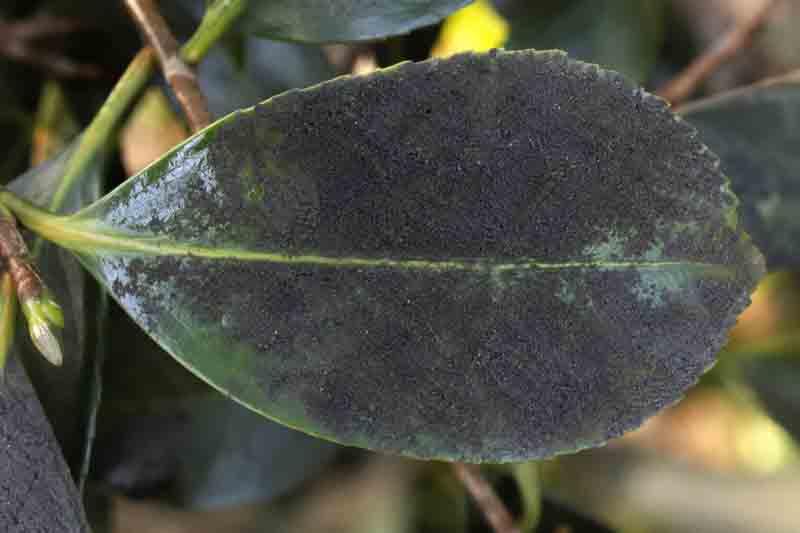
Sooty mold forms a black, soot-like coating on leaves and stems. It grows on sugary honeydew produced by aphids, soft scales, mealybugs, and some planthoppers.
The mold remains on the plant surface and can often be rubbed or washed away. It is a sign of an insect infestation, not the original cause of the problem.
Inspect new shoots, stems, and leaf undersides for honeydew-producing insects. Control the pest first, then gently rinse the foliage as the remaining mold loosens. Fungicide alone will not solve the problem.
Irregular yellow rings, cream patches, streaks, or mosaic patterns may be associated with one or more camellia viruses. Symptoms sometimes occur on selected branches and may also produce variegated flowers.
Visual diagnosis is not definitive. Nutrient disorders, genetic variegation, mites, herbicide injury, and other environmental stresses can create similar discoloration.
There is no curative spray. Do not propagate a suspicious plant through cuttings, budding, or grafting. A vigorous shrub with limited ornamental symptoms may be retained, but replace severely affected or declining plants with healthy nursery stock.
Sunscald causes bleached, tan, bronze, or brown patches on foliage exposed to excessive heat and sunlight. Damage is often concentrated on the south- or west-facing side of the shrub or develops after a shade-grown plant is suddenly exposed to stronger sun.
Dead leaf tissue may later be colonized by secondary fungi, making the original environmental injury look infectious.
Provide afternoon shade in hot climates, avoid sudden exposure changes, and maintain even soil moisture. Damaged leaves will not recover, but healthy new growth should develop once the exposure is corrected.
Other problems to rule out: Raised corky patches beneath leaves may indicate oedema caused by excessive water uptake. In regions where Phytophthora ramorum is regulated, suspicious leaf-edge lesions and premature defoliation on nursery plants should be reported or professionally diagnosed rather than treated as an ordinary leaf spot.
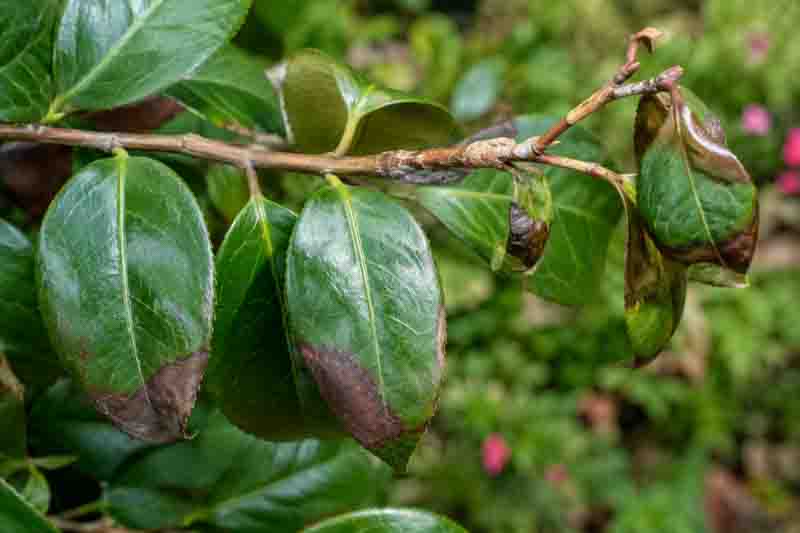
Camellia dieback and canker are commonly associated with Glomerella cingulata, a fungus historically connected with the Colletotrichum anthracnose group. The disease can affect leaves, shoots, and stems, but branch wilting and stem cankers are its most important diagnostic signs.
Symptoms may begin as brown or black leaf lesions, but serious infections can progress into shoots and stems. Leaves on an affected branch may suddenly yellow, wilt, darken, or remain attached after the shoot dies.
Inspect the stem below dying foliage for gray patches, sunken bark, cracking, or a canker that has girdled the branch. Drought, wounds, poor establishment, and damaged roots can increase susceptibility. Other fungi, including Botryosphaeria, may cause similar cankers on stressed plants.
Prune infected stems several inches below visible discoloration and back into healthy wood. Disinfect tools between cuts, remove diseased debris, avoid bark injuries, and correct drought, poor drainage, or root stress.
Fungicides cannot restore girdled branches. Seek laboratory diagnosis when a valuable plant is declining rapidly or several branches are affected.
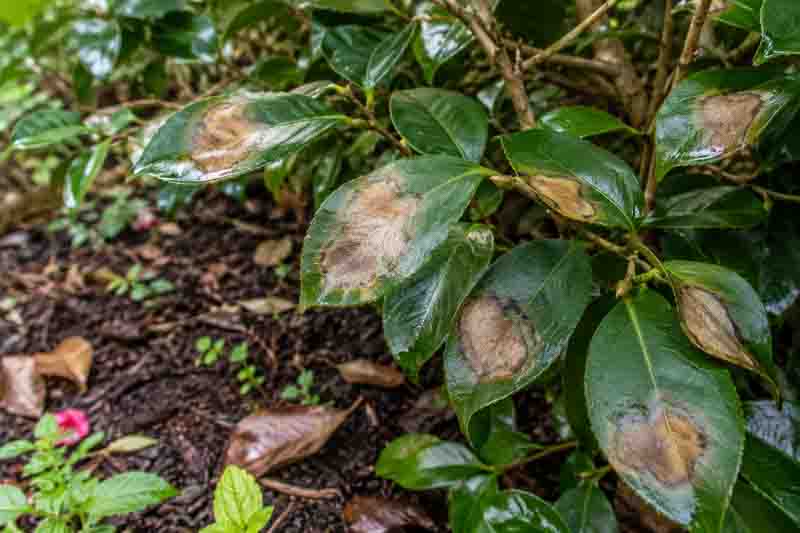
Phytophthora root rot is among the most destructive camellia diseases. Symptoms include uniformly pale or yellow foliage, weak growth, wilting despite wet soil, leaf drop, and gradual or rapid collapse.
Fine feeder roots disappear, while remaining roots become reddish brown, dark brown, or soft instead of firm and pale. The disease is strongly associated with waterlogged or poorly drained soil.
Stop unnecessary irrigation and correct drainage immediately. Remove severely infected plants and as much diseased root material as practical. Do not replant susceptible camellias into the same poorly drained soil without correcting the site.
Fungicides used against Phytophthora are generally preventive or suppressive rather than curative. Obtain a professional diagnosis before treating valuable specimens.
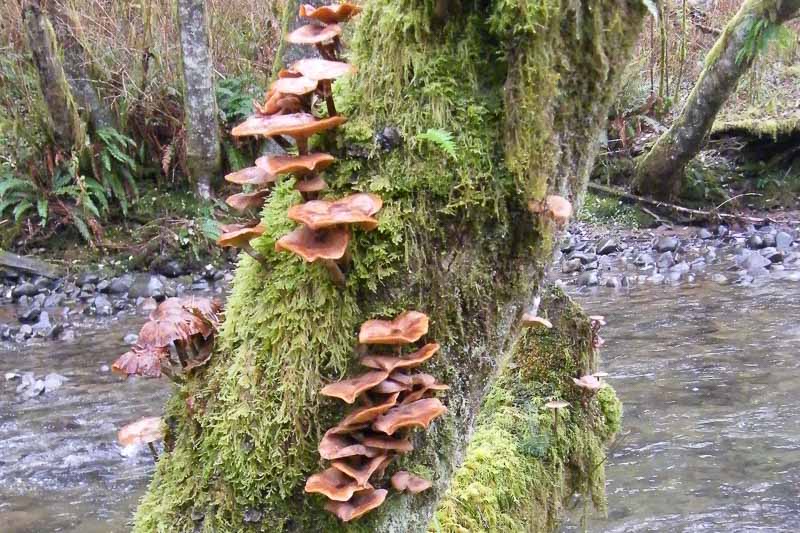
Honey fungus, caused by species of Armillaria, is especially relevant in the United Kingdom, Europe, and other regions where these fungi are established. Affected camellias may decline, wilt, produce pale foliage, or die branch by branch.
White fungal sheets may occur beneath loose bark near the base. Dark, cord-like rhizomorphs may be present around roots, and honey-colored mushrooms may occasionally appear nearby. Fruiting bodies are not always produced.
There is no reliable home-garden cure for an extensively infected woody plant. Confirm the diagnosis, remove severely affected plants and major infected roots, and avoid immediately replanting highly susceptible shrubs in the same position.
Tea scale, Fiorinia theae, is one of the most damaging camellia pests. Feeding on leaf undersides produces yellow splotches on the upper surfaces.
Beneath the leaf, female coverings appear dark brown, gray, or nearly black, while male coverings are white. Heavy infestations may resemble a dense cottony layer and can cause premature leaf drop, reduced flowering, twig dieback, and long-term decline.
Tea scale is an armored scale and does not produce the honeydew responsible for sooty mold.
Remove heavily infested leaves where practical. Horticultural oil may suppress overwintering scales, eggs, and mobile crawlers when the foliage is covered thoroughly. Contact insecticides are most effective against crawlers rather than protected adults.
Timing varies by climate. Follow local guidance and see Gardenia’s guide to scale insects. Avoid treating heat- or drought-stressed plants.
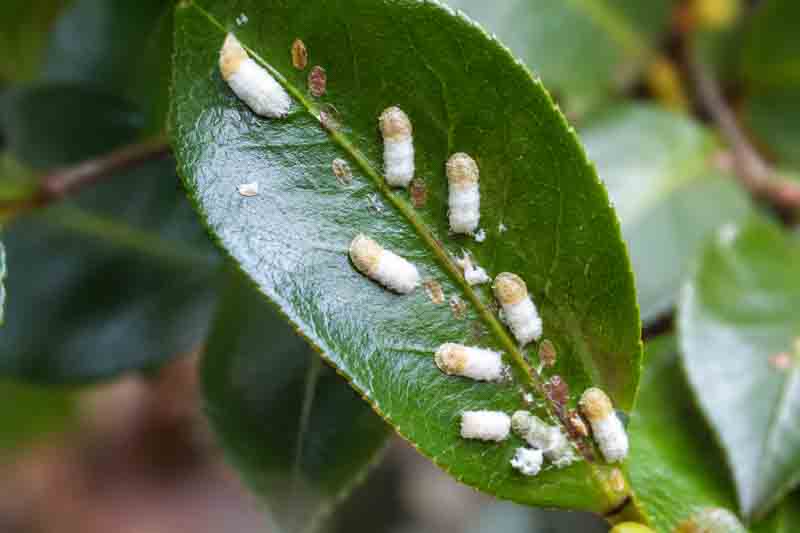
Soft scales are important camellia pests because they produce sugary honeydew. Cottony camellia scale is a concern in parts of North America, while cushion scale is commonly reported on camellias in the United Kingdom.
Infested plants may develop pale foliage, sticky leaves, ants, and black sooty mold. Look beneath leaves for flattened tan or light-brown scales and elongated white cottony egg sacs.
Unlike tea scale, these soft scales produce the honeydew that supports sooty mold.
Remove heavily infested foliage where practical and monitor for the crawler stage. Horticultural oil or insecticidal soap may suppress exposed stages when applied thoroughly according to the label. Preserve natural predators and avoid spraying open flowers.
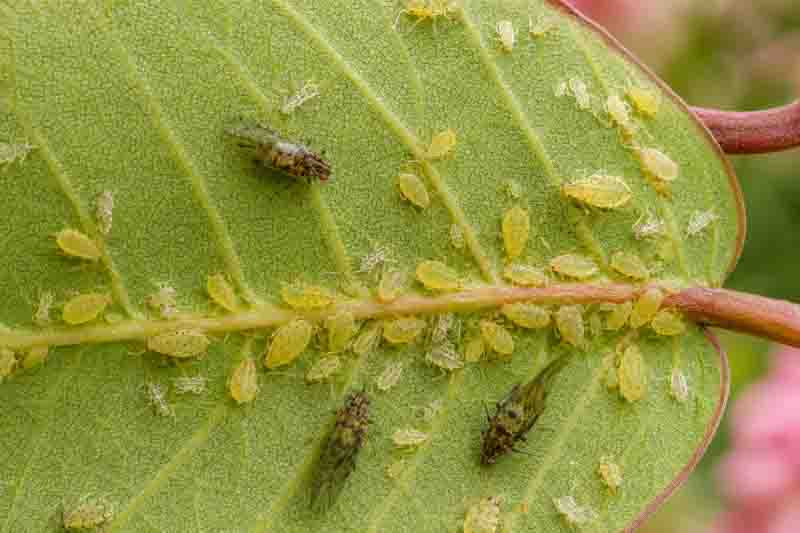
Aphids gather on soft shoots, young leaves, and flower buds. Their feeding may curl or distort growth, while sticky honeydew attracts ants and supports sooty mold.
Dislodge small colonies with water or prune heavily infested shoot tips. Preserve ladybugs, hoverflies, lacewings, and other predators. Insecticidal soap or horticultural oil may help when applied directly according to the label.
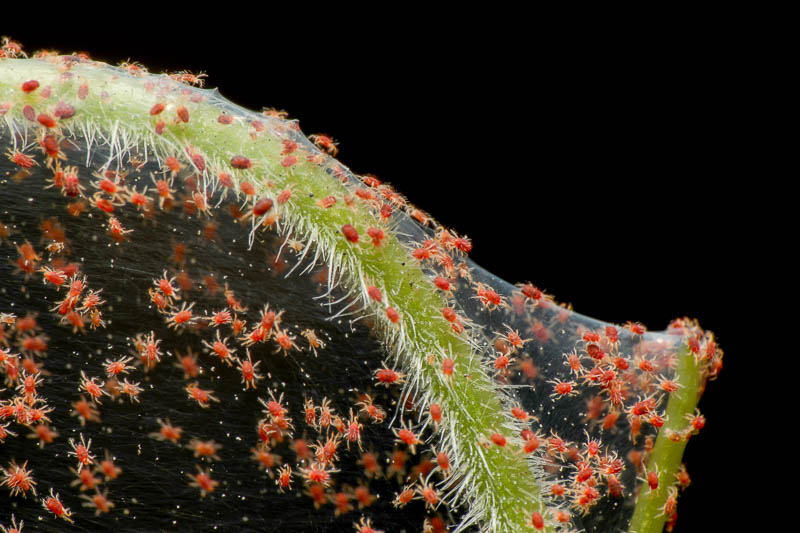
Spider mites cause numerous tiny pale dots, followed by yellowing, bronzing, browning, and premature leaf drop. Fine webbing, eggs, shed skins, or tiny moving mites may be visible beneath leaves with magnification.
Hot, dry, dusty conditions and drought-stressed plants favor many outbreaks.
Confirm mites by tapping foliage over white paper. Reduce dust and drought stress, rinse leaf undersides, and preserve predatory mites. Horticultural oil, insecticidal soap, or a labeled miticide may be needed for persistent infestations.
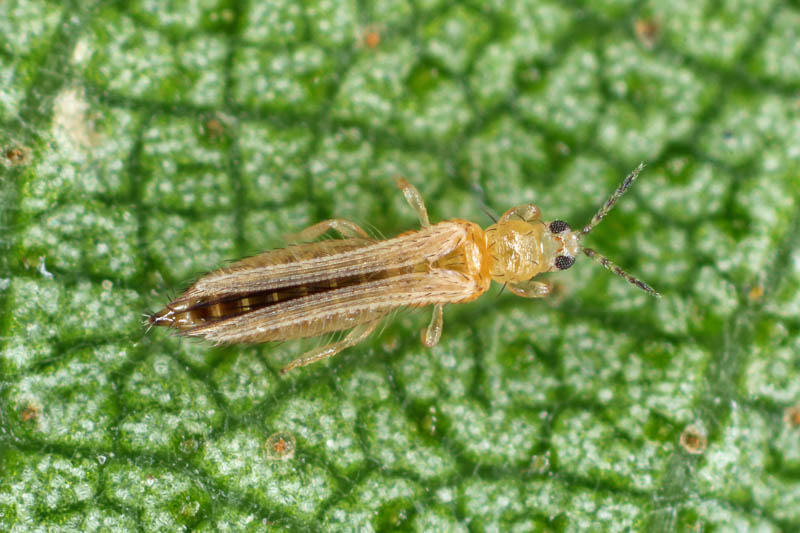
Thrips are slender insects that hide in buds and flowers. Their feeding may scar petals, produce silvery or brown streaks, distort blooms, or leave black specks of waste.
Thrips are usually a less common cause of complete bloom failure than frost, drought, or other forms of bud stress.
Shake flowers over white paper and inspect damaged petals closely. Remove badly infested flowers and fallen debris. Confirm the pest before treating because frost and Botrytis can create similar flower damage.
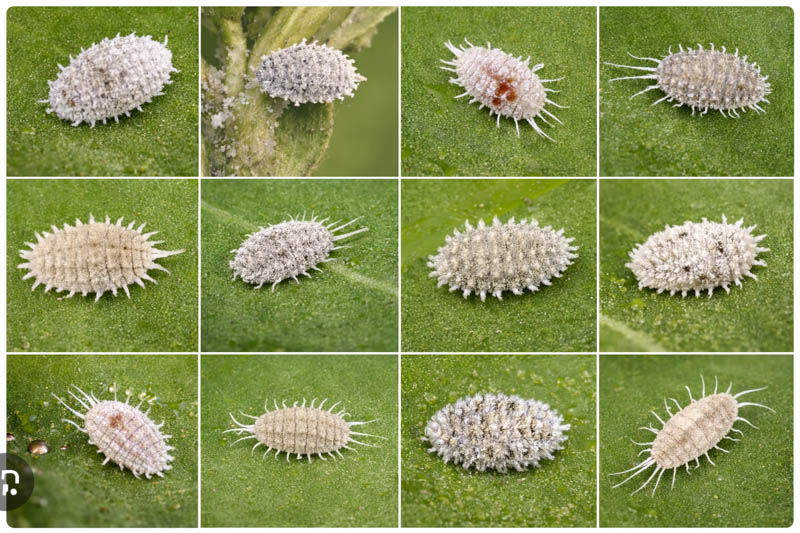
Mealybugs appear as white, waxy, cotton-like insects in leaf axils, on stems, beneath leaves, or around roots. They produce honeydew, so sticky foliage, ants, and sooty mold may accompany the infestation.
Remove visible colonies and prune heavily infested growth. Thorough coverage with insecticidal soap or horticultural oil may suppress exposed insects, but repeat inspection is essential because mealybugs hide in protected crevices.
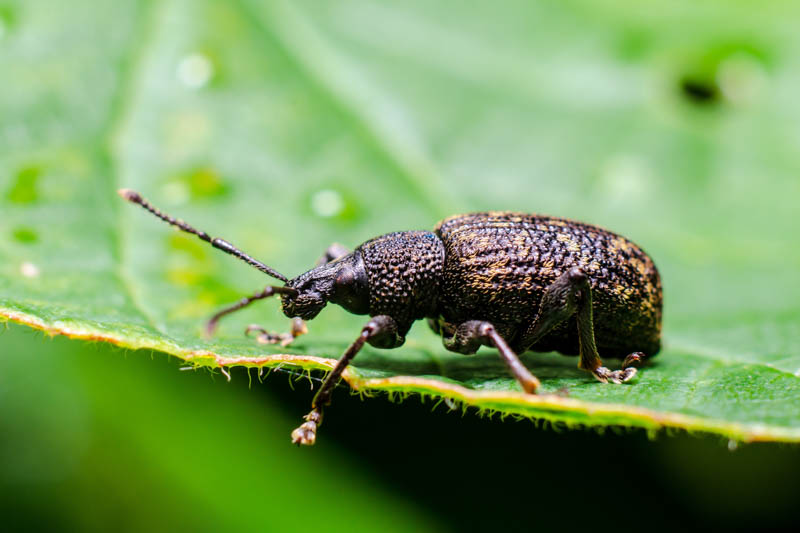
Black vine weevil and related root weevils are particularly troublesome on container-grown camellias. Adult beetles chew characteristic semicircular notches along leaf margins.
The cream-colored, legless larvae feed on roots and may cause weak growth, wilting, or sudden collapse. Root damage can be serious even when adult feeding appears mainly cosmetic.
Inspect pots and root balls for larvae. Hand-pick nocturnal adults where practical. Beneficial nematodes or labeled controls may be used against larvae, but timing depends on soil temperature and pest stage.
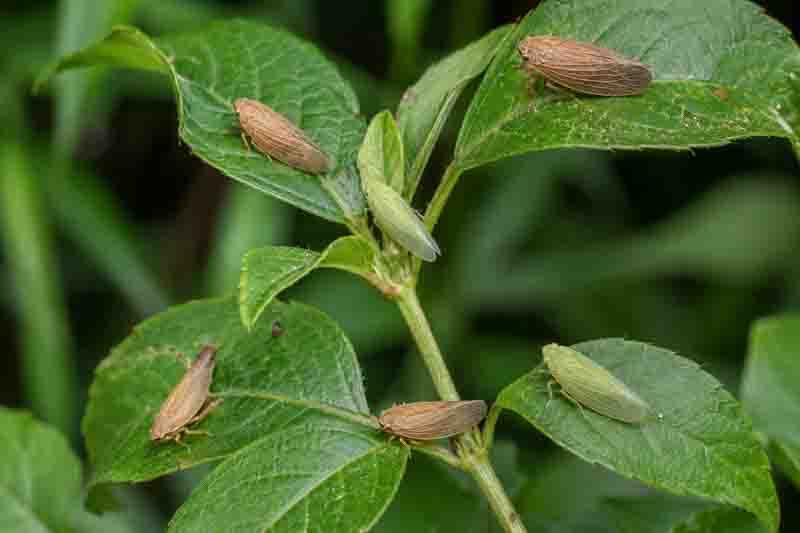
Planthoppers are usually minor or incidental camellia pests rather than a leading cause of decline. Adults and nymphs may feed on young shoots, produce honeydew, and leave white waxy material or cast skins.
Heavy populations can occasionally distort growth or contribute to sooty mold, but a few insects on a healthy plant rarely justify treatment.
Confirm that the insects are abundant enough to cause damage. Prune heavily occupied shoot tips, wash off nymphs, and conserve natural predators. Treatment is rarely necessary for a light infestation.
For complete planting, watering, soil, and maintenance guidance, see How to Plant, Care for, and Grow Camellias.
A symptom is not a diagnosis. Brown flowers may result from disease or frost. Yellow leaves may reflect scales, root rot, unsuitable soil, or normal aging. Wilting may be caused by too little water, too much water, damaged roots, or a girdled stem.
Before applying treatment, identify the affected plant part, inspect closely for pests or pathogens, check the soil, and review recent weather and care. Correct diagnosis prevents unnecessary treatment and gives the camellia the best chance of recovery.
The most serious camellia diseases include petal blight, camellia dieback and canker, and Phytophthora root rot. Camellia leaf blight can also cause significant damage, particularly to young, recently propagated, or stressed plants.
Tea scale is among the most damaging camellia pests, while soft scales, aphids, spider mites, bud mites, thrips, mealybugs, vine weevils, and occasional planthoppers may affect flowers, foliage, stems, or roots. Sooty mold often reveals a hidden honeydew-producing infestation.
Many problems can be reduced through excellent drainage, consistent moisture, sanitation, protection from extreme exposure, and regular inspection. When symptoms involve rapid dieback, extensive root loss, unexplained cankers, or several possible diseases, obtain an expert diagnosis before applying pesticides or removing a valuable plant.
The most serious camellia diseases include petal blight, camellia dieback and canker, and Phytophthora root rot. Camellia leaf blight can also cause significant damage, particularly to young, recently propagated, or stressed plants.
Petal blight begins as small brown spots that enlarge rapidly and may produce darkened veins in the petals. Frost injury follows freezing weather, often affects exposed flowers simultaneously, and does not spread progressively like an infection.
Brown blotches and premature leaf loss may be caused by camellia leaf blight, anthracnose, algal leaf spot, sunscald, frost, or other damage. Twig dieback alongside leaf blotches increases concern about leaf blight, anthracnose, or stem canker.
Tea scale causes yellow splotches on upper leaf surfaces. Beneath the leaves, look for small elongated scales, white male coverings, dark female coverings, or a dense cottony-looking layer during heavy infestations.
Sticky leaves with black sooty mold usually indicate honeydew-producing pests such as aphids, cottony camellia scale, cushion scale, mealybugs, or planthoppers. Control the insect source rather than treating the surface mold alone.
Root rot may cause uniform yellowing, poor growth, wilting despite wet soil, leaf drop, and gradual or sudden collapse. Infected feeder roots are reduced and may become reddish brown, dark brown, or soft instead of firm and pale.
Camellia leaf galls look dramatic but usually cause little lasting damage when only a few leaves are affected. Remove the swollen growth before it develops a white spore-producing surface to reduce infection the following year.
No. First determine whether the damage comes from a pest, disease, frost, sun, drought, or poor drainage. Choose the least disruptive effective response and use pesticides only when the target has been identified and the product is labeled for that use.
Updated: July 2026 • Reviewed by Gardenia Editors
| Hardiness |
6 - 9 |
|---|---|
| Heat Zones |
7 - 8 |
| Climate Zones | 4, 5, 6, 7, 8, 9, 12, 14, 15, 16, 17, 18, 19, 20, 21, 22, 23, 24 |
| Plant Type | Shrubs |
| Plant Family | Theaceae |
| Genus | Camellia |
| Exposure | Full Sun, Partial Sun, Shade |
| Season of Interest | Spring (Early, Mid), Fall, Winter |
| Maintenance | Low |
| Water Needs | Average |
| Soil Type | Clay, Loam, Sand |
| Soil pH | Acid, Neutral |
| Soil Drainage | Moist but Well-Drained, Well-Drained |
| Characteristics | Cut Flowers, Fragrant, Plant of Merit, Showy |
| Landscaping Ideas | Beds And Borders, Hedges And Screens, Patio And Containers, Wall-Side Borders |
| Garden Styles | City and Courtyard, Informal and Cottage, Japanese Garden, Traditional Garden |
| Hardiness |
6 - 9 |
|---|---|
| Heat Zones |
7 - 8 |
| Climate Zones | 4, 5, 6, 7, 8, 9, 12, 14, 15, 16, 17, 18, 19, 20, 21, 22, 23, 24 |
| Plant Type | Shrubs |
| Plant Family | Theaceae |
| Genus | Camellia |
| Exposure | Full Sun, Partial Sun, Shade |
| Season of Interest | Spring (Early, Mid), Fall, Winter |
| Maintenance | Low |
| Water Needs | Average |
| Soil Type | Clay, Loam, Sand |
| Soil pH | Acid, Neutral |
| Soil Drainage | Moist but Well-Drained, Well-Drained |
| Characteristics | Cut Flowers, Fragrant, Plant of Merit, Showy |
| Landscaping Ideas | Beds And Borders, Hedges And Screens, Patio And Containers, Wall-Side Borders |
| Garden Styles | City and Courtyard, Informal and Cottage, Japanese Garden, Traditional Garden |
Create a membership account to save your garden designs and to view them on any device.
Becoming a contributing member of Gardenia is easy and can be done in just a few minutes. If you provide us with your name, email address and the payment of a modest $25 annual membership fee, you will become a full member, enabling you to design and save up to 25 of your garden design ideas.
Join now and start creating your dream garden!
Create a membership account to save your garden designs and to view them on any device.
Becoming a contributing member of Gardenia is easy and can be done in just a few minutes. If you provide us with your name, email address and the payment of a modest $25 annual membership fee, you will become a full member, enabling you to design and save up to 25 of your garden design ideas.
Join now and start creating your dream garden!