A daylily flower may last only a day, but your display can continue for weeks or even across much of summer. Learn how bud count, reblooming cultivars, bloom-season succession, deadheading, sun, water, feeding, and division work together to keep daylilies flowering longer without relying on gardening myths.
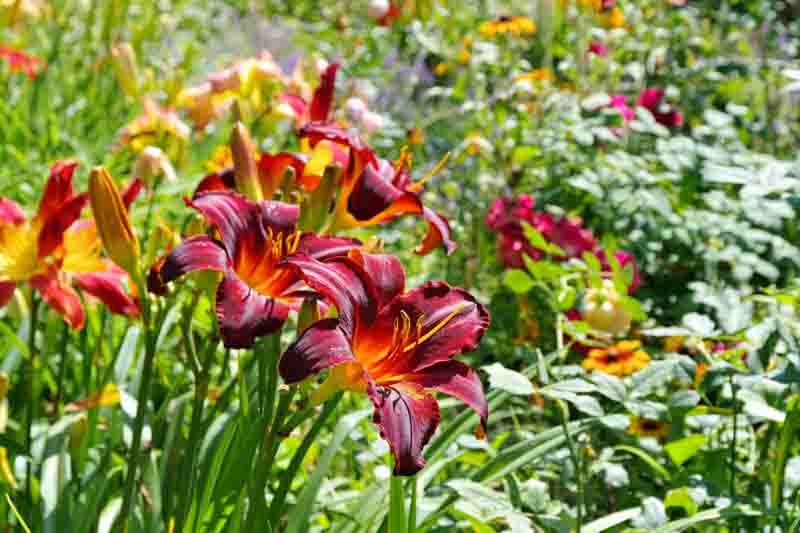


A daylily flower may last only one day, but that does not mean your daylily display has to be brief. A healthy daylily (Hemerocallis) can carry many buds on several flower scapes, and those buds open in succession. With thoughtful cultivar selection and good growing conditions, daylilies can contribute color for weeks and, across a well-planned planting, through much of the summer.
The key is understanding what “bloom longer” really means. You cannot turn a normal one-day flower into a flower that lasts for a week through watering, fertilizer, or deadheading. Instead, you extend the display by protecting a strong primary crop of buds, choosing cultivars capable of rebloom where climate allows, and combining plants whose main flowering periods occur at different points in the season.
That changes the strategy completely. Deadheading has a role, but it is not magic. Fertilizer may support flowering, but more fertilizer does not automatically mean more blooms. And a cultivar described as reblooming may perform very differently from one climate to another.
More Buds → More Rebloom Scapes → More Bloom Windows
| Layer | What Extends the Display | Your Strategy |
|---|---|---|
| More Buds | More individual flowers available to open during the primary display | Choose cultivars with good bud count, branching, and bloom pacing |
| More Rebloom Scapes | Additional flowering stalks after the first display | Choose proven rebloomers suited to your climate and keep plants vigorous |
| More Bloom Windows | Different cultivars flowering successively through the season | Combine Early, Midseason, Late, and Very Late flowering plants |
Gardenia’s guiding principle: do not depend on one plant flowering forever. Build a longer display from bud succession within each clump, additional scapes where rebloom occurs, and successive bloom periods across several cultivars.
Think at three scales: How long does each flower stay open? How long does the clump keep producing flowers? And what blooms before and after that cultivar? Gardenia’s long-bloom strategy works across all three levels.
Before trying to extend flowering, separate three characteristics that are often confused: individual flower duration, clump bloom duration, and season-long bloom.
Most daylily flowers open for a single day. That short flower life is part of the plant’s normal biology and is the reason behind the common name “daylily.”
The American Daylily Society also recognizes Extended bloomers, whose individual flowers remain open for at least 16 hours. Extended bloom can keep an individual flower attractive for more of the day, but it does not mean the cultivar necessarily flowers for more weeks.
A mature daylily clump can flower for far longer than a single blossom because a scape carries numerous buds and an established plant may produce several scapes. Those buds open successively rather than all at once.
Bud count matters, but bloom pacing matters too. A cultivar with many buds that open in rapid succession may finish sooner than another whose buds open more gradually. The longest primary displays combine enough buds with a flowering rhythm that spreads those openings over time.
The longest garden-wide display comes from combining cultivars whose primary bloom occurs at different points in the season, then adding rebloomers where conditions support repeat flowering.
The important distinction: A flower that stays open longer, a clump that carries many buds, and a cultivar that reblooms are different traits. A long daylily season comes from combining them intelligently rather than relying on a single “long-blooming” label.
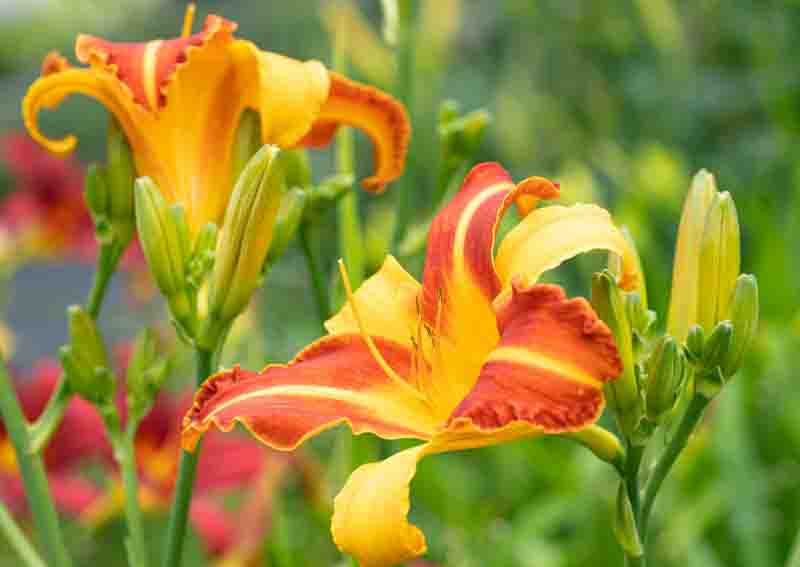
If your goal is a long display, flower color should not be your only selection criterion.
A striking cultivar with relatively few buds may deliver a short, concentrated show. Another with more buds, useful branching, and slower bloom pacing may keep opening flowers for considerably longer.
The American Daylily Society considers both branching and bud count important when evaluating plant performance. Good branching gives buds room to develop and flowers room to open without crowding, while sparse branching and low bud count can limit the display.
But bud count alone does not determine flowering duration. A high number of buds can still be used up quickly if they open in a compressed period. For a prolonged display, look at the overall flowering performance rather than treating one number as the whole story.
| Trait | What It Tells You | Why It Matters |
|---|---|---|
| Bud count | How many flower buds a scape carries | Provides more flowers available to open during the primary display |
| Branching | How buds and flowers are arranged on the scape | Good branching gives buds room to develop and flowers room to open without crowding |
| Bloom pacing | How quickly the available buds open through the flowering period | A more gradual pace can help stretch the primary display over more days |
| Rebloom | Whether additional flowering scapes may develop later | Can add another flowering wave after the primary display |
| Bloom season | Where primary flowering occurs in the local daylily season | Lets you combine cultivars for seasonal succession |
| Extended bloom | Individual flowers remain open for at least 16 hours | Keeps each individual flower presentable for more of the day |
Browse Gardenia’s Top Daylilies and Hemerocallis collection to compare cultivars and their garden characteristics.
The most dependable way to keep daylilies flowering for a long time is not to ask one cultivar to do everything. Instead, combine plants with different primary bloom periods.
The American Daylily Society recognizes a sequence of flowering periods extending from Extra Early through Very Late. The actual calendar dates vary with climate, location, and seasonal weather.
For practical garden planning, Gardenia groups those bloom windows into three connected seasons:
Instead of trying to prolong one flowering peak indefinitely, the display passes from one group of cultivars to the next.
| Garden Phase | Bloom Groups | Purpose |
|---|---|---|
| Start | Extra Early + Early | Bring daylily color into the garden before peak season |
| Build | Early Midseason | Bridge early flowering toward peak bloom |
| Peak | Midseason | Create the central flowering peak |
| Carry | Late Midseason | Keep flowers moving beyond peak season |
| Extend | Late + Very Late | Provide the final primary daylily flowers |
Explore Gardenia’s Early-Blooming Daylilies, Midseason-Blooming Daylilies, and Late-Blooming Daylilies to build the sequence from beginning to end.
The most reliable way to extend bloom is succession. Build the primary season first with cultivars from different bloom windows, then use rebloom as an additional layer rather than the entire plan.
A reblooming daylily flowers more than once during a growing season. Some cultivars produce an initial display followed by another later in the year, while others may develop additional scapes relatively soon after their primary bloom.
Rebloom can significantly extend the display, but performance varies with cultivar, climate, and growing-season length. A plant that reblooms strongly in a long, warm season may perform quite differently where summer is short.
University of Minnesota Extension, for example, notes that reblooming cultivars are generally unsuccessful there because the growing season is too short.
Do not assume that a cultivar labeled reblooming will behave identically everywhere. Look for plants with a good performance record in your climate and pay attention to observations from local nurseries, daylily societies, and experienced growers.
Gardenia’s Reblooming Daylilies guide provides cultivars to consider when repeat flowering is an important part of your planting plan.
Gardenia’s strategy: Build a dependable sequence of primary bloom periods first. Then add rebloomers that perform well in your climate to create extra flowering waves.
Deadheading improves appearance and prevents unwanted seed development, but it should not be treated as a switch that automatically produces more flowers.
University of Minnesota Extension recommends removing dead flowers to prevent seed production and notes that plants allowed to produce seed are likely to have fewer flowers the following year. Clemson Extension likewise recommends removing spent flowers and seed pods and notes that this may encourage rebloom.
Remove the collapsed flower without damaging unopened buds beside it. Several buds may remain on the same scape, so do not cut down the entire flowering stalk simply because one blossom has faded.
If a seed pod begins to develop and you are not intentionally breeding daylilies, remove it. Once all flowers and buds on a scape are finished, the completed stalk can be cut near its base.
Deadheading reality check: Deadheading may support repeat performance by preventing unwanted seed production, but it cannot give a non-reblooming cultivar the genetic ability to produce another flowering cycle.
Daylilies tolerate some partial shade, but if maximum flowering is the goal, sunlight matters.
University of Minnesota Extension recommends at least about six hours of direct sunlight for best flowering. Plants receiving less light may survive and grow substantial foliage while producing fewer flowers.
If an established clump once flowered well but now produces fewer scapes, reassess the site. Trees and shrubs grow over time, and a location that was sunny when planted may become increasingly shaded years later.
Yes. Light shade during the hottest part of the day can help keep individual flowers fresh, especially in hot conditions. That is different from deep shade, where insufficient light can reduce flower production.
Sunlight check: If the foliage looks vigorous but flowering is disappointing, measure how much direct sun the plant actually receives now – not how sunny the spot was when you planted it.
Established daylilies are adaptable and can tolerate periods of drought, but drought tolerance is not the same as optimum flowering performance.
University of Minnesota Extension recommends keeping the soil moist and gives approximately 1 in. (2.5 cm) of water per week as a useful general target, with more frequent watering sometimes needed in sandy soils.
Adequate moisture helps a plant perform to its flowering potential. The goal is consistently moist but well-drained soil rather than alternating between severe dryness and saturated conditions.
If the goal is maximum flowering, avoid repeatedly allowing plants to become severely water-stressed during active growth. Check soil moisture rather than waiting until the foliage visibly wilts.
Organic mulch can slow moisture loss and suppress weeds, but avoid piling heavy layers directly over the crown.
Drought-tolerant does not mean drought-loving. Daylilies can survive less-than-ideal moisture, but strong flowering is easier to support when moisture remains reasonably consistent.
Fertilizer can support flowering where nutrients are needed, but feeding should respond to the soil rather than the assumption that more fertilizer automatically produces more flowers.
University of Minnesota Extension recommends soil testing every three to five years to help determine amendment and fertilizer needs. It also notes that annual fertilization may help produce more flowers and recommends a spring application of manure or compost.
If flowering is disappointing, first check sunlight, moisture, crown depth, crowding, cultivar behavior, and plant health. Fertilizer cannot correct a daylily that is too shaded or planted too deeply.
Feeding shortcut: Support flowering with good soil and appropriate nutrition, but diagnose poor bloom before reaching automatically for fertilizer.
Daylilies form expanding clumps, and University of Minnesota Extension notes that division can promote more flowers.
That does not mean every plant should be divided on a rigid schedule. Consider division when a clump is densely crowded, has outgrown its available space, or flowering has declined after other likely causes have been considered.
If poor bloom is the only symptom, check sunlight, moisture, crown depth, and plant health first. Division will not correct shade or another unrelated problem.
For the complete technique, see Gardenia’s When and How to Divide Daylilies guide.
Divide for a reason. If crowding is limiting performance, division may help. If the real problem is shade, drought, or planting depth, solve that instead.
A spent flower, a finished flower scape, and healthy green foliage are not the same thing.
Once a scape has no flowers or unopened buds remaining, it can be removed. But healthy green foliage generally does not need to be sheared simply because the primary flowering period has ended.
Cutting healthy leaves is not what triggers rebloom. Remove dead or badly damaged foliage selectively and leave healthy leaves while they remain active.
For detailed seasonal pruning guidance, see Gardenia’s When to Cut Back Daylilies: Deadheading, Scapes and Fall Cleanup.
Do not try to force rebloom by shearing the plant. Rebloom is primarily a cultivar characteristic influenced by climate and growing conditions. Cutting healthy foliage does not create the trait.
A long flowering display depends on buds reaching bloom. University of Minnesota Extension notes that aphids and thrips sometimes feed on daylily flower buds, so inspect distorted, damaged, or failing buds rather than assuming every bloom problem is caused by water or fertilizer.
If bud damage occurs together with premature yellowing, streaked foliage, crown problems, or general decline, investigate plant health separately instead of treating the problem as a simple flowering issue.
| Your Goal | Best Strategy | Do Not Depend On |
|---|---|---|
| More days of primary bloom on one clump | Choose cultivars with good bud count, branching, and bloom pacing | Deadheading alone |
| Another flowering flush | Choose proven rebloomers suited to your climate | Trying to force a non-rebloomer |
| Daylily color across more of summer | Combine successive primary bloom seasons from Early through Very Late | Expecting one cultivar to flower continuously |
| Better flower production | Provide adequate sun, moisture, suitable nutrition, and room to grow | Adding fertilizer before diagnosing the problem |
| Flowers visible longer each day | Look for cultivars described as Extended bloomers | Assuming Extended means more weeks of flowering |
| Common Mistake | Why It Falls Short | Better Approach |
|---|---|---|
| Buying only Midseason cultivars | Most of the planting peaks at roughly the same time. | Mix Early, Midseason, Late, and Very Late flowering plants. |
| Relying entirely on rebloom | Repeat flowering varies with cultivar and climate. | Build primary bloom succession first, then add rebloomers. |
| Expecting deadheading to create rebloom | Deadheading cannot give a cultivar a rebloom trait it does not possess. | Use deadheading to remove spent flowers and unwanted seed pods. |
| Growing daylilies in increasing shade | Daylilies flower best with about six or more hours of direct sun. | Reassess sunlight as surrounding trees and shrubs mature. |
| Allowing repeated drought stress | Surviving dry conditions is not the same as performing at full flowering potential. | Maintain reasonable moisture during active growth and bloom. |
| Shearing healthy foliage after bloom | Cutting leaves does not trigger another flowering cycle. | Remove finished scapes but keep healthy foliage in place. |
Gardenia’s shortcut: If you want daylilies flowering for longer, ask three questions: Does this cultivar carry plenty of buds and pace them well? Can it produce rebloom scapes? What will flower before and after it? Those answers are more useful than relying on a single “long-blooming” label.
Even a carefully planned daylily collection eventually finishes flowering. If your real goal is a garden that stays colorful rather than a border composed only of daylilies, companion planting creates another layer of seasonal continuity.
Pair daylilies with perennials and ornamental grasses that begin before, overlap with, or continue after the main daylily display.
Gardenia’s Great Companion Plants for Daylilies includes combinations that can help carry the border beyond the daylily season.
Think beyond one genus. The longest-lasting border combines daylily bloom succession with companion plants that take over when daylilies are between flowering waves or have finished for the year.
Start with cultivars from different primary bloom windows, then compare rebloom, flower form, height, fragrance, foliage habit, hardiness, and growing requirements in Gardenia’s daylily profiles.
Explore Early, Midseason, Late, and Reblooming Daylilies, or browse the complete Hemerocallis collection.
Combine cultivars with different primary bloom seasons, include rebloomers suited to your climate, choose plants with good bud count and bloom pacing, and support flowering with adequate sunlight, moisture, appropriate nutrition, and healthy clump management.
Most individual daylily flowers last only one day. A clump flowers for much longer because numerous buds open successively on its flower scapes.
The American Daylily Society uses the term Extended for a flower that remains open for at least 16 hours. Extended bloom describes how long one individual flower stays open, not how many weeks the cultivar remains in bloom.
A single cultivar may not flower continuously all summer, but combining cultivars from successive primary bloom periods can provide daylily flowers across a much longer season. Reblooming cultivars can add additional flowering periods where conditions support them.
Deadheading prevents unwanted seed production and keeps plants looking tidy. It may support repeat performance in cultivars capable of rebloom, but it cannot turn a non-rebloomer into a reblooming daylily.
If you are not intentionally raising daylilies from seed, removing developing pods is sensible. University of Minnesota Extension notes that plants allowed to produce seeds are likely to have fewer flowers the following year.
A reblooming daylily flowers more than once during the growing season. An Extended daylily has individual flowers that remain open for at least 16 hours. One refers to additional flowering cycles; the other to the duration of a single flower.
Daylilies flower best with at least about six hours of direct sunlight per day. They tolerate some partial shade, but reduced light can reduce flowering.
University of Minnesota Extension gives about 1 inch of water per week as a useful general guideline for keeping soil moist, with more frequent watering potentially needed in sandy soils. Good drainage remains important.
Appropriate nutrition may help produce more flowers where nutrients are needed, but fertilization should respond to actual soil conditions. Sunlight, moisture, crown depth, crowding, cultivar behavior, and plant health should also be checked when flowering is poor.
No. Cutting healthy foliage does not create rebloom ability. Rebloom is primarily a cultivar characteristic influenced by climate and growing conditions.
Rebloom varies with cultivar, climate, growing-season length, and growing conditions. A cultivar that repeats reliably in one region may rebloom weakly or not at all in another.
Very dense clumps may benefit from division, and University of Minnesota Extension notes that division can promote more flowers. Poor bloom can also result from shade, moisture stress, planting depth, or plant-health problems, so diagnose the likely cause first.
Build a sequence of cultivars with different primary bloom periods, from Extra Early and Early through Midseason, Late Midseason, Late, and Very Late. Then add reblooming cultivars as an additional flowering layer where climate and growing conditions support repeat bloom.
Keeping daylilies blooming longer is not about finding one pruning trick or fertilizer that makes every plant flower continuously.
Start with plant selection. Bud count and bloom pacing influence the primary display, reblooming cultivars may produce additional scapes, and successive bloom-season groups can pass the display from one part of summer to the next.
Then protect that flowering potential with adequate sun, consistent moisture, appropriate nutrition, sensible deadheading, healthy foliage, and division when crowding is genuinely limiting performance.
Gardenia’s Long-Bloom Formula:
More Buds → More Rebloom Scapes → More Bloom Windows
The goal is not to force one daylily to flower forever. It is to build a planting in which flowers continue opening within the clump, rebloom may create another wave, and another cultivar is ready to take over as the previous bloom window ends.
Updated: August 2026 • Reviewed by Gardenia Editors
| Hardiness |
3 - 9 |
|---|---|
| Heat Zones |
2 - 11 |
| Climate Zones | 2, 3, 4, 5, 6, 7, 8, 9, 10, 11, 12, 13, 14, 15, 16, 17, 18, 19, 20, 21, 22, 23, 24, H1, H2 |
| Plant Type | Perennials |
| Genus | Hemerocallis |
| Exposure | Full Sun, Partial Sun |
| Season of Interest | Summer (Early, Mid, Late), Fall |
| Maintenance | Low |
| Water Needs | Average |
| Soil Type | Chalk, Clay, Loam, Sand |
| Soil pH | Acid, Alkaline, Neutral |
| Soil Drainage | Moist but Well-Drained, Well-Drained |
| Characteristics | Showy |
| Tolerances | Drought, Rabbit, Dry Soil, Salt |
| Attracts | Butterflies, Hummingbirds |
| Landscaping Ideas | Banks And Slopes, Beds And Borders, Patio And Containers |
| Garden Styles | City and Courtyard, Coastal Garden, Informal and Cottage, Traditional Garden |
| Hardiness |
3 - 9 |
|---|---|
| Heat Zones |
2 - 11 |
| Climate Zones | 2, 3, 4, 5, 6, 7, 8, 9, 10, 11, 12, 13, 14, 15, 16, 17, 18, 19, 20, 21, 22, 23, 24, H1, H2 |
| Plant Type | Perennials |
| Genus | Hemerocallis |
| Exposure | Full Sun, Partial Sun |
| Season of Interest | Summer (Early, Mid, Late), Fall |
| Maintenance | Low |
| Water Needs | Average |
| Soil Type | Chalk, Clay, Loam, Sand |
| Soil pH | Acid, Alkaline, Neutral |
| Soil Drainage | Moist but Well-Drained, Well-Drained |
| Characteristics | Showy |
| Tolerances | Drought, Rabbit, Dry Soil, Salt |
| Attracts | Butterflies, Hummingbirds |
| Landscaping Ideas | Banks And Slopes, Beds And Borders, Patio And Containers |
| Garden Styles | City and Courtyard, Coastal Garden, Informal and Cottage, Traditional Garden |
Create a membership account to save your garden designs and to view them on any device.
Becoming a contributing member of Gardenia is easy and can be done in just a few minutes. If you provide us with your name, email address and the payment of a modest $25 annual membership fee, you will become a full member, enabling you to design and save up to 25 of your garden design ideas.
Join now and start creating your dream garden!
Create a membership account to save your garden designs and to view them on any device.
Becoming a contributing member of Gardenia is easy and can be done in just a few minutes. If you provide us with your name, email address and the payment of a modest $25 annual membership fee, you will become a full member, enabling you to design and save up to 25 of your garden design ideas.
Join now and start creating your dream garden!