Get to know your Texas planting zone, from the Panhandle to the Gulf Coast. Find frost dates, planting calendars, and region-by-region plant lists so you can choose heat-tough flowers, trees, shrubs, herbs, and vegetables that thrive reliably in your USDA hardiness zone each growing season with confidence and garden joy.
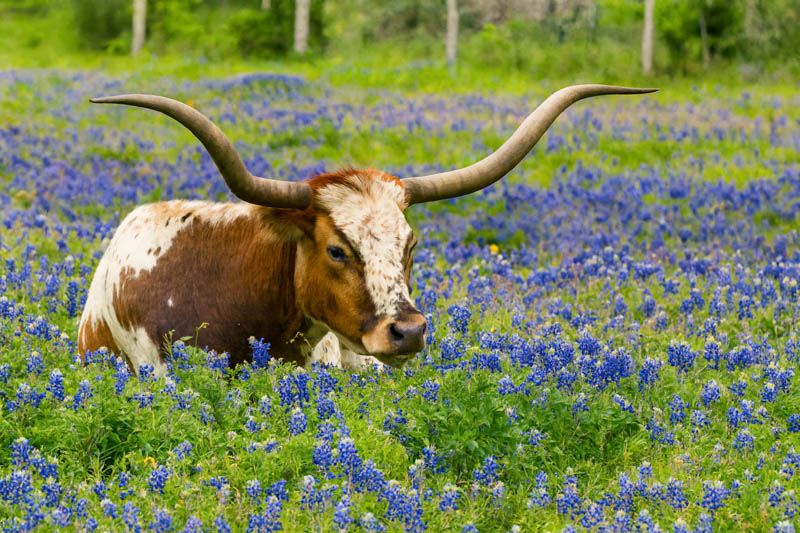


Gardening in Texas is an adventure – in the best way. From chilly Panhandle winters to steamy Gulf Coast summers, the Texas planting zones stretch across a wide range of USDA hardiness zones, roughly from zone 6a to zone 10b. This guide helps you understand your local Texas growing zone, pick the right plants, and time your garden perfectly.
Texas doesn’t fit neatly into one number. Instead, the state spans several USDA planting zones thanks to its size, elevation changes, and varied climates. Generally speaking, Texas hardiness zones run from about zone 6a in the northern Panhandle to around zone 10b along the southern Gulf Coast. That means your exact Texas garden zone will depend on where you live:
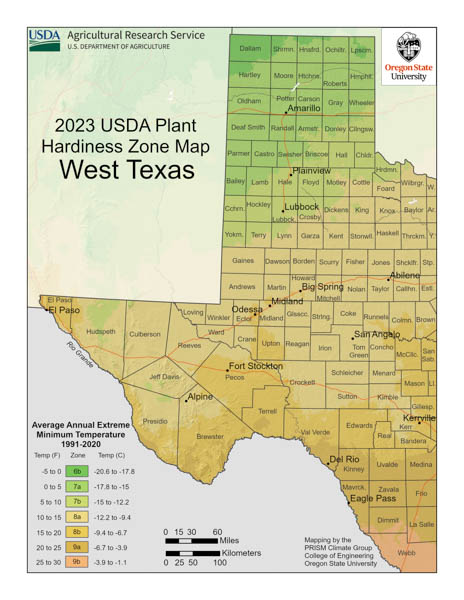
The USDA Hardiness Zone Map for Texas is the quickest way to see how temperatures vary across the state. It’s based on the coldest temperatures that typically occur in winter, which helps you understand which plants can overwinter reliably.
 |
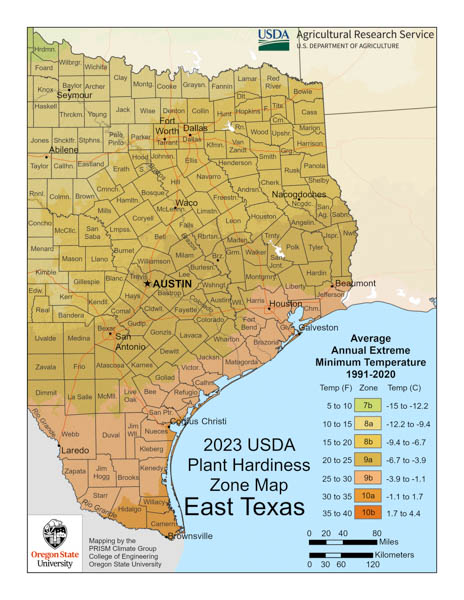 |
A simplified Texas planting zone map, based on the USDA 2023 Plant Hardiness Zone Map, which uses 1991–2020 climate data.
Use it together with your ZIP code to pinpoint your exact Texas garden zone. To find your precise Texas planting zone by ZIP code, use a USDA lookup tool, then come back here or to our Plant Finder to see what grows best in your zone.
Because Texas is so large, it’s easier to think of Texas garden zones by region. Below is a simplified overview you can adapt and expand with local details.
Winters are colder here, with occasional hard freezes and a shorter growing season. Popular cities in this range include Amarillo, Lubbock, and parts of the Dallas–Fort Worth area. Gardeners in these Texas planting zones should focus on cold-tolerant perennials, hardy shrubs, and cool-season vegetables.
Central Texas, including Austin, Waco, and much of the Hill Country, has hot summers and relatively mild winters. These Texas growing zones support a wide range of plants, from herbs and vegetables to ornamental shrubs, roses, and native wildflowers.
East Texas is warm, humid, and greener, with tall pines and rich soils in many areas. Regions like Tyler, Longview, and Beaumont fall into these Texas hardiness zones. Gardeners can grow many fruit trees, flowering shrubs, and long-season vegetables.
From San Antonio and Corpus Christi down to the Rio Grande Valley and Brownsville, winters are very mild and the growing season is long. In these South Texas planting zones, many gardeners can grow citrus, tropical plants, and multiple rounds of vegetables each year.
Knowing your average last spring frost and first fall frost helps you plan your Texas garden calendar. Frost dates vary significantly across the state, so treat the numbers below as starting points and adjust based on your local experience.
| Region / City | Average Last Spring Frost | Average First Fall Frost | Approx. Frost-Free Days |
|---|---|---|---|
| Amarillo (Panhandle) | Late April | Late October | ~180 days |
| Dallas–Fort Worth (North Texas) | Mid-March | Early November | ~230 days |
| Austin (Central Texas) | Early March | Mid-November | ~250 days |
| Houston (Gulf Coast) | Late February | Late November | ~270 days |
| Brownsville (South Texas) | Rare frost | Rare frost | Year-round growing |
Use these frost dates to work backward for seed starting and forward for fall crops. When in doubt, watch local forecasts—Texas weather can change quickly!
Once you know your Texas planting zone, you can choose plants that handle your heat, humidity, and occasional cold snaps. Below are general suggestions you can customize for each specific zone or region. Best Plants for Texas Heat – Top Picks per Region
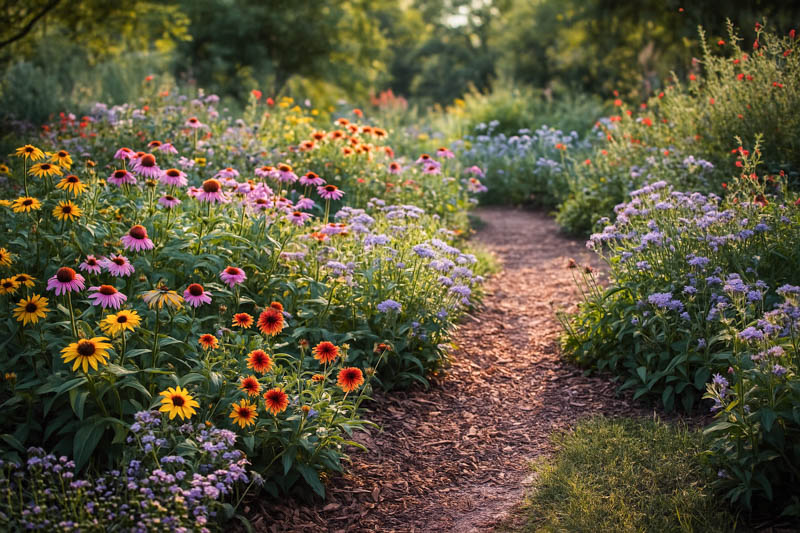
Native plants are a great fit for Texas planting zones because they’re adapted to local heat, drought, and soil. Consider native perennials, wildflowers, and shrubs to create a low-maintenance, pollinator-friendly landscape.
Exact dates will vary based on your specific Texas garden zone, but this month-by-month overview shows how a typical year might look. You can adapt this template for each zone or major city.
Gardening in Texas means dealing with heat, sun, wind, and sometimes drought. Here are a few practical tips that help in almost every Texas planting zone:
Now that you understand your Texas planting zone, you’re ready to choose plants that match your climate, plan around frost dates, and build a thriving garden. Want to compare Texas to other states? Visit our national USDA planting zone guide to see growing zones across the United States.
Most of Texas falls between USDA planting zones 7 and 9, but the statewide range is much broader—from zone 6a in the northern Panhandle to zone 10b along the southern Gulf Coast. Your exact zone depends on local climate, elevation, and proximity to the coast.
Dallas is generally in USDA zone 8a, with winters that are cool but not severe. Surrounding suburbs may fall slightly cooler or warmer depending on altitude and urban heat effects, so checking your ZIP-code lookup provides the most accurate result.
Houston sits in USDA zones 9a to 9b. Winters are very mild, allowing for a long growing season and reliable growth of heat-tolerant vegetables, citrus, and subtropical ornamentals. Areas closer to the coast may experience slightly warmer microclimates.
Austin is typically USDA zone 8b. The city has hot summers and mild winters, and gardeners can grow a wide range of perennials, herbs, fruit trees, and warm-season vegetables with proper timing.
San Antonio generally falls in USDA zones 9a to 9b. The climate is warm with a long frost-free period, making it suitable for citrus, figs, heat-loving ornamentals, and multiple vegetable planting cycles each year.
The Texas Panhandle is the coolest part of the state, running from about USDA zone 6a to 7a. Winters are colder, freezes are more frequent, and the growing season is shorter than in the rest of Texas.
Yes. Citrus grows reliably in the warmest Texas zones—especially South Texas and the Gulf Coast, where winter lows rarely drop below freezing. In Central or North Texas, citrus can still be grown in containers and moved indoors during cold snaps.
Absolutely. Frost dates vary dramatically across the state and determine when you should start seeds, transplant vegetables, and protect tender plants. North Texas may see frost into late March, while South Texas may go through most winters without a frost at all.
Yes. Urban areas, higher elevations, river valleys, and coastal regions all experience distinct microclimates. These can shift your garden by half a zone or more, influencing which plants overwinter reliably and how long your growing season lasts.
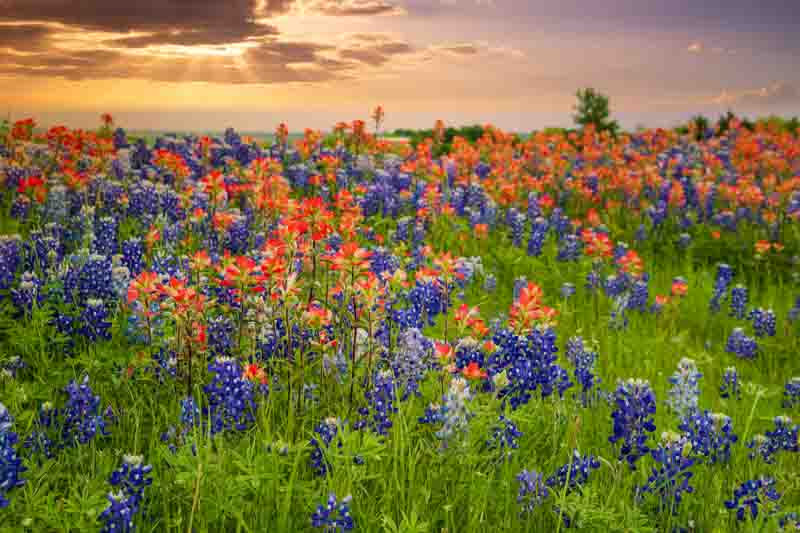
Heat-tolerant and drought-resistant plants perform well statewide. Common favorites include tomatoes, peppers, okra, lantana, salvia, rosemary, native grasses, and Texas wildflowers such as bluebonnets and black-eyed Susans.
Use the USDA Plant Hardiness Zone Lookup tool and enter your ZIP code. Combining that information with local frost dates and your own observations of sunlight, wind, and soil conditions will give you the most accurate picture of your garden’s climate.
Updated: December 2025 • Reviewed by Gardenia Editors
| Hardiness |
6 - 10 |
|---|---|
| Native Plants | United States, Southwest, Texas |
Photo: 123rf
Create a membership account to save your garden designs and to view them on any device.
Becoming a contributing member of Gardenia is easy and can be done in just a few minutes. If you provide us with your name, email address and the payment of a modest $25 annual membership fee, you will become a full member, enabling you to design and save up to 25 of your garden design ideas.
Join now and start creating your dream garden!
Create a membership account to save your garden designs and to view them on any device.
Becoming a contributing member of Gardenia is easy and can be done in just a few minutes. If you provide us with your name, email address and the payment of a modest $25 annual membership fee, you will become a full member, enabling you to design and save up to 25 of your garden design ideas.
Join now and start creating your dream garden!