Discover tough, colorful perennials that thrive in every Texas region. Heat loving, drought smart plants for easy, pollinator rich beds.
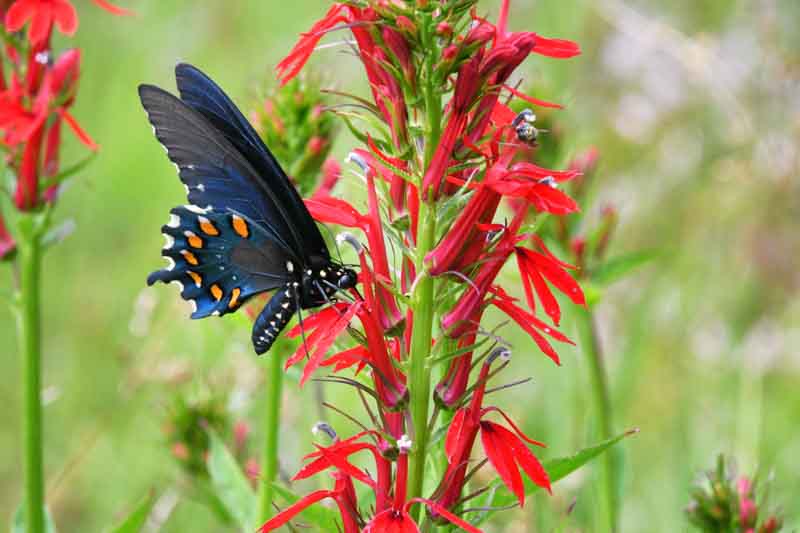


Texas is enormous, diverse and full of microclimates that swing from humid pine forests to windy high plains and sun baked desert. Choosing the best perennials for Texas means choosing plants that are already battle tested in heat, drought, humidity and sudden cold snaps. The right Texas perennials come back year after year, giving you color, pollinator power, long blooming seasons and lower maintenance than thirsty annuals or fussy imports.
This guide highlights the best perennials for four broad Texas regions so you can match your planting list to your local soils and climate. Use it as a friendly roadmap to build long lived flower beds, wildlife friendly borders and tough native and well adapted perennials that thrive in real world Texas conditions.
| Hardiness |
6 - 10 |
|---|---|
| Plant Type | Perennials |
| Native Plants | United States, Southwest, Texas |
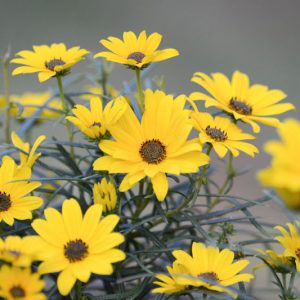
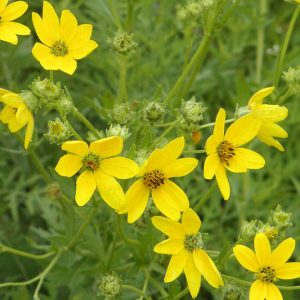
Moist Meadow Border: Combine Helianthus angustifolius (Swamp Sunflower), Rudbeckia maxima (Giant Coneflower), and Asclepias incarnata (Swamp Milkweed) along a fence or ditch for a tall, late-summer wall of gold that feeds butterflies and songbirds.
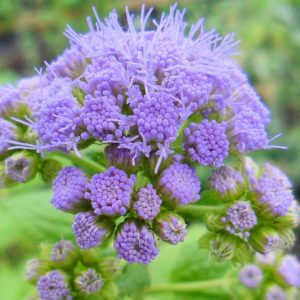
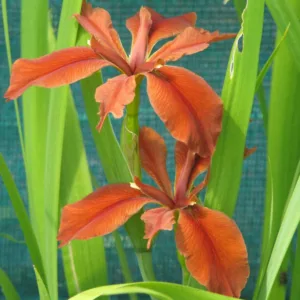
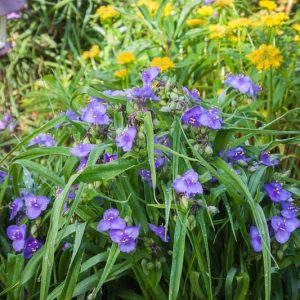
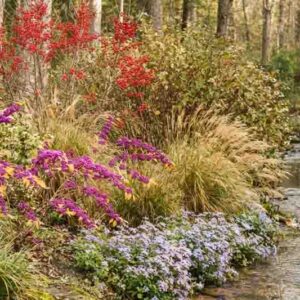
Shaded Creekside Ribbon: Plant drifts of Lobelia cardinalis (Cardinal Flower), Conoclinium coelestinum (Blue Mistflower), and Iris fulva (Copper Iris) in part shade near downspouts, low spots, or streambanks for hummingbird and butterfly action all season.
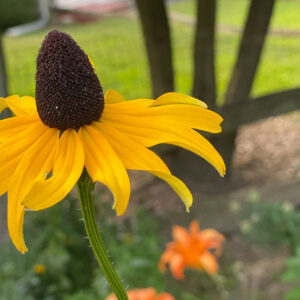
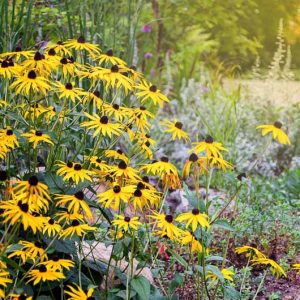
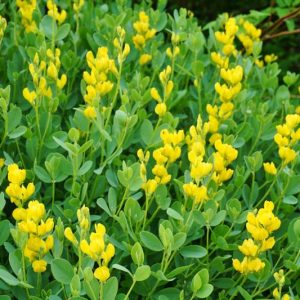
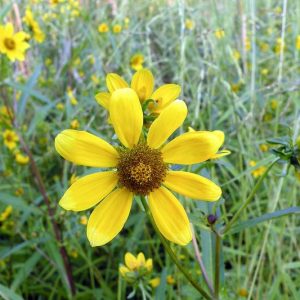
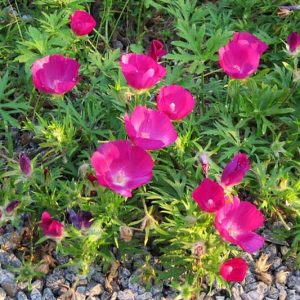
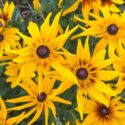
Sunny Coastal Cottage Strip: Use Borichia frutescens (Sea Ox-Eye), Baptisia sphaerocarpa (Yellow Wild Indigo), and Rudbeckia hirta (Black-Eyed Susan) with a front layer of Callirhoe involucrata (Purple Poppy Mallow) to create a bright, wind-tolerant border.
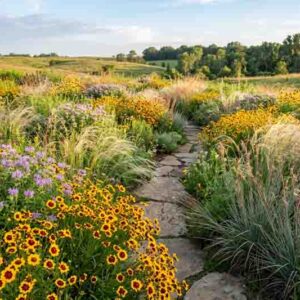
Across the Dallas – Fort Worth area and the Blackland Prairie, gardeners work with sticky clay soils, intense sun and wide temperature swings. The best perennials for North Texas are drought capable, clay tolerant and built for tough prairie conditions.
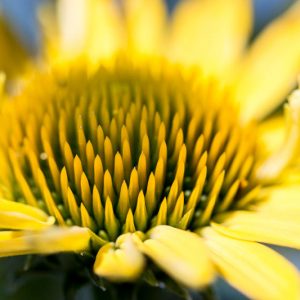
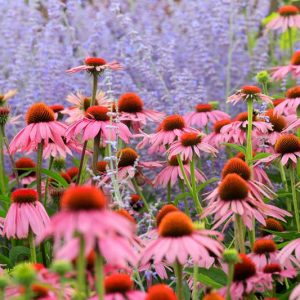
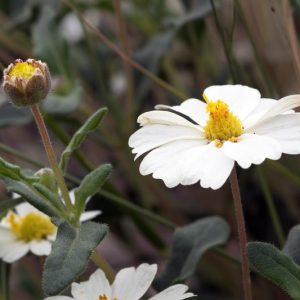
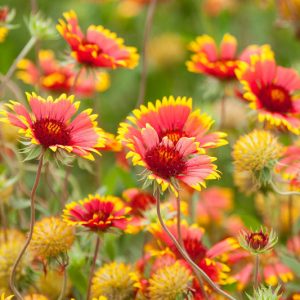
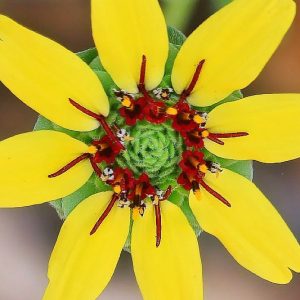
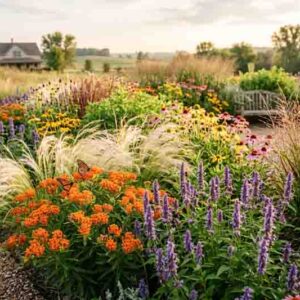
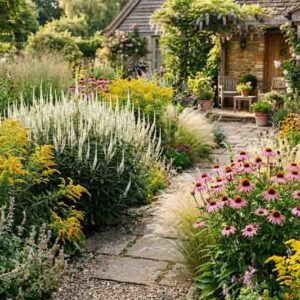
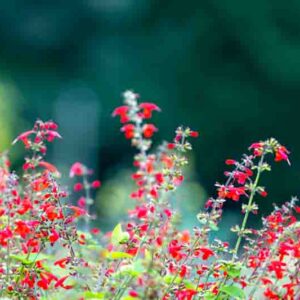
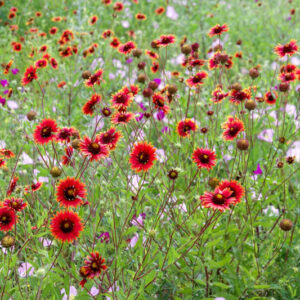
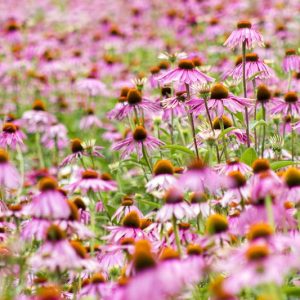
Front Yard Prairie Strip: Mix Salvia greggii (Autumn Sage), Echinacea purpurea (Purple Coneflower), and Gaillardia pulchella (Firewheel) in a sunny band along the sidewalk. Add clumps of Melampodium leucanthum (Blackfoot Daisy) at the edge for a tidy, long-blooming finish.
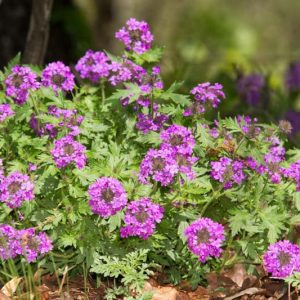
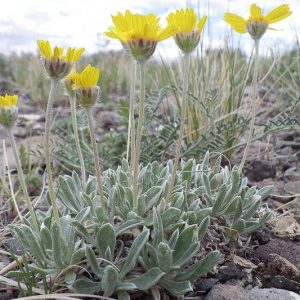
Clay-Busting Pollinator Patch: In open lawn areas, combine Helianthus maximiliani (Maximilian Sunflower), Tetraneuris scaposa (Four-Nerve Daisy), and Glandularia bipinnatifida (Prairie Verbena). These deep-rooted natives are built for sticky Blackland clays.
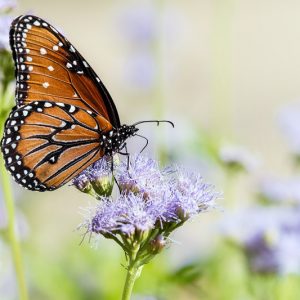
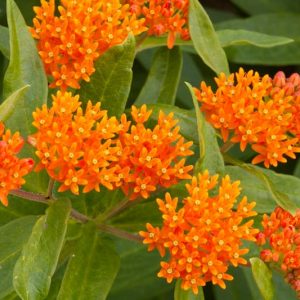
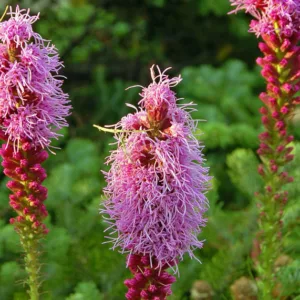
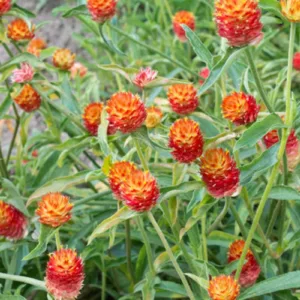
Butterfly Meadow Corner: Turn a neglected corner into habitat by planting Asclepias asperula (Antelope-Horns Milkweed), Asclepias tuberosa (Butterfly Milkweed), and Liatris aspera (Rough Blazing Star), then weaving in Conoclinium greggii (Palm-leaf Mistflower) as a nectar-rich filler.
Limestone, thin soils and wild swings in rainfall define the Hill Country. The best Hill Country perennials are drought hardened, heat loving and able to anchor themselves in rocky ground. Many are evergreen or semi evergreen and ideal for xeriscaping and wildlife friendly gardens.
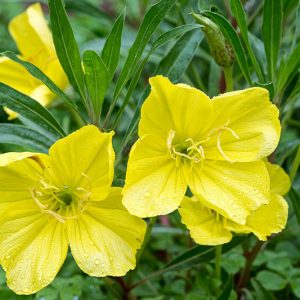
Limestone Wildflower Slope: On a rocky bank, combine Berlandiera lyrata (Chocolate Daisy), Gaillardia pulchella (Firewheel), and Liatris punctata (Dotted Blazing Star) with pockets of Oenothera macrocarpa (Ozark Sundrops) for a drought-proof tapestry.
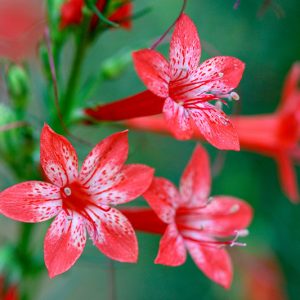
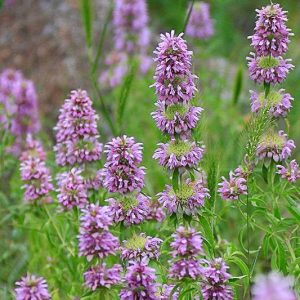
Hill Country Hummingbird Border: Plant drifts of Ipomopsis rubra (Standing Cypress), Lobelia cardinalis (Cardinal Flower), and Monarda citriodora (Lemon Bee Balm) behind a low edging of Callirhoe involucrata (Purple Poppy Mallow) to draw hummingbirds from late spring into summer.
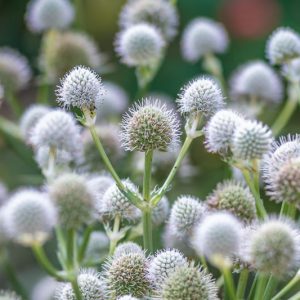
Seepline Pocket Garden: In moister pockets or near a seasonal seep, mix Asclepias incarnata (Swamp Milkweed), Engelmannia peristenia (Engelmann Daisy), and Eryngium yuccifolium (Rattlesnake Master) for an unusual blend of textures and pollinator value.
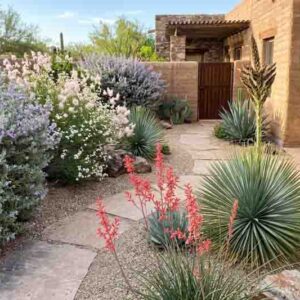
West Texas perennials must handle intense sun, wind, low humidity and bursts of rainfall. Desert natives and shortgrass prairie perennials are at home here, often evergreen, deeply rooted and perfect for xeriscaping, rock gardens and water wise landscapes.
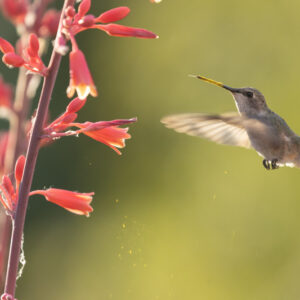
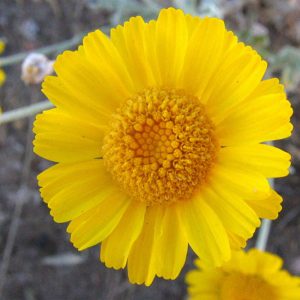
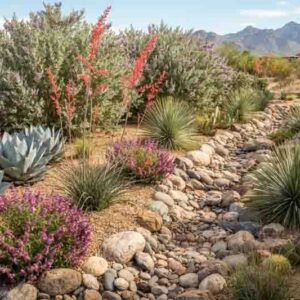
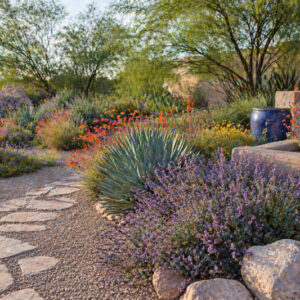
Desert Driveway Border: Use clumps of Hesperaloe parviflora (Red Yucca) backed with Baileya multiradiata (Desert Marigold) and mounds of Melampodium leucanthum (Blackfoot Daisy) for a heat-loving, no-irrigation strip along pavement.
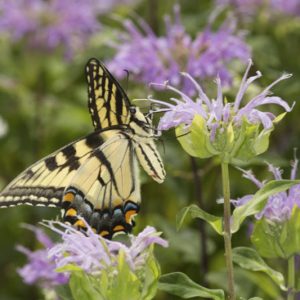
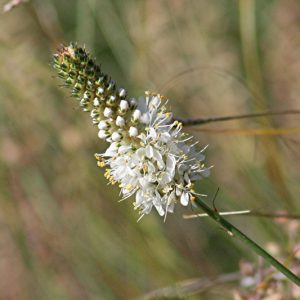
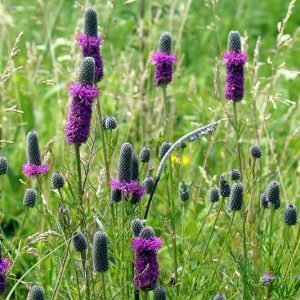
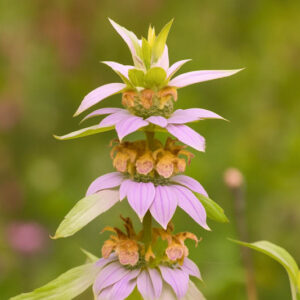
High Plains Pollinator Patch: Combine Dalea candida (White Prairie Clover), Dalea purpurea (Purple Prairie Clover), and Gaillardia pulchella (Firewheel), then thread in Monarda punctata (Spotted Bee Balm) for bees and wasps.
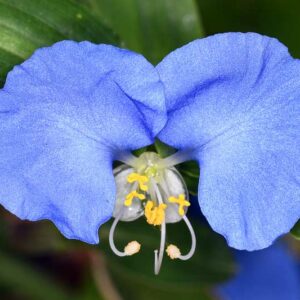
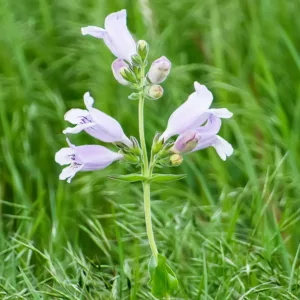
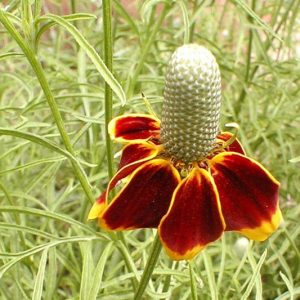
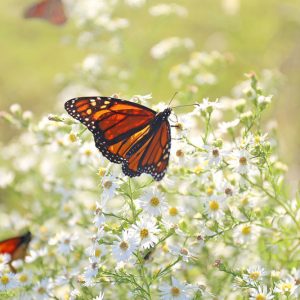
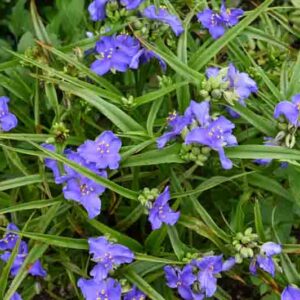
Wind-Tough Prairie Corner: On an exposed corner, plant drifts of Ratibida columnifera (Mexican Hat Plant), Tetraneuris acaulis (Angelita Daisy), and Tradescantia occidentalis (Prairie Spiderwort) with clusters of Aster ericoides (Heath Aster) for late-season bloom.
Many common landscape perennials in Texas—such as non-native daylilies, Asiatic lilies, tropical milkweed, generic bedding salvias, and imported verbenas—offer color but often provide limited ecological value. Some can need extra irrigation and fertilizer, and a few, like tropical milkweed and certain aggressive verbenas, can cause problems when they escape cultivation or disrupt native insect cycles.
By contrast, native perennials are adapted to Texas soils, rainfall patterns, and heat cycles. They support local butterflies, bees, hummingbirds, and other wildlife while reducing the need for supplemental water and chemical inputs.
When a non-native perennial is widely used for its color or bloom time, this guide points to native “look-alike” options that fill the same landscape role while boosting habitat instead of degrading it.
Whether you garden in humid pine forests, prairie clay, rocky Hill Country slopes or bright West Texas sun, there are native and well adapted perennials ready to thrive with minimal fuss. Start with your region, pick several structural evergreen or rosette perennials, then layer in seasonal bloomers and groundcovers. Add native grasses, vines and wildflowers and you have a long lived landscape that looks natural, handles drought and supports Texas wildlife.
A perennial in Texas is a plant that reliably comes back from its roots for at least several years under normal local conditions. Because Texas has such varied climates, a plant that is perennial on the Gulf Coast might act like a tender perennial or even an annual in the Panhandle. When in doubt, check your USDA zone (most of Texas is 6–9) and confirm that the plant is hardy to at least that zone.
Native perennials evolved with Texas heat, drought, soils, and wildlife. They typically need less water and fertilizer, handle extreme temperature swings better, and provide more nectar, pollen, and seed for local pollinators and birds. They also have a much lower risk of becoming invasive than many imported ornamentals. In practical terms, natives = less maintenance and more ecological value.
Good “plant it and mostly forget it” perennials for large parts of the state include:
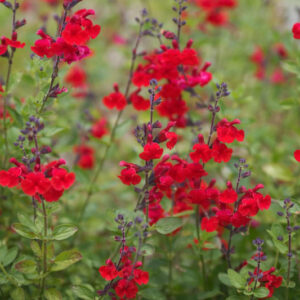
Autumn sage (Salvia greggii)
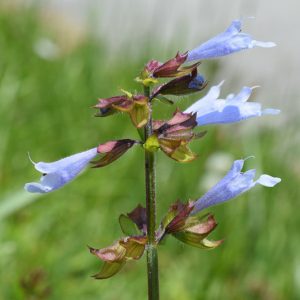
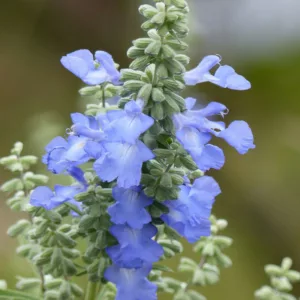
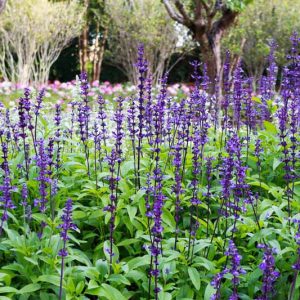
Mealy blue sage (Salvia farinacea)
Blackfoot daisy (Melampodium leucanthum)
Firewheel (Gaillardia pulchella)
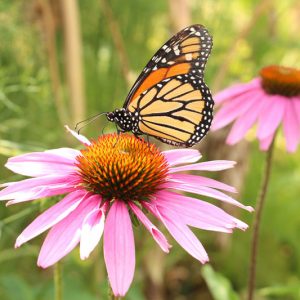
Purple coneflower (Echinacea purpurea and E. angustifolia)
Winecup or purple poppy mallow (Callirhoe involucrata)
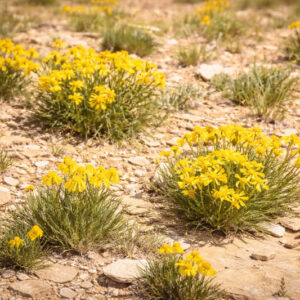
Four-nerve daisy (Tetraneuris scaposa)
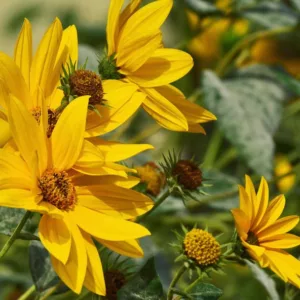
Maximilian sunflower (Helianthus maximiliani)
These tolerate heat, poor soils, and short droughts once established.
Look for species from prairies, desert edges, or rocky slopes. Some standouts are: red yucca (Hesperaloe parviflora), blackfoot daisy, desert marigold (Baileya multiradiata), Engelmann daisy (Engelmannia peristenia), antelope-horns milkweed (Asclepias asperula), firewheel, chocolate daisy (Berlandiera lyrata), and prairie verbena (Glandularia bipinnatifida). These plants are adapted to hot, reflective sites and often look best in lean, well-drained soils.
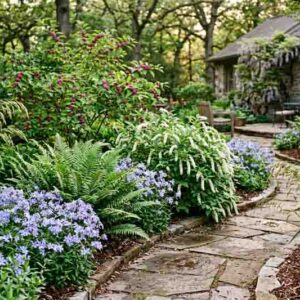
True deep shade is challenging, but bright shade or dappled light supports several natives:
Turk’s cap (Malvaviscus arboreus var. drummondii)
Lyreleaf sage (Salvia lyrata)
River fern (Thelypteris kunthii) in East/Central Texas
Inland sea oats (Chasmanthium latifolium)
Coralberry (Symphoricarpos orbiculatus) as a subshrub
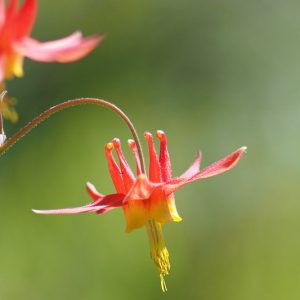
Columbines such as Aquilegia canadensis and A. chrysantha (in cooler areas or morning sun)
These work especially well under open-canopy oaks or along the north side of structures.
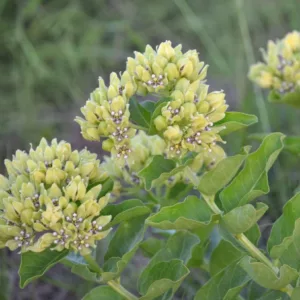
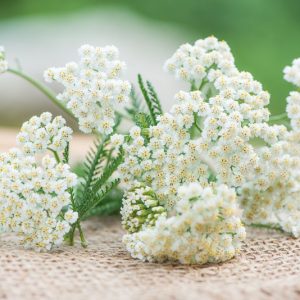
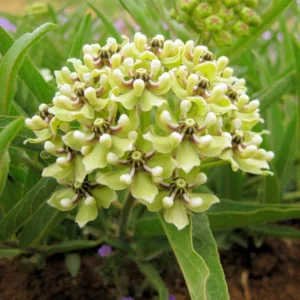
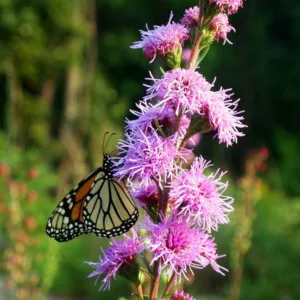
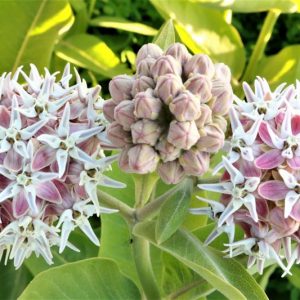
For butterflies and bees, choose: milkweeds (Asclepias tuberosa, A. asperula, A. viridis, A. incarnata), coneflowers (Echinacea spp.), liatris (Liatris aspera, L. punctata), blazing stars, gaillardia, yarrow, and goldenrods.
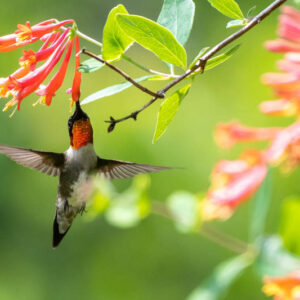
For hummingbirds, plant: autumn sage, mealy blue sage, standing cypress (Ipomopsis rubra), Turk’s cap, penstemons (Penstemon spp.), and cardinal flower (Lobelia cardinalis). A mixed bed of these provides nectar from spring into fall.
Clay-tolerant, sun-loving natives include:
Mealy blue sage (Salvia farinacea)
Autumn sage (Salvia greggii) with good drainage
Engelmann daisy (Engelmannia peristenia)
Maximilian sunflower (Helianthus maximiliani)
Four-nerve daisy (Tetraneuris scaposa)
Black-eyed Susan (Rudbeckia hirta)
Prairie verbena (Glandularia bipinnatifida)
Amending entire beds with compost, not just individual planting holes, improves performance but these species will tolerate clay better than most.
On sandy or coastal sites, consider: sea ox-eye (Borrichia frutescens), dune or beach sunflower where native, swamp sunflower on moist sands, seaside goldenrod (Solidago sempervirens), gaillardia, coastal penstemons, and many milkweeds (especially Asclepias viridis and A. tuberosa). These species accept higher drainage and occasional salt-laden winds.
Choose plants that tolerate flooding but do not mind drying out between rains:
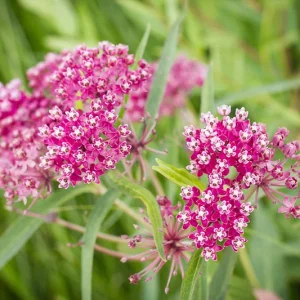
Swamp milkweed (Asclepias incarnata)
Swamp sunflower (Helianthus angustifolius)
Smooth beggartick (Bidens laevis)
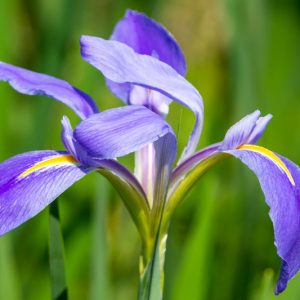
Copper iris and other Louisiana irises (Iris fulva, I. brevicaulis)
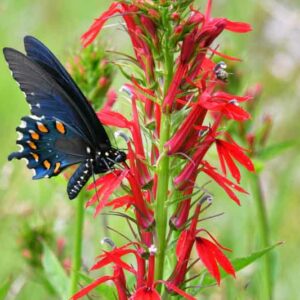
Cardinal flower (Lobelia cardinalis)
Blue mistflower (Conoclinium coelestinum)
These are especially well suited to East Texas and wetter parts of Central Texas.
No plant is completely deer-proof, but some are less favored. Generally more deer-resistant perennials include: red yucca, blackfoot daisy, chocolate daisy, many salvias (especially Salvia greggii and S. farinacea), lantanas native to Texas (Lantana urticoides), four-nerve daisy, ratibida (Mexican hat), and some ornamental grasses like little bluestem (Schizachyrium scoparium). Browsing pressure varies, so local observation is still important.
Start by grouping plants by water and sun needs. Put the most drought-tolerant species in the hottest, driest spots and reserve moister beds for rain-garden plants or those you are willing to irrigate. Plant in drifts or clumps of the same species for visual impact. Mix upright forms (e.g., liatris, coneflower), mounding forms (gaillardia, blackfoot daisy), and groundcovers (winecup, horseherb) for layered structure. Mulch to conserve moisture and suppress weeds.
Plants with notably long bloom seasons in much of Texas include: autumn sage, mealy blue sage, blackfoot daisy, firewheel, prairie verbena, Turk’s cap, rock rose (Pavonia lasiopetala in limestone areas), and many coreopsis species. If you stagger a mix of early, mid-, and late-season bloomers, you can maintain color from March into November in many regions.
Yes. Many gardeners use a “native backbone” and sprinkle in a few well-behaved non-natives for additional color or texture. The key is to avoid known or potentially invasive species and to ensure that non-natives do not demand more water and fertilizer than the surrounding natives. If you prioritize natives for the bulk of your planting, you still gain most of the ecological and water-saving benefits.
Updated: November 2025 • Reviewed by Gardenia Editors
Create a membership account to save your garden designs and to view them on any device.
Becoming a contributing member of Gardenia is easy and can be done in just a few minutes. If you provide us with your name, email address and the payment of a modest $25 annual membership fee, you will become a full member, enabling you to design and save up to 25 of your garden design ideas.
Join now and start creating your dream garden!
Create a membership account to save your garden designs and to view them on any device.
Becoming a contributing member of Gardenia is easy and can be done in just a few minutes. If you provide us with your name, email address and the payment of a modest $25 annual membership fee, you will become a full member, enabling you to design and save up to 25 of your garden design ideas.
Join now and start creating your dream garden!