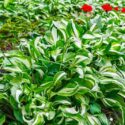
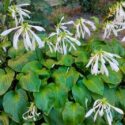
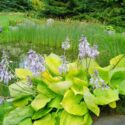
From miniature 'Blue Mouse Ears' to dramatic 'Krossa Regal' and 'Sum and Substance', discover the best hostas for pots of every size. Gardenia's Container Hosta Fit framework helps match mature spread, growth habit, foliage impact, water demand, and container size - while showing when to pot up progressively.
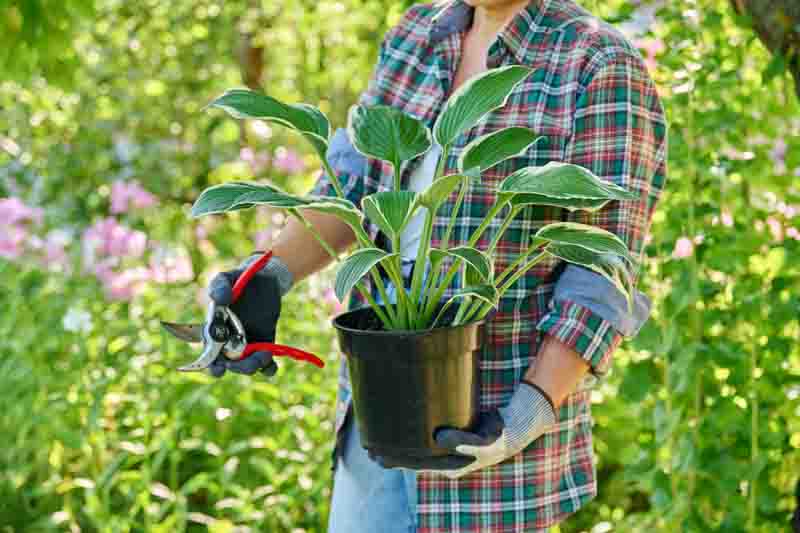


Hostas are among the best perennials for shady containers. Their sculptural leaves provide months of color and texture, they return year after year, and the huge range of hosta sizes makes it possible to grow everything from tiny blue miniatures in troughs to dramatic architectural specimens in substantial patio pots.
But choosing the best hosta for a container involves more than picking your favorite leaf color. A miniature hosta can disappear visually in an oversized planter, while a vigorous hosta that eventually spreads 4 or 5 feet can quickly overwhelm a decorative pot that looked generous when the plant was young.
The best container hosta is therefore one whose mature spread, growth habit, foliage character, moisture demand, and eventual root room match the container and location you actually have.
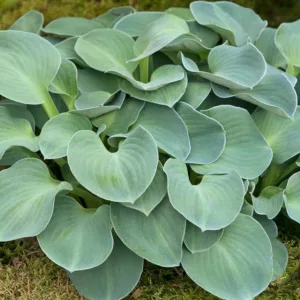
Best miniature classic: Hosta ‘Blue Mouse Ears’ – compact, rounded blue-green leaves and excellent proportions for small pots and troughs.
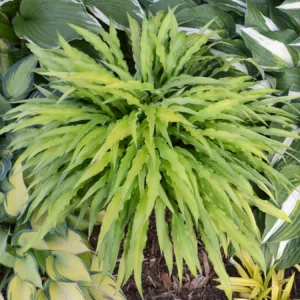
Best fine-textured miniature: Hosta ‘Curly Fries’ – narrow, rippled chartreuse foliage gives small containers unusual movement.
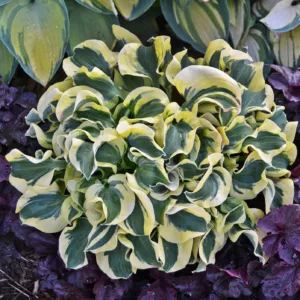
Best tiny variegated choice: Hosta ‘Mini Skirt’ – compact blue-green leaves edged in cream.
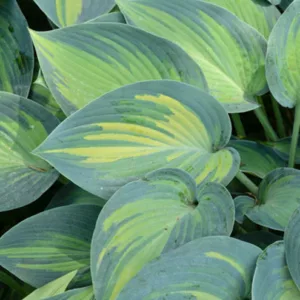
Best medium all-rounder: Hosta ‘June’ – elegant blue-green and gold foliage on a manageable mound.
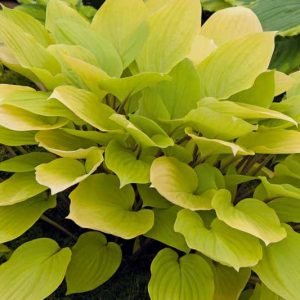
Best bright foliage: Hosta ‘Fire Island’ – glowing yellow-chartreuse leaves above distinctive red petioles.
Best fragrant container hosta: Hosta ‘Guacamole’ – broad chartreuse foliage and large fragrant white flowers, but it needs a generous container.
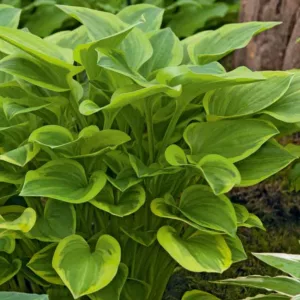
Best dramatic blue specimen: Hosta ‘Krossa Regal’ – architectural, vase-shaped blue foliage for a substantial planter.
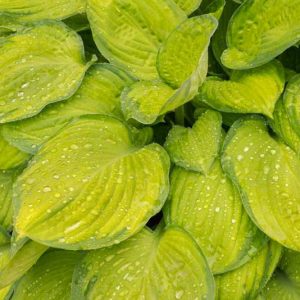
Best giant-pot statement: Hosta ‘Sum and Substance’ – huge chartreuse-gold leaves, provided you can give it enough root room and water.
Gardenia’s Container Hosta Fit Rule: Choose for mature spread first, foliage effect second, and pot size third. A hosta should look comfortably framed by its container at maturity rather than temporarily squeezed into a pot that suits only the young plant.
Hostas combine several qualities that make them unusually effective container plants. They tolerate the partial shade that many flowering patio plants dislike, offer strong foliage from spring through autumn, and range from tiny cultivars only a few inches tall to enormous architectural plants.
Containers also bring hostas closer to eye level, where leaf texture, puckering, margins, blue bloom, red petioles, and subtle variegation can be appreciated more easily than in a large border.
Growing hostas in pots can be particularly useful for:
The Royal Horticultural Society recommends hostas for containers and notes that miniature varieties are particularly suitable for pots and troughs. Container-grown hostas do, however, dry out faster than plants in the ground and require regular summer watering.
This is one of the most common mistakes when choosing a hosta for a pot.
A hosta may be only 18 or 20 inches tall yet eventually spread 3 or 4 feet. That mature width affects how quickly the foliage overwhelms the rim of the container, how much water the plant uses, and how much root room it eventually needs.
For example, ‘Patriot’ grows around 20 inches tall but can spread much wider. ‘Guacamole’ reaches only around 2 feet in height but may spread more than 4 feet.
Both can be grown in containers, but neither belongs in the same long-term pot you would choose for a miniature such as ‘Blue Mouse Ears’.
Gardenia container shortcut: When comparing hostas for pots, mature spread is usually more useful than mature height. Height tells you how tall the display becomes. Spread tells you how much visual and physical territory the plant eventually wants.
Gardenia evaluates a hosta for container use using five practical questions:
This is why “best hosta for containers” cannot be reduced to a list of cultivars. A miniature hosta in a shallow trough and a 5-foot-wide statement hosta in a massive patio planter are solving completely different design problems.
Gardenia’s Pot-Sizing Rule: Plan for mature size – but pot up progressively. Keep the hosta’s eventual spread and water demand in mind, while moving a young plant into appropriately larger containers as it grows rather than placing a small root ball immediately into a huge volume of wet compost.
Miniature and very small hostas are natural candidates for containers because their foliage can be enjoyed close-up and their scale suits troughs, bowls, small pots, shelves, steps, and compact patios.
The RHS specifically recommends miniature hostas for containers and troughs, provided they receive good drainage, reliable summer moisture, and light shade.
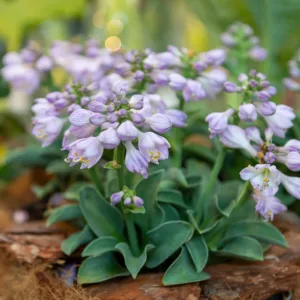
‘Blue Mouse Ears’ is one of the classic small hostas for container culture. Thick, almost round blue-green leaves form a neat compact mound, followed by violet flowers.
‘Curly Fries’ is very different. It grows about 6 inches tall and around 16 inches wide, with extremely narrow, rippled chartreuse foliage. The effect is more like a small fountain of foliage than the broad-leaved mound most gardeners associate with hostas.
Its texture makes it especially valuable in a pot placed where the plant can be viewed at close range.
‘Mini Skirt’ grows only a few inches tall and forms a compact mound. Its wavy blue-green leaves have creamy-yellow margins that mature toward creamy white.
This is an excellent choice where you want a genuinely diminutive hosta with more visual intricacy than a plain green or blue cultivar.
| Hardiness |
3 - 9 |
|---|---|
| Heat Zones |
1 - 8 |
| Climate Zones | 1, 1A, 1B, 2, 2A, 2B, 3, 3A, 3B, 4, 5, 6, 7, 8, 9, 10, 14, 15, 16, 17, 18, 19, 20, 21 |
| Plant Type | Perennials |
| Plant Family | Asparagaceae |
| Genus | Hosta |
| Exposure | Full Sun |
| Season of Interest | Spring (Mid, Late), Summer (Early, Mid, Late), Fall |
| Maintenance | Low |
| Soil Drainage | Moist but Well-Drained |
For many more compact choices, browse Gardenia’s Miniature and Very Small Hostas for Gardens and Containers.
Medium hostas are often the sweet spot for patio containers. They provide enough foliage mass to make a strong display but do not demand the enormous soil volume of giant cultivars.
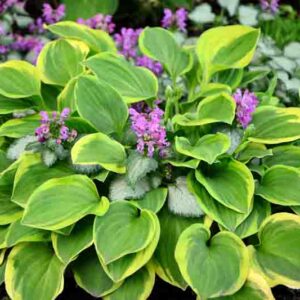
‘June’ forms an elegant mound around 15 inches tall and roughly 28 inches wide. Its blue-green leaves are illuminated by yellow to greenish-yellow centers.
This manageable spread, refined coloration, and dense habit make ‘June’ one of the easiest hostas to imagine as a long-term container specimen.
‘Fire Island’ grows about 14 inches tall and around 34 inches wide. Its brilliant yellow spring foliage matures toward chartreuse, while red petioles provide an unusual second layer of color.
It is particularly effective in a simple dark or neutral container that allows the foliage and stems to provide the drama.
‘Golden Tiara’ grows about 16 inches tall but can eventually spread considerably wider. Green leaves edged in chartreuse, gold, and later cream produce a lively mound, accompanied by abundant purple flowers.
Because it is vigorous, give it more room than its modest height initially suggests.
Container lesson: “Medium” does not mean “small pot.” A 15-inch-tall hosta may eventually spread 30-40 inches. Choose your long-term container strategy for the mature clump, not just the nursery plant.
A large hosta can be spectacular in a container, but this is where the distinction between container-capable and container-practical becomes important.
Large hostas need substantial root volume, reliable watering, physical stability, and enough surrounding space for the foliage to spread without constantly brushing against walls, furniture, or foot traffic.
‘Guacamole’ combines large chartreuse-gold leaves edged in darker green with unusually large, fragrant white flowers. It reaches about 24 inches tall and can spread over 4 feet.
It is beautiful in a generous specimen container, particularly near a seating area where its fragrance can be appreciated, but this is not a hosta for a modest decorative pot.
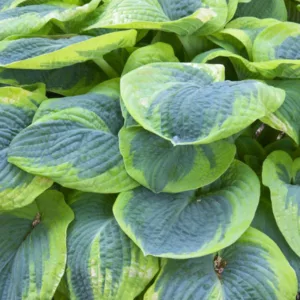
‘Frances Williams’ grows around 32 inches tall and more than 4 feet wide at maturity. Its thick, puckered blue-green leaves have broad yellow to creamy margins.
The strong texture reads beautifully as a single specimen in a large container. Its eventual scale should be planned from the beginning.
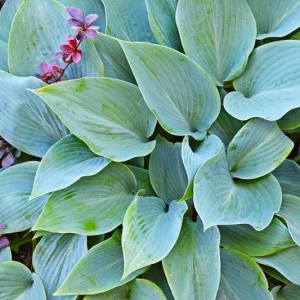
‘Krossa Regal’ is one of the most architectural choices. Rather than forming only a broad low mound, its blue-gray foliage rises in a graceful vase-shaped habit.
That vertical structure makes it particularly effective as a statement container hosta, but mature plants can become very large, with foliage spreading several feet and flower scapes extending much higher.
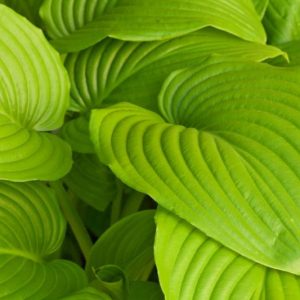
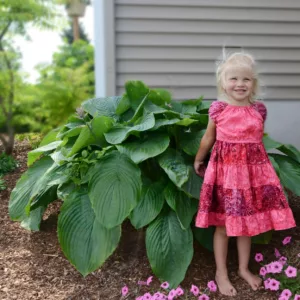
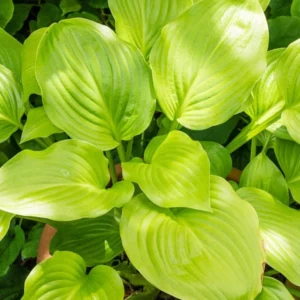
‘Sum and Substance’ is a giant hosta, eventually around 3 feet tall and approximately 5 feet across. Its huge chartreuse-to-gold leaves create a lush, almost tropical effect.
It can make a spectacular patio statement in a truly substantial planter, but the container must provide enough soil volume, moisture reserve, and physical stability to support a mature plant.
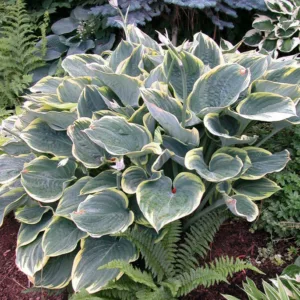
‘Sagae’ is a superb large hosta for a substantial container, combining a strong upright habit with broad blue-green leaves edged in yellow that mature toward creamy white. It grows about 28 inches tall and can spread more than 4 feet, so it needs a generous, stable planter.
Its architectural form makes it especially effective as a single focal specimen where the variegated foliage can be appreciated from a distance.
‘Empress Wu’ can reach approximately 3-4 feet tall and 5-6 feet wide. It can technically be grown in a very large container, but for most gardeners it is better regarded as a landscape giant than a routine patio-pot hosta.
If your goal is “huge hosta in a pot,” make sure the container, location, watering commitment, and eventual plant width are genuinely large enough. A young giant hosta can be misleadingly easy to accommodate.
Gardenia’s Statement Hosta Rule: A giant hosta does not become a small plant because it is placed in a pot. For long-term success, either give it genuinely substantial root volume or choose a naturally smaller cultivar that delivers drama through foliage rather than sheer size.
The Royal Horticultural Society suggests containers around 12-18 inches (30-45 cm) in diameter as a useful starting size for many hostas, but that should not be read as a universal long-term pot size. The right container ultimately depends on the cultivar’s mature spread, growth rate, root volume, and water demand.
Miniature hostas can suit smaller pots and troughs, while large and giant cultivars may eventually require containers substantially wider and deeper than the standard starting range.
For long-term container selection, Gardenia recommends thinking in terms of scale:
| Hosta Scale | Container Approach | Best Use |
|---|---|---|
| Miniature | Compact pot, bowl, or trough with excellent drainage | Close-up display, shelves, steps, small patios |
| Small to medium | Generous individual container with room for several seasons of growth | Patios, entrances, grouped pots |
| Large | Large, stable planter with substantial soil volume | Single focal specimen |
| Giant | Very large tub with realistic allowance for mature spread | Statement planting where space and watering are ample |
Do not solve the mature-size problem by immediately planting a small nursery hosta into an enormous pot. Excess unused compost can remain wet for too long around a relatively small root system.
Plan for mature size, but pot up progressively. Move the hosta into a larger container as its roots and foliage expand, while keeping the final mature scale in mind.
Container hostas need a combination that can be deceptively difficult to achieve: consistent moisture without stagnant, waterlogged roots.
Use a good-quality, moisture-retentive but well-drained potting mix. The RHS recommends peat-free multipurpose compost or a loam-based mix such as John Innes No. 3.
Plant the hosta at approximately the same depth at which it was previously growing rather than burying the crown deeply.
Most hostas perform best in partial shade or light shade, and containers can dry much faster than garden soil. That makes harsh afternoon sun particularly challenging for potted plants.
Blue hostas generally retain their characteristic color best with protection from intense sun, while many yellow or chartreuse hostas develop stronger color with somewhat more light. Even cultivars described as sun tolerant still require adequate moisture, particularly when grown in pots.
Morning sun followed by afternoon shade is often an excellent compromise.
For cultivar-specific guidance, see Gardenia’s Hostas Tolerant of Sun and Blue Hostas for Gardens and Containers.
Water management is probably the biggest practical difference between a hosta in the ground and one in a pot.
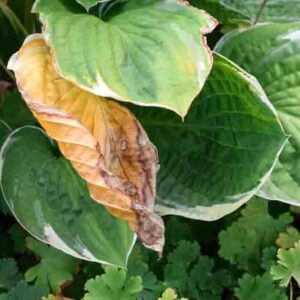
The RHS notes that container-grown hostas need regular watering during summer because pots dry quickly. When hostas become too dry, brown leaf margins are a common result.
Instead of watering by calendar:
Brown Edges on a Potted Hosta?
Do not immediately assume disease. Dry compost, hot sun, heat, wind, root congestion, and other stresses can all damage hosta foliage. Use Gardenia’s Hosta Problems guide to diagnose the pattern.
Because container plants have access only to the nutrients held in a limited volume of compost, they benefit from periodic feeding. The RHS recommends a general-purpose liquid feed about once a month while container hostas are actively growing.
A hosta does not need repotting merely because another season has passed. Instead, look for signs that the relationship between plant and pot has stopped working:
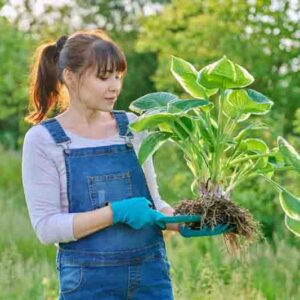
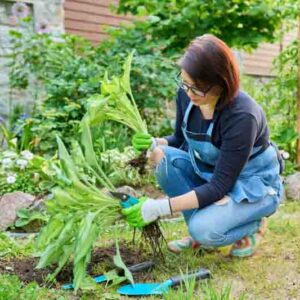
At that point, move the hosta into a somewhat larger container or divide the clump.
For step-by-step care, see Gardenia’s complete Hosta planting and care guide.
Hostas are hardy perennials, but a plant in a container experiences winter differently from the same hosta planted in the ground. The roots are surrounded by a relatively small volume of compost and are therefore more exposed to temperature fluctuations.
Winter moisture is equally important. Container-grown hostas can suffer when dormant roots remain waterlogged for long periods.
For winter:
Hostas need their normal dormant period.
For detailed seasonal timing, see Gardenia’s When to Cut Back Hostas: Fall or Spring?.
Pots can make hostas easier to inspect, but they do not make them immune to pests.
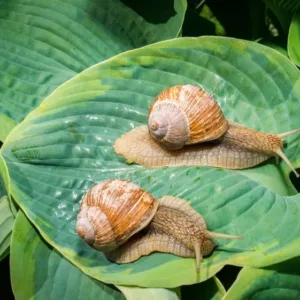
Slugs and snails can still climb containers and chew holes through foliage. Thick or substantial leaves may suffer less damage than thin leaves, but no hosta should be considered completely slug-proof.
See Gardenia’s Slug and Snail guide for practical control.
Vine weevil can also affect plants grown in containers. The larvae feed below the compost surface on roots, so unexplained decline in a potted hosta should prompt inspection of the root system rather than an assumption that watering or light is always responsible.
Unusual mottling, puckering, brown vein-bounded bands, crown decay, or other suspicious symptoms should not simply be blamed on container stress. Gardenia’s Hosta Diseases guide helps distinguish the major disease patterns.
If you are unsure which scale of hosta belongs in your pot, start with the result you want rather than a cultivar name.
| Your Goal | Best Direction | Gardenia Picks | Approx. Mature Spread |
|---|---|---|---|
| Tiny pot or trough | Miniature hosta | ‘Blue Mouse Ears’, ‘Mini Skirt’ | About 1 ft |
| Fine texture and unusual form | Small narrow-leaved cultivar | ‘Curly Fries’ | About 16 in |
| Easy patio focal point | Medium hosta | ‘June’, ‘Fire Island’ | About 2-3 ft |
| Fragrance near seating | Large fragrant hosta | ‘Guacamole’ | 4+ ft |
| Architectural blue statement | Large upright hosta | ‘Krossa Regal’ | Several feet |
| Huge tropical-looking foliage | Giant hosta in a very large tub | ‘Sum and Substance’ | Around 5 ft |
The spread figures above are approximate mature dimensions rather than minimum pot diameters. They show why a hosta that looks compact in its nursery container may demand far more visual and physical space after several seasons.
Gardenia’s final container rule: Do not ask only, “Can this hosta grow in a pot?” Ask, “Will this hosta still suit this pot when it is mature?” The best container hostas are those whose mature scale, water demand, growth habit, and visual character continue to work together after the novelty of the first season.
Find the Right Hosta for Your Space
Browse Gardenia’s Hosta collection, explore miniature hostas and blue hostas, or use Gardenia’s Hosta comparison tool to compare mature size, foliage, and growing requirements before choosing the plant that will live in your container for years.
Want More Hostas for Pots and Containers?
These are some of Gardenia’s favorite container hostas, but there are many more to explore. Use Gardenia’s Plant Finder to discover additional Hosta varieties and narrow your choices by mature size, sun exposure, foliage color, growing conditions, and other features that matter for your container and garden.
Yes. Hostas grow very well in containers when given a suitably sized pot, moisture-retentive but well-drained potting mix, regular summer watering, and appropriate light. Miniature and medium hostas are especially practical, while large cultivars require much more root room and water.
Excellent small container hostas include ‘Blue Mouse Ears’, ‘Curly Fries’, and ‘Mini Skirt’. Their naturally compact habits make them well suited to pots, bowls, and troughs where their foliage can be appreciated close-up.
Pot size should reflect the hosta’s mature scale rather than its nursery size. Containers around 12-18 inches can be a useful starting point for many hostas, but large and giant cultivars may eventually require substantially larger containers. Pot young plants up progressively rather than placing them immediately into oversized pots.
Yes, but giant hostas need very large, stable containers with substantial soil volume and reliable watering. Cultivars such as ‘Sum and Substance’ can make impressive statement plants, while giants such as ‘Empress Wu’ are usually more practical in the ground unless exceptionally large containers are available.
Most container hostas perform best in partial shade or light shade. Morning sun can suit many cultivars, while intense afternoon sun increases heat and water stress. Blue hostas usually retain their color best with more shade, while yellow and chartreuse cultivars often benefit from some additional light.
Check container hostas regularly during active growth and water when the potting mix begins to dry. Frequency varies with pot size, temperature, wind, plant size, and exposure. Large leafy hostas in warm weather may need much more frequent watering than miniature plants in shade.
Yes. Hardy hostas can remain dormant in containers over winter, but their roots are more exposed than those of plants in the ground. Keep pots well drained and, in very cold climates, group or insulate vulnerable containers to reduce extreme root-zone temperature swings.
Repot or divide a container hosta when the clump overwhelms the pot, roots become congested, the compost dries unusually quickly, water no longer penetrates easily, or the plant becomes physically unstable. Repotting should respond to plant condition rather than follow a fixed annual schedule.
Updated: September 2026 – Reviewed by Gardenia Editors
| Hardiness |
3 - 9 |
|---|---|
| Heat Zones |
1 - 8 |
| Climate Zones | 1, 1A, 1B, 2, 2A, 2B, 3, 3A, 3B, 4, 5, 6, 7, 8, 9, 10, 14, 15, 16, 17, 18, 19, 20, 21 |
| Plant Type | Perennials |
| Plant Family | Asparagaceae |
| Genus | Hosta |
| Exposure | Full Sun |
| Season of Interest | Spring (Mid, Late), Summer (Early, Mid, Late), Fall |
| Maintenance | Low |
| Soil Drainage | Moist but Well-Drained |
Create a membership account to save your garden designs and to view them on any device.
Becoming a contributing member of Gardenia is easy and can be done in just a few minutes. If you provide us with your name, email address and the payment of a modest $25 annual membership fee, you will become a full member, enabling you to design and save up to 25 of your garden design ideas.
Join now and start creating your dream garden!
Create a membership account to save your garden designs and to view them on any device.
Becoming a contributing member of Gardenia is easy and can be done in just a few minutes. If you provide us with your name, email address and the payment of a modest $25 annual membership fee, you will become a full member, enabling you to design and save up to 25 of your garden design ideas.
Join now and start creating your dream garden!