What should you feed tomato plants, and when? Learn how to choose fertilizer by soil and growth stage, understand N-P-K, side-dress fruiting tomatoes, feed container plants, and avoid excess nitrogen, unnecessary phosphorus, Epsom salt myths, and other mistakes that can leave you with fewer tomatoes.


Fertilizing tomatoes can feel more complicated than it needs to be. Garden centers offer tomato feeds, bloom boosters, composts, manures, calcium products, Epsom salts, and fertilizers labeled 4-6-3, 5-10-10, 10-10-10, or something entirely different. The obvious question is: which one should you use?
The answer depends on what your tomatoes are already getting. A tomato plant needs nitrogen, phosphorus, potassium, calcium, magnesium, sulfur, and several micronutrients, but it does not need every nutrient added at every stage of growth. In fertile soil, repeated feeding can do more harm than good. In a container, on the other hand, nutrients are gradually removed by the plant and lost through drainage, so supplemental feeding is usually much more important.
The biggest mistake is treating fertilizer like a universal recipe. Tomatoes do not automatically need a high-phosphorus fertilizer when they flower or a high-potassium fertilizer the moment fruit appears. Growth stage changes nutrient demand, but the fertilizer you apply should still reflect what the soil or potting mix already supplies.
The short answer: For tomatoes growing in the ground, start with a soil test whenever possible. Build fertile, well-drained soil, avoid excessive nitrogen, and reassess fertility as the first fruits develop. Container tomatoes usually need more regular feeding because repeated watering removes nutrients from their limited volume of potting mix.
For planting, watering, pruning, support, and troubleshooting advice, see Gardenia’s complete guide to growing tomatoes and Tomato (Solanum lycopersicum) plant profile.
If your tomatoes are growing in the ground, a soil test is the best place to begin. It can reveal pH and existing levels of major nutrients, helping you avoid adding phosphorus, potassium, lime, or other amendments that are already abundant.
A useful soil test can help answer several important questions:
Is the soil pH suitable for tomatoes?
Is phosphorus already high?
Does potassium actually need to be added?
Is lime necessary – or completely unnecessary?
Would additional fertilizer correct a real deficiency or simply add more nutrients to an already fertile bed?
This matters because garden soils can accumulate nutrients over time. A vegetable bed that has received compost, manure, and fertilizer for years may already contain plenty of phosphorus. Adding another high-phosphorus product because the label says “bloom” does not make tomatoes flower better if the soil is already well supplied.
Tomatoes generally grow well in slightly acidic soil, around pH 6.0-6.8. Soil pH affects nutrient availability, so a plant can sometimes show symptoms of poor nutrition even when nutrients are technically present in the soil.
Gardenia rule: A fertilizer is useful only when it supplies something the tomato actually needs. The picture of a tomato on the bag is less important than the fertilizer analysis and what your soil already contains.
The three numbers on a fertilizer label represent its percentages of nitrogen, phosphate, and potash, commonly shortened to N-P-K.
Nitrogen (N) supports leafy growth, chlorophyll production, and plant proteins.
Phosphorus (P) is involved in energy transfer, root growth, flowering, and reproduction.
Potassium (K) helps regulate water balance, enzyme activity, stress tolerance, and fruit development.
A 5-5-5 fertilizer contains 5% nitrogen, 5% phosphate, and 5% potash. A 5-10-10 contains proportionally less nitrogen and more phosphate and potash.
Strictly speaking, the P and K numbers on fertilizer labels are expressed conventionally as phosphate and potash equivalents rather than as elemental phosphorus and potassium. Home gardeners do not need to calculate those conversions, but it helps explain why the label is a fertilizer analysis rather than a literal measurement of elemental nutrients.
Tomatoes also need calcium, magnesium, sulfur, iron, manganese, zinc, boron, copper, molybdenum, and other nutrients in smaller amounts. A healthy crop depends on the whole nutrient system, not simply finding the largest second or third number on a fertilizer bag.
Remember: A bigger fertilizer number is not automatically better. A 5-10-10 fertilizer may be useful in one garden and unnecessary in another. The right analysis depends on what the soil or potting mix already provides.
Instead of feeding tomatoes because a certain number of days have passed, Gardenia uses five checks before deciding whether more fertilizer is appropriate:
Gardenia’s 5-Factor Feeding Check: Soil – Stage – Plant – System – Recent Feeding. Consider all five before adding fertilizer. This helps prevent a common mistake: seeing a struggling tomato and assuming immediately that it is hungry.
A pale plant in waterlogged soil may have damaged roots rather than a shortage of fertilizer. A huge dark-green plant with few flowers may already have received too much nitrogen. A container tomato that has been fruiting heavily for weeks may genuinely need another feed.
There is no single best fertilizer ratio for every tomato garden. The right product depends on what the soil or growing medium already supplies.
If a soil test shows adequate phosphorus and potassium but additional nitrogen is needed, repeatedly applying a high-phosphorus tomato fertilizer makes little sense. If potassium is genuinely low, however, a fertilizer supplying potassium may be useful.
Many gardeners grow excellent tomatoes with:
Balanced granular vegetable fertilizers.
Organic vegetable or tomato fertilizers.
Compost-based soil fertility programs.
Controlled-release fertilizers.
Liquid or soluble tomato feeds, particularly for containers.
The label matters less than whether the nutrient analysis and application rate suit the plant’s actual situation.
Whichever type you use:
Follow the label rate carefully.
Do not increase the dose in the hope of accelerating growth.
Keep concentrated fertilizer away from stems and roots.
Account for nutrients already supplied by compost, manure, and previous fertilizer.
Water dry fertilizers appropriately according to label directions.
What matters most: Do not shop for fertilizer by brand name or the tomato photograph on the package. Compare the nutrient analysis, the application rate, and what your plants actually need.
Good tomato feeding starts before the plants go into the ground. Mature compost can improve soil structure, drainage, water retention, and biological activity while contributing nutrients.
Before planting:
Test the soil when possible.
Add mature compost to improve soil structure and organic matter.
Correct documented nutrient deficiencies rather than adding amendments automatically.
Adjust pH only when needed according to soil-test recommendations.
Compost is valuable, but it is not a standardized fertilizer. One batch may contain very different nutrient levels from another, depending on how it was made.
If your soil test recommends phosphorus, potassium, or another amendment, before planting is often a convenient time to incorporate it through the future root zone.
Avoid automatic planting-hole recipes. Bone meal, Epsom salts, eggshells, lime, and handfuls of fertilizer are often recommended online as though every tomato and every soil need the same ingredients. They do not.
Do not fertilize the planting hole by habit. Concentrated fertilizer can injure young roots, while unnecessary amendments can create nutrient imbalances that are harder to correct later.
Newly planted tomatoes need enough nutrition to establish roots and leaves, but the goal is steady growth, not forcing a large soft canopy as quickly as possible.
Nursery-grown transplants may already contain fertilizer in their potting mix. After planting, give the roots time to establish before assuming the plant needs another heavy feeding.
A modest starter feed may be useful when:
Soil fertility is genuinely low.
A soil test recommends additional nutrients.
Plants are establishing in cool soil where nutrient uptake may be slow.
The transplanting system specifically calls for a dilute starter solution.
If you use a starter fertilizer, follow the product directions carefully. A stronger solution does not establish tomatoes faster and can damage sensitive roots.
A stalled transplant is not always hungry. Cold soil, low night temperatures, overwatering, drought, transplant shock, or damaged roots can all slow growth. Fertilizer cannot correct those problems.
For many in-ground tomatoes, the development of the first fruits is a useful point to reassess fertility. The plant is now maintaining stems, foliage, flowers, roots, and developing fruit simultaneously.
This does not mean every tomato must immediately receive a high-potassium or high-phosphorus fertilizer. Growth stage changes nutrient demand, but the fertilizer should still match what the soil already supplies.
If plants are healthy, dark green without being excessively lush, flowering well, and setting fruit normally, they may not need much additional feeding. If a soil-test-based program calls for side-dressing, this can be an appropriate stage to provide it.
A useful trigger: Think of the first developing fruits as a time to reassess nutrition, not as an automatic command to fertilize. Healthy plants in fertile soil may already have everything they need.
| Stage | What to Do | What to Avoid |
|---|---|---|
| Before planting | Test soil and correct documented needs | Adding amendments “just in case” |
| Transplant establishment | Use modest starter feeding if appropriate | Overfeeding young roots |
| Vegetative growth | Maintain balanced fertility | Pushing lush foliage with excess nitrogen |
| First fruits developing | Reassess fertility and side-dress if needed | Automatically switching to a “bloom” fertilizer |
| Heavy ongoing harvest | Monitor vigor and supplement if justified | Repeated feeding despite excessive foliage |
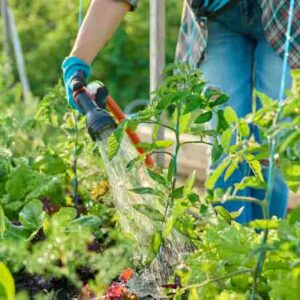
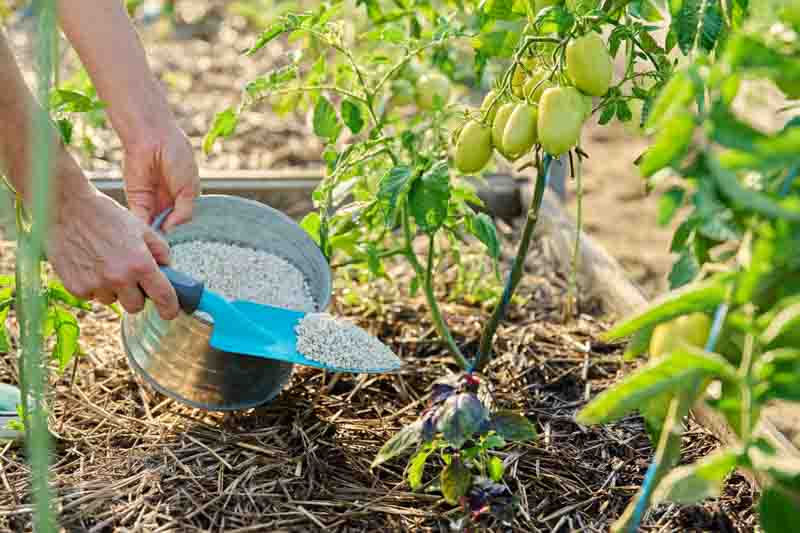
Side-dressing means applying fertilizer to established plants beside the stem rather than putting concentrated fertilizer directly against it.
For a safe, practical application:
Measure the amount recommended on the fertilizer label.
Spread it over the active root area rather than piling it against the stem.
Keep concentrated granules away from stems and exposed roots.
Incorporate lightly only if the label recommends it.
Avoid disturbing shallow tomato roots.
Water after application when directed by the product label.
There is no universal side-dressing interval. Fertile garden soil may need little additional fertilizer, while light soils, long growing seasons, or heavy cropping may justify additional applications.
Let soil fertility and plant performance determine whether another feeding is useful rather than repeating it automatically every two weeks.
Nitrogen is essential to tomatoes, but too much can shift the plant toward excessive vegetative growth.
Signs that nitrogen may be excessive include:
Very dark-green foliage.
Long, vigorous stems.
Many large leaves and suckers.
A dense canopy.
Few flowers relative to the size of the plant.
Slower or disappointing fruit production despite vigorous growth.
That does not mean nitrogen always reduces fruiting. It means nitrogen supplied beyond the plant’s needs can unbalance growth.
If your tomato is enormous but producing few flowers, do not immediately add another feed. Check sunlight, temperature, plant age, watering, and previous nitrogen applications first.
Hot weather is a particularly important alternative explanation. Tomatoes can shed flowers or fail to set fruit when temperatures interfere with pollination. No fertilizer can correct unsuitable temperatures.
Big plant, few tomatoes? Do not assume it needs more food. A huge, dark-green tomato with lots of leaves and little fruit may already be receiving too much nitrogen.
If your tomato is behaving strangely and the cause is unclear, Gardenia’s Tomato Problems: What Is Wrong With My Plant? guide can help separate nutrition problems from heat, water stress, pests, disease, and other causes.
Tomatoes need phosphorus and potassium, but that does not mean every tomato garden needs additional amounts of either.
Phosphorus supports energy transfer, root growth, flowering, and reproduction, but it can accumulate in soils that receive repeated manure or high-phosphorus fertilizer applications.
Potassium contributes to water regulation, enzyme function, stress tolerance, and fruit development, but adding more does not benefit plants when soil levels are already sufficient.
This is why a high second or third fertilizer number should not be treated as a guarantee of more flowers or better fruit. The correct fertilizer is the one that complements existing fertility.
Do not fertilize by growth-stage myth: Tomatoes do not automatically need high phosphorus for flowers and high potassium for fruit. Growth stage matters, but soil fertility still determines what needs to be added.
Not necessarily. Blossom-end rot develops when growing fruit does not receive enough calcium, but the underlying problem is often calcium delivery rather than a simple absence of calcium in the soil.
Factors that can interfere with calcium reaching developing fruit include:
Irregular watering.
Drought stress.
Root injury.
High soluble salt levels.
Excessive fertilizer.
Very rapid plant growth.
Before adding a calcium product, look at the root environment. Is the soil repeatedly drying out? Is it staying saturated? Have large amounts of fertilizer recently been applied? Is the soil test actually low in calcium?
Blossom-end rot is not automatically a “feed me calcium” signal. Stable soil moisture and healthy roots are essential because calcium must move through the plant with water.
For a detailed watering strategy, see Gardenia’s How Often Should You Water Tomato Plants?.
Epsom salt is magnesium sulfate. It supplies:
Magnesium.
Sulfur.
It does not supply:
Nitrogen.
Phosphorus.
Potassium.
Calcium.
If testing confirms magnesium deficiency, a magnesium amendment may be appropriate. But applying Epsom salt routinely to healthy tomatoes does not make plants greener, increase fruit production, or prevent blossom-end rot.
It can also become part of a bigger problem when gardeners stack multiple products together. Compost, granular fertilizer, liquid feed, calcium supplements, and Epsom salt can collectively supply far more soluble nutrients than intended.
Skip the routine Epsom salt treatment. Use magnesium only when there is a reason to suspect or confirm magnesium deficiency. Tomatoes do not benefit from extra magnesium simply because it is popular in gardening advice.
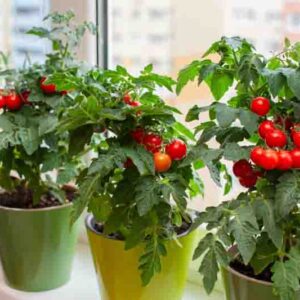
Container tomatoes usually need more regular feeding than tomatoes planted in garden soil. Their roots occupy a small volume of potting mix, and every watering that drains from the pot can carry soluble nutrients with it.
For better results:
Start with a high-quality potting mix suitable for vegetables.
Check whether the mix already contains starter or controlled-release fertilizer.
Use a complete fertilizer once the original nutrient supply begins to decline.
Follow the product’s dilution rate and feeding interval.
Reduce or pause feeding if plants become excessively lush or show signs of salt buildup.
Use a generously sized container to reduce rapid swings in both moisture and fertility.
Once the nutrients in the original mix begin to decline, container tomatoes often benefit from a regular dilute feeding program using a complete fertilizer. Exactly how often depends on the product, container size, plant size, weather, and how frequently you water.
Follow the label rather than automatically feeding every time you water. Frequent low-dose feeding can work well with some products, while others are designed for longer intervals.
A larger container makes both watering and fertilizing easier because it contains a greater volume of potting mix and experiences slower swings in nutrient concentration. A large indeterminate tomato crowded into a small pot can exhaust water and nutrients remarkably quickly.
Container clue: If a tomato has been productive for weeks but gradually becomes pale and less vigorous despite correct watering and healthy roots, review its fertilizer program. Nutrient depletion is more likely in containers than in fertile garden soil.
Both organic and synthetic fertilizers can grow excellent tomatoes. Tomato roots ultimately absorb nutrients in mineral forms, regardless of their original source.
Organic fertilizers: Usually have lower nutrient analyses and depend partly on soil microorganisms to release nutrients. Availability can vary with temperature, moisture, and biological activity.
Synthetic fertilizers: Supply nutrients in predictable concentrations and often act more quickly. Their precision is useful, but overapplication is easier.
Compost: Excellent for soil structure and organic matter, but not automatically a complete fertilizer.
Composted manure: Adds organic matter and nutrients, but repeated applications can build up phosphorus or soluble salts.
Organic does not mean unlimited. Compost, manure, and organic fertilizers can still contribute excess nutrients when repeatedly applied. The same principle applies to every fertilizer source: supply what the plant needs, not as much as possible.
The better question is not which category is universally superior, but whether the nutrient source fits your soil, crop, and gardening system.
Nutrient deficiencies can produce recognizable patterns, but leaves provide clues, not laboratory results.
Nitrogen deficiency: older foliage may become generally pale or yellow while growth slows.
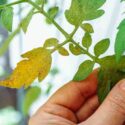
Magnesium deficiency: older leaves can develop yellowing between greener veins.
Iron deficiency: interveinal yellowing typically appears first on younger leaves.
Potassium deficiency: older leaves may develop yellow or scorched margins.
Phosphorus stress: plants may be stunted or develop purplish foliage, but cold soil can also reduce phosphorus uptake.
Similar symptoms can result from root injury, excess water, drought, unfavorable pH, disease, herbicide damage, or environmental stress. Before correcting a supposed nutrient deficiency, look at the whole plant and the conditions around its roots.
Leaves are clues, not a soil test. Yellowing, purple foliage, and scorched margins can suggest nutrient problems, but water stress, cold soil, root damage, disease, and pH problems can produce similar symptoms.
If symptoms are spreading or difficult to interpret, see Gardenia’s Tomato Problems guide and Tomato Diseases: Identification, Treatment & Prevention.
“Tomatoes always need a high-phosphorus bloom booster.” Not if the soil already contains enough phosphorus.
“Blossom-end rot means add calcium.” Not necessarily. Moisture and root problems commonly interfere with calcium delivery.
“Epsom salt makes tomatoes grow better.” Only a genuine magnesium deficiency justifies adding magnesium.
“More fertilizer means more tomatoes.” Excess nutrients, especially nitrogen, can produce lots of foliage without improving yield.
“Organic fertilizer cannot burn plants.” Organic products can still be overapplied and can contribute salts or nutrient excesses.
“Yellow leaves mean the plant needs feeding.” Roots, water, disease, temperature, and normal leaf aging can cause similar symptoms.
| What You See | What to Check Before Feeding |
|---|---|
| Healthy growth and good fruit set | Do not fertilize simply because a date has arrived. |
| Huge dark-green plant with few flowers | Review nitrogen, sunlight, temperature, and plant age before adding fertilizer. |
| Pale, weak plant | Check fertility, soil moisture, pH, root health, and disease. |
| First fruits developing normally | Reassess fertility and side-dress if your soil and fertilizer program justify it. |
| Blossom-end rot | Check moisture consistency, root health, and fertilizer history before adding calcium. |
| Container tomato losing vigor after heavy production | Review feeding frequency, container size, watering, and root condition. |
Bottom line: Feed the tomato you have, not the tomato pictured on a fertilizer bag. Start with soil fertility, consider the plant’s growth stage and performance, account for its growing system and everything already applied, then add nutrients only when they are likely to help.
Match the next step to what your tomato is doing:
Leaves are yellow and you are not sure whether the cause is nutrition, watering, roots, or disease? Start with Gardenia’s Tomato Problems guide before adding more fertilizer.
Unsure how often to water? Read How Often Should You Water Tomato Plants?.
Seeing spots, persistent wilt, or progressive leaf damage? Use Gardenia’s Tomato Diseases guide.
Need the entire growing system? Go to Gardenia’s Complete Tomato Planting & Care Guide.
There is no single best fertilizer ratio for every tomato plant. The right choice depends on soil fertility, growth stage, previous amendments, and whether the tomato is growing in the ground or a container. Use a soil test for in-ground tomatoes whenever possible and avoid excessive nitrogen.
Prepare garden soil according to soil-test recommendations before planting. Use modest starter feeding if appropriate after transplanting, then reassess fertility when the first fruits begin developing. Additional feeding depends on soil fertility, plant growth, fruit load, growing system, and fertilizer directions.
There is no universal feeding interval. Tomatoes in fertile garden soil may need relatively little supplemental fertilizer, while container tomatoes usually require more regular feeding. Follow soil-test recommendations and fertilizer label directions rather than automatically feeding every week or two.
It can be appropriate in some soils, but it is not automatically the best choice. A 10-10-10 supplies equal percentages of nitrogen, phosphate, and potash. If the soil already contains adequate phosphorus or potassium, another fertilizer analysis may be more suitable.
Tomatoes require phosphorus, but extra phosphorus does not automatically produce more flowers when the soil already contains enough. A soil test is the best way to determine whether in-ground tomatoes actually need additional phosphorus.
Not routinely. Epsom salt supplies magnesium and sulfur. It may be useful when a genuine magnesium deficiency has been identified, but it is not a complete tomato fertilizer and does not prevent or cure blossom-end rot.
Not necessarily. Blossom-end rot develops when fruit does not receive enough calcium, but irregular soil moisture, damaged roots, excessive soluble salts, and rapid growth can interfere with calcium uptake and transport even when the soil contains adequate calcium.
Yes. Excessive nitrogen can encourage vigorous leafy growth while flowering and fruiting lag behind. Poor fruit set can also result from high temperatures, low light, drought stress, plant age, and other conditions, so fertilizer is not always the cause.
Updated: September 2026 • Reviewed by Gardenia Editors
| Hardiness |
2 - 11 |
|---|---|
| Climate Zones | 1, 1A, 1B, 2, 2A, 2B, 3, 3A, 3B, 4, 5, 6, 7, 8, 9, 10, 11, 12, 13, 14, 15, 16, 17, 18, 19, 20, 21, 22, 23, 24, A1, A2, A3, H1, H2 |
| Plant Type | Fruits |
| Plant Family | Solanaceae |
| Genus | Solanum, Tomatoes |
| Common names | Love Apple, Tomato |
| Exposure | Full Sun |
| Season of Interest | Spring (Late), Summer (Early, Mid, Late), Fall |
| Height | 3' - 10' (90cm - 3m) |
| Spread | 1' - 4' (30cm - 120cm) |
| Spacing | 24" - 36" (60cm - 90cm) |
| Maintenance | Average, High |
| Water Needs | Average |
| Soil Type | Clay, Loam, Sand |
| Soil pH | Acid, Neutral |
| Soil Drainage | Moist but Well-Drained |
| Tolerance | Rabbit, Clay Soil |
| Attracts | Bees |
| Landscaping Ideas | Patio And Containers |
| Garden Styles | City and Courtyard, Informal and Cottage, Pollinator Garden |
| Hardiness |
2 - 11 |
|---|---|
| Climate Zones | 1, 1A, 1B, 2, 2A, 2B, 3, 3A, 3B, 4, 5, 6, 7, 8, 9, 10, 11, 12, 13, 14, 15, 16, 17, 18, 19, 20, 21, 22, 23, 24, A1, A2, A3, H1, H2 |
| Plant Type | Fruits |
| Plant Family | Solanaceae |
| Genus | Solanum, Tomatoes |
| Common names | Love Apple, Tomato |
| Exposure | Full Sun |
| Season of Interest | Spring (Late), Summer (Early, Mid, Late), Fall |
| Height | 3' - 10' (90cm - 3m) |
| Spread | 1' - 4' (30cm - 120cm) |
| Spacing | 24" - 36" (60cm - 90cm) |
| Maintenance | Average, High |
| Water Needs | Average |
| Soil Type | Clay, Loam, Sand |
| Soil pH | Acid, Neutral |
| Soil Drainage | Moist but Well-Drained |
| Tolerance | Rabbit, Clay Soil |
| Attracts | Bees |
| Landscaping Ideas | Patio And Containers |
| Garden Styles | City and Courtyard, Informal and Cottage, Pollinator Garden |
Create a membership account to save your garden designs and to view them on any device.
Becoming a contributing member of Gardenia is easy and can be done in just a few minutes. If you provide us with your name, email address and the payment of a modest $25 annual membership fee, you will become a full member, enabling you to design and save up to 25 of your garden design ideas.
Join now and start creating your dream garden!
Create a membership account to save your garden designs and to view them on any device.
Becoming a contributing member of Gardenia is easy and can be done in just a few minutes. If you provide us with your name, email address and the payment of a modest $25 annual membership fee, you will become a full member, enabling you to design and save up to 25 of your garden design ideas.
Join now and start creating your dream garden!