What should you plant before and after tomatoes? Learn which crops create a real rotation break, why peppers, potatoes and eggplants do not, and how corn, grains, legumes, brassicas and cover crops fit into the plan. Gardenia's four-layer test makes tomato crop rotation easier to plan intelligently.
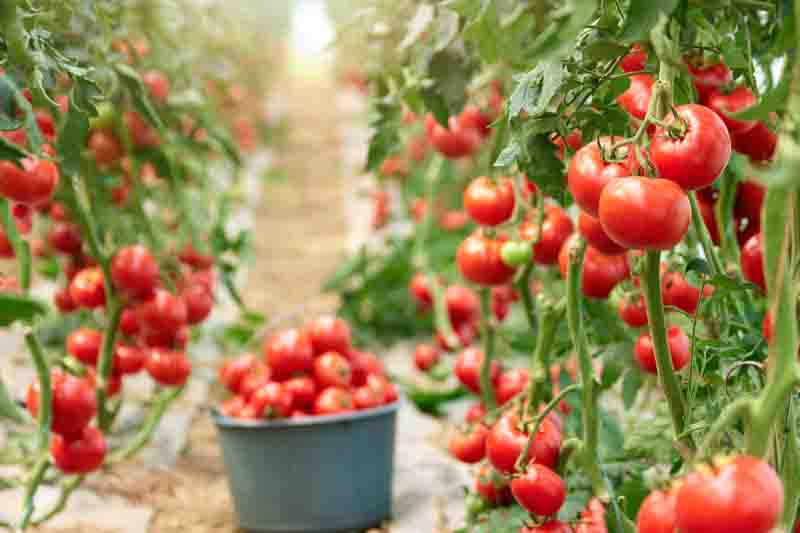


What should you plant before tomatoes – and what should follow them?
The best answer is not simply “plant beans after tomatoes.” A useful tomato crop rotation considers plant family, disease history, actual pathogen hosts, season, and what the next crop contributes to the garden.
For most home gardens, a practical goal is to keep tomatoes and other nightshade crops out of the same bed for about 3-4 years when space allows. That includes tomatoes, peppers, potatoes, eggplants, tomatillos, ground cherries, and other Solanaceae.
Good rotation partners can include corn, beans and peas, brassicas, cucurbits, onions and garlic, leafy greens, root crops, and suitable cover crops. But plant family is only the first filter.
If tomatoes suffered from a diagnosed soilborne disease or nematode problem, the next crop should ideally be a true nonhost for that specific organism. A plant can belong to a different family and still be a poor rotation choice for a particular disease.
Gardenia tomato-rotation rule: Rotate the host, not just the crop name. Replacing tomatoes with peppers or potatoes changes the harvest, but for many tomato problems it does not create a meaningful break. Once a disease is known, its actual host range matters more than a generic family rule.
| Rotation Choice | Before or After Tomatoes? | Main Value |
|---|---|---|
| Corn / small grains | Yes | Strong family break for many tomato problems. |
| Beans / peas | Usually | Different family; useful rotational vegetables. |
| Brassicas | Yes | Useful cool-season rotation group. |
| Cucurbits | Usually | Different family, but disease-specific host range still matters. |
| Onions / garlic | Yes | Different family and easy to fit into many rotations. |
| Leafy greens / many root crops* | Usually | Seasonal diversification. |
| Peppers / eggplants / potatoes / tomatillos | Avoid as the main rotation break | Same Solanaceae group. |
*If root-knot nematodes or another soilborne pest are the reason for rotating, confirm that the proposed crop is actually a nonhost.
Crop rotation is mainly a pest- and disease-management strategy.
Growing tomatoes repeatedly in the same place can give some soilborne or residue-borne pathogens repeated access to susceptible plants. Rotation may help reduce that pressure by temporarily removing the host.
Break repeated host cycles: especially for problems associated with tomatoes and related crops.
Diversify roots and residues: different crops use the bed differently.
Create room for cover crops: useful for biomass, soil protection, and nutrient cycling.
Reduce reliance on one crop family: a healthier long-term garden strategy.
Rotation reduces risk – it does not reset the garden to zero. Some pathogens survive for years, some attack many unrelated plants, and others arrive on transplants, insects, wind, water, soil, or tools.
A useful home-garden target is a 3-4 year break from tomatoes and other Solanaceae where space permits.
That means avoiding tomatoes, peppers, potatoes, eggplants, tomatillos, and ground cherries in that bed during the intervening years.
This is a practical family-rotation rule, not a universal disease timetable. Fusarium wilt, Verticillium, root-knot nematodes, Phytophthora, bacterial diseases, and other problems differ in how long they survive and which plants they infect.
Use 3-4 years as a general starting point. If a specific disease or pest has been identified, let its biology determine the final rotation plan.
For a broad family rotation, avoid simply replacing tomatoes with another nightshade crop:
Tomatoes
Volunteer tomatoes and related nightshade weeds should also be controlled where disease management is the goal.
Potatoes are especially important because tomatoes and potatoes share major diseases, including early blight and late blight.
There are disease-specific exceptions. Tomato Fusarium wilt, for example, is highly specific to tomato. That is why broad family rotation is a useful screening rule, while actual pathogen host range is the more precise rule once a disease has been diagnosed.
These crops can fit before or after tomatoes, depending on climate, season, and disease history.
Corn is a classic tomato rotation crop. As a grass, it provides a strong botanical break from Solanaceae and can contribute substantial residue.
Beans and peas belong to another plant family and fit well into many tomato rotations.
Legumes can fix atmospheric nitrogen, but a harvested bean or pea crop should not be treated as a guaranteed replacement for fertilizer.
Broccoli, cabbage, cauliflower, kale, kohlrabi, mustard greens, turnips, and radishes provide a useful family break and are particularly convenient in cool seasons.
Cucumbers, zucchini, winter squash, pumpkins, and melons can also fit well into a tomato rotation.
However, some broad-host-range soilborne pathogens can affect both cucurbits and Solanaceae, so disease history still matters.
Garlic, onions, leeks, scallions, and other alliums are easy to incorporate into many rotations.
Lettuce, spinach, endive, carrots, and beets can diversify the sequence where they are appropriate nonhosts.
If root-knot nematodes are present, do not assume every root or leafy crop is automatically suitable.
Think in rotations, not in one immediate successor. Corn, beans, cucurbits, brassicas, alliums, and leafy crops may all belong in the years between tomato crops, but the best crop for any particular season depends on climate and planting time.
Cover crops are different from harvestable vegetables because they are grown mainly for soil cover, nutrient cycling, biomass, erosion control, and rotation value.
Useful examples include crimson clover, hairy vetch, field peas, and cowpeas.
Through associations with nitrogen-fixing bacteria, legumes can add biologically fixed nitrogen to the cropping system. How much eventually becomes available to tomatoes depends on biomass, nodulation, growth stage, residue management, and decomposition.
Legume cover crops are not a fertilizer formula. They can contribute nitrogen, but they do not automatically eliminate the need for fertility management.
Cereal rye, oats, wheat, barley, and other grasses produce biomass, capture residual nitrogen, reduce erosion, and provide a strong family break from tomatoes.
They do not fix atmospheric nitrogen. Mature, high-carbon residue can also temporarily tie up available nitrogen during decomposition, so termination timing matters.
A mixture can combine the biomass and nitrogen-capture benefits of grasses with the nitrogen-fixing potential of legumes.
Choose cover crops according to climate, planting date, winter conditions, disease history, and the planned tomato planting date.
If you have four beds, a simple family-based rotation might look like this:
| Year | Bed A | Bed B | Bed C | Bed D |
|---|---|---|---|---|
| 1 | Tomatoes | Legumes | Brassicas | Corn / grains |
| 2 | Legumes | Brassicas | Corn / grains | Tomatoes |
| 3 | Brassicas | Corn / grains | Tomatoes | Legumes |
| 4 | Corn / grains | Tomatoes | Legumes | Brassicas |
This is an example, not a compulsory sequence. Cucurbits, alliums, leafy crops, roots, and cover crops can be substituted according to season and disease history.
Family: Is the proposed crop another Solanaceae?
Disease history: What problem occurred in the bed?
Host status: Is the replacement crop actually a nonhost?
Soil role: What does the crop contribute – harvest, biomass, nitrogen capture, soil cover, or another function?
Gardenia Four-Layer Tomato Rotation Check: Family → Disease history → Host status → Soil role.
Rotation can help reduce pressure from diseases that survive in infected debris and susceptible hosts, but sanitation matters too.
After early blight or Septoria:
Remove badly infected debris.
Control volunteer tomatoes and susceptible weeds.
Rotate away from relevant hosts.
Mulch and water near the soil.
Maintain suitable spacing and airflow.
See Gardenia’s Tomato Diseases: Identification, Treatment & Prevention for detailed diagnosis and management.
The tomato Fusarium wilt pathogen is highly host-specific to tomato but can remain in soil for years.
Rotate away from tomatoes for several years where practical.
Use resistant cultivars.
Avoid moving contaminated soil.
Do not expect one non-tomato season to eliminate the pathogen.
Verticillium wilt has a broader host range and can persist in soil for long periods.
Use a longer rotation where possible.
Favor suitable nonhosts such as corn and small grains.
Use resistant tomatoes where available.
Avoid moving infested soil.
Rotation is least powerful when a pathogen is long-lived or has many hosts. Resistant cultivars, sanitation, and accurate diagnosis become equally important.
Root-knot nematodes show why plant family alone is not enough.
Use resistant tomato cultivars where appropriate.
Choose genuine nonhost rotation crops.
Do not assume legumes, cucurbits, or root crops are automatically safe.
Control susceptible weeds.
Consider soil testing or local Extension guidance for persistent infestations.
Rotation cannot reliably prevent problems such as airborne diseases, infected transplants, insect-transmitted viruses, aphids, whiteflies, hornworms, blossom-end rot, fruit cracking, sunscald, heat-related blossom drop, or herbicide injury.
It should be one part of a broader tomato-growing system.
See Gardenia’s How to Grow Tomatoes: Complete Planting & Care Guide.
Perfect rotation is difficult when you have only one sunny raised bed.
Remove diseased debris.
Control volunteers and nightshade weeds.
Use resistant cultivars.
Mulch and water at soil level.
Maintain appropriate spacing.
Start with healthy transplants.
Diagnose recurring problems rather than assuming rotation is the only answer.
Containers can provide another growing location. See Gardenia’s Growing Tomatoes in Containers: Complete Guide.
Usually not.
Normal crop rotation does not require replacing garden soil. If a serious soilborne problem has been confirmed, moving tomatoes to another location may help, but replacing only surface soil will not necessarily remove a pathogen spread through the root zone.
Companion planting concerns plants grown together during the same season. Crop rotation concerns which crops occupy the same place over time.
Basil, marigolds, herbs, and flowers beside tomatoes do not replace rotation where persistent soilborne disease is a concern.
See Gardenia’s Best Companion Plants for Tomatoes – and What to Avoid.
Record where tomatoes and other Solanaceae grew.
Write down serious disease problems.
Choose a true nonhost when a disease is known.
Use cover crops where appropriate.
Think about what each rotation crop contributes to the soil and garden.
The best tomato rotation is the one you can maintain. Record plant families and disease history, then check host status when a problem is known.
For broader vegetable rotation principles, see Gardenia’s Crop Rotation Guide.
Good rotation choices include corn, beans and peas, brassicas, cucurbits, onions, garlic, leafy greens, root crops, and suitable cover crops. The exact choice depends on season, climate, and disease history.
Corn, small grains, beans and peas, brassicas, cucurbits, alliums, leafy greens, and appropriate cover crops can all fit before tomatoes.
A practical home-garden target is about 3-4 years away from tomatoes and related Solanaceae where space allows. Disease-specific recommendations may differ.
They are generally poor choices for broad family rotation because they belong to the same Solanaceae family and share several important diseases.
Yes, in many situations. Beans belong to a different plant family, but do not assume a harvested bean crop automatically replaces the nutrients removed by tomatoes.
Options include cereal rye, oats, wheat, crimson clover, vetches, field peas, cowpeas, and locally adapted grass-legume mixtures.
No. Rotation may reduce disease pressure, but long-lived soilborne pathogens also require resistant cultivars, sanitation, and disease-specific management.
Use resistant tomatoes where appropriate and rotate with crops confirmed to be nonhosts. A different plant family is not automatically safe.
Usually not. Soil replacement is not a routine part of tomato crop rotation.
No. Companion planting concerns plants grown together during one season; crop rotation changes which crops occupy a bed over successive seasons or years.
Updated: September 2026 • Reviewed by Gardenia Editors
| Hardiness |
2 - 11 |
|---|---|
| Climate Zones | 1, 1A, 1B, 2, 2A, 2B, 3, 3A, 3B, 4, 5, 6, 7, 8, 9, 10, 11, 12, 13, 14, 15, 16, 17, 18, 19, 20, 21, 22, 23, 24, A1, A2, A3, H1, H2 |
| Plant Type | Annuals, Fruits, Perennials |
| Plant Family | Solanaceae |
| Genus | Solanum, Tomatoes |
| Exposure | Full Sun |
| Season of Interest | Spring (Late), Summer (Early, Mid, Late), Fall |
| Maintenance | Average, High |
| Water Needs | Average |
| Soil Type | Clay, Loam, Sand |
| Soil pH | Acid, Neutral |
| Soil Drainage | Moist but Well-Drained |
| Hardiness |
2 - 11 |
|---|---|
| Climate Zones | 1, 1A, 1B, 2, 2A, 2B, 3, 3A, 3B, 4, 5, 6, 7, 8, 9, 10, 11, 12, 13, 14, 15, 16, 17, 18, 19, 20, 21, 22, 23, 24, A1, A2, A3, H1, H2 |
| Plant Type | Annuals, Fruits, Perennials |
| Plant Family | Solanaceae |
| Genus | Solanum, Tomatoes |
| Exposure | Full Sun |
| Season of Interest | Spring (Late), Summer (Early, Mid, Late), Fall |
| Maintenance | Average, High |
| Water Needs | Average |
| Soil Type | Clay, Loam, Sand |
| Soil pH | Acid, Neutral |
| Soil Drainage | Moist but Well-Drained |
Create a membership account to save your garden designs and to view them on any device.
Becoming a contributing member of Gardenia is easy and can be done in just a few minutes. If you provide us with your name, email address and the payment of a modest $25 annual membership fee, you will become a full member, enabling you to design and save up to 25 of your garden design ideas.
Join now and start creating your dream garden!
Create a membership account to save your garden designs and to view them on any device.
Becoming a contributing member of Gardenia is easy and can be done in just a few minutes. If you provide us with your name, email address and the payment of a modest $25 annual membership fee, you will become a full member, enabling you to design and save up to 25 of your garden design ideas.
Join now and start creating your dream garden!