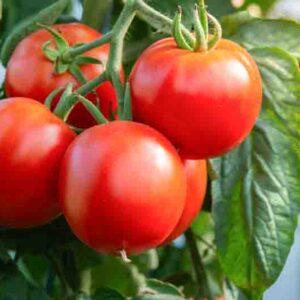
Grow great tomatoes in almost any sunny space. Discover the best varieties for small pots, patios, balconies, hanging baskets, and large planters, from true micro tomatoes to prolific cherries and full-sized slicers. Compare plant habit, support needs, climate fit, and practical container sizes before choosing your perfect tomato.
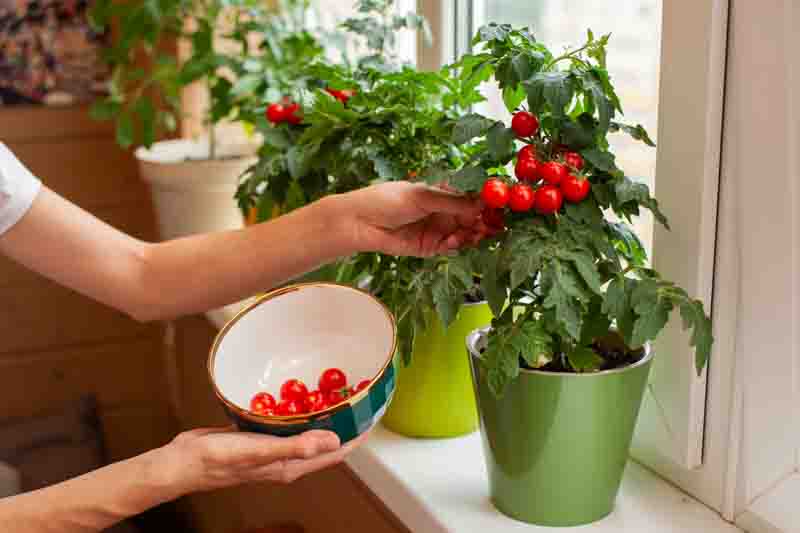


You do not need a vegetable garden to grow excellent tomatoes. A sunny patio, balcony, deck, courtyard, or doorstep can produce everything from sweet cherry tomatoes to full-sized slicers – as long as the plant itself fits the container and the space around it.
That distinction matters. Fruit size tells you surprisingly little about plant size. Some cherry tomatoes grow into vigorous vines that need tall support and generous root room, while compact patio tomatoes can stay manageable despite producing much larger fruit.
The best tomato for a container is therefore not simply the smallest-fruited variety or the one with “patio” in its name. It is the tomato whose growth habit, mature size, root demand, support needs, and water demand match your pot, your available space, and the amount of care you realistically want to give it.
Gardenia Container Tomato Rule: Choose the tomato by the mature plant, not the fruit. A small cherry tomato may grow on a much larger plant than a compact variety producing standard slicing tomatoes.
Almost any tomato can be grown in a sufficiently large container, but some varieties are much easier to manage than others.
Determinate tomatoes reach a genetically limited size and tend to produce much of their crop over a relatively concentrated period. Many work well in containers because their mature structure is easier to predict and support.
Indeterminate tomatoes continue producing new stems, flowers, and fruit through the season. They can be exceptionally productive in pots, especially where vertical space is available, but usually need more root volume, stronger support, and closer attention to watering.
Dwarf tomatoes are different again. Dwarf describes plant architecture – usually shorter internodes and a compact, sturdy framework – rather than automatically telling you whether the plant is determinate or indeterminate.
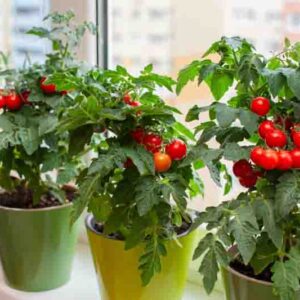
Micro-dwarf tomatoes take compactness much further and can fit on small patios, shelves, tabletops, and other spaces where a conventional tomato would be impractical.
If the terminology feels confusing, Gardenia’s Determinate vs. Indeterminate Tomatoes guide explains how growth habit affects spacing, support, pruning, and harvest pattern.
Gardenia Five-Factor Container Fit: A tomato is genuinely container-friendly when its growth habit + mature size + root volume + support requirement + water demand fit the space and care you can provide. Once a variety passes those five tests, use climate and days to maturity as a second filter.
| Your space or goal | Best starting point | Examples | Container approach |
|---|---|---|---|
| Windowsill or tiny patio | Micro-dwarf | Micro Tom, Tiny Tim | Cultivar-specific; genuinely small pots may work |
| Hanging basket | Trailing cherry | Tumbling Tom | Wide basket, reliable watering |
| Small balcony | Compact determinate or dwarf | Patio Choice Yellow, Bush Early Girl | Often 5-10 gal., depending on cultivar |
| Regular patio | Determinate slicer | Celebrity | About 7-10+ gal. |
| Long cherry harvest | Supported indeterminate | Sungold, Super Sweet 100, Black Cherry | About 10+ gal. with tall support |
| Sauce and preserving | Determinate paste tomato | Roma | About 7-10+ gal. |
| Disease resistance | Manageable resistant cultivar | Mountain Magic | About 10+ gal. |
| Large heirloom fruit | Full-sized indeterminate | Cherokee Purple, Brandywine | About 15-20+ gal. is often easier |
These are practical home-garden targets rather than biological minimums. Larger containers mainly make water, nutrient, root-zone, and stability management more forgiving.
Micro Tom is about as compact as tomatoes get. This micro-dwarf cultivar often remains around 6-8 in. (15-20 cm) tall, although growing conditions can affect final size.
Its value is simple: it allows gardeners to grow a fruiting tomato in spaces where an ordinary tomato would be impractical.
Best for: windowsills, tabletops, tiny balconies, children’s gardens, and extremely limited spaces.
Tiny Tim is another classic compact cherry tomato. Its restrained growth makes it easier to accommodate than a standard cherry vine while still providing a useful patio crop.
Best for: small pots, patio tables, tight balconies, and gardeners who want to avoid tall supports.
Small-pot reality: Micro and very compact cultivars are exceptions. Do not use their container sizes as a model for ordinary determinate or indeterminate tomatoes.
Hanging baskets have limited root volume and dry quickly, so choose tomatoes bred for compact, trailing growth rather than trying to train a conventional vine downward.
Tumbling Tom is one of the best-known tomatoes for hanging baskets and elevated planters. Its flexible stems cascade over the edge rather than requiring a tall cage, while the plant produces cherry-sized fruit.
Use a generous basket, provide excellent drainage, and check moisture frequently during hot or windy weather.
Best for: hanging baskets, elevated containers, and spaces where cascading growth is more practical than staking.
Patio Choice Yellow is a compact determinate tomato developed for small-space production. Its bright yellow cherry tomatoes grow on a plant much more restrained than vigorous indeterminate cherries.
Best for: balconies and patios where a large trellis or six-foot vine would be inconvenient.
Bush Early Girl is useful for gardeners who want slicing tomatoes without committing to a long indeterminate vine.
Do not confuse it with standard ‘Early Girl’, which is indeterminate. Bush Early Girl is a separate, more compact determinate cultivar.
Name trap: ‘Early Girl’ and ‘Bush Early Girl’ are different cultivars. One extra word changes the plant architecture – and therefore the container and support you need.
Celebrity is a useful middle ground for gardeners who want standard red slicing tomatoes from a determinate plant with useful disease resistance. It is container-manageable rather than miniature.
Best for: regular patio containers where you want familiar slicing tomatoes from a predictable plant.
With a large pot and good vertical support, vigorous indeterminate cherries can be outstanding container tomatoes.
‘Sungold’ produces intensely sweet tangerine-orange fruit over a long season. It is vigorous, so Gardenia uses about 10 gallons or more as a practical starting point, together with sturdy support.
Best for: exceptional flavor and gardeners with room to grow vertically.
‘Super Sweet 100’ produces long clusters of sweet red cherry tomatoes and rewards generous root volume, tall support, and regular harvesting.
Best for: heavy, long-running cherry production.
‘Black Cherry’ produces dusky purple-brown fruit with a rich, sweet flavor. Its vigorous indeterminate growth calls for generous root room and support.
Best for: distinctive color and rich cherry-tomato flavor.
‘Mountain Magic’ is especially useful where disease resistance matters as much as plant size.
This compact indeterminate produces smooth red cocktail tomatoes and carries a strong disease-resistance package, including important late-blight resistance. A container around 10 gallons or more provides a useful moisture reserve without demanding an enormous footprint.
Best for: disease-prone regions where season-long production matters.
Gardenia cultivar insight: Disease resistance improves the odds of a successful crop, but it does not replace sun, airflow, adequate root space, steady moisture, and sensible sanitation.
‘Roma’ is a practical container paste tomato because its determinate growth is easier to manage than many long-season sauce tomatoes.
Its meaty plum-shaped fruit contains less watery gel than many slicing tomatoes, making it useful for sauce, roasting, cooking, and preserving.
Gardenia uses about 7-10 gallons or more as a practical target. Support the plant when heavily laden, and avoid aggressive sucker removal because determinate tomatoes can lose productive stems when over-pruned.
Best for: sauce makers who want a manageable plant and relatively concentrated harvest.
Yes. A container does not have to contain a compact cultivar.
Standard ‘Early Girl’ can crop successfully in a large pot, but it should be treated as a full-sized indeterminate vine.
Large-fruited heirlooms such as ‘Cherokee Purple’ and ‘Brandywine’ can also succeed when given enough root volume, water, fertility, and support.
A 15-20 gallon or larger container is often easier to manage because it provides more moisture reserve and physical stability. Choose this route because you specifically want those fruits; for a tiny balcony, compact tomatoes usually use space more efficiently.
About 5 gallons: workable for compact determinate tomatoes when moisture is monitored closely. Do not treat five gallons as a universal tomato pot.
About 7-10 gallons: a useful range for many determinates such as Roma and Celebrity.
About 10 gallons or more: more practical for vigorous indeterminate cherries, cocktail tomatoes, Mountain Magic, and standard Early Girl.
About 15-20 gallons or more: much more forgiving for large indeterminate slicers and heirlooms such as Brandywine and Cherokee Purple.
Gardenia practical sizing principle: These are home-garden management targets, not biological minimums. The useful question is not only, “Can this tomato survive in the pot?” but, “Will this pot make the plant reasonably easy to keep healthy through summer?”
For drainage, potting mix, watering, fertilizer, support, and heat management, see Gardenia’s Growing Tomatoes in Containers: Complete Guide.
A tomato can fit the pot perfectly and still be the wrong choice for the climate.
Short or cool seasons: favor cultivars that begin ripening relatively early.
Hot balconies: larger containers are particularly useful because small pots heat and dry quickly.
Humid or disease-prone climates: disease resistance may matter more than choosing the smallest possible plant. Mountain Magic is especially interesting where late blight is a recurring concern.
Windy balconies: compact plants have an advantage, but full-sized vines can work if containers and supports are securely anchored.
Use the Gardenia Five-Factor Container Fit first, then ask: Will this cultivar ripen reliably and remain manageable in my actual climate?
Choosing by fruit size alone. Check the mature plant habit before buying.
Assuming every determinate tomato is tiny. Some determinate cultivars still become substantial plants.
Confusing dwarf with determinate. Dwarf describes architecture, not necessarily harvest pattern.
Using a minimum pot size as the ideal pot size. A tomato may fruit in a smaller container while becoming much harder to water consistently.
Choosing a hanging-basket tomato by fruit type. Look for trailing plant architecture.
Adding support too late. Install cages, stakes, or trellises when planting.
Ignoring maturity and climate. A cultivar can fit the balcony perfectly yet still fail to ripen reliably in your season.
The phrase “best tomato for containers” does not have one universal answer. The best plant for a hanging basket is completely different from the best plant for a 20-gallon container beside a tall trellis.
Explore: Browse Gardenia’s Tomato Varieties to discover different fruit types, growth habits, colors, sizes, and uses.
Grow: Once you have chosen the plant, follow Gardenia’s Growing Tomatoes in Containers guide for pot selection, drainage, potting mix, watering, feeding, support, heat management, and troubleshooting.
The Gardenia takeaway: Match the plant to the container before matching the fruit to your plate. Start with mature architecture, root volume, support, and water demand; then filter for climate, maturity, flavor, color, and use.
The easiest container tomatoes are usually cultivars bred for compact growth, including micro-dwarf, dwarf, and compact determinate tomatoes. Micro Tom, Tiny Tim, Patio Choice Yellow, Bush Early Girl, Celebrity, and Roma are useful starting points. Vigorous indeterminate tomatoes such as Sungold can also perform very well in sufficiently large containers with strong support.
A 5-gallon container is best suited to compact determinate or similarly restrained tomatoes when moisture can be monitored closely. Larger containers are usually easier to manage because they provide a greater reserve of water, nutrients, root space, and stability.
Choose a true micro-dwarf cultivar rather than a standard cherry tomato. Micro Tom is an exceptionally compact micro-dwarf, while Tiny Tim is another small tomato suited to limited spaces.
Choose tomatoes with naturally compact, trailing growth rather than full-sized upright vines. Tumbling Tom is a classic example. Hanging baskets dry quickly, so monitor moisture carefully.
Determinate tomatoes are often easier to manage because their mature growth is more limited and predictable. Indeterminate tomatoes can also be highly productive in containers when given enough root volume, vertical space, water, nutrients, and support.
Some can, but fruit size does not determine plant size. Compact cherry cultivars may grow in relatively small containers, while vigorous indeterminate cherries such as Sungold, Super Sweet 100, and Black Cherry need substantially more root room and strong support.
Yes. Full-sized indeterminate tomatoes such as Brandywine and Cherokee Purple can grow successfully in pots, but they need large containers, sturdy support, steady watering, and substantial vertical space. Containers around 15-20 gallons or larger are often easier to manage.
Yes. Roma is a determinate paste tomato with a manageable bushy habit and relatively concentrated harvest. Gardenia uses about 7-10 gallons or more as a practical target for easier moisture management.
Yes, but Sungold is a vigorous indeterminate cherry tomato rather than a compact patio tomato. Gardenia uses about 10 gallons or more as a practical starting point, together with strong vertical support and consistent moisture.
Gardenia – Growing Tomatoes in Containers: Complete Guide. Practical guidance on container size, potting mix, watering, feeding, support, heat management, and selecting tomato varieties for pots.
Gardenia – Determinate vs. Indeterminate Tomatoes. Explains tomato growth habits and how they affect mature size, support, pruning, spacing, harvest pattern, and container suitability.
North Carolina State University Plant Breeding Consortium – Mountain Magic. Cultivar information on compact indeterminate growth and disease resistance.
Cornell University – Evaluation of Late Blight Resistant Tomato Varieties. Field evaluation including Mountain Magic.
Martí, E. et al. – Genetic and Physiological Characterization of Tomato cv. Micro-Tom. Research describing the compact dwarf architecture of Micro-Tom.
Saito, T. et al. – Comprehensive Resources for Tomato Functional Genomics Based on the Miniature Model Tomato Micro-Tom. Documents the miniature stature of Micro-Tom.
Container sizes and cultivar recommendations in this article are practical Gardenia home-garden guidelines rather than biological minimums. Actual requirements vary with cultivar vigor, climate, exposure, irrigation, pot dimensions, growing medium, and management.
Updated: September 2026 • Reviewed by Gardenia Editors
| Hardiness |
2 - 11 |
|---|---|
| Climate Zones | 1, 1A, 1B, 2, 2A, 2B, 3, 3A, 3B, 4, 5, 6, 7, 8, 9, 10, 11, 12, 13, 14, 15, 16, 17, 18, 19, 20, 21, 22, 23, 24, A1, A2, A3, H1, H2 |
| Plant Type | Annuals, Fruits, Perennials |
| Plant Family | Solanaceae |
| Genus | Solanum, Tomatoes |
| Exposure | Full Sun |
| Season of Interest | Spring (Late), Summer (Early, Mid, Late), Fall |
| Maintenance | Average, High |
| Water Needs | Average |
| Soil Type | Clay, Loam, Sand |
| Soil pH | Acid, Neutral |
| Soil Drainage | Moist but Well-Drained |
| Hardiness |
2 - 11 |
|---|---|
| Climate Zones | 1, 1A, 1B, 2, 2A, 2B, 3, 3A, 3B, 4, 5, 6, 7, 8, 9, 10, 11, 12, 13, 14, 15, 16, 17, 18, 19, 20, 21, 22, 23, 24, A1, A2, A3, H1, H2 |
| Plant Type | Annuals, Fruits, Perennials |
| Plant Family | Solanaceae |
| Genus | Solanum, Tomatoes |
| Exposure | Full Sun |
| Season of Interest | Spring (Late), Summer (Early, Mid, Late), Fall |
| Maintenance | Average, High |
| Water Needs | Average |
| Soil Type | Clay, Loam, Sand |
| Soil pH | Acid, Neutral |
| Soil Drainage | Moist but Well-Drained |
Create a membership account to save your garden designs and to view them on any device.
Becoming a contributing member of Gardenia is easy and can be done in just a few minutes. If you provide us with your name, email address and the payment of a modest $25 annual membership fee, you will become a full member, enabling you to design and save up to 25 of your garden design ideas.
Join now and start creating your dream garden!
Create a membership account to save your garden designs and to view them on any device.
Becoming a contributing member of Gardenia is easy and can be done in just a few minutes. If you provide us with your name, email address and the payment of a modest $25 annual membership fee, you will become a full member, enabling you to design and save up to 25 of your garden design ideas.
Join now and start creating your dream garden!