Hot weather can leave healthy tomato plants covered in flowers but short on fruit. Discover proven heat-tolerant and hot-set tomato varieties for scorching summers, learn why warm nights disrupt fruit set, and choose tomatoes by heat performance, crop timing, fruit type, and disease pressure for a more reliable harvest.
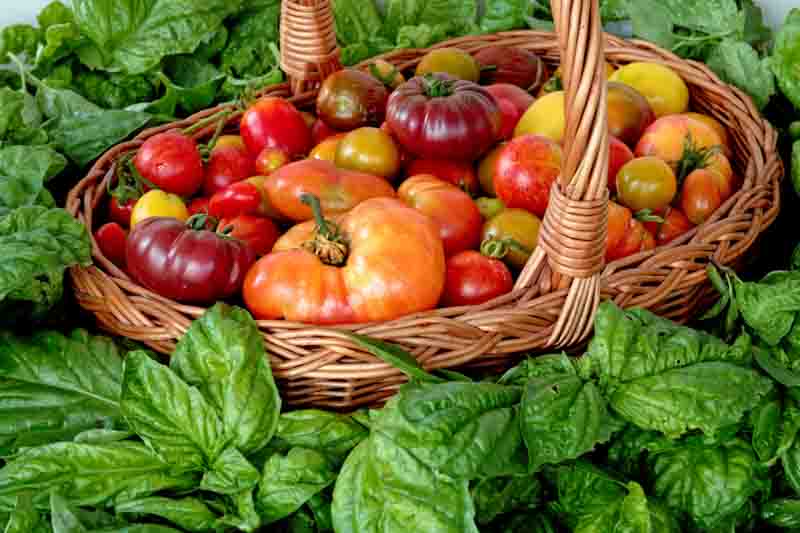


Tomatoes love warmth – up to a point. Once summer temperatures climb high enough, a plant can look perfectly healthy, keep growing, and still stop turning flowers into fruit.
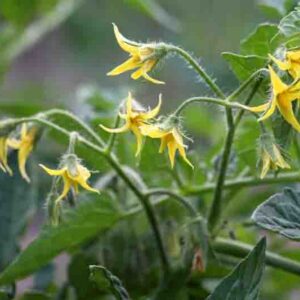
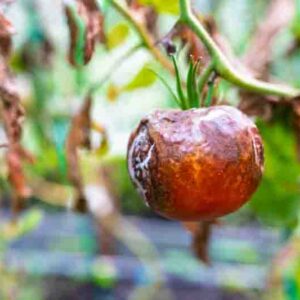
The problem is often reproductive rather than vegetative. Heat can reduce pollen quality, interfere with pollen release and fertilization, and trigger blossom drop even while the rest of the plant remains vigorous. Warm nights can make matters worse because flowers never get much relief after sunset.
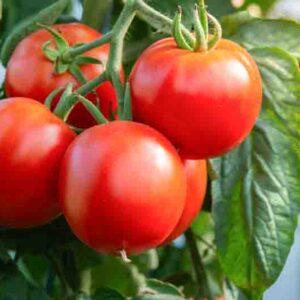
That is where heat-tolerant and hot-set tomato varieties become especially valuable. Cultivars such as ‘Solar Fire’, ‘Florida 91’, and newer choices such as ‘Grand Marshall’ and ‘Red Bounty’ have documented ability to set fruit under challenging warm conditions. Other tomatoes, including several vigorous cherry types, often continue cropping well in heat even though they were not specifically bred as hot-set cultivars.
Gardenia heat rule: Do not ask only, “Can this tomato tolerate heat?” Ask, “Can it continue setting fruit when temperatures are high?” A tomato can survive a hot summer and still produce very little.
“Heat tolerant” can describe several different traits, and they are not interchangeable.
A tomato may tolerate high temperatures vegetatively – staying alive, maintaining foliage, and continuing to grow – yet still lose flowers because reproductive tissues are more heat-sensitive than stems and leaves.
A hot-set tomato has been selected for improved fruit set under temperatures that cause many standard cultivars to abort flowers or produce poor pollen.
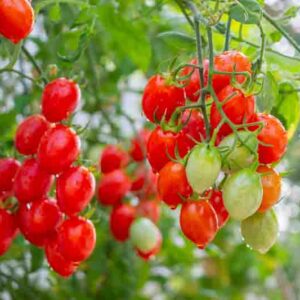
There is also a third group: tomatoes that perform well through hot weather without necessarily being formal hot-set releases. Some vigorous cherry and cocktail tomatoes belong here. Their smaller fruit and productive growth can make them more dependable than large slicers when summer conditions become difficult.
So look beyond labels such as “vigorous,” “sun-loving,” or even “heat tolerant.” For difficult summer climates, documented fruit-setting ability is far more informative.
Tomato fruit set often becomes less reliable when daytime temperatures remain in the upper 80s to low 90s°F (about 30-33°C), particularly when nighttime temperatures stay around 70°F (21°C) or warmer.
Those figures are guidelines rather than fixed biological cutoffs. Cultivars differ, humidity matters, and duration matters. One hot afternoon is very different from a week of hot days combined with warm nights.
High temperatures can reduce pollen viability, interfere with pollen release and fertilization, and cause otherwise healthy flowers to yellow and fall. Very high humidity may make pollen sticky, while extremely dry air can desiccate flower tissues.
Warm nights deserve particular attention because tomatoes normally benefit from cooler conditions after sunset. When nights remain persistently warm, flower development can suffer even if the foliage still looks healthy.
If plants are flowering but not setting fruit, Gardenia’s Tomato Plant Not Flowering or Fruiting? guide can help distinguish heat-related blossom drop from nitrogen excess, water stress, humidity, poor pollination, and other causes.
Good to know: Fertilizer cannot rescue a flower already damaged by excessive heat. Keep the plant healthy so new flowers have a better chance of setting when conditions improve.
| Variety | Heat category | Fruit type | Best fit |
|---|---|---|---|
| Solar Fire | Documented hot-set cultivar | Medium-large red slicer | Very hot summer and fall production |
| Florida 91 | Documented high-temperature fruit set | Red slicer | Hot southern climates |
| Grand Marshall | Current UF hot-set cultivar | Large to extra-large red slicer | Hot-season large-fruited production |
| Red Bounty | Current UF cultivar with good heat set | Extra-large red slicer | Hot-season slicing tomatoes |
| Thunderbird (STM5187) | Current UF hot-set determinate | Extra-large firm red fruit | Warm-season production where available |
| Phoenix | Extension-recommended hot-set type | Red slicer | Warm-season and fall crops |
| Heat Wave II | Long-proven southern heat performer | Red slicer | Hot, humid summers |
| Solar Set | Heat-tolerant UF release | Red slicer | Warm-season production |
| Sunmaster | Long-proven southern heat performer | Red slicer | Hot summer gardens |
| Sunleaper | Long-proven southern heat performer | Red slicer | Summer and fall production |
| Sungold | Strong warm-season cherry performer | Orange cherry | Flavor and long harvest |
| Super Sweet 100 | Strong warm-season cherry performer | Red cherry | Heavy, extended cherry production |
The categories are intentional. Solar Fire and Florida 91 have well-documented hot-set credentials. Grand Marshall, Red Bounty, and Thunderbird appear in current University of Florida guidance with hot-set or heat-set traits. Phoenix and several older cultivars have long histories of Extension recommendation for southern heat. Sungold and Super Sweet 100 belong here because small-fruited tomatoes often keep producing well in warm weather.
Current versus proven: Newer hot-set cultivars may be harder for home gardeners to find. Older heat performers remain valuable because they have accumulated years of regional experience. Availability should be part of the decision.
‘Solar Fire’ was developed by the University of Florida for warm-season tomato production. It produces firm, medium-to-large red fruit and combines hot-set ability with resistance to Fusarium wilt races 1, 2, and 3, Verticillium wilt race 1, and gray leaf spot.
This combination makes it particularly useful where heat and disease pressure occur together, especially in hot, humid climates.
‘Florida 91’ remains one of the clearest choices where standard tomatoes struggle to set fruit during summer. Current University of Florida guidance describes it as having good fruit-setting ability under high temperatures.
It is determinate, producing much of its crop over a relatively concentrated period, which can work well for spring or fall crops timed around peak summer heat.
Best for: gardeners who want conventional slicing tomatoes with documented hot-weather fruit-setting ability.
Current University of Florida guidance includes several newer cultivars worth knowing when high-temperature fruit set is a priority.
‘Grand Marshall’ is a vigorous midseason tomato with hot-set ability and large to extra-large red fruit.
‘Red Bounty’ has good heat set and produces extra-large globe-shaped fruit.
‘Thunderbird (STM5187)’ is a hot-set determinate producing extra-large, very firm fruit.
These newer cultivars broaden the options for gardeners who want large slicing tomatoes in warm conditions, although seed or transplant availability for home gardeners may vary considerably.
Gardenia availability note: A newer cultivar is only useful if you can obtain it. Do not dismiss an older, well-proven heat performer simply because a newer commercial cultivar exists.
Several older cultivars remain useful because of repeated Extension recommendation and practical performance in hot southern regions.
‘Phoenix’ has been recommended for warm-season and fall crops where high temperatures make fruit set difficult. ‘Heat Wave II’ has a long history as a summer and fall slicer. ‘Solar Set’ was released by the University of Florida for exceptional heat tolerance, while ‘Sunmaster’ and ‘Sunleaper’ have repeatedly appeared in southern warm-season recommendations.
They do not all have identical research histories, but together they represent a useful pool of regionally proven options. Local nurseries can be especially helpful because they often stock cultivars that perform well nearby.
Often, yes – but not because every cherry tomato is genetically heat-set.
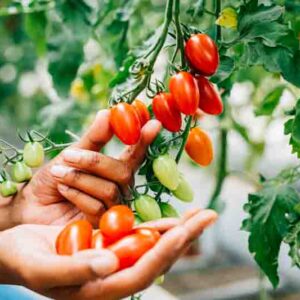
Small-fruited tomatoes frequently continue producing under warm conditions that reduce fruit set in large slicers. That makes them useful insurance in hot-climate gardens.
‘Super Sweet 100’ is a vigorous indeterminate producing long clusters of sweet red fruit. ‘Sungold’ is another vigorous cherry valued for prolific production and exceptionally sweet orange fruit.
Neither is a compact patio tomato, and neither should be treated as equivalent to a documented hot-set slicer. Their value is that they give the garden a different route to production when conditions become difficult.
Best strategy: Combine a true hot-set slicer with a productive cherry rather than relying on one fruit type alone.
Heat tolerance alone does not tell you whether a tomato will succeed in your garden. Gardenia recommends evaluating hot-climate tomatoes across five factors: heat-set ability, nighttime temperatures, planting window, fruit type, and disease pressure.
1. Heat-set ability: If summer regularly stops production, prioritize cultivars with documented or well-established hot-season performance.
2. Nighttime temperatures: Pay as much attention to the overnight low as the daytime high. Repeated warm nights can interfere with flower development.
3. Planting window: A spring crop can set much of its fruit before peak summer heat, while a fall crop can move into flowering as nights become cooler.
4. Fruit type: Large slicers are generally harder to carry through extreme heat than small-fruited tomatoes.
5. Disease pressure: In hot, humid climates, disease resistance can matter as much as heat-set ability.
Gardenia Hot-Climate Fit: heat set + night temperature + planting window + fruit type + disease pressure. A tomato can be excellent on one factor and still be poorly suited to your garden because of another.
Hot, dry climates create intense evaporative demand. Plants can lose water rapidly, exposed fruit may develop sunscald, and containers can become extremely hot. Mulch, consistent irrigation, and root-zone protection become especially important.
Hot, humid climates combine temperature stress with greater disease pressure. High humidity can also interfere with pollen release, while warm nights may remain stubbornly high. Good spacing, airflow, sanitation, and disease-resistant cultivars become more important.
In either climate, do not assume every afternoon wilt means the plant needs immediate flooding. Check soil moisture first. Tomatoes can wilt temporarily during intense heat even when moisture remains available deeper in the root zone.
In very hot regions, timing can be almost as important as cultivar choice.
Spring tomatoes should be established early enough to flower and set a substantial crop before the harshest part of summer. Many southern gardeners also grow a fall crop, planting while conditions are still hot so flowering increasingly coincides with cooler nights.
Hot-set cultivars are useful during this transition because they help bridge the difficult period between summer planting and more favorable fall conditions.
Regional planting dates vary enormously, so local Extension calendars should take precedence over national schedules.
Keep soil moisture reasonably consistent. Deep watering is more useful than repeatedly wetting only the surface. Gardenia’s tomato watering guide explains how to adjust irrigation to weather, soil, containers, and plant size.
Mulch once the soil is warm. Mulch reduces evaporation and buffers rapid soil-temperature changes.
Protect container roots. Pots can become much hotter than open soil. Larger containers, light-colored pots, and shading the container itself can reduce root stress.
Preserve useful foliage. Avoid aggressive pruning during intense heat because foliage helps shade developing fruit from sunscald.
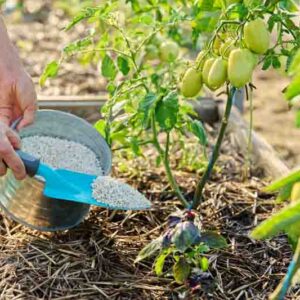
Do not over-fertilize stressed plants. A bloom booster cannot repair heat-damaged pollen. Gardenia’s tomato fertilizing guide explains how to feed plants without encouraging excessive leafy growth.
Use temporary shade carefully. Light shade cloth can reduce stress during exceptional afternoon heat, but tomatoes still need abundant light.
No tomato is heat-proof. A hot-set cultivar improves the odds of continued fruiting, but prolonged extreme heat, persistently warm nights, drought, humidity, root stress, or disease can still interrupt production.
If an otherwise healthy plant pauses during a severe heat wave, keep it adequately watered and watch the next flower clusters as conditions improve.
Skip the miracle cures: Epsom salts, extra calcium, and high-phosphorus fertilizer do not restore flowers damaged by excessive heat. Correct the actual stress and wait for new flowers.
If summer heat regularly limits your tomato harvest, spread the risk rather than expecting one cultivar to perform perfectly through every stage of the season.
1. Grow one documented or well-supported hot-set slicer. Florida 91, Solar Fire, Grand Marshall, Red Bounty, Phoenix, or another regionally appropriate choice gives you the best chance of harvesting full-sized tomatoes during difficult weather.
2. Add one productive small-fruited tomato. A cherry such as ‘Sungold’ or ‘Super Sweet 100’ gives the garden a different fruit-setting strategy.
3. Time the crop around peak heat. Aim for a strong spring harvest before the worst temperatures arrive, or establish a fall crop as nights begin moderating.
Gardenia 3-Part Heat Strategy: one hot-set slicer + one productive small-fruited tomato + a planting window that avoids asking every flower to set during peak heat.
Explore: Browse Gardenia’s Tomato Varieties collection, then apply the Gardenia Hot-Climate Fit – heat-set ability, nighttime temperatures, planting window, fruit type, and disease pressure – to narrow the choices for your conditions.
Diagnose: If plants flower but stop producing once summer arrives, use Gardenia’s Tomato Fruit-Set Guide to determine whether heat is really responsible.
Grow: Gardenia’s complete tomato growing guide covers planting, soil, spacing, watering, feeding, pests, diseases, and harvesting.
The Gardenia takeaway: The best tomato for a hot climate is not simply the one that survives the highest temperature. Choose for fruit-setting ability, nighttime heat, planting window, fruit type, disease pressure, and local availability – then support those genetics with steady moisture, mulch, healthy foliage, and smart timing.
Strong choices include Solar Fire, Florida 91, Grand Marshall, Red Bounty, Thunderbird, Phoenix, Heat Wave II, Solar Set, Sunmaster, and Sunleaper. Vigorous cherry tomatoes such as Sungold and Super Sweet 100 can also be useful because small-fruited tomatoes often continue producing reliably in warm weather.
A heat-set tomato is a cultivar selected for improved ability to set fruit under temperatures that interfere with fruit set in many standard tomatoes. Heat-set does not mean heat-proof; prolonged extreme heat can still reduce flowering and fruit production.
Fruit set often becomes less reliable when daytime temperatures stay in the upper 80s to low 90s°F, about 30-33°C, especially when nights remain around 70°F, 21°C, or warmer. Cultivar, humidity, plant stress, and duration of heat all affect the response.
High temperatures can interfere with pollen development, pollen release, and fertilization. Affected flowers may yellow and drop instead of forming fruit. Water stress and unsuitable humidity can make the problem worse.
Yes. Solar Fire was developed by the University of Florida for improved fruit set under warm conditions. It also carries resistance to several important tomato diseases.
Yes. Current University of Florida guidance describes Florida 91 as having good fruit-setting ability under high temperatures. It is a determinate tomato and remains a strong choice for warm-season production.
Yes. Current University of Florida guidance identifies Grand Marshall as having hot-set ability, Red Bounty as having good heat set, and Thunderbird (STM5187) as a hot-set determinate cultivar. Home-garden availability may vary.
Many cherry tomatoes continue setting fruit under warm conditions more reliably than large-fruited tomatoes, but cherry fruit alone does not guarantee heat tolerance. Cultivar, humidity, nighttime temperature, and plant stress still matter.
Often they will. If the plant remains healthy, new flowers produced after temperatures moderate may pollinate and set normally. Keep plants adequately watered and avoid unnecessary stress.
Temporary light shade can help during exceptionally intense afternoon heat, particularly where exposed fruit or foliage is showing heat injury. Avoid excessive shade because tomatoes still need abundant light.
University of Florida IFAS Extension – Tomato Production. Current cultivar guidance, including high-temperature fruit-setting characteristics for Florida 91, Grand Marshall, Red Bounty, Thunderbird, and other cultivars.
University of Florida IFAS Extension – Tomato Cultivar Selection Considerations for Open-Field and Protected Culture in North Florida. Identifies Solar Fire, Florida 91, and Phoenix as hot-set types.
University of Florida IFAS – Solar Fire Tomato Can Take the Heat. Background on Solar Fire, warm-temperature fruit set, and disease resistance.
LSU AgCenter – Planting Fall Tomatoes. Regional recommendations for heat-set and warm-season cultivars including Florida 91, Phoenix, Solar Fire, Sunmaster, Solar Set, Sunleaper, and Heat Wave II.
Gardenia – Tomato Plant Not Flowering or Fruiting?. Diagnostic guidance on heat, blossom drop, pollination, moisture stress, and recovery after hot weather.
Updated: September 2026 • Reviewed by Gardenia Editors
| Hardiness |
2 - 11 |
|---|---|
| Climate Zones | 1, 1A, 1B, 2, 2A, 2B, 3, 3A, 3B, 4, 5, 6, 7, 8, 9, 10, 11, 12, 13, 14, 15, 16, 17, 18, 19, 20, 21, 22, 23, 24, A1, A2, A3, H1, H2 |
| Plant Type | Annuals, Fruits, Perennials |
| Plant Family | Solanaceae |
| Genus | Solanum, Tomatoes |
| Exposure | Full Sun |
| Season of Interest | Spring (Late), Summer (Early, Mid, Late), Fall |
| Maintenance | Average, High |
| Water Needs | Average |
| Soil Type | Clay, Loam, Sand |
| Soil pH | Acid, Neutral |
| Soil Drainage | Moist but Well-Drained |
| Hardiness |
2 - 11 |
|---|---|
| Climate Zones | 1, 1A, 1B, 2, 2A, 2B, 3, 3A, 3B, 4, 5, 6, 7, 8, 9, 10, 11, 12, 13, 14, 15, 16, 17, 18, 19, 20, 21, 22, 23, 24, A1, A2, A3, H1, H2 |
| Plant Type | Annuals, Fruits, Perennials |
| Plant Family | Solanaceae |
| Genus | Solanum, Tomatoes |
| Exposure | Full Sun |
| Season of Interest | Spring (Late), Summer (Early, Mid, Late), Fall |
| Maintenance | Average, High |
| Water Needs | Average |
| Soil Type | Clay, Loam, Sand |
| Soil pH | Acid, Neutral |
| Soil Drainage | Moist but Well-Drained |
Create a membership account to save your garden designs and to view them on any device.
Becoming a contributing member of Gardenia is easy and can be done in just a few minutes. If you provide us with your name, email address and the payment of a modest $25 annual membership fee, you will become a full member, enabling you to design and save up to 25 of your garden design ideas.
Join now and start creating your dream garden!
Create a membership account to save your garden designs and to view them on any device.
Becoming a contributing member of Gardenia is easy and can be done in just a few minutes. If you provide us with your name, email address and the payment of a modest $25 annual membership fee, you will become a full member, enabling you to design and save up to 25 of your garden design ideas.
Join now and start creating your dream garden!