Disease resistance can save a tomato crop - but only when the genetics match the disease. Discover the best tomatoes for late blight, Fusarium, Verticillium, viruses, nematodes, and other recurring problems, learn how to decode resistance labels, and choose a variety that still delivers the fruit you want.


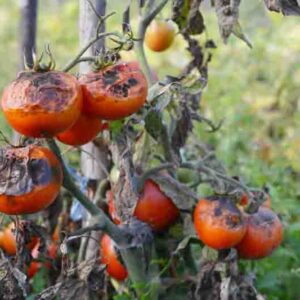
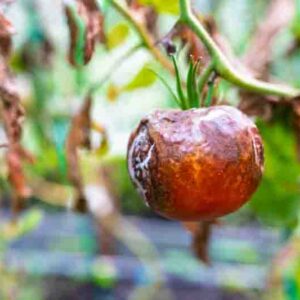
Few things are more frustrating than watching vigorous tomato plants collapse just as the first fruits begin to ripen. Fusarium wilt can shut down a plant from the inside, late blight can move through foliage with alarming speed, and recurring soilborne diseases can make the same garden bed disappointing year after year.
Choosing a disease-resistant tomato can dramatically improve your odds – but there is an important catch. There is no single trait called “tomato disease resistance.” A cultivar resistant to Fusarium wilt may still be vulnerable to late blight. A tomato bred for late-blight resistance may have no special protection against bacterial spot or Tomato spotted wilt virus.
The best disease-resistant tomato is therefore not necessarily the cultivar with the longest string of resistance letters. It is the one whose resistance package matches the diseases most likely to threaten your garden.
Gardenia disease-resistance rule: Never ask only, “Is this tomato disease resistant?” Ask, “Resistant to which disease?” Resistance is valuable only when it matches the pathogen you actually need to manage.
Disease resistance means a tomato has genetic traits that reduce the pathogen’s ability to infect, colonize, damage, or reproduce on the plant. It does not mean the tomato is immune.
A resistant cultivar may still develop symptoms when disease pressure is intense. Weather, pathogen strain, plant stress, resistance genes, and the amount of infectious material present can all affect the outcome.
This is especially important with late blight. In Cornell trials, cultivars carrying important late-blight resistance genes developed dramatically less disease than susceptible tomatoes, but resistance was not absolute.
Resistance also differs in strength and specificity. Some genes protect against particular races of Fusarium wilt. Others target Verticillium wilt, root-knot nematodes, Tomato spotted wilt virus, late blight, or gray leaf spot.
Think of resistance as risk reduction rather than invincibility.
Seed packets and transplant labels often compress disease resistance into a string of letters. Learning to read them makes cultivar selection much easier.
| Code | Resistance refers to |
|---|---|
| V | Verticillium wilt |
| F / F1 / F2 / F3 | Fusarium wilt and specified races |
| N | Root-knot nematodes |
| TSWV | Tomato spotted wilt virus |
| ToMV / TMV | Tomato or tobacco mosaic viruses, depending on the labeling system |
| A / ASC | Alternaria stem canker |
| St | Stemphylium gray leaf spot |
Resistance abbreviations are not perfectly standardized between seed companies, so always read the supplier’s key rather than interpreting letters in isolation.
Important: “F2” usually means resistance through Fusarium races 1 and 2, not simply twice as much Fusarium resistance. Race-specific resistance matters.
Resistance codes become much more useful when you know what each disease actually does to a tomato plant. Some primarily damage foliage, while others invade the vascular system, attack fruit, or affect the entire plant.
| Disease | Typical damage | Why resistance matters |
|---|---|---|
| Late blight | Rapidly expanding water-soaked brown lesions on leaves and stems; fruit may develop firm brown lesions; severe infections can destroy plants quickly. | One of the strongest reasons to choose cultivars with documented Ph resistance where late blight is a recurring regional threat. |
| Early blight | Brown lesions with concentric target-like rings usually begin on older lower leaves. Severe infection causes progressive defoliation and can expose fruit to sunscald. | Resistance or tolerance can slow disease development and help preserve productive foliage longer. |
| Septoria leaf spot | Numerous small spots with pale or gray centers and dark margins begin on lower foliage and can lead to severe leaf loss. | Strong cultivar resistance is less widely available than for some vascular wilts, so prevention and accurate diagnosis remain especially important. |
| Fusarium wilt | Lower leaves yellow and wilt, often beginning on one side; vascular tissue may turn brown as the plant progressively declines. | Race-specific resistance is particularly valuable because there is no practical cure once the pathogen colonizes the vascular system. |
| Verticillium wilt | Progressive lower-leaf yellowing, wilting, reduced vigor, premature leaf loss, and internal vascular discoloration. | Resistant cultivars are particularly useful where this persistent soilborne pathogen is already established. |
| Bacterial leaf spot | Small water-soaked lesions become brown or black, sometimes with surrounding yellowing; severe infections can cause premature leaf loss and reduced yield. | Resistance options vary, so clean seed and transplants, sanitation, good airflow, and limiting splash remain important. |
| Bacterial wilt | Rapid, persistent wilting develops as bacteria invade and block water-conducting tissues; severely infected plants may collapse and die. | There is no practical cure once infection becomes systemic, making prevention and resistant cultivars where available especially valuable. |
| Bacterial canker | Stem lesions and cankers can disrupt water movement, while infected tomatoes may also develop leaf, vascular, and fruit symptoms. | Healthy planting material and sanitation are critical because bacterial canker can become systemic and difficult to manage after infection. |
| Mosaic viruses | Mottled or mosaic-patterned foliage, curling, distortion, stunting, reduced flowering, and lower yields can develop depending on the virus. | Viruses cannot be cured after infection, making resistant cultivars, clean planting material, sanitation, and vector management especially important. |
Do not diagnose by one symptom alone. Brown leaves, yellowing, spots, and wilt can have several causes. Compare where symptoms begin, lesion pattern, weather, speed of spread, and whether the problem affects only foliage or the entire plant before choosing a treatment.
| Variety | Especially useful against | Fruit type | Best reason to grow it |
|---|---|---|---|
| Mountain Magic | Late blight, early blight, Fusarium wilt, Verticillium wilt | Cocktail | Exceptional combination of resistance and eating quality |
| Defiant PhR | Late blight plus several common wilt diseases | Red slicer | Full-sized tomato with strong late-blight genetics |
| Mountain Merit | Late blight and multiple soilborne diseases | Red slicer | Broadly useful garden hybrid |
| Iron Lady | Late blight | Red slicer | Strong Ph-2 + Ph-3 late-blight resistance |
| Plum Regal | Fusarium, Verticillium, TSWV, early blight; useful late-blight resistance | Plum / paste | Disease-resistant sauce tomato |
| Celebrity | Verticillium wilt, Fusarium wilt races 1 and 2, root-knot nematodes, tobacco mosaic virus | Red slicer | Widely adaptable classic with broad resistance |
| Big Beef | Verticillium wilt, Fusarium wilt races 1 and 2, root-knot nematodes, Alternaria stem canker, gray leaf spot, tobacco mosaic virus | Large slicer | Large fruit without abandoning resistance |
| Solar Fire | Fusarium races 1-3, Verticillium, gray leaf spot | Red slicer | Disease resistance combined with hot-season performance |
| Jasper | Strong field performance against late blight | Cherry | Disease resilience in a productive cherry tomato |
‘Mountain Magic’ deserves special attention because its resistance package covers diseases that often require very different management strategies.
NC State documents high resistance to late blight, moderate resistance to early blight, and resistance to Fusarium wilt races 1 and 2 and Verticillium wilt.
It is a compact indeterminate producing smooth red cocktail-sized fruit. Cornell late-blight trials found Mountain Magic among the strongest performers, while tasters also rated its fruit highly.
This combination is unusual. Resistance alone is not enough to make a tomato worth growing; fruit quality, productivity, and garden habit matter too.
Best for: gardeners who want strong late-blight resistance without sacrificing flavor or season-long production.
Late blight, caused by Phytophthora infestans, can destroy susceptible tomato foliage rapidly when cool, wet conditions favor disease. Where late blight is a recurring regional problem, cultivar genetics can make an enormous difference.
Defiant PhR, Mountain Merit, Mountain Magic, and Iron Lady carry important combinations of the Ph-2 and Ph-3 resistance genes. Cornell trials showed substantially less late-blight damage in resistant cultivars than in susceptible controls.
Plum Regal carries Ph-3 and has shown useful late-blight resistance in Cornell field trials, while Jasper and Matt’s Wild Cherry have also performed extremely well in Cornell late-blight evaluations.
Do not interpret this as a guarantee. Pathogen populations vary, and even resistant plants can show disease under severe pressure. Resistance buys protection and time – it does not eliminate the pathogen.
Gardenia late-blight tip: If late blight is your recurring problem, prioritize a cultivar with documented Ph-2 + Ph-3 resistance rather than choosing a tomato simply because its label says “disease resistant.”
Fusarium and Verticillium are soilborne vascular wilts. Once established in a garden, they are particularly frustrating because the pathogen attacks the plant’s internal water-conducting system.
For gardens with a known history of these diseases, resistance codes become extremely useful.
Celebrity is a classic choice with resistance to Verticillium wilt, Fusarium wilt races 1 and 2, root-knot nematodes, and tobacco mosaic virus.
Big Beef combines large slicing fruit with resistance to Verticillium wilt, Fusarium wilt races 1 and 2, root-knot nematodes, Alternaria stem canker, gray leaf spot, and tobacco mosaic virus.
Mountain Magic adds Fusarium races 1 and 2 and Verticillium resistance to its valuable blight package.
Solar Fire is especially interesting in hot regions because it combines warm-season performance with resistance to Verticillium wilt, Fusarium wilt races 1, 2, and 3, and gray leaf spot.
If Fusarium is the main concern, pay attention to the race number. A cultivar resistant to Fusarium race 1 is not automatically resistant to races 2 or 3.
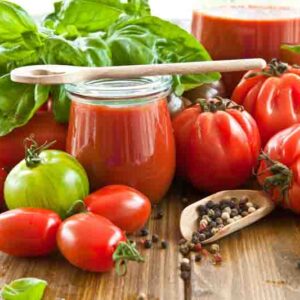
For gardeners who regularly lose paste tomatoes to disease, Plum Regal is particularly interesting.
It is a determinate plum tomato with resistance to Fusarium wilt, Verticillium wilt, Tomato spotted wilt virus, and early blight. It also carries Ph-3 and has shown useful late-blight resistance in Cornell field trials.
This makes Plum Regal especially valuable because sauce gardeners often grow several paste plants together. A disease that moves through a dense planting can otherwise threaten a large portion of the preserving crop at once.
For comparison, classic ‘Roma’ remains an excellent paste tomato, but its resistance package should not automatically be treated as equivalent to Plum Regal’s.
Best for: gardeners who want a determinate paste tomato where disease resistance is a major selection criterion.
Cherry tomatoes are often vigorous, but vigor itself is not disease resistance.
Jasper is particularly interesting where late blight is a concern. Cornell trials found it among the better-performing cherry tomatoes under late-blight pressure.
Mountain Magic, although technically more cocktail-sized than a tiny cherry, is another excellent small-fruited option when late blight and soilborne wilts are priorities.
Popular cherries such as ‘Sungold’ may be vigorous and productive, but that should not be confused with the broad documented resistance package of Mountain Magic.
Choose according to the disease you need to solve rather than assuming that a famously vigorous cultivar is automatically the safest choice.
Some heirlooms show useful field tolerance to particular problems, but many famous heirlooms do not carry the standardized resistance packages found in modern hybrids.
That does not make heirlooms inferior. A tomato such as ‘Brandywine’ is grown primarily for flavor and fruit quality, not for a broad documented disease-resistance package.
If disease repeatedly ends your tomato season early, one practical strategy is to grow both: keep the heirloom you love for flavor, but add a resistant hybrid as insurance.
Do not confuse heirloom status with weakness. “Heirloom” describes a cultivar’s history and seed type, not its health. Likewise, “hybrid” does not automatically mean disease resistant. Check the actual cultivar.
A long resistance code can look impressive, but it does not necessarily identify the best tomato for your garden. Gardenia recommends evaluating disease-resistant tomatoes across five factors: pathogen match, resistance strength, local disease pressure, climate, and growing goal.
Gardenia Disease-Resistance Fit: pathogen match + resistance strength + local disease pressure + climate + growing goal. The cultivar with the longest resistance code is not automatically the cultivar that fits your garden best.
Genetics should be the first layer of defense, not the only one.
Rotate tomatoes and other solanaceous crops where practical. Space plants so foliage dries reasonably quickly. Mulch to reduce soil splash. Water the root zone rather than repeatedly wetting foliage. Remove badly diseased plant material and avoid carrying contaminated soil on tools between beds.
Just as importantly, identify the disease before reacting. Early blight, late blight, Septoria leaf spot, bacterial spot, Fusarium wilt, herbicide injury, nutrient stress, and ordinary lower-leaf decline can all produce brown or yellow foliage.
Use Gardenia’s Tomato Diseases: Identification, Treatment & Prevention guide when symptoms point to an infectious disease. If the cause is less clear, start with Tomato Problems: What Is Wrong With My Plant?.
Gardenia 3-Layer Disease Defense: resistant genetics + disease-unfriendly growing conditions + accurate diagnosis. Skip any one layer and even a resistant tomato can become much harder to protect.
If late blight repeatedly threatens your garden, start with Mountain Magic, Defiant PhR, Mountain Merit, Iron Lady, or another cultivar with documented Ph resistance.
If Fusarium or Verticillium wilt is the recurring problem, look specifically for V and the appropriate F race codes. Celebrity, Big Beef, Mountain Magic, and Solar Fire are useful places to start.
If you want a disease-resistant paste tomato, consider Plum Regal.
If you want small fruit with strong late-blight performance, Mountain Magic and Jasper deserve attention.
If you live in a hot southern climate, Solar Fire combines disease resistance with hot-season performance.
And if you simply want a reliable general-purpose slicer with a broad, familiar resistance package, Celebrity remains a practical choice.
Explore: Browse Gardenia’s Tomato Varieties collection to explore fruit types, growth habits, colors, sizes, and uses.
Diagnose: If disease is already present, identify the actual problem with Gardenia’s Tomato Disease Guide before choosing next season’s cultivar.
Grow: Once you have selected the variety, Gardenia’s complete tomato growing guide covers planting, watering, feeding, pruning, support, pests, diseases, and harvesting.
The Gardenia takeaway: Do not choose “the most disease-resistant tomato.” Choose the tomato resistant to the disease your garden is actually likely to face – then make sure its fruit type, growth habit, climate fit, and harvest pattern still match the way you want to grow.
There is no single most disease-resistant tomato because cultivars resist different pathogens. Mountain Magic is an especially strong all-round choice, with documented resistance to late blight, moderate early-blight resistance, Fusarium wilt races 1 and 2, and Verticillium wilt.
Late-blight-resistant choices include Mountain Magic, Defiant PhR, Mountain Merit, Iron Lady, and Plum Regal. Several of these carry Ph-2 and/or Ph-3 resistance genes. Jasper has also performed strongly in Cornell late-blight trials.
V usually indicates resistance to Verticillium wilt, F indicates Fusarium wilt resistance, often with race numbers, and N indicates resistance to root-knot nematodes. Always check the seed supplier’s resistance-code key because abbreviations can vary.
No. Resistance reduces susceptibility or disease severity but does not guarantee immunity. Resistant plants may still develop symptoms under severe disease pressure, unfavorable weather, or exposure to pathogen strains that overcome particular resistance genes.
Yes. NC State documents Mountain Magic as highly resistant to late blight, moderately resistant to early blight, and resistant to Fusarium wilt races 1 and 2 and Verticillium wilt.
Plum Regal is a strong choice. It is a determinate plum tomato with resistance to Fusarium wilt, Verticillium wilt, Tomato spotted wilt virus, and early blight. It also carries Ph-3 and has shown useful late-blight resistance in Cornell field trials.
Many famous heirlooms lack the standardized resistance packages found in modern hybrids, but heirloom status itself does not mean a tomato is unhealthy or susceptible to every disease. Resistance should be evaluated cultivar by cultivar.
Yes. Resistant genetics are only one part of disease management. Crop rotation, sanitation, good spacing, mulching, sensible irrigation, and accurate disease identification still help reduce disease pressure and protect resistant plants.
North Carolina State University Plant Breeding Consortium – Mountain Magic. Documents resistance to late blight, early blight, Fusarium wilt races 1 and 2, and Verticillium wilt.
Cornell University – Evaluation of Late Blight Resistant Tomato Varieties. Field trials of Mountain Magic, Defiant PhR, Mountain Merit, Iron Lady, Plum Regal, Jasper, and other cultivars under late-blight pressure.
Oklahoma State University Extension – Growing Tomatoes in the Home Garden. Tomato cultivar recommendations and explanations of common disease-resistance codes.
University of Illinois Extension – Tomato Varieties. Cultivar characteristics and resistance information for Celebrity, Better Boy, Roma, and other garden tomatoes.
Cornell Cooperative Extension – Plum Regal. Cultivar information and documented disease-resistance characteristics.
Gardenia – Tomato Diseases: Identification, Treatment & Prevention. Diagnostic guidance for common tomato diseases and noninfectious look-alikes.
Updated: September 2026 • Reviewed by Gardenia Editors
| Hardiness |
2 - 11 |
|---|---|
| Climate Zones | 1, 1A, 1B, 2, 2A, 2B, 3, 3A, 3B, 4, 5, 6, 7, 8, 9, 10, 11, 12, 13, 14, 15, 16, 17, 18, 19, 20, 21, 22, 23, 24, A1, A2, A3, H1, H2 |
| Plant Type | Annuals, Fruits, Perennials |
| Plant Family | Solanaceae |
| Genus | Solanum, Tomatoes |
| Exposure | Full Sun |
| Season of Interest | Spring (Late), Summer (Early, Mid, Late), Fall |
| Maintenance | Average, High |
| Water Needs | Average |
| Soil Type | Clay, Loam, Sand |
| Soil pH | Acid, Neutral |
| Soil Drainage | Moist but Well-Drained |
| Hardiness |
2 - 11 |
|---|---|
| Climate Zones | 1, 1A, 1B, 2, 2A, 2B, 3, 3A, 3B, 4, 5, 6, 7, 8, 9, 10, 11, 12, 13, 14, 15, 16, 17, 18, 19, 20, 21, 22, 23, 24, A1, A2, A3, H1, H2 |
| Plant Type | Annuals, Fruits, Perennials |
| Plant Family | Solanaceae |
| Genus | Solanum, Tomatoes |
| Exposure | Full Sun |
| Season of Interest | Spring (Late), Summer (Early, Mid, Late), Fall |
| Maintenance | Average, High |
| Water Needs | Average |
| Soil Type | Clay, Loam, Sand |
| Soil pH | Acid, Neutral |
| Soil Drainage | Moist but Well-Drained |
Create a membership account to save your garden designs and to view them on any device.
Becoming a contributing member of Gardenia is easy and can be done in just a few minutes. If you provide us with your name, email address and the payment of a modest $25 annual membership fee, you will become a full member, enabling you to design and save up to 25 of your garden design ideas.
Join now and start creating your dream garden!
Create a membership account to save your garden designs and to view them on any device.
Becoming a contributing member of Gardenia is easy and can be done in just a few minutes. If you provide us with your name, email address and the payment of a modest $25 annual membership fee, you will become a full member, enabling you to design and save up to 25 of your garden design ideas.
Join now and start creating your dream garden!