Do deer eat Rudbeckia? Usually not much. Learn how deer resistant black-eyed Susans really are, why expert ratings differ, how to recognize browsing, whether damaged plants recover, and which Rudbeckias best suit perennial borders, containers, native gardens, and pollinator plantings without relying on unsupported cultivar deer-resistance rankings.
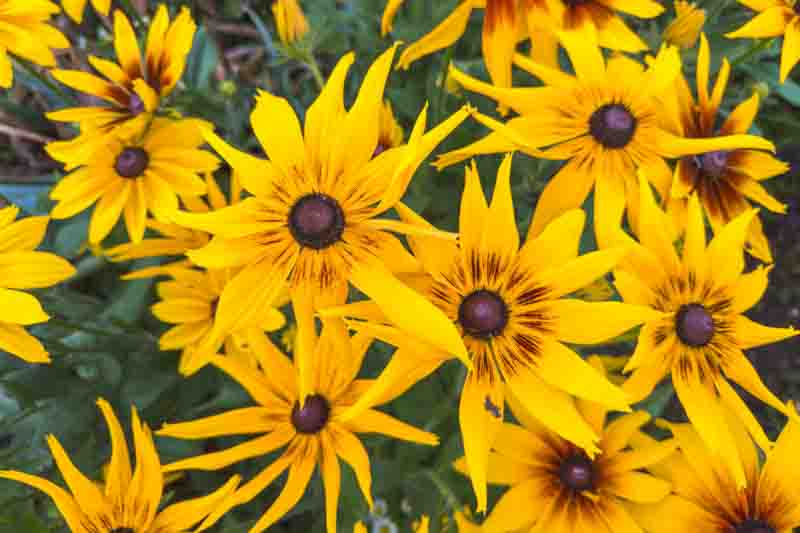


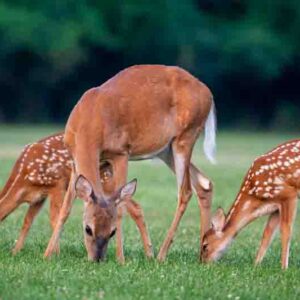
Deer can eat Rudbeckia, but black-eyed Susans are generally lower-browse plants and serious damage is usually uncommon. Rutgers rates Rudbeckia B – Seldom Severely Damaged, while Iowa State places black-eyed Susan among perennials seldom damaged by deer. No Rudbeckia is completely deer-proof, but the genus is usually a good choice for deer-prone sunny gardens.
Black-eyed Susans have a strong reputation in gardens where deer are a recurring problem.
Rutgers Cooperative Extension rates Rudbeckia species B – Seldom Severely Damaged. Iowa State University Extension likewise places black-eyed Susan among perennials seldom damaged by deer.
The University of Maryland includes several native Rudbeckias on its deer-resistant plant list, including Rudbeckia fulgida, Rudbeckia hirta, Rudbeckia laciniata, and Rudbeckia triloba.
NC State describes the genus as deer and rabbit resistant, although its species pages show why “deer resistant” should never be interpreted as “untouchable.” For example, Rudbeckia fulgida is described as occasionally damaged by deer but moderately resistant, while Rudbeckia laciniata may have foliage eaten and usually recovers.
Those descriptions are not contradictory. They are different ways of describing the same practical reality: Rudbeckia generally carries a lower risk of serious deer damage, but browsing can still happen.
Some species may also be physically less appealing. Rudbeckia hirta, for example, has stiff hairs on its leaves and stems. But texture varies across the genus, so the stronger evidence is the consistent browsing record reported by multiple horticultural sources.
Gardenia’s Rudbeckia Rule: think lower browse risk, not deer-proof. If deer resistance is acceptable, the next decision should be which Rudbeckia best fits the garden.
There is not enough evidence to rank these species precisely by deer resistance. What we can do is combine their documented lower-browse status with the characteristics that actually distinguish them in the garden.
| Species | Deer Evidence | Habit / Lifespan | Best Use |
|---|---|---|---|
| Rudbeckia fulgida Orange Coneflower / Black-Eyed Susan |
Maryland lists it as deer resistant; NC State describes it as moderately resistant but occasionally damaged. | Long-lived clump-forming perennial, usually about 2-3 ft tall. | Permanent perennial borders, mass planting, pollinator gardens. |
| Rudbeckia hirta Black-Eyed Susan / Gloriosa Daisy |
Maryland includes it on its deer-resistant native list; its rough, hairy foliage may also reduce appeal. | Biennial or short-lived perennial, often grown as an annual; readily self-seeds. | Colorful summer borders, cutting gardens, containers, informal plantings. |
| Rudbeckia laciniata Cutleaf Coneflower |
Maryland lists it as deer resistant. NC State notes that deer may eat the foliage, but plants usually recover. | Tall perennial, commonly 3-10 ft depending on conditions. | Back of borders, naturalistic gardens, meadow-style plantings, larger landscapes. |
| Rudbeckia triloba Brown-Eyed Susan |
Maryland lists it as deer resistant; NC State describes it as moderately deer resistant. | Biennial or short-lived perennial, typically about 3-5 ft tall; self-seeds readily. | Informal borders, cottage gardens, naturalized plantings, pollinator gardens. |
The table shows why there is no single “best” Rudbeckia.
If you want a dependable perennial clump, Rudbeckia fulgida is the obvious starting point.
If you want more unusual flower colors and forms, Rudbeckia hirta offers far more variation, but individual plants are usually shorter-lived.
If you need height and a naturalistic effect, Rudbeckia laciniata is in a completely different scale class.
If you want an airy, self-seeding plant for an informal garden, Rudbeckia triloba fills that role better than a compact border cultivar.
Do not choose among Rudbeckia species by an invented deer-resistance ranking. Choose first for acceptable browse risk, then for lifespan, mature size, habit, and garden role.
Once you have chosen the type of Rudbeckia you want, cultivar selection becomes much more useful. The following plants are included for their different horticultural strengths, not because one is proven more deer resistant than another.
| Rudbeckia | Why Choose It? | Best Garden Role |
|---|---|---|
| ‘Goldsturm’ | A classic, dependable R. fulgida selection with masses of golden-yellow flowers and dark cones. | Permanent perennial borders, large drifts, cottage gardens. |
| ‘American Gold Rush’ | Compact growth, abundant golden flowers, and excellent resistance to Septoria leaf spot. | Lower-maintenance borders, mass planting, smaller spaces. |
| ‘Little Goldstar’ | A compact perennial with masses of classic yellow flowers on a much smaller plant. | Front of borders, edging, containers, small gardens. |
| ‘Prairie Sun’ | Large yellow-orange flowers with distinctive green centers and a long flowering season. | Bold summer borders, cutting gardens, containers. |
| ‘Cherry Brandy’ | Deep cherry-red flowers for gardeners who want Rudbeckia outside the traditional yellow palette. | Mixed borders, cutting gardens, containers, dramatic color schemes. |
The most important distinction in this table is not deer resistance.
‘Goldsturm’, ‘American Gold Rush’, and ‘Little Goldstar’ are perennial Rudbeckia fulgida selections suited to more permanent planting schemes.
‘Prairie Sun’ and ‘Cherry Brandy’ are Rudbeckia hirta selections, so they are better treated as shorter-lived plants that deliver strong seasonal color rather than as permanent structural perennials.
That difference is far more useful to a gardener than pretending one cultivar has a proven deer-resistance advantage over another.
If deer browse Rudbeckia, healthy plant tissue disappears. You may find shoots, buds, flowers, leaves, or flowering stems missing, often with rough or torn ends.
But black-eyed Susans also develop problems that can make a plant look damaged without any deer involvement.
Septoria leaf spot is particularly important. It causes dark spots that can spread across the foliage and make plants increasingly unattractive, but the leaves remain present rather than disappearing.
Powdery mildew produces a pale or powdery coating. Slugs and other chewing pests may leave holes or ragged leaf margins without removing entire stems.
The first diagnostic question is therefore simple:
Is healthy tissue actually missing, or is the tissue still present but spotted, discolored, or declining?
Gardenia’s Rudbeckia Damage Check: missing stems, buds, flowers, or substantial foliage support a browsing diagnosis. Dark spots, mildew, yellowing, or gradual foliage decline point toward another problem.
Established Rudbeckia can usually recover from modest browsing.
If deer remove only a few leaves, flowering may continue with little noticeable effect. If they remove a developing flower stem, that particular bloom is lost, but established plants may produce additional branching or new flowering growth when damage happens early enough in the season.
Perennial species such as Rudbeckia fulgida regrow from established crowns and normally return after winter dormancy. Losing some above-ground growth therefore does not usually mean the entire plant is lost.
Rudbeckia laciniata provides a useful example of this resilience: NC State notes that deer may eat its foliage, but the plants usually recover.
Repeated browsing is more serious because the plant cannot maintain a full flower display if developing stems are continually removed.
Short-lived species such as Rudbeckia hirta and Rudbeckia triloba need a slightly different perspective. Individual plants may naturally persist for only a limited number of seasons, although self-seeding can keep them present in the garden.
Most established Rudbeckias do not need permanent protection simply because deer visit the garden.
Watch new plants more closely. A recently planted Rudbeckia has fewer shoots to lose and a less established root system.
Respond if browsing becomes repetitive. If fresh shoots or flowering stems disappear each time the plant regrows, temporary protection can help preserve the display and allow young plants to establish.
A small wire cage or temporary barrier is dependable around individual plants. Commercial deer repellents may also help under light to moderate pressure when applied and maintained according to the product label.
If deer are heavily browsing Rudbeckia along with plants that are normally considered resistant, local deer pressure may simply be high enough that broader physical exclusion is more dependable than plant choice alone.
Rudbeckia earns its place in a deer-prone garden for reasons that go well beyond browsing resistance.
Its flowers provide strong summer and early-fall color, attract bees, butterflies, and other pollinators, and fertile seed heads can feed birds such as goldfinches.
Several widely grown species are native to North America, making Rudbeckia particularly useful in native, prairie, meadow, and wildlife-oriented plantings.
The genus also offers unusually broad design flexibility.
A compact ‘Little Goldstar’ can edge a border. ‘Goldsturm’ can form a substantial perennial drift. ‘American Gold Rush’ offers a useful disease-resistance advantage. *Rudbeckia hirta* selections bring more unusual flower colors. Tall *Rudbeckia laciniata* can rise at the back of a naturalistic planting, while *Rudbeckia triloba* contributes an airy, informal effect.
That range is why “Is Rudbeckia deer resistant?” should be only the first question.
The better final choice depends on lifespan, mature size, disease resistance, flowering style, site conditions, and the role the plant needs to perform.
Once you have chosen the right Rudbeckia, apply the same logic to its companions.
Do not simply combine plants because they all appear on deer-resistant lists. They also need compatible sunlight, soil, drainage, water requirements, hardiness, mature size, and garden roles.
Gardenia’s Deer-Smart Rudbeckia Strategy: establish that browsing risk is acceptable, choose the right Rudbeckia species for the garden role, then select the cultivar and companion plants that fit the site.
Compare Black-Eyed Susans by lifespan, mature size, flower color, flowering season, hardiness, disease resistance, and garden use.
Then use the Gardenia Plant Finder to find other lower-browse plants that also match your sun, soil, drainage, water needs, hardiness, mature size, garden style, native goals, wildlife value, and other tolerances.
Browse Deer-Resistant Garden Ideas for inspiration, then use the Garden Design Tool to check whether your selected plants share compatible growing conditions before planting them together.
Deer can eat Rudbeckia, but serious browsing is usually uncommon. Rutgers rates Rudbeckia species B – Seldom Severely Damaged, while Iowa State places black-eyed Susan among perennials seldom damaged by deer.
Yes. Black-eyed Susans are generally lower-browse plants, although no Rudbeckia is completely deer-proof. Local deer may still sample plants when browsing pressure is high or preferred food is scarce.
Maryland includes Rudbeckia fulgida, Rudbeckia hirta, Rudbeckia laciniata, and Rudbeckia triloba on its deer-resistant native plant list. Their garden habits differ substantially, so choose among them by lifespan, height, habit, and garden role rather than a precise deer-resistance ranking.
Rudbeckia fulgida is usually the best starting point for a permanent perennial border because it is a clump-forming perennial. Popular selections include ‘Goldsturm’, ‘American Gold Rush’, and ‘Little Goldstar’.
Rudbeckia fulgida is a perennial that forms persistent clumps, while Rudbeckia hirta is generally biennial or short-lived perennial and is often grown as an annual. Rudbeckia hirta offers a wider range of unusual flower colors and may persist by self-seeding.
Established Rudbeckia usually recovers from modest browsing. Perennial species such as Rudbeckia fulgida regrow from established crowns, while NC State notes that even browsed Rudbeckia laciniata usually recovers.
Look for healthy shoots, buds, flowers, or foliage that suddenly disappear. Dark leaf spots, mildew, yellowing, or gradual foliage decline are more likely to indicate disease or another plant-health problem.
Yes. Rudbeckia combines relatively low deer-browsing risk with flowers that attract bees and butterflies. Fertile seed heads can also provide food for birds, making many Rudbeckias strong choices for native and wildlife gardens.
Updated: September 2026 – Reviewed by Gardenia Editors
| Hardiness |
3 - 9 |
|---|---|
| Heat Zones |
1 - 7 |
| Climate Zones | 1, 1A, 1B, 2, 2A, 2B, 3, 3A, 3B, 4, 5, 6, 7, 8, 9, 10, 11, 12, 13, 14, 15, 16, 17, 18, 19, 20, 21, 22, 23, 24 |
| Plant Type | Annuals, Perennials |
| Genus | Rudbeckia |
| Exposure | Full Sun, Partial Sun |
| Season of Interest | Summer (Early, Mid, Late), Fall |
| Maintenance | Low |
| Water Needs | Average |
| Soil Type | Clay, Loam |
| Soil pH | Acid, Alkaline, Neutral |
| Soil Drainage | Moist but Well-Drained |
| Characteristics | Dried Arrangements, Cut Flowers, Showy |
| Tolerances | Deer |
| Attracts | Bees, Birds, Butterflies, Hummingbirds |
| Landscaping Ideas | Beds And Borders, Patio And Containers |
| Garden Styles | City and Courtyard, Informal and Cottage, Prairie and Meadow |
Create a membership account to save your garden designs and to view them on any device.
Becoming a contributing member of Gardenia is easy and can be done in just a few minutes. If you provide us with your name, email address and the payment of a modest $25 annual membership fee, you will become a full member, enabling you to design and save up to 25 of your garden design ideas.
Join now and start creating your dream garden!