Create Your Garden

Virginia Planting Zones – Growing Zones Guide

Discover your Virginia growing zone with the updated 2023 USDA hardiness map, learn average frost dates, and see what to plant in each region - from cool Shenandoah Valley plots to long-season Tidewater gardens. Get vegetable, fruit, flower, and native-plant ideas tailored to your garden zones.
Carriage and horses in Williamsburg, Virginia

Virginia Growing Zones Guide: Frost Dates, Maps & What to Plant

Gardening in Virginia might mean tomatoes tumbling out of raised beds in a sunny Richmond alley, blueberries and apples tucked into a Shenandoah hillside, or hydrangeas and crape myrtles glowing in salty Tidewater air. Virginia planting zones cover a surprisingly wide range of USDA hardiness zones, running roughly from zone 5b–6a in the coldest mountain ridges to 8a–8b in coastal and Tidewater communities.

This guide will help you understand your Virginia growing zone, read the 2023 USDA map, time your planting around frost dates, and choose the best plants for your part of the Old Dominion.

What Planting Zone Is Virginia In?

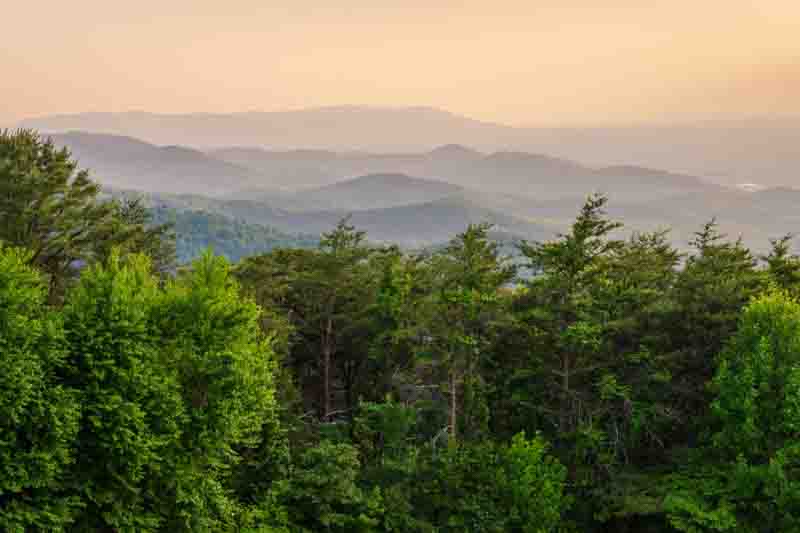
Virginia stretches from high Allegheny and Blue Ridge peaks down through the Shenandoah Valley, across rolling Piedmont hills, and out to the Tidewater and Chesapeake Bay. That mix of elevation, latitude, and coastal influence creates several distinct gardening climates. Using the updated 2023 USDA Plant Hardiness Zone Map (based on 1991–2020 winter lows), Virginia spans about zones 5b to 8b, with much of the state in zones 6b–7b and the warmest southeastern and coastal pockets at 8a–8b.

  • Allegheny & High Mountain Ridges: The coldest ridgetops and high valleys in far western Virginia fall around zones 5b–6a, with longer, colder winters and a shorter frost-free season.
  • Shenandoah Valley & Southwest Uplands: Cities and towns like Winchester, Staunton, Harrisonburg, Roanoke, and Blacksburg are mostly zones 6a–7a, excellent for cool-season crops, tree fruits, and many ornamentals.
  • Piedmont & Central Virginia: Charlottesville, Richmond, and surrounding counties sit mainly in zones 6b–7b, with warm summers, moderate winters, and a comfortable growing season for most fruits and vegetables.
  • Northern Virginia & D.C. Suburbs: Arlington, Alexandria, Fairfax, and Loudoun communities are generally zones 7a–7b (with some 8a pockets near urban heat), ideal for a huge range of perennials, shrubs, and edibles.
  • Tidewater, Hampton Roads & Coastal Plain: Norfolk, Newport News, Chesapeake, Virginia Beach, and the Eastern Shore fall in zones 7b–8b, with very mild winters and long frost-free periods that support figs, camellias, and many heat-loving crops.

USDA Hardiness Zone Map for Virginia

The 2023 USDA Plant Hardiness Zone Map uses 30-year averages of the coldest winter temperatures (1991–2020) to assign zones across the country. It’s the standard reference gardeners use to pick trees, shrubs, and perennials that can reliably survive winter in their area.
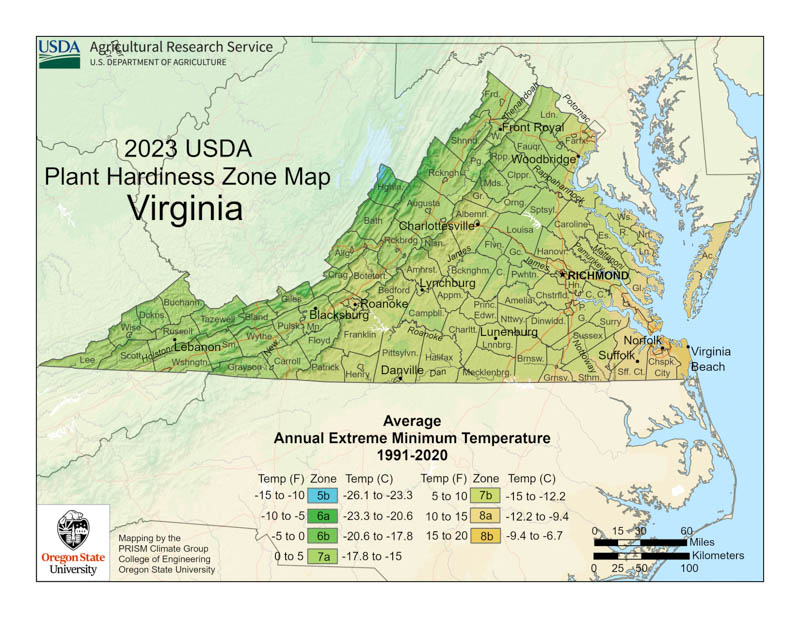
Virginia Planting Zones, Virginia Growing Zones, Virginia Garden Zones, Virginia Hardiness Zone Map

A simplified Virginia planting zone map based on the 2023 USDA Hardiness Zone Map, using 1991–2020 climate data.

Use the map together with your ZIP code to pinpoint your exact Virginia garden zone. Look up your Virginia planting zone by ZIP code using the USDA tool, then come back here or explore our Plant Finder to discover plants matched to your zone, sun exposure, and soil.

Virginia Growing Zones by Region

Although Virginia’s planting zones run from about 5b to 8b, local conditions—mountain hollows, river bottoms, city heat islands, and bayside breezes—create countless microclimates. Thinking regionally makes it easier to match plants and planting dates to your yard.

Allegheny Highlands & High Elevation Ridges (Approx. Zones 5b–6a)

This region includes the highest, coldest parts of western Virginia, such as portions of Highland, Bath, and the Allegheny counties. Winters are long and chilly, and late frosts are common, but summer days are pleasantly warm.

  • Excellent for apples, tart cherries, cool-season vegetables, and hardy perennials.
  • Shorter season means starting warm-weather crops indoors and choosing earlier-maturing varieties.
  • Expect frequent frosts into spring and a relatively early first frost in fall.
🔎 Find plants by hardiness zone

Shenandoah Valley & Southwest Virginia (Approx. Zones 6a–7a)

Winchester, Staunton, Harrisonburg, Lexington, Roanoke, and Blacksburg sit in valleys and uplands between the Blue Ridge and Allegheny ranges. Winters are cool, summers warm but not extreme, and the growing season is solid but shorter than on the coast.

  • Great for apples, peaches, grapes, berries, and cool-season crops in spring and fall.
  • Warm-season favorites—tomatoes, peppers, and melons—thrive when started early indoors and transplanted after frost.
  • Nighttime temperatures can drop quickly in fall, so be ready to cover tender crops.
🔎 Find plants by hardiness zone

Piedmont & Central Virginia (Approx. Zones 6b–7b)

Rolling hills from Charlottesville and Farmville through Richmond and surrounding counties make up classic Virginia farm and wine country. Summers are warm and humid, winters moderate, and the frost-free season is reasonably long.

  • Prime territory for tomatoes, peppers, squash, beans, and sweet corn.
  • Tree fruits (apples, peaches, plums) and berries perform well with good siting and pruning.
  • Heavy red clay soils benefit from raised beds, compost, and mulch to improve drainage.
🔎 Find plants by hardiness zone

Northern Virginia & D.C. Metro (Approx. Zones 7a–7b, Some 8a)

Arlington, Alexandria, Fairfax, Loudoun, and Prince William counties are strongly influenced by urban heat and relatively low elevation. Winters are mild, summers steamy, and paved surfaces and buildings can create “bonus” warmth.

  • Supports a wide palette of ornamental shrubs, perennials, and small trees—azaleas, camellias, hydrangeas, crape myrtles, and more.
  • Long season for sequential plantings of greens, herbs, and warm-season vegetables.
  • Urban microclimates near brick walls, patios, and pavement may behave like a half-zone warmer.
🔎 Find plants by hardiness zone

Tidewater, Hampton Roads & Coastal Plain (Approx. Zones 7b–8b)

From Williamsburg to Norfolk, Newport News, Chesapeake, Virginia Beach, and the Eastern Shore, the Chesapeake Bay and Atlantic Ocean moderate winter lows. Frosts arrive late and depart early, and sea breezes take some edge off summer heat.

  • Ideal for long-season crops like okra, sweet potatoes, peppers, eggplant, and southern peas.
  • Supports broadleaf evergreens, camellias, crape myrtles, sago palms, and many subtropical-look ornamentals.
  • Salty winds, sandy soils, and high water tables near creeks and bays shape plant choices and root depth.
🔎 Find plants by hardiness zone

Virginia Frost Dates: When to Plant and When to Protect

From breezy Blue Ridge overlooks to sheltered Norfolk backyards, frost dates are your best planning tool. Whether you’re gardening in Winchester, Charlottesville, Richmond, Roanoke, or Virginia Beach, your average last and first frosts help you decide when to sow cool-season crops, when to set out tender seedlings, and when to be ready with row covers in fall.

Across Virginia, last spring frosts generally run from late March in the warmest Tidewater areas to late April or early May in higher elevations. First fall frosts often arrive from mid–late October in the mountains to mid–late November along the coast, depending on elevation and proximity to the ocean or Bay.

Region / City Average Last Spring Frost Average First Fall Frost Approx. Frost-Free Days
Winchester (Northern Shenandoah Valley) Late April (around Apr 21–30) Late October (around Oct 21–31) ~170–185 days
Roanoke (Southwest Valley & Foothills) Mid–Late April (around Apr 11–20) Late October (around Oct 21–31) ~180–195 days
Charlottesville (Central Piedmont) Mid–Late April (roughly Apr 11–20) Early–Mid November (around Nov 1–10) ~190–205 days
Richmond (Central Virginia) Mid–Late April (around Apr 11–20) Early–Mid November (around Nov 1–10) ~200–210 days
Virginia Beach (Tidewater Coast) Late March (around Mar 21–31) Mid–Late November (around Nov 11–20) ~230–240 days

Dates summarized from regional climate and frost-date tools; always check a local forecast and ZIP code–based lookup for the most precise information for your garden.

Use these frost windows as planning guides—your yard may act warmer or cooler depending on slope, altitude, wind, nearby pavement, and buildings. They’re long-term averages, not guarantees, so keep an eye on the forecast during spring warm-ups and autumn cold snaps.
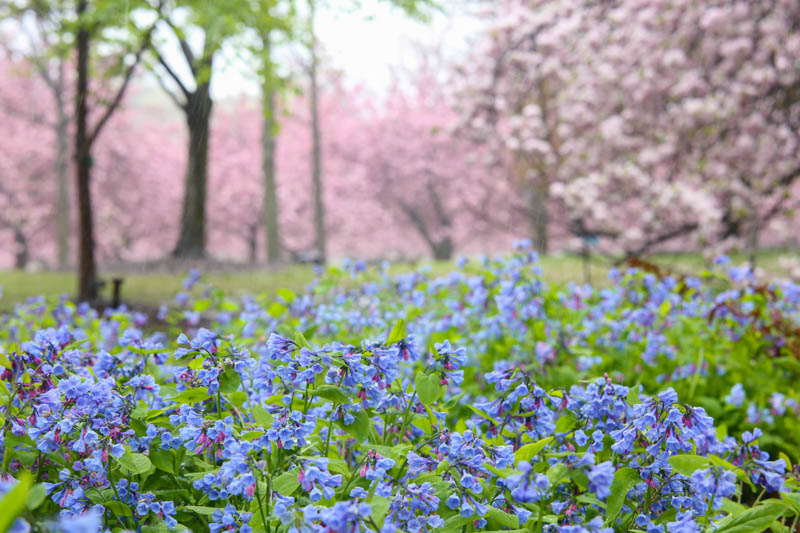
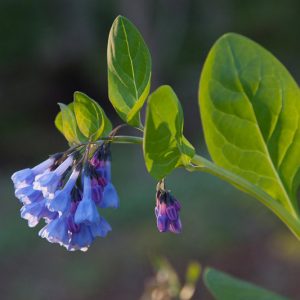
Virginia Bluebells with cherry blossom background.

Interactive Virginia Planting Calendar (General Guide)

Tap a month to see what to plant in Virginia by zone. Use these quick guides as a starting point—then adjust for your exact frost dates and whether you garden on a cool mountain slope, a warm city balcony, or a breezy coastal patio.

⛰️ Zones 5–6: Highlands & Higher Valleys 🌳 Zones 6–7: Valley & Piedmont 🌊 Zones 7–8: Tidewater & Coast
January – Plan, Prune & Dream
  • All zones: Review last year’s notes, test soil, sketch new beds, and order seeds before popular varieties sell out.
  • Zones 6–8 (Valley, Piedmont, Tidewater): Prune fruit trees and grapes on mild days; start onions, leeks, and some herbs indoors toward the end of the month.
February – Early Cool-Season Starts
  • Tidewater & warm zones (7b–8b): In late February, direct-sow hardy peas, spinach, and radishes under protection; start cabbage, broccoli, and kale indoors.
  • Cooler zones (5–6): Start brassicas, onions, and leafy greens indoors; prepare beds as soil thaws and dries.
March – Main Cool-Season Planting
  • Zones 6–8: Sow peas, carrots, beets, mustard greens, collards, and lettuce; transplant onions, cabbage, and broccoli outdoors as soil warms.
  • Zones 5–6 (highlands): By late March, begin direct-sowing hardy greens and peas; start tomatoes, peppers, and eggplants indoors.
April – Cool-Season Peak & Warm-Up
  • Tidewater & lower elevations (zones 7–8): Finish sowing cool-season crops early; by late April, begin hardening off tomatoes, peppers, and basil.
  • Highlands & valley (zones 5–6): April is prime time for cool-season crops outdoors; keep row covers handy for late cold snaps.
May – Warm-Season Planting in Full Swing
  • All zones: After your last frost, transplant tomatoes, peppers, eggplants, and basil; direct-sow beans, corn, cucumbers, squash, and melons.
  • Cooler zones (5–6): Aim for mid–late May to transplant the most frost-tender crops.
June – Mulch, Stake & Manage Heat
  • All zones: Mulch generously to conserve moisture and keep roots cool; stake tomatoes and provide trellises for beans and cucumbers.
  • Zones 6–8: Sow another round of beans, squash, and heat-tolerant greens for late-summer harvests.
July – Peak Harvest & Fall Crop Planning
  • All zones: Harvest tomatoes, beans, cucumbers, squash, and early corn; water deeply but infrequently to encourage deep roots.
  • Zones 5–7: Start seeds for fall broccoli, kale, and cabbage indoors or in shaded nursery beds.
  • Warm zones (7b–8b): Plan space for late-summer plantings of greens and root crops as summer crops wind down.
August – Fall Garden Kickoff
  • Zones 5–7: Sow fall carrots, beets, turnips, spinach, lettuce, and radishes in early–mid month; keep soil evenly moist and consider shade cloth for seedlings.
  • Tidewater & warm zones (7b–8b): Late August is a prime window to sow cool-season crops for a long fall and winter harvest.
September – Cooler Nights, Fresh Greens
  • All zones: Enjoy fall plantings of lettuce, kale, collards, and radishes; continue harvesting warm-season crops until frost threatens.
  • Zones 7–8: Sow one last round of quick greens and herbs in early September for late-fall salads.
October – Shift to Cool-Season Production
  • Highlands & valley (zones 5–6): Protect late tomatoes and peppers from early frosts; focus on leafy greens and root crops that shrug off light freezes.
  • Piedmont & coast (zones 6–8): Harvest remaining warm-season crops; enjoy a second season of broccoli, cabbage, kale, and hardy herbs.
November – Harvest, Mulch & Tuck In
  • All zones: Harvest tender crops before hard freezes; mulch perennials, shrubs, and young trees to buffer winter cold.
  • Zones 7–8: Use row covers or low tunnels to carry greens, carrots, and herbs deep into winter.
December – Clean Up & Take Notes
  • All zones: Clean tools, repair beds and trellises, and jot down which varieties thrived—or struggled—in your particular Virginia microclimate.

Virginia Gardening Tips by Zone

Virginia gardeners juggle humidity, heavy thunderstorms, clay or rocky mountain soils, coastal sands, deer pressure, and the occasional tropical storm. These tips will help your garden thrive from zone 5b to 8b:

  • Dial in your microclimate. Mountain hollows, river bottoms, city courtyards, and bayside yards can act a half-zone warmer or cooler than the map suggests.
  • Start long-season crops indoors. Tomatoes, peppers, and eggplants appreciate a head start, especially in cooler mountain and valley areas.
  • Improve soil with organic matter. In Piedmont clay and coastal sands alike, compost and mulch are your best friends for drainage, moisture retention, and soil life.
  • Plan for both downpours and dry spells. Build raised beds where drainage is poor, use mulch, and water deeply but not constantly during summer droughts.
  • Consider wind and storms. In open and coastal areas, stake tall plants, use windbreaks, and choose flexible, wind-tolerant trees and shrubs.
  • Choose disease-resistant varieties. Humid summers can fuel blights and mildews—especially on tomatoes, cucurbits, and roses—so prioritize resistant cultivars.
  • Use natives as the backbone. Surround your vegetable beds with native shrubs, perennials, and grasses for low-maintenance structure and built-in support for pollinators and beneficial insects.

Start Growing in Your Virginia Planting Zone

Now that you understand your Virginia planting zone, frost dates, and regional climate, you’re ready to choose plants that love your conditions and build a thriving Old Dominion garden. Mix edible crops, flowering perennials, and native plants for a landscape that feeds both your household and local wildlife. Curious how Virginia compares to other states? Visit our national USDA planting zone guide to explore growing zones across the United States.
Native Plants, Invasive Plants, Virginia Invasive Plants, Virginia Invasive Shrubs, Virginia Invasive Perennials, Virginia Invasive Trees

Frequently Asked Questions About Virginia Planting Zones

What growing zone is Virginia in?

According to the 2023 USDA Plant Hardiness Zone Map, Virginia spans roughly zones 5b to 8b. The coldest Allegheny and Blue Ridge ridges fall near 5b–6a, much of the Shenandoah Valley, Piedmont, and central Virginia sit in 6a–7b, and Tidewater and Hampton Roads reach 7b–8b with very mild winters.

How do I find my exact Virginia planting zone?

The easiest way is to use the USDA’s online Plant Hardiness Zone Map. Enter your ZIP code to see your exact zone based on 1991–2020 average winter lows. Then fine-tune for your microclimate—slopes, pavement, nearby water, and wind can make a site feel effectively half a zone warmer or cooler.

When is the last frost in Virginia?

Last spring frost dates vary widely. Coastal areas like Virginia Beach often see their last frost around late March, while central cities such as Richmond and Roanoke usually frost for the last time in mid–late April. Higher valleys and ridges (e.g., around Winchester and Radford) can freeze into late April or early May. Always confirm with a local ZIP code–based frost-date tool.

When is the first fall frost in Virginia?

In most mountain and valley locations, the first fall frost typically arrives between mid and late October. Central and northern Virginia often frost from late October into early November, while coastal Tidewater sites, including Virginia Beach and Norfolk, may not see frost until mid–late November in an average year.

What vegetables grow best in Virginia?

Virginia’s zones 5b–8b support a broad mix of cool- and warm-season crops. Cool-season staples include lettuce, spinach, peas, broccoli, cabbage, carrots, and beets. Warm-season favorites like tomatoes, peppers, beans, cucumbers, squash, sweet corn, okra, and sweet potatoes perform well when planted after the last frost and given full sun and consistent moisture.

Can I grow citrus trees in Virginia?

Virginia is generally too cold for traditional citrus to grow unprotected outdoors long-term. However, in the very mildest coastal microclimates (zones 8a–8b) near Virginia Beach and parts of Hampton Roads, gardeners sometimes experiment with cold-hardy citrus such as Satsuma mandarins or Meyer lemons, using sheltered locations and winter protection. Many people grow citrus in containers and overwinter them indoors instead.

What fruits do well in Virginia backyards?

Apples, peaches, pears, cherries, and plums all grow well across much of Virginia when you choose varieties suited to your zone and disease pressures. Blueberries, blackberries, raspberries (in cooler areas), grapes, and strawberries are excellent small-fruit options. Coastal and southern gardeners can often add figs and, in protected spots, hardy pomegranates.

What are the best native plants for Virginia gardens?

Many gardeners use native spring ephemerals, summer wildflowers, and shrubs as the backbone of their Virginia landscapes. Popular choices include serviceberry, redbud, dogwood, oak and hickory trees, native azaleas, goldenrod, coneflower, bee balm, little bluestem, and switchgrass. Native plant societies and extension guides provide region-specific lists for the mountains, Piedmont, and coastal plain.

How is the 2023 USDA hardiness map different from the old one?

The 2023 USDA Plant Hardiness Zone Map is based on more recent 30-year climate normals (1991–2020) instead of the older 1976–2005 period. Many locations in Virginia shifted about a half-zone warmer on paper, reflecting slightly milder average winter lows, although extreme cold snaps can still occur. Gardeners should treat the map as a guide, not a guarantee, and continue to monitor local weather.

Do I need a greenhouse to garden in Virginia?

Most Virginia gardeners can grow abundant crops outdoors without a greenhouse by timing plantings around frost dates and using simple season-extenders like row covers, cold frames, or low tunnels. A greenhouse or unheated hoop house is helpful if you want extra-early tomatoes, winter greens, or additional protection in colder mountain zones, but it’s not essential for a productive backyard garden.

Updated: December 2025

Guide Information

Hardiness 5 - 8
Native Plants United States, Southeast, Virginia

Recommended Guides

Monarch Nectar Plants for Virginia
Great Pollinator Plants for Virginia
Recommended Native Ferns for Virginia’s Central Rappahannock Region
Recommended Native Trees for Virginia’s Capital Region
Native Plants that Attract Hummingbirds in Virginia’s Capital Region
Recommended Native Vines for Virginia’s Capital Region
Native Shrubs for Virginia’s Capital Region
Native Grasses for Virginia’s Capital Region
Recommended Native Ferns for Virginia’s Capital Region
Shade-Loving Native Annuals and Perennials for Virginia’s Capital Region
Sun-Loving Native Annuals and Perennials for Virginia’s Capital Region
Native Plants that Attract Hummingbirds in Virginia’s Northern Neck Peninsula
Sun-Loving Native Annuals and Perennials for Virginia’s Rappahannock Region
Recommended Native Shrubs for Virginia’s Central Rappahannock Region
Recommended Native Grasses for Virginia’s Central Rappahannock Region
Native Trees for Virginia’s Northern Neck Peninsula
Shade-Loving Native Annuals and Perennials for Virginia’s Central Rappahannock Region
Recommended Native Ferns for Virginia’s Northern Piedmont Region
Shade-Loving Native Annuals and Perennials for Virginia’s Northern Piedmont Region
Sun-Loving Native Annuals and Perennials for Virginia’s Northern Piedmont Region
Recommended Native Trees for Virginia’s Central Rappahannock Region
Native Plants that Attract Hummingbirds in Virginia’s Central Rappahannock Region
Recommended Native Vines for Virginia’s Central Rappahannock Region
Shade-Loving Native Annuals and Perennials for Virginia’s Southern Piedmont Region
Recommended Native Grasses for Virginia’s Southern Piedmont Region
Recommended Native Shrubs for Northern Virginia
Recommended Native Grasses for Northern Virginia
Recommended Native Ferns for Northern Virginia
Shade-Loving Native Annuals and Perennials for Northern Virginia
Recommended Native Trees for Virginia’s Southern Piedmont Region
Native Plants that Attract Hummingbirds in Virginia’s Southern Piedmont Region
Recommended Native Vines for Virginia’s Southern Piedmont Region
Recommended Native Shrubs for Virginia’s Southern Piedmont Region
Sun-Loving Native Annuals and Perennials for Southeast Virginia
Shade-Loving Native Annuals and Perennials for Southeast Virginia
Native Ferns for Southeast Virginia
Native Vines for Southeast Virginia
Native Plants that Attract Hummingbirds in Southeast Virginia
Native Grasses for Southeast Virginia
Native Shrubs for Southeast Virginia
Native Trees for Southeast Virginia
Native Annuals and Perennials for Virginia’s Eastern Shore
Native Annuals and Perennials for Virginia’s Northern Neck Peninsula
Native Ferns for Virginia’s Northern Neck Peninsula
Native Grasses for Virginia’s Northern Neck Peninsula
Native Vines for Virginia’s Northern Neck Peninsula
Native Shrubs for Virginia’s Northern Neck Peninsula
Native Ferns for Virginia’s Eastern Shore
Guides with
Virginia
While every effort has been made to describe these plants accurately, please keep in mind that height, bloom time, and color may differ in various climates. The description of these plants has been written based on numerous outside resources.

Guide Information

Hardiness 5 - 8
Native Plants United States, Southeast, Virginia
Guides with
Virginia

Related Items

Please Login to Proceed

You Have Reached The Free Limit, Please Subscribe to Proceed

Subscribe to Gardenia

To create additional collections, you must be a paid member of Gardenia
  • Add as many plants as you wish
  • Create and save up to 25 garden collections
Become a Member

Plant Added Successfully

You have Reached Your Limit

To add more plants, you must be a paid member of our site Become a Member

Update Your Credit
Card Information

Cancel

Create a New Collection

Sign Up to Our Newsletter

    You have been subscribed successfully

    Join Gardenia.net

    Create a membership account to save your garden designs and to view them on any device.

    Becoming a contributing member of Gardenia is easy and can be done in just a few minutes. If you provide us with your name, email address and the payment of a modest $25 annual membership fee, you will become a full member, enabling you to design and save up to 25 of your garden design ideas.

    Join now and start creating your dream garden!

    Join Gardenia.net

    Create a membership account to save your garden designs and to view them on any device.

    Becoming a contributing member of Gardenia is easy and can be done in just a few minutes. If you provide us with your name, email address and the payment of a modest $25 annual membership fee, you will become a full member, enabling you to design and save up to 25 of your garden design ideas.

    Join now and start creating your dream garden!
    Find your Hardiness Zone

    Find your Heat Zone

    Find your Climate Zone