Tasman flax-lily, Tasmanian flax-lily, Blue flax-lily, blueberry lily, blue berry flax-lily
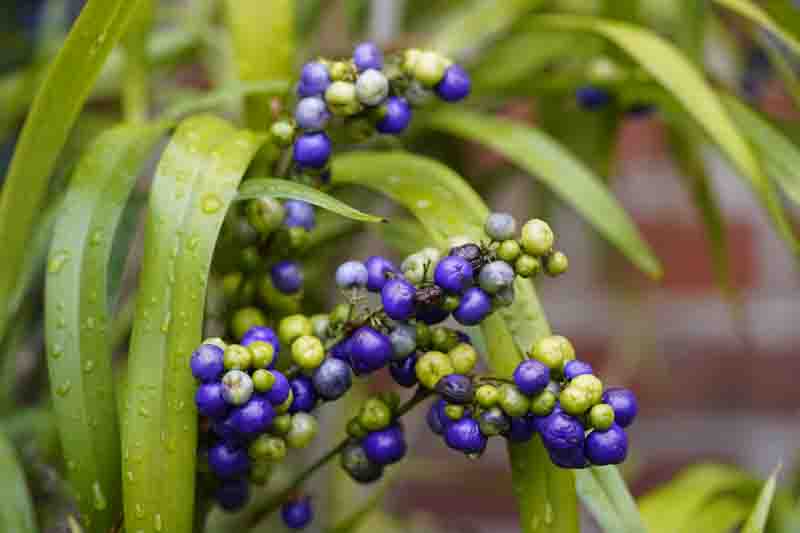


Dianella tasmanica, commonly known as Tasman flax lily, Tasmanian flax lily, or simply flax lily, is a handsome evergreen rhizomatous perennial or subshrub grown for its bold strap-shaped foliage, airy blue flowers, glossy violet-blue berries, shade tolerance, and easy landscape performance. Native to southeastern Australia, from southeastern New South Wales to Tasmania, it is especially useful in woodland gardens, shaded borders, native plantings, coastal-style landscapes, containers, and low-maintenance mass plantings.
This is one of those plants that quietly solves a lot of garden problems. Need texture under trees? A neat evergreen edge for a path? A soft, strappy groundcover that is more substantial than grass but less bulky than a shrub? Dianella tasmanica steps in beautifully. Its leaves form upright to arching fans, its flowers float above the foliage in branching sprays, and its berries add a jewel-like finish after bloom. In the right site, it becomes a durable, architectural, wildlife-friendly foliage plant with year-round value.
Dianella tasmanica is a clump-forming to slowly spreading evergreen perennial grown for blue-green strap-like leaves, blue starry flowers, ornamental purple-blue berries, shade tolerance, and dependable groundcovering structure. It performs best in part shade to filtered sun, humus-rich well-drained soil, and regular to moderate moisture, making it excellent for woodland borders, shaded paths, mass planting, containers, and Australian native-style gardens.
Use: Woodland gardens, shaded borders, path edging, mass planting, containers, underplanting, Australian native gardens, coastal-style gardens, and low-maintenance foliage designs.
Highlight: Blue flowers with yellow stamens are followed by glossy blue to purple berries, creating a rare combination of texture, bloom, and fruit in a shade-tolerant evergreen perennial.
Design note: Use in repeated drifts under shrubs and small trees, or pair variegated forms with deep green foliage for a brighter shaded border.
| Botanical Name | Dianella tasmanica |
|---|---|
| Family | Asphodelaceae |
| Common Names | Tasman Flax Lily, Tasmanian Flax Lily, Flax Lily |
| Native Range | Southeastern Australia, including southeastern New South Wales, Victoria, and Tasmania |
| Plant Type | Evergreen rhizomatous perennial or subshrub |
| Hardiness | Best in USDA Zones 9-11; protect from severe cold and wet winter soil |
| Height | Typically 1.5-3 ft. tall; some forms or favorable sites may reach about 3-4 ft. |
| Spread | Often 2-4 ft. wide, spreading slowly by creeping rhizomes |
| Sun Exposure | Part shade to filtered sun; tolerates full sun in cooler climates with adequate moisture |
| Soil | Humus-rich, well-drained loam, sandy loam, or improved clay; avoid constantly soggy soil |
| Bloom Time | Usually spring to summer, depending on climate |
| Flower Color | Blue to violet-blue with yellow stamens |
| Foliage | Evergreen, strap-shaped, upright to arching, green or variegated by cultivar |
| Water Needs | Moderate; more drought tolerant once established, but best with occasional deep watering |
| Attracts | Bees, small pollinators, and birds that may feed on berries |
| Pet and Child Safety | Ornamental only; berries should not be eaten by people or pets |
Dianella tasmanica is an evergreen rhizomatous perennial or subshrub with a grass-like appearance, although it is not a true grass. It forms fans of long, narrow, strap-shaped leaves and slowly expands by underground rhizomes. The effect is tidy, textural, and architectural, making it a valuable plant for gardeners who want evergreen structure without the weight of shrubs.
In spring or summer, branching flower stems rise above the foliage and carry small blue to violet-blue flowers with bright yellow stamens. These are followed by shiny blue to purple berries that can be striking in shaded plantings. The berries are ornamental and attractive to wildlife, but they should not be treated as edible fruit for people or pets.
Good to know: Tasman flax lily is especially valuable where gardeners need evergreen texture in part shade. It gives the look of an ornamental grass but handles woodland edges, filtered light, and mixed borders more comfortably than many sun-loving grasses.
Dianella tasmanica is native to southeastern Australia, including southeastern New South Wales, Victoria, and Tasmania. In its native habitat, it is associated with temperate forests, woodland edges, moist gullies, and sheltered sites. In gardens outside Australia, it should be grown as an ornamental landscape perennial rather than a locally native plant.
Tasman flax lily typically flowers from spring into summer, although timing varies with climate, exposure, and winter temperatures. The flowers are small but elegant, with blue to violet-blue tepals and prominent yellow stamens. They are carried in loose panicles, giving the plant a light, airy effect above the dense foliage.
The foliage is the main reason to grow Dianella tasmanica. Leaves are long, narrow, upright to arching, and usually rich green, though variegated cultivars are widely grown for cream-striped or white-edged foliage. In shade, variegated forms can brighten dark corners, while green forms create a calmer, more natural woodland look.
Most plants grow about 1.5-3 feet tall, with flower stems sometimes rising higher. A mature clump often spreads 2-4 feet wide, slowly filling space by rhizomes. Some forms or especially favorable garden sites may reach about 3-4 feet. It is not usually aggressive in average garden conditions, but it can create broad colonies over time where moisture, shade, and soil are favorable.
Dianella tasmanica is best suited to USDA Zones 9-11. It tolerates light frost and cool conditions better than many subtropical foliage plants, but severe freezes may damage the leaves. In colder parts of its range, site it in a sheltered bed with excellent drainage, mulch lightly around the root zone, and remove winter-damaged foliage in spring.
The flowers attract bees and other small pollinators, while the berries may be eaten by birds. In a layered planting, Dianella tasmanica also gives small wildlife low cover near the ground. For best ecological value, plant it with other flowering native and climate-compatible plants so nectar, pollen, seed, and shelter are available across the seasons.
Tasman flax lily is not usually the first choice for browsing animals because of its tough, fibrous leaves, but deer and rabbits can sample almost anything when food is scarce. Protect young plants until they are established, especially in gardens with heavy deer pressure.
Dianella tasmanica is moderately drought tolerant once established, particularly in shade or morning sun. However, it looks best with occasional deep watering during long dry periods. In hot climates, afternoon shade and mulch help prevent leaf scorch and keep the foliage fresh.
Ornamental only; berries should not be eaten and may cause stomach upset if ingested. Keep away from children and pets.
Dianella tasmanica spreads by rhizomes and may form colonies in favorable climates, but it is generally manageable in garden settings. Gardeners in mild, moist regions should monitor spread, divide clumps when necessary, and avoid dumping garden waste near natural areas.
Water regularly during the first growing season so the roots establish well. After that, water deeply during dry spells, especially for plants in containers, full sun, or root-competitive areas beneath trees. Established plants in shaded garden beds usually need less frequent irrigation than newly planted clumps.
Feed lightly in spring with compost, leaf mold, or a balanced slow-release fertilizer. Avoid excessive nitrogen, which can produce soft, floppy foliage. In native-style gardens, a modest annual mulch is often enough to keep plants healthy.
Apply leaf mold, composted bark, pine needles, or fine woodland mulch around the root zone. Keep mulch slightly away from the crown. Mulch helps conserve soil moisture, reduce weeds, and create the cool root conditions Dianella tasmanica appreciates.
Care tip:
The secret to growing Dianella tasmanica well is bright shade, steady moisture, good drainage, and occasional grooming. Think woodland edge, not swamp and not desert.
Remove tired, damaged, or browned leaves in late winter or early spring. Cut old leaves close to the base rather than trimming across the tips, which can leave ragged ends. After flowering and fruiting, spent flower stems can be cut to the ground to tidy the plant.
Every few years, older clumps may become crowded or woody in the center. Lift and divide them in spring, replanting the youngest, healthiest sections. This refreshes the planting, controls spread, and gives you extra plants for edging, containers, or bare shaded spots.
Dianella tasmanica is excellent in containers. Use a pot with drainage holes, fill it with a high-quality potting mix, and water when the top layer begins to dry. Variegated forms are especially attractive in patio pots, entry containers, and shaded courtyard designs.
The easiest way to propagate Tasman flax lily is by division. In spring, dig up a mature clump, separate it into smaller sections with roots and shoots attached, and replant promptly. Water well until new growth begins. Seed may be possible, but division is faster, more reliable, and preserves the exact foliage color and habit of named cultivars.
This plant struggles in hot, dry, exposed sites, dense dark shade, compacted soil, and wet winter conditions that keep the crown saturated. Brown leaf tips often point to heat, drought, salt buildup in containers, or inconsistent watering. Yellowing and collapse may indicate poor drainage or root stress.
| Task | Best Time |
|---|---|
| Planting | Spring, or fall in mild climates |
| Flowering | Spring to summer, depending on region |
| Berry Display | After flowering, often summer into fall |
| Division | Spring, as new growth begins |
| Grooming | Late winter to spring, with light cleanup anytime |
Brown tips are usually caused by drought stress, hot sun, dry wind, salt buildup in pots, or irregular watering. Improve moisture consistency, move containers to brighter shade, and flush potting soil occasionally with clean water.
Yellowing may indicate poor drainage, overwatering, nutrient deficiency, or old foliage aging naturally. Check the soil before feeding. If the soil is wet and heavy, improve drainage or replant into a raised bed.
Root rot is the main disease risk in waterlogged soil. Avoid planting too deep, keep mulch off the crown, and do not allow container plants to sit in saucers of water.
Young leaves may be nibbled by slugs and snails, especially in damp shade. Stressed plants may occasionally attract scale insects. Good airflow, balanced watering, and regular cleanup reduce most problems.
Fast diagnostic: Brown tips usually mean heat, drought, or salt stress. Yellow leaves often mean poor drainage. Weak flowering may mean too much shade. Ragged foliage often means the clump needs grooming or division.
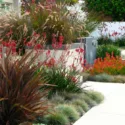
Use Dianella tasmanica as a foliage rhythm plant. Repetition is its superpower. A single clump is pleasant; a drift of five, seven, or twelve becomes a polished design move. It works beautifully along shaded paths, beneath shrubs, around tree trunks and in modern courtyards where clean texture matters.
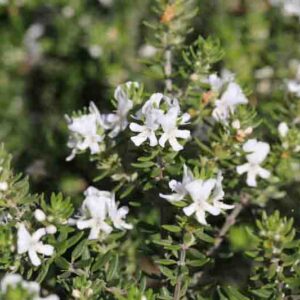
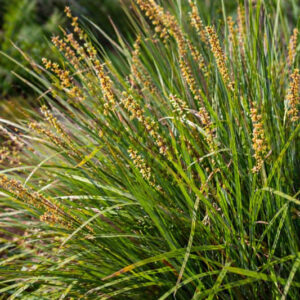
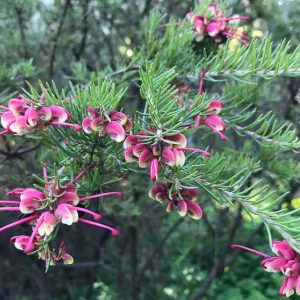
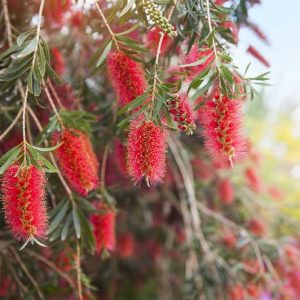
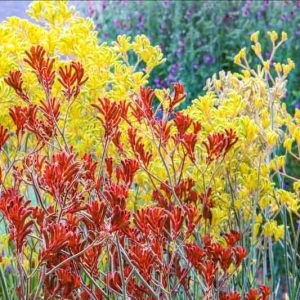
Good companions for Dianella tasmanica prefer mild climates, part shade to filtered sun or gentle morning sun, well-drained soil, and low to moderate moisture once established. They include Lomandra longifolia, Westringia fruticosa, Correa alba, Anigozanthos flavidus, Anigozanthos, Gaura lindheimeri, Spanish Lavender in brighter, drier edges, Sea Thrift in coastal well-drained sites, Rosemary in sunnier borders, and Creeping Rosemary where drainage is sharp and shade is light.
No. Dianella tasmanica is not native to the United States. It is native to southeastern Australia, including southeastern New South Wales, Victoria, and Tasmania.
Dianella tasmanica usually grows about 1.5 to 3 feet tall, with flower stems rising above the foliage. Mature clumps often spread 2 to 3 feet wide by slow rhizomes.
Yes. Dianella tasmanica grows well in part shade, filtered sun, and bright woodland conditions. It can tolerate more sun in cooler climates if soil moisture is consistent.
No. The glossy blue to purple berries are ornamental and may attract birds, but they should not be eaten by people, children, dogs, cats, or other pets.
Dianella tasmanica is moderately drought tolerant once established, especially in part shade. It looks best with occasional deep watering during long dry periods.
Divide Dianella tasmanica in spring as new growth begins. Replant healthy rooted sections promptly and water well until they establish.
Brown leaf tips are usually caused by drought stress, hot afternoon sun, dry wind, salt buildup in containers, or inconsistent watering. Improve moisture consistency and provide afternoon shade in hot climates.
Updated: May 2026 • Reviewed by Gardenia Editors
| Hardiness |
9 - 11 |
|---|---|
| Plant Type | Perennials |
| Plant Family | Asphodelaceae |
| Exposure | Full Sun, Partial Sun |
| Season of Interest | Spring (Early, Mid, Late), Summer (Early, Mid, Late), Fall, Winter |
| Height | 3' - 4' (90cm - 120cm) |
| Spread | 3' - 4' (90cm - 120cm) |
| Spacing | 36" - 48" (90cm - 120cm) |
| Maintenance | Low |
| Water Needs | Low, Average |
| Soil Type | Loam, Sand |
| Soil pH | Acid, Neutral |
| Soil Drainage | Well-Drained |
| Characteristics | Showy, Evergreen, Fruit & Berries |
| Native Plants | Australia |
| Tolerance | Drought, Salt, Dry Soil, Rocky Soil |
| Attracts | Bees, Birds |
| Garden Uses | Beds And Borders, Ground Covers, Patio And Containers |
| Garden Styles | City and Courtyard, Coastal Garden, Informal and Cottage, Mediterranean Garden, Pollinator Garden, Woodland Garden |


| Hardiness |
9 - 11 |
|---|---|
| Plant Type | Perennials |
| Plant Family | Asphodelaceae |
| Exposure | Full Sun, Partial Sun |
| Season of Interest | Spring (Early, Mid, Late), Summer (Early, Mid, Late), Fall, Winter |
| Height | 3' - 4' (90cm - 120cm) |
| Spread | 3' - 4' (90cm - 120cm) |
| Spacing | 36" - 48" (90cm - 120cm) |
| Maintenance | Low |
| Water Needs | Low, Average |
| Soil Type | Loam, Sand |
| Soil pH | Acid, Neutral |
| Soil Drainage | Well-Drained |
| Characteristics | Showy, Evergreen, Fruit & Berries |
| Native Plants | Australia |
| Tolerance | Drought, Salt, Dry Soil, Rocky Soil |
| Attracts | Bees, Birds |
| Garden Uses | Beds And Borders, Ground Covers, Patio And Containers |
| Garden Styles | City and Courtyard, Coastal Garden, Informal and Cottage, Mediterranean Garden, Pollinator Garden, Woodland Garden |
How many Dianella tasmanica (Tasman Flax Lily) do I need for my garden?
| Plant | Quantity | |
|---|---|---|
| Dianella tasmanica (Tasman Flax Lily) | N/A | Buy Plants |
Create a membership account to save your garden designs and to view them on any device.
Becoming a contributing member of Gardenia is easy and can be done in just a few minutes. If you provide us with your name, email address and the payment of a modest $25 annual membership fee, you will become a full member, enabling you to design and save up to 25 of your garden design ideas.
Join now and start creating your dream garden!
Create a membership account to save your garden designs and to view them on any device.
Becoming a contributing member of Gardenia is easy and can be done in just a few minutes. If you provide us with your name, email address and the payment of a modest $25 annual membership fee, you will become a full member, enabling you to design and save up to 25 of your garden design ideas.
Join now and start creating your dream garden!