Long-blooming camellias deliver exquisite flowers across fall, winter, and spring while glossy evergreen foliage provides year-round beauty. Compare 12 exceptional japonicas and hybrids by bloom season, size, fragrance, hardiness, and flower form, then learn how to grow, combine, and position them for months of unforgettable garden color in suitable landscapes.
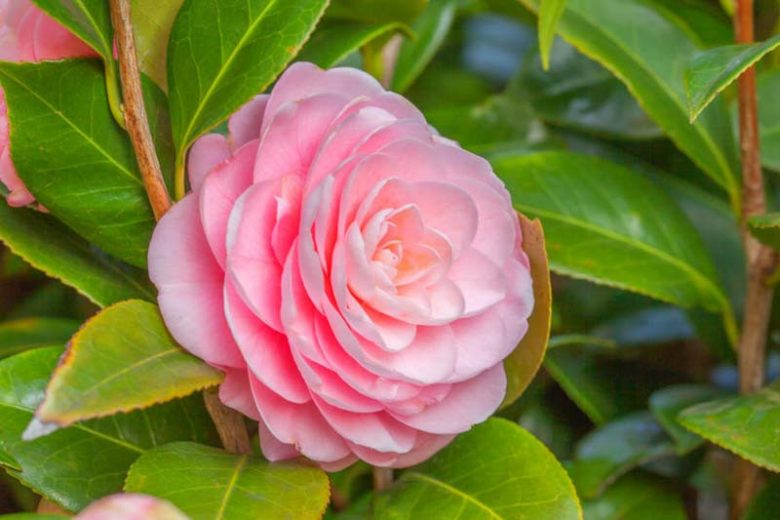


Long-blooming camellias provide far more than a brief seasonal display. While many camellias flower for several weeks, exceptional cultivars may produce successive flushes across fall, winter, and spring, displaying white, blush, pink, striped, crimson, or red flowers above handsome evergreen foliage.
The 12 cultivars featured in this guide have broad flowering periods in Gardenia’s plant records. Several are recorded from mid fall through late spring, while others begin in late fall and continue into mid spring. Their actual performance varies with cultivar, climate, exposure, and seasonal weather.
Most are Camellia japonica cultivars or hybrids involving Japanese camellias. The collection also includes several Camellia × williamsii hybrids, prized for vigorous growth, abundant flowers, and their tendency to shed faded blooms cleanly.
Fragrant hybrids such as ‘Cinnamon Cindy’ and ‘Minato-No-Akebono’ add another dimension. Their flowers are generally smaller than those of classic japonicas, but they may be produced generously over an unusually broad seasonal window.
This guide compares each cultivar by its recorded bloom start, bloom end, mature height, spread, and USDA hardiness. Use it to choose a long-flowering camellia that fits your climate, available space, preferred flower style, and intended landscape use.
Long blooming does not mean nonstop flowering every day. A camellia may open flowers in successive flushes, pause during cold weather, and resume when temperatures become milder. The recorded range describes the cultivar’s potential overall flowering window.
A long-blooming camellia produces flowers over an unusually broad seasonal period. This may result from a large number of buds opening gradually, multiple flowering flushes, or buds developing at different rates across the shrub.
Temperature strongly affects the display. Cool but moderate weather can slow bud opening and extend the life of individual flowers. Severe cold may temporarily pause flowering, while an unusually warm spell may cause many buds to open together and shorten the overall show.
Gardenia records bloom periods using seasonal stages such as mid fall, late fall, midwinter, mid spring, and late spring. These stages are more useful for comparison than one universal month because the same cultivar may flower several weeks earlier or later in different gardens.
A recorded range should therefore be understood as the cultivar’s potential season under suitable conditions, not as a guarantee that flowers will remain open continuously from the first stage to the last.
| Flowering Pattern | Bloom Start | Bloom End | Featured Cultivars |
|---|---|---|---|
| Broad fall-to-late-spring ranges | Mid fall | Late spring | ‘April Remembered’, ‘Moonlight Bay’, ‘Anticipation’, ‘Water Lily’, ‘Minato-No-Akebono’ |
| Fall-to-mid-spring bloomers | Late fall | Mid spring | ‘Betty Ridley’, ‘Bonnie Marie’, ‘Cinnamon Cindy’, ‘Annie Wylam’, ‘Carter’s Sunburnt’, ‘Don Mac’ |
| Long winter-to-spring cultivar | Midwinter | Late spring | ‘Pink Perfection’ |
Climate note: These are Gardenia’s recorded seasonal ranges. Actual flowering varies with latitude, elevation, exposure, plant maturity, and yearly weather.
The table below uses Gardenia’s cultivar records for bloom start, bloom end, mature height, spread, and USDA hardiness. Flower descriptions summarize the appearance and distinguishing character of each selection.
| Cultivar | Flower Character | Bloom Start | Bloom End | Height | Spread | USDA |
|---|---|---|---|---|---|---|
| ‘Betty Ridley’ | Tyrian-rose formal-double flowers packed with numerous petals | Late fall | Mid spring | 8-10 ft. | 6-8 ft. | 7-9 |
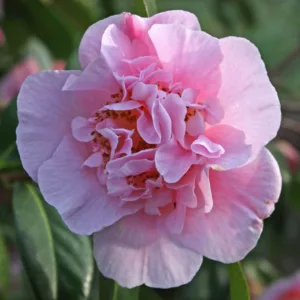
| ‘Bonnie Marie’ | Large pink semi-double to anemone-form flowers with deeper veining and golden stamens | Late fall | Mid spring | 8-10 ft. | 6-8 ft. | 7-9 |
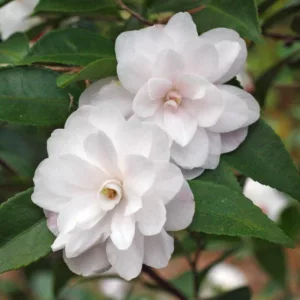
| ‘Cinnamon Cindy’ | Small white peony-form flowers delicately tinged with pink; mildly fragrant | Late fall | Mid spring | 8-10 ft. | 3-6 ft. | 7-9 |
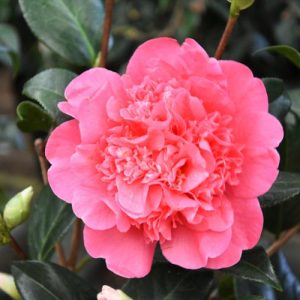
| ‘Annie Wylam’ | Bright pink peony- to rose-form flowers paling toward the center | Late fall | Mid spring | 8-10 ft. | 6-7 ft. | 7-9 |
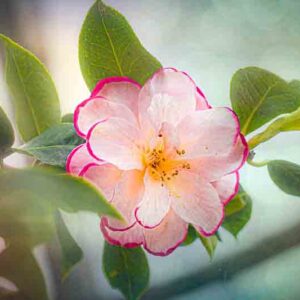
| ‘April Remembered’ | Large creamy-pink semi-double flowers edged deeper pink | Mid fall | Late spring | 8-10 ft. | 6-8 ft. | 6-10 |
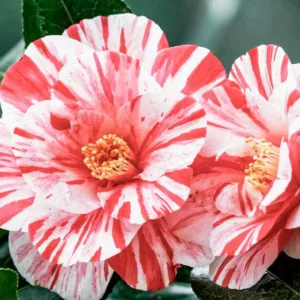
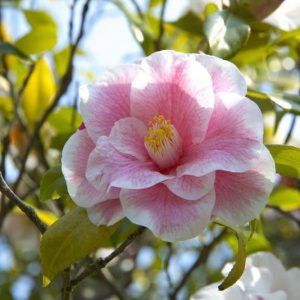
| ‘Carter’s Sunburnt’ | Large pale-pink semi-double flowers striped and splashed deeper pink | Late fall | Mid spring | 6-8 ft. | 6-8 ft. | 7-9 |
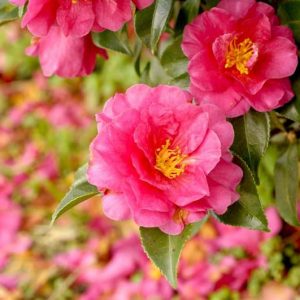
| ‘Don Mac’ | Large red semi-double flowers with conspicuous golden stamens | Late fall | Mid spring | 10-15 ft. | 5-10 ft. | 7-9 |
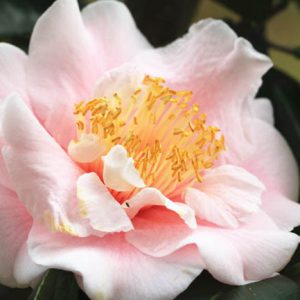
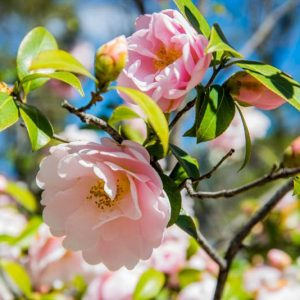
| ‘Moonlight Bay’ | Very large pale-pink semi-double flowers with golden stamens | Mid fall | Late spring | 8-10 ft. | 5-8 ft. | 7-9 |
| ‘Anticipation’ | Very large deep rose-pink full peony-form flowers | Mid fall | Late spring | 7-15 ft. | 4-10 ft. | 7-9 |
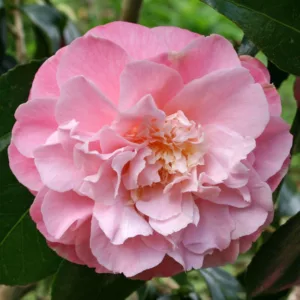
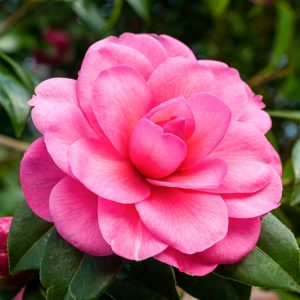
| ‘Water Lily’ | Bright rose-pink formal-double flowers with gracefully fluted petals | Mid fall | Late spring | 8-15 ft. | 5-8 ft. | 7-9 |
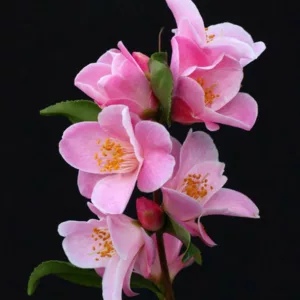
| ‘Minato-No-Akebono’ | Small shell-pink single flowers with prominent golden stamens and delicate fragrance | Mid fall | Late spring | 4-5 ft. | 3-5 ft. | 7-9 |
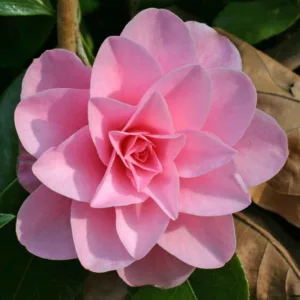
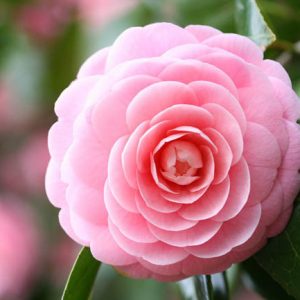
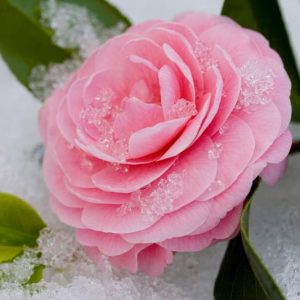
| ‘Pink Perfection’ | Perfectly arranged shell-pink formal-double flowers | Midwinter | Late spring | 8-10 ft. | 6-8 ft. | 7-9 |
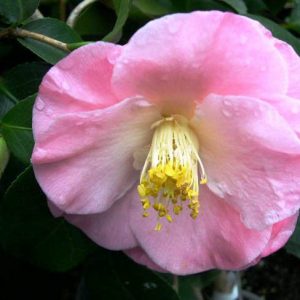
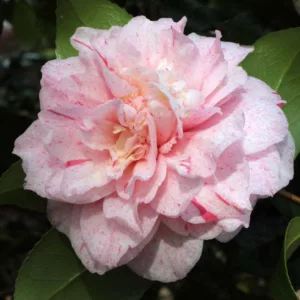
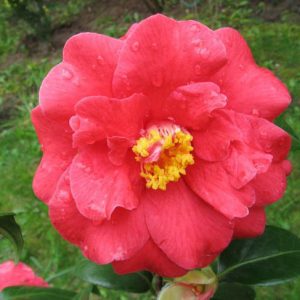
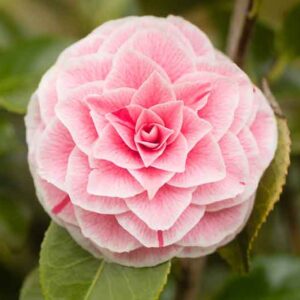
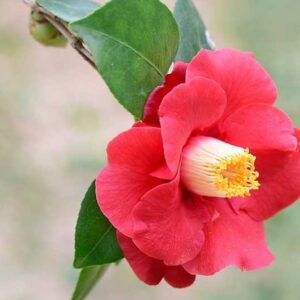
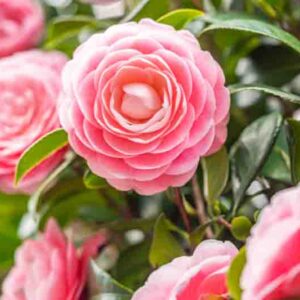
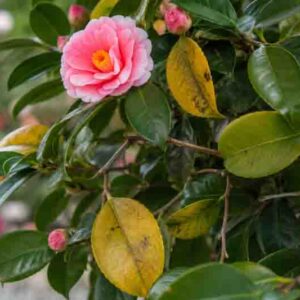
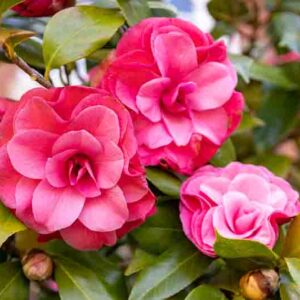
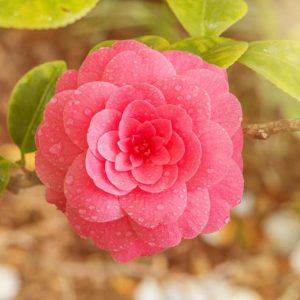
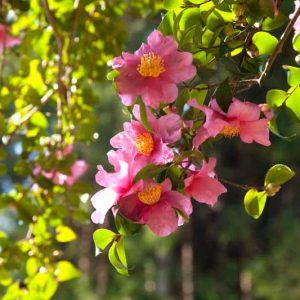
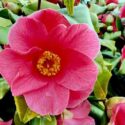
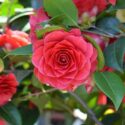
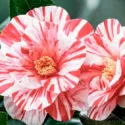
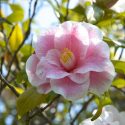
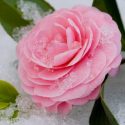
Browse the photographs below to compare flower colors, forms, foliage, and overall plant character. Select any cultivar to open its full Gardenia profile, including detailed descriptions, growing requirements, landscape uses, and additional images.
| Hardiness |
7 - 9 |
|---|---|
| Climate Zones | 4, 5, 6, 7, 8, 9, 12, 14, 15, 16, 17, 18, 19, 20, 21, 22, 23, 24 |
| Plant Type | Shrubs |
| Plant Family | Theaceae |
| Genus | Camellia |
| Exposure | Full Sun, Partial Sun, Shade |
| Season of Interest | Spring (Early, Mid), Fall, Winter |
| Maintenance | Low |
| Water Needs | Average |
| Soil Type | Clay, Loam, Sand |
| Soil pH | Acid, Neutral |
| Soil Drainage | Moist but Well-Drained, Well-Drained |
| Characteristics | Cut Flowers, Plant of Merit, Showy |
| Tolerance | Full Shade |
| Landscaping Ideas | Beds And Borders, Hedges And Screens, Patio And Containers, Wall-Side Borders, Walls And Fences |
| Garden Styles | City and Courtyard, Informal and Cottage, Japanese Garden, Traditional Garden |
‘April Remembered’, ‘Moonlight Bay’, ‘Anticipation’, ‘Water Lily’, and ‘Minato-No-Akebono’ are recorded from mid fall through late spring. Actual flowering may occur in distinct flushes and vary by climate.
‘Minato-No-Akebono’ is the smallest featured selection at approximately 4-5 feet tall and 3-5 feet wide. Its long recorded season and fragrant flowers make it especially valuable in compact gardens.
‘April Remembered’ is listed for USDA Zones 6-10, extending long-season camellia culture into colder regions when planted in a sheltered, suitable site.
‘Cinnamon Cindy’ and ‘Minato-No-Akebono’ combine extended flowering windows with delicate fragrance. Place them near paths, entrances, patios, or windows.
‘Betty Ridley’, ‘Water Lily’, and ‘Pink Perfection’ offer densely arranged petals and especially refined formal-double flower forms.
‘Don Mac’, ‘Anticipation’, and ‘Water Lily’ may reach 15 feet tall and require sufficient long-term space. Their evergreen foliage can provide year-round screening.
Camellia japonica provides many celebrated long-flowering cultivars. It offers remarkable diversity in flower form, ranging from single and semi-double blooms with visible golden stamens to peony forms, rose-form doubles, and intricately arranged formal doubles.
Japonicas generally develop glossy evergreen foliage and dense, shapely habits. Mature size varies considerably. ‘Carter’s Sunburnt’ remains around 6-8 feet, while ‘Don Mac’ may eventually reach 10-15 feet.
Their flowers may remain attached as they fade, especially on densely petaled cultivars. Removing browned blooms can improve appearance, although deadheading is not necessary for future flowering.
Camellia × williamsii hybrids originated primarily from crosses involving Camellia japonica and Camellia saluenensis. They are commonly vigorous, free-flowering, and well suited to cool, temperate gardens.
Many williamsii hybrids release their flowers cleanly as they fade, leaving a tidier shrub than cultivars whose dead flowers remain attached.
‘Anticipation’ and ‘Water Lily’ represent this group in the featured collection. Both have broad flowering ranges in Gardenia’s records and may grow into substantial evergreen shrubs.
Fragrance is relatively uncommon among traditional camellias, but breeders have used fragrant species such as Camellia lutchuensis to introduce scent into selected garden hybrids.
‘Cinnamon Cindy’ and ‘Minato-No-Akebono’ produce smaller flowers than many japonicas, but their delicate fragrance and broad flowering windows make them especially appealing near frequently used garden areas.
| Growing Region | Likely Flowering Pattern | Best Strategy |
|---|---|---|
| Mild coastal or warm-winter climate | Fall buds may open early, and several cultivars may overlap strongly. | Combine long-season selections with plants having different peak flowering periods. |
| Cool coastal or temperate climate | Flowering may start later but proceed gradually through an extended spring period. | Use seasonal classifications instead of expecting exact calendar dates. |
| Cold inland or exposed garden | Open fall and winter flowers may be damaged, while unopened buds can remain viable. | Favor hardy cultivars and protected locations away from drying wind. |
| Hot-summer region | Warm spring weather may accelerate bud opening and shorten individual flower life. | Provide afternoon shade, mulch, and consistent root-zone moisture. |
A shrub that flowers across several seasonal stages deserves a prominent position. Place compact or fragrant selections near entrances, patios, seating areas, or windows where the flowers can be enjoyed repeatedly.
‘Minato-No-Akebono’ is particularly useful in smaller spaces. ‘Cinnamon Cindy’ develops a relatively narrow habit despite reaching 8-10 feet tall.
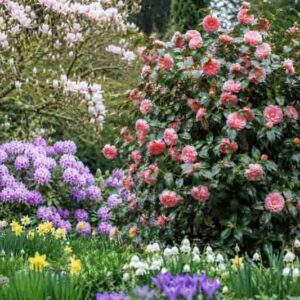
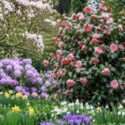
Long-flowering camellias create an evergreen framework behind bulbs, hellebores, ferns, azaleas, rhododendrons, and shade-tolerant perennials. Their broad flowering windows help bridge gaps between autumn, winter, and spring displays.
Place large cultivars toward the rear of a border and smaller or narrower selections closer to paths and foreground planting areas.
Bright woodland shade offers protection from intense summer heat and drying wind. Pair camellias with acid-loving companions such as pieris, azaleas, rhododendrons, ferns, sarcococca, hellebores, and suitable hydrangeas.
Avoid planting directly beneath shallow-rooted trees where severe competition for moisture may interfere with flower-bud development.
Large japonicas and williamsii hybrids can form impressive informal screens. Space plants according to their mature width rather than following one fixed planting distance.
Avoid repeated formal shearing when flowers are the priority. Selective pruning after bloom preserves more flower-bearing growth and maintains a natural outline.
‘Minato-No-Akebono’ is the clearest long-term container candidate among the featured cultivars because of its relatively compact 4-5-foot height and 3-5-foot spread.
Use a substantial container filled with acidic, freely draining potting mix. Maintain consistent moisture, provide drainage holes, and protect the root ball from severe freezing.
Larger cultivars may be grown in containers while young, but their eventual dimensions and irrigation needs make them better suited to planting in the ground.
A sheltered wall can protect flowers from drying wind and create a favorable microclimate. Upright cultivars may also be trained against wires where garden width is restricted.
Allow sufficient space between the plant and wall for airflow, maintenance, and natural root development.
Partial shade, filtered light, or bright shade suits most long-blooming camellias. Morning sun with protection from intense afternoon heat is often effective.
Deep shade can reduce flowering, while harsh afternoon sun may scorch foliage, fade flowers, and dry the shallow roots.
Grow camellias in acidic to neutral soil rich in organic matter. The soil should retain moisture while draining freely. Prolonged saturation can damage roots, while strongly alkaline conditions may cause yellow foliage and weak growth.
Plant with the upper surface of the root ball level with or slightly above the surrounding soil. Planting too deeply can restrict root health and reduce vigor.
Consistent moisture is particularly important during late summer and fall when flower buds are forming and enlarging. Drought at this stage can reduce flowering or contribute to bud drop.
Water deeply at the root zone, but avoid keeping the soil continuously saturated. Container plants may need watering during cool weather, especially when positioned beneath eaves.
Apply 2-3 inches (5-7 cm) of leaf mold, shredded bark, pine bark, or another organic mulch over the root zone. Keep mulch away from direct contact with the trunk and main stems.
Mulch conserves moisture, moderates root-zone temperatures, and gradually adds organic matter to the soil.
Healthy established plants growing in fertile soil may need little fertilizer. Where growth is weak or a deficiency is confirmed, feed lightly after flowering with a fertilizer formulated for acid-loving plants.
Avoid excessive nitrogen and late feeding, which may encourage soft vegetative growth rather than dependable flower-bud development.
Long-blooming camellias generally require little routine pruning. Remove dead, diseased, broken, crossing, or badly positioned branches and shorten overly long shoots only when necessary.
Because flowering may continue into spring, wait until the main display has ended before shaping the plant. Pruning later in summer or fall may remove shoots carrying the next crop of flower buds.
| Symptom | Possible Cause | What to Do |
|---|---|---|
| Many buds open at once | A sudden warm period accelerated flowering | This is weather-related. Combine cultivars with different peak periods to reduce seasonal gaps. |
| Few flower buds form | Deep shade, late pruning, drought, excessive nitrogen, or poor establishment | Improve light where practical, water consistently, and prune only after flowering. |
| Buds drop before opening | Drought, waterlogged roots, frost, transplant stress, or natural bud thinning | Maintain even moisture, improve drainage, and protect plants from severe exposure. |
| Open flowers turn brown suddenly | Frost or cold, drying wind | Wait for unopened buds to resume flowering during milder weather. |
| Brown patches spread across petals | Camellia petal blight or Botrytis gray mold | Remove affected and fallen flowers and compare the symptoms carefully. |
| Flowers decline unusually quickly | Warm temperatures, strong sun, heavy rain, or wind | Provide afternoon shade and shelter where practical. |
Even an exceptional long-season cultivar cannot guarantee uninterrupted flowers in every climate. The most dependable strategy is to combine several plants with overlapping flowering periods.
Explore Gardenia’s seasonal guides for additional choices:
Not every gardener needs the same flowering pattern. A compact garden may benefit most from one smaller plant with a broad seasonal range, while a large landscape can combine several shrubs whose flowering periods overlap.
Compare each cultivar’s recorded bloom start and end, mature dimensions, hardiness, flower form, and garden role. A long flowering window is only valuable when the plant also fits its site.
Long-blooming camellias can provide flowers across several seasonal stages, but they do not necessarily bloom continuously throughout their entire recorded range. Weather, climate, exposure, and plant maturity influence when buds open and how long the display lasts.
‘April Remembered’, ‘Moonlight Bay’, ‘Anticipation’, ‘Water Lily’, and ‘Minato-No-Akebono’ have the broadest ranges in Gardenia’s current cultivar data. ‘Minato-No-Akebono’ is also the smallest featured selection, while ‘April Remembered’ extends into USDA Zone 6.
Use the comparison table to match flowering period, mature size, spread, and hardiness to your garden. Then browse the 12 image profiles to compare flower color, form, foliage, and overall habit before making a final choice.
The broadest featured ranges extend from mid fall through late spring in Gardenia’s cultivar data. Actual flowering may occur in successive flushes, pause during cold weather, and vary considerably with climate and exposure.
April Remembered, Moonlight Bay, Anticipation, Water Lily, and Minato-No-Akebono are recorded from mid fall through late spring in Gardenia’s cultivar data.
Minato-No-Akebono is the smallest featured cultivar at approximately 4-5 feet tall and 3-5 feet wide. It also has fragrant shell-pink flowers and a broad recorded flowering range.
April Remembered is listed for USDA Zones 6-10. In Zone 6, plant it in a sheltered location protected from harsh winter wind and damaging temperature fluctuations.
Not necessarily. They may flower in successive flushes, pause during cold weather, and resume when conditions improve. The recorded range represents the potential overall season rather than uninterrupted daily bloom.
Cinnamon Cindy and Minato-No-Akebono combine broad flowering periods with delicate fragrance. Camellia fragrance is usually subtle rather than powerful.
Yes. Minato-No-Akebono is the clearest long-term container choice among the featured cultivars because it remains approximately 4-5 feet tall and 3-5 feet wide. Use acidic, freely draining potting mix.
Prune immediately after the main flowering display ends. Because some cultivars continue into late spring, wait until flowering is largely complete before shaping the plant.
Updated: July 2026 • Cultivar data derived from Gardenia plant records • Reviewed by Gardenia Editors
Picture courtesy of: 123RF Stock Photo
| Hardiness |
7 - 9 |
|---|---|
| Climate Zones | 4, 5, 6, 7, 8, 9, 12, 14, 15, 16, 17, 18, 19, 20, 21, 22, 23, 24 |
| Plant Type | Shrubs |
| Plant Family | Theaceae |
| Genus | Camellia |
| Exposure | Full Sun, Partial Sun, Shade |
| Season of Interest | Spring (Early, Mid), Fall, Winter |
| Maintenance | Low |
| Water Needs | Average |
| Soil Type | Clay, Loam, Sand |
| Soil pH | Acid, Neutral |
| Soil Drainage | Moist but Well-Drained, Well-Drained |
| Characteristics | Cut Flowers, Plant of Merit, Showy |
| Tolerance | Full Shade |
| Landscaping Ideas | Beds And Borders, Hedges And Screens, Patio And Containers, Wall-Side Borders, Walls And Fences |
| Garden Styles | City and Courtyard, Informal and Cottage, Japanese Garden, Traditional Garden |
Create a membership account to save your garden designs and to view them on any device.
Becoming a contributing member of Gardenia is easy and can be done in just a few minutes. If you provide us with your name, email address and the payment of a modest $25 annual membership fee, you will become a full member, enabling you to design and save up to 25 of your garden design ideas.
Join now and start creating your dream garden!
Create a membership account to save your garden designs and to view them on any device.
Becoming a contributing member of Gardenia is easy and can be done in just a few minutes. If you provide us with your name, email address and the payment of a modest $25 annual membership fee, you will become a full member, enabling you to design and save up to 25 of your garden design ideas.
Join now and start creating your dream garden!