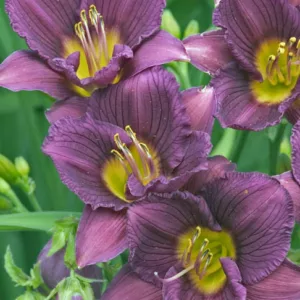
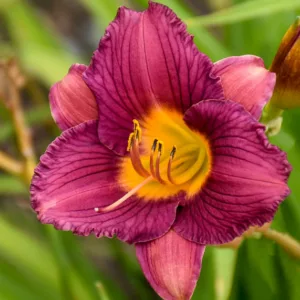
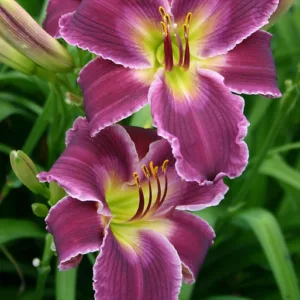
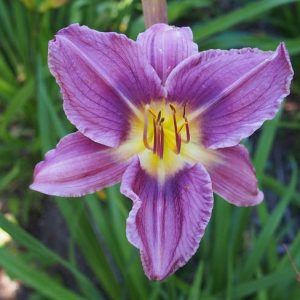
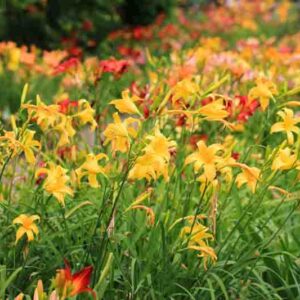
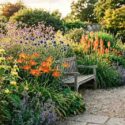
Daylilies tolerate partial shade, but less sunlight usually means fewer flowers. Discover how many hours of sun daylilies really need, why afternoon shade can actually help in hot climates, which cultivars are worth considering, and how to tell whether your "shady" garden is bright enough for reliable summer bloom.
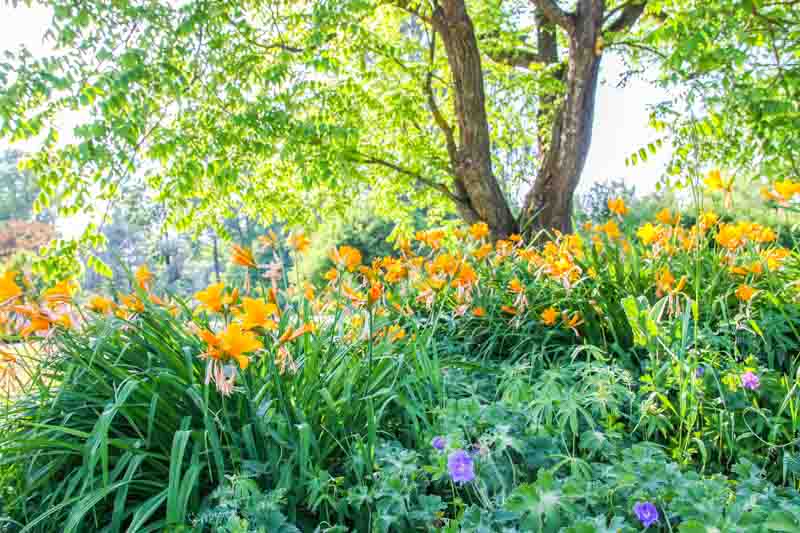


Daylilies are sun-loving perennials, but the answer to “Can daylilies grow in shade?” is more interesting than a simple yes or no.
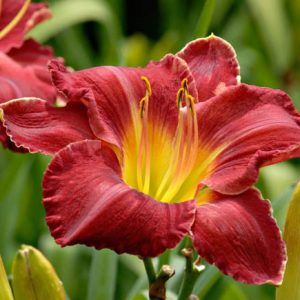
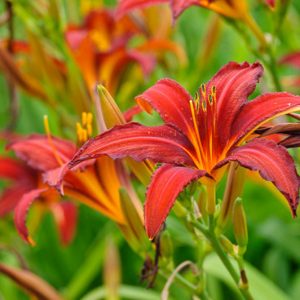
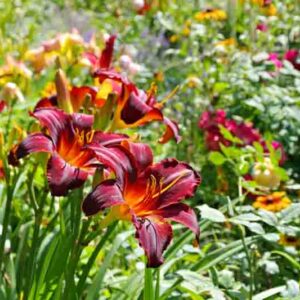
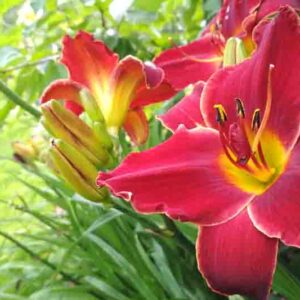
Most Hemerocallis flower most generously in full sun. The American Daylily Society recommends a minimum of about six hours of direct sunlight per day for most daylilies. However, it also makes an important exception: many red and purple cultivars benefit from partial shade during the hottest part of the day because dark colors absorb heat and do not withstand intense sun as well as lighter colors.
The Royal Horticultural Society takes a similar practical view. Daylilies perform best in full sun and are also suitable for partial shade, while richer flower colors may bleach in scorching sun. Heavy shade, on the other hand, generally produces poorer flowering.
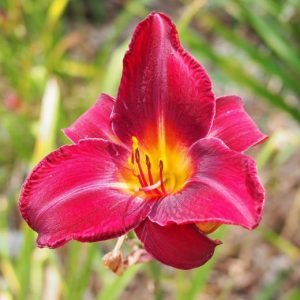
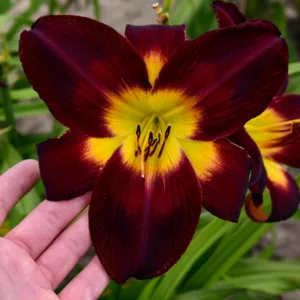
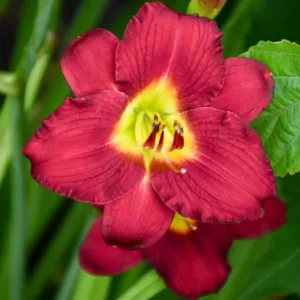
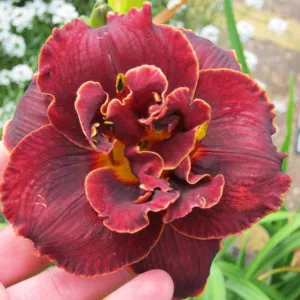
So the real question is not whether daylilies “like shade.” It is what kind of shade your garden provides. Strong morning and midday sun followed by afternoon shade can be an excellent situation, particularly for dark red, burgundy, purple, plum, and lavender-flowered cultivars. A bed receiving little direct sunlight all day is something entirely different.
Gardenia’s Daylily Light Test: Before deciding whether a site is suitable, ask three questions: How many hours of direct sun does it receive? When does that sunlight occur? Is the shade protecting flowers from extreme heat, or depriving the plant of the light it needs to bloom?
The American Daylily Society says most daylilies do best in full sun, tolerate part-shade conditions, and generally require at least six hours of direct sun per day.
That six-hour benchmark is useful because daylilies are exceptionally adaptable plants. A clump may survive and continue producing attractive foliage with considerably less light, which can create the impression that the site is working perfectly. Flowering tells a different story.
When light becomes insufficient, daylilies may produce fewer flower scapes and buds even though the leaves remain healthy and vigorous.
If an established plant has plenty of foliage but few flowers, insufficient sunlight should therefore be one of the first possibilities you investigate. Gardenia’s guide to why daylilies are not blooming explains how to distinguish low light from crowding, planting depth, excessive nitrogen, water stress, and other common causes.
For complete planting, watering, fertilizing, dividing, and seasonal-care advice, see Gardenia’s complete daylily growing and care guide.
“Partial shade” is one of the least precise descriptions in gardening.
A border receiving six hours of strong morning and midday sun before becoming shaded at 2 or 3 p.m. may be described as partially shaded. So may a bed beneath a tree canopy that receives occasional shafts of sunlight. Those sites offer very different growing conditions.
For daylilies, the amount and timing of direct sunlight matter more than the label attached to the bed.
The six-hour recommendation comes from the American Daylily Society. The other categories are practical Gardenia interpretations rather than rigid biological thresholds. Cultivar, climate, latitude, temperature, soil moisture, and the intensity of the available light all affect performance.
Partial shade is not always a compromise.
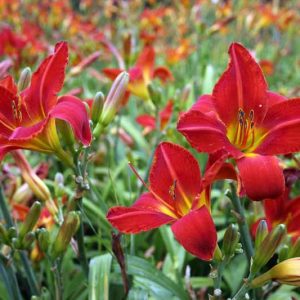
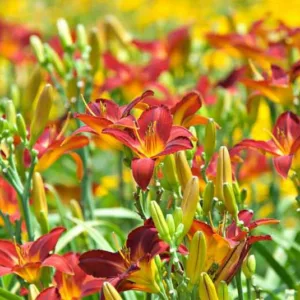
ADS specifically notes that many red and purple daylilies benefit from partial shade during the hottest part of the day. Dark colors absorb more heat than lighter colors and may not withstand intense sunlight as well.
RHS similarly notes that some richer daylily colors can bleach in scorching sun.
This makes morning sun followed by afternoon shade particularly interesting for dark-flowered daylilies. The plant still receives the strong light needed to support flowering, while its blooms escape some of the most intense late-day heat.
This matters most in hot inland climates, west-facing gardens, and beds next to walls, paving, gravel, or stone that reflect additional heat.
Think “afternoon protection,” not “shade-loving.” A dark red or purple daylily may benefit from escaping the harshest afternoon sun while still needing substantial direct light to produce a strong floral display.
The best candidates for this guide are not cultivars claimed to possess unusual shade tolerance. Nearly all garden daylilies prefer plenty of sun.
Instead, Gardenia gives particular attention to red, burgundy, purple, plum, lavender, and strongly eyed cultivars because ADS specifically identifies red and purple flowers as the group most likely to benefit from partial shade during the hottest part of the day.
Award-winning cultivars appear first because major American Daylily Society recognition provides useful evidence of garden quality beyond flower color alone. The remaining selections add valuable traits such as rebloom, compact growth, fragrance, distinctive flower form, or unusual color.
Important: this table does not claim that these cultivars have greater biological shade tolerance than other daylilies. They were chosen because their darker or strongly contrasted flowers make them especially relevant to the ADS recommendation that many red and purple cultivars benefit from hottest-part-of-day shade, while their award history or garden characteristics make them worthwhile plants in their own right.
The ADS recommendation refers to many red and purple cultivars, not every dark-flowered daylily.
‘Bela Lugosi’ illustrates why that distinction matters. Its flowers are deep purple, yet the cultivar is specifically described as sunfast. In other words, it is known for holding its rich color well in sunlight.
That does not make the broader ADS guidance wrong. It shows that cultivar genetics matter alongside flower color.
Use dark color as a reason to consider afternoon protection, not as proof that a cultivar cannot handle full sun. In moderate climates, many red and purple daylilies may perform beautifully in all-day sun. Protection becomes more relevant as summer temperatures, reflected heat, and afternoon exposure intensify.
If you have a choice, morning and midday sun followed by afternoon shade is generally the more useful partial-sun pattern for a dark-flowered daylily in a hot climate.
Morning sunlight supports photosynthesis and flowering without the intense heat usually associated with late afternoon. By contrast, a site shaded all morning but exposed to fierce west-facing sun for several hours can be technically “part sun” while still subjecting flowers to severe heat.
This is why counting hours alone does not tell the whole story.
A six-hour east- or southeast-facing exposure may behave very differently from a six-hour west-facing bed beside a stone wall.
Best partial-sun pattern for many dark daylilies: Plenty of direct morning and midday light, followed by some protection from the most intense late-afternoon heat.
Some can, but flowering becomes less predictable.
The six-hour figure supplied by the American Daylily Society is the safest target for reliable bloom. A daylily growing in bright partial sun with somewhat less direct light may still flower satisfactorily, particularly in a bright climate, but there is no universal threshold at which every cultivar suddenly stops blooming.
That is why it would be misleading to say that five hours is always enough or that four hours is always inadequate.
If an established daylily flowers well in its current location, there is no need to move it simply because it falls short of a textbook recommendation. Actual garden performance matters.
When choosing a new planting site, however, give a daylily the brightest appropriate location available.
Sometimes, but planting beneath trees introduces two challenges at once: shade and root competition.
The brighter outer edge of an open tree canopy can be useful, especially where it provides late-afternoon shade. Beneath a dense mature canopy, however, direct sunlight may be too limited for strong flowering.
Tree roots also compete heavily for moisture. A daylily growing beneath a tree may therefore receive both less light and less water than a plant growing in an open border.
If you want to grow daylilies near trees, favor the brighter outer canopy rather than deep shade close to the trunk, and avoid damaging major tree roots while planting.
Dappled shade can be perfectly workable when enough strong sunlight reaches the foliage during the day. It can also be much darker than gardeners realize.
There is an easy way to find out. Observe the proposed planting area several times on a clear summer day – in the morning, around noon, during midafternoon, and toward evening.
You may discover that a bed described as “shady” actually receives several hours of strong direct sun. Alternatively, a supposedly “part-sun” bed beneath dense foliage may receive little more than shifting sunflecks.
Gardenia’s Daylily Light Test is deliberately based on actual light reaching the plant, not the name gardeners give the site.
A daylily can flower beautifully for years and then gradually produce fewer blooms, even though nothing obvious has changed about the plant.
The change may be happening around it.
A young tree develops a broader canopy. A hedge becomes taller and denser. A neighboring shrub spreads several feet into the border. Because these changes occur gradually, diminishing sunlight can be easy to overlook.
The daylily may continue producing attractive leaves, masking the problem. Meanwhile, fewer scapes and buds appear each summer.
If a previously productive clump now produces mostly foliage, compare today’s light levels with those the plant received when it was first planted. Nearby vegetation may need pruning, or the daylily may need to be divided and moved to a brighter position.
Partially shaded soil often dries more slowly than soil exposed to all-day sun, but do not assume that every shaded bed stays moist.
Trees and shrubs can remove large quantities of water from the soil. Beds beneath roof overhangs may receive less rainfall than expected, and warm winds can still dry the root zone quickly.
Daylilies benefit from reliable moisture while actively growing and especially during scape development, bud formation, and flowering.
Check the soil before watering rather than following a rigid schedule. Deep watering is generally more useful than repeatedly wetting only the surface.
For more detailed advice, use Gardenia’s complete daylily care guide.
A leafy daylily growing in shade can tempt gardeners to add fertilizer in hopes of producing more flowers.
That can make the problem worse.
Excess nitrogen encourages foliage growth but cannot replace missing sunlight. A plant that already has abundant leaves and few flowers rarely needs to be pushed into producing even more leaves.
Before feeding a poorly flowering daylily, check sun exposure, crowding, planting depth, water, and the age of the clump.
Daylilies are adaptable, but they are not woodland perennials.
If a site receives little direct sunlight throughout the growing season, trying cultivar after cultivar is unlikely to solve the basic problem. A genuine shade plant will generally provide more dependable results.
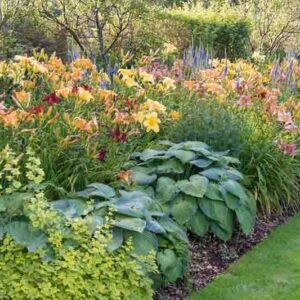
Depending on your climate and conditions, Hostas, Epimedium, ferns, Heuchera, Hellebores, woodland Phlox, Brunnera, or other shade-adapted perennials may be better choices.
Gardenia’s shade reality check: If a daylily produces healthy foliage but very few flower scapes, first measure the available light. The solution may not be a supposedly more shade-tolerant daylily. It may be a brighter location – or a plant genuinely adapted to shade.
| Hardiness |
3 - 9 |
|---|---|
| Heat Zones |
2 - 11 |
| Climate Zones | 2, 3, 4, 5, 6, 7, 8, 9, 10, 11, 12, 13, 14, 15, 16, 17, 18, 19, 20, 21, 22, 23, 24, H1, H2 |
| Plant Type | Perennials |
| Genus | Hemerocallis |
| Exposure | Full Sun, Partial Sun |
| Season of Interest | Summer (Early, Mid, Late), Fall |
| Maintenance | Low |
| Water Needs | Average |
| Soil Type | Chalk, Clay, Loam, Sand |
| Soil pH | Acid, Alkaline, Neutral |
| Soil Drainage | Moist but Well-Drained, Well-Drained |
| Characteristics | Showy |
| Tolerances | Drought, Rabbit, Dry Soil, Salt |
| Attracts | Butterflies, Hummingbirds |
| Landscaping Ideas | Banks And Slopes, Beds And Borders, Patio And Containers |
| Garden Styles | City and Courtyard, Coastal Garden, Informal and Cottage, Traditional Garden |
Find the right daylily for your garden: Use Gardenia’s Plant Finder to explore plants by color, size, bloom season, exposure, and other garden traits, or use the Daylily Comparison Tool to compare cultivars side by side. Use the Garden Design Tool to combine plants, compare their seasons and sizes, and build a planting palette for your own garden. You can also browse Gardenia’s daylily garden ideas for more planting inspiration.
Daylilies remain fundamentally sun-loving flowering perennials. For the most dependable bloom, the American Daylily Society recommends about six hours or more of direct sunlight per day.
But partial shade is not automatically a disadvantage.
For many red and purple cultivars, protection during the hottest part of the day may actually improve flower appearance because darker colors absorb more heat and may withstand intense sunlight less well than lighter flowers.
That makes a garden with strong morning and midday sun followed by afternoon shade potentially excellent for richly colored daylilies.
The important distinction is between shade that protects flowers from excessive heat and shade that prevents the plant from receiving enough light to flower well.
Choose the site first, then the cultivar. Measure the sunlight. Notice when it arrives. Consider summer heat and reflected exposure. And when choosing among dark-flowered daylilies, give proven garden performers and award-winning cultivars particular consideration.
That approach is far more useful than simply asking whether a daylily “grows in shade.”
Daylilies can grow in partial shade, but they are not true shade plants. The American Daylily Society says most daylilies require at least six hours of direct sunlight per day for good performance. Heavy shade generally reduces flowering.
About six hours or more of direct sunlight per day is the American Daylily Society’s general recommendation. Some daylilies may flower with somewhat less light, but flowering can become less reliable.
Many red and purple cultivars can benefit from partial shade during the hottest part of the day. The American Daylily Society notes that dark colors absorb heat and do not withstand intense sun as well as lighter colors.
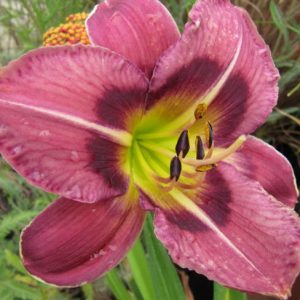
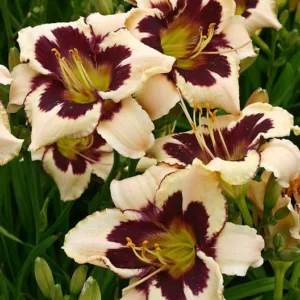
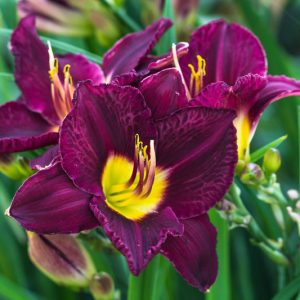
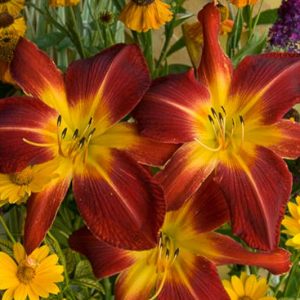
Dark red, burgundy, purple, plum, and strongly eyed cultivars are particularly worth considering where plants receive substantial morning and midday sun followed by afternoon shade. Award-winning examples include ‘Always Afternoon’, ‘Moonlit Masquerade’, ‘Bela Lugosi’, ‘Ruby Spider’, ‘Red Volunteer’, ‘Persian Ruby’, ‘Pardon Me’, and ‘Night Embers’.
Both can support flowering, but in hot climates strong morning and midday sun followed by afternoon shade can be particularly useful for red and purple daylilies because the flowers escape the harshest late-day heat.
They can grow near open-canopied trees if they still receive substantial direct sunlight. Dense tree shade and competition from roots can reduce both flowering and available moisture.
American Daylily Society – Daylily FAQ – guidance on sun requirements, partial shade, flower color, and general daylily culture.
Royal Horticultural Society – How to Grow Hemerocallis – guidance on sun, partial shade, and the response of richly colored flowers to scorching sunlight.
American Daylily Society – Stout Silver Medal – the society’s highest cultivar award and historical winners.
American Daylily Society – Awards – major and specialist awards used to evaluate cultivar recognition.
Gardenia – Hemerocallis Daylilies – individual cultivar profiles, growing requirements, flower characteristics, photographs, and comparisons.
| Hardiness |
3 - 9 |
|---|---|
| Heat Zones |
2 - 11 |
| Climate Zones | 2, 3, 4, 5, 6, 7, 8, 9, 10, 11, 12, 13, 14, 15, 16, 17, 18, 19, 20, 21, 22, 23, 24, H1, H2 |
| Plant Type | Perennials |
| Genus | Hemerocallis |
| Exposure | Full Sun, Partial Sun |
| Season of Interest | Summer (Early, Mid, Late), Fall |
| Maintenance | Low |
| Water Needs | Average |
| Soil Type | Chalk, Clay, Loam, Sand |
| Soil pH | Acid, Alkaline, Neutral |
| Soil Drainage | Moist but Well-Drained, Well-Drained |
| Characteristics | Showy |
| Tolerances | Drought, Rabbit, Dry Soil, Salt |
| Attracts | Butterflies, Hummingbirds |
| Landscaping Ideas | Banks And Slopes, Beds And Borders, Patio And Containers |
| Garden Styles | City and Courtyard, Coastal Garden, Informal and Cottage, Traditional Garden |
Create a membership account to save your garden designs and to view them on any device.
Becoming a contributing member of Gardenia is easy and can be done in just a few minutes. If you provide us with your name, email address and the payment of a modest $25 annual membership fee, you will become a full member, enabling you to design and save up to 25 of your garden design ideas.
Join now and start creating your dream garden!
Create a membership account to save your garden designs and to view them on any device.
Becoming a contributing member of Gardenia is easy and can be done in just a few minutes. If you provide us with your name, email address and the payment of a modest $25 annual membership fee, you will become a full member, enabling you to design and save up to 25 of your garden design ideas.
Join now and start creating your dream garden!