Do deer eat sedum? Sometimes, but many stonecrops have excellent deer-resistance records. The catch is that not every sedum behaves the same way. Compare 12 lower-browse choices, learn how to recognize real deer damage, and find the right creeping or upright stonecrop for your garden.
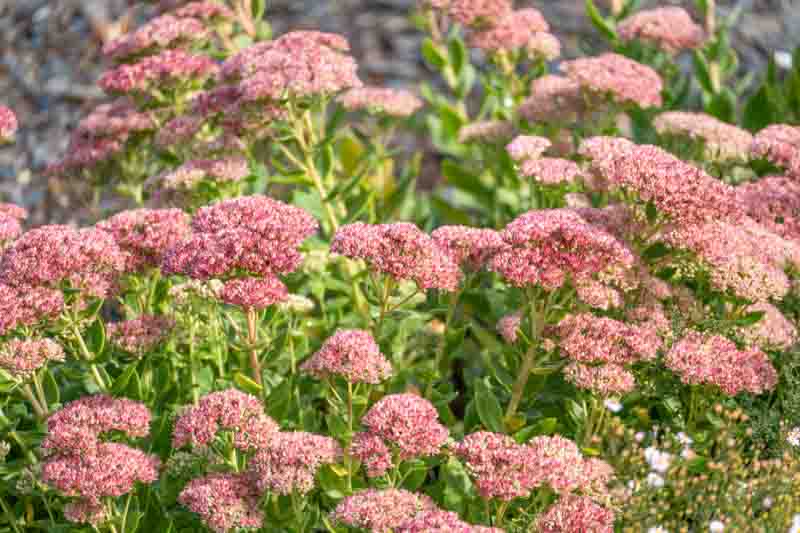


Deer can eat sedum, but many stonecrops are considered deer resistant and are usually left alone. Their fleshy foliage and generally tough, low-maintenance growth make them less appealing than many softer garden plants, although no sedum is completely deer-proof.
Browsing depends on the exact sedum, how hungry local deer are, the time of year, and whether the plant is young or newly planted. Some low-growing stonecrops have particularly strong resistance records, while several upright cultivars are also specifically listed as deer resistant.
Many sedums are good choices for gardens where deer are a regular problem. Several individual stonecrops are specifically listed as deer resistant by university extension sources, plant breeders, and botanical references.
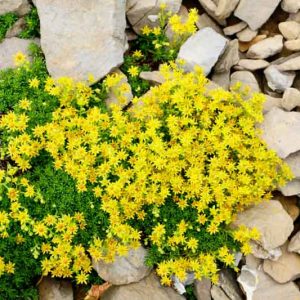
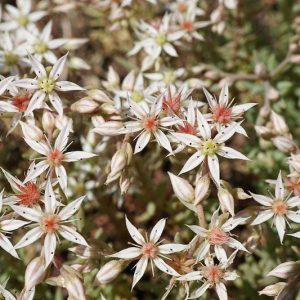
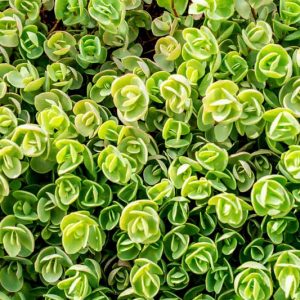
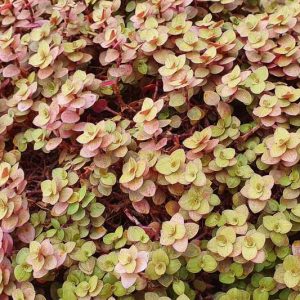
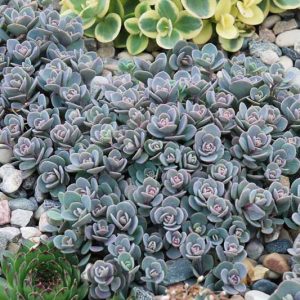
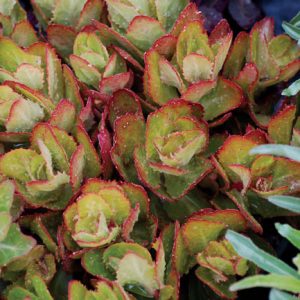
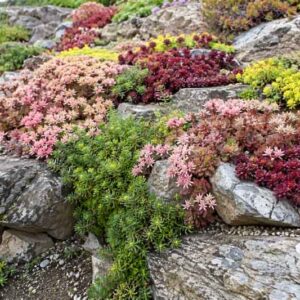
Examples include Sedum acre, Sedum album, Sedum tetractinum, Sedum makinoi, ‘Angelina’, ‘John Creech’, and cultivars in the SunSparkler series. Native woodland stonecrop, Sedum ternatum, also has a low deer-browse rating from University of Maryland Extension.
Still, “deer resistant” describes a tendency, not a guarantee. Deer preferences change with location, season, available food, and herd pressure. A sedum ignored for years in one garden may occasionally be sampled in another.
Gardenia’s Sedum Rule: treat deer resistance as a useful advantage, not a promise. The most dependable choices are sedums with a documented resistance record for the exact species or cultivar.
Upright stonecrops deserve a little more explanation because their deer-resistance record is not uniform.
Rutgers rates Sedum spectabile, now generally classified as Hylotelephium spectabile, C – Occasionally Severely Damaged. In the Rutgers system, that means deer may sometimes cause significant damage and the plant may need protection in deer-prone landscapes.
The Royal Horticultural Society reaches a similarly cautious conclusion. Its deer-resistant plant list is based in part on a survey of 740 gardeners, and Hylotelephium spectabile appears among the plants reported as very susceptible to deer damage.
That does not mean every upright stonecrop is a poor choice. Several named cultivars have their own deer-resistance records.
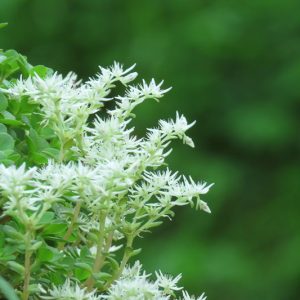
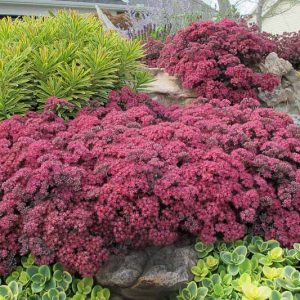
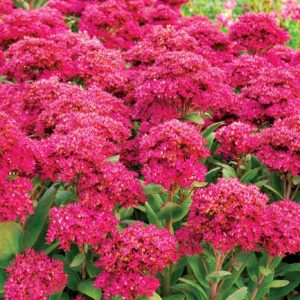
For example, NC State specifically says that ‘Matrona’ tolerates deer and rabbits. Terra Nova Nurseries also lists several upright cultivars as deer resistant, including ‘Mr. Goodbud’, ‘Birthday Party’, ‘Class Act’, ‘Cherry Truffle’, ‘Peach Pearls’, and ‘Thunderhead’.
The practical takeaway: do not reject every upright sedum because S. spectabile has a weaker general rating. Check the named cultivar. Some upright stonecrops have good cultivar-specific deer-resistance records.
If deer resistance is important, these stonecrops are useful starting points. They include both low-growing groundcovers and upright border plants, so choose according to the job you need the plant to perform.
| Hardiness |
3 - 9 |
|---|---|
| Plant Type | Cactus & Succulents, Perennials |
| Genus | Sedum |
| Exposure | Full Sun, Partial Sun |
| Season of Interest | Spring (Mid, Late), Summer (Early, Mid, Late), Fall |
| Maintenance | Low |
| Soil Drainage | Well-Drained |
| Tolerances | Deer |
| Attracts | Bees, Butterflies, Birds |
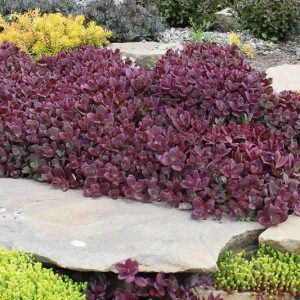
Choose for the garden role as well as the deer rating. ‘John Creech’ can hug the ground between stones, while ‘Matrona’ creates an upright flowering clump. Both may resist deer, but they are not interchangeable plants.
A deer-resistant plant can still be sampled. Browsing is more likely when food is scarce, deer populations are high, or plants are newly installed.
Young spring growth may also attract more attention than mature foliage. Newly planted sedums have another disadvantage: even modest damage can look severe because the plant has not yet developed a substantial crown or spreading root system.
Drought and winter can also change deer behavior. When natural forage becomes limited, plants ignored earlier in the year may suddenly become worth investigating.
Gardenia browse check: one missing shoot is usually less important than repeated damage. If deer sample a sedum once and do not return, protection may not be necessary. Repeated loss of fresh growth is the more useful warning sign.
Sedum can look damaged for reasons that have nothing to do with deer.
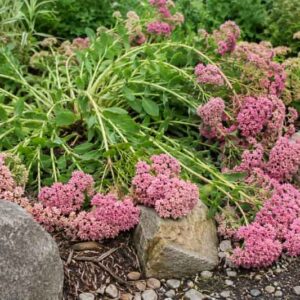
Flopped is not browsed. If an upright sedum still has its stems, foliage, and flower heads but is leaning outward, check sunlight, drainage, watering, and fertilizer before blaming deer.
Most established stonecrops can recover from modest browsing. The best response depends on whether the damage is occasional or becoming a pattern.
Do not assume that planting aromatic or deer-resistant plants around a sedum will create a protective barrier. Deer may ignore one plant and browse another growing directly beside it.
Knowing that a sedum resists deer is only the first step. A successful plant also has to fit your climate, sunlight, drainage, mature size, and the role you need it to play.
Explore the Gardenia Sedum collection to compare stonecrops, or use the Low-Growing Sedum Guide to see which varieties creep, clump, or spread aggressively.
Then use the Gardenia Plant Finder to search for deer-resistant plants by hardiness, sun, soil, drainage, water needs, native status, mature size, and garden use. Browse Deer-Resistant Garden Ideas for inspiration, and use the Garden Design Tool to check whether your stonecrops and companion plants actually suit the same garden conditions.
Deer can eat sedum, but many stonecrops are deer resistant and usually suffer little browsing. Damage becomes more likely on tender growth, new plants, or when other food is scarce.
No. Many sedums have good deer-resistance records, but resistance varies by species and cultivar. Check the exact plant when deer pressure is a serious concern.
Its general resistance record is weaker than that of many other stonecrops. Rutgers rates Sedum spectabile C – Occasionally Severely Damaged, while an RHS survey placed Hylotelephium spectabile among plants very susceptible to deer damage.
Yes. Several named upright cultivars are specifically documented as deer resistant. Examples include ‘Matrona’, ‘Mr. Goodbud’, ‘Class Act’, ‘Birthday Party’, ‘Peach Pearls’, and other selected cultivars.
‘Autumn Joy’ can be left alone in some gardens, but its resistance record is mixed. Because showy stonecrop receives a weaker Rutgers rating and appears among susceptible plants in the RHS survey, it should not be considered deer-proof.
Well-supported choices include Sedum acre, Sedum album, Sedum ternatum, Sedum tetractinum, ‘Angelina’, ‘John Creech’, SunSparkler cultivars, ‘Matrona’, ‘Mr. Goodbud’, ‘Class Act’, and ‘Birthday Party’.
They may. Deer become less selective when preferred food is scarce or deer pressure is high. Resistance reduces browsing risk but does not make any sedum completely deer-proof.
Updated: September 2026 – Reviewed by Gardenia Editors
| Hardiness |
3 - 9 |
|---|---|
| Plant Type | Cactus & Succulents, Perennials |
| Genus | Sedum |
| Exposure | Full Sun, Partial Sun |
| Season of Interest | Spring (Mid, Late), Summer (Early, Mid, Late), Fall |
| Maintenance | Low |
| Soil Drainage | Well-Drained |
| Tolerances | Deer |
| Attracts | Bees, Butterflies, Birds |
Create a membership account to save your garden designs and to view them on any device.
Becoming a contributing member of Gardenia is easy and can be done in just a few minutes. If you provide us with your name, email address and the payment of a modest $25 annual membership fee, you will become a full member, enabling you to design and save up to 25 of your garden design ideas.
Join now and start creating your dream garden!