Drought-tolerant trees bring bold form, deep shade and low-maintenance resilience. With thoughtful planting, proper soil prep and smart watering early on, you’ll invest once and reap decades of performance—even when the taps run low.


Drought-tolerant trees can bring shade, structure, wildlife value, and long-term beauty to landscapes where water is limited. Once established, the right tree can often go longer between irrigations than a higher-water species, but successful low-water planting still depends on matching the tree to your climate, soil, drainage, available space, and summer conditions.
This guide explains how to choose, plant, water, and care for trees that can cope with dry periods while still performing well in the landscape.
Good to know
These terms are often used interchangeably, but they all describe slightly different ideas.
Drought-tolerant trees can withstand periods of limited moisture once established. Drought-resistant is commonly used in the same sense, although no tree is completely resistant to severe or prolonged drought. Low-water describes the landscape goal: choosing trees that require less supplemental irrigation under suitable growing conditions.
The important phrase is once established. Even species adapted to dry climates need regular moisture after planting while roots expand into the surrounding soil.
Trees are valuable for shade, structure, habitat, and cooling, and drought-tolerant species can provide those benefits while reducing irrigation demand once established. They can be particularly useful in dry-summer climates, water-restricted landscapes, exposed sites, and gardens where frequent irrigation is impractical.
Watering matters
Trees survive dry conditions in different ways. No single feature guarantees drought tolerance, but several adaptations are common among species that cope well with limited moisture.
Gardenia tip
How they behave: Once established, these trees can tolerate extended dry periods with relatively little supplemental irrigation when grown in suitable climates and soils.
Best for: dry-summer gardens, xeric landscapes, hot courtyards, exposed sites, and other areas where irrigation is deliberately limited.
How they behave: These trees tolerate periodic dry spells once established but may need supplemental watering during prolonged drought, extreme heat, or unusually dry seasons.
Best for: mixed landscapes, residential gardens, and regions where rainfall is intermittent rather than consistently scarce.
| Plant Type | Trees |
|---|---|
| Tolerances | Drought |
| Need | Great Trees | Notes |
|---|---|---|
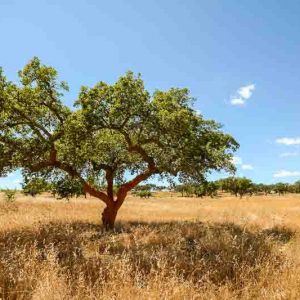
| Large shade for hot yards | Bur oak, cork oak, honeylocust, London plane | Tolerate heat and urban conditions when established. |
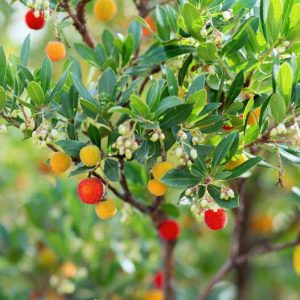
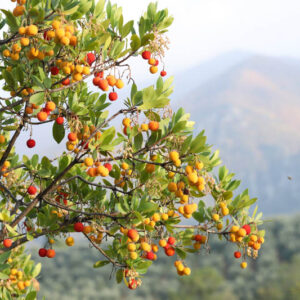
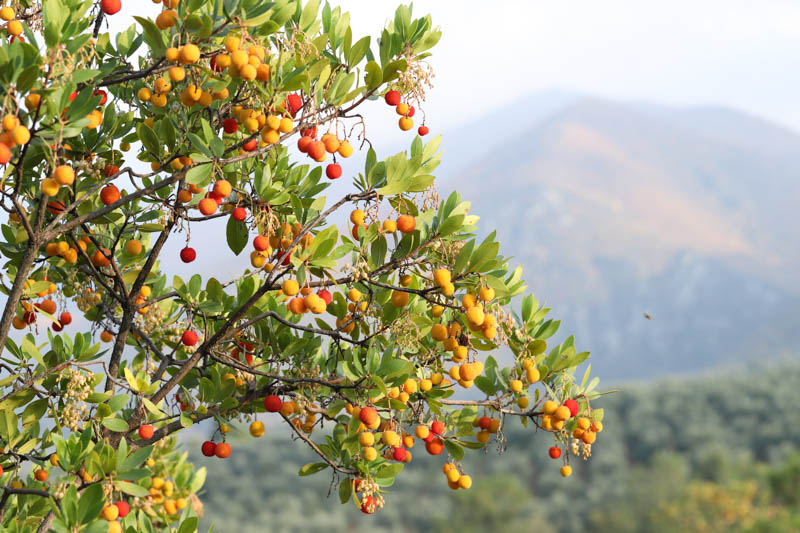
| Small ornamental accents | Desert willow, strawberry tree, Texas mountain laurel | Flower or fruit interest with low water needs. |
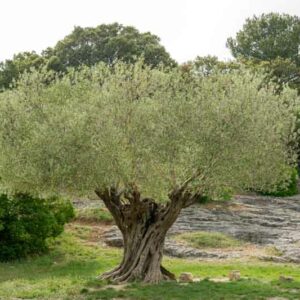
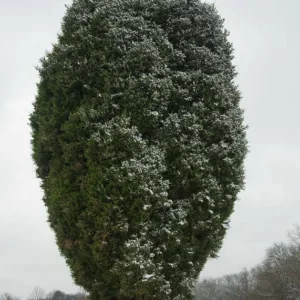
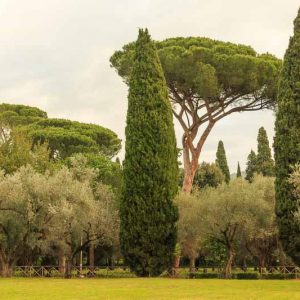
| Evergreen structure | Olive, Arizona cypress, Eastern redcedar | Year-round screening and wind filtering. |
| Coastal wind and salt | Olive, shore pine, strawberry tree | Choose selections proven for your local coast. |
| Street tree resilience | Ginkgo, golden raintree, honeylocust, hackberry | Tolerate heat islands, compaction, intermittent care. |
Regionality matters: drought in the Southwest is not drought in the Northeast. Always match species to climate zone, humidity, and soil. Verify invasive status locally.
Think like a storm. Give fewer, deeper drinks that sink past the root ball and create a reason for roots to explore.
Mulch is your water-saver. Lawn is your water competitor. Groundcovers can be allies if chosen well.
Good structure improves wind stability and reduces stress during drought. A balanced canopy also shades its own roots and nearby plantings, lowering irrigation needs.
Find Drought-Tolerant Garden Design Ideas
Drought-tolerant trees are species that can survive and grow with minimal water once established. They typically have deep root systems, small or waxy leaves, and natural adaptations that help them conserve moisture and handle heat.
Yes, even drought-tolerant trees need regular watering during their first one to three years while roots establish. After that, they usually only need deep, occasional watering during long dry periods.
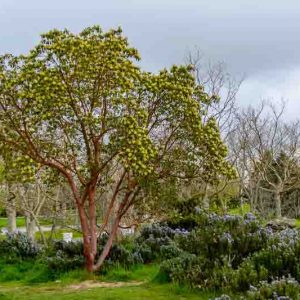
Excellent shade trees include Chinese Pistache, Cork Oak, Bur Oak, Desert Willow, and Honey Locust. They grow broad canopies and tolerate full sun and heat with little water once mature.
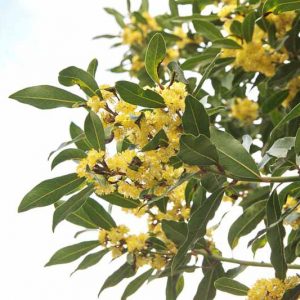
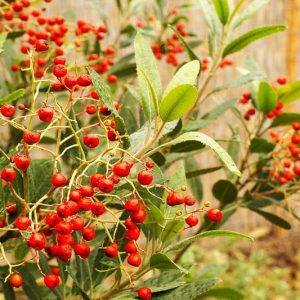
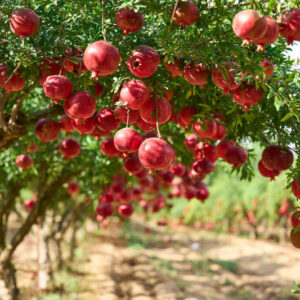
Compact and ornamental options include Texas Mountain Laurel, Strawberry Tree (Arbutus unedo), Olive, and Pomegranate. These stay modest in size but bring color, texture, and drought endurance.
It’s best not to. Drought-tolerant species dislike constant moisture and may develop root rot. Group them with other low-water plants and use separate irrigation zones.
They prefer well-drained, often lean or rocky soils. Avoid heavy clay or overfertilized soil — too much water or nutrients can make drought-adapted species weak and short-lived.
Most establish in two to three growing seasons. During that time, water deeply but infrequently to encourage deep roots. After establishment, they can often thrive on rainfall alone.
Usually yes. Many evolved in hot, arid regions. Still, newly planted trees can struggle in extreme heat, so mulch well and water deeply during the first few summers.
A few semi-deciduous species may shed some leaves in extreme heat to reduce stress, then flush new growth once rains return. It’s a normal survival response, not a disease.
Plant in fall or early spring. Cooler weather and seasonal rains help roots establish before summer stress arrives.
Mulch 2–3 inches deep (away from the trunk), water deeply but rarely, remove competing turf around the base, and prune lightly to balance canopy and roots.
Drought-tolerant trees let you design boldly without tethering your garden to the hose. Start with the right species, plant high with the root flare visible, water deeply in year one, and maintain a generous mulch ring. Then let their natural resilience do the heavy lifting. When heat rises and rain takes a break, your landscape can still look cool, shaded, and composed.
Updated: October 2025
| Plant Type | Trees |
|---|---|
| Tolerances | Drought |
Create a membership account to save your garden designs and to view them on any device.
Becoming a contributing member of Gardenia is easy and can be done in just a few minutes. If you provide us with your name, email address and the payment of a modest $25 annual membership fee, you will become a full member, enabling you to design and save up to 25 of your garden design ideas.
Join now and start creating your dream garden!