Spanish Jasmine, Royal Jasmine, Catalan Jasmine, Sicilian Jasmine

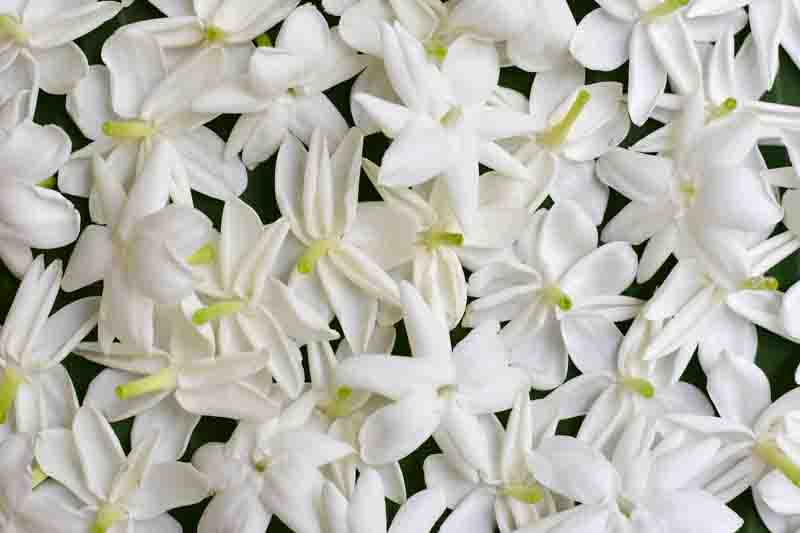


Jasminum grandiflorum, commonly called Spanish Jasmine, is one of the most elegant and commercially important fragrant jasmines in cultivation. It is prized for its large, intensely scented white flowers, graceful climbing habit, and long season of bloom in warm weather. Often known as Royal Jasmine, Catalonian Jasmine, or Large-Flowered Jasmine, this species is grown both for garden beauty and for the perfume industry, where its flowers are valued for their rich, refined fragrance. If you want a true jasmine that combines ornamental charm, serious scent, and professional-grade garden performance, Jasminum grandiflorum is one of the finest choices available.
Jasminum grandiflorum is a fragrant semi-evergreen to deciduous climbing jasmine grown for large white flowers that bloom from summer into fall. Plant it in full sun to part shade in fertile, well-drained soil, water regularly during active growth, feed through the warm season, and prune after flowering to shape the plant.
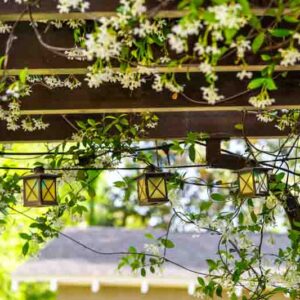
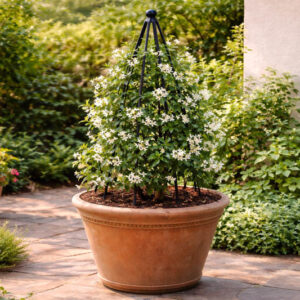
Use: Excellent for trellises, pergolas, warm walls, courtyard gardens, containers, conservatories, and fragrance gardens.
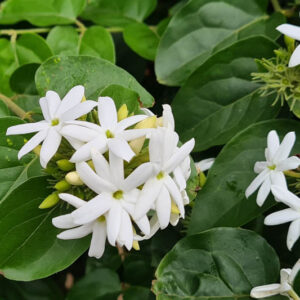
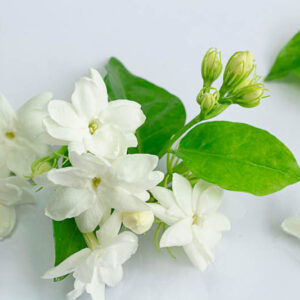
Highlight: Large, highly fragrant white flowers with pink-tinged buds over a long warm-season bloom period.
Design note: Grow it close to paths, terraces, doors, or seating areas where the scent can be enjoyed rather than wasted in the background.
| Botanical Name | Jasminum grandiflorum |
|---|---|
| Family | Olive family (Oleaceae) |
| Common Names | Spanish Jasmine, Royal Jasmine, Catalonian Jasmine, Large-Flowered Jasmine |
| Native Range | Native from East Africa and the Arabian Peninsula through Pakistan to south-central China; widely cultivated in warm regions |
| Plant Type | Semi-evergreen climber, deciduous climber, fragrant vine, perfume jasmine |
| Hardiness (approx. USDA) | Best in USDA Zones 9-10, with protection in sheltered Zone 8 gardens and container culture in colder regions |
| Height | 6-13 ft. (2-4 m) tall and wide as a free-standing shrub; capable of reaching 25–40 ft (7.5–12 m) as a climber |
| Spread | 5-10 ft. (1.5-3 m), depending on training and pruning |
| Sun Exposure | Full sun to part shade, with best flowering in strong light |
| Soil | Fertile, well-drained, moderately moist, loamy soil |
| Bloom Time | Summer into fall, often with a long flowering season in warmth |
| Flower Color | White flowers opening from pink-tinged buds |
| Fragrance | Yes – rich, sweet, refined, and highly valued in perfumery |
| Foliage | Glossy green pinnate leaves with multiple leaflets |
| Edible Flowers | Flowers may be used for scenting preparations in some traditions, but use only unsprayed, culinary-safe flowers |
Spanish Jasmine is one of the most admired true jasmines in warm-climate gardening. It belongs to the genus Jasminum and is especially valued for fragrance, flower quality, and climbing elegance. This is the jasmine gardeners choose when they want something more refined than a generic vine – a plant with genuine perfume value, excellent ornamental character, and strong garden presence.
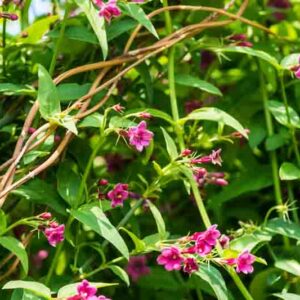
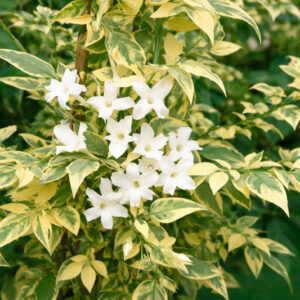
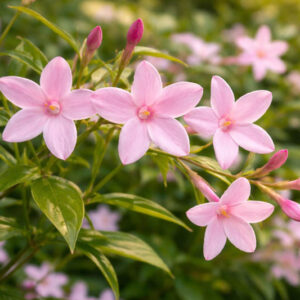
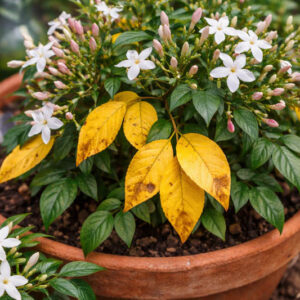
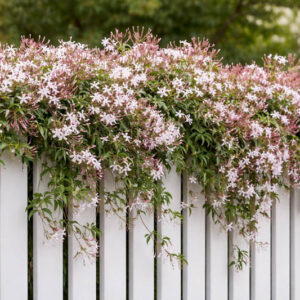
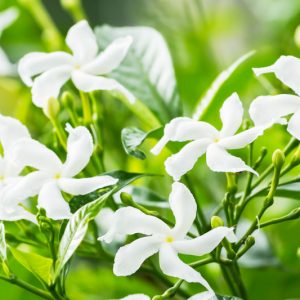
Spanish Jasmine is a semi-evergreen to deciduous woody climber with slender twining stems and glossy, pinnate foliage. The leaves are divided into several leaflets, giving the plant a lighter, more textured look than many broadleaf climbers. Flower buds are often flushed pink, then open into starry white blooms around 2 in. across (about 5 cm). The fragrance is rich, sweet, and unmistakably jasmine, but with a polished, elegant character that explains its long-standing value in perfumery.
Jasminum grandiflorum has a broad native distribution extending from East Africa and the Arabian Peninsula through Pakistan to south-central China. It is now widely cultivated across subtropical and warm temperate regions and has become closely associated with Mediterranean-style gardens, scented courtyards, and perfume crops.
Spanish Jasmine typically blooms from summer into fall. In climates with a long warm season, flowering can be impressively extended. That lengthy display makes it especially useful for gardeners who want fragrance after spring has passed and while patios, terraces, and outdoor rooms are still in full use.
This is a climber with movement and softness, not a rigid wall-covering machine. It twines rather than clings, so it needs support. Left unsupported, it can sprawl and mound loosely. Trained upward, it becomes a refined flowering vine that feels airy and graceful rather than heavy.
Spanish Jasmine typically reaches 6–13 ft (2–4 m) tall and wide when grown as a free-standing shrub or kept pruned, but 25–40 ft (7.5–12 m) tall as a climber with support in ideal conditions.
Jasminum grandiflorum is best suited to USDA Zones 9-10. In mild sheltered gardens it may persist in warmer parts of Zone 8 with protection, but it is not a carefree cold-climate vine. In cooler regions, it performs best in containers, conservatories, or bright winter shelter.
Indoor tip:
Spanish Jasmine grows best indoors or under protection in bright conditions with moderate warmth, ideally around 60-75°F (16-24°C). Cold drafts, low light, and waterlogged roots are the fastest ways to lose buds, foliage quality, and flowering momentum.
Jasminum grandiflorum holds the Royal Horticultural Society’s Award of Garden Merit, a strong sign that it combines beauty, reliability, and real garden value.
Takeaway:
Spanish Jasmine is one of the best true jasmines for gardeners who want large fragrant flowers, a long bloom season, and a climber with both ornamental and perfume-world credibility.
Spanish Jasmine contributes nectar-rich flowers that can attract pollinators in warm gardens. It also earns a place in fragrance-focused planting plans and works naturally with broader jasmine care guidance when building an ornamental, scent-centered space.
Spanish Jasmine is not usually considered highly deer-resistant, and browsing pressure varies by region.
Tender shoots and flower buds may still be sampled where deer populations are heavy.
Once established, Spanish Jasmine can handle brief dry periods, but it flowers and performs best with steady moisture and excellent drainage. It is more forgiving of a short dry spell than chronic soggy soil, but it is not a desert plant.
Spanish Jasmine tolerates short dry spells once established, but consistent moisture with sharp drainage produces better flowering, stronger growth, and healthier foliage.
True jasmines in the genus Jasminum are generally listed as non-toxic to dogs, cats, and horses. Even so, any ornamental plant may cause mild stomach upset if chewed in quantity, and culinary use should be limited to clean, unsprayed flowers.
Spanish Jasmine is vigorous in warm climates, but it is not broadly treated as a top invasive jasmine in general garden guidance. As with many twining ornamentals, local behavior matters. Check regional advice before planting near natural areas, especially in frost-free or subtropical regions.
Spanish Jasmine is best described as region-specific in behavior rather than universally invasive. In warm climates, grow it responsibly and verify local guidance before using it widely near natural habitats.
Feed Spanish Jasmine regularly from spring through summer. A balanced fertilizer works well, though a bloom-supportive formula can help maximize flowering. Avoid overdoing nitrogen, which encourages leaf growth at the expense of flowers.
Apply a 2-3 in. mulch layer around the root zone to hold moisture, suppress weeds, and moderate summer heat. Keep mulch away from direct contact with the stem base.
Design tip:
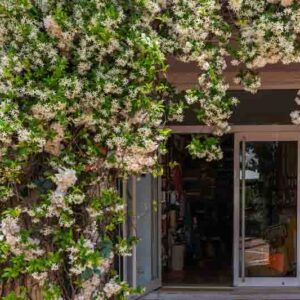
Spanish Jasmine is most effective where people brush past it, sit near it, or open a door beside it. Grow it as a scent experience, not just as a climber.
Guide young stems early and tie them loosely to their support. Spanish Jasmine twines but does not self-cling to walls. Spread stems outward over the support so flowers are displayed across a broad surface instead of bunching into a dense knot.
Prune after the main flowering period. Remove weak, tangled, or overcrowded shoots and shorten vigorous stems to maintain shape.
Pruning tip:
The best way to prune Spanish Jasmine is right after flowering, thinning and shortening stems enough to keep the plant open, elegant, and ready to produce strong new flowering shoots.
In frost-free climates, winter care mainly means avoiding waterlogged soil and protecting against unusual cold. In colder regions, container-grown plants should be moved indoors before frost. Provide bright light, good air circulation, and lighter watering during winter rest.
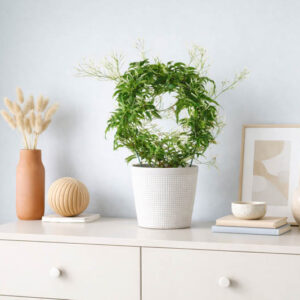
Spanish Jasmine adapts very well to container culture and is often easiest to manage that way outside mild climates.
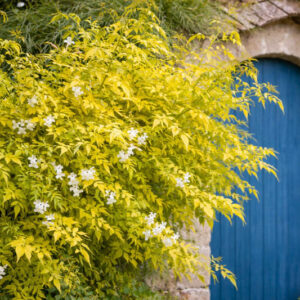
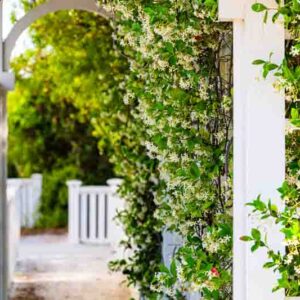
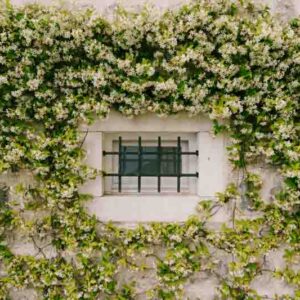
Spanish Jasmine is particularly beautiful trained on a warm wall or open trellis.
Bloom trigger:
For strong flowering, give Spanish Jasmine high light, steady warmth, regular feeding, and a root run that is snug but not cramped. Oversized pots and excess nitrogen often produce more foliage than flowers.
| Task | Best Time |
|---|---|
| Planting | Plant in spring after temperatures warm. |
| Feeding | Feed from spring through summer. |
| Pruning | Prune after flowering. |
| Propagation | Take semi-ripe cuttings in summer or layer flexible stems. |
| Mulching | Refresh mulch in spring. |
| Main display | Expect peak bloom from summer into fall. |
Spanish Jasmine is most often propagated by semi-ripe cuttings or layering.
Take partially matured stems in summer, remove the lower leaves, and insert cuttings into a sharply draining propagation mix. Keep them evenly moist in bright indirect light.
Peg down a flexible stem into moist soil while still attached to the parent plant. Once roots develop, cut it free and transplant.
Legginess usually means insufficient light, irregular pruning, or overly rich feeding. Spanish Jasmine stays far more attractive when trained and edited regularly.
Jasminum grandiflorum stands out for its larger flowers, professional-grade fragrance reputation, and summer to fall bloom window. Compared with Common Jasmine, it is often considered more refined in flower size and perfume profile, though usually less hardy. Compared with Pink Jasmine, it blooms later and has a different, less winter-driven display. Compared with Star Jasmine, it is a true jasmine with a lighter framework and a more classic jasmine scent.
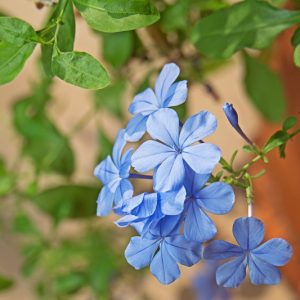
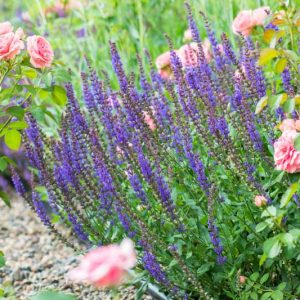
Choose companion plants that enjoy sun, warmth, and well-drained soil while complementing the jasmine’s refined habit and fragrance. Excellent partners include gardenias, dwarf citrus, lavender, rosemary, salvia, plumbago, heliotrope, angelonia, gaura, pelargoniums, mandevilla, and structured evergreen shrubs such as pittosporum. The best combinations feel airy, luminous, and fragrant rather than crowded.
What is Spanish Jasmine?
Spanish Jasmine, or Jasminum grandiflorum, is a fragrant climbing true jasmine grown for its large white flowers, long summer to fall bloom season, and elegant twining habit.
Is Spanish Jasmine a true jasmine?
Yes. It belongs to the genus Jasminum, so it is a true jasmine.
Is Spanish Jasmine fragrant?
Yes. It is one of the most valued fragrant jasmine species and is famous in perfumery for its rich floral scent.
When does Spanish Jasmine bloom?
Spanish Jasmine usually blooms from summer into fall, often over a long warm-season period.
How big does Spanish Jasmine get?
It commonly grows 6–13 ft (2–4 m) tall and wide with pruning or without support, but 25–40 ft (7.5–12 m) tall as a climber with support in ideal conditions.
Is Spanish Jasmine a climber or a shrub?
It is primarily a twining climber, though it can sprawl loosely if left unsupported.
Does Spanish Jasmine need full sun?
It grows best in full sun to part shade, with stronger bloom in brighter conditions.
Can Spanish Jasmine grow in shade?
It tolerates light shade, but too much shade reduces flowering and often leads to weaker, leggier growth.
What is the best place to plant Spanish Jasmine?
The best place to plant Spanish Jasmine is in a warm, bright, sheltered spot near a patio, doorway, path, or seating area where the fragrance can be enjoyed.
Can Spanish Jasmine grow in a pot?
Yes. Spanish Jasmine performs very well in a container with excellent drainage and support, making it ideal for patios and for overwintering indoors in cold climates.
Is Spanish Jasmine evergreen?
Spanish Jasmine is usually semi-evergreen to deciduous, depending on climate and winter conditions.
How do you prune Spanish Jasmine?
Prune Spanish Jasmine after flowering by shortening long shoots, thinning congested stems, and maintaining an open framework to encourage strong new flowering growth.
Why is my Spanish Jasmine not flowering?
The most common causes are low light, excessive nitrogen fertilizer, poor drainage, cold stress, or pruning at the wrong time.
How often should I water Spanish Jasmine?
Water Spanish Jasmine regularly while it establishes and during active growth, then reduce watering in winter. Container plants usually need more frequent watering than plants in the ground.
Is Spanish Jasmine good for patios and trellises?
Yes. Spanish Jasmine is one of the best fragrant jasmine plants for warm walls, trellises, pergolas, and sunny patio containers.
Can Spanish Jasmine be grown indoors?
Yes, as long as it receives very bright light, warmth, support, and careful watering. It can be grown indoors in a conservatory, greenhouse, or bright sheltered room.
Are Spanish Jasmine flowers edible?
Spanish Jasmine flowers may be used in floral preparations in some traditions, but only unsprayed, culinary-safe flowers should be used.
Updated: March 2026 – Reviewed by Gardenia Editors
| Hardiness |
9 - 10 |
|---|---|
| Heat Zones |
9 - 10 |
| Plant Type | Climbers, Shrubs |
| Plant Family | Oleaceae |
| Genus | Jasminum |
| Common names | Jasmine |
| Exposure | Full Sun, Partial Sun |
| Season of Interest | Summer (Early, Mid, Late), Fall |
| Height | 6' - 13' (180cm - 4m) |
| Spread | 5' - 10' (150cm - 3m) |
| Spacing | 120" (3m) |
| Maintenance | Low |
| Water Needs | Average |
| Soil Type | Chalk, Clay, Loam, Sand |
| Soil pH | Acid, Neutral, Alkaline |
| Soil Drainage | Moist but Well-Drained |
| Characteristics | Fragrant, Plant of Merit, Showy |
| Tolerances | Clay Soil, Heat |
| Garden Uses | Beds And Borders, Wall-Side Borders |
| Garden Styles | City and Courtyard, Coastal Garden, Informal and Cottage |
| Toxic to Humans | No known toxicity |
| Toxic to Cats | Not toxic |
| Toxic to Dogs | Not toxic |
| Toxic to Horses | Not toxic |


| Hardiness |
9 - 10 |
|---|---|
| Heat Zones |
9 - 10 |
| Plant Type | Climbers, Shrubs |
| Plant Family | Oleaceae |
| Genus | Jasminum |
| Common names | Jasmine |
| Exposure | Full Sun, Partial Sun |
| Season of Interest | Summer (Early, Mid, Late), Fall |
| Height | 6' - 13' (180cm - 4m) |
| Spread | 5' - 10' (150cm - 3m) |
| Spacing | 120" (3m) |
| Maintenance | Low |
| Water Needs | Average |
| Soil Type | Chalk, Clay, Loam, Sand |
| Soil pH | Acid, Neutral, Alkaline |
| Soil Drainage | Moist but Well-Drained |
| Characteristics | Fragrant, Plant of Merit, Showy |
| Tolerances | Clay Soil, Heat |
| Garden Uses | Beds And Borders, Wall-Side Borders |
| Garden Styles | City and Courtyard, Coastal Garden, Informal and Cottage |
| Toxic to Humans | No known toxicity |
| Toxic to Cats | Not toxic |
| Toxic to Dogs | Not toxic |
| Toxic to Horses | Not toxic |
How many Jasminum grandiflorum (Spanish Jasmine) do I need for my garden?
| Plant | Quantity | |
|---|---|---|
| Jasminum grandiflorum (Spanish Jasmine) | N/A | Buy Plants |
Create a membership account to save your garden designs and to view them on any device.
Becoming a contributing member of Gardenia is easy and can be done in just a few minutes. If you provide us with your name, email address and the payment of a modest $25 annual membership fee, you will become a full member, enabling you to design and save up to 25 of your garden design ideas.
Join now and start creating your dream garden!
Create a membership account to save your garden designs and to view them on any device.
Becoming a contributing member of Gardenia is easy and can be done in just a few minutes. If you provide us with your name, email address and the payment of a modest $25 annual membership fee, you will become a full member, enabling you to design and save up to 25 of your garden design ideas.
Join now and start creating your dream garden!