Growing jasmine in pots is one of the best ways to enjoy fragrant blooms in small spaces. This expert guide covers the best jasmine varieties, container size, soil, watering, feeding, pruning, and overwintering tips so your potted jasmine stays healthy, manageable, and loaded with flowers.
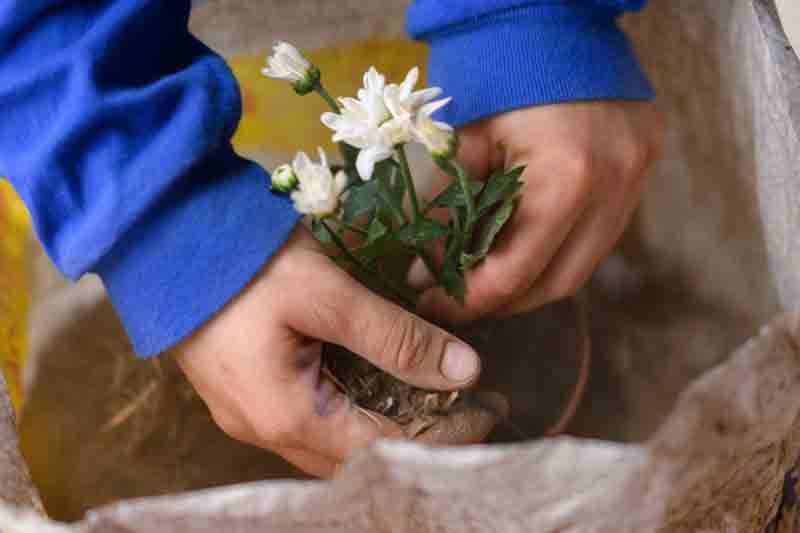


If you want a container plant that offers glossy foliage, elegant flowers, and serious fragrance, growing jasmine in pots is one of the best choices you can make. A healthy potted jasmine can perfume a patio, soften a balcony, frame an entryway, or become the standout plant in a sunny courtyard. It is beautiful, practical, and surprisingly adaptable when grown with the right method.
The reason jasmine in pots works so well is simple: containers give you control. You can fine-tune drainage, choose the right soil, manage size with pruning, add support early, and move the plant when light or temperature changes. That matters because jasmine is not difficult so much as it is specific. It grows best when the roots stay well aerated, the light is strong, and watering is steady rather than excessive.
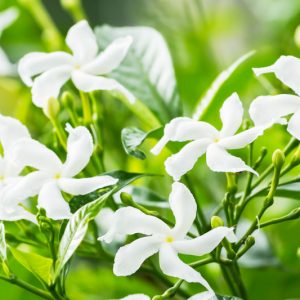
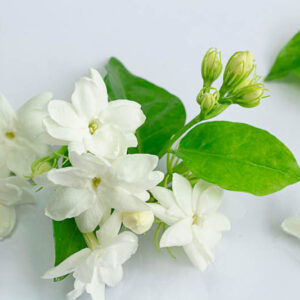
That is also why container-grown jasmine often performs better than jasmine planted casually in the ground. In a pot, the plant is easier to shape, easier to protect, and easier to keep in the exact conditions it prefers. Whether you are growing Arabian Jasmine (Jasminum sambac), Pink Jasmine (Jasminum polyanthum), Common Jasmine (Jasminum officinale), or even Star Jasmine (Trachelospermum jasminoides), the same principle applies: match the variety to the pot, the light, and the climate.
Use a pot with excellent drainage, a rich but airy mix, several hours of sun, and measured watering. Most jasmine problems in containers start with two things: weak light and soggy roots.
Not all jasmine types perform equally well in containers. Some stay more manageable, some need trellising, and some bloom better when slightly root snug. The best variety depends on whether you want compact fragrance, a climbing effect, or a larger patio specimen.
Best all-around choice: Arabian Jasmine. For many gardeners, this is the best jasmine for pots because it combines intense fragrance, manageable growth, and good response to pruning.
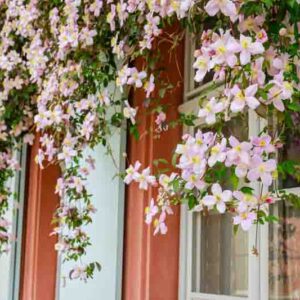
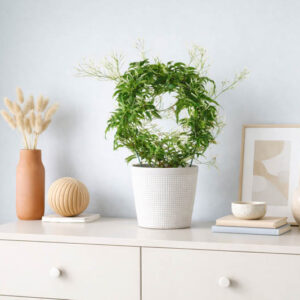
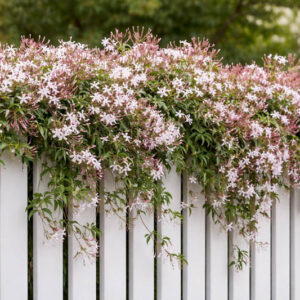
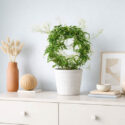
Best for trellises and hoops: Pink Jasmine. This is ideal when you want a twining container plant with a dramatic bloom display.
Best for larger patio containers: Common Jasmine. It is beautiful and fragrant, but more vigorous than Arabian Jasmine and better suited to gardeners willing to prune regularly.
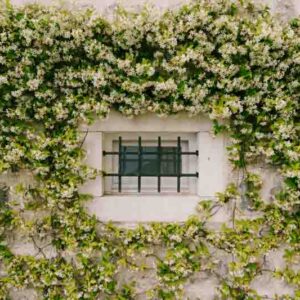
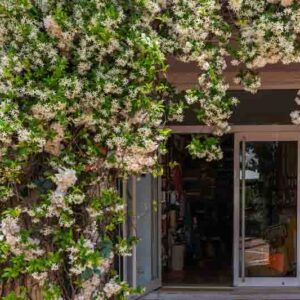
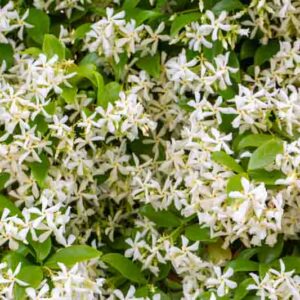
Best jasmine-like evergreen option: Star Jasmine. This is not a true jasmine, but it is often grown in pots for its glossy leaves and sweetly scented flowers.
Choose based on how you want the plant to behave, not just how it smells.
| Variety | Growth Habit | Fragrance | Sun Needs | Needs Support? | Best Use |
|---|---|---|---|---|---|
| Arabian Jasmine (Jasminum sambac) | Shrubby to lightly vining | Very strong | Full sun to very bright light | Optional | Best all-around container jasmine |
| Pink Jasmine (Jasminum polyanthum) | Twining vine | Strong | Full sun to bright light | Yes | Hoops, trellises, balcony training |
| Common Jasmine (Jasminum officinale) | Vigorous vine | Strong | Full sun | Yes | Large patio pots, bold displays |
| Star Jasmine (Trachelospermum jasminoides) | Evergreen climber | Strong | Sun to part sun | Usually | Evergreen container structure |
The best pot for jasmine is not necessarily the biggest or the most decorative. It is the one that drains well and suits the size of the root system. A container with drainage holes is essential. Without them, even excellent soil becomes risky.
Pot size matters just as much as material. Jasmine often performs better when slightly root snug than when overpotted. A container that is too large stays wet too long, encouraging weak roots and reduced flowering. When repotting, move up only one size at a time.
Choose the smallest pot that comfortably fits the root ball and still allows growth. Bigger is not better when growing jasmine in containers.
The best soil for jasmine in pots is fertile, moisture-retentive, and sharply drained. That combination matters because jasmine likes even moisture during active growth, but it dislikes compacted, stale, airless soil around its roots.
A quality potting mix improved with perlite, bark fines, or coarse amendment works well. Avoid digging garden soil into a container. It compacts too easily, drains poorly, and can turn a pot into a waterlogged box. In containers, root health is everything. Good soil is not just about feeding the plant – it is about oxygen around the roots.
Potted jasmine usually flowers best in full sun or very bright light. That means several hours of direct sun for most varieties, especially if you want dense growth and reliable bloom. A sunny patio, balcony, terrace, or south-facing wall is often ideal.
In very hot climates, some afternoon protection can be helpful, especially for plants transitioning from nursery shade to strong summer sun. But deep shade is rarely successful. If jasmine is alive but lanky, thin, and reluctant to flower, low light is often the reason.
A useful principle is this: jasmine can tolerate more sun than it can tolerate poor drainage. Give it bright conditions first, then fine-tune watering and placement from there.
This is where many articles stay vague. The real rule is simple: water deeply, then wait until the top inch of the potting mix begins to dry before watering again. Do not keep the soil constantly wet, and do not let the plant swing between drought and saturation.
In spring and summer, especially in warm weather, potted jasmine may need frequent watering because containers dry faster than the ground. In cooler months, watering demand falls sharply. Always let the plant, the pot size, the temperature, and the weather guide your schedule.
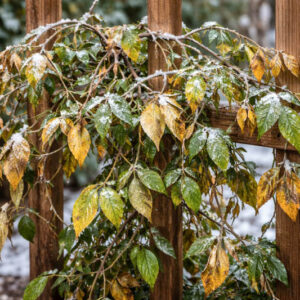
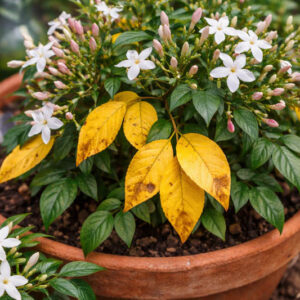
If leaves yellow and the soil stays damp, the plant is probably being overwatered. If buds dry up or leaves curl and the pot becomes bone dry, the plant is being left too long between waterings. Good jasmine care is rhythmic rather than rigid.
Because nutrients leach from pots faster than from garden beds, jasmine in containers benefits from regular feeding. During active growth, a balanced fertilizer works well. As flower production ramps up, a bloom-supporting fertilizer can help maintain performance.
Be careful with excessive nitrogen. Too much nitrogen often produces beautiful leaves and disappointing bloom. If your jasmine looks lush but not floriferous, the fertilizer may be too focused on foliage. For container jasmine, the goal is balanced growth – sturdy stems, healthy leaves, and buds that actually open.
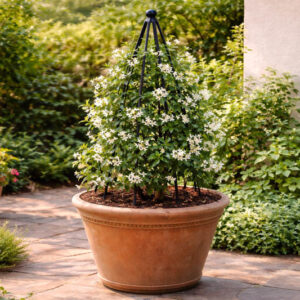
If you are growing a vining jasmine, add support early. A hoop, trellis, obelisk, or compact frame helps the plant grow with structure instead of collapsing into a tangle. The earlier you guide the stems, the easier the plant is to manage.
Pruning jasmine in pots should be purposeful. Prune after the main bloom period, remove weak or crowded stems, and shorten shoots that throw the plant out of balance. This keeps the canopy compact and helps the root system support the top growth. In containers, that balance matters more than it does in open ground.
The best time to repot jasmine is usually in spring, just before or as active growth begins. Signs it is time include roots circling heavily, water running straight through the pot, or a plant that dries out unusually fast.
Move up only one pot size. Overpotting is one of the most common reasons container jasmine struggles. Fresh mix, careful watering, and strong light help the plant re-establish quickly.
Yes. In fact, many gardeners get the best long-term results by keeping jasmine in containers year-round. In mild climates, pots can stay outside permanently. In colder climates, containers make it possible to enjoy jasmine outdoors in warm weather and then move it into shelter before frost.
This flexibility is one of the biggest advantages of growing jasmine in pots. You are not locked into one location or one season. You can position the plant for beauty in summer and protection in winter.
If your jasmine is not hardy in your climate, bring it indoors or into a frost-free protected area before cold weather becomes severe. Inspect the plant thoroughly first. Check leaf undersides, clean the foliage if needed, and do not bring pests inside with the plant.
Once sheltered, keep jasmine in the brightest position possible and reduce watering compared with summer. Avoid crowding it into a dark corner or placing it near radiators and heating vents. Indoor winter stress usually comes from a poor combination of low light, hot dry air, and excess water.
| Problem | Likely Cause | Best Fix |
|---|---|---|
| Leaves but no flowers | Low light or too much nitrogen | Move to sunnier spot and use balanced feeding |
| Yellowing foliage | Overwatering or poor drainage | Let mix dry slightly and improve drainage |
| Long, weak stems | Insufficient sun | Increase light and prune lightly after bloom |
| Buds falling off | Water stress or sudden change | Stabilize watering and avoid abrupt moves |
| Sticky leaves or webbing | Aphids or spider mites | Inspect early and treat before infestation spreads |
If you want more jasmine plants, propagation is usually done from cuttings. Take healthy semi-ripe or softwood stems during the active growing season, remove the lower leaves, and root them in a light, well-draining medium. Keep humidity moderate, light bright but indirect, and moisture even but not wet.
Propagation is easiest when the parent plant is actively growing and not under stress. Do not take cuttings from weak, thirsty, or pest-ridden stems. Strong parent plants produce stronger new plants.
This matters for clarity. True jasmine belongs to the Jasminum genus. Star jasmine belongs to Trachelospermum. They are often grouped together in garden writing because both are fragrant and commonly grown in similar ways, but they are not botanically the same plant. If accuracy matters in your plant selection, keep that distinction clear.
The ASPCA lists true jasmine (Jasminum species) as non-toxic to cats, dogs, and horses. Star Jasmine (Trachelospermum jasminoides) is also listed as non-toxic. Even so, it is still wise to discourage chewing, since consuming plant material can cause mild digestive upset.
The best jasmine for pots is not just the most fragrant one. It is the variety that matches your light, your available space, and your willingness to water, feed, prune, and protect it properly.
Yes. Jasmine grows very well in pots when it has excellent drainage, bright light, careful watering, and timely pruning or support.
Arabian Jasmine is usually the best all-around jasmine for pots because it is fragrant, relatively manageable, and performs well in containers.
Water jasmine in pots when the top inch of potting mix begins to dry. Water deeply, then let excess drain away.
Most jasmine in pots flowers best in full sun or very bright light, though some afternoon protection can help in very hot climates.
The most common reasons are insufficient sunlight, too much nitrogen, overwatering, or pruning at the wrong time.
Updated: March 2026 • Reviewed by Gardenia Editors
| Hardiness |
6 - 11 |
|---|---|
| Plant Type | Climbers, Shrubs |
| Plant Family | Apocynaceae, Oleaceae |
| Genus | Jasminum, Trachelospermum |
| Exposure | Full Sun, Partial Sun |
| Season of Interest | Spring (Early, Mid, Late), Summer (Early, Mid, Late), Fall, Winter |
| Maintenance | Low |
| Water Needs | Average |
| Soil Type | Chalk, Loam, Sand |
| Soil pH | Acid, Alkaline, Neutral |
| Soil Drainage | Moist but Well-Drained, Well-Drained |
| Characteristics | Showy |
| Attracts | Bees, Butterflies |
| Landscaping Ideas | Arbors, Pergolas, Trellises, Banks And Slopes, Ground Covers, Patio And Containers, Wall-Side Borders |
| Garden Styles | City and Courtyard, Coastal Garden, Informal and Cottage |
| Hardiness |
6 - 11 |
|---|---|
| Plant Type | Climbers, Shrubs |
| Plant Family | Apocynaceae, Oleaceae |
| Genus | Jasminum, Trachelospermum |
| Exposure | Full Sun, Partial Sun |
| Season of Interest | Spring (Early, Mid, Late), Summer (Early, Mid, Late), Fall, Winter |
| Maintenance | Low |
| Water Needs | Average |
| Soil Type | Chalk, Loam, Sand |
| Soil pH | Acid, Alkaline, Neutral |
| Soil Drainage | Moist but Well-Drained, Well-Drained |
| Characteristics | Showy |
| Attracts | Bees, Butterflies |
| Landscaping Ideas | Arbors, Pergolas, Trellises, Banks And Slopes, Ground Covers, Patio And Containers, Wall-Side Borders |
| Garden Styles | City and Courtyard, Coastal Garden, Informal and Cottage |
Create a membership account to save your garden designs and to view them on any device.
Becoming a contributing member of Gardenia is easy and can be done in just a few minutes. If you provide us with your name, email address and the payment of a modest $25 annual membership fee, you will become a full member, enabling you to design and save up to 25 of your garden design ideas.
Join now and start creating your dream garden!
Create a membership account to save your garden designs and to view them on any device.
Becoming a contributing member of Gardenia is easy and can be done in just a few minutes. If you provide us with your name, email address and the payment of a modest $25 annual membership fee, you will become a full member, enabling you to design and save up to 25 of your garden design ideas.
Join now and start creating your dream garden!