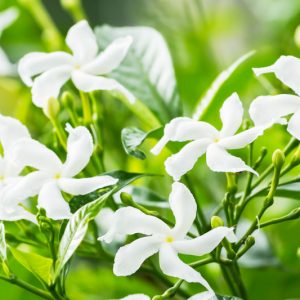
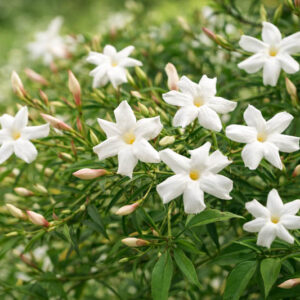
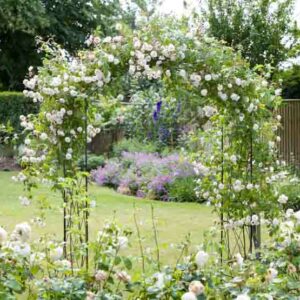
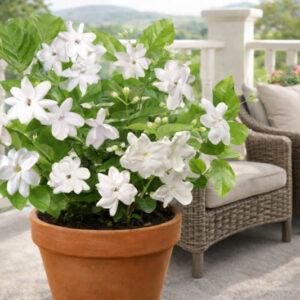
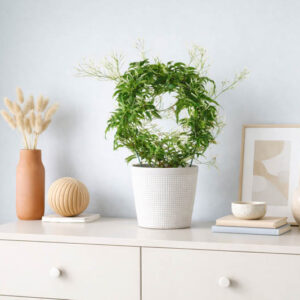
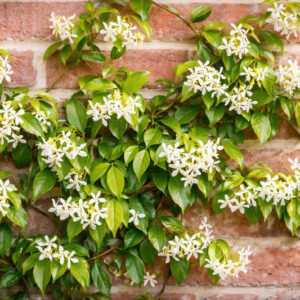
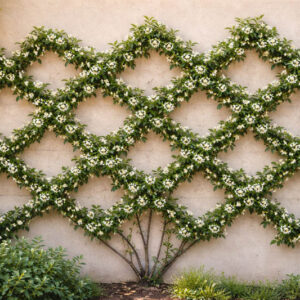
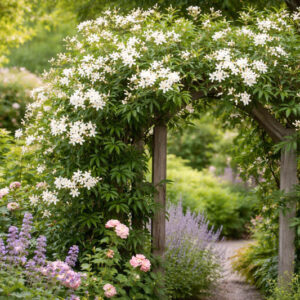
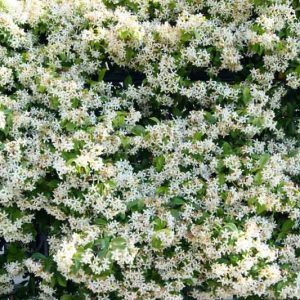
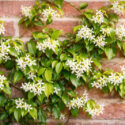
Jasmine is a fragrant flowering vine or shrub grown for its starry, highly scented blooms, usually from spring through summer, depending on the type. If jasmine is not blooming, the usual causes are low light, wrong pruning time, excess nitrogen, water stress, cold damage, or root problems that reduce bud formation.
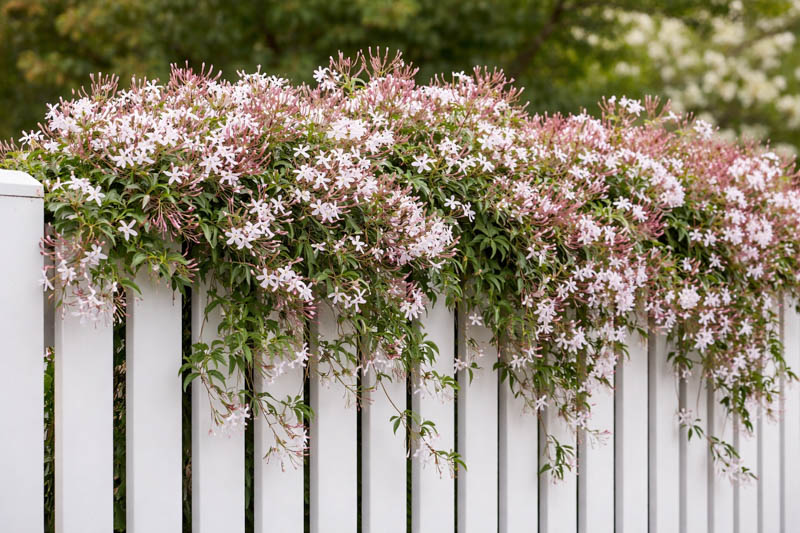


When jasmine refuses to bloom, the problem is usually not mysterious – it is cultural. In other words, your plant is responding to how it is being grown. Light, pruning, fertilizer, watering, temperature, root space, and seasonal timing all directly affect flower production. Once you identify which one is off, getting your jasmine to flower again becomes much easier.
Guidance from RHS, NC State, and Clemson is broadly consistent on the basics: jasmine and star jasmine bloom best with strong light, well-drained soil, and pruning timed to the plant’s flowering cycle.
That matters because jasmine is grown mainly for its flowers and fragrance. A healthy green vine with few or no blooms is disappointing, but most flowering problems are fixable.
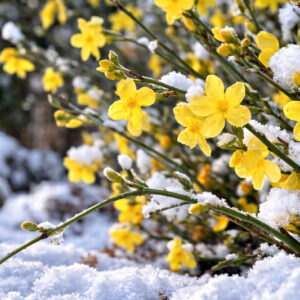
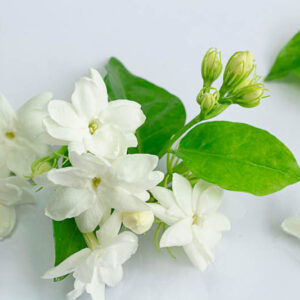
Important species note: Care differs between true jasmines such as common jasmine (Jasminum officinale), Arabian jasmine (Jasminum sambac), pink jasmine (Jasminum polyanthum), and star jasmine (Trachelospermum jasminoides), which is not a true jasmine. They are often grown in similar ways, but bloom season, pruning response, and ideal conditions are not identical.
The fastest path to more jasmine flowers is simple: give it enough sun, prune only after flowering, feed lightly, water deeply but not constantly, and keep the roots healthy.
If your jasmine has plenty of leaves but no flowers, low light is one of the first things to check. This is one of the most common causes of jasmine not blooming. Many jasmines tolerate partial shade, but tolerance is not the same thing as blooming well. A plant can survive in shade and still flower poorly.
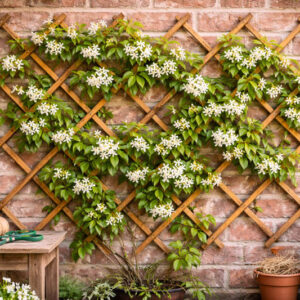
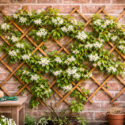
Jasmine forms flower buds best when it gets strong light for a large part of the day. In dim locations, it often grows long, leafy stems and produces very few buds. That is why a jasmine growing against a bright wall or fence often flowers far better than one tucked into a gloomy corner.
What to do: Move container plants to a sunnier position, or thin back nearby growth that is casting dense shade. If your jasmine is in the ground, improve exposure where possible and be realistic – a plant in deep shade rarely becomes a heavy bloomer.
Bad pruning timing is one of the biggest reasons jasmine flowers disappear from one season to the next. Many gardeners trim their plant to keep it neat, then wonder why it does not bloom. The problem is simple: they cut off the developing flower buds.
Many commonly grown jasmines are best pruned after flowering, but exact timing depends on the species. If you prune too late, or prune heavily just as the plant is preparing its next flush, you remove the wood that would have carried flowers.
This mistake is especially common when a jasmine gets overgrown and is hard-pruned at the wrong moment. The plant may respond with lots of new shoots, but that fresh leafy growth does not always carry immediate flowers.
If your jasmine grew strongly after pruning but did not flower, the timing of the cut is often the real problem – not the health of the plant.
What to do: Shape jasmine after its main flowering period. Remove weak, tangled, or dead growth, but avoid unnecessary hard cuts unless the plant truly needs renovation.
Fertilizer is often applied with good intentions, but too much nitrogen can backfire. This is a classic cause of jasmine not flowering. Nitrogen fuels leafy growth. That sounds helpful, but when it is overdone, the plant channels energy into shoots and foliage rather than bud production.
If your jasmine looks deep green, vigorous, and full of fresh stems but still refuses to bloom, excessive feeding is a strong suspect. This happens often when jasmine is planted near a lawn and picks up regular lawn fertilizer, or when a high-nitrogen product is used too often.
What to do: Use a balanced fertilizer sparingly, mainly during active growth. Avoid repeated high-nitrogen feeding. If the plant already looks lush, do not assume it needs more fertilizer. In blooming plants, overfeeding is often just as harmful as underfeeding.
Sometimes the answer is patience. A young jasmine or a recently transplanted one may not bloom heavily right away. Instead, it spends its energy establishing roots, extending stems, and adapting to its site. That is normal.
This is especially true after transplanting, repotting, or planting into a new garden bed. Even when care is good, the plant may pause flowering while it adjusts. Gardeners often misread this and start changing fertilizers, watering routines, and pruning all at once, which usually creates more stress.
What to do: Keep care steady. Give the plant time to settle, provide good light, and avoid forcing growth with heavy feeding. A jasmine that is establishing well this season is more likely to bloom strongly in the next one.
Jasmine dislikes extremes. Dry soil can prevent buds from forming properly or cause them to abort, while wet soil can stress the roots and reduce vigor. If buds formed and then dropped, or if the plant wilts despite wet soil, check the root zone before anything else.
What to do: Water deeply, then allow the top layer of soil to begin drying before watering again. Improve drainage in heavy soil, and make sure containers drain freely.
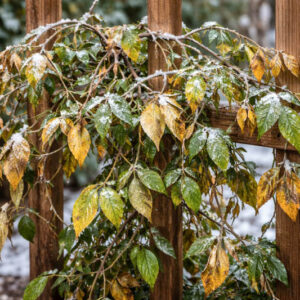
Jasmine may survive winter and still bloom poorly if cold weather damaged the flower buds. This is a key reason blooming can fail even when the plant looks mostly alive afterward. Tender new growth and developing buds are especially vulnerable to sudden temperature drops.
After a cold snap, jasmine may produce blackened or limp new growth, delay flowering, or open far fewer blooms than usual. The roots and older stems may survive, but the floral display is reduced because the buds were lost before they had the chance to open.
What to do: Protect jasmine during unexpected cold events, especially if it is in a pot or in an exposed position. Do not prune too quickly after frost. Wait until warmer weather makes it clear which growth is truly damaged.
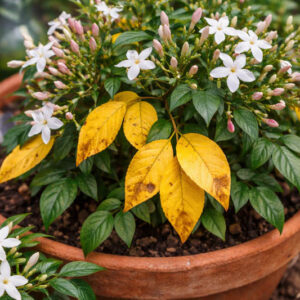
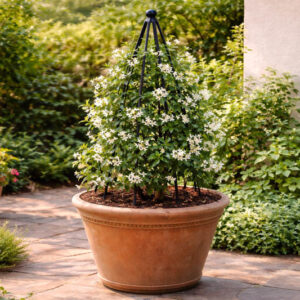
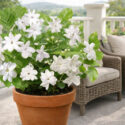
Container jasmine often blooms beautifully for a while, then seems to stall. The reason is frequently below the surface. If the roots are circling tightly, the soil is exhausted, or the pot dries out too fast, flowering suffers.
A rootbound jasmine may still put on some leaves, but it often loses vigor, dries out quickly, and produces fewer buds. The same happens when potting mix breaks down over time and no longer drains or holds nutrients properly.
What to do: Check whether roots are tightly packed around the root ball. Repot if necessary into a slightly larger container with fresh, free-draining mix. Refresh tired soil and resume light, steady feeding rather than heavy fertilizer dumps.
Some jasmines bloom best when seasonal cues line up properly. If the plant stays too warm, too cold, or experiences erratic conditions, blooming may be delayed or reduced. Indoor jasmine is especially prone to this. It may grow well in a room that is comfortable for people but still fail to receive the environmental signals it needs for strong bud development.
This is one reason indoor jasmine can be frustrating. Light is weaker, humidity is lower, and temperatures are flatter than outdoors. The plant may stay alive, but flower production drops.
What to do: Match your jasmine type to the right growing conditions. Give indoor plants the brightest location possible and avoid placing them near heating vents or harsh drafts. Outdoors, choose a site that suits the plant’s hardiness and exposure needs.
Pests do not always stop flowering completely, but they often reduce it. Aphids, mealybugs, scale insects, and spider mites all weaken jasmine by feeding on sap or stressing the foliage. In bad infestations, the plant diverts energy away from blooms and into basic survival.
Look for sticky leaves, distorted tips, fine webbing, black sooty mold, or a dull, tired appearance. A pest problem can be gradual, which is why it is often missed until bloom quality has already dropped.
What to do: Inspect leaf undersides, stem joints, and soft new growth. Wash off light infestations and treat persistent ones with an appropriate horticultural oil or insecticidal soap according to label directions. Early action works far better than delayed action.
One final issue is identification and expectation. Gardeners often use the word “jasmine” for several different plants, and not all behave the same way. True jasmine species and star jasmine are different plants, even though both are fragrant and commonly grown as vines. Bloom timing, pruning response, and light tolerance can vary.
That means a care routine that works for one jasmine may not work perfectly for another. If you are treating every jasmine the same, you may be solving the wrong problem. For example, a plant that flowers on a certain growth cycle can easily be cut at the wrong time if it is mistaken for another type.
What to do: Confirm which jasmine you are growing, then adjust care to match that plant. A correct ID turns vague troubleshooting into accurate troubleshooting.
If your jasmine is not blooming, the plant is usually telling you one of three things – it is not getting enough light, it was pruned at the wrong time, or the roots are under stress. Fertilizer mistakes, cold damage, youth, and pests can also reduce flowering, but most cases come back to those basics. Fix the growing conditions, and the flowers usually follow.
This usually points to low light, too much nitrogen, or pruning at the wrong time. The plant is growing, but conditions are not encouraging bud formation.
Many jasmines bloom best with several hours of strong sun. Some tolerate partial shade, but flowering is usually lighter there.
Yes. Soggy soil stresses roots, reduces vigor, and can interfere with flower production just as much as drought can.
Usually after the main flowering period. Pruning too late can remove the stems or buds that would have flowered next.
It often will. Tight roots, fast drying soil, and depleted potting mix can all reduce blooming in container-grown jasmine.
Updated: March 2026 • Reviewed by Gardenia Editors
| Hardiness |
6 - 11 |
|---|---|
| Plant Type | Climbers, Shrubs |
| Plant Family | Apocynaceae, Oleaceae |
| Genus | Jasminum, Trachelospermum |
| Exposure | Full Sun, Partial Sun |
| Season of Interest | Spring (Early, Mid, Late), Summer (Early, Mid, Late), Fall, Winter |
| Maintenance | Low |
| Water Needs | Average |
| Soil Type | Chalk, Loam, Sand |
| Soil pH | Acid, Alkaline, Neutral |
| Soil Drainage | Moist but Well-Drained, Well-Drained |
| Characteristics | Showy |
| Attracts | Bees, Butterflies |
| Landscaping Ideas | Arbors, Pergolas, Trellises, Banks And Slopes, Ground Covers, Patio And Containers, Wall-Side Borders |
| Garden Styles | City and Courtyard, Coastal Garden, Informal and Cottage |
| Hardiness |
6 - 11 |
|---|---|
| Plant Type | Climbers, Shrubs |
| Plant Family | Apocynaceae, Oleaceae |
| Genus | Jasminum, Trachelospermum |
| Exposure | Full Sun, Partial Sun |
| Season of Interest | Spring (Early, Mid, Late), Summer (Early, Mid, Late), Fall, Winter |
| Maintenance | Low |
| Water Needs | Average |
| Soil Type | Chalk, Loam, Sand |
| Soil pH | Acid, Alkaline, Neutral |
| Soil Drainage | Moist but Well-Drained, Well-Drained |
| Characteristics | Showy |
| Attracts | Bees, Butterflies |
| Landscaping Ideas | Arbors, Pergolas, Trellises, Banks And Slopes, Ground Covers, Patio And Containers, Wall-Side Borders |
| Garden Styles | City and Courtyard, Coastal Garden, Informal and Cottage |
Create a membership account to save your garden designs and to view them on any device.
Becoming a contributing member of Gardenia is easy and can be done in just a few minutes. If you provide us with your name, email address and the payment of a modest $25 annual membership fee, you will become a full member, enabling you to design and save up to 25 of your garden design ideas.
Join now and start creating your dream garden!
Create a membership account to save your garden designs and to view them on any device.
Becoming a contributing member of Gardenia is easy and can be done in just a few minutes. If you provide us with your name, email address and the payment of a modest $25 annual membership fee, you will become a full member, enabling you to design and save up to 25 of your garden design ideas.
Join now and start creating your dream garden!