Jasmine essential oil is more than a beautiful fragrance. This guide explains jasmine oil benefits, uses, skin and hair applications, aromatherapy value, and the safety rules that actually matter. Learn what jasmine essential oil is, why it is so prized, and how to use it properly for the best results.
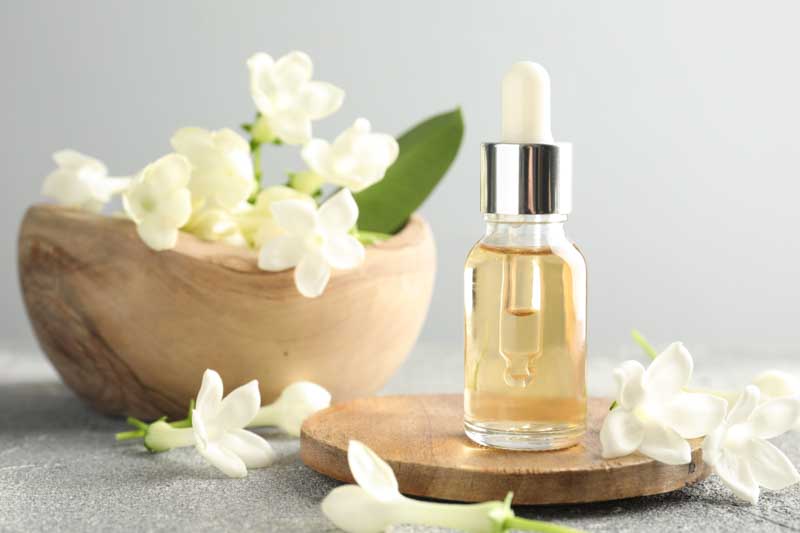


Jasmine essential oil has a reputation that goes well beyond fragrance. It is luxurious, unmistakably floral, and deeply associated with perfumery, aromatherapy, and premium body care. That is why people keep searching for jasmine essential oil benefits. But the real value of jasmine is not hype. It is the combination of an extraordinarily rich aroma, careful formulation, and proper use.
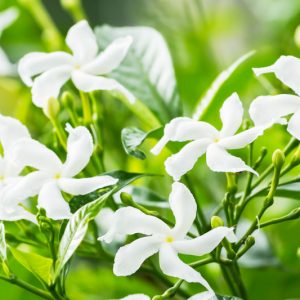
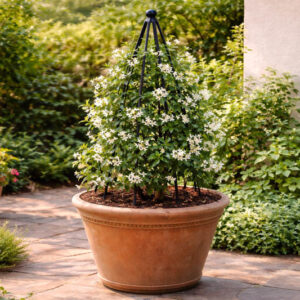
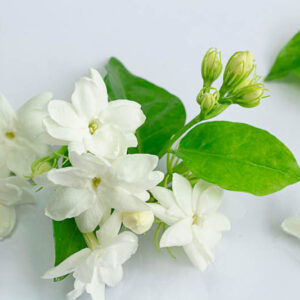
What is jasmine essential oil? Jasmine essential oil is a concentrated aromatic extract made from jasmine flowers, most commonly Jasminum grandiflorum or Jasminum sambac. In practice, many products sold as jasmine essential oil are actually jasmine absolute, because jasmine flowers are delicate and are commonly extracted rather than conventionally steam-distilled. That detail matters because it affects aroma, pricing, formulation, and how the product should be used.
If you are looking for a serious guide to jasmine essential oil uses, jasmine oil benefits for skin, jasmine oil benefits for hair, jasmine essential oil for aromatherapy, how to use jasmine essential oil, or jasmine essential oil safety, this article is designed to answer those questions clearly and professionally. It is written to be useful, quotable, and practical – not vague, exaggerated, or overloaded with filler.
Need the short version? These are the points that matter most.
One of the biggest misconceptions online is that all jasmine oil products are basically the same. They are not. In real-world buying, people often use the phrase jasmine essential oil loosely, even when the product is technically a jasmine absolute or another fragrant jasmine extract. That is why label reading matters so much.
For most buyers, the key takeaway is simple. Whether the label says jasmine essential oil, jasmine absolute, or jasmine extract, you are dealing with a highly concentrated aromatic material that should be used in tiny amounts. Jasmine is not a casual splash-it-on oil. It is potent, expensive, and more complex than mass-market floral fragrance oils.
The two names most worth knowing are Jasminum sambac and Jasminum grandiflorum. Both are true jasmines prized for intensely fragrant flowers, but they do not smell identical. Sambac is often described as warmer, fuller, and more exotic. Grandiflorum is often described as softer, greener, and more classically floral.
Jasmine is prized less for volume and more for impact. A very small amount can transform a diffuser blend, perfume oil, or body treatment.
If you want a reliable article on jasmine essential oil benefits, this distinction has to come early. It changes everything from aroma quality to safety expectations to pricing.
Jasmine absolute: This is the form many premium jasmine products take. It is commonly solvent-extracted from jasmine flowers and is widely used in perfumery and aromatherapy.
Jasmine essential oil: This term is widely used in retail, but it is not always technically precise. Sometimes it refers loosely to jasmine absolute. Sometimes it is used in a broader marketing sense.
Jasmine fragrance oil: This is different. Fragrance oils may be synthetic, natural-identical, or blended. They can smell pleasant, but they are not interchangeable with a true jasmine aromatic extract.
This distinction matters because many readers search for best jasmine essential oil when what they actually want is a high-quality jasmine absolute suitable for aromatherapy or body care use.
The most responsible way to discuss jasmine essential oil benefits is to focus on what jasmine is genuinely known for: its powerful floral aroma, its importance in perfumery, its popularity in aromatherapy, and its value in premium body-care formulations. It should not be sold as a miracle cure. It should be understood as a high-value aromatic ingredient with specific strengths.
1 It helps create a richer aromatic environment. Jasmine is widely valued in aromatherapy because its scent can make a space feel warmer, fuller, and more emotionally expressive than simpler floral oils. Some users describe it as uplifting or confidence-supporting, but it is better to present that as user experience rather than guaranteed clinical outcome.
2 It is exceptionally valuable in natural perfumery. Jasmine is one of the most important floral materials in fragrance. Even a tiny amount can add depth, sensuality, and floral complexity to blends with sandalwood, neroli, vanilla, bergamot, patchouli, or rose.
3 It elevates massage and body-oil blends. Because jasmine lingers well on skin when diluted properly, it is a strong choice for massage oils, pulse-point blends, and evening self-care rituals where fragrance is part of the experience.
4 It adds luxury to skin care formulas. Jasmine oil benefits for skin are most meaningful in the context of formulation. Jasmine is often included in facial oils, creams, balms, and body oils because it upgrades the sensory experience and gives products a more refined, spa-like profile.
5 It improves the appeal of hair and body products. Jasmine oil benefits for hair are mainly about aromatic finish and product elegance. In well-made hair oils and scalp blends, jasmine contributes fragrance and a more polished user experience.
Good jasmine does not smell flat or sugary. It smells layered, deep, and alive, which is why it remains so important in high-end fragrance and aromatic body care.
One of the most important things an authoritative article can do is separate tradition, user experience, and research. Jasmine has a long reputation in fragrance and aromatherapy, but the evidence base for broad therapeutic claims is limited. That does not make jasmine unimportant. It means the language should stay precise.
There is published human research on Jasminum sambac aromatherapy massage suggesting a stimulating or arousing effect on autonomic measures rather than a simple blanket calming effect. That is a useful reminder that aroma responses are not always as simplistic as “relaxing” or “energizing.” It also means marketers should be careful not to overstate what jasmine is proven to do.
The safest framing is this: jasmine is strongly valued for aroma, ritual, perfumery, and sensory experience. Claims beyond that should be made conservatively.
The best uses of jasmine essential oil are the ones that respect both its potency and its cost. This is not an oil to dump into everything. It performs best in small, intentional applications.
Diffuser blends: Jasmine works beautifully in a diffuser when paired with citrus, sandalwood, frankincense, bergamot, ylang-ylang, or neroli. It adds floral body and aromatic richness to otherwise simple blends.
Massage oils: A lightly diluted amount in jojoba, sweet almond, or fractionated coconut oil can create a luxurious massage blend that feels refined without becoming overpowering.
Natural perfume: Jasmine is one of the best oils for roll-on perfume blends because it wears close to the skin and pairs well with both floral and woody notes.
Body oils: In properly diluted body oils, jasmine can make a simple formula feel more elegant and memorable.
Hair oils: A very small amount of jasmine in a carrier oil or ready-made hair serum can upgrade the scent profile of a hair treatment without turning it into a heavy perfume product.
Bath and body rituals: Jasmine can be used in body butters, bath oils, and evening self-care routines, but always with appropriate dilution and safe formulation practice.
If you want the full value of jasmine, technique matters. Overuse is the most common mistake. Jasmine is concentrated enough that too much can feel heavy, overly perfumed, or irritating.
For aromatherapy, start small. One to three drops in a diffuser is often enough, especially when jasmine is part of a blend. For topical use, always dilute it in a carrier oil before applying it to the skin. For perfume oils, jasmine works especially well with jojoba and deeper support notes like sandalwood, vanilla, patchouli, or neroli.
A practical rule is this: with jasmine, less is usually better. When the aroma feels smooth, dimensional, and close to the skin, you are probably in the right range. When it starts to feel dense or dominating, you have probably gone too far.
Jasmine should feel elegant, not loud. If the scent takes over the entire blend, the formula usually needs less jasmine, not more.
Because jasmine is highly aromatic and often sold as an absolute, conservative dilution is usually the best approach. In skin care and personal fragrance, professionals often start low and only increase carefully if needed.
Face products: keep the dilution very low. Facial skin is more reactive, and leave-on formulas should be approached with extra care.
Body oils and massage oils: low dilutions are usually enough because jasmine has strong aromatic presence.
Perfume oils: jasmine can be slightly more noticeable here, but balance still matters more than intensity.
Scalp and hair products: use small amounts and patch test first, especially for leave-on products.
The most important principle is not chasing a strong smell. It is achieving a pleasant, wearable, and well-tolerated result.
Search interest around jasmine oil for skin and jasmine oil for hair is huge, but this is where precision matters. Jasmine is not magic on its own. Its value in personal care comes mainly from fragrance quality, sensory softness, and its ability to elevate a formula.
In skin care, jasmine is often used in facial oils, creams, body oils, and balms because it gives products a more calming, elegant, and premium character. It is especially well suited to nighttime routines and body care, where scent is a major part of the experience.
In hair care, jasmine is commonly included in hair oils, scalp oils, and leave-in products to improve fragrance and create a more polished finish. It pairs especially well with argan, jojoba, coconut, and camellia oil-based formulas.
The key point is safety. Never apply concentrated jasmine directly to large areas of skin or scalp. Patch testing and proper dilution remain the professional standard.
Many buyers shopping for jasmine are also comparing it with other floral oils. This is useful because it clarifies what makes jasmine distinctive.
Jasmine vs rose: Rose often feels fresher, brighter, or more classically romantic. Jasmine usually feels deeper, warmer, and more sensual.
Jasmine vs neroli: Neroli is often lighter, greener, and more sparkling. Jasmine usually feels fuller and more voluptuous.
Jasmine vs ylang-ylang: Ylang-ylang can be rich and exotic, but it often feels creamier and more tropical. Jasmine tends to feel more floral and more refined in perfume structure.
This comparison matters because the best jasmine essential oil is often the right choice for someone who wants a floral note with real depth rather than a light or airy bloom profile.
If you want the best jasmine essential oil, start with the aroma and then inspect the label closely. High-quality jasmine should smell rich, floral, natural, and layered – not sugary, synthetic, or sharply perfumed.
Look for these quality markers:
Clear botanical name: ideally Jasminum grandiflorum or Jasminum sambac.
Clear extraction language: reputable sellers often explain whether the material is an absolute, CO2 extract, or another form.
Transparent sourcing language: serious brands usually explain what the product is instead of relying on vague marketing claims.
Potent aroma in tiny amounts: good jasmine should not require heavy use to be noticed.
Appropriate pricing: authentic jasmine is usually expensive because the raw material is precious and aromatic yield is low.
Because jasmine is costly, adulteration and dilution are real concerns. That is why transparency matters more here than with many cheaper oils.
Jasmine is not automatically unsuitable for most adults, but concentrated aromatic materials always call for caution. People with sensitive skin, fragrance sensitivity, eczema-prone skin, or a history of contact reactions should start especially low and patch test carefully.
Extra caution is also appropriate during pregnancy, for children, and for anyone with an underlying medical condition or medication concern that could make fragrance exposure more complicated. In those situations, individual guidance matters more than generic internet advice.
Any serious article about jasmine essential oil benefits also has to cover jasmine essential oil safety. This is not optional. Jasmine may smell beautiful, but it is still a concentrated aromatic material.
Do not use it undiluted on the skin. Jasmine absolute can cause irritation or sensitization in some people, especially at higher concentrations.
Do not ingest it casually. Internal use is not appropriate unless there is qualified product-specific guidance in a legitimate professional context.
Patch test before broader topical use. This is especially important for facial products, sensitive skin, and leave-on formulations.
Store it properly. Keep jasmine tightly sealed, away from heat, light, and moisture to preserve both aroma and stability.
Respect the extraction type. Extraction method can change how a product behaves, how it is labeled, and what safety considerations matter most.
Treat jasmine like a precious concentrate, not a casual fragrance oil. Small amounts, proper dilution, and transparent sourcing make all the difference.
Jasmine essential oil is best known for aromatherapy, natural perfume, massage blends, body oils, and premium skin and hair care formulas when properly diluted.
Not exactly. Many products sold as jasmine essential oil are actually jasmine absolute, because jasmine flowers are commonly extracted rather than conventionally steam-distilled.
No. Jasmine essential oil or jasmine absolute should be diluted in a carrier oil before topical use, and patch testing is recommended.
High-quality jasmine smells rich, floral, warm, and layered, often with deep and slightly green notes rather than a flat sugary scent.
Jasmine essential oil can be used in diluted hair oils and scalp blends to improve fragrance and elevate the feel of hair care products.
Jasmine oil is expensive because jasmine flowers are delicate, the aromatic material is precious, and authentic jasmine is highly valued in fragrance and aromatherapy.
Jasmine essential oil deserves its premium status, but only when it is understood properly. It is not a cure-all, and it is not just another pretty floral oil. It is a concentrated aromatic material with serious value in perfumery, aromatherapy, massage blends, and luxury personal care.
If you want a botanical oil that feels memorable, elegant, and highly expressive in small amounts, jasmine is one of the strongest choices available. Used well, it can make a diffuser blend feel richer, a body oil feel more refined, and a perfume blend feel far more dimensional.
The best jasmine does not rely on hype. It works because the aroma is deep, distinctive, and beautifully persistent. That is exactly why it continues to matter.
The information in this article is supported by the following sources:
Gardenia. Jasminum sambac – Arabian Jasmine.
https://www.gardenia.net/plant/jasminum-sambac-arabian-jasmine
Gardenia. Jasminum grandiflorum – Spanish Jasmine.
https://www.gardenia.net/plant/jasminum-grandiflorum-spanish-jasmine
Tisserand Institute. Safety Guidelines.
https://tisserandinstitute.org/safety-guidelines/
IFRA. IFRA Standards.
https://ifrafragrance.org/initiatives-positions/safe-use-fragrance-science/ifra-standards
Hongratanaworakit, T. Stimulating effect of aromatherapy massage with jasmine oil. PubMed.
https://pubmed.ncbi.nlm.nih.gov/20184043/
Updated: March 2026 • Reviewed by Editors
| Hardiness |
6 - 11 |
|---|---|
| Plant Type | Climbers, Shrubs |
| Plant Family | Oleaceae |
| Genus | Jasminum |
| Exposure | Full Sun, Partial Sun |
| Season of Interest | Spring (Early, Mid, Late), Summer (Early, Mid, Late), Fall, Winter |
| Maintenance | Low |
| Water Needs | Average |
| Soil Type | Chalk, Loam, Sand |
| Soil pH | Acid, Alkaline, Neutral |
| Soil Drainage | Moist but Well-Drained, Well-Drained |
| Characteristics | Showy |
| Attracts | Bees, Butterflies |
| Landscaping Ideas | Arbors, Pergolas, Trellises, Banks And Slopes, Ground Covers, Patio And Containers, Wall-Side Borders |
| Garden Styles | City and Courtyard, Coastal Garden, Informal and Cottage |
| Hardiness |
6 - 11 |
|---|---|
| Plant Type | Climbers, Shrubs |
| Plant Family | Oleaceae |
| Genus | Jasminum |
| Exposure | Full Sun, Partial Sun |
| Season of Interest | Spring (Early, Mid, Late), Summer (Early, Mid, Late), Fall, Winter |
| Maintenance | Low |
| Water Needs | Average |
| Soil Type | Chalk, Loam, Sand |
| Soil pH | Acid, Alkaline, Neutral |
| Soil Drainage | Moist but Well-Drained, Well-Drained |
| Characteristics | Showy |
| Attracts | Bees, Butterflies |
| Landscaping Ideas | Arbors, Pergolas, Trellises, Banks And Slopes, Ground Covers, Patio And Containers, Wall-Side Borders |
| Garden Styles | City and Courtyard, Coastal Garden, Informal and Cottage |
Create a membership account to save your garden designs and to view them on any device.
Becoming a contributing member of Gardenia is easy and can be done in just a few minutes. If you provide us with your name, email address and the payment of a modest $25 annual membership fee, you will become a full member, enabling you to design and save up to 25 of your garden design ideas.
Join now and start creating your dream garden!
Create a membership account to save your garden designs and to view them on any device.
Becoming a contributing member of Gardenia is easy and can be done in just a few minutes. If you provide us with your name, email address and the payment of a modest $25 annual membership fee, you will become a full member, enabling you to design and save up to 25 of your garden design ideas.
Join now and start creating your dream garden!