Discover Oklahoma growing zones from the windy Panhandle to lush Green Country and the Red River. Learn your 2023 USDA hardiness zone, average frost dates, and what vegetables, fruits, flowers, and native plants thrive in zones 6–8 so you can plan a resilient, low-stress Oklahoma garden.


Gardening in Oklahoma might mean raised beds tucked behind an Oklahoma City bungalow, tomatoes and peppers soaking up heat in Lawton, blackberries edging a Tulsa fence, wheat stubble and windbreaks in the Panhandle, or wildflowers rolling across tallgrass prairie and Crosstimbers oak woods. Oklahoma planting zones stretch from the wind-brushed High Plains of the Panhandle to the humid, long-season forests along the Red River, so what thrives in Guymon won’t be quite the same as what loves Norman, Tulsa, or Idabel.
Using the updated 2023 USDA Plant Hardiness Zone Map (based on 1991–2020 winter lows), Oklahoma now falls mainly in zones 6a, 6b, 7a, 7b, and a small pocket of 8a. Most gardeners are in zones 6b–7b, with the far northwest Panhandle staying cooler and far southeastern counties trending warmest. Compared to older maps, many Oklahoma areas have shifted about a half-zone warmer, and parts of the southern edge that were 7b are now 8a. These warmer zones reflect Oklahoma’s long-term trend toward milder winter lows over the past three decades.
The coldest zones are tucked into the far northwest Panhandle and some higher, open northern plains, while the warmest zones show up in low-lying, humid southeastern counties near the Red River. A hardiness zone describes your average annual extreme minimum temperature so you can quickly see which trees, shrubs, and perennials can reliably ride out winter in your garden.
This guide will help you understand your Oklahoma growing zone, read the 2023 USDA map, time your planting around frost dates, and choose the best plants for your part of the Sooner State.
Oklahoma stretches from windswept High Plains in the Panhandle, across wheat and cattle country in the west, through the I-35 corridor and Cross Timbers oak woodlands, into the greener hills of “Green Country” around Tulsa, and finally down to piney woods, lakes, and Red River bottoms in the south and southeast. Elevation, latitude, and the clash of dry western air with Gulf moisture create several distinct gardening climates.
According to the 2023 USDA Plant Hardiness Zone Map and state zone summaries, Oklahoma’s plant hardiness zones now range mainly from 6a to 8a, with most populated areas falling in zones 6b, 7a, and 7b. A small southeastern pocket has warmed into zone 8a.
The 2023 USDA Plant Hardiness Zone Map is built from 30-year averages (1991–2020) of the coldest winter temperatures. It’s the national standard gardeners use to choose trees, shrubs, and perennials that can reliably survive winter in their area.
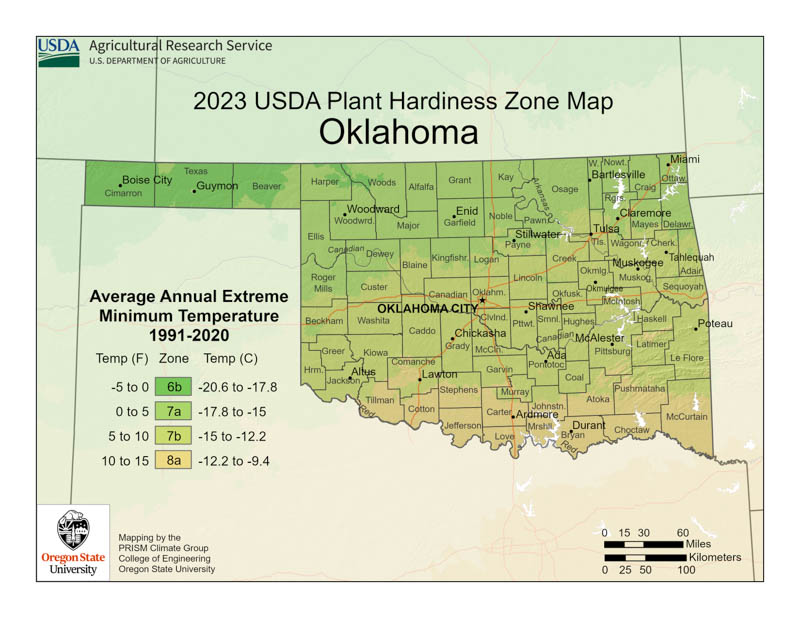
A simplified Oklahoma planting zone map based on the 2023 USDA Hardiness Zone Map, using 1991–2020 climate data.
Use the map together with your ZIP code to pinpoint your exact Oklahoma garden zone. Look up your Oklahoma planting zone by ZIP code using the USDA tool, then come back here or explore our Plant Finder to discover plants matched to your zone, sun exposure, and soil.
Although Oklahoma’s planting zones run mainly from 6a to 8a, local conditions—Panhandle winds, lake shores, urban heat islands, wooded hollows, river bottoms, and ridgelines—create countless microclimates. Thinking regionally makes it easier to match plants and planting dates to your own yard.
This region includes Boise City, Guymon, Goodwell, and smaller Panhandle towns. High elevation, low humidity, and constant wind create big temperature swings and tougher winters than elsewhere in the state.
Woodward, Enid, Ponca City, Blackwell, and nearby communities sit in wheat and cattle country with cold, sometimes dusty winters and hot, dry summers.
Oklahoma City, Edmond, Norman, Moore, Guthrie, and Stillwater lie along the busy I-35 corridor and central plains. Winters are relatively mild, summers are hot and often windy, and the growing season is long.
The greener hills and forests of “Green Country” include Tulsa, Broken Arrow, Jenks, Owasso, Bartlesville, Claremore, Muskogee, and Grand Lake communities. Humidity is higher and rains more frequent than in western Oklahoma.
From Lawton and Chickasha to Ardmore, Ada, McAlester, Durant, and Idabel, southern and southeastern Oklahoma enjoy some of the state’s mildest winters and longest frost-free seasons.
From windy Panhandle springs to muggy Tulsa summers and foggy Red River mornings, frost dates are your best planning tool. Whether you’re gardening in Guymon, Enid, Oklahoma City, Norman, Tulsa, Lawton, Ardmore, or Durant, your average last and first frosts help you decide when to sow cool-season crops, set out tender seedlings, and be ready with row covers in fall.
Across Oklahoma, last spring frosts generally run from early March in the warmest southern and southeastern areas to late April in cooler northern and Panhandle locations. First fall frosts typically arrive from early–mid October in the Panhandle and far north to early–mid November in much of central, southern, and southeastern Oklahoma.
| Region / City | Average Last Spring Frost | Average First Fall Frost | Approx. Frost-Free Days |
|---|---|---|---|
| Panhandle & High Plains (Guymon / Boise City) | Mid–Late April (around Apr 15–25) | Early–Mid October (around Oct 7–18) | ~155–170 days |
| North-Central & North (Enid / Ponca City / Stillwater) | Early–Mid April (around Apr 5–15) | Late October (around Oct 21–31) | ~185–200 days |
| Central I-35 Corridor (Oklahoma City / Edmond / Norman) | Early April (around Apr 1–10) | Early–Mid November (around Nov 1–10) | ~200–215 days |
| Green Country & Northeast (Tulsa / Bartlesville / Muskogee) | Early–Mid April (around Apr 5–15) | Late October (around Oct 21–31) | ~185–200 days |
| South & Southeast (Lawton / Ardmore / Durant / Idabel) | Early–Late March (around Mar 10–31) | Early–Mid November (around Nov 1–15) | ~210–230 days |
Zone and frost-date ranges here are summarized from the 2023 USDA Plant Hardiness Zone Map and Oklahoma-focused frost-date tools; always check a local forecast and ZIP code–based lookup for the most precise information for your garden.
Use these frost windows as planning guides—your yard may act warmer or cooler depending on slope, altitude, wind, nearby pavement, and buildings. They’re long-term averages, not guarantees, so watch the forecast closely during spring warm-ups and autumn cold snaps.
Once you know your Oklahoma planting zone, you can lean into your region’s strengths—long southern summers, central Oklahoma’s four seasons, or cooler Panhandle nights. Focus on cold-hardy perennials for your zone (6–8), plus heat- and wind-tolerant annuals and vegetables, and pair them with soil-building practices that match your local conditions.
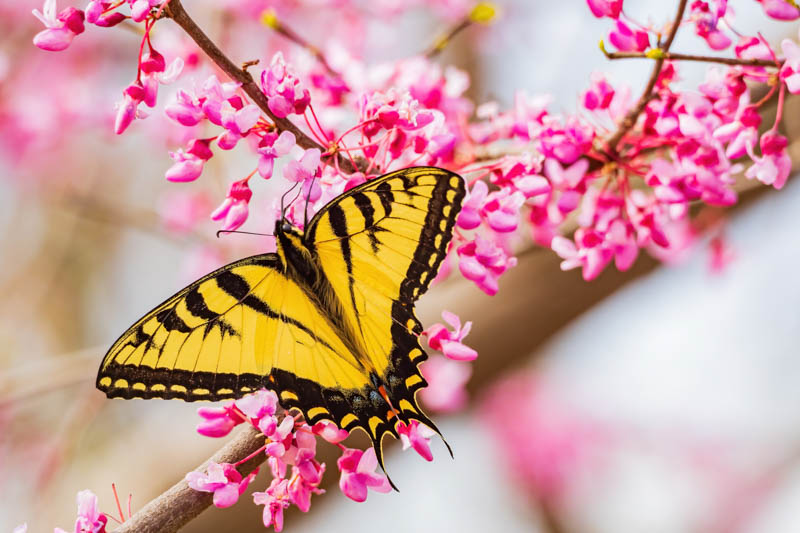
Many Oklahoma native plants are perfectly tuned to local soils, rainfall, wind, and winter lows. Think of prairie wildflowers like Indian blanket (the state wildflower) and butterfly milkweed, structural grasses such as little bluestem and switchgrass, and iconic trees like eastern redbud (the state tree) and oaks. Combine native wildflowers, grasses, shrubs, and trees for a low-maintenance, wildlife-friendly landscape that supports pollinators, songbirds, and other beneficial wildlife while tolerating Oklahoma’s hot summers, drought, and thunderstorms.
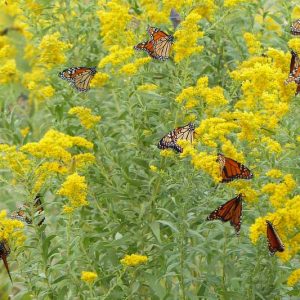
Explore curated lists like great pollinator plants for Oklahoma, monarch-friendly nectar plant collections, and guides to native grasses, shrubs, ferns, and vines to build a garden that buzzes and flutters from spring through fall.
Tap a month to see what to plant in Oklahoma by zone. Use these quick guides as a starting point—then adjust for your exact frost dates and whether you garden on a breezy Panhandle acreage, a warm Oklahoma City courtyard, a Tulsa backyard, or a shady southeastern porch.
Oklahoma gardeners juggle wind, hail, summer droughts, clay and sandy soils, deer and grasshopper pressure, and the occasional ice storm or tornado. These tips will help your garden thrive from zone 6a to 8a:
Now that you understand your Oklahoma planting zone, frost dates, and regional climate, you’re ready to choose plants that love your conditions and build a thriving Sooner State garden. Mix edible crops, flowering perennials, and native plants for a landscape that feeds both your household and local wildlife. Curious how Oklahoma compares to other states? Visit our national USDA planting zone guide to explore growing zones across the United States.
Key zone and climate information in this article is based on the 2023 USDA Plant Hardiness Zone Map and Oklahoma climate resources from extension services and frost-date tools.
The 2023 USDA Plant Hardiness Zone Map places Oklahoma mainly in zones 6a, 6b, 7a, and 7b, with a small pocket of 8a in the far southeast. Most gardeners are in 6b–7b. Your exact zone depends on your ZIP code, elevation, and local microclimate, so always confirm with the USDA zone lookup tool.
Most of the Oklahoma City metro, including Edmond, Moore, and Midwest City, falls in USDA zone 7a to 7b on the 2023 map. That means typical winter lows run from about 0°F to 10°F. Warm-season crops and many classic landscape shrubs do well, but you should still protect borderline-hardy plants during severe cold snaps.
Tulsa and much of “Green Country” generally sit in USDA zones 6b–7a. Winters are a touch cooler than central Oklahoma, but summers are still hot and humid. Many zone-7 perennials and shrubs thrive here, and gardeners can push some zone-8 plants in sheltered microclimates with winter protection.
In Oklahoma, average last spring frost dates run from about early March in the warmest southern and southeastern counties to late April in the Panhandle and far north. Central and I-35-corridor cities like Oklahoma City and Norman typically see their last frost in early April. These are averages, not guarantees, so always watch the local forecast before planting tender crops.
Average first fall frosts generally arrive in early to mid-October in the Panhandle and far northern Oklahoma, late October around many north-central and northeastern cities, and early to mid-November across central, southern, and southeastern Oklahoma. The actual date can shift by several weeks from year to year, so use local data and forecasts to time fall protection.
Oklahoma’s growing season varies from roughly 155–170 frost-free days in the Panhandle and far north to about 200–230 frost-free days in central, southern, and southeastern counties. That’s long enough for heat-loving crops like okra, sweet potatoes, and melons in most of the state, especially if you start transplants indoors.
Oklahoma’s zones 6–8 are ideal for cool-season crops like lettuce, spinach, peas, broccoli, and cabbage in spring and fall, plus warm-season staples like tomatoes, peppers, okra, corn, beans, squash, cucumbers, and sweet potatoes in summer. The main keys are timing around frost dates, mulching heavily, and choosing heat- and disease-tolerant varieties.
Well-adapted fruit trees for most of Oklahoma include apples, pears, plums, peaches, and some tart cherries, provided you match their required chill hours to your part of the state. In warmer southern and southeastern counties, figs, persimmons, pecans, and muscadine grapes also perform well. In the very warmest pockets, gardeners sometimes grow cold-hardy citrus with extra winter protection.
Yes. Native Oklahoma plants evolved with the state’s wind, heat, drought, and variable rainfall, so they usually need less irrigation and fertilizer once established. They also provide highly nutritious nectar, pollen, seeds, and shelter for local bees, butterflies, and birds. Using natives as the backbone of your landscape generally means lower maintenance and a healthier backyard ecosystem.
In Oklahoma, plan for wind first: use fences, hedges, or native shrubs as windbreaks; stake tall plants; and choose flexible trees with strong branch structure. Build raised beds where drainage is poor, mulch to protect soil from heavy rain, and space plants for good airflow to reduce disease after thunderstorms. Designing with Oklahoma’s weather in mind leads to more resilient gardens and fewer mid-season losses.
Updated: December 2025
| Hardiness |
6 - 8 |
|---|---|
| Native Plants | United States, Southwest, Oklahoma |
| Hardiness |
6 - 8 |
|---|---|
| Native Plants | United States, Southwest, Oklahoma |
Create a membership account to save your garden designs and to view them on any device.
Becoming a contributing member of Gardenia is easy and can be done in just a few minutes. If you provide us with your name, email address and the payment of a modest $25 annual membership fee, you will become a full member, enabling you to design and save up to 25 of your garden design ideas.
Join now and start creating your dream garden!
Create a membership account to save your garden designs and to view them on any device.
Becoming a contributing member of Gardenia is easy and can be done in just a few minutes. If you provide us with your name, email address and the payment of a modest $25 annual membership fee, you will become a full member, enabling you to design and save up to 25 of your garden design ideas.
Join now and start creating your dream garden!