Crocosmia (Montbretia) - Guides
Characteristics
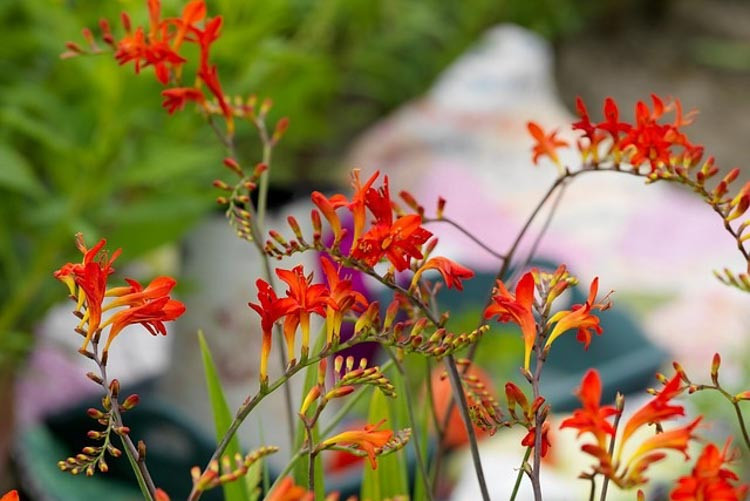
Crocosmia, also called montbretia, coppertips, or falling stars, is a summer-to-fall perennial for gardeners who want bold color without complicated care. Its arching stems carry red, orange, yellow, or scarlet flowers above sword-shaped leaves, creating movement, height, and late-season drama. It is especially useful in sunny borders, pollinator gardens, cutting gardens, and warm-color planting schemes.
How to Choose a Variety
Choose Crocosmia ‘Lucifer’ when you want tall scarlet flowers and a strong architectural accent. Pick ‘Solfatare’ for softer apricot-yellow blooms and bronzy foliage, ‘Star of the East’ for large orange flowers with pale centers, or ‘Carmin Brillant’ for glowing red-orange color. For small gardens or mild, moist regions, prioritize named cultivars you can monitor and divide. Compare more options in this guide to the best Crocosmia varieties for your garden.
Where and How to Plant
Plant Crocosmia in full sun to partial sun, in fertile, moist but well-drained soil. Give clumps room to expand, and avoid placing them where stray corms will be hard to remove. Water during establishment and dry spells, then let the plant settle into a steady rhythm. In colder areas, plant corms in spring after the soil warms. For step-by-step planting depth, spacing, division, and seasonal care, use this guide to planting and caring for Crocosmia.
How to Design With Crocosmia
Use Crocosmia as a bright vertical accent, not a random filler. Repeat small groups through a border for rhythm, or plant one bold clump as a focal point. Pair orange and red Crocosmia with blue, purple, silver, bronze, or golden companions to make the color feel intentional. Excellent partners include ornamental grasses, salvias, dahlias, heleniums, agapanthus, kniphofias, asters, and rudbeckias. Explore great companion plants for Crocosmia for polished combinations.
How to Keep It Manageable
Crocosmia multiplies by corms, so the best care habit is regular editing. Divide crowded clumps every few years, replant only the firm, healthy corms you need, and remove extras responsibly. This is especially important in mild, moist climates where some montbretia types can spread. Keep Crocosmia away from wild edges, stream banks, and natural areas if it is considered invasive locally.
For the best results, choose the right variety, plant it where you can reach it, combine it with compatible companions, and divide before the clump becomes congested. Treated that way, Crocosmia becomes a colorful, pollinator-friendly, low-fuss perennial rather than a plant you regret later.