Lupinus (Lupines) - Guides
Characteristics
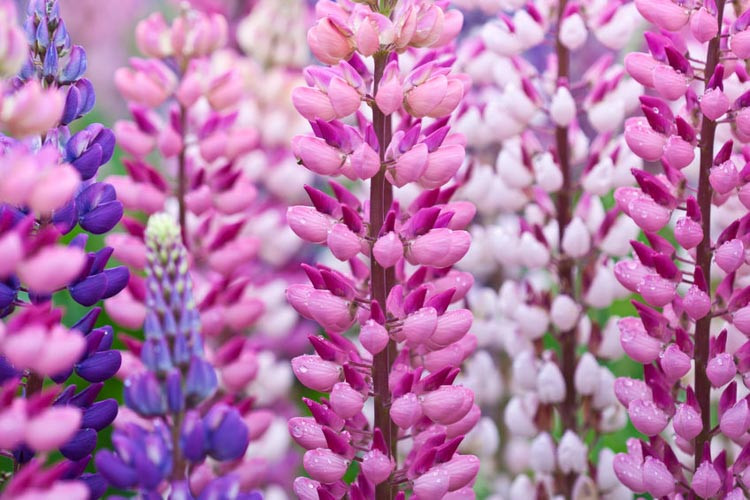
Lupinus, commonly called lupine, is a bold, vertical perennial for gardeners who want colorful flower spikes, cottage-garden charm, and strong pollinator value. Its pea-like blooms rise above attractive palmate foliage in blue, purple, pink, red, yellow, white, and bicolor shades. For the full overview, start with the Lupinus lupine genus guide.
How to Choose Lupines
Choose lupines by height, color, climate, and planting style. Tall border types give dramatic spires, while compact varieties suit smaller gardens and containers. For rosy-red impact, try Lupinus ‘My Castle’. For blue and white contrast, use Lupinus ‘The Governor’. For soft white flowers, plant ‘Noble Maiden’, or choose ‘Gallery White’ for compact spaces. For a natural look, consider Lupinus polyphyllus.
Where to Plant Lupines
Plant lupines in full sun to light shade with cool roots and well-drained soil. The best advice is simple: avoid hot, humid, soggy sites. Lupines perform best where summers are not excessively hot and soil stays lightly moist without becoming waterlogged. Use them in borders, meadow gardens, cottage gardens, and wildflower-style plantings inspired by spring wildflowers, summer wildflowers, and blue wildflowers.
Care Advice That Works
Water new plants regularly until established, then keep soil evenly moist during dry spells. Mulch lightly to cool the root zone, but do not bury the crown. Deadhead faded spikes to encourage neat growth and possible rebloom, or leave a few seedheads if you want self-sown seedlings. Stake tall varieties in windy gardens. Because lupines are often nitrogen-fixing plants, avoid heavy nitrogen fertilizer, which can mean more leaves and fewer flowers.
Design and Wildlife Tips
Plant lupines in groups of three or more for the strongest display. Their tall spires pair beautifully with foxgloves, irises, peonies, catmint, salvia, alliums, and ornamental grasses. Add them to pollinator-friendly borders because their blooms can attract bees, butterflies, and hummingbirds, much like the best flowers to attract hummingbirds. For more pairing ideas, explore the best perennial flowers and plants.
For success with Lupinus, remember this simple guidance: choose a cool, sunny site, keep soil well drained but not dry, skip rich nitrogen feeding, and plant in bold groups for unforgettable spring-to-summer color.