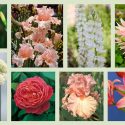
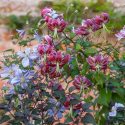
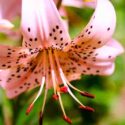
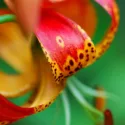
Huge flowers, intoxicating fragrance, and spectacular late-summer color make Oriental lilies unforgettable. Discover how to choose the best varieties, provide the right acidic soil, plant bulbs correctly, grow lilies in borders or pots, manage after-bloom care, and explore favorite cultivars for fragrance, flower color, height, and garden impact.
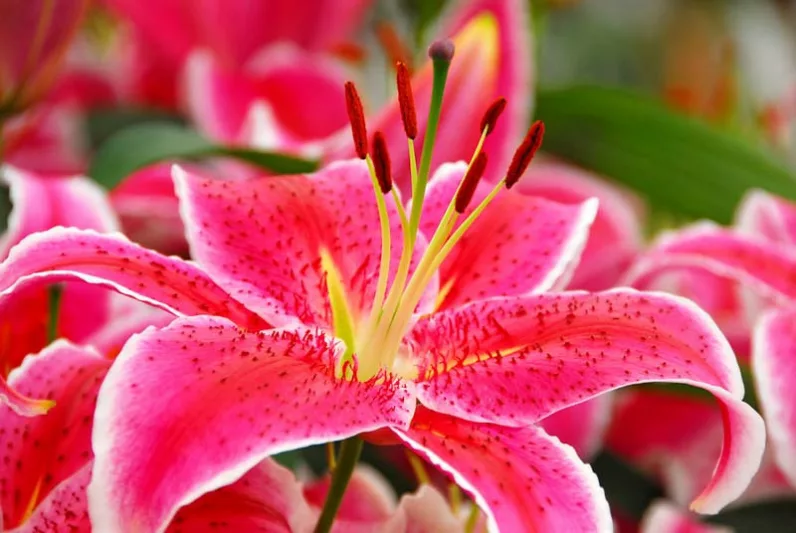


Few garden flowers announce summer quite like Oriental lilies. Their enormous blooms, rich colors, ruffled petals, and powerful perfume make them some of the most dramatic true lilies in the genus Lilium.
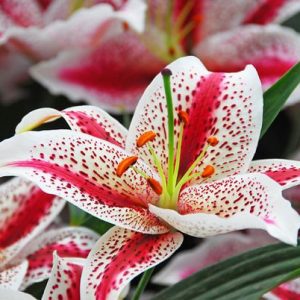
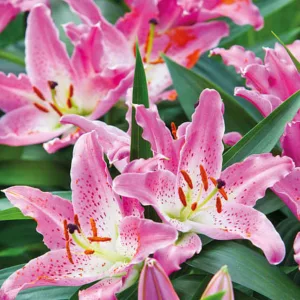
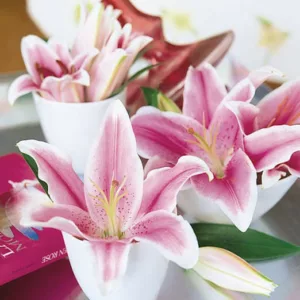
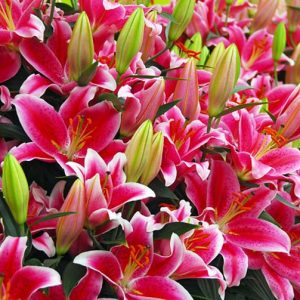
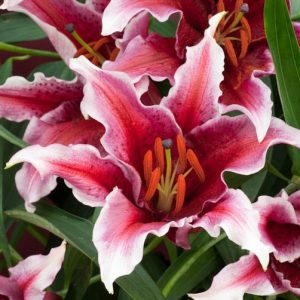
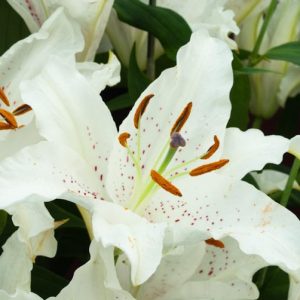
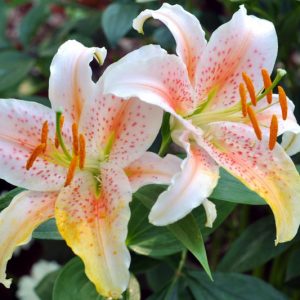
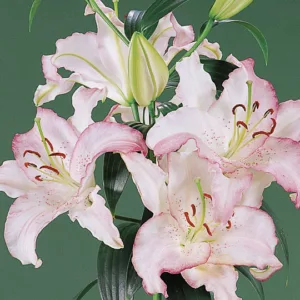
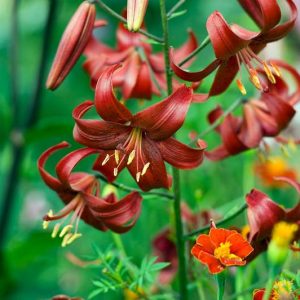
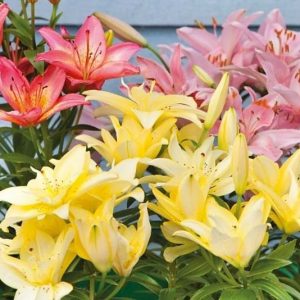
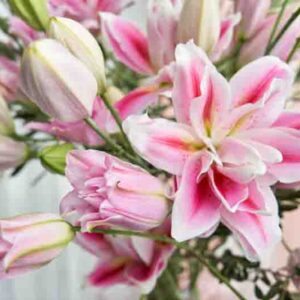
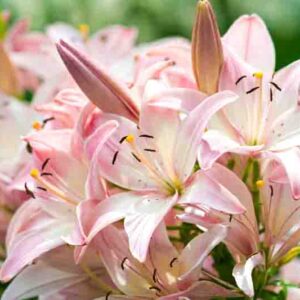
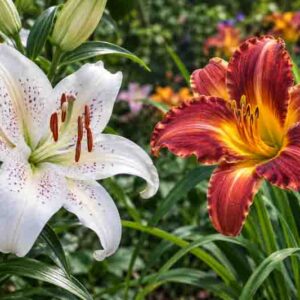
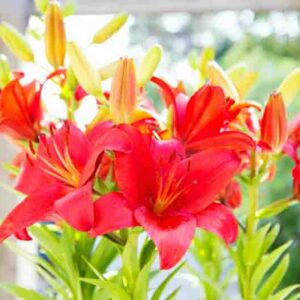
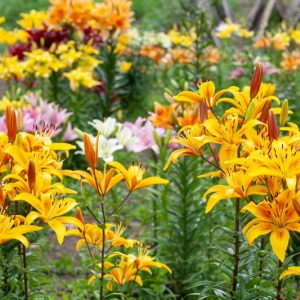
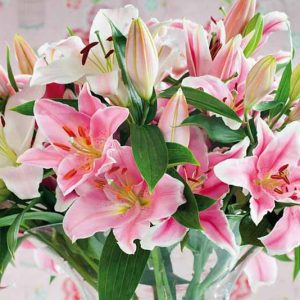
Oriental lilies generally flower from midsummer into late summer, after many Asiatic lilies have finished. Their flowers are typically broad and open, often bowl-shaped or recurved, and frequently marked with spots, contrasting bands, colored throats, or elegantly ruffled edges. White, pink, crimson, burgundy, and combinations of these shades dominate the group.
Fragrance is their signature. Cultivars such as ‘Star Gazer’, ‘Casa Blanca’, and ‘Muscadet’ can perfume a patio, border, or room with only a few open flowers.
Oriental lilies do ask for a little more care than Asiatic lilies, especially where soil is alkaline, summers are very hot, or drainage is poor. Give them the right site, however, and they can return year after year with increasingly impressive displays.
Gardenia’s shortcut: choose Oriental lilies when fragrance and flower drama matter most – then choose the cultivar for height, color, flower form, hardiness, and the conditions in your garden.
| Feature | Oriental Lily Profile |
|---|---|
| Botanical group | Lilium Oriental Hybrids – Horticultural Division VII |
| Plant type | Bulbous perennial |
| Bloom season | Mostly mid to late summer, with some cultivars extending later |
| Height | About 2-6 ft. (60-180 cm), with compact cultivars below this range |
| Flowers | Large to very large, usually bowl-shaped, open, outward-facing, or recurved |
| Fragrance | Usually strong to intense |
| Colors | White, cream, pink, crimson, burgundy, red, and patterned combinations, sometimes with yellow bands |
| Light | Full sun to partial shade |
| Soil | Fertile, moist but well-drained, preferably acidic to neutral |
| Hardiness | Group broadly spans USDA Zones 3-9; check individual cultivar |
| Best uses | Fragrance gardens, beds and borders, patios, containers, and cutting gardens |
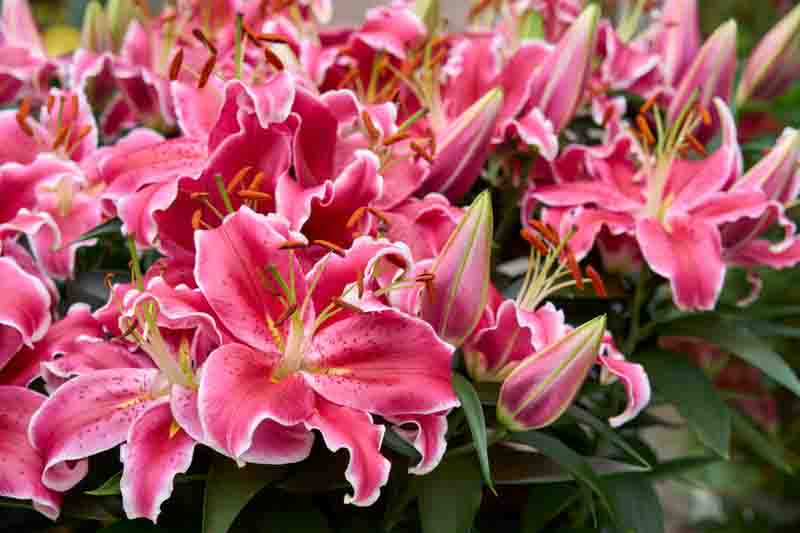
Oriental lilies belong to Lilium Horticultural Division VII. Their ancestry includes East Asian species and hybrids associated with lilies such as Lilium auratum and Lilium speciosum. Modern breeding has produced a large group of garden cultivars famous for immense flowers and intense fragrance.
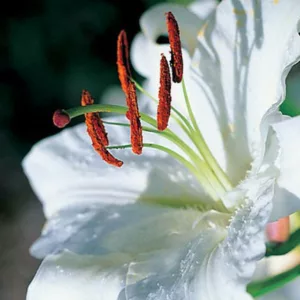
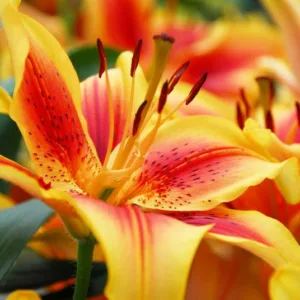
The typical Oriental flower is broad and substantial. Tepals may overlap, curve backward, twist at the edges, or form a large open bowl. Many cultivars are decorated with freckles, colored midribs, contrasting throats, or ruffled white margins.
Flowers may face upward, outward, or somewhat downward. The foliage is generally broader than that of Asiatic lilies, and the plants usually flower later in the season.
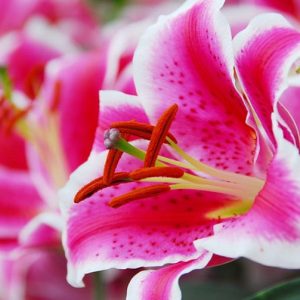
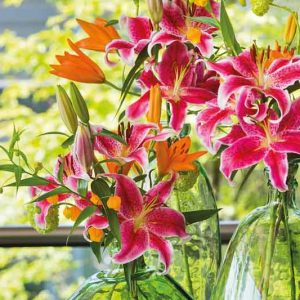
Some Oriental lilies have become icons of the entire genus. ‘Star Gazer’, with its upward-facing crimson-pink flowers, is one of the best-known cut-flower lilies in the world. ‘Casa Blanca’ remains a benchmark for elegant white Oriental lilies.
Oriental lilies are primarily mid- to late-summer bloomers, bringing their strongest display after many early Asiatic lilies have faded.
Exact timing varies by cultivar, climate, spring temperatures, and seasonal weather. Some Oriental lilies continue flowering toward the end of summer, which makes them especially valuable for extending the lily season.
Rather than expecting one cultivar to flower all summer, combine lily groups with different natural seasons:
For a longer lily season: combine early Asiatic lilies with later Trumpet, Oriental, and Orienpet cultivars. Gardenia’s Lilies for Long Summer Blooms explains how to build a succession rather than relying on one group.
Fragrance is one of the main reasons gardeners grow Oriental lilies. Their perfume can be rich, sweet, spicy, or intensely floral, and a few open blooms may scent an entire patio or room.
Popular fragrant cultivars include:
Strong fragrance is wonderful in the right location but can be overpowering in a confined space. Before planting several highly scented lilies next to a dining table, bedroom window, or small balcony, consider how close you will be to the flowers.
For scent-focused selections, explore Gardenia’s Most Fragrant Oriental Lilies and Most Fragrant Lilies.
Oriental lilies are renowned for scale. Their flowers range from large to enormous and often appear even larger because of their broad overlapping tepals and open form.
The palette is narrower than that of Asiatic lilies but exceptionally refined:
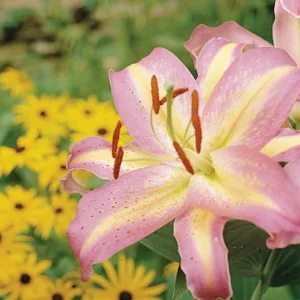
‘Salmon Star’ demonstrates how far Oriental colors can move beyond the familiar crimson-and-white look, with pale salmon flowers marked by a coral stripe. ‘Muscadet’ illustrates the opposite effect – primarily white flowers transformed by pink stripes and rose-red freckles.
The result is a group particularly well suited to gardens where individual flowers are meant to be admired up close.
Oriental lilies are often described as 2-6 ft. (60-180 cm) tall, but the group contains much more variation than that summary suggests.
Some modern cultivars are remarkably compact. ‘Starlight Express’ stays exceptionally compact at about 14-16 in. tall (35-40 cm), while ‘Souvenir’ stays around 18-20 in. (45-50 cm). These are very different plants from a taller Oriental grown at the back of a border.
At the other end, larger cultivars can provide substantial vertical structure. Familiar selections such as ‘Casa Blanca’ and ‘Muscadet’ reach about 3-4 ft. (90-120 cm), while other Orientals can become considerably taller.
Gardenia cultivar insight: fragrance is a strong Oriental trait, but size is not. Gardenia’s cultivar records range from dwarf ‘Starlight Express’ and ‘Souvenir’ to substantial border lilies such as ‘Casa Blanca’ and ‘Muscadet’. “Oriental” predicts flower character and scent far better than it predicts eventual plant height.
Oriental lilies perform well in full sun to partial shade. Good light supports strong stems and abundant flowering, while a cooler root zone helps prevent stress during summer.
This has led to the familiar lily-gardening idea of giving them “heads in the sun and feet in the shade.” You do not literally need to shade the bulbs, but nearby low-growing plants or mulch can help moderate soil temperature and conserve moisture.
Good locations include:
Avoid dense shade, severely exposed windy sites, and places where water sits around the bulbs.
This is where Oriental lilies differ most clearly from many Asiatic and Orienpet lilies.
Oriental lilies generally perform best in acidic to neutral soil and may struggle in distinctly alkaline conditions.
Do not confuse soil type with soil pH. An Oriental lily may tolerate several soil textures, but its root-zone pH can still be critical. Check both drainage and pH before planting.
Alkaline soil? Containers are often the simplest solution. Fill them with a suitable ericaceous growing medium so you can control the root-zone pH instead of trying to transform an unsuitable garden soil.
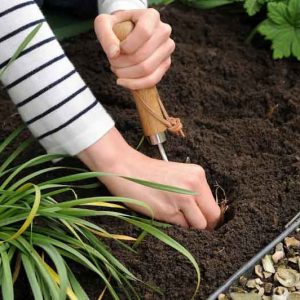
Plant Oriental lily bulbs in fall or early spring. Lily bulbs do not have the dry protective tunic found on bulbs such as tulips, so avoid leaving them exposed to dry out after purchase.
Planting depth depends on lily type and bulb size. Gardenia’s Oriental planting guidance uses about 8 in. (20 cm) deep and 10 in. (25 cm) apart as a useful general reference for Oriental lilies.
See Gardenia’s Lilies: Planting Depth and Distance for planting recommendations across the different lily groups.
For complete seasonal care, use Gardenia’s How to Grow and Care for Lilies.
Containers are not merely decorative for Oriental lilies – they can solve a genuine growing problem.
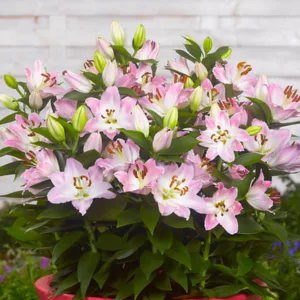
Where garden soil is alkaline, a container lets you provide the acidic growing medium these lilies prefer. Pots also make it easy to position fragrant cultivars beside a patio or entrance, then move them after flowering if desired.
For cultivar suggestions and detailed container advice, see Gardenia’s Best Lilies for Pots and Containers.
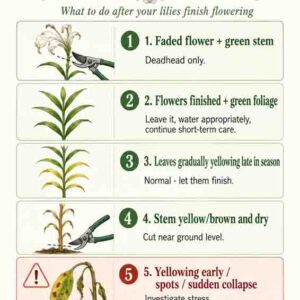
Once the flowers fade, remove the spent blooms if you are not saving seed, but leave healthy green stems and foliage in place.
The leaves continue photosynthesizing after flowering and help replenish the bulb for the following year’s growth.
Gardenia’s after-bloom rule: Flowers Off, Foliage On. Deadheading is fine; cutting healthy green foliage immediately after flowering is not.
Established Oriental lilies can slowly produce offsets and form larger clumps. They do not need annual division, but lifting and separating crowded bulbs can restore spacing and provide new plants.
Offsets can be separated after the foliage has died down. Replant them promptly because lily bulbs lack a protective tunic and can lose moisture relatively quickly.
Propagation from bulb scales is also possible. Seed can be used for species and breeding work, but seedlings produced by hybrid cultivars will not necessarily reproduce the parent plant.
Oriental lilies are spectacular but can be affected by many of the same problems as other true lilies.
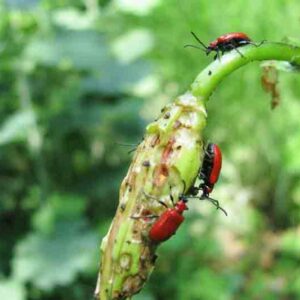
Oriental lilies can suffer from Botrytis or gray mold, lily diseases, viruses, and bulb or basal rot. Persistently wet soil is one of the most avoidable causes of failure because lily bulbs deteriorate quickly when drainage is poor.
Start with healthy bulbs, avoid overcrowding, provide adequate air movement, remove badly diseased material, and keep the root zone moist without allowing it to become saturated.
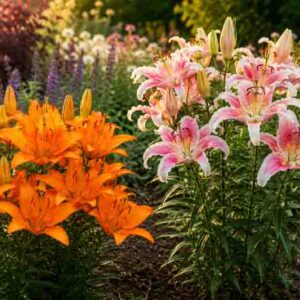
Oriental lilies are natural focal points. Their flowers are too large, fragrant, and visually dominant to disappear quietly into a planting, so it usually works better to embrace that drama.
Plant several bulbs of the same cultivar together to create a concentrated display. Surround them with plants that soften the lower stems without competing heavily with the bulbs.
Gardenia’s Great Companion Plants for Oriental Hybrid Lilies provides specific ideas, while Great Companion Plants for Lilies explains broader companion-selection principles.
Oriental lilies are the natural choice when your priorities are large flowers, intense perfume, and a dramatic mid- to late-summer display. Other lily groups serve different purposes.
For a broader comparison, see Gardenia’s How to Choose Lilies, browse the Lilium plant collection, or explore Gardenia’s Lilium guide library.
If you love Oriental flowers but garden in alkaline soil, experience very hot summers, or need greater height, compare Orienpets. These Oriental-Trumpet hybrids often retain the fragrance and flower drama of Orientals while offering greater vigor, stature, heat tolerance, and broader soil flexibility. The best choice still depends on the cultivar.
For classic pink drama: choose ‘Star Gazer’.
For elegant white flowers: ‘Casa Blanca’ remains one of the outstanding choices.
For delicate white and pink: try ‘Muscadet’.
For a compact container: consider ‘Starlight Express’ or ‘Souvenir’.
For salmon tones: ‘Salmon Star’ offers an unusual warmer palette.
For maximum fragrance: compare individual selections in Gardenia’s Most Fragrant Oriental Lilies.
Knowing that you want an Oriental lily is only the first decision. Cultivars vary greatly in height, flower color, flower size, fragrance, hardiness, and container suitability.
Know you want an Oriental lily but not which one? Use Gardenia’s Lilium Comparison Tool to compare plants by height, hardiness, bloom season, flower color, soil, drainage, pH, light, and other garden characteristics – then narrow the choices to lilies that actually fit your site.
You can also browse the complete Lilium plant collection for additional Oriental cultivars and related lily groups.
The Oriental label tells you to expect fragrance and flower drama. Gardenia’s individual plant records help determine which Oriental lily actually fits your garden.
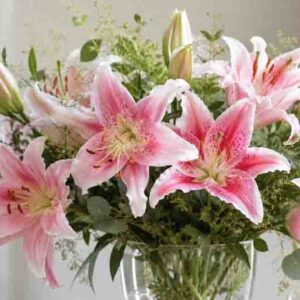
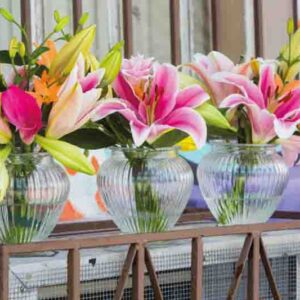
Oriental lilies are among the most spectacular cut flowers. Their large blooms, sturdy stems, and fragrance can transform a simple arrangement, and white cultivars such as ‘Casa Blanca’ are especially prized for elegant bouquets.
When cutting lilies from plants you want to keep growing in the garden, avoid taking the entire leafy stem. Leave enough green foliage behind to continue photosynthesis and replenish the bulb.
Fragrance also matters indoors. A cultivar that smells wonderful outdoors may feel overpowering in a small room, so choose accordingly.
For floral uses and the wider world of lilies, explore Gardenia’s Lily Flowers: From Garden Favorites to Stunning Arrangements.
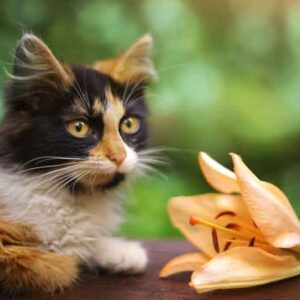
Yes. Oriental lilies are true lilies in the genus Lilium and are extremely dangerous to cats. Flowers, leaves, stems, and pollen can all present a serious risk, and water from a vase containing lilies may also be dangerous.
If a cat may have been exposed to a true lily, seek urgent veterinary attention rather than waiting for symptoms. This warning is particularly important with Oriental lilies because they are so widely used as indoor cut flowers.
| Hardiness |
3 - 9 |
|---|---|
| Heat Zones |
1 - 7 |
| Climate Zones | 1, 2, 3, 4, 5, 6, 7, 8, 9, 14, 15, 16, 17, 18, 19, 20, 21, 22, 23 |
| Plant Type | Bulbs, Perennials |
| Genus | Lilium |
| Exposure | Full Sun, Partial Sun |
| Season of Interest | Summer (Mid, Late) |
| Height | 2' - 6' (60cm - 180cm) |
| Spread | 6" - 2' (15cm - 60cm) |
| Maintenance | Low |
| Water Needs | Average |
| Soil Type | Chalk, Clay, Loam, Sand |
| Soil pH | Acid, Neutral |
| Soil Drainage | Moist but Well-Drained, Well-Drained |
| Characteristics | Cut Flowers, Fragrant, Showy |
| Landscaping Ideas | Beds And Borders, Patio And Containers |
| Garden Styles | City and Courtyard, Cutting Garden, Informal and Cottage, Traditional Garden |
Yes. Oriental lilies are bulbous perennials and can return year after year where the cultivar is hardy and the bulbs are grown in suitable, well-drained conditions.
Oriental lilies generally bloom from midsummer into late summer, with some cultivars extending later. Exact flowering time varies with cultivar, climate, spring temperatures, and seasonal weather.
Yes. Strong fragrance is one of the defining characteristics of Oriental lilies. Many cultivars produce a rich, sweet perfume, although intensity and scent character vary among individual cultivars.
Oriental lilies commonly range from about 2 to 6 feet tall, but cultivar variation is substantial. Compact selections may stay below 2 feet, while larger cultivars can become considerably taller.
Oriental lilies grow in full sun or partial shade. Good light promotes strong flowering, while some shade around the lower plant and root zone can help conserve moisture and moderate soil temperature.
Oriental lilies perform best in fertile, moist but well-drained soil that is acidic to neutral. They can struggle in distinctly alkaline conditions, where growing them in containers with an appropriate ericaceous medium may be easier.
Plant Oriental lily bulbs in fall or early spring. Lily bulbs lack a dry protective tunic, so healthy bulbs should be planted reasonably promptly rather than allowed to dry in storage.
Yes. Oriental lilies grow very well in containers, and pots are particularly useful where garden soil is alkaline because the growing medium and pH can be controlled. Compact cultivars are especially suitable.
Remove faded flowers if you are not saving seed, but leave healthy green leaves and stems in place. Cut the plant back only after the foliage has yellowed or browned naturally.
Yes. Oriental lilies are true lilies in the genus Lilium and are extremely dangerous to cats. Flowers, leaves, stems, pollen, and water from a vase containing lilies can present a serious risk. Seek urgent veterinary attention if exposure is suspected.
Oriental lilies earn their place among the great summer garden flowers through a combination few other plants can match: huge blooms, sophisticated color, and extraordinary fragrance. They are especially valuable from midsummer onward, when their flowers can turn a patio, border, or cutting garden into a focal point.
Success depends on matching the plant to the site. Give Oriental lilies good drainage, adequate moisture, suitable acidic to neutral conditions, and enough light, then choose the cultivar for the height, fragrance, color, and setting you want.
Updated: August 2026 • Reviewed by Gardenia Editors
| Hardiness |
3 - 9 |
|---|---|
| Heat Zones |
1 - 7 |
| Climate Zones | 1, 2, 3, 4, 5, 6, 7, 8, 9, 14, 15, 16, 17, 18, 19, 20, 21, 22, 23 |
| Plant Type | Bulbs, Perennials |
| Genus | Lilium |
| Exposure | Full Sun, Partial Sun |
| Season of Interest | Summer (Mid, Late) |
| Height | 2' - 6' (60cm - 180cm) |
| Spread | 6" - 2' (15cm - 60cm) |
| Maintenance | Low |
| Water Needs | Average |
| Soil Type | Chalk, Clay, Loam, Sand |
| Soil pH | Acid, Neutral |
| Soil Drainage | Moist but Well-Drained, Well-Drained |
| Characteristics | Cut Flowers, Fragrant, Showy |
| Landscaping Ideas | Beds And Borders, Patio And Containers |
| Garden Styles | City and Courtyard, Cutting Garden, Informal and Cottage, Traditional Garden |
Create a membership account to save your garden designs and to view them on any device.
Becoming a contributing member of Gardenia is easy and can be done in just a few minutes. If you provide us with your name, email address and the payment of a modest $25 annual membership fee, you will become a full member, enabling you to design and save up to 25 of your garden design ideas.
Join now and start creating your dream garden!
Create a membership account to save your garden designs and to view them on any device.
Becoming a contributing member of Gardenia is easy and can be done in just a few minutes. If you provide us with your name, email address and the payment of a modest $25 annual membership fee, you will become a full member, enabling you to design and save up to 25 of your garden design ideas.
Join now and start creating your dream garden!