Choose, plant, and care for Mediterranean trees - olives, stone pines, holm oaks, and more. Low water, high shade, timeless style made simple.
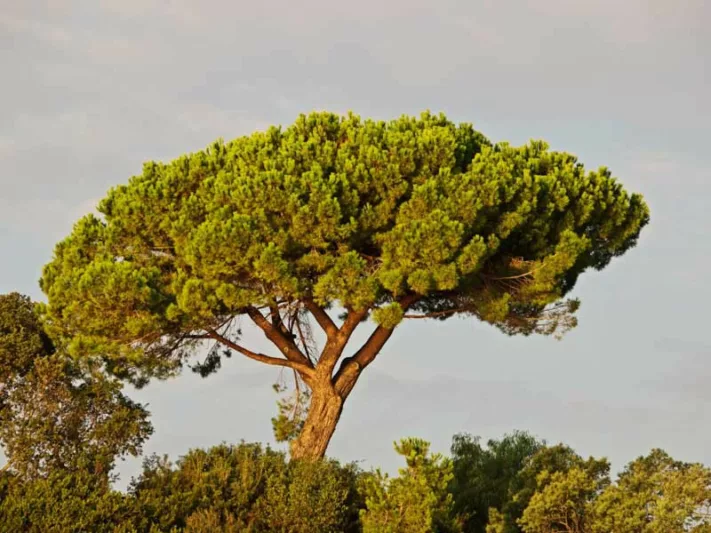


Want that sun-kissed, timeless look with less irrigation and more payoff? Over and over, Mediterranean trees deliver. They cool patios, anchor views, perfume the air, and stay composed when sprinklers go quiet. This guide is your friendly roadmap—what to choose, how to plant, when to water, and the easy care that keeps these trees happy for decades.
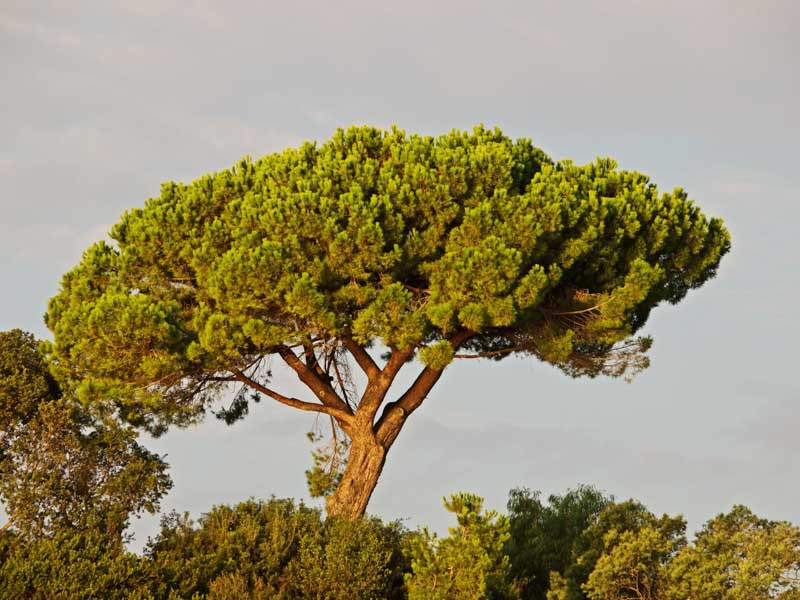
Summary: Choose species with small or silver leaves, leathery foliage, and deep roots. Plant high with a visible root flare, mulch 2–3 in (5–7.5 cm), and water deeply but infrequently in year 1. Typical best zones are 8–10—some push to 7, a few to 6 with shelter.
| Why some trees handle drought | Small, thick, or silver leaves; waxy or leathery cuticles; deep or wide roots; summer dormancy; aromatic resins; corky bark that limits water loss. |
|---|---|
| Reliable categories | Mediterranean evergreens (olive, holm oak, cork oak), coastal-tough (mastic), conifers (stone pine, Italian cypress). |
| Best uses | Deep patio shade, wind filters near coasts, narrow screening, heat-island streetscapes, low-care courtyard anchors. |
| Caution | All trees need establishment water; poor drainage kills faster than drought. Avoid lawn at the trunk. Verify cold hardiness and invasive status locally. |
| Best strategy | Plant in fall or early spring; set root flare at or slightly above grade; mulch 2–3 in in a 3–6 ft ring; drip deeply every 7–14 days in year 1—then taper. |
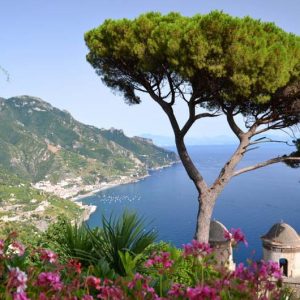
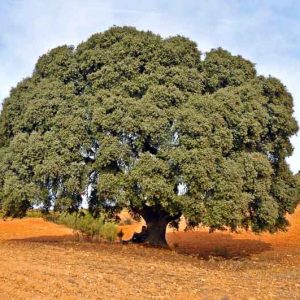
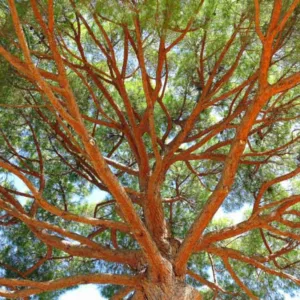
Mediterranean trees evolved where summers are dry and bright and winters are mild to cool with seasonal rain. They often carry small or leathery leaves, silver or glossy foliage, and deep or wide root systems. Many are evergreen, which gives year-round structure and screening. Think olive tree (Olea europaea), holm oak (Quercus ilex), Italian cypress (Cupressus sempervirens), and stone pine (Pinus pinea). Others are fruiting icons like pomegranate and fig that thrive with sharp drainage and infrequent deep watering once established.
| Plant Type | Trees |
|---|---|
| Garden Styles | Mediterranean Garden |

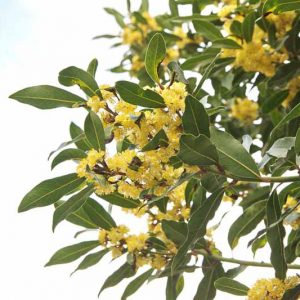
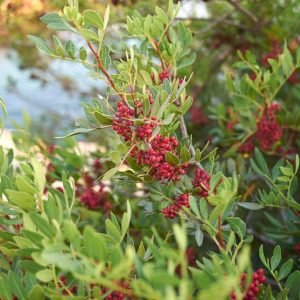
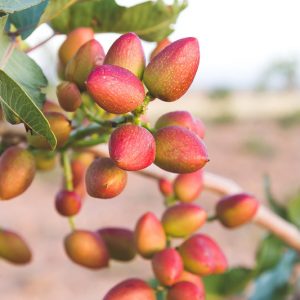
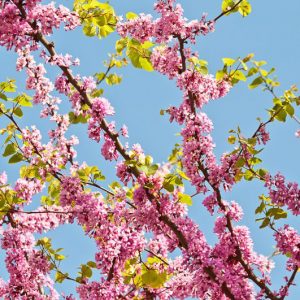
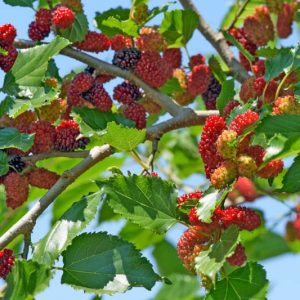
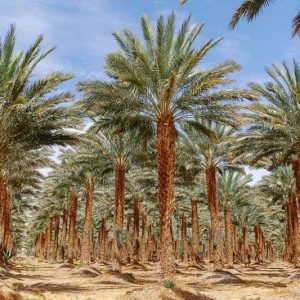
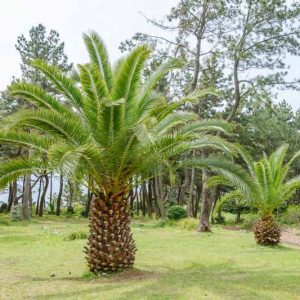
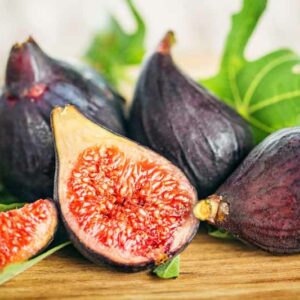
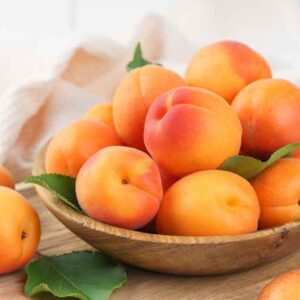
Use with care based on climate and local guidance:
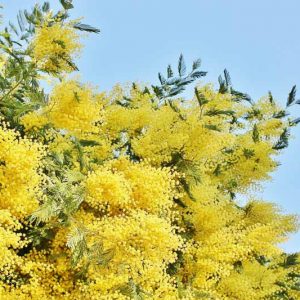
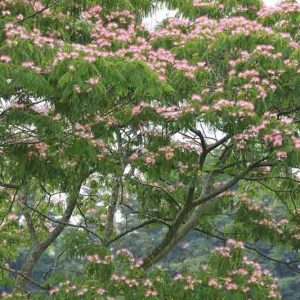
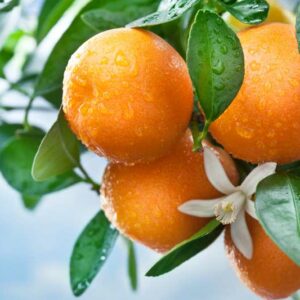
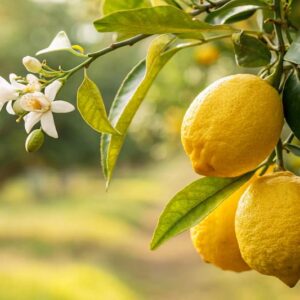
In practice these phrases point to the same idea: trees selected and managed to use less irrigation once established. Drought-tolerant and drought-resistant trees handle dry spells with deep roots and conservative foliage. “Low-water” highlights the design goal of lowering irrigation demand.
Small, thick, or silver leaves — reflect sun and reduce water loss.
Glossy or leathery foliage — slows transpiration in hot wind.
Deciduous strategy — some drop leaves early in extreme drought to conserve energy.
Deep or wide root systems — tap subsoil moisture and hold in wind.
Summer-dry origins — Mediterranean and steppe climates build resilience from the start.
| Site condition | Best trees | Placement tips |
|---|---|---|
| Hot courtyards and patios | Olive, stone pine, holm oak, strawberry tree | Place upwind to cast afternoon shade on sitting areas. |
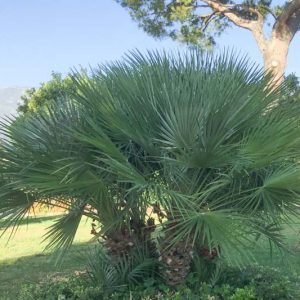
| Coastal wind and salt | Mastic, olive, companion European fan palm, edge-tough Phoenician juniper | Stagger as a wind filter, not a wall. Use pale gravel mulch. |
| Gravel gardens and slopes | Cork oak, Italian cypress, carob, Aleppo pine | Add terraces or stone pockets for stability and drainage. |
| Small gardens | Pomegranate, Judas tree, bay laurel trained as a standard | Use columnar or multi-stem forms to save footprint. |
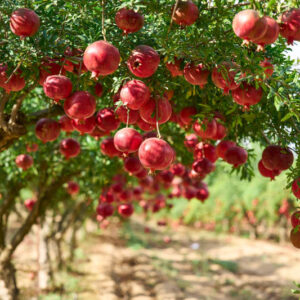
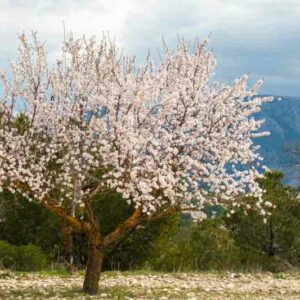
| Fruiting charm | Fig, pomegranate, almond | Check chill hours and local suitability before planting. |
| Regionality notes | Match winter lows, summer heat, and humidity to species. Many Mediterranean trees thrive in zones 8–10, some in 7, a few in 6 with shelter. | |
| Step | What to do | Why it helps |
|---|---|---|
| Time it | Plant in fall in mild regions or early spring in cold-winter areas. | Cool air + warm soil = faster rooting with less irrigation. |
| Dig wide, not deep | Hole 2× root-ball width, same depth. Root flare at or slightly above grade. | Encourages lateral roots and prevents burying the flare. |
| Score circling roots | Make 3–4 vertical cuts on container roots. | Prevents girdling and pushes roots outward. |
| Backfill | Use native soil only. Firm lightly to remove air pockets. | Avoids bathtub effect and differential drainage. |
| Water in | Slow soak until moisture reaches below the root ball. Repeat once if site was bone-dry. | Settles soil and hydrates the entire ball. |
| Mulch | Apply 2–3 in over a 3–6 ft ring. Keep 3 in clear around trunk. | Saves water, cools soil, reduces weeds. Prevents trunk rot. |
| Stake if needed | Use two stakes for one season in windy sites, then remove. | Encourages a strong trunk and natural movement. |
| Root flare check | If the trunk looks like a pole into soil, the flare is buried. Adjust so the flare is visible and proud of grade. | |
| Phase | Cadence | Amount | Notes |
|---|---|---|---|
| Weeks 1–6 | Every 5–7 days in warm weather, 7–10 days in cool spells | 10–15 gal small trees; 20–30 gal larger stock | Slow soak past the root ball. |
| Months 3–12 | Every 10–14 days; adjust for heat, wind, and soil | Deep, infrequent sessions | Leaves that flag at noon but recover by evening = near-ideal stress. |
| Year 2 | Only during extended dry spells | Water when soil is dry 6–8 in down | Probe soil before irrigating. |
| Year 3+ | Occasional deep soak in heat waves or visible stress | As needed | Many trees cruise on seasonal rain. |
| Pro tip | Use a drip ring or a 5-gallon bucket with two 1/8-in holes near the drip line for slow, deep watering. | ||
| Topic | What to do | Why it helps |
|---|---|---|
| Wood-chip mulch | Apply 2–3 in and refresh annually. | Saves water and boosts soil life. |
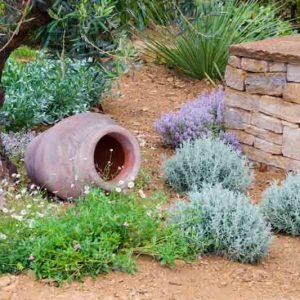
| Gravel mulch | Use for olive, cypress, and agave palettes. Keep depth moderate. | Matches arid aesthetics but reflects heat if too deep. |
| No lawn at trunk | Maintain a clean mulch ring 3–6 ft across for 3–5 years. | Reduces competition for water. |
| Underplant wisely | After establishment, use thyme, santolina, or rock rose away from the flare. | Keeps crowns visible and dry; supports low-water design. |
| Topic | What to do | Why it helps |
|---|---|---|
| Timing | Light pruning in late winter or immediately after flowering on spring bloomers. | Protects next year’s buds and reduces stress. |
| Goals | One dominant leader (shade trees), wide branch angles, well-spaced scaffold limbs. | Builds strong structure and wind stability. |
| Remove | Dead, damaged, diseased, rubbing, or inward-growing branches. Avoid heavy thinning. | Prevents sunburn and keeps canopy efficient. |
| Protect bark | In hot-sun regions, paint newly exposed limbs with diluted interior white latex. | Prevents sunscald on fresh cuts and thin bark. |
| Move | How to use it | Design payoff |
|---|---|---|
| Shade first | Place broad crowns west or south of patios; underplant with drought-tolerant shrubs and grasses. | Cuts late-day heat; layered cooling. |
| Vertical punctuation | Use Italian cypress in pairs or trios to frame gates and viewpoints. | Strong lines with minimal footprint. |
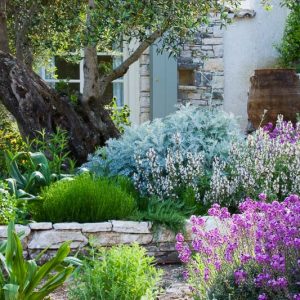
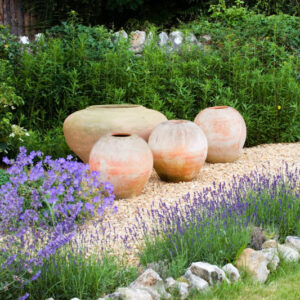
| Courtyard calm | One olive in gravel with lavender and santolina. | Instant Mediterranean look with low water. |
| Wind filters | Stagger evergreens; avoid solid walls. | Slows wind, reduces drying and damage. |
| Hardscape synergy | Use pale gravel or limestone paths beneath canopies. | Bounces light without overheating roots. |
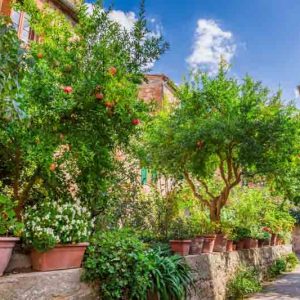
| Container cue | Dwarf olives, strawberry tree, and bay laurel thrive in large terracotta (mild climates). Use gritty mix; water to establish, then taper. | |
| Season | Tasks |
|---|---|
| Early spring | Assess structure; remove weak wood; refresh mulch ring; check drip emitters. |
| Late spring | Watch heat spikes; deep soak if leaves flag and do not recover by nightfall. |
| Summer | Maintain mulch; avoid daily spritzing; water only when the root zone is dry several inches down. |
| Fall | Prime planting season in summer-dry regions; light feeding only if growth truly lags. |
| Winter | Protect young trunks from sunscald; in soggy climates, pull mulch back slightly from the flare. |
| Firewise note | Keep a clean mulch ring; prune up lower limbs 6–10 ft (by tree size); avoid dense resinous hedges near structures; maintain spacing so crowns do not touch; clear dry litter before peak season. |
| Issue | Fix | Check |
|---|---|---|
| Leaf scorch | Deepen mulch ring; add one slow deep soak; shade from reflected heat. | Walls or paving bouncing heat; dry soil past 6–8 in. |
| Early leaf drop | Increase deep-watering frequency during prolonged drought; inspect roots. | Normal survival tactic for some species if stress is extreme. |
| Slow growth | Avoid heavy fertilizer; verify visible root flare; improve drainage if needed. | Common in Mediterranean evergreens; patience wins. |
| Trunk rot or insects at base | Pull mulch away from trunk; increase air flow; reduce watering at crown. | Mulch volcanoes and wet crowns are usual culprits. |
| One-minute rescue | Set a hose to a pencil-thin trickle at the drip line for 30–60 minutes. Probe afterward: moisture should reach 8–12 inches deep. | |
Summer-dry adaptations: small/leathery often silver leaves, deep or wide roots, conservative water use; many are evergreen.
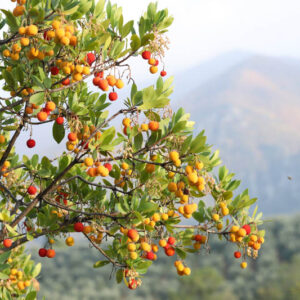
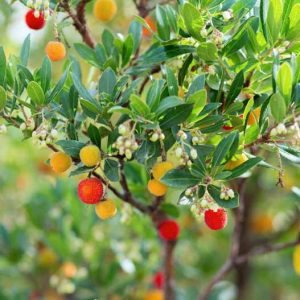
Olive, holm oak, cork oak, stone pine, strawberry tree, bay laurel, pistachio.
Which smaller trees fit courtyards and patios?
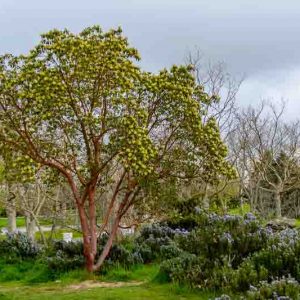
Strawberry tree, bay laurel (can be kept as standards), pomegranate, compact/dwarf olives.
Many thrive in Zones 8–10; some reach Zone 7 and a few into sheltered Zone 6 with sharp drainage—match species to your local minima.
After establishment, low-water companions like thyme, santolina, and rock rose—keep off the trunk and maintain a visible flare.
Fig and pomegranate are very forgiving with good drainage; almond needs adequate winter chill and spring frost protection for crops.
Choose wind-firm, salt-tolerant species (mastic, olive, European fan palm) and plant as a staggered filter rather than a solid wall.
Yes – use large terracotta or similar with a gritty, free-draining mix; water to establish, then taper. Dwarf olive, strawberry tree, and bay laurel do well in mild climates.
Mediterranean trees let you design boldly without tying your garden to the hose. Choose species that fit your winter lows and summer heat, plant high with a visible root flare, water deeply in year one, and keep a generous mulch ring. When the forecast leans hot and dry, your landscape can stay cool, shaded, and beautifully composed.
Updated: November 2025 • Reviewed by Gardenia Editors
| Plant Type | Trees |
|---|---|
| Garden Styles | Mediterranean Garden |
Create a membership account to save your garden designs and to view them on any device.
Becoming a contributing member of Gardenia is easy and can be done in just a few minutes. If you provide us with your name, email address and the payment of a modest $25 annual membership fee, you will become a full member, enabling you to design and save up to 25 of your garden design ideas.
Join now and start creating your dream garden!
Create a membership account to save your garden designs and to view them on any device.
Becoming a contributing member of Gardenia is easy and can be done in just a few minutes. If you provide us with your name, email address and the payment of a modest $25 annual membership fee, you will become a full member, enabling you to design and save up to 25 of your garden design ideas.
Join now and start creating your dream garden!