Merlot Grape, Merlot, Médoc Noir, Merlot Noir, Petit Merle, Merle, Merlot Black, Alicante Noir, Black Alicante, Crabutet Noir, Plant Du Médoc
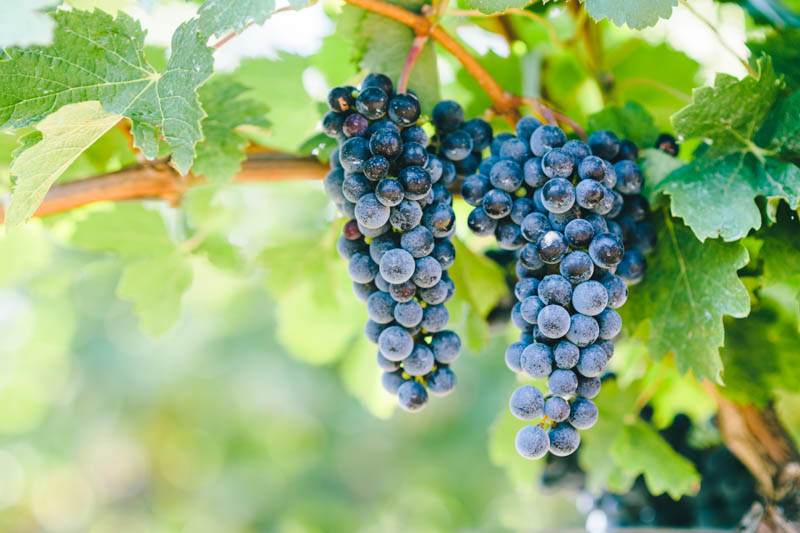


Vitis vinifera ‘Merlot’, commonly known as the Merlot grape, is one of the world’s most important and widely planted red wine grapes. Best known for its long association with Bordeaux and Bordeaux-style blends, Merlot is valued for combining ripe fruit character, moderate tannins, dependable color, and broad winemaking usefulness in a single cultivar.
This deciduous grapevine is grown chiefly for wine rather than fresh eating. In the vineyard, Merlot is appreciated for its ability to ripen well in a wide range of regions while still responding clearly to site, soil, canopy management, crop level, and harvest timing. In the cellar, it is prized for wines that can be supple and approachable in youth yet capable of real depth and structure in stronger sites.
Vitis vinifera ‘Merlot’ is a classic wine grape known for blue-black berries, generous fruit character, moderate tannin structure, and broad value in premium red wine production. Plant it in full sun with excellent drainage, train it on a sturdy support, and prune it every year to keep the vine balanced, open, and productive. Expect medium clusters of dark, seeded grapes used mainly for varietal wines and Bordeaux-style blends rather than fresh eating.
Use: Primarily grown for red wine, reserve bottlings, and Bordeaux-style blends.
Highlight: Medium blue-black berries with good sugar accumulation, expressive fruit, and generally softer tannins than many firmer red wine cultivars.
Design note: Though grown mainly for wine, Merlot can also serve as an ornamental edible vine for arbors, fences, and trellises where a structured fruiting vine is desired.
| Botanical Name | Vitis vinifera ‘Merlot’ |
|---|---|
| Family | Vitaceae |
| Common Name | Merlot Grape |
| Plant Type | Deciduous fruiting vine, wine grape |
| Hardiness (approx. USDA) | Often grown in commercial viticultural regions broadly comparable to Zones 7-10, though actual suitability depends on winter temperatures, disease pressure, rootstock, and site conditions |
| Growth Habit | Vigorous climbing vine requiring structured training |
| Height | 15-20 ft. or more depending on pruning and trellis system |
| Spread | 6-10 ft. or more depending on training method |
| Sun Exposure | Full sun |
| Soil | Well-drained soil; often successful on clay, clay-limestone, gravelly clay, or other structured vineyard soils with moderate water-holding capacity |
| Ripening Season | Early to mid-season relative to many major red wine grapes, depending on climate, clone, crop level, and site |
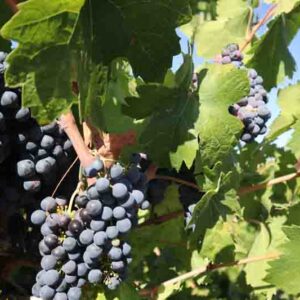
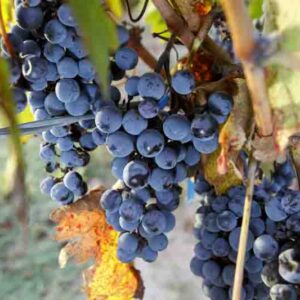
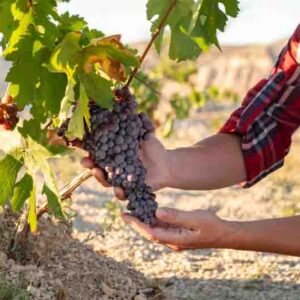
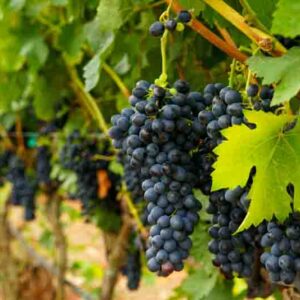
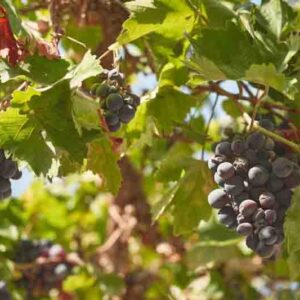
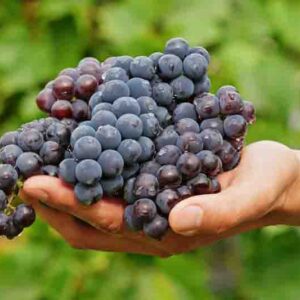
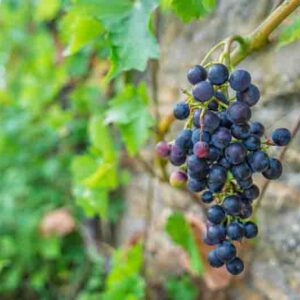
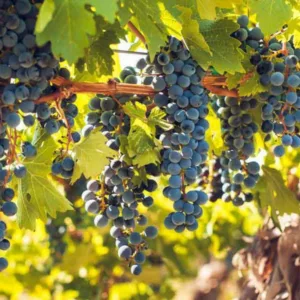
| Fruit | Medium-sized blue-black berries in medium clusters, usually seeded |
| Main Uses | Varietal red wine, reserve bottlings, Bordeaux-style blends, occasional rosé |
| Flavor Direction | Plum, black cherry, red cherry, blackberry, cocoa, herbs, cedar, and sometimes floral or earthy notes |
| Harvest Goal | Balanced sugar, sound acidity, ripe skins, mature seeds, and clean fruit expression |
Merlot remains globally important because it combines drinkability, vineyard usefulness, and fine-wine potential unusually well. It can produce wines that are attractive in youth, yet the best examples still offer depth, structure, and aging potential.
For growers, Merlot is also strategically useful. In many regions, it can reach desirable maturity without requiring the very latest harvest window among major red cultivars. That combination of practical ripening behavior and strong wine quality helps explain why it became central to Bordeaux and later spread around the world.
Why growers and winemakers keep choosing it: Merlot combines dependable ripening, generous fruit, polished tannins, broad blending value, and the ability to produce both approachable and age-worthy red wines.
| Origin | France, historically associated with Bordeaux |
|---|---|
| Parentage | Vitis vinifera ‘Cabernet Franc’ × Vitis vinifera ‘Magdeleine Noire des Charentes’ |
| Discovery of Parentage | Confirmed by DNA analysis and published in the late 2000s |
| Fruit color | Blue-black to black |
| Berry size | Medium |
| Cluster type | Medium, often moderately compact |
| Skin | Moderately thin to medium |
| Seed presence | Seeded |
| Main uses | Varietal wine, reserve red wine, Bordeaux blends |
Merlot is an old French grape with deep ties to Bordeaux, especially the Right Bank, where it became one of the defining grapes of Saint-Émilion and Pomerol. Modern DNA work showed that Merlot is the offspring of Cabernet Franc and Magdeleine Noire des Charentes, a parentage that helps explain both its fine-wine quality and its relatively practical ripening behavior.
The name “Merlot” is widely linked to the French word merle, meaning blackbird, likely referring either to the dark berries or to birds’ fondness for ripe fruit. Whatever the exact linguistic path, Merlot’s viticultural importance is clear. It became one of Bordeaux’s core red grapes and later spread worldwide because it could produce compelling wines in a broad range of regions.
Classic red wine production: One of the world’s benchmark grapes for supple, fruit-rich, cellar-worthy wines.
Moderate to warm-season vineyards: Often useful where some later-ripening red cultivars can be more risky.
Blending: Especially valuable with Cabernet Sauvignon, Cabernet Franc, Malbec, and Petit Verdot.
Varietal wines: Excellent for polished, expressive reds with wide appeal.
Serious growers: Best suited to growers willing to manage the canopy carefully.
Merlot is first and foremost a wine grape. It is not a table grape in the usual horticultural sense, and it is not grown mainly for juice. The berries are seeded, the skins matter, and vineyard decisions around crop level, irrigation, canopy exposure, and harvest timing are made with wine chemistry, flavor development, and phenolic maturity in mind.
The fruit can be eaten fresh, but that is not why most growers plant it. Table grapes are usually selected for larger berries, lower seed prominence, and crisp, easy-eating texture. Merlot is cultivated because it can produce balanced, expressive red wine, whether bottled on its own or used in blends.
Merlot is self-pollinating, like most cultivated grapevines with perfect flowers. A single vine can set fruit without requiring another cultivar nearby. Even so, fruit set is still influenced by bloom weather, vine nutrition, light exposure, and general vine health.
Growers watch bloom closely because Merlot can be vulnerable to poor fruit set, shot berries, and coulure under unfavorable conditions. In practical terms, that means spring weather and balanced nutrition can affect both yield and cluster uniformity.
Like other bunch grapes, Merlot fruits on shoots arising from one-year-old wood. That is why annual dormant pruning is essential. Without it, the vine becomes harder to manage, fruiting wood is less well balanced, and the canopy often grows dense enough to compromise both ripening and disease control.
How Long Grapevines Take to Produce Fruit
Merlot is commonly described as an early- to mid-ripening premium red wine grape. That description is relative. It does not mean Merlot behaves like an ultra-early backyard table grape. It means that among internationally important red wine cultivars, it often reaches acceptable maturity with less late-season exposure than some firmer or later-ripening reds.
Harvest timing still matters enormously. Merlot can accumulate sugar readily, but the best picking decisions are not based on sugar alone. Experienced growers also consider seed maturity, skin ripeness, acidity, weather risk, and overall flavor development. The goal is not simply maximum ripeness. The goal is balanced ripeness.
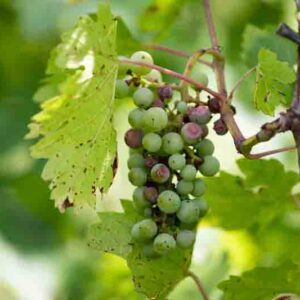
Why your Grapevine has Leaves but No Grapes
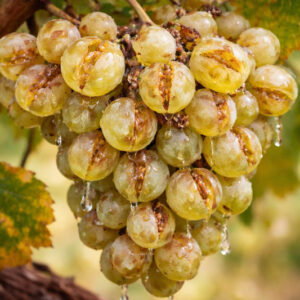
How to Tell When Grapes Are Ready to Harvest
Harvest tip: Do not rely on berry color alone. Merlot often colors before every cluster reaches ideal flavor and tannin maturity. Taste repeatedly, check seeds and skins, and watch for the shift from simple fruit toward deeper plum, black cherry, and cocoa character.
Merlot typically produces medium-sized berries in medium clusters, often with a softer, less aggressively tannic profile than firmer red wine grapes. In wine, that commonly translates into reds that feel rounder and more immediately generous.
Its familiar flavor range includes plum, black cherry, red cherry, blackberry, cocoa, cedar, bay leaf, and sometimes violet or earthy notes. Climate shapes style strongly. Cooler conditions tend to emphasize fresher red fruit, herbal detail, and firmer acidity, while warmer sites often move toward darker fruit, softer texture, and broader body.
Key fruit traits: blue-black berries, moderate skin thickness, polished tannin potential, generous fruit, and a flavor profile that shifts from cherry-plum freshness to darker, richer fruit depending on site and ripeness.
Merlot is adaptable, but it is not indifferent to site. It performs best in sunny, well-drained vineyard soils with enough structure to regulate moisture without staying wet. In many fine-wine settings, Merlot performs especially well on clay-rich or clay-limestone soils, which can moderate water stress and support steady ripening.
That said, Merlot does not require one single soil type. Gravelly clay, loam with good drainage, and structured alluvial soils can all work well if vigor is controlled and water does not sit around the roots. The main goal is to avoid chronically wet, compacted, or overly fertile conditions that drive too much vegetative growth or weaken fruit quality.
Soil also helps shape style. Merlot from cooler, heavier soils may retain more freshness and savory detail, while fruit from warmer, freer-draining soils may show darker fruit and a broader palate.
Site takeaway: Merlot rewards soils that are well drained yet not chronically droughty, and it becomes more compelling when vigor and water status stay in balance through the season.
Like many major wine grapes, Merlot is not a single monolithic planting type in practice. It is grown through a range of clonal selections that can differ in yield, berry size, cluster compactness, disease behavior, and flavor potential. Growers choose planting material not only for identity but also for performance goals and regional suitability.
Rootstock choice matters just as much. Commercial Merlot is commonly planted on rootstocks selected for vigor control, soil adaptation, nematode considerations, and phylloxera protection. Rootstock can influence water uptake, canopy size, and overall vine balance. In serious plantings, Merlot quality depends not only on the scion variety but also on how well the root system matches the site.
Merlot is widely planted because it is adaptable, but adaptability does not mean it performs equally well in every setting. It does best in sunny sites with a season long enough to ripen the crop without excessive stress.
Compared with very late red wine cultivars, it can be more forgiving in moderate climates. Still, excessive heat can push it toward jammy, lower-acid fruit, while cool, wet, or shaded sites can weaken flavor and increase disease pressure. Warm afternoons with cooler nights often help Merlot develop attractive fruit while retaining better freshness.
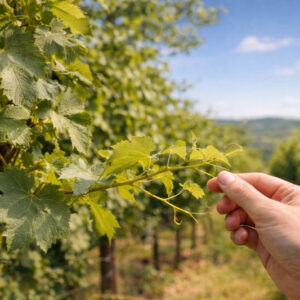
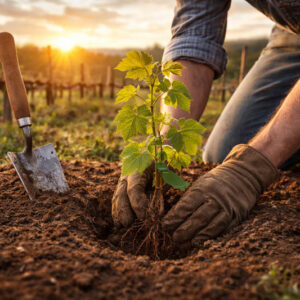
When to Plant Grapes for Healthier Vines
Merlot is a vigorous climbing vine that can easily exceed 15 to 20 feet if it is not trained and pruned. That vigor can be useful, but it can also become a liability when the vine produces too much canopy and too little effective fruit exposure. Dense, shaded canopies delay flavor development, reduce air movement, and raise the risk of bunch rot and mildew.
Like many Vitis vinifera cultivars, Merlot responds best when managed for balance rather than sheer growth. The goal is not the biggest possible vine. The goal is a vine with enough leaf area to ripen the crop, enough openness to keep clusters healthy, and enough structure to keep pruning and harvest manageable.
How to Grow Grapes Successfully at Home
Merlot is not disease resistant in the way that many hybrid grapes are. As a classic Vitis vinifera wine cultivar, it can be affected by the same major problems that challenge many premium wine grapes, including powdery mildew, downy mildew, black rot, and botrytis bunch rot, along with virus-related issues such as leafroll or red blotch where present.
Botrytis deserves particular attention because compact clusters, humid fruiting zones, and wet conditions can favor infection. That is why shoot thinning, leaf removal, cluster-zone airflow, and general canopy openness are not cosmetic practices. They are central parts of disease prevention.
Another issue is poor fruit set or coulure, which can be associated with difficult bloom weather, nutrient imbalance, and vine stress. In practice, that means some Merlot vineyards may show irregular clusters or many small berries when bloom conditions are unfavorable.
Common Grapevine Problems and How to Fix Them
Watch for: Dense shaded fruit zones, wet weather around bloom or harvest, bunch rot pressure, and vines that grow far more leaves than fruit can usefully ripen.
Merlot needs a sturdy support system, whether that means a backyard trellis, fence, or proper vineyard wire setup. Common systems such as vertical shoot positioning, bilateral cordon training, and spur-pruned cordon systems are often used because they organize the canopy, expose clusters more evenly, and simplify pruning and harvest.
The exact training method depends on site vigor, row spacing, climate, and management style, but the principle remains the same: structure supports fruit quality. A well-designed system improves airflow, helps maintain orderly growth, and makes seasonal work more effective.
Annual pruning is essential with Merlot. Like other bunch grapes, it fruits on shoots arising from one-year-old wood. That means dormant pruning determines how many fruitful nodes remain, how balanced the vine will be the following season, and how manageable the canopy becomes. Spur pruning is common in many vineyards, though the exact approach depends on site and training system.
Winter pruning is only the beginning. Merlot often responds strongly to canopy management during the growing season. Shoot thinning, positioning, lateral control, and selective leaf removal around the fruit zone can improve light penetration, reduce humidity, and help the vine channel energy toward ripening.
How to Prune Grapevines for Bigger Harvests: Cane Pruning vs Spur Pruning
Merlot and Cabernet Sauvignon are frequently compared because they are both iconic Bordeaux grapes and common blending partners, but they are not interchangeable. Merlot is usually rounder and more immediately supple, while Cabernet Sauvignon typically carries firmer tannins and a more rigid frame.
In blends, Merlot often supplies flesh, mid-palate, and approachability, while Cabernet Sauvignon contributes more structural definition. That contrast is one reason the two grapes work so well together.
| Cultivar | Typical Harvest Position | Structure | Best Known For |
|---|---|---|---|
| Merlot | Often earlier in comparable sites | Softer, rounder tannins | Plum, cherry, plush texture, blending softness |
| Cabernet Sauvignon | Often later in comparable sites | Firmer tannins, stronger frame | Blackcurrant, cedar, age-worthy structure |
| Cabernet Franc | Often earlier | Medium structure, aromatic lift | Herbal-fruited complexity and freshness |
Merlot is not the best long-term container grape. A young vine can survive for a time in a large pot, especially as a short-term learning project, but a wine grape intended for meaningful yields and steady quality generally performs better in the ground. Root restriction, heat swings, water stress, and nutrient fluctuations are all amplified in containers.
For ornamental effect, temporary container growing is possible. For dependable cropping and serious fruit quality, in-ground planting with a proper support system is the better choice.
How to Grow Grapes in Containers (Expert Pot Guide)
Merlot is best suited to home vineyard growers, serious hobby winemakers, moderate-climate gardeners, and growers who want a classic wine grape with real quality potential. It is a better fit for people interested in vineyard craft than for gardeners who simply want a carefree snack grape on an arbor.
If your goal is to grow fruit for smooth, expressive red wine, Merlot is one of the smartest classic choices available. If your priority is fresh eating, seedless berries, or minimal annual work, another grape is likely to be a better fit. Merlot rewards attention and sound management.
Growers exploring classic wine grapes may also consider Cabernet Sauvignon, Cabernet Franc, Malbec, Zinfandel, Sangiovese, and how to grow grapes in the home garden.
Merlot is a dark-skinned wine grape cultivar best known for producing smooth, fruit-rich red wines with moderate tannins and broad blending value.
No. Merlot is grown mainly as a wine grape. Its seeded berries and vineyard management profile make it much better suited to red wine than to fresh eating.
Merlot commonly shows plum, black cherry, red cherry, blackberry, cocoa, cedar, and herbal notes. Warmer sites often produce richer, darker fruit, while cooler sites can show more freshness and savory detail.
Merlot is usually considered an early- to mid-ripening premium red wine grape, though exact timing depends on climate, clone, crop level, and site.
Yes. Merlot is self-pollinating, so a single vine can set fruit on its own, though bloom weather and vine health still affect fruit set quality.
Merlot is used mainly for varietal red wines and Bordeaux-style blends, especially with Cabernet Sauvignon and Cabernet Franc.
It is grown so widely because it combines broad adaptability, dependable ripening, strong wine quality potential, and a texture many drinkers find immediately appealing.
A Merlot vine can reach 15 to 20 feet or more if left unpruned, so it needs a strong support system and yearly pruning.
Common issues include excessive vigor, poor fruit set around bloom, bunch rots such as Botrytis in wet seasons, and the same fungal and virus-related problems that affect many Vitis vinifera grapes.
Yes, especially for committed home vineyard growers and hobby winemakers who want a classic red wine grape with strong quality potential.
Bottom line: Vitis vinifera ‘Merlot’ remains one of the world’s most valuable wine grapes because it combines expressive fruit, balanced structure, blending usefulness, and genuine fine-wine potential in one vine. With its blue-black fruit, moderate tannins, and broad stylistic range, it rewards good site selection, annual pruning, careful canopy management, and thoughtful harvest timing. Grow it where the season is long enough for clean ripening, the canopy can be kept balanced, and the fruit can stay healthy through harvest, and Merlot can deliver grapes suited to truly distinguished red wine.
Updated: April 2026
| Hardiness |
7 - 10 |
|---|---|
| Heat Zones |
6 - 9 |
| Climate Zones | 4, 5, 6, 7, 8, 9, 14, 15, 16, 17, 18, 19, 20, 21, 22, 23 |
| Plant Type | Climbers, Fruits, Shrubs |
| Plant Family | Vitaceae |
| Genus | Vitis |
| Common names | Grape |
| Exposure | Full Sun |
| Season of Interest | Summer (Early, Mid, Late), Fall |
| Height | 15' - 20' (4.6m - 6.1m) |
| Spread | 6' - 10' (180cm - 3m) |
| Spacing | 120" (3m) |
| Maintenance | High |
| Water Needs | Average |
| Soil Type | Chalk, Loam, Sand |
| Soil pH | Alkaline, Neutral |
| Soil Drainage | Moist but Well-Drained, Well-Drained |
| Characteristics | Showy, Fruit & Berries |
| Tolerances | Heat, Fire |
| Attracts | Bees, Birds |
| Garden Uses | Arbors, Pergolas, Trellises, Wall-Side Borders, Walls And Fences |
| Garden Styles | City and Courtyard, Informal and Cottage |
| Toxic to Humans | No known toxicity |
| Toxic to Cats | No known toxicity |
| Toxic to Dogs | Toxic |
| Toxic to Horses | No known toxicity |


| Hardiness |
7 - 10 |
|---|---|
| Heat Zones |
6 - 9 |
| Climate Zones | 4, 5, 6, 7, 8, 9, 14, 15, 16, 17, 18, 19, 20, 21, 22, 23 |
| Plant Type | Climbers, Fruits, Shrubs |
| Plant Family | Vitaceae |
| Genus | Vitis |
| Common names | Grape |
| Exposure | Full Sun |
| Season of Interest | Summer (Early, Mid, Late), Fall |
| Height | 15' - 20' (4.6m - 6.1m) |
| Spread | 6' - 10' (180cm - 3m) |
| Spacing | 120" (3m) |
| Maintenance | High |
| Water Needs | Average |
| Soil Type | Chalk, Loam, Sand |
| Soil pH | Alkaline, Neutral |
| Soil Drainage | Moist but Well-Drained, Well-Drained |
| Characteristics | Showy, Fruit & Berries |
| Tolerances | Heat, Fire |
| Attracts | Bees, Birds |
| Garden Uses | Arbors, Pergolas, Trellises, Wall-Side Borders, Walls And Fences |
| Garden Styles | City and Courtyard, Informal and Cottage |
| Toxic to Humans | No known toxicity |
| Toxic to Cats | No known toxicity |
| Toxic to Dogs | Toxic |
| Toxic to Horses | No known toxicity |
How many Vitis vinifera ‘Merlot’ (Grape) do I need for my garden?
| Plant | Quantity | |
|---|---|---|
| Vitis vinifera ‘Merlot’ (Grape) | N/A | Buy Plants |
Create a membership account to save your garden designs and to view them on any device.
Becoming a contributing member of Gardenia is easy and can be done in just a few minutes. If you provide us with your name, email address and the payment of a modest $25 annual membership fee, you will become a full member, enabling you to design and save up to 25 of your garden design ideas.
Join now and start creating your dream garden!
Create a membership account to save your garden designs and to view them on any device.
Becoming a contributing member of Gardenia is easy and can be done in just a few minutes. If you provide us with your name, email address and the payment of a modest $25 annual membership fee, you will become a full member, enabling you to design and save up to 25 of your garden design ideas.
Join now and start creating your dream garden!