Frontenac, Frontenac grape, Wine grape ‘Frontenac’, Red wine grape ‘Frontenac’, Frontenac noir, MN 1047
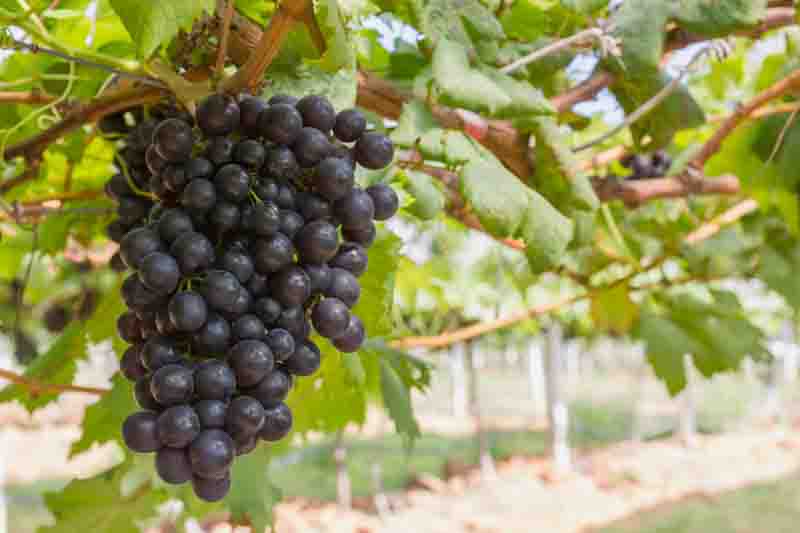


Vitis ‘Frontenac’, commonly known as the Frontenac Grape, is one of the most important cold-hardy wine grapes ever introduced for northern vineyards. Developed by the University of Minnesota and released in 1996, Frontenac was the first member of the Frontenac family introduced to the public and quickly became a catalyst for modern cold-climate viticulture. Its arrival helped drive new vineyard plantings and growing public interest in regional wines across Minnesota, Wisconsin, Iowa, and other northern states.
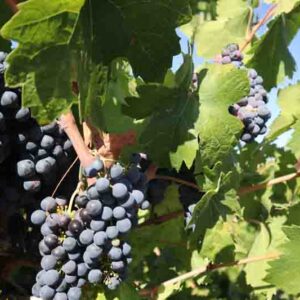
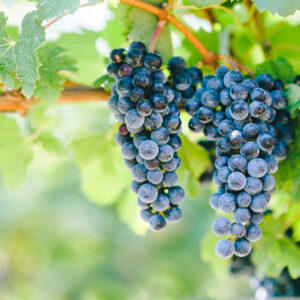
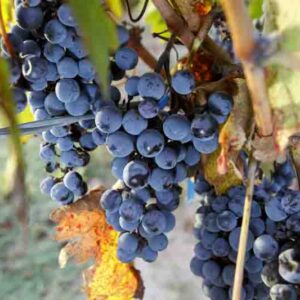
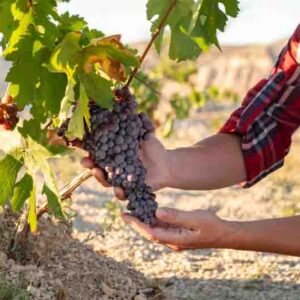
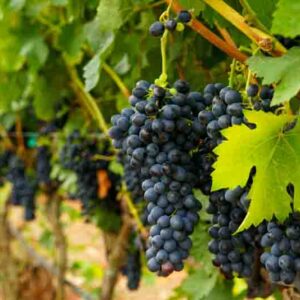
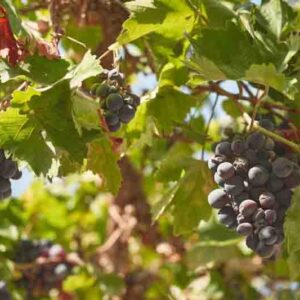
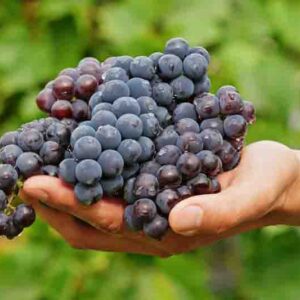
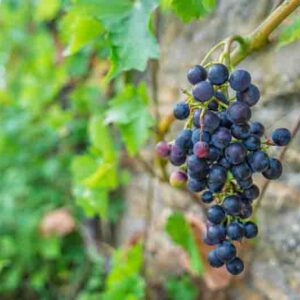
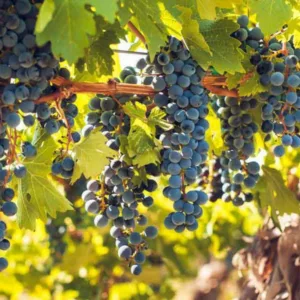
This deciduous hybrid grapevine is valued because it combines extreme winter hardiness, strong vigor, dependable yields, and serious wine quality. Frontenac produces medium-sized clusters of bluish-black grapes with small to medium berries, dark juice, and naturally high acidity. It is grown primarily for red wine, rosé, dessert wine, and ice wine, rather than for fresh eating. For growers in short-season regions, Frontenac remains a benchmark cultivar because it can survive severe winters and still deliver bold, expressive fruit.
Vitis ‘Frontenac’ is a cold-hardy hybrid grapevine bred for wine production in northern climates. Plant it in full sun with excellent drainage, avoid wet soils, train it on a sturdy trellis, and prune annually to manage its moderately high vigor. Expect medium-sized clusters of dark, intensely pigmented grapes with high natural acidity, usually harvested in October in Minnesota, with later harvests possible for dessert wine and ice wine.
Use: Primarily cultivated for red wine, rosé, dessert wine, and ice wine production, with occasional use in blends and juice.
Highlight: Medium-sized clusters with intensely colored juice, cherry-driven flavor, and high natural acidity that suit distinctive cold-climate wines.
Design note: Frontenac vines are vigorous and attractive on trellises, arbors, and backyard vineyard structures, though they are best managed with proper training and pruning.
| Botanical Name | Vitis ‘Frontenac’ |
|---|---|
| Family | Vitaceae (Grape family) |
| Common Names | Frontenac Grape |
| Plant Type | Deciduous fruiting vine, cold-hardy hybrid grape |
| Hardiness (approx. USDA) | Zones 3-8; a leading red wine grape for very cold regions |
| Minimum Temperature | Can survive winter cold events down to about -35°F (-37°C) with relatively little damage compared to many other grapes |
| Height | 10-20 ft. depending on pruning and support |
| Spread | 2-10 ft. depending on training system and spacing |
| Sun Exposure | Full sun |
| Soil | Well-drained soil; avoid wet sites, poor drainage, and high water tables |
| Harvest Season | October in Minnesota; later fall or early winter for dessert wine and ice wine |
| Fruit | Medium-sized clusters averaging about 0.3 lb, with small to medium bluish-black berries and intensely colored dark red juice |
Frontenac stands out because it combines qualities that are difficult to find in a single grapevine: extreme cold hardiness, reliable cropping, strong vigor, and serious wine potential. That combination changed the economics and possibilities of northern grape growing. Before Frontenac, producing dependable red wine fruit in very cold regions was much harder and far less predictable.
Just as importantly, Frontenac is not only valuable because it survives. It produces fruit with deep color, distinctive flavor, and broad winemaking versatility. That makes it one of the most influential grapes in modern cold-climate vineyards and one of the most commonly cited benchmark cultivars for northern red wine production.
Why growers remember it: Frontenac helped move cold-climate viticulture from experiment to industry in the Upper Midwest and other northern regions.
Frontenac was developed by the University of Minnesota grape breeding program and released in 1996. It was the first Frontenac family cultivar introduced to the public, predating Frontenac Gris and Frontenac Blanc.
Its release was a turning point. Growers in places such as Minnesota, Wisconsin, and Iowa suddenly had access to a grape that could survive severe winter lows and still deliver fruit suitable for high-color, characterful wines. As vineyard acreage expanded, Frontenac became one of the grapes most closely associated with the rise of cold-hardy wine production in the northern United States.
Cold-climate red wine production: A proven choice for northern vineyards.
USDA Zone 3 vineyards: Especially valuable where winter survival is a critical concern.
Rosé, dessert wine, and ice wine: Useful beyond standard dry red wine production.
Backyard vineyards: Excellent for serious home winemakers with proper trellising.
Growers who want a proven workhorse: Productive, hardy, and versatile in the winery.
Frontenac is primarily a wine grape, not a classic fresh-eating table grape. Its naturally high acidity, thick skins, and intense juice chemistry make it much more valuable in the winery than on the snack tray.
That does not mean the fruit is unusable fresh, but fresh eating is not its main strength. If your goal is sweet, mild, low-acid grapes for the table, other cultivars are usually better choices. If your goal is red wine, rosé, dessert wine, or ice wine in a cold climate, Frontenac is far more compelling.
Frontenac grapes are self-pollinating, so a single vine can produce fruit without a second grape variety nearby. That makes it practical for home growers and convenient for vineyard blocks planted as a single cultivar.
Like most bunch grapes, Frontenac fruits on the current season’s shoots that arise from one-year-old wood. The vines can support an average of about 96 clusters per vine, often carrying 2-3 clusters per shoot. Typical yield is about 5-8 tons per acre, although actual production depends on site, age, pruning severity, and seasonal conditions.
How Long Grapevines Take to Produce Fruit
Frontenac has an early to midseason bud break, similar to Frontenac Gris and Frontenac Blanc, but it is among the later harvested cold-hardy cultivars in Minnesota. Harvest typically occurs in October, not late September, and that timing is central to its quality.
Growers are often tempted to pick earlier because berries color well and acidity can seem intimidating. In practice, patience matters. Additional hang time helps lower acidity, improve flavor development, and create better wine balance. For dessert wine and ice wine, berries may remain on the vine into late fall or early winter while still holding quality.
Why your Grapevine has Leaves but No Grapes
How to Tell When Grapes Are Ready to Harvest
Harvest tip: Frontenac rewards patience. Picking too early often preserves excessive acidity, while extra hang time can greatly improve flavor, chemistry, and wine structure.
Frontenac is typically harvested at 22-25 °Brix for standard wine production. For dessert wine, fruit may be allowed to reach as high as 30 °Brix. A desirable harvest pH is 3.0-3.3, and titratable acidity is usually about 10-15 g/L.
These numbers explain why Frontenac is both attractive and demanding. It accumulates enough sugar for serious winemaking, but it also retains substantial acidity. In dessert wine and ice wine, that acidity is often an asset. In dry red wine, it means harvest timing and cellar decisions matter enormously.
Key harvest targets: 22-25 °Brix for table wine, up to 30 °Brix for dessert wine, with pH 3.0-3.3 and 10-15 g/L titratable acidity.
Frontenac is known for holding high natural acidity late into the season. That trait is part of what makes it so useful in very cold climates, because fruit can still taste lively and balanced after long hang time, and the chemistry supports age-worthy, fresh wines.
For growers and winemakers, high acidity is both a challenge and a strength. Harvesting too early can produce wines that feel sharp or angular. Waiting longer, monitoring pH and titratable acidity, and matching the grape to the right wine style are the keys to getting the best from Frontenac.
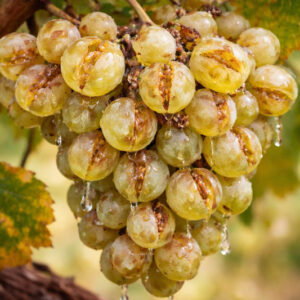
Frontenac produces small to medium-sized berries borne in medium-sized clusters averaging about 0.3 pound per cluster. The high skin-to-pulp ratio gives the fruit intense dark red juice, which helps explain its strong color extraction and concentrated wine style.
Frontenac wines are typically bold and cherry-driven, with notes of black currant and mixed red fruit. Rosé versions often show a light Bing cherry character and can finish slightly off-dry. Because the berries can hang late while maintaining quality, Frontenac is also particularly well-suited to dessert wine and ice wine production.
Flavor profile: Think vivid cherry, black currant, red fruit, deep color, and bright acidity rather than soft, mellow, low-acid fruit.
One of Frontenac’s defining strengths is its extreme cold hardiness. It has been proven to survive cold events down to about -35°F (-37°C) with relatively little damage compared to many other grape varieties. That level of winter survival makes it one of the standout red wine grapes for USDA Zone 3.
This is the reason Frontenac became such an important planting in northern vineyards. In climates where many grapes fail outright, Frontenac can survive, recover, and crop. Even so, site selection still matters. The best-performing vines are planted on sunny, well-drained sites where excess moisture does not collect and cold air can drain away.
When to Plant Grapes for Healthier Vines
Cold-climate takeaway: Frontenac is one of the rare red wine grapes that pairs true wine potential with the winter survival needed for very cold regions.
Frontenac has moderately high vigor and is typically more vigorous than Marquette. That vigor helps vines establish strongly and support heavy cropping, but it also demands disciplined vineyard management.
On fertile soils, excessive vegetative growth can become a problem. Dense canopies increase shading, reduce airflow, and raise disease pressure. Frontenac performs best when vigor is directed into a balanced canopy rather than allowed to run unchecked.
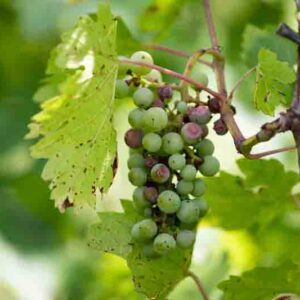
Frontenac is considered moderately susceptible to several important grape diseases and pests, including black rot, botrytis bunch rot, and powdery mildew. It is also susceptible to foliar phylloxera.
A fungicide program, especially around bloom, helps protect crop quality. One practical advantage is that Frontenac is not sensitive to sulfur and copper sprays, so these can be used as organic fungicide tools where appropriate. Growers should also pay attention to dicamba drift and nearby herbicide exposure. Frontenac leaves are relatively tolerant of 2,4-D injury, but the berries remain susceptible.
Common Grapevine Problems and How to Fix Them
Watch for: Frontenac is hardy, but not carefree. Good disease management, phylloxera monitoring, and awareness of herbicide drift are part of successful production.
Frontenac is usually easiest to train on High Wire (HW) because of its semi-trailing growth habit and moderately high vigor. On fertile, high-organic-matter soils that push additional growth, it can also perform well on Geneva Double Curtain (GDC).
Vertical Shoot Positioning (VSP) can be used, but it is generally less efficient for Frontenac because the cultivar often requires more shoot tucking and repeated hedging throughout the season. In practical terms, that means VSP can work, but it usually comes with added labor cost. For many growers, HW remains the most natural fit.
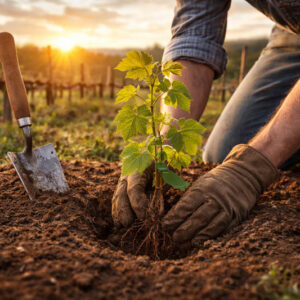
Typical spacing is often about 6-8 feet between vines, with row spacing adjusted for equipment, vigor, and training system. Backyard growers can also train Frontenac on sturdy trellises and fences, but structured vineyard systems usually deliver better crop control and more consistent fruit quality.
Both spur pruning and cane pruning are acceptable for Frontenac, although spur pruning is common. On average, the vine carries a spur about every 2.5-3 inches of cordon length. When spur pruning, maintain about 3-3.5 spurs per linear foot and shoot thin to 2 shoots per spur.
Frontenac produces roughly 3-5 buds per linear foot, and canopy work matters as much as dormant pruning. Fruit-zone leaf removal and shoot thinning improve light exposure, encourage more even ripening, and help balance vegetative and reproductive growth. If blind wood or dieback develops, renew trunks and cordons as needed.
How to Prune Grapevines for Bigger Harvests: Cane Pruning vs Spur Pruning
Frontenac and Marquette are often compared because both are important cold-hardy wine grapes from the University of Minnesota breeding program. In general, Frontenac is more vigorous, later harvested, and naturally higher in acidity. Marquette is often seen as somewhat more refined for dry red wine, while Frontenac is prized for its durability, color, versatility, and strength in dessert wine, rosé, and ice wine styles.
For growers, the choice often comes down to climate, wine goals, and management style. If you need extreme hardiness and do not mind managing acidity carefully, Frontenac is a powerful option. If your priority is dry red wine with somewhat easier chemistry, Marquette may be the more convenient fit.
Because Frontenac is a vigorous, productive wine grape, it is generally not recommended for long-term container culture. Large containers may work temporarily, but they rarely provide the root volume, moisture stability, or structural support needed for a mature vine carrying a serious crop.
For best long-term performance, plant Frontenac in open ground where it can develop a permanent trunk, cordon system, and broad root zone. Container culture tends to magnify stress and make canopy balance harder to maintain.
How to Grow Grapes in Containers (Expert Pot Guide)
Frontenac is ideal for cold-climate vineyard growers, home winemakers, and gardeners who want a serious wine grape for northern conditions. It is especially valuable where winter lows eliminate less hardy cultivars and where growers want a vine with a long, proven track record.
It is best suited to people who understand that this is a wine grape first. If you want richly colored fruit for red wine, rosé, dessert wine, or ice wine and are willing to manage vigor and acidity carefully, Frontenac remains one of the strongest choices available.
Growers exploring cold-hardy grapes may also consider Reliance Grape, King of the North Grape, Catawba Grape, and how to grow grapes in the home garden.
Frontenac is extremely hardy and has been proven to survive cold events down to about -35°F (-37°C) with relatively little damage compared to many other grape varieties. That makes it one of the standout red wine grapes for USDA Zone 3.
Frontenac is primarily a wine grape. Its high acidity, thick skins, and intensely pigmented juice make it much better suited to red wine, rosé, dessert wine, and ice wine than to fresh eating.
Frontenac is grown mainly for red wine, rosé, dessert wine, and ice wine. Its deep color, bold fruit character, and naturally high acidity make it one of the most versatile cold-hardy wine grapes.
In Minnesota, Frontenac is usually harvested in October and is considered one of the later-ripening cold-hardy grapes. Fruit may be left even longer for dessert wine or ice wine production.
Frontenac naturally retains high acidity late into the season. That trait helps it perform in cold climates and supports fresh, age-worthy wines, but it also means growers often need patience at harvest and careful winemaking decisions.
Frontenac wine is typically bold and cherry-driven, often showing black currant and other red fruit notes. Rosé versions can show a light Bing cherry character with an off-dry finish.
No. Frontenac is self-pollinating, so a single vine can produce fruit without another grape variety nearby.
Frontenac is typically harvested at 22-25 °Brix for standard wine production, or up to 30 °Brix for dessert wine. A desirable pH is 3.0-3.3, and titratable acidity is usually about 10-15 g/L.
High Wire (HW) is usually the best and easiest system for Frontenac because of its semi-trailing growth habit and moderately high vigor. Geneva Double Curtain can also work on highly vigorous sites, while VSP usually requires more labor.
Frontenac is moderately susceptible to black rot, botrytis bunch rot, powdery mildew, and foliar phylloxera. A fungicide program, especially around bloom, together with good canopy management, helps maintain a healthy crop.
Bottom line: Vitis ‘Frontenac’ is one of the defining grapes of cold-climate viticulture. With extreme winter hardiness, moderately high vigor, generous yields, and bold wine potential, it helped reshape northern winemaking and remains one of the most important red wine grapes for serious vineyards in cold regions.
Updated: March 2026 • Reviewed by Gardenia Editors
| Hardiness |
3 - 8 |
|---|---|
| Plant Type | Climbers, Fruits, Shrubs |
| Plant Family | Vitaceae |
| Genus | Vitis |
| Common names | Grape |
| Exposure | Full Sun |
| Season of Interest | Summer (Early, Mid, Late), Fall |
| Height | 10' - 20' (3m - 6.1m) |
| Spread | 2' - 10' (60cm - 3m) |
| Spacing | 72" - 120" (180cm - 3m) |
| Maintenance | High |
| Water Needs | Average |
| Soil Type | Chalk, Loam, Sand |
| Soil pH | Alkaline, Neutral |
| Soil Drainage | Well-Drained |
| Characteristics | Showy, Fruit & Berries |
| Tolerances | Fire |
| Attracts | Bees, Birds |
| Garden Uses | Arbors, Pergolas, Trellises, Walls And Fences |
| Garden Styles | Informal and Cottage |
| Toxic to Humans | No known toxicity |
| Toxic to Cats | No known toxicity |
| Toxic to Dogs | Toxic |
| Toxic to Horses | Not toxic |


| Hardiness |
3 - 8 |
|---|---|
| Plant Type | Climbers, Fruits, Shrubs |
| Plant Family | Vitaceae |
| Genus | Vitis |
| Common names | Grape |
| Exposure | Full Sun |
| Season of Interest | Summer (Early, Mid, Late), Fall |
| Height | 10' - 20' (3m - 6.1m) |
| Spread | 2' - 10' (60cm - 3m) |
| Spacing | 72" - 120" (180cm - 3m) |
| Maintenance | High |
| Water Needs | Average |
| Soil Type | Chalk, Loam, Sand |
| Soil pH | Alkaline, Neutral |
| Soil Drainage | Well-Drained |
| Characteristics | Showy, Fruit & Berries |
| Tolerances | Fire |
| Attracts | Bees, Birds |
| Garden Uses | Arbors, Pergolas, Trellises, Walls And Fences |
| Garden Styles | Informal and Cottage |
| Toxic to Humans | No known toxicity |
| Toxic to Cats | No known toxicity |
| Toxic to Dogs | Toxic |
| Toxic to Horses | Not toxic |
How many Vitis ‘Frontenac’ (Frontenac Grape) do I need for my garden?
| Plant | Quantity | |
|---|---|---|
| Vitis ‘Frontenac’ (Frontenac Grape) | N/A | Buy Plants |
Create a membership account to save your garden designs and to view them on any device.
Becoming a contributing member of Gardenia is easy and can be done in just a few minutes. If you provide us with your name, email address and the payment of a modest $25 annual membership fee, you will become a full member, enabling you to design and save up to 25 of your garden design ideas.
Join now and start creating your dream garden!
Create a membership account to save your garden designs and to view them on any device.
Becoming a contributing member of Gardenia is easy and can be done in just a few minutes. If you provide us with your name, email address and the payment of a modest $25 annual membership fee, you will become a full member, enabling you to design and save up to 25 of your garden design ideas.
Join now and start creating your dream garden!