When is a tomato truly ready to pick? Learn how to judge color, firmness, breaker stage, mature-green fruit, and cultivar differences, plus when it is smarter to harvest early before heavy rain, extreme heat, pests, cracking, or frost and let your tomatoes finish ripening safely indoors.


Knowing when to pick tomatoes sounds simple until the fruit actually begins changing color. Should you wait until a tomato is completely red on the vine? Is a pink tomato ripe enough to harvest? Will a green tomato ripen indoors? What about yellow, orange, purple, striped, or green-ripe varieties that never become classic tomato red?
The best harvest stage depends on more than color. Tomato variety, firmness, intended use, weather, cracking risk, pests, and how soon you plan to eat the fruit all matter. A tomato for tonight’s salad can be harvested differently from one sitting on the vine before three days of heavy rain.
Gardenia harvest principle: Do not ask only, “Is this tomato fully colored?” Ask, “Has it reached physiological maturity, what color should this cultivar actually become, how firm is it, and what risks does it face if I leave it on the vine?”
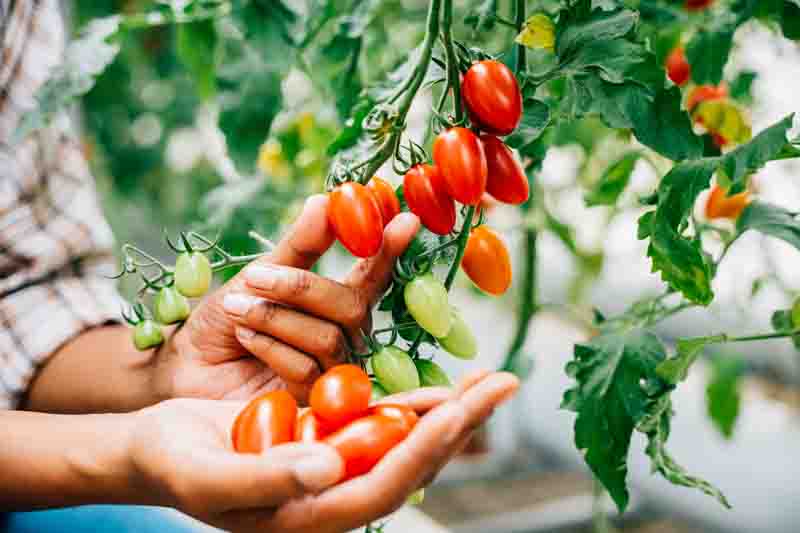
For immediate eating, tomatoes are generally ready when they have developed the mature color expected for the cultivar and remain firm but give slightly to gentle pressure.
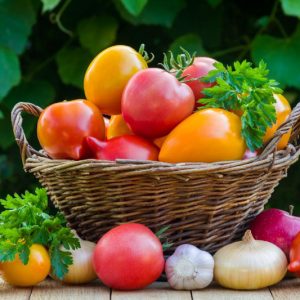
That does not mean every tomato should be red. Depending on the cultivar, ripe fruit may be:
Bright red: as with Early Girl, Super Sweet 100, or Mountain Magic.
Pink: as with Brandywine.
Golden yellow: as with Yellow Pear.
Orange: as with Sun Gold.
Dusky pink-purple or brown-red: as with Cherokee Purple, Black Krim, or Black Cherry.
Striped yellow-green: as with Green Zebra.
Ripe fruit should normally have reached its characteristic mature size, developed its expected color pattern, and softened slightly from the hard texture of an immature tomato.
A tomato intended for immediate fresh eating can usually remain on a healthy vine until close to full cultivar color. But tomatoes do not have to reach that stage on the plant. Once a fruit reaches the breaker stage, it is physiologically mature enough to continue ripening after harvest.
Quick answer: If conditions are good and you want to eat the tomato immediately, wait for its characteristic ripe color and a slight give. If the fruit has begun changing color but rain, heat, pests, cracking, or frost threaten it, you can harvest earlier and finish ripening indoors.
Color is important, but it becomes much more reliable when combined with several other clues.
The first question is not “Is it red?” but “What color is this variety supposed to be when ripe?”
A ripe Early Girl becomes red. Sun Gold becomes rich orange. Green Zebra remains predominantly green but develops warmer yellow-green tones.
Ripening often begins with a subtle change near the blossom end. The hard, flat immature green begins to lighten or show the cultivar’s first mature color.
This initial visible color break matters because it signals that the fruit has entered its natural ripening process.
Immature tomatoes are usually very hard. As they ripen, the flesh develops a slight give under gentle finger pressure.
Rock hard: usually immature or not yet at best eating stage.
Firm with a slight give: a useful sign of eating ripeness.
Very soft or collapsing: likely overripe or beginning to deteriorate.
A nearly ripe tomato during mild, dry weather may benefit from staying on the vine. The same tomato before heavy rain, extreme heat, frost, or repeated animal damage may be safer harvested now.
Gardenia Four-Cue Ripeness Check: Judge a tomato by cultivar color + progression out of immature green + firmness + the risk of leaving it on the vine. No single cue works perfectly for every tomato.
The breaker stage is one of the most useful concepts in tomato harvesting. It occurs when a mature green tomato shows its first definite external change toward the cultivar’s ripe color, often beginning on a small part of the fruit near the blossom end.
At this point, the tomato has reached physiological maturity and its natural ripening process is underway. It can be harvested and allowed to finish ripening indoors.
This is different from picking a truly immature green tomato. An immature fruit may remain hard, shrivel, color poorly, or never develop good eating quality.
| Ripening Stage | What It Looks Like | Harvest Meaning |
|---|---|---|
| Immature green | Hard, undeveloped green fruit | Too early for reliable indoor ripening |
| Mature green | Full-sized and physiologically mature but still externally green | Can ripen indoors, but maturity can be difficult for home gardeners to judge |
| Breaker | First definite external color change | Reliable stage for harvesting and finishing indoors |
| Turning / pink | Increasing mature color across the fruit | Excellent compromise between vine time and protection from damage |
| Fully colored / firm ripe | Characteristic cultivar color; firm with slight give | Excellent for immediate fresh eating |
Gardenia breaker-stage rule: If the tomato has clearly begun its natural color change, you no longer have to choose between “leave it until fully ripe” and “pick it too early.” Breaker-stage fruit can finish ripening off the vine.
If weather is mild, the plant is healthy, and pests, cracking, and disease are not threatening the fruit, there is nothing wrong with allowing a tomato to develop full cultivar color on the vine.
For many gardeners, that is part of the pleasure of growing tomatoes: picking a fully colored fruit and eating it minutes later.
But once breaker stage begins, you gain flexibility. Harvesting becomes especially useful when:
Heavy rain is approaching after a dry period.
Cracking has already started on similar fruit.
Squirrels, birds, rodents, or insects repeatedly attack ripening tomatoes.
Extreme heat is slowing color development.
Sunscald threatens exposed fruit.
Frost or freezing weather is approaching.
You need the fruit to remain firm enough for handling or transport.
Gardenia harvest-risk rule: Once a tomato reaches breaker stage, compare the benefit of additional vine time with the risk of losing or damaging the fruit. When cracking, weather, pests, or frost become the larger risk, pick it.
Red tomatoes are generally the easiest to judge because their color transition is obvious. Familiar examples include Early Girl, Super Sweet 100, Mountain Magic, and Roma.
For immediate eating, look for fruit that:
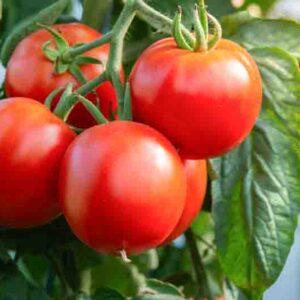
Has developed the expected red color over most or all of its surface.
Has reached its characteristic mature size.
Feels firm but gives slightly under gentle pressure.
Shows no rapidly expanding cracks, leaking, or soft rot.
Pink tomatoes need a slightly different eye. The classic Brandywine, for example, develops a mature pink rather than conventional bright red.
Color-name trap: A tomato called “pink,” “black,” or “green” is not waiting to become standard red. Learn the finished appearance of the cultivar before using color as your ripeness test.
Do not judge by color alone. Some fruit develops persistent green or yellow shoulders, sunscald, or other ripening disorders. A red lower half with a hard green shoulder does not necessarily mean the entire fruit is ripening normally.
Non-red tomatoes are where simple “wait until it turns red” advice fails completely.
Yellow cultivars generally move from cool green toward warm yellow or gold.
For Yellow Pear, look for:
Bright, even yellow coloration.
Fully developed pear-shaped fruit.
A slight give rather than hard immature flesh.
Sun Gold develops a rich orange color rather than stopping at pale yellow. Fruit harvested too early may be yellow-orange but not yet at its fullest eating quality.
Dark tomatoes can be particularly confusing because “black” does not mean jet black.
Cherokee Purple develops dusky pink-purple fruit, often with darker or greenish shoulders.
Black Krim may combine brown-red, purple-red, dusky tones, and persistent green or olive shoulders.
Black Cherry develops a dusky purple-brown mature color rather than uniform red.
With these cultivars, combine color development with slight softening rather than waiting for an imaginary uniform “black” stage.
Some cultivars remain substantially green when ripe. Green Zebra develops warmer yellow-green tones while its darker striping remains visible.
For green-ripe tomatoes, look for:
A shift away from hard, cool immature green.
Warmer yellow-green or amber undertones appropriate to the cultivar.
A slightly more translucent appearance.
Gentle softening.
Gardenia cultivar rule: Ripeness means reaching the mature color and texture of the specific cultivar. Red is only one possible ripe color.
Often, yes – especially when tomatoes have already reached breaker stage or beyond and cracking is a recurring problem.
Cracking commonly follows a sudden increase in water availability after a drier period. The inside of the fruit expands rapidly and the skin cannot always stretch quickly enough.
Consider harvesting before a major rain event when:
The tomato has already begun changing color.
Similar fruit on the plant has recently cracked.
The soil has been relatively dry and a soaking rain is forecast.
The fruit is large and belongs to a crack-susceptible cultivar.
A small superficial crack does not automatically make a tomato unusable, but deep cracks increase opportunities for insects and decay organisms to enter.
Before a storm: Do not strip every immature green tomato from the plant. Prioritize fruit already at breaker, turning, pink, or later stages when cracking risk is high.
For more symptom-based help, see Gardenia’s Tomato Problems: What Is Wrong With My Plant?.
Extreme heat can interfere with normal tomato color development. Red pigments develop poorly at very high temperatures even when the fruit has otherwise reached physiological maturity.
During prolonged hot weather:
Do not assume a tomato needs more direct sunshine simply because it remains orange-red instead of deep red.
Harvest fruit that has reached breaker or turning stage if temperatures remain extremely high.
Finish ripening indoors at a moderate room temperature.
Protect exposed remaining fruit from unnecessary sunscald by avoiding excessive leaf removal.
This approach is particularly useful with red cultivars such as Early Girl, Super Sweet 100, and Mountain Magic.
Hot-weather harvest tip: A tomato that refuses to become fully red during extreme heat may not need more sunshine. Once natural color change has begun, moving it indoors can support more normal ripening.
Do not leave a valuable crop on tomato plants when a killing frost is expected.
Before frost:
Harvest all fruit that has begun coloring. Breaker-stage and more advanced tomatoes should continue ripening indoors.
Collect mature-green tomatoes. Full-sized, physiologically mature fruit can often ripen indoors.
Do not expect every tiny green tomato to ripen. Truly immature fruit often develops poorly after harvest.
Inspect harvested fruit. Separate damaged or diseased tomatoes from sound fruit.
The challenge is distinguishing mature-green fruit from genuinely immature tomatoes.
Useful clues include:
Full or nearly full cultivar size.
A well-rounded, developed shape rather than a small, angular fruit.
A less intense green or slightly whitish area near the blossom end.
A surface that looks mature rather than newly formed.
Mature green is not the same as simply green. A full-sized mature-green tomato may ripen successfully indoors. A very young, undeveloped green tomato may not.
Tomatoes that have reached physiological maturity do not require sunlight to finish ripening. A bright sunny windowsill is unnecessary and may overheat fruit.
For reliable indoor ripening:
Keep tomatoes at a moderate room temperature.
Keep them out of intense direct sunlight.
Keep fruit dry.
Arrange tomatoes in a shallow layer rather than piling them deeply.
Separate bruised, cracked, or damaged fruit.
Inspect the harvest every day or two.
A paper bag can accelerate ripening by retaining some of the ethylene naturally released by ripening fruit.
You can:
Place a few mature tomatoes loosely in a paper bag.
Fold the top rather than sealing the fruit airtight.
Inspect frequently so one decaying tomato does not damage the rest.
Adding another ethylene-producing fruit can accelerate the process further, but it is not necessary for tomatoes that are already physiologically mature.
Gardenia indoor-ripening rule: Tomatoes need physiological maturity + suitable temperature to ripen well indoors. They do not need a sunny windowsill.
If tomatoes reach full size but seem stuck at green or orange-red, several explanations are possible.
Extreme heat: very high temperatures can slow normal red pigment development.
The fruit is not physiologically mature yet: size alone does not prove ripeness.
The cultivar is not supposed to become red: Sun Gold, Yellow Pear, Black Krim, and Green Zebra all finish differently.
Green or yellow shoulder: a physiological ripening disorder may prevent part of the fruit from coloring normally.
Severe plant stress or disease: a badly declining plant may not support normal fruit development.
Do not leave mature fruit indefinitely on the vine solely because the shoulders remain green or yellow. Look at the entire fruit and compare it with the normal appearance of that cultivar.
Before waiting another week: Make sure you actually know the cultivar’s mature color. A ripe Black Krim, Cherokee Purple, or Green Zebra can look “unfinished” if you are expecting the visual cues of a standard red tomato.
Check tomato plants frequently during peak harvest because ripe fruit can accumulate quickly.
For clean harvesting:
Support the tomato in one hand.
Gently twist or lift fruit that releases readily.
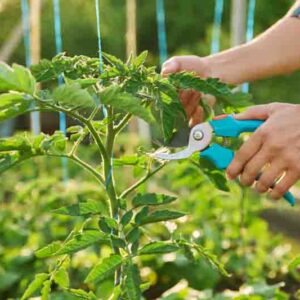
Use clean scissors or pruners when the stem resists.
Avoid pulling hard enough to tear the vine or break a loaded cluster.
Place harvested tomatoes gently into a shallow basket or container.
Keep damaged fruit separate from unblemished tomatoes.
During peak production, daily or every-other-day harvesting may be worthwhile, particularly for cherry tomatoes such as Sun Gold, Super Sweet 100, and Black Cherry.
Fruit size does not change the basic biology of tomato ripening, but cultivar characteristics strongly influence how harvesting feels in practice.
Cherry tomatoes can move from nearly ripe to overripe quickly during warm weather.
Examples include:
Sun Gold – orange when ripe.
Super Sweet 100 – red when ripe.
Black Cherry – dusky purple-brown when ripe.
Yellow Pear – bright yellow when mature.
Check productive cherry vines frequently because fruit can become soft, split, or fall if left too long.
Paste tomatoes such as Roma are often harvested fully colored but still firm, particularly when the fruit is destined for sauces, roasting, or preserving.
Determinate paste cultivars can ripen a substantial portion of their crop within a relatively concentrated period, so harvest volume can build quickly.
Large-fruited tomatoes can be particularly vulnerable to cracking as they ripen, although susceptibility varies greatly by cultivar. Maintain even soil moisture and consider harvesting at breaker or turning stage when heavy rain, extreme heat, or repeated cracking threatens the crop.
Large slicers such as Cherokee Purple and Brandywine are also good examples of why knowing cultivar-specific ripe color matters.
Determinate cultivars tend to produce a more concentrated harvest, so several tomatoes may become ready within the same few weeks.
Indeterminate plants continue producing new flower clusters and fruit, giving a more extended harvest while conditions remain favorable.
For more detail, see Gardenia’s Determinate vs. Indeterminate Tomatoes.
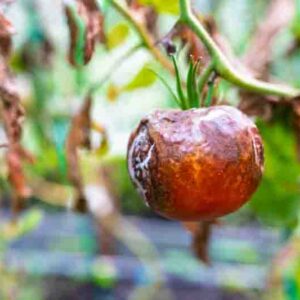
A tomato is moving beyond ideal fresh-eating ripeness when it becomes very soft, develops translucent or water-soaked areas, leaks, splits badly, or begins collapsing.
Look for:
Very soft or collapsing flesh.
Deep splitting accompanied by deterioration.
Water-soaked or translucent areas.
Leaking juice.
Skin that tears with almost no pressure.
Overripe does not automatically mean unsafe. A very soft but otherwise sound tomato may still be excellent for immediate sauce, soup, roasting, or cooking.
Discard tomatoes showing obvious decay such as:
Active mold.
Leaking or slimy tissue.
Sour, fermented, or otherwise abnormal odor.
Large areas of soft rot.
Soft is not automatically spoiled. Judge whether the tomato is simply beyond ideal slicing texture or is actually showing signs of decay. Very ripe sound tomatoes can be excellent for immediate cooking.
Storage depends on how ripe the tomato is when you harvest it.
Keep them at moderate room temperature.
Do not refrigerate them while you are waiting for normal ripening.
Keep them away from intense direct sunlight.
Inspect them frequently.
Use them promptly for the best flavor and texture.
Keep them at room temperature when they will be eaten soon.
If a fully ripe tomato will deteriorate before you can use it, short-term refrigeration can slow further softening.
Bring refrigerated ripe tomatoes back toward room temperature before serving for better flavor.
Avoid piling ripe tomatoes deeply in a bowl where the weight of upper fruit can bruise those underneath.
Instead of trying to identify one universally perfect harvest stage, match harvest timing to your immediate goal.
| Your Situation | Best Harvest Approach |
|---|---|
| Eating the tomato today or tomorrow | Allow full cultivar color and slight softening when vine conditions are safe. |
| Heavy rain approaching | Harvest breaker-stage or more advanced fruit when cracking risk is significant. |
| Extreme summer heat | Pick fruit that has begun coloring and finish ripening indoors. |
| Birds, squirrels, or insects repeatedly attack fruit | Harvest at breaker or turning stage before damage occurs. |
| Frost approaching | Harvest all coloring fruit and mature-green tomatoes likely to ripen indoors. |
| Fruit already cracked | Harvest promptly and use sound fruit quickly. |
Gardenia harvest decision: Full vine color is an excellent target when conditions are favorable, but breaker stage creates flexibility. Once natural ripening has begun, harvest timing becomes a risk-management decision rather than a race to maximum color on the vine.
Waiting for every tomato to turn red: Many cultivars never become standard red, and breaker-stage fruit does not need to remain on the vine until full color.
Picking truly immature green tomatoes too early: Fruit that has not reached physiological maturity may never ripen satisfactorily indoors.
Leaving nearly ripe fruit through heavy rain: When cracking risk is high, keeping breaker-stage fruit on the plant may turn a good harvest into a split one.
Leaving fruit on the vine during extreme heat just for more color: Very high temperatures can actually slow normal red pigment development.
Assuming green shoulders mean the entire tomato is unripe: Some cultivars naturally retain darker shoulders, while green or yellow shoulder can also be a ripening disorder.
Ripening tomatoes in direct hot sun: tomatoes do not need sunlight to ripen after harvest.
Refrigerating unripe tomatoes: cold temperatures slow normal ripening and can compromise flavor and texture.
Using color without knowing the cultivar: Black Krim, Cherokee Purple, and Green Zebra illustrate why a standard red-tomato test can be misleading.
For complete season-long tomato care, visit Gardenia’s Tomato (Solanum lycopersicum) profile and How to Grow Tomatoes: Complete Planting & Care Guide.
For immediate eating, look for the mature color expected for the cultivar, a full-sized fruit, and flesh that is firm but gives slightly to gentle pressure. Tomatoes can also be harvested earlier at breaker stage once their first definite mature color appears.
No. Red cultivars can be harvested once they reach breaker stage and begin showing mature color, then allowed to finish ripening indoors. Other cultivars may ripen yellow, orange, pink, purple-brown, striped, or green rather than red.
Breaker stage is the point when a physiologically mature green tomato shows its first definite external change toward its ripe color. Once this stage begins, the fruit can continue ripening normally after harvest.
Yes, provided they have reached sufficient physiological maturity. Breaker-stage tomatoes reliably continue ripening after harvest. Mature-green fruit may also ripen, although it is harder for home gardeners to distinguish from truly immature green fruit.
Both can work. When weather is mild and fruit is safe from pests and cracking, you can allow tomatoes to develop full cultivar color on the vine. Once breaker stage begins, indoor ripening is useful when weather, pests, cracking, or frost threaten the crop.
If breaker-stage or nearly ripe tomatoes are on the vine and heavy rain is forecast after dry weather, harvesting them can reduce cracking risk. Sudden increases in water availability can cause fruit to swell faster than the skin can expand.
Often yes once color has begun. Extreme heat can slow normal red pigment development. Breaker-stage or turning tomatoes can be moved indoors to finish ripening at a more moderate temperature.
Mature-green tomatoes can often ripen indoors, but truly immature green fruit may never develop good flavor or texture. Breaker-stage fruit, which has begun changing color, is easier to identify and ripens more reliably.
No. Tomatoes do not require sunlight to finish ripening after harvest. Keep mature fruit at moderate room temperature out of intense direct sunlight and inspect it regularly for ripeness or decay.
Very high temperatures can slow normal red pigment development. The fruit may also be immature, belong to a cultivar that ripens another color, or have a ripening disorder such as persistent green or yellow shoulders.
Learn the mature appearance of the cultivar. Green-ripe tomatoes often shift from hard, cool green toward warmer yellow-green, amber, or slightly translucent tones and develop a gentle give when ripe.
Yes. Before a killing frost, harvest all fruit that has begun coloring and any mature-green tomatoes likely to ripen indoors. Small, intensely green immature fruit is less likely to develop good eating quality.
During peak production, check plants every day or two. Frequent harvesting prevents fruit from becoming overripe and helps you collect tomatoes before cracking, pests, or weather damage occurs.
Tomatoes are generally best stored and eaten at room temperature for optimum flavor. If fully ripe fruit cannot be used before it deteriorates, short-term refrigeration can slow further softening; allow it to warm again before serving.
An overripe tomato becomes very soft and may develop splitting or watery areas. Very soft but sound fruit can still be cooked promptly, but tomatoes with mold, slime, leaking rot, or an abnormal sour odor should be discarded.
Updated: September 2026 • Reviewed by Gardenia Editors
| Hardiness |
2 - 11 |
|---|---|
| Climate Zones | 1, 1A, 1B, 2, 2A, 2B, 3, 3A, 3B, 4, 5, 6, 7, 8, 9, 10, 11, 12, 13, 14, 15, 16, 17, 18, 19, 20, 21, 22, 23, 24, A1, A2, A3, H1, H2 |
| Plant Type | Fruits |
| Plant Family | Solanaceae |
| Genus | Solanum, Tomatoes |
| Common names | Love Apple, Tomato |
| Exposure | Full Sun |
| Season of Interest | Spring (Late), Summer (Early, Mid, Late), Fall |
| Height | 3' - 10' (90cm - 3m) |
| Spread | 1' - 4' (30cm - 120cm) |
| Spacing | 24" - 36" (60cm - 90cm) |
| Maintenance | Average, High |
| Water Needs | Average |
| Soil Type | Clay, Loam, Sand |
| Soil pH | Acid, Neutral |
| Soil Drainage | Moist but Well-Drained |
| Tolerance | Rabbit, Clay Soil |
| Attracts | Bees |
| Landscaping Ideas | Patio And Containers |
| Garden Styles | City and Courtyard, Informal and Cottage, Pollinator Garden |
| Hardiness |
2 - 11 |
|---|---|
| Climate Zones | 1, 1A, 1B, 2, 2A, 2B, 3, 3A, 3B, 4, 5, 6, 7, 8, 9, 10, 11, 12, 13, 14, 15, 16, 17, 18, 19, 20, 21, 22, 23, 24, A1, A2, A3, H1, H2 |
| Plant Type | Fruits |
| Plant Family | Solanaceae |
| Genus | Solanum, Tomatoes |
| Common names | Love Apple, Tomato |
| Exposure | Full Sun |
| Season of Interest | Spring (Late), Summer (Early, Mid, Late), Fall |
| Height | 3' - 10' (90cm - 3m) |
| Spread | 1' - 4' (30cm - 120cm) |
| Spacing | 24" - 36" (60cm - 90cm) |
| Maintenance | Average, High |
| Water Needs | Average |
| Soil Type | Clay, Loam, Sand |
| Soil pH | Acid, Neutral |
| Soil Drainage | Moist but Well-Drained |
| Tolerance | Rabbit, Clay Soil |
| Attracts | Bees |
| Landscaping Ideas | Patio And Containers |
| Garden Styles | City and Courtyard, Informal and Cottage, Pollinator Garden |
Create a membership account to save your garden designs and to view them on any device.
Becoming a contributing member of Gardenia is easy and can be done in just a few minutes. If you provide us with your name, email address and the payment of a modest $25 annual membership fee, you will become a full member, enabling you to design and save up to 25 of your garden design ideas.
Join now and start creating your dream garden!
Create a membership account to save your garden designs and to view them on any device.
Becoming a contributing member of Gardenia is easy and can be done in just a few minutes. If you provide us with your name, email address and the payment of a modest $25 annual membership fee, you will become a full member, enabling you to design and save up to 25 of your garden design ideas.
Join now and start creating your dream garden!