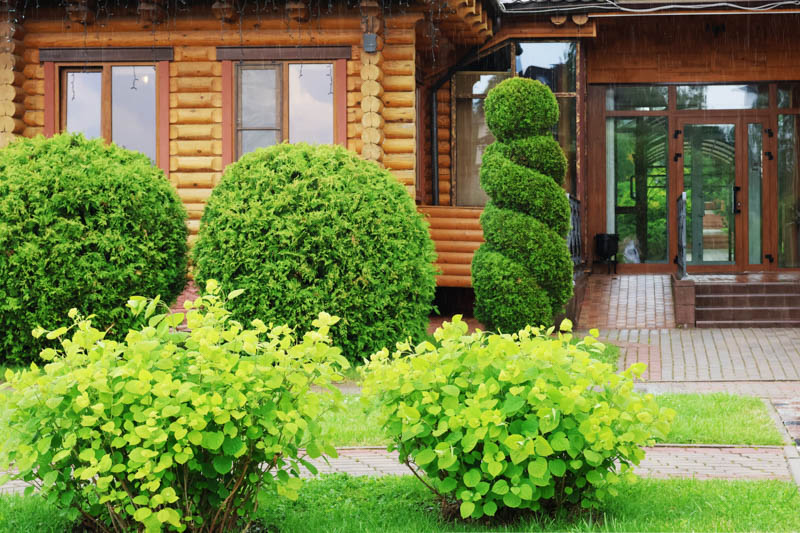
Evergreen Foundation Shrub Guides
Evergreen foundation shrubs can make a house look beautifully established, even during the coldest months. But the space around a building isn’t always an easy place to grow plants. Soil may be compacted, rainfall may never reach beneath the eaves, and shrubs planted too close to windows can quickly become a problem. How far should evergreens be from a wall? When should you prune boxwood, pieris, or yew? And what causes evergreen foliage to turn brown after winter? Discover how to plant, space, water, prune, and maintain foundation shrubs so they complement your home, remain healthy, and provide lasting curb appeal without constant corrective pruning.
Learn How to Plant Evergreen Foundation Shrubs with Correct Spacing, Soil, and Drainage
Successful evergreen foundation planting begins with the relationship between the plant and the building. Shrubs need enough room to grow, but walls also need ventilation, maintenance access, and effective drainage.
Seven essential steps for planting evergreen foundation shrubs:
- Measure the site: Note windows, doorways, wall height, planting-bed depth, pathways, downspouts, vents, and utility access.
- Observe the microclimate: Identify full sun, dry shade beneath eaves, wind exposure, and reflected heat from masonry.
- Choose the mature plant size: Compare ultimate height, width, and natural shape before buying.
- Check the soil: Assess compaction, drainage, texture, pH, and signs of construction debris.
- Plan spacing: Leave adequate room between shrubs, walls, windows, and paths based on mature spread.
- Plant correctly: Position the root flare or crown at the appropriate depth, loosen or correct circling roots as recommended, and backfill appropriately.
- Water and mulch: Water the root zone thoroughly and apply suitable mulch while keeping it away from trunks, siding, vents, and other vulnerable building details.
How far should evergreen shrubs be planted from a foundation? There is no universal distance. A compact boxwood needs less room than a spreading osmanthus. Use the shrub’s mature radius as a starting point, then allow additional clearance for wall maintenance, airflow, and access. Check local building requirements where relevant.
How deep should a foundation planting bed be? Deep enough to accommodate the mature width of the chosen shrubs while maintaining access to the house. A shallow strip might suit smaller evergreens or low perennials, whereas a broad layered planting requires substantially more depth.
What is the best soil for evergreen foundation shrubs? It depends on the species. Pieris and inkberry generally appreciate acidic conditions, while yews require suitable drainage. Junipers prefer well-drained soil and often tolerate leaner conditions. Choose the shrub to match the site’s existing soil wherever possible.
Should you amend foundation soil? Correct serious compaction or drainage issues where practical, and use soil amendments only when appropriate. Avoid creating isolated pockets of heavily amended soil that behave differently from the surrounding ground.
How should drainage work near a house? Water should be directed away from vulnerable foundation details rather than collecting beside the building. Keep existing drainage routes, weep holes, vents, and damp-proofing features clear. Correct serious drainage issues before establishing planting beds.
Can a raised bed be built against the foundation? Raising soil or mulch directly against walls can bridge moisture barriers and conceal building details. Any raised planting design near a structure needs proper consideration of drainage and construction requirements.
When is the best time to plant evergreen shrubs? Spring and early fall are often suitable in temperate climates. In colder regions, spring planting may give vulnerable evergreens more time to establish before winter. Avoid planting during severe heat, freezing, or waterlogging.
Should shrubs be planted in a straight row? Not necessarily. Repeating a few structural evergreens in naturally spaced groups can create a more attractive composition than a continuous hedge. Formal rows suit some houses, but they are not required for successful foundation planting.
How do you plant beneath a roof overhang? Check whether the soil actually receives rain. Deep eaves often create surprisingly dry conditions, even on shaded sides of a house. Choose suitable plants and provide a realistic watering plan during establishment.
Gardenia’s planting rule: Protect the building while supporting healthy roots. The ideal shrub fits its mature position, has sufficient growing space, and does not interfere with drainage, windows, or access.
Read Gardenia’s Best Shrubs for Foundation Planting, Small Evergreen Shrub Guide, and Shrub Planting and Care Guides.
Discover How to Water, Feed, Mulch, and Prune Evergreen Shrubs Without Losing Their Natural Shape
Evergreen shrubs need consistent establishment care, but once settled, many are comparatively straightforward to maintain. The goal is to preserve healthy foliage and natural proportions rather than repeatedly cutting plants down to fit unsuitable positions.
How often should newly planted evergreens be watered? Water thoroughly after planting and check moisture in the root zone regularly. Frequency depends on rainfall, soil texture, temperature, species, and root establishment. Avoid both prolonged drought and constantly saturated soil.
Do evergreen foundation shrubs need water during winter? Sometimes. Evergreens can lose moisture through their foliage during winter, particularly in sunny or windy weather. Check root-zone moisture during frost-free periods and water when genuinely needed.
How do you mulch around foundation shrubs? Spread suitable organic mulch over the root zone to reduce weeds and conserve moisture, but keep it away from shrub stems and vulnerable wall details. Avoid mulch piled against siding, vents, or masonry that must remain exposed.
Should evergreen shrubs be fertilized every spring? Not automatically. Healthy shrubs in suitable soil may need little additional feeding. Use soil testing or visible evidence of nutrient problems to guide fertilizer decisions, and avoid high doses that encourage excessively soft growth.
How should Green Velvet Boxwood be pruned? Buxus ‘Green Velvet’ naturally develops a rounded shape. Occasional light shaping and removal of damaged growth may be enough. Avoid excessive shearing that creates a dense outer surface and reduces airflow within the shrub.
How do you maintain inkberry holly? Ilex glabra ‘Shamrock’ generally looks attractive in its natural rounded form. Prune selectively when necessary rather than forcing it into a tight geometric shape. Consistent root-zone moisture and suitable acidic soil are important.
When should pieris be pruned? Pieris generally needs little pruning. Where shaping is necessary, it is often done after flowering so that developing buds are not removed unnecessarily. Avoid severe cutting into older stems unless the plant’s response is understood.
How do you prune Mexican orange blossom? Compact choisya cultivars may require only light shaping after flowering. Remove dead or damaged growth and preserve the natural branching habit. Excessive cutting can reduce the flowering display and spoil the shrub’s outline.
Should dwarf conifers be clipped regularly? Usually not. Many are selected for naturally compact growth. For junipers, avoid cutting deeply into old, bare interior wood, which often fails to produce attractive new foliage.
How do you control a shrub growing toward a window? Selective pruning may improve clearance temporarily, but a shrub that repeatedly blocks the window is often too large for the site. Replacement with an appropriately sized variety can be more successful than continual severe pruning.
How do you maintain a mixed evergreen foundation planting? Manage each plant according to its own requirements while keeping the overall composition balanced. Some species need more moisture, others tolerate drier conditions, and their pruning schedules may differ.
Should you remove old evergreen leaves? Some older foliage naturally yellows or sheds as new growth develops. Remove dead or diseased material when appropriate, but don’t interpret every internal yellow leaf as a sign of severe decline.
Gardenia’s maintenance advice: Choose shrubs whose natural mature form fits the design. The easiest foundation garden is one that needs only occasional attention, not repeated corrective pruning.
Explore Gardenia’s Boxwood Growing and Care Guide, Pieris Care Guide, and Low-Maintenance Shrub Guide.
Solve Evergreen Foundation Problems: Brown Leaves, Dry Shade, Winter Damage, and Overgrown Shrubs
Many evergreen foundation problems are caused by the planting site rather than the shrub itself. Restricted roots, dry soil beneath eaves, reflected heat, and poor drainage can all leave formerly attractive plants looking sparse or unhealthy.
Why are foundation evergreens turning brown? Possible causes include drought, waterlogged roots, winter desiccation, excess fertilizer salts, root injury, pests, and diseases. Inspect the pattern of damage and check the soil before applying a treatment.
Why are shrubs struggling beneath the eaves? Roof overhangs can prevent rainfall from reaching the root zone, creating dry shade. Some shrubs tolerate these conditions once established, but others need supplemental water or a different position.
Why is my boxwood turning yellow? Boxwood foliage can change color from winter stress, poor drainage, drought, nutrient problems, or pests and disease. Normal seasonal bronzing is possible, but extensive dieback or rapidly spreading damage should be investigated.
Why is pieris developing yellow leaves? Pieris can suffer nutrient availability problems when soil pH is unsuitable. Waterlogging, drought, and root damage can also cause chlorosis. Check the growing conditions and soil pH before applying iron or fertilizer.
Why are the lower branches becoming bare? Excessive shade, overcrowding, root competition, or repeated improper pruning can reduce lower foliage. Some evergreens do not recover well from cutting back to bare old wood.
How do you prevent winter burn? Choose shrubs hardy for the location, avoid severe exposure when possible, and maintain appropriate root-zone moisture. Sunny, windy winter weather can dry leaves while frozen roots cannot replace lost water.
Can salt damage evergreens near driveways? Yes. Road and deicing salts can cause foliage injury and root stress. Choose salt-tolerant plants where exposure is unavoidable and avoid concentrating salty runoff in foundation beds.
Are foundation shrubs vulnerable to reflected heat? South- and west-facing walls can create unusually hot conditions. Shade-loving evergreens may suffer leaf scorch there, while sun-adapted shrubs may thrive if the soil and water supply are suitable.
Can you renovate an overgrown evergreen planting? Sometimes. Identify each shrub and its ability to regenerate after pruning. Large old conifers and certain other evergreens cannot safely be cut back to a small framework. Replacement may be more practical when mature size is fundamentally wrong.
How do you replace a failed foundation shrub? First correct the condition that caused its decline. Consider drainage, pH, sunlight, available root space, and local pest pressure before selecting a replacement. Avoid automatically buying another plant of the same species.
How can you prevent root problems beside walls? Maintain suitable drainage, avoid excessive soil compaction, allow adequate root space, and keep plants away from vulnerable structural details. Roots are not inherently a foundation problem, but site and building conditions determine the risks.
Do evergreen shrubs need protection from heavy snow? Some upright or broad-branched plants can be damaged by accumulated snow and ice. Choose suitable species for exposed locations and avoid rough removal methods that may break branches.
What is the biggest long-term mistake? Planting shrubs that eventually become too large and attempting to keep them permanently small through harsh pruning. Mature size should be considered before planting, not after a shrub begins covering the windows.
Gardenia’s final care advice: A healthy evergreen foundation planting begins with the right plant in the right place. Protect drainage and building access, choose appropriately sized shrubs, and respond to early signs of stress before they become serious problems.
Discover Gardenia’s Best Shrubs for Dry Shade, Small Evergreen Shrubs, and Shrub Troubleshooting and Care.